Tag: Atul Goel

  • No more ‘gutka’ with the game? BCCI faces heat over surrogate ads

    No more ‘gutka’ with the game? BCCI faces heat over surrogate ads

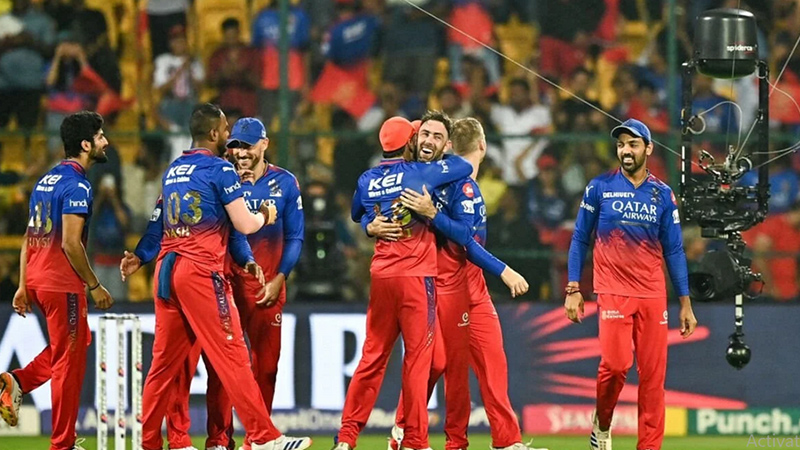
    MUMBAI: Cricket might be a game of glorious uncertainties, but one thing the Union Health Ministry wants to be absolutely certain about is a tobacco-free Indian Premier League (IPL). In a major crackdown ahead of the tournament’s 22 March 2025 kickoff, the ministry has urged the Board of Control for Cricket in India (BCCI) to ban all forms of tobacco and alcohol advertising, particularly surrogate promotions by gutka manufacturers endorsed by Bollywood celebrities and former cricketers.

    The ministry’s directive comes after a study by the Indian Council of Medical Research (ICMR) and Vital Strategies, published in the British Medical Journal, which found that 41.3 per cent of all smokeless tobacco (SLT) surrogate ads in 2023 were displayed during the last 17 matches of the Cricket World Cup. These ads, often disguised as ‘elaichi’ mouth freshener promotions, allow tobacco brands to sidestep advertising bans while maintaining high visibility.

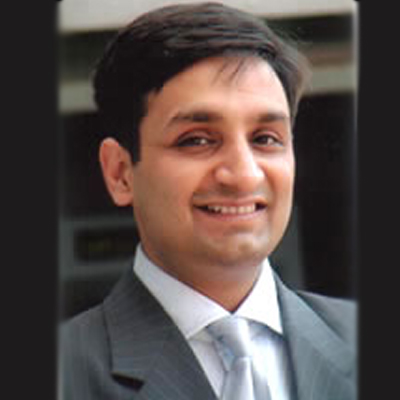
    In a letter dated 5 March 2025 to IPL chairman Arun Singh Dhumal and the BCCI, Director General of Health Services Atul Goel called for a blanket ban on tobacco and alcohol advertising across stadiums, related events, and national TV broadcasts. The ministry has also recommended that sports authorities discourage players, commentators, and stakeholders from endorsing tobacco-linked brands, either directly or indirectly.

    The letter stressed that cricketers are role models for millions, and the IPL, India’s largest sporting spectacle, has a moral responsibility to support public health initiatives. Goel pointed out that tobacco and alcohol consumption are leading contributors to India’s non-communicable disease (NCD) burden, with cardiovascular ailments, cancer, lung disease, diabetes, and hypertension accounting for over 70 per cent of annual deaths. India ranks second in global tobacco-related fatalities, with nearly 1.4 million deaths per year, while alcohol remains the country’s most widely used psychoactive substance.

    Despite strict advertising restrictions, India’s alcohol and tobacco industries continue to wield influence through high-profile sporting events like the IPL. The alco-bev market, currently worth Rs 1.7 trillion, is projected to touch Rs 5 trillion by FY28, while the tobacco sector is set to generate 14 billion dollors in revenue by 2025, according to Statista. However, with increasing government scrutiny, companies are expected to cut brand extension ad spends by 20-30 per cent, reports Financial Express.

    The crackdown isn’t limited to cricket. India became the first country to extend tobacco advertising prohibitions to OTT platforms from 1 September 2023. Now, new proposals seek to mandate non-skippable 30-second anti-tobacco health warnings on streaming content featuring tobacco use.

    With the IPL just weeks away, the big question remains: Will the BCCI enforce a ban on surrogate ads in stadiums and broadcasts? If implemented, this move could significantly impact brand visibility for tobacco and alcohol manufacturers while reinforcing cricket’s commitment to public health.

    For now, it’s game on for stricter regulations, but whether the IPL will play ball remains to be seen.

  • ‘We will be a Rs 5 billion company by 2008’ : Atul Goel – E-City Ventures CEO

    ‘We will be a Rs 5 billion company by 2008’ : Atul Goel – E-City Ventures CEO

    His is a tale that is not just about multiplexes. E-City Investments and Holdings chief Atul Goel is hooking up a film exhibition, distribution and digital delivery business.

    At the centre of this game is the multiplex business. Fun Multiplex Pvt Ltd is on a massive scale up exercise, planning to ramp up from 23 screens to 150 by FY08 while acquiring 100 single screens to gain a pan-India presence.

    E-City Digital Cinemas will deliver movies to theatres via satellite as well as hard disk in a format that operates on low margins but is profitable. Being part of the Essel group, it will use the Essel Shyam facility at Noida near Delhi which is also utilised by Zee for uplinking its channels.

    Goel recently got IL&FS to invest Rs 1 billion for a 26 per cent stake in E-City Entertainment, the hived off entity that handles real estate development. His next big target: a combined turnover of Rs 5 billion by FY08.

    In conversation with Indiantelevision.com’s Sibabrata Das & Bijoy AK, Goel unveils the expansion plans he has chalked out for E-City.

    Excerpts:

    Why did you decide to hive off the multiplex and real estate businesses into separate companies?
    The best way to attract investors is to divide the two segments of business. They can enjoy their own valuations and investors. For instance, the investors in real estate may not necessarily want to take exposure in the multiplex business. We got Infrastructure Leasing & Financial Services Ltd (IL&FS) to pick up a 26 per cent stake in E-City Entertainment, which handles real estate development like setting up malls, for Rs 1 billion.

    Are you in the hunt for an investor in the multiplex business as well?
    Fun Multiplex Pvt. Ltd. still needs to scale up as we ended the last fiscal with a turnover of just Rs 450 million and a net profit of Rs 60 million. We are planning to pump in Rs 2.5 billion and have 150 screens by FY08. We have already put in Rs 300 million. We plan to raise money in a debt-equity ratio of 1.5:1. Our target in FY08 is to have a total income of Rs 2.5 billion and operating profit of Rs 720 million by FY08.

    What makes you project such a fast rate of growth in two years?
    The revenues will come mainly because of newer developments. We have 23 screens and are opening up three properties this month. We, in fact, will be adding 10 more screens by 15 August.

    Do you see revenue growth also coming from increase in ticket rates?
    Pricing power will continue to be more a movie-based strategy rather than a rate hike in tickets across the board. In case of Krrish, we increased the ticket rates. We will also see the emergence of differential pricing for off-time shows. We have, for instance, lowered the rates for early morning screenings.

    Multiplex operators are in a build up phase and Inox has even taken the acquisition route in Kolkata to enhance its pan-India presence. How are you planning to scale up your operations?
    We are also planning to take the inorganic route. We will be acquiring single screen theatres across the country. We aim to have 100 single screens by FY08. This will be in addition to the 150 multiplex screens we will have by then.

    The future trend could be special alliances between distributors and multiplex operators

    Multiplex operators have been made to pay more for premium film content by Yash Raj Films (YRF). When YRF asked for an increase in revenue share for the Aamir Khan blockbuster Fanaa, you took a hard stance. What made you compromise later?
    Initially, all the multiplex operators protested against the hike. But the unity didn’t stay and some of them went ahead to sign the new terms with YRF. Let me reiterate here that we were in a pure business deadlock and not a confrontation of any kind.

    Has YRF, with a lineup of Hindi blockbusters like Fanaa, Krrish and Kabhie Alvida Na Kehna, started a trend where film content distributors would push for higher revenue shares from multiplex operators?
    We are not in a position where we can take a hard stance against YRF. We have a business relationship going with them and are showing Krissh. The new terms are exceptional to YRF but with such high ratios, we can only break even. The future trend could be special alliances between distributors and multiplex operators.

    Are you in any such alliance with a big distributor?
    It is too early to carve out such relationships. In fact, we urge the distributors not to start hiking rates or getting into special relationships with certain multiplexes at this stage. The industry needs to scale up the infrastructure, there is an opportunity sitting out there. We should take measures that grow rather than kill the industry at this early stage.

    Have you taken a cautious approach in the film distribution business?
    E-City Films (ECF) has distributed Hindi movies like 36 China Town in Gujarat where we control 90 theatres. The market is fragmented and will take time to consolidate. Some companies are also acquiring some movies for distribution at unrealistic prices. We are cautious and have no plans to set up a film distribution outfit overseas. For international movies, our strategy is to distribute 10-12 a year. In the past, we have distributed Alexander (December 2004), One Dollar Curry (February 2005), Million Dollar Baby (March 2005) and Sahara (July 2005). Among ECF’s recently acquired movies are Astronaut Farmer, Babel, Miss Potter and Michael Clayton.

    Have you closed down your content syndication business?
    It is in a state of lull now, but we have revival plans.

    What are the expansion plans for E-City Entertainment after IL&FS has taken a stake in it?
    We are investing Rs 1 billion each for the Kanpur and Coimbatore properties. Lucknow will attract a further funding of Rs 250 million. We have already pumped in Rs 2.17 billion in developing four projects (Rs 600 million for Andheri in Mumbai, Rs 750 million in Lucknow, Rs 550 million in Ahmedabad and Rs 270 million in Chandigarh). We will have 10-15 properties by FY08. We expect our turnover to climb from Rs 210 million to Rs 800 million by then. As these are rental incomes, E-City Entertainment will always be a profitable venture.

    How are you funding these properties?
    We will be raising fresh equity. But we have not started talking with anybody yet.

    When is E-City Digital Cinemas starting satellite delivery of movies to cinema theatres?
    We plan to launch it by the end of this month. We will be using the uplinking facility of Essel Shyam at Noida near Delhi. Currently, the hard disk is physically distributed to the 22 theatres in Gujarat (we control 90 theatres there) which we have taken on long term hire basis. We are using Real Image’s encryption technology so that piracy is safeguarded. The movie is first converted into digital master using the telecine machine, after which it can be taken on to D5 tape or captured directly on the encoding server. After encryption and compression, the movie is uplinked to the satellite via transmission server and downloaded at the playout local server which is installed at the theatre. A digital projector is used for screening of the film. E-City Digital Cinemas will target A-class towns where the current net collections are over Rs 100,000 per week.

    How many theatres will have the digital system?
    We plan to digitise 500 screens by FY08. We have already acquired 30 cinemas including a few in Mumbai. The business operates on low margins and, on a turnover of Rs 300 million last fiscal, we have reached a break even situation. As we ramp up theatre acquisitions, we expect our revenues to touch Rs 2.5 billion by FY08.

    So will E-City Holdings go for an initial public offering (IPO) or will the different entities have separate listings?
    We haven’t decided anything yet. We have no IPO plans, as of now. But by FY08 the entire venture will be a Rs 5 billion company.

  • E-City Films to release Hollywood film ‘The New World’ in India

    E-City Films to release Hollywood film ‘The New World’ in India

    MUMBAI: E-City Films will release this year’s Oscar nominated Hollywood Blockbuster The New World in India on 7 April. Directed by Terence Malick and inspired by the legend of John Smith and Pocahontas, the movie explores the story of love, loss and discovery, both a celebration and an elegy of the America that was and the America that was yet to come.
    The film was nominated for this year’s Oscar Awards for Best Achievement in Cinematography (Emmanuel Lubezki).

    Speaking on the release of the film, E-City Films chief executive officer Atul Goel said, ” The Multiplex revolution has paved way for the English movie market in India, which can be pegged at Rs.1 billion approx. We are looking at a 30 per cent growth in this business. It is an excellent business arena to broach upon.”

    E-City Films (I) Pvt. Ltd has so far distributed Alexander (December 2004), One Dollar Curry (February 2005), Million Dollar Baby (March 2005) and Sahara (July 2005), Truth about Love, Elvis has left the Building, Five Children and It, Cellular and many such hits in the Indian sub-continent viz. Pakistan, Nepal, Bhutan and Bangladesh. It has also taken the Indian lifestyle shows to the Russian television audience, informs an official release.

  • IL&FS acquires 26% in E-City Entertainment for Rs 1 billion

    IL&FS acquires 26% in E-City Entertainment for Rs 1 billion

    MUMBAI: Subhash Chandra-promoted E-City Entertainment has diluted 26 per cent stake to Infrastructure Leasing & Financial Services Ltd (IL&FS) for Rs 1 billion.

    The funds will be used for real estate development in two new projects which will require a total investment of Rs 2 billion. “IL&FS has acquired 26 per cent stake in E-City for Rs 1 billion. We will be investing Rs 2 billion in two projects, for which we are also raising a debt of Rs 1 billion,” E-City Ventures CEO Atul Goel tells Indiantelevision.com.

    E-City hived off its multiplex business into a company called Fun Multiplex Pvt Ltd last year, Goel said. The real estate business is being handled by E-City Entertainment and is setting up malls. “We decided to hive off the multiplex and real estate businesses into separate companies. We felt that the investors in real estate would not necessarily want to take exposure to the multiplex business,” Goel said.

    E-City hived off its multiplex business into a company called Fun Multiplex Pvt Ltd last year, Goel said. The real estate business is being handled by E-City Entertainment and is setting up malls. “We decided to hive off the multiplex and real estate businesses into separate companies. We felt that the investors in real estate would not necessarily want to take exposure to the multiplex business,” Goel said.

    The company has already invested Rs 2.17 billion in developing five projects. E-City Entertainment has put in Rs 600 million for the Andheri property (130,000 sq ft) in Mumbai, Rs 750 million in Lucknow (400,000 sq ft), Rs 550 million in Ahmedabad (160,000 sq ft) and Rs 270 million in Chandigarh (90,000 sq ft). “Three of our properties are already operational while the one at Lucknow will stand up by July. In Coimbatore we have acquired 350,000 sq ft and it should be operational by the end of next year. We are yet to identify another property but it could preferably be in the southern region,” Goel said.

  • E-City Digital to invest Rs 1 billion, have 500 theatres by FY 2008

    E-City Digital to invest Rs 1 billion, have 500 theatres by FY 2008

    MUMBAI: Subhash Chandra-promoted E-City Digital Cinemas Pvt Ltd plans to invest Rs 1 billion in digitising 500 cinema theatres by 2007-’08.

    The company will start delivering movies to the theatres via satellite by next month. Currently, the hard disk is physically distributed to the 22 theatres in Gujarat which it has taken on hire basis. “We will be using the uplinking facility of Essel Shyam at Noida near Delhi. We are investing Rs 1 billion and plan to have 500 digital theatres by FY 2008 in Mumbai, Delhi and Uttar Pradesh territories,” says E-City Ventures CEO Atul Goel. Zee channels are also uplinked from Essel Shyam teleport at Noida.

    Each theatre will have to invest Rs 2 million on the digital technology. E-City will make the investments and will pay fixed weekly theatre hire charges to the exhibitors. The contracts will be for a minimum period of five years. The company will also do deals with film distributors.

    E-City is using Real Image’s encryption technology so that piracy is safeguarded. The movie is first converted into digital master using the telecine machine, after which it can be taken on to D5 tape or captured directly on the encoding server. After encryption and compression, the movie is uplinked to the satellite via transmission server and downloaded at the playout local server which is installed at the theatre. A digital projector is used for screening of the film.

    E-City Digital Cinemas will target A-class towns where the current net collections are over Rs 100,000 per week. Part of the Essel Group of Industries, the company has current earnings of Rs 14 million from the 22 theatres it has recently started digitising. “As we aim to ramp up theatre acquisitions, we expect our revenues to touch Rs 2.5 billion by March-end 2009,” says Goel.

    Digital cinema reduces industry costs by eliminating expensive prints that constitute 15-20 per cent of a film’s cost. It also attacks piracy as every show can have watermark indicating theatre, time and date, making it a customised copyright property. Exhibitors will also get first run movies and a simultaneous nationwide release is possible without distributing prints.