Tag: AT&T

  • Most TV execs can’t sell streamlined multichannel ads, rely on homegrown tech: Study

    Most TV execs can’t sell streamlined multichannel ads, rely on homegrown tech: Study

    MUMBAI: Most TV companies are unprepared for advanced TV, a research has revealed.

    SintecMedia Survey finds that 69 per cent of TV media executives admitted their inability to sell streamlined multichannel advertising, while 59 per cent rely on homegrown technology.

    SintecMedia, a leading provider of broadcast and digital management software, has announced the results of a research study of TV media executives and agency media buyers about the future of TV, problems facing media companies, and how media companies plan to manage advanced TV advertising and delivery.

    The study includes results from a survey in partnership with MediaPost as well as interviews with executives from market-leading companies including Charter Spectrum Reach, Hulu, Scripps Network, and Turner.

    Fifty-nine per cent of TV media companies rely on homegrown technology to sell their inventory, a fact that will make it difficult for companies to adapt as advanced TV forces new technology and process into the advertising organization. The study also finds that the executives believe that their companies are unprepared for changes. Less than one third, 31 per cent believe that their company has what they need to sell digital and linear TV in a single streamlined process.

    SintecMedia is also a software partner for brands including NBCU, CBS, ABC, AT&T, STARZ, Star India, Seven Australia and Sky. SintecMedia and MediaPost surveyed TV executives, digital executives and agency media buyers.

    TV media executives, the study reveals, are not aligned with media buyers about several key advanced TV elements. While TV executives believe that TV ratings metrics will become the standard for multichannel and advanced TV advertising, agencies believe that the impression will become the significant metric. What’s more, TV companies feel confident that the TV department will take on more digital sales while agencies believe that digital will take on more TV sales.

    The study finds that demand for advanced TV inventory is founded on fast transactions, easy delivery and big scale. Technical and organizational friction within TV companies creates barriers that could frustrate media buyers looking for easy ways to buy audience-targeted campaigns from TV companies, potentially giving digital companies like Facebook and Google a window of opportunity.

    TV companies are, however, in a good position to grab market share in advanced TV if they can overcome technical and operational hurdles quickly.

    “TV companies and digital companies are both vying for advanced TV market share, with widely varying business models. The future of TV requires a profitable combination of quality content, multichannel distribution and ad sales built on a flexible, centralized technology stack. This strategy empowers the media company to control their transactions and make decisions quickly,” said SintecMedia CEO Lorne Brown.

    “Our research shows that many TV executives are facing critical trade-offs to reap small rewards from compromised projects now compared to more ambitions strategic initiatives that ensure that they preserve their control and profitability in the future,” Brown added.

  • Martin Sorrell on how WPP is combating ad world slowdown

    Martin Sorrell on how WPP is combating ad world slowdown

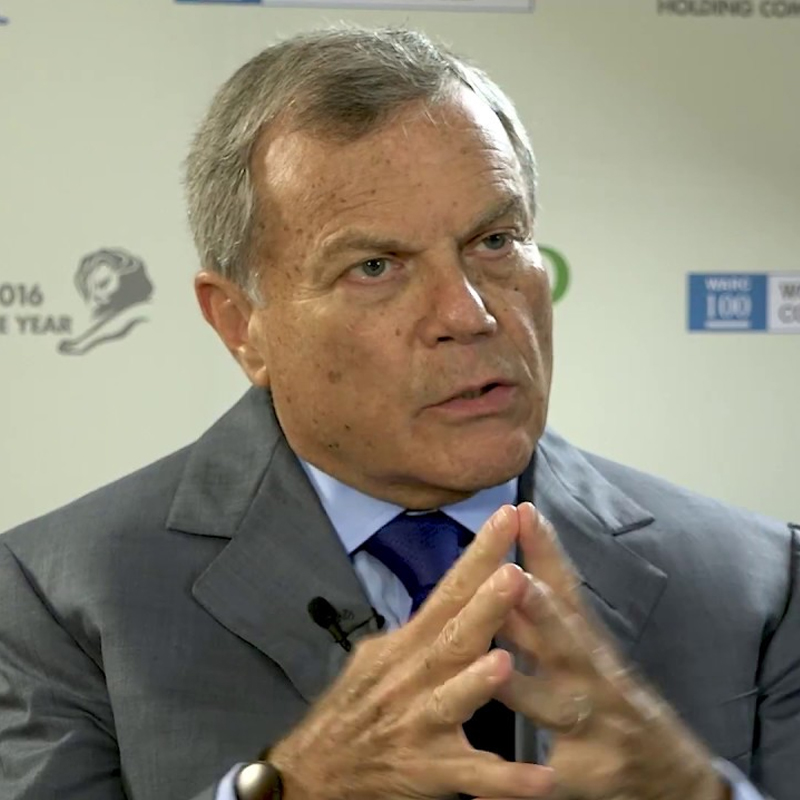
    MUMBAI: It’s been sometime that we have got to listen to advertising heavyweight and guru Martin Sorrell’s unique insights. For those who have missed him, he’s still at his vintage best. The WPP CEO shared his worldview on what’s impacting the advertising business and how the industry is combating with the slowdown in a fireside chat with Goldman Sachs analyst Lisa Yan at the 26th Goldman Sachs Communacopia Conference held last week.

    Sorrell pointed out that the advertising industry has been generally  going through a slow growth-pace for a while now, though it has seen some upward movements for a short period. The reasons: low-economic growth, low-inflation, very little pricing power, and focus on cost, amongst clients. “That’s been tolerable, certainly up until, I would say the end of 2016,” expressed Sorrell. “What we started to see, a little bit of softness…certainly in Q4 of last year.”

    What caused this slowdown? Sorrell gave at least three hypotheses that could have contributed, and could continue to do so, and industry will have to have adequate responses to them.

    The first being consulting firms who have been looking at generating cost savings for bottomline-focused corporations, and the first expense they have been scratching out is advertising.  

    “I think you can build the case, so that consultants, it’s not just an Accenture or Deloitte or BCG or McKinsey or Bain, go into client and say you’re spending too much money generally, your costs are too high, we’ll see if we can do something about it, and that fans out from there,” said Sorrell.

    The second hypothesis is that increasingly agencies and brands have been diverting spends towards Google and Facebook. “Google and Facebook have become significant  destinations… we are the most significant customer with  the two – on behalf of our clients,” he said. “If Google was $5 billion, Murdoch $2.25 billion and Facebook $1.7 billion last year, this year the figures are Google $5.5 billion-$6billion, Facebook $2.5 billion, and Murdoch $2.25 billion.”

    Sorrel labeled the two digital giants as frenemies, though he acknowledged that they have become friendlier than last year, especially Google.

    The third hypothesis – which he called the most plausible reason for the impact this year – “is that in an era of cheap capital, a zero cost — or close to zero-cost capital, there are pools of capital which fund zero-based budgeting approaches or private equity activist approaches that are putting tremendous pressure on particularly packaged goods companies,” said Sorrell. “Their approach has get rid of R&D spending, get reduced marketing spending and its running across sectors…Beyond tech and pharma, top-line growth is very hard to come by. And, I think that’s the central issue. So, as long as there’s cheap capital, as long as there is this very significant pressure of a zero-based budgeting and an activist later, you’re going to see pressure.”

    Sorrell does not expect the era of cheap capital to go away quickly thanks to Hurricane Harvey and the tragedies in Houston and Florida. “The results of this is indices rise, the fed probably is going to keep interest rates down lower longer,” he expressed.

    WPP has been responding to these challenges, he pointed out, through what it calls horizontality – basically integrating the  company in a much more aggressive, seamless, efficient manner.

    The second response has been zooming in on the high growth markets of Asia, Latin America, Africa, Middle East and central and eastern Europe. “That continues. That’s a third of our business; it continues to be a high level of focus,” he said.

    WPP, has got a razor sharp eye on digital which is 40 per cent of its business. “It is very much in the target range that we identified three, four, five years ago. It doesn’t stop at 40 per cent, 41 per cent, which it was in the first half of the year; it has to go beyond that, so probably to the extent where ultimately everything is permeated in one way or another by digital. But that’s some way off, but getting closer,” highlighted Sorrell.

    “Making data, the centre or a significant part of the centre of what we do is critically important, particularly when you have disintermediation in retail from the likes of Amazon or Alibaba or Tencent or JD.com or others where the battlefield will ultimately be about who controls the data,” he added.   He, however, mentioned that the growth of data has not been as good as the industry would like to see it but that doesn’t diminish its importance in relation to horizontality.

    Sorrell expressed his worry that what’s happening in the packaging goods industry could have worrying implications as a whole for the ad business.

    “My hypothesis would be that cheap money is chasing packaged goods and driving up the valuations. And those last three quarters, if you look at revenue growth at 2.4 per cent, it’s mainly price, very little volume. And those of you know how packaged goods companies function know that the moment the volumes stutter and stagnate or even fall, which is the case with a number of packaged goods companies, the trouble starts. If you have fewer consumers, fewer customers,  that’s when the trouble starts. So, I come back to this, and it’s fundamental obviously, it’s our lifeblood, I come back to this thing that investing in innovation and brand is key, and that’s the heart of it,” the WPP chief elaborated.

    WPP has lost out on a lot of business (AT&T and VW) in recent times, and Sorrell stated that competition will always stay but it’s a question of price. “I’ve never heard any of our people say to me it was because we didn’t do a good job, they’ve always said it’s because somebody else discounted and we lost the business on the basis of price. Sometimes, that maybe the case but I think mainly it’s due to the qualitative side of the offer. But, I think we’ve got our act together much better on integration,” he added.

    Google is the biggest destination for WPP’s media spend for their clients. “It is by definition currently the most powerful media channel that you can find, search being the primary product. Boycotting that, not accessing it, I think is a mistake. Working with Google to improve the way that they manage the process is the way to go,” he said.

    Sorrell also mentioned that WPP will be changing its regional management approach encouraging more integration on shared client work across agencies. “Well, with the growth of technology, with the rise of the BRICs — Brazil, Russia, India and China should not be regional reports, they should be direct to the center. Even if that upsets regional managers,” he quipped.

    He said that he saw Amazon becoming a very serious threat to Google on search with 55 per cent of product searches in the US  emanating from it. “Amazon now has a voice activated device. Every one of the Fearsome Five has a voice activated device. What that means for brands is very serious.”

     

  • Infosys wins three awards at Nice comm event

    MUMBAI: Infosys, a global leader in consulting, technology, outsourcing and next-generation services, has participation in six of the 32 Catalysts at TM Forum Live – winning three of the seven Catalyst Awards at the annual flagship communications industry event, held in Nice, France. The Awards recognized Infosys’ open innovation to co-create commercially viable prototypes of new digital services and business models.

    The three winning Catalysts: A platform for IoT and Anything as a Service: This Catalyst focused on how operators can attract ecosystem partners to co-create new digital services beyond connectivity through the platform business model. Infosys worked with Vodafone and was recognized for its outstanding performance. The focus was on delivering agility, experience and efficiency to communication service providers and exposing TM Forum Open APIs to third party developers to create new revenue streams enabled by network slicing, edge computing and a service marketplace.

    “This Catalyst has brought several leading industry players together to show how platform business models together with orchestration and closed-loop assurance can deliver innovative new services and new revenue streams to our industry,” said Dr. Lester Thomas, Chief Systems Architect, Vodafone Group. “Infosys played an invaluable role in the overall architecture, and in particular, defining the Open APIs and contributing enhancements to the Open API programme.”

    Joint Agile Delivery – Phase II: In this Catalyst, Infosys was recognized for ‘Outstanding Use’ of TM Forum Assets and worked with AT&T, Orange, Telecom Italia. This Catalyst has been recognized for continuing efforts towards contributing APIs and processes to TM Forum and has a vision for a ‘standardized and platform-based’ approach to developing and delivering world-class software that capitalizes on cross-organizational synergies to dramatically improve time to market, quality and cost.

    “Seamless Joint Agile Delivery across complex partner ecosystem is going to be key for rapid service innovation, delivery and operations. Infosys, along with other major industry partners, collaborated on this catalyst to provide a standardized and platform based approach for service validation and service assurance for Virtual Network Functions (VNFs) and associated Network Services from different suppliers,” said Michel Valette, Tests and Diagnostics Domain Manager, Orange & Stream Leader, Operations Centre of the Future, TM Forum. “Infosys leveraged their rich capabilities on machine learning and artificial intelligence to provide closed loop adaptive service assurance for dynamic network services coming from different partners.”

    Logical Factory: Virtualizing Manufacturing for Agility: This Catalyst, developed with BT, Telecom Italia and TWI, built on a prior award-winning Catalyst – the Smart Industrial Manufacturing: Robots as a Service, which demonstrated the use of TMF’s Open-APIs in the Industrial Internet-of-Things domain to order and configure Robots-as-a-Service. In this enhanced version, the scope was expanded to the entire manufacturing and maintenance process lifecycle. TM Forum recognized this Catalyst project in the category for ‘Outstanding Ecosystem Design’ using CurateFx – TM Forum’s digital ecosystem design and management SaaS solution.

    “Infosys’ commendable effort and focus in developing the concept played a key part in the team winning the ‘Outstanding Ecosystem Design Using CurateFx’,” said Darren Williams, Welding Systems Lead, TWI.

    Nik Willets, Chief Executive Officer, TM Forum said, “Infosys has made significant investments to enhance its knowledge base in new and emerging technologies. Winning three awards for Catalyst projects proves that Infosys is a knowledge partner capable of defining next-generation products and services for communication service providers. The company is also an early adopter of TM Forum’s Open API initiative.”

    Rajesh Krishnamurthy, President and Head of Energy, Utilities, Telecommunications and Services, Infosys said, “Our technology focus and collaboration with like-minded partners is accelerating innovation and delivering results.

  • SintecMedia & Lotame bring dynamic audience targeting to broadcast TV

    MUMBAI: SintecMedia and Lotame have announced plans for an integration that will deliver audience segments from the Lotame DMP directly to SintecMedia’s frontend proposal system, OnBoard. SintecMedia is the preferred broadcast management for linear and digital, and a software partner for over 300 of the top media brands including CBS, ABC, AT&T, Star India, Seven Australia and Sky.

    By connecting detailed viewership data with Lotame’s audience data, local sellers can offer enhanced targeting to clients. The partnership enables media companies to understand how targets overlay with their available inventory for more accurate pricing and scale during the proposal phase, and then optimize delivery across TV, video and mobile platforms for added value end-to-end.

    As major media companies announce cross-channel audience targeting products for advertisers, local broadcasters have been largely left out of such offerings, even as they compete most directly with digital audience targeting options such as search and social media. This partnership delivers a competitive product that unlocks audience targeting across TV, video and mobile platforms, creating a game changing offering for media companies.

    “As broadcasters, we are very pleased to see these kinds of partnerships develop because it shows that innovative companies are investing in the broadcast advertising ecosystem. These solutions provide a key benefit – a one-stop answer that enables cross-screen audience sales and improved yield optimisation for our advertising clients,” said Pearl TV MD Anne Schelle. Pearl is a business organisation of eight local TV broadcasting companies who operate more than 220 local stations.

    The partnership allows sellers to build audience-targeted proposals in real-time and deliver against audience goals more accurately using continually refreshed audience data. Clients who use Lotame’s TV DMP can now more easily index audiences against day-parts and programs on linear programming by passing that data to SintecMedia for execution and optimization. Additionally, SintecMedia clients can now use Lotame’s TV DMP to access and send 1st, 2nd and 3rd party audience data to SintecMedia’s platform. Sellers will be able to deliver competitive products to buyers, streamline and automate audience-based sales, and increase inventory demand and profit.

    “The partnership delivers the next level of multi-platform audience targeting at scale to local broadcasters,” said Lotame director of television & video innovation Ryan Reed. “SintecMedia and Lotame are both focused on maximizing profitability and control for media companies across TV, digital and mobile, and this partnership gives broadcasters the tools to compete in today’s fragmented marketplace.”

    “Workflow is the major issue facing broadcasters as they move to offer audience targeted products to buyers,” said SintecMedia president Lorne Brown. “This partnership drives the kind of ‘fast, easy, and big’ solutions that sellers need to compete with the walled gardens at the local level.”

  • Time Warner shareholders approve merger with AT&T

    MUMBAI: Time Warner Inc. shareholders voted to adopt the merger agreement between AT&T Inc. and Time Warner Inc., with 78 per cent of the outstanding shares of common stock voting in favor; and of the shares voted, 99 per cent were cast in favor of the proposal. Having obtained shareholder approval of the transaction, and with regulatory review of the deal underway, the company continues to expect the transaction to close before yearend 2017.

    Time Warner, a global leader in media and entertainment with businesses in television networks and film and TV entertainment, uses its industry-leading operating scale and brands to create, package and deliver high-quality content worldwide on a multi-platform basis.

    Time Warner Inc. chairman and CEO Jeff Bewkes commented: “On behalf of our board of directors and management team, I’m pleased that the Company’s shareholders have approved the proposal to combine with AT&T. In addition to providing shareholders with immediate value and the ability to participate in the upside of the combined company, the deal advances our long-term operational strategy. By combining Time Warner’s leading brands and video content with AT&T’s distribution, we will accelerate our ability to innovate, develop and deliver the next generation of video services, making our content even more valuable to consumers and business partners.”

    Also Read :

    http://www.indiantelevision.com/television/tv-channels/english-entertainment/time-warner-fy-16-and-fourth-quarter-numbers-up-170209

    http://www.indiantelevision.com/television/tv-channels/english-entertainment/content-a-game-of-thrones-atts-control-over-hbo-cartoon-network-warner-bros-faces-regulatory-lens-161023

  • 5G TV may rival cable, satellite & IPTV: Report

    5G TV may rival cable, satellite & IPTV: Report

    MUMBAI: TV and video delivery is likely to become a core capability of next generation 5G wireless services, concludes a new report from Strategy Analytics. Recent demonstrations have suggested that 5G will support 1Gbps data throughput rates. Combining 5G with other networking enhancements and technologies would allow operators to support TV-equivalent services which could eat into the $500Bn global TV and video market currently served by cable, satellite, IPTV and terrestrial broadcast service providers.

    Strategy Analytics, Inc. provides the competitive edge with advisory services, consulting and actionable market intelligence for emerging technology, mobile and wireless, digital consumer and automotive electronics companies.

    “Data rates get the headlines, but other network technologies will also make or break the business case for 5G TV services,” says Service Provider Analysis director Sue Rudd. “The efficiency of the end-to-end network will determine whether 5G TV is possible, but we have seen enough from early demonstrations by operators like Verizon, Deutsche Telekom, SK Telecom, AT&T and BT to suggest that it will arrive sooner or later in many parts of the world.”

    The report points out that the number of households and devices supported by a 5G TV service within any cell will make or break the 5G TV business case. The number of termination locations can be increased by a factor of three or more by deploying several network enhancements that deliver ‘trunking’ efficiency in the Radio Access Network (RAN). These include MIMO and beamforming for optimal spectrum use, virtualization of cell sites, dynamic throughput over backhaul networks and network slicing to guarantee data rates to the household.

    “Television is already being transformed by new digital services like Netflix and Amazon,” notes Michael Goodman, Director, TV and Media Strategies. “The arrival of 5G TV wireless services could herald another wave of TV disruption through the 2020s and beyond.”

    “The emergence of 5G TV would represent a further stage in the convergence of media and communications, and wireless and fixed services,” says David Mercer, VP and Principal Analyst. “It would also raise important questions relating to the roles of different ecosystem players and the future structure of the media value chain.”

    Also Read:

    Verizon completes purchase of XO Comm fiber business

    Regulations 2016: Of DeMon challenges, changing goalposts & rampant litigation

    Sports TV 2016: Digital explosion, player consolidation & confusion

    Tata Elxsi to showcase latest innovations & solutions in BroadcastAsia 2016

  • AT&T unveils live video streaming service, DirecTV Now

    AT&T unveils live video streaming service, DirecTV Now

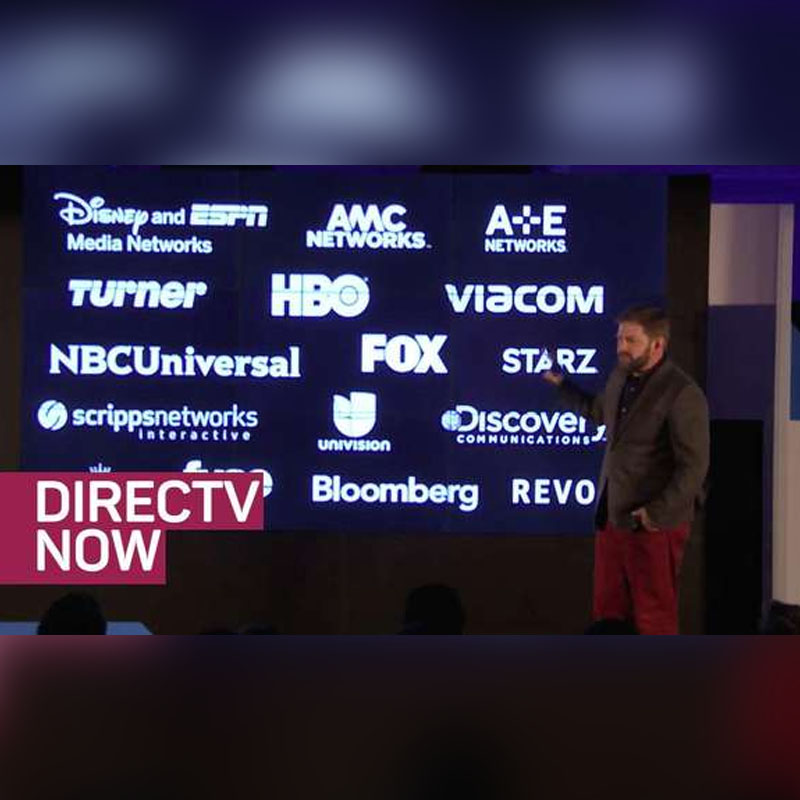
    MUMBAI: To win over subscribers who avoid pay-television subscriptions, AT&T has launched its streaming service DirecTV Now. The service will launch at prices ranging from $35 a month for over 60 channels to $70 for over 120 channels.

    The company has also announced that, for a limited time, more than 100 channels will be available for $35. The video service joins competitors like Sling TV and PlayStation Vue in drastically undercutting traditional cable and satellite packages, which often cost more than $100 per month. Dish Network launched Sling TV streaming service more than a year ago, and Sony PlayStation has its own package called PlayStation Vue. Next year, online video service Hulu plans to offer its own bundles of TV channels.

    The platform’s content will include live and on-demand video from Walt Disney, Twenty-First Century Fox, Viacom Inc and Scripps Networks Interactive. According to reports, the company is actively working to bring CBS Corp programming to its service.

    AT&T is counting on the mobile video market for new revenue as most U.S. consumers already have wireless service and further growth is limited. AT&T acquired DirecTV for $48.5 billion last year, making it the largest U.S. pay-TV operator with 25.3 million video subscribers, in an effort to diversify into the media and entertainment business.

    AT&T is also at near talks to acquire Time Warner for about $86 billion. This deal would create a media behemoth that offers TV, wireless, and the content that goes with it.

  • AT&T unveils live video streaming service, DirecTV Now

    AT&T unveils live video streaming service, DirecTV Now

    MUMBAI: To win over subscribers who avoid pay-television subscriptions, AT&T has launched its streaming service DirecTV Now. The service will launch at prices ranging from $35 a month for over 60 channels to $70 for over 120 channels.

    The company has also announced that, for a limited time, more than 100 channels will be available for $35. The video service joins competitors like Sling TV and PlayStation Vue in drastically undercutting traditional cable and satellite packages, which often cost more than $100 per month. Dish Network launched Sling TV streaming service more than a year ago, and Sony PlayStation has its own package called PlayStation Vue. Next year, online video service Hulu plans to offer its own bundles of TV channels.

    The platform’s content will include live and on-demand video from Walt Disney, Twenty-First Century Fox, Viacom Inc and Scripps Networks Interactive. According to reports, the company is actively working to bring CBS Corp programming to its service.

    AT&T is counting on the mobile video market for new revenue as most U.S. consumers already have wireless service and further growth is limited. AT&T acquired DirecTV for $48.5 billion last year, making it the largest U.S. pay-TV operator with 25.3 million video subscribers, in an effort to diversify into the media and entertainment business.

    AT&T is also at near talks to acquire Time Warner for about $86 billion. This deal would create a media behemoth that offers TV, wireless, and the content that goes with it.

  • AT&T, Comcast, Charter and Dish Network emerge among top cable, satellite and telco pay-TV operators

    AT&T, Comcast, Charter and Dish Network emerge among top cable, satellite and telco pay-TV operators

    MUMBAI:  AT&T (IPTV + Satellite), Comcast    (Cable), Charter (Cable), Dish Network  (Satellite), Verizon (IPTV), Cox (Cable), and Altice (Cable) have emerged as the top seven cable, satellite and telco pay-TV operators in the third quarter this year.

    FierceCable has tallied a look at the third-quarter earnings season, ranking the top satellite, cable, and telco pay-TV operators and studying their performance through key metrics, including average revenues per user (ARPU) and subscriber growth.

    Top US Pay TV Service Provider Metrics Q3 2016 (ranking by subscribers)
    Rank   Platform Subscribers (millions) Net Adds ARPU*
    1 AT&T IPTV + Satellite 25.292 -3,000 $118.09
    2 Comcast Cable 22.428 32,000 $148.47
    3 Charter Cable 16.887 -47,000 $80.81
    4 Dish Network Satellite 13.643 50,000 $89.44
    5 Verizon IPTV 4.673 36,000 n/a
    6 Cox Cable 4.146 3,000 n/a
    7 Altice Cable 3.598 -41,000 $117.80


    Source- Fierce Cable

    Meanwhile, satellite, cable, and telecommunications-based subscription video services lost 430,000 customers in the third quarter, according to SNL Kagan, giving the industry a loss of 1.3 million subscribers. The research firm’s count for the third quarter is lower than the 486,000 estimate given by MoffettNathanson analyst Craig Moffett last week. UBS experts sent analysis of the overall video industry in the United States, showing losses and gains in the past few years in this space. The firm said that it estimated that the pay TV subscribers base of U.S. multichannel including Sling TV,  dropped by 0.6 per cent year over year in the third quarter, similar to the drop in both the first quarter and the second quarter.

    MoffettNathanson experts said the overall subscriber declined in the pay-TV space in the last 10 years. Dish Network’s Sling TV service has affected the trend, the experts said. Experts said that Charter, Comcast, and other cable companies are scoring over telco providers such as Verizon and AT&T as also on satellite providers such as Dish Network. In the broadband internet space, UBS experts marked impressive performance of Comcast and Charter against Verizon and AT&T.

    According to Firece Cable, in the third quarter, around 94,000 pay-TV customers were lost by cable operators, SNL Kagan said. This was still the sector’s best performance in 10 years.  AT&T’s decision to give priority to the growth of DirecTV generated 323,000 new subs for the platform in the third quarter, offsetting huge losses for Dish Network in satellite. In the 12-month period ending 30 September, SNL Kagan calculated that Dish Network’s Sling TV added 925,000 customers.

  • AT&T, Comcast, Charter and Dish Network emerge among top cable, satellite and telco pay-TV operators

    AT&T, Comcast, Charter and Dish Network emerge among top cable, satellite and telco pay-TV operators

    MUMBAI:  AT&T (IPTV + Satellite), Comcast    (Cable), Charter (Cable), Dish Network  (Satellite), Verizon (IPTV), Cox (Cable), and Altice (Cable) have emerged as the top seven cable, satellite and telco pay-TV operators in the third quarter this year.

    FierceCable has tallied a look at the third-quarter earnings season, ranking the top satellite, cable, and telco pay-TV operators and studying their performance through key metrics, including average revenues per user (ARPU) and subscriber growth.

    Top US Pay TV Service Provider Metrics Q3 2016 (ranking by subscribers)
    Rank   Platform Subscribers (millions) Net Adds ARPU*
    1 AT&T IPTV + Satellite 25.292 -3,000 $118.09
    2 Comcast Cable 22.428 32,000 $148.47
    3 Charter Cable 16.887 -47,000 $80.81
    4 Dish Network Satellite 13.643 50,000 $89.44
    5 Verizon IPTV 4.673 36,000 n/a
    6 Cox Cable 4.146 3,000 n/a
    7 Altice Cable 3.598 -41,000 $117.80


    Source- Fierce Cable

    Meanwhile, satellite, cable, and telecommunications-based subscription video services lost 430,000 customers in the third quarter, according to SNL Kagan, giving the industry a loss of 1.3 million subscribers. The research firm’s count for the third quarter is lower than the 486,000 estimate given by MoffettNathanson analyst Craig Moffett last week. UBS experts sent analysis of the overall video industry in the United States, showing losses and gains in the past few years in this space. The firm said that it estimated that the pay TV subscribers base of U.S. multichannel including Sling TV,  dropped by 0.6 per cent year over year in the third quarter, similar to the drop in both the first quarter and the second quarter.

    MoffettNathanson experts said the overall subscriber declined in the pay-TV space in the last 10 years. Dish Network’s Sling TV service has affected the trend, the experts said. Experts said that Charter, Comcast, and other cable companies are scoring over telco providers such as Verizon and AT&T as also on satellite providers such as Dish Network. In the broadband internet space, UBS experts marked impressive performance of Comcast and Charter against Verizon and AT&T.

    According to Firece Cable, in the third quarter, around 94,000 pay-TV customers were lost by cable operators, SNL Kagan said. This was still the sector’s best performance in 10 years.  AT&T’s decision to give priority to the growth of DirecTV generated 323,000 new subs for the platform in the third quarter, offsetting huge losses for Dish Network in satellite. In the 12-month period ending 30 September, SNL Kagan calculated that Dish Network’s Sling TV added 925,000 customers.