Tag: AT&T

  • DirecTV to acquire EchoStar’s video distribution business in the US

    DirecTV to acquire EchoStar’s video distribution business in the US

    MUMBAI: This is clearly a sign of the times: the impact that streaming is having on consumption of video by viewers at home. American DTH operators DirecTV and EchoStar today announced that they have entered into a definitive agreement under which the former will acquire the latter’s video distribution business Dish DBS, including DishTV and Sling TV through a debt exchange transaction. 

    A release issued by the companies stated that the acquisition will benefit US video consumers by creating a more robust competitive force in a video industry dominated by streaming services owned by large tech companies and programmers. The transaction will provide consumers with compelling video options while separately improving EchoStar’s financial profile as it continues to enhance and further deploy its nationwide 5G Open RAN wireless network.

    “DirecTV operates in a highly competitive video distribution industry,” said DirecTV CEO Bill Morrow. “With greater scale, we expect a combined DirectTV  and Dish will be better able to work with programmers to realize our vision for the future of TV, which is to aggregate, curate, and distribute content tailored to customers’ interests, and to be better positioned to realize operating efficiencies while creating value for customers through additional investment.”

    “This agreement is in the best interests of EchoStar’s customers, shareholders, bondholders, employees, and partners,” said EchoStar president & CEO Hamid Akhavan. “With an improved financial profile, we will be better positioned to continue enhancing and deploying our nationwide 5G Open RAN wireless network. This will provide US wireless consumers with more choices and help to drive innovation at a faster pace. We expect Dish and EchoStar bondholders to benefit from two companies with stronger financial profiles and more sustainable capital structures.”

    “DirecTV was founded 30 years ago to give consumers greater choices than incumbent cable companies for video content, and the its  acquisition of Dish TV and Sling TV positions it to again provide more choices and better value in an industry currently dominated by large streaming platforms,” said TPG partners David Trujillo and John Flynn. “Our ability to execute these transactions, alongside our proposed acquisition of AT&T’s 70 per cent stake in DirecTV announced earlier today, exemplifies the unique capabilities of the TPG platform and our experienced sector-focused investment approach as we support DirecTV’s continued investment in innovating the next generation of video services that benefit consumers.”

    Compelling Transaction Benefits
    A combination of DIRECTV and DISH will help the new company provide consumers with more choices and better value. The combined video company is expected to: 

    * Have increased scale to incentivise programmers to allow DirecTV to deliver smaller packages at lower price points.

     * Be better positioned to bring together multiple content sources in one easily accessible place.
     
    * Have an enhanced ability to make the investments required to improve its streaming services.
     
    * Improve the viability of the satellite platform by realizing efficiencies of some shared fixed infrastructure and operating expenses.
     
    * Continue to provide the broadest array of programming and diverse voices available on pay TV, including local news.
     

    The transaction will also benefit US wireless consumers by allowing EchoStar to focus on enhancing and further deploying its 5G Open RAN cloud-native wireless network. This transaction will: 

    * Alleviate a material portion of EchoStar’s financial constraints.
     
    * Free up operational and financial resources that EchoStar can dedicate to its mission of deploying a nationwide facilities-based wireless service to compete with dominant incumbent wireless carriers. 
     
    * Benefit consumers by enabling EchoStar (through its Boost Mobile brand) to strengthen its position as the fourth facilities-based carrier in the U.S.
     
    * Enable EchoStar to further leverage its satellite assets and experience, including developing innovative direct-to-device (D2D) solutions. 

    Highly Competitive Industry

    The video distribution industry has undergone a massive transformation and is highly competitive, now dominated by streaming services owned by large tech companies and programmers. 

    * Streaming services owned by large tech companies and programmers now have subscription numbers that far exceed those of pay TV distributors.
     
    * Content that was historically the mainstay of traditional pay TV – news, sports, and entertainment – is now available exclusively or first-run on direct-to-consumer streaming services.
     
    * The vast majority of consumers who leave satellite video are “cutting the cord” for streaming services – wherever they live.  

    * Combined, DirecTV and Dish have collectively lost 63 per cent of their satellite customers since 2016.
     
    * Traditional pay TV penetration in US households is now less than 50 per cent

    Improve Both Companies’ Financial Profiles

    The transaction is expected to strengthen the financial profiles of DirecTV and EchoStar, creating opportunities for additional investment.

    * Upon transaction close, DirecTV expects to have a leverage position just over 2.0x, and plans to reduce to under 2.0x within 12 months, consistent with its stated 1.5x – 2.0x financial policy on a pro forma basis. As a result, DirecTV will have one of the best leverage profiles in the pay TV industry.  
     
    * DirecTV estimates that the combination of DirecTV and Dish has the potential to generate cost synergies of at least $1 billion per annum. These synergies are expected to be achieved by the third anniversary of closing, assuming the closing is in late 2025.
     
    * The transaction will provide EchoStar with greater financial flexibility by improving its access to capital and reducing overall refinancing needs. 

    * At close, EchoStar will have reduced its total consolidated debt (excluding financing leases and other notes payable) by approximately $11.7 billion and reduced its consolidated refinancing needs through 2026 by approximately $6.7 billion (excluding financing leases and other notes payable).
     
    * The transaction, in conjunction with the exchange offer announced today (the exchange offer), will also result in the termination of all intercompany obligations between Dish Network and Dish DBS and creates the ability for EchoStar to fully unencumber the 3.45-3.55 GHz spectrum, unlocking incremental strategic and operating flexibility.

    Transaction Details 

    Under the terms of the purchase agreement, DirecTV will acquire EchoStar’s video distribution business, including DishTV and Sling TV, in exchange for a nominal consideration of $1 plus the assumption of Dish DBS’ net debt. Dish Network will also benefit from the releases of a substantial amount of intercompany receivables, including spectrum, but will have contractually limited access to the cash flow generated by its business between signing and closing. Dish DBS and DirecTV have commenced the exchange offer for five different series of Dish DBS notes with a total face value of approximately $9.75 billion, including seeking certain consents from the holders of such notes to facilitate the acquisition. 

    The indentures governing the new DishH DBS notes will provide for an amendment without the consent of holders of the new Dish DBS notes to allow for the mandatory exchange of such notes following receipt of certain regulatory approvals and provided the acquisition has been or will be consummated before the outside date described in the purchase agreement, into a reduced principal amount of DirecTV debt which will have terms and collateral that mirror its existing secured debt. Such mandatory exchange is conditioned, amongst other things, on an aggregate reduction in the principal amount of Dish DBS’ notes in such exchange of at least $1.568 billion. If noteholders do not accept the exchange offer on terms satisfactory to DirecTV, including to the extent the above mentioned minimum principal reduction is not achieved, it has the right to terminate the acquisition without closing.

    The transaction is subject to various closing conditions, including, but not limited to, a requisite amount of the outstanding Dish DBS notes being tendered into the exchange offer, completion of a pre-closing reorganization, and receipt of required regulatory approvals.

    In addition, TPG Angelo Gordon and certain of its co-Investors, as well as DirecTV, provided $2.5 billion of financing to fully refinance Dish DBS’ November 2024 debt maturity. The proceeds of the funding will be distributed to Dish DBS via a secured intercompany loan to fully repay Dish DBS’ November 2024 debt maturity and for general corporate purposes. The financing can be exchanged or refinanced into DirecTV debt at the closing of the acquisition.

    “We built our business to provide bespoke financing solutions. We are pleased to partner with DirecTV and Dish DBS on a transaction that is value-enhancing for all stakeholders,” said TPG Angelo Gordon partner Ryan Mollett and managing director Michael Ginnings.

    Upon closing of this transaction, DirecTV will be led by a proven management team that reflects the strengths and capabilities of both organizations. DirecTV will continue to be led by CEO Bill Morrow, and CFO Ray Carpenter. The combined company will be headquartered in El Segundo, California.

    TPG Inc. to Acquire AT&T’s 70 per cent Stake in DirecTV

    TPG  and AT&T  today announced a definitive agreement under which TPG will acquire from AT&T the remaining 70 per cent stake in DirecTV that it does not already own. TPG will invest in DirecTV through TPG Capital, the firm’s US and European private equity platform. The transaction between TPG and AT&T is expected to close in the second half of 2025, subject to customary closing conditions. Completion of this transaction is not contingent on DirecTV’s  acquisition of Dish.

  • Discovery, AT&T close in on WarnerMedia transaction

    Discovery, AT&T close in on WarnerMedia transaction

    Mumbai: Discovery Inc and AT&T have announced that they have closed their transaction to combine the WarnerMedia business with Discovery. The combined entity is a premier standalone global media and entertainment company Warner Bros Discovery, which will begin trading on the Nasdaq with the start of trading on 11 April, under the new ticker symbol ‘WBD.’

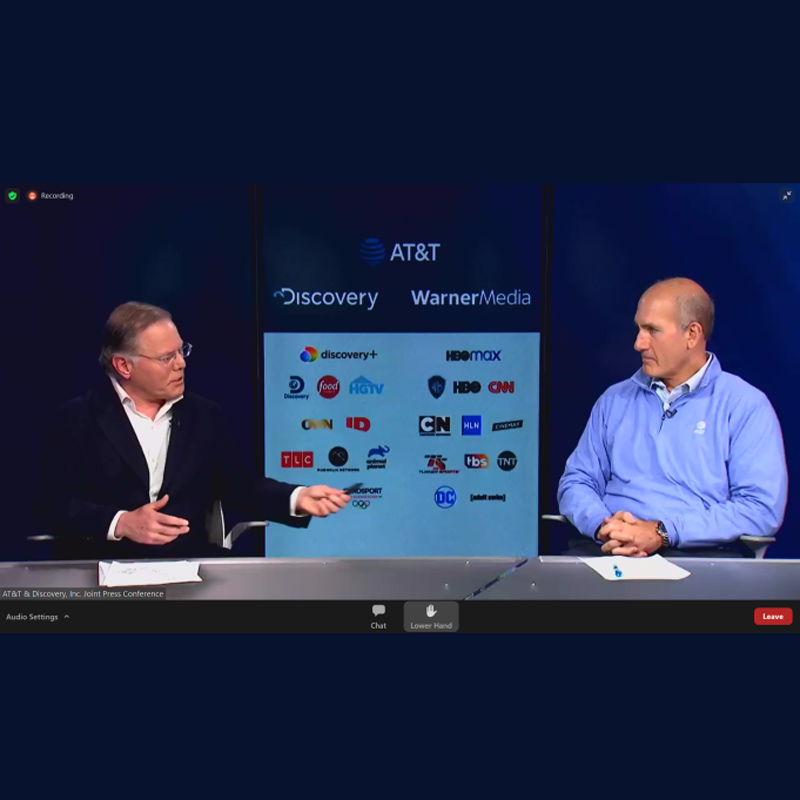
    The new company combines WarnerMedia’s premium entertainment, sports and news assets with Discovery’s leading non-fiction and international entertainment and sports businesses, including Discovery Channel, discovery+, Warner Bros. Entertainment, CNN, CNN+, DC, Eurosport, HBO, HBO Max, HGTV, Food Network, Investigation Discovery, TLC, TNT, TBS, truTV, Travel Channel, MotorTrend, Animal Planet, Science Channel, New Line Cinema, Cartoon Network, Adult Swim, Turner Classic Movies and others.

    “Today’s announcement marks an exciting milestone not just for Warner Bros Discovery but for our shareholders, our distributors, our advertisers, our creative partners and, most importantly, consumers globally,” said Warner Bros Discovery CEO David Zaslav. “With our collective assets and diversified business model, Warner Bros Discovery offers the most differentiated and complete portfolio of content across film, television and streaming. We are confident that we can bring more choice to consumers around the globe while fostering creativity and creating value for shareholders.”

    “We are at the dawn of a new age of connectivity, and today marks the beginning of a new era for AT&T,” stated AT&T CEO John Stankey. “With the close of this transaction, we expect to invest at record levels in our growth areas of 5G and fiber, where we have strong momentum, while we work to become America’s best broadband company. At the same time, we’ll sharpen our focus on returns to shareholders. We expect to invest for growth, strengthen our balance sheet and reduce our debt, all while continuing to pay an attractive dividend that puts us among the top dividend-paying stocks in America.”

    Under terms of the agreement, which was structured as a Reverse Morris Trust transaction, at close AT&T received $40.4 billion in cash and WarnerMedia’s retention of certain debt. Additionally, shareholders of AT&T received 0.241917 shares of WBD for each share of AT&T common stock they held at the close. As a result, AT&T shareholders received 1.7 billion shares of WBD, representing 71 per cent of WBD shares on a fully diluted basis. 

    Discovery’s existing shareholders own the remainder of the new company. In addition to their new shares of WBD common stock, AT&T shareholders continue to hold the same number of shares of AT&T common stock they held immediately prior to close.

  • Discovery Plus, HBO Max to merge into one streaming service

    Discovery Plus, HBO Max to merge into one streaming service

    Mumbai: Discovery, which is expected to close its acquisition of WarnerMedia in the second quarter of 2022, confirmed its plans to combine its streaming service Discovery Plus and WarnerMedia’s HBO Max into one service rather than offer the two platforms as a bundle.

    Discovery chief financial officer Gunnar Weidenfels who addressed the Deutsche Bank 30th Annual Media, Internet and Telecom Conference said that Discovery is making preparations to combine the two streaming services. But before they are combined, the first step of integration will be some form of bundling as the company figures out the best way to merge the two platforms.

    On 11 March, Discovery Inc stockholders approved various matters relating to the acquisition of WarnerMedia from AT&T to create Warner Bros-Discovery Inc. The transaction will bring together WarnerMedia’s entertainment, sports and new assets with Discovery’s non-fiction, international entertainment, and sports business.

    Direct-to-consumer service Discovery Plus had 22 million subscribers, while HBO Max had 73.8 million subscribers at the end of 2021.

  • Discovery-WarnerMedia merger gets clearance from European Commission

    Discovery-WarnerMedia merger gets clearance from European Commission

    Mumbai: Discovery Inc has received unconditional clearance from the European Commission to move ahead with its merger agreement with WarnerMedia and is on track to close the deal by second quarter 2022. The company filed a merger proxy earlier this month and has scheduled a stockholder meeting on 11 March.

    “We, of course, are pleased to receive unconditional clearance from the European Commission, the expiration of the HSR waiting period, and clearance from other key international markets, and AT&T having received a favorable private letter ruling from the IRS,” said Discovery president and chief executive officer David Zaslav. “We also filed our merger proxy earlier this month and have scheduled our stockholder meeting for March 11th. Following the vote, and assuming the deal is approved by our stockholders, we expect to be on track to close in Q2.”

    Discovery reported its fourth quarter results for the year 2021. The company posted revenue of $3.18 billion, an increase of 10 per cent to the prior year quarter. Its direct-to-consumer business added two million subscribers since the end of Q3 totalling to 22 million subscribers.

    “2021 was by all measures an exceptional year for our company, in which we achieved significant operational, financial, and strategic objectives,” added Zaslav. “We grew our global DTC paying subscribers to 22 million, a tailwind for our strong distribution revenue growth of 11 per cent, while global advertising revenues grew 10 per cent due to continued strength in our key markets and share gains. Additionally, we ended the year with nearly $ four billion of cash on hand and generated robust cash flows, supporting our ability to invest in growth initiatives. Further, the successful recent broadcast of our second Winter Olympic Games across Europe, on the heels of our first broadcast of the Summer Olympic Games, underscores one of our key differentiators: in-language and locally relevant content. All of which position us well to take advantage of the remarkable opportunities ahead for Warner Bros. Discovery, which we believe will be among the world’s most dynamic media companies.”

  • AT&T to spin off its interests in WarnerMedia in $43 bn transaction

    AT&T to spin off its interests in WarnerMedia in $43 bn transaction

    Mumbai: AT&T has announced that it will spin off 100 per cent of its interest in WarnerMedia to AT&T’s existing shareholders in a pro-rata distribution, following the merger of WarnerMedia with Discovery, which is expected to close in the second quarter of 2022.

    Following the closing of the transaction, the Warner Bros Discovery Inc common stock is expected to be listed on the NASDAQ global select market under the ticker ‘WBD.’ The new company’s board of directors will consist of 13 members, seven initially appointed by AT&T, including the chairperson of the board. Discovery has designated six members, including CEO David Zaslav.

    Discovery president and CEO David Zaslav will lead WBD with a best-in-class management team and operational and creative leadership from both companies.

    AT&T’s board of directors has approved an expected post-close annual dividend of $1.11 per AT&T share to account for the distribution of WarnerMedia to AT&T shareholders and to size the annual dividend payout at approximately 40 per cent of the projected free cash flow to enable investment in attractive opportunities.

    AT&T will receive $43 billion (subject to working capital and other adjustments) in a combination of cash and other consideration and AT&T’s shareholders will receive a stock representing 71 per cent of the new company, Warner Bros. Discovery Inc. on a fully diluted basis. Existing Discovery shareholders will own approximately 29 per cent of the new company on a fully diluted basis.

    On the closing date of the transaction, each AT&T shareholder will receive, on a tax-free basis, an estimated 0.24 shares of the new WBD common stock for each share of AT&T common stock held as of the record date for the pro-rata distribution. The exact number of shares of WBD to be received by AT&T shareholders for each AT&T common share will be determined closer to the closing based on the number of shares of AT&T common stock outstanding and the number of shares of Discovery common stock outstanding on an as-converted and as-exercised basis. AT&T has approximately 7.2 billion fully diluted shares outstanding.  

    AT&T shareholders will continue to hold the same number of shares of AT&T after the transaction closes.

    In connection with the transaction, all classes of shares of Discovery capital stock will be converted and reclassified into common shares of WBD with one vote per share.

    No action is required by AT&T’s shareholders to receive shares of WBD common stock in the merger when it occurs. The closing of the transaction remains subject to satisfaction of certain conditions, including obtaining all necessary regulatory approvals.

    “In evaluating the form of distribution, we were guided by one objective — executing the transaction in the most seamless manner possible to support long-term value generation,” said AT&T CEO John Stankey. “We are confident the spin-off achieves that objective because it’s simple, efficient and results in AT&T shareholders owning shares of both companies, each of which will have the ability to drive better returns in a manner consistent with their respective market opportunities.

    “We believe that the remaining AT&T and the new WBD are two equities that the market will want to own and the markets to support those equities will develop,” Stankey said. “Rather than try to account for market volatility in the near-term and decide where to apportion value in the process of doing an exchange of shares, the spin-off distribution will let the market do what markets do best. We are confident both equities will soon be valued on the solid fundamentals and attractive prospects they represent.”

    AT&T will continue to trade on the NYSE under the ticker ‘T.’ The company will host a virtual investor conference on 11 March at which it will provide additional insight and expectations for the financial and operational performance of AT&T’s communications segment following the close of the pending WarnerMedia transaction.

  • AT&T likely to close WarnerMedia-Discovery merger by June-end

    AT&T likely to close WarnerMedia-Discovery merger by June-end

    Mumbai: US major AT&T has reported its fourth-quarter financial results on Wednesday. The company’s WarnerMedia segment posted revenues of $9.9 billion, a growth of 15.4 per cent year-on-year driven by content licensing and direct-to-consumer subscription growth. The company said that it expects the WarnerMedia-Discovery transaction to close by the second quarter of 2022.

    “We are encouraged with how the process for the WarnerMedia deal is progressing and now expect the transaction to close in the second quarter,” said AT&T CEO John Stankey. “Coming off an outstanding year with HBO Max, we plan to hand off the business with a strong exit velocity, and we look to further our international momentum and deliver more world-class content for viewers.”

    He further added, “When the deal closes, the investments made in both content and HBO Max growth, coupled with strong execution by the team, will ensure Warner Bros Discovery is positioned as a leading global media company with the depth of content and the capabilities required to lead in the next era of media.”

    WarnerMedia’s streaming service HBO Max added 13.1 million subscribers in 2021 and currently has a base of 73.8 million subscribers globally. The investor presentation also revealed that WarnerMedia saw a DTC subscription revenue growth of 11.5 per cent from $1.7 billion to $1.9 billion in the fourth quarter.

    In May 2021, AT&T announced that it had proposed a merger between Discovery Inc and its media subsidiary WarnerMedia, which would be spun off into a new publicly-traded company to be known as Warner Bros Discovery. The merged entity would be led by Discovery CEO David Zaslav. The transaction was approved by the European Commission in December 2021 and it is expected to be completed in mid-2022.

  • AT&T rolls out fastest consumer broadband at 2-gig, 5-gig speeds

    AT&T rolls out fastest consumer broadband at 2-gig, 5-gig speeds

    Mumbai: Telecommunication giant AT&T has rolled out the fastest consumer broadband services at new multi-gig speeds of 2-gig and 5-gig for its fiber customers across parts of the network’s footprint.

    Starting 24 January, AT&T’s nearly 5.2 million customer locations in parts of more than 70 metro areas, such as LA, Atlanta and Dallas, will be able to take advantage of symmetrical 2-gig and 5-gig speed tiers with “new, simple and straightforward pricing,” said the statement.

    The company will continue bringing multi-gig-capable technology across its current fiber footprint throughout 2022 and as part of its future expansion efforts to cover 30 million customer locations by year-end 2025. It has claimed to have achieved up to 10-gig speeds in its labs.

    “As we set out to become America’s best connectivity provider, we’re doubling down on fiber in our broadband infrastructure,” stated AT&T Communications CEO Jeff McElfresh. “With true multi-gig speeds, and symmetrical upload and download, AT&T Fiber will redefine how we experience the internet and drive innovation, from education, to work, to entertainment.”

    According to a recent survey by AT&T commissioned with Recon Analytics, six in 10 consumers purchased a new connected device in the last year. The average consumer has 13 connected devices in their home and that is expected to multiply. In addition – half of all workers now have the option to work remotely long term – which means video conferencing for hours is here to stay. Consumers and small businesses are consuming more data than ever, and the trend is expected to continue to see data consumption increase from megabytes to terabytes.

    Multi-gig speeds are primed for these growing demands and will provide more bandwidth for households and small businesses to run a multitude of connected devices at once. Similar to freeways with several high-speed lanes, multi-gig speeds open those lanes for various connected devices to run at their fastest possible speed.

    The architectural nature of fiber designed specifically to provide high-speed internet (as compared to cable which was designed to provide TV content to households), allows high-capacity tasks, such as uploading large documents during video calls and gaming, to flow seamlessly, even during high-usage times.

    “The pandemic has significantly changed how consumers and businesses use the internet and what is required from a broadband provider. Faster is better – but reliability is best. And AT&T has shown it has both with AT&T Fiber,” said Recon Analytics founder and lead analyst Roger Entner.  

  • #Retrace2021: How streaming wars re-shaped the global M&E industry in 2021

    #Retrace2021: How streaming wars re-shaped the global M&E industry in 2021

    Mumbai: Beginning with the blockbuster M&A deal between Discovery and AT&T in May which created the world’s second-largest media company by revenue after Disney, intensifying streaming wars reshaped the global media and entertainment industry through 2021. At the heart of this transformation was the mindboggling demand for content.

    According to research led by European economic consultancy Frontier Economics manager Clive Kenny, OCC (Online Curated Content) providers directly invested $25.7bn (Rs 1.8trn) in OCC content worldwide in 2019, including original and licensed titles. This sum is likely to soar to $61bn (Rs 4.3trn) by 2024. Significant increase in content investment in the pipeline includes: The Walt Disney Company’s plans to invest $14bn-16bn (Rs 985bn-1,126bn) per year in global OCC content by 2024; ViacomCBS’s plans to ramp up investment in OCC content to $5bn (Rs 352bn) in 2024; WarnerMedia’s parent company, AT&T’s, pledge to invest $4bn (Rs 282bn) in HBO Max in the three years through 2022; and, Netflix will spend $28bn (Rs 1.97trn) a year by 2028.

    Driven by tech, worldwide changes in viewers’ media consumption habits in the context of more genres, newer formats, and platform choices are here to stay and grow further, and the scope for this growth is immense. The importance, as well as the urgency of sourcing content to satiate this rather ravenous appetite for entertainment, will continue effecting similar shifts in the sector going ahead. The equation will balance out between global giants wanting to create worldwide media behemoths and (comparatively) ‘local’ players striving to maintain their individuality and independence in the market.

    Here’s a look back at some of the biggest industry deals that made news in 2021. Even though not driven by the streaming wars, the $5 bn acquisition of Yahoo (formerly Verizon Media) by Apollo Global Management finds a place in this list for being the culmination of Verizon’s persistent efforts to establish itself in the online media space.

    AT&T and Discovery: Announced in May 2021 through an all-stock transaction called the Reverse Morris Trust, the AT&T, and Discovery merger deal aimed at giving rise to a content powerhouse to be led by Discovery president and CEO David Zaslav. The merged entity will bring together brands like Warner Bros., HBO, Discovery, DC Comics, CNN, Cartoon Network, HGTV, Food Network, the Turner Networks, TNT, TBS, Eurosport, Magnolia, TLC, Animal Planet, and ID.

    The emphasis on the D2C aspect of the business was clearly spelled out in the official statement which read “the new company will compete globally in the fast-growing direct-to-consumer business, bringing compelling content to D2C subscribers across its portfolio, including HBO Max and the recently launched discovery+.”

    Televisa and Univision: In April, Mexican and Latin American media giant Televisa and US Hispanic network Univison merged their media, content, and production assets to create a global Spanish-language powerhouse. The combined entity Televisa-Univision will be led by Univision CEO Wade Davis. It will have the largest Spanish-language library of owned content, serving two of the world’s largest Spanish-speaking markets the US and Mexico.

    According to the Television Business International, the “merger was designed to enable the new company to address what it believes is the relatively nascent global Spanish-language streaming market. The pair said that the Spanish-language market, which represents around 600 million people globally, and an aggregate GDP of about $7 trillion, is significantly underserved from a streaming perspective relative to other major markets. They cited the stat that fewer than 10 per cent of the Spanish speaking population currently use an OTT video product, compared with the English language market where nearly 70 per cent of the population has at least one streaming service.”

    The deal brought together Televisa’s four free-to-air channels, 27 pay-TV networks channels and stations, Videocine movie studio, Blim TV SVOD service, and the Televisa trademark with Univision’s assets in the US including the Univision and UniMás broadcast networks, nine Spanish-language cable networks, 61 television stations, 58 radio stations in major US Hispanic markets and Puerto Rico, and digital assets, notably the recently launched AVOD streaming service PrendeTV.

    TF1 and M6: With a view to providing a “French response to the challenges from global platforms” Groupe Bouygues and RTL Group announced the $4bn merger of leading French commercial broadcasters TF1 and M6 to form a new “French total video champion” in May. The resulting entity will bring together the strengths of the companies’ D2C streaming businesses operating under the brand names MyTF1 and 6play.

    Said the companies, “This market where linear TV remains a powerful media is undergoing a structural transformation with a strong shift towards on-demand consumption. The combination of these two players, of the know-how of their employees and of their strong brands, would allow the new group to invest more and to step-up innovation. The proposed merger is critical to ensure the long-term independence of French content creation and to continue to offer diversified and premium local content to the benefit of all viewers.”

    Amazon acquires MGM: In the same month, global tech giant Amazon acquired Hollywood studio MGM for $8.45 Bn. MGM is behind classics such as ‘Gone with the Wind’, and ‘Rocky’, the famous Bond franchise, ‘Singin’ in the Rain’, ‘12 Angry Men’,  as well as popular reality TV shows like ‘The Voice’ and ‘Shark Tank’.

    Amazon has been ramping up its content spend to stay competitive amidst the fare being churned out by Netflix and Disney. “The real financial value behind this deal is the treasure trove of IP in the deep catalogue that we plan to re-imagine and develop together with MGM’s talented team,” said Amazon Studios and Prime Video SVP Mike Hopkins. 

    Fox Entertainment buys MarVista: With an aim to develop content for its digital outlets including the ad-supported streaming platform Tubi, Fox Entertainment closed the year with acquiring MarVista Entertainment in December. Founded in 2003, MarVista specialises in production for digital platforms. Having created an average of 80 titles across different genres, the studio boasts a content catalogue of over 2500 programming hours.

    “With these key strategic advantages, acquiring and investing in MarVista aligns perfectly with Fox Entertainment’s long-term vision for streaming and diversifying our in-house capabilities and infrastructure, as we expand our portfolio,” said CEO of Fox Entertainment Charlie Collier.

    The deal was most recently in the series of Fox’s attempts this year to bolster its streaming and digital capabilities. It follows the September acquisition of celebrity-focused news outlet TMZ from WarnerMedia and the launch of Studio Ramsay Global, a production entity focused on culinary and lifestyle programming with restaurateur Gordon Ramsay.

    RTL Group and Talpa Network: The merger of RTL Nederland and Talpa Network assets was announced in June this year with the intention of creating a strong Dutch cross-media group across TV, streaming, radio, print, and digital, as well as to the benefit of audiences and the Dutch creative industry. The plan spelled out a “clear ambition to further expand Videoland” –  the leading Dutch streaming service with one million paying subscribers.

    According to the agreements, Talpa Network will contribute its TV, radio, print, digital, e-commerce, and other assets to RTL Nederland and will receive a 30 per cent stake in the enlarged RTL Nederland in return.

    In addition, Talpa Network’s content units (Talpa Concepts, Talpa Entertainment Producties) – which are not part of the deal – and RTL Nederland will enter into a content agreement for newly developed formats for linear TV channels and for the streaming service Videoland.
    The annual content spend of the combined group amounts to more than €400 million.

    ZEEL-SPNI merger: The Zee Entertainment Enterprises Ltd (Zeel) and Sony Pictures Networks India (SPNI) mega-merger announced in September combined the two media giants’ linear networks, digital assets, production operations, and programme libraries to create one of India’s largest media and entertainment entities (close to $2 billion in revenue) in terms of market share.

    In an investor call, Punit Goenka, managing director, and chief executive officer of the merged entity, revealed that it will target overall growth with a focus on sports and digital. As part of the deal, Sony agreed to infuse $1.6 billion cash which will enable the merged entity to accelerate its digital platform and significantly invest in premium content including sports.

    Both SPNI and Zeel had been on the lookout for a partner that could bring in mutual synergies, while minimising clashes, to fend off competition amid growing consolidation in the media and entertainment industry.  With this, the Zeel-Sony merged entity will compete in the market with market leader DisneyStar India, Viacom18-RIL, and the only standalone, player Sun TV Network. Given their relative strengths in scripted, factual, and sports programming, respective distribution footprints across India, and iconic entertainment brands, the combined company will try to meet the growing consumer demand for premium content across entertainment touchpoints and platforms.

    Under the terms of the definitive agreements, SPNI will have cash balance of $1.5 billion closing, including through infusion by the current shareholders of SPNI and the promoters (founders) of Zeel, to enable the combined company to drive sharper content creation across platforms, strengthen its footprint in the rapidly evolving digital ecosystem, bid for media rights in the fast-growing sports landscape and pursue other growth opportunities.

    Content Partnerships: While there were fewer major acquisitions happening in India, multi-year content partnerships between streaming platforms and mainstream production houses emerged as a significant trend through 2021. Under the Netflix India and Excel Entertainment deal inked in September, the Ritesh Sidhwani and Farhan Akhtar-owned production house will produce a variety of stories under its series banner Excel Media & Entertainment for Netflix members in over 190 countries.

    More recently streaming platform Zee5 entered into a strategic partnership with content and IP studio Applause Entertainment, a venture of Aditya Birla Group for a multi-show association. The two content companies will collaborate to create a robust original content slate of new Zee5 originals in Hindi to entertain viewers across the globe.

    Apollo acquires Yahoo (formerly Verizon Media): The $5 bn deal involving Private equity firm Apollo Global Management’s complete acquisition of Yahoo (formerly Verizon Media) from Verizon was announced in September this year. The group’s assets including titular Yahoo properties and the TechCrunch, AOL, Engadget, and RYOT brands encompass around 900 million monthly active users globally under the umbrella brand which is currently the third-largest internet property, per Apollo’s figures.

    Even though not driven by the streaming wars, the acquisition is significant for being the culmination of Verizon’s years-long strive to establish itself in online media, specifically adtech. It was preceded by the telco’s $4.4 bn acquisition of AOL in 2015 and Yahoo in 2017 for $4.5 bn. 

  • HBO Max, HBO add 2.8 mn subs in Q2, WarnerMedia’s revenues touch $8.8 billion.

    HBO Max, HBO add 2.8 mn subs in Q2, WarnerMedia’s revenues touch $8.8 billion.

    New Delhi: Media and telecommunications giant AT&T showed continued customer growth in wireless, fiber and HBO Max in the second quarter, the company has said. In its Q2 report released on Thursday, AT&T reported consolidated revenues of $44 billion, up from $41 billion in Q2 2020.

    WarnerMedia’s total revenues climbed to $8.8 billion from 8.5 billion in Q1 indicating partial recovery from the impact of the pandemic.

    HBO Max and HBO added 2.8 million domestic subscribers. Total domestic subscribers for both topped 47 million — up 10.7 million from the past year and 67.5 million globally, up 12 million in the past year. The parent company has also raised its expectations for HBO/HBO Max growth by the end of 2021, and now expects 70 million-73 million global HBO Max/HBO subscribers by the end of year. 

    “We are pleased with our performance and our momentum is strong,” said AT&T CEO John Stankey. “For the fourth consecutive quarter, we saw good subscriber growth across wireless, fiber and HBO Max. Mobility delivered strong service revenue, EBITDA and postpaid phone growth. Our fiber business grew subscribers and penetration.”

    The company’s top executive said, HBO Max had another strong quarter and is ahead of plan to be a leading direct-to-consumer streaming platform, with both subscriber- and ad-supported choices. “As a result, we’re raising our global HBO Max year-end forecast to 70 million to 73 million subscribers. Also, we’re updating full-year guidance for consolidated revenue, wireless service revenue, adjusted EPS and free cash flow,” he said.

    Early this May, AT&T and Discovery Inc. had agreed to combine their media assets into a new public traded company. The deal is expected to be completed by mid-2022 pending regulatory approvals.  “No news is good news… We continue to move through it,” said Stankey responding to a media query on the deal.

    The merged entity to be led by current Discovery chief executive David Zaslav will bring together brands like HBO, Warner Bros., Discovery, DC Comics, CNN, Cartoon Network, HGTV, Food Network, the Turner Networks, TNT, TBS, Eurosport, Magnolia, TLC, Animal Planet, ID. The larger aim is to compete globally in the fast-growing direct-to-consumer business- bringing compelling content to DTC subscribers across its portfolio, including HBO Max and the recently launched discovery+.

  • Discovery extends David Zaslav’s employment contract

    Discovery extends David Zaslav’s employment contract

    MUMBAI:  When you swing a deal like he has done, you probably deserve to be rewarded. Discovery president & CEO David Zaslav played a key role in getting AT&T’s WarnerMedia to align itself with the network he leads, an announcement of which was made earlier this week. Well, his labour has yielded fruit as his employment contract has been extended to run through 31 December 2027 from its previous effective date of 2023.

    Of course, we all know that the merger of the two media firms will lead to the creation of a behemoth offering WarnerMedia’s premium entertainment, sports, and news assets and Discovery’s leading nonfiction and international entertainment and sports businesses. And it was announced that Zaslav will lead the proposed new company.

    Since joining it in 2007, Zaslav has steered Discovery to new heights starting with taking it public in 2008, stream rolling it into the Fortune500 in 2014, acquiring Scripps Networks Interactive, in a transaction which closed in 2018 and ramping up its direct-to-consumer efforts under discovery+. The definitive real-life subscription streaming service launched in the US in January 2021 with more than 55,000 episodes, and internationally, continues its rollout to more than 25 markets and accounts for 15 million subs already.

    The Discovery comprises nearly 20 per cent of ad-supported pay-TV viewership in the US and nearly seven billion monthly video views, making it the No 1 pay-TV portfolio in Uncle Sam, claims a press release. And its global distribution has surpassed three billion viewers.

    Before Discovery Zaslav had a distinguished career at NBCUniversal, where he was instrumental in developing and launching CNBC and also played a role in the creation of MSNBC.