Tag: ATSC 3.0

  • It’s raining new NextGen TV sets & receivers at  CES 2025

    It’s raining new NextGen TV sets & receivers at CES 2025

    MUMBAI: There is a lot of excitement in the US about NextGen TV or TV broadcasts based on the ATSC 3.0 standard.  With 76 per cent of U.S. households now able to receive the signals,  America’s local TV broadcasters are hailing the introduction of new ATSC 3.0 receivers that will first be shown at next week’s Consumer Electronics Show (CES) in Las Vegas. The affordable options will add to consumer choice, from high-end NextGen TV sets to affordable accessories that can transform Android and Fire TV devices already in consumer homes. 

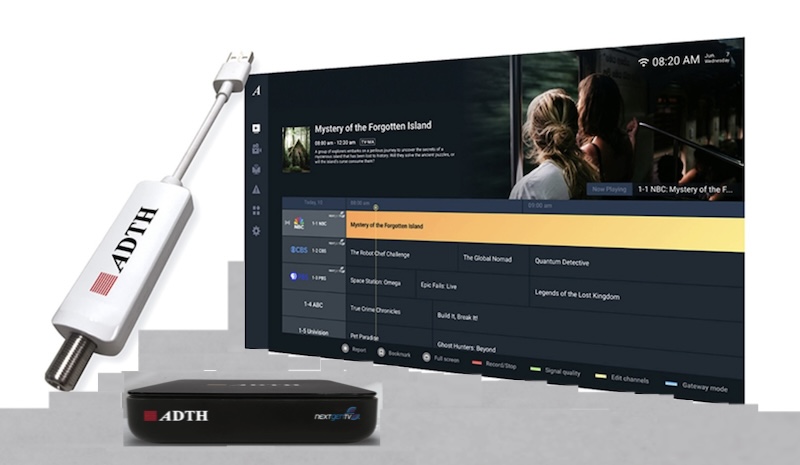
    “We are very excited about the expanded offerings from accessory device manufacturers for NextGen TV. The new low-cost Atlanta  DTH (ADTH) USB receiver, powered by Tolka, is built for existing Android and Fire TV televisions and will, at a very affordable price, expand the reach of NextGen TV into homes who already have those sets. ADTH is also about to introduce a new model that works without an internet connection and will be doing a software update for deployed ADTH devices to give them the same functionality. In addition, Zinwell is adding pause functionality to their accessory device, with an add-on hard disc drive. In 2025, RCA is also coming to market with two new NextGen TV sets that will join TV options already available from Panasonic, Sony, Samsung, Hisense, and TCL,” said Pearl TV managing director Anne Schelle. “We congratulate all of the manufacturers who are selling thousands of receivers each day to consumers looking for the best possible video and audio quality from local stations.” 

    Pearl TV is a business organisation of US broadcast companies with a shared interest in exploring forward-looking broadcasting opportunities, including innovative ways of promoting local broadcast TV content and developing digital media and wireless platforms for the broadcast industry. Pearl’s membership, comprising more than 820 TV stations, includes eight of the largest broadcast companies in America: Cox Media group, Graham Media group, Gray Television, Hearst Television, Nexstar Media group, Sinclair Broadcast group, the E.W. Scripps, and Tegna. 

    Broadcasters are loading up new services with new features for NextGen TV viewers, including interactive gaming options that will be launched by GameLoop. 

    GameLoop TV launches next week in Las Vegas on local NextGen TV channel 3.2 and will bring gaming directly to viewers with no additional hardware or subscriptions required. At the heart of GameLoop’s innovation is the channel’s exciting “play now” feature, which allows NextGen TV viewers to instantly play games showcased on the channel simply using their TV remote or mobile phone. 

    “We also salute TV broadcasters Gray and Sinclair, who are working to bring fun, interactive gaming to the living room through GameLoop – a service that utilises NextGen TV for web-based family fun that will work seamlessly with millions of installed NextGen TV sets. Easy interactivity is literally going to be a game-changer for viewers,” Schelle predicted. 

    High Dynamic Range (HDR) functionality is now live on more than 200 local NextGen TV services throughout the US , with more being added to enhance viewing of key sports games and other spectacles.  Broadcasters are promoting the advantages of NextGen TV this sports season on stations throughout the country and plan to continue these promotions as they continue to rollout HDR and Dolby Atmos services nationwide. 

    A holiday promotion effort in NextGen TV markets that began before December continues through early February, with broadcasters now indicating onscreen to viewers when local NextGen TV programming is available in HDR. 

    “We’re very excited to announce that broadcast stations throughout the country are adding HDR10+ capability in their NextGen TV broadcast services to accommodate a broad array of TV manufacturers. With other flavors of HDR that also may be present in the service, this allows every receiver to present the best picture possible, showing that local television just keeps getting better and better, which is exactly what we promised with the rollout of NextGen TV services,” Schelle said. In addition to providing better video quality through HDR, many markets are adding Dolby Atmos audio coding, which delivers immersive audio capability. 

    “HDR began for sports with the Kentucky Derby last spring. It really made the Olympic Games pop with brilliant video. We know that sports is a big driver for buying new TV sets as well as for enjoying broadcast services — your favorite games look even better in High Dynamic Range,” Schelle said. 

    Throughout the country, local stations not already broadcast on over-the-air ATSC 3.0 transmissions are gaining access to NextGen TV viewers through the innovative addition of more channels through broadcast internet protocol – or broadcast IP. These additional channels are available as NextGen TV channels and have added more choices for viewers in a range of markets, from public to commercial broadcasters who now have their programming available for NextGen TV viewers. 

    Consumers can easily find details of what NextGen TV services are available in their markets by visiting WatchNextGenTV.com, a resource maintained by Pearl that lists individual services by market and a full range of more than 90 NextGen TV receivers and antenna products certified to work seamlessly with the new services. 

  • Long live linear TV, courtesy of NextGenTV

    Long live linear TV, courtesy of NextGenTV

    MUMBAI: Las Vegas. Normally labelled as Sin City. But in April it was all about the future of entertainment technology with the NAB Show opening with a bang. And what a bang it was. It is a hard knock for those who continue to resist the frenetic pace of technological evolution. One of these is ATSC 3.0 which is coming. Yes, even as it is spreading gradually in the US, it is being planned to come to India. That is if Sankhya Labs, Sinclair Broadcast, Doordarshan and Prasar Bharti succeed in its rollout.

    I happened to see some trial broadcasts in the Las Vegas Convention Centre and it was awesome.

    At early stages yet, ATSC 3.0 endeavours to wirelessly transmit data, video and audio, over the air without using the traditional terrestrial frequencies or the 4G, 5G or 6G spectrum. Also known as NextGen TV, it is a digital television standard developed by the Advanced Television Systems Committee (ATSC), offering features such as ultra-high-definition video, high-efficiency video coding (HEVC), high dynamic range (HDR), immersive audio, and interactive capabilities.

    Sankhya Labs has been working on developing semiconductor solutions and software for ATSC 3.0-enabled devices. These solutions encompass various aspects of ATSC 3.0 technology, including receivers, modulators, demodulators, and related software stacks. Sankhya Labs aims to offer cost-effective and scalable solutions to enable the deployment of ATSC 3.0 infrastructure and consumer devices in India and other markets. Currently, it has developed – and continues to develop –  the PCB, the software, the receiver and dongle, and set-top box designs which will then be farmed out for local manufacture.

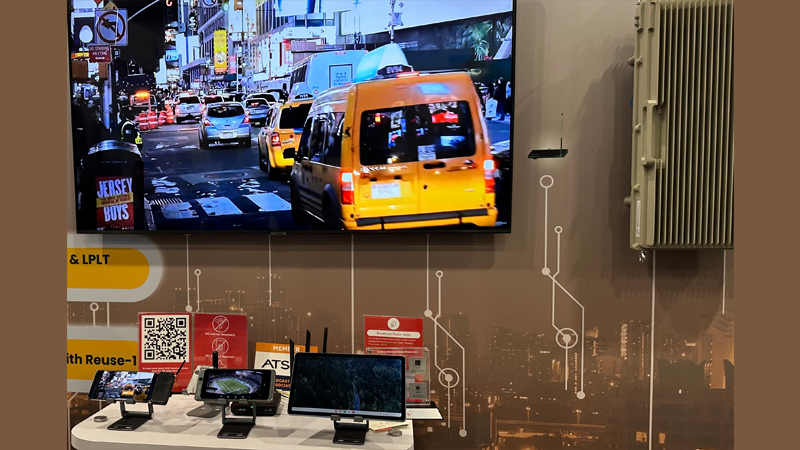
    I happened to see the transmitter developed by Sankhya at the NAB Show which will be mounted – when the service is ripe and ready to be rolled out – next to the cellular towers which dot Indian building terraces in urban and rural India. Then there is the dongle (looking like the early device we used to get connected to the internet) which will act as the receiver and can be attached to an ordinary smartphone with basic video capabilities and receive the transmitted video at almost no cost to the customer. (Remember there are more than 500 million smartphone users in this country and even if 10 per cent of them opt for ATSC 3.0 that will be a humungous base of 50 million viewers) For the home, users will have a set-top box (which Sankhya hopes to gradually decrease in size)  that will sit next to the TV set to receive the signals for family viewing.

    As it does for FreeDish, DD is likely to auction channels to private broadcasters who can reach viewers with another linear service, thus giving traditional TV a new lease on life and advertisers another medium to target the vast masses of television viewers.  This is at a time when YouTube video, Instagram reels, free-to-air TV, and streaming services have totally disrupted satellite and cable pay TV services in India with cord-cutters, cord nevers reaching record highs. The streamers need help to retain clever viewers who are sharing passwords as well as churning when they finish watching shows that interest them in one service or another.

    How long will ATSC 3.0  take to become a reality? Broadcasters, handset manufacturers, telcos have all blackballed it saying that it is a needless platform that is being created. 

    But Sankhya Labs and the NextGenTV committee would like it to spread tomorrow itself. Work has been going on for at least the past three to four years and it might take as much time for the government-owned broadcaster to give it a clear green signal. (I’m crossing my fingers DD moves fast once a government is formed at the Centre post the elections or a private company is given the responsibility of spreading ATSC 3.0 services in a public-private partnership.)  One can be optimistic and only hope that this exciting technology which can lead to the creation of zillions of local channels monitoring local traffic conditions, weather conditions, long-distance medicine, education, etc etc comes quickly enough.

    When it does arrive, it will come with the potential to revolutionise the way we consume our entertainment once again. And oodles of other services.