Tag: ATS

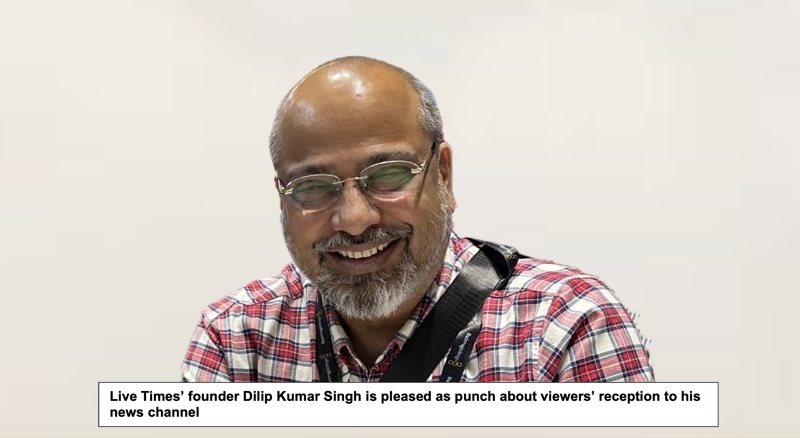
  • Live Times founder Dilip Kumar Singh and his news story

    Live Times founder Dilip Kumar Singh and his news story

    MUMBAI: This is a news channel that seems to be getting Indian viewers’ attention. At least if one goes by BARC numbers for average time spent  (ATS) among the 15+ demographic.

    A press release issued by Live Times, says the global multicast news hub, managed to get an ATS of around 10 minutes  across India and Hindi speaking markets in the past four weeks.The ATS for urban areas like Mumbai was at a remarkable 21 minutes while for Delhi it was  over eight minutes in week 51.  

    “The exceptional ATS numbers are a testament to the trust and loyalty of our viewers, who turn to us for news that not only respects their intelligence but also prioritises the truth. This accomplishment strongly affirms Live Times’ commitment to providing news that people can rely on. Our audience seeks more than just headlines; they desire information that empowers, educates, and inspires,” says Live Times founder & CEO Dilip Kumar Singh. 

    According to him, Live Times’ success is rooted in its unique value proposition—delivering real-time, authentic and accurate news and information that connects deeply with audiences across demographics. With a steadfast commitment to uncovering the truth and addressing public issues that matter, Live Times has become a beacon of reliable news for millions, adds Singh. 

    He points out that at Live Times, it’s all about the interest of viewers. Flagship shows like Live Pradesh, Delhi Ke Dil Mein Kya Hai, and Live Express bring the news closer to home, diving into the stories that shape the audience’s day and impact their future. “Whether it’s breaking headlines, in-depth analyses, or uncovering the stories behind the scenes, Live Times delivers journalism that connects and empowers.” he says. 

    Singh believes that “for advertisers, Live Times offers a golden opportunity to connect with an engaged, diverse audience. By aligning with a platform rooted in integrity and trust, brands can ensure their message resonates deeply and authentically.”

    Are  advertisers listening?

  • Advertisers target rural north & south zone on serials & film-based content: BARC

    Advertisers target rural north & south zone on serials & film-based content: BARC

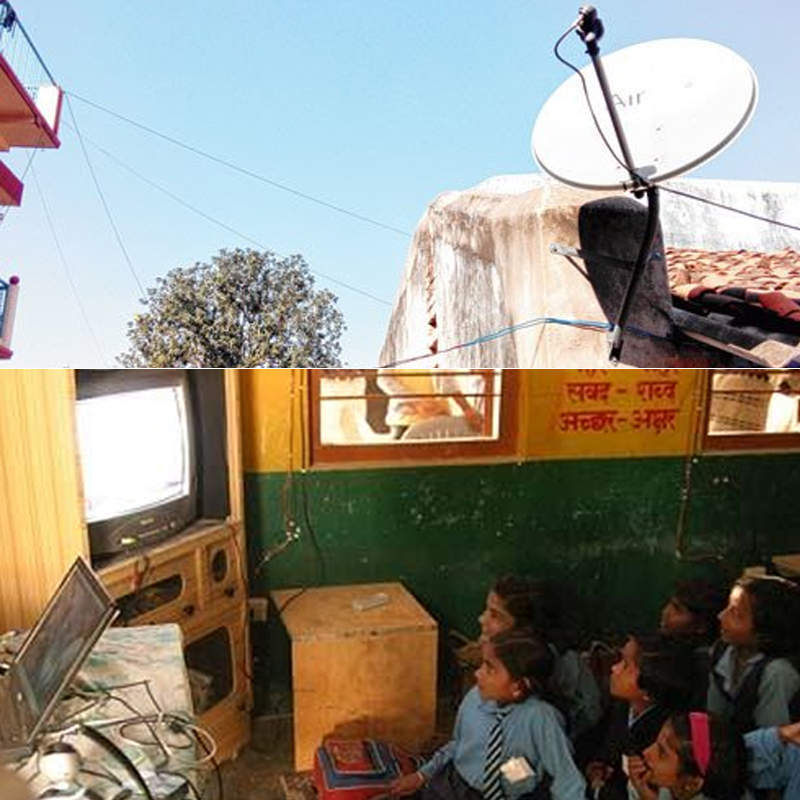
    MUMBAI: None realised the importance of rural market until BARC India started monitoring viewing habits in the countryside. After the TV audience measurement system gave its ratings, the industry woke up to the potential of this market.

    A recent newsletter released by BARC India emphasises on the viewing habits of the viewers on different fronts.

    From one front,  this research explores the advertisers and marketers targeting north and south zone on serials and film-based content to reach their respective audience.

    On an overall level for rural India, serial-based programmes secure the highest share, followed by film-based programmes. This pattern is consistent across zones with the exception of south India. Viewership for serials is driven majorly by the north zone while film-based programmes have maximum viewership in the south zone, which does not come as a surprise.

    public://barc6_0.jpg

    Most of the programme themes are driven by south zone. The only exception is music which is driven almost entirely by the north zone. For broadcasters in the serials and music genre, north rural market is the key.

    For advertisers and marketers targeting north and south zone, serials and film-based content will be the ‘Holy Grail’ to reach their audience respectively as over 30 per cent of the viewership is attributed to each of these content types across zones.

    For marketers targeting west or east zone, frequency-based plans yield results easily. On the other hand, for those targeting north, reach-based plans may be more achievable.

    On an overall level, the south zone registers the highest reach and ATS ( Average Time Spent) among the four zones in rural market. Looking at the west zone, ATS is the second highest after south zone. However, it has relatively lower reach. This shows that audience in the western rural market has lower reach but they spend a high amount of time consuming television content. Conversely, the north zone has the lowest ATS but has a comparatively better reach. One can infer that audience in the north zone does not stick to television viewing for as long as those in other zones.

    The rural viewership pattern

    Urban and rural India follow distinctly different viewing patterns across the day. Rural India starts its day much earlier than urban India around 5am, and continues to have higher viewership until 9am.

    Post 9am, urban India’s viewership catches up and has higher viewership than the rural India throughout the afternoon and evening. Both, urban and rural India see a marginal peak during 2-230pm. However, rural India sees an early spike for prime time as compared to urban India. The highest viewership in rural India is generated during the time-band 830-9pm followed by the time-band 8-830pm.

    Viewership starts declining around 1030pm hinting at an early wrap-up for the day for the rural audience.

    If one compares all the four zones in the rural market, it seems like the viewership is driven by southern rural market followed by the west zone. The lowest viewership in rural market can be observed in the north zone which has the lowest average rating percentage for the entire day.

    public://barc10_0.jpg

    public://barc9_0.jpg

    If one looks at the zone-wise viewership, both weekdays and weekends are driven by the south zone followed by west zone. Overall viewership for weekends is marginally higher than weekdays for rural India. At the zone level, this increase for weekend viewership is the maximum for the west zone and the least for the east zone.

    public://barc8_0.jpg

    public://barc7.jpg

    Viewership differs during prime time

    Millennials in rural India could be the next big target for broadcasters and advertisers to hold on to.

    Viewership in India during prime time is equally divided among both the genders. However, if compared by the four zones, north and west zone have a higher percentage of male viewers (51 per cent  and 52 per cent, respectively) and Millennials (age-group 15-30) form the largest percentage of audience in rural India. The pattern is the same among all the four zones with the exception of south where Gen X (age group 31-50) forms the largest percentage of the audience.

    NCCS C (New Consumer Classification System) has the highest share of viewership among all zones in rural India. While the west zone and the east zone display a composition similar to rural India, the north zone and south zone have some variations. The north zone has a substantially higher composition of NCCS A & NCCS B, while the contribution of NCCS C is lower than the rural India average. Conversely, in the south zone, the contribution of NCCS A is low.

    public://barc5_0.jpg

    Surprisingly, film-based programmes, which have the maximum reach during prime time, have one of the lowest stickiness across rural India for all the four zones. Game/talk/quiz and lifestyle-based programmes can hold the audience for long as they have a healthy ratio for reach to fidelity. In rural India, stickiness for serial-based programs is the highest across programme themes.

    Surprisingly, it is driven mostly by south zone, which had the lowest reach among all zones for this content. Interestingly, if one compares this to the audience composition analysed above, north zone and west zone, which have a higher percentage of male audience, also see higher stickiness for sports programmes. Lifestyle-based content in terms of stickiness has much better ratio of reach to fidelity across zones.

    public://barc4_0.jpg

    public://barc3_0.jpg

    Ad sector popularity

    The top ad sectors by viewership during prime time in rural India are personal care/hygiene, food & beverages, hair care and services etc.

    Personal care/hygiene and hair care sector have a higher share in the north zone. This can also be seen while comparing all the zones for the ‘personal healthcare’ category, where again the north zone takes the lead.

    On the other hand, the south zone is more inclined towards categories such as food and beverages, auto, durables and personal accessories.

    public://barc2_1.jpg

    Switching pattern for GEC & movie genre

    Since most of the TV viewership is generated by GEC and the movie genre, it would be interesting to understand the switching pattern of rural India on a day-part level.

    public://barc1_1.jpg

    As observed in the paragraphs above, throughout the day, most of the switching to or from a channel genre happens due to audience switching the TV on or not. However, it declines during the later time-bands. The only exception is 6pm to 12 midnight where switching between movies and GEC is higher than viewers switching TV on during that time-band (with movies as reference). On comparing switching from movies to GEC genre, switching percentage remains almost comparable throughout the day.

    On the other hand, switching from GEC to movies declines during later time-bands. On an overall level, switching from GEC to movies is seen more often that the switching from movies to GEC.
  • Advertisers target rural north & south zone on serials & film-based content: BARC

    Advertisers target rural north & south zone on serials & film-based content: BARC

    MUMBAI: None realised the importance of rural market until BARC India started monitoring viewing habits in the countryside. After the TV audience measurement system gave its ratings, the industry woke up to the potential of this market.

    A recent newsletter released by BARC India emphasises on the viewing habits of the viewers on different fronts.

    From one front,  this research explores the advertisers and marketers targeting north and south zone on serials and film-based content to reach their respective audience.

    On an overall level for rural India, serial-based programmes secure the highest share, followed by film-based programmes. This pattern is consistent across zones with the exception of south India. Viewership for serials is driven majorly by the north zone while film-based programmes have maximum viewership in the south zone, which does not come as a surprise.

    public://barc6_0.jpg

    Most of the programme themes are driven by south zone. The only exception is music which is driven almost entirely by the north zone. For broadcasters in the serials and music genre, north rural market is the key.

    For advertisers and marketers targeting north and south zone, serials and film-based content will be the ‘Holy Grail’ to reach their audience respectively as over 30 per cent of the viewership is attributed to each of these content types across zones.

    For marketers targeting west or east zone, frequency-based plans yield results easily. On the other hand, for those targeting north, reach-based plans may be more achievable.

    On an overall level, the south zone registers the highest reach and ATS ( Average Time Spent) among the four zones in rural market. Looking at the west zone, ATS is the second highest after south zone. However, it has relatively lower reach. This shows that audience in the western rural market has lower reach but they spend a high amount of time consuming television content. Conversely, the north zone has the lowest ATS but has a comparatively better reach. One can infer that audience in the north zone does not stick to television viewing for as long as those in other zones.

    The rural viewership pattern

    Urban and rural India follow distinctly different viewing patterns across the day. Rural India starts its day much earlier than urban India around 5am, and continues to have higher viewership until 9am.

    Post 9am, urban India’s viewership catches up and has higher viewership than the rural India throughout the afternoon and evening. Both, urban and rural India see a marginal peak during 2-230pm. However, rural India sees an early spike for prime time as compared to urban India. The highest viewership in rural India is generated during the time-band 830-9pm followed by the time-band 8-830pm.

    Viewership starts declining around 1030pm hinting at an early wrap-up for the day for the rural audience.

    If one compares all the four zones in the rural market, it seems like the viewership is driven by southern rural market followed by the west zone. The lowest viewership in rural market can be observed in the north zone which has the lowest average rating percentage for the entire day.

    public://barc10_0.jpg

    public://barc9_0.jpg

    If one looks at the zone-wise viewership, both weekdays and weekends are driven by the south zone followed by west zone. Overall viewership for weekends is marginally higher than weekdays for rural India. At the zone level, this increase for weekend viewership is the maximum for the west zone and the least for the east zone.

    public://barc8_0.jpg

    public://barc7.jpg

    Viewership differs during prime time

    Millennials in rural India could be the next big target for broadcasters and advertisers to hold on to.

    Viewership in India during prime time is equally divided among both the genders. However, if compared by the four zones, north and west zone have a higher percentage of male viewers (51 per cent  and 52 per cent, respectively) and Millennials (age-group 15-30) form the largest percentage of audience in rural India. The pattern is the same among all the four zones with the exception of south where Gen X (age group 31-50) forms the largest percentage of the audience.

    NCCS C (New Consumer Classification System) has the highest share of viewership among all zones in rural India. While the west zone and the east zone display a composition similar to rural India, the north zone and south zone have some variations. The north zone has a substantially higher composition of NCCS A & NCCS B, while the contribution of NCCS C is lower than the rural India average. Conversely, in the south zone, the contribution of NCCS A is low.

    public://barc5_0.jpg

    Surprisingly, film-based programmes, which have the maximum reach during prime time, have one of the lowest stickiness across rural India for all the four zones. Game/talk/quiz and lifestyle-based programmes can hold the audience for long as they have a healthy ratio for reach to fidelity. In rural India, stickiness for serial-based programs is the highest across programme themes.

    Surprisingly, it is driven mostly by south zone, which had the lowest reach among all zones for this content. Interestingly, if one compares this to the audience composition analysed above, north zone and west zone, which have a higher percentage of male audience, also see higher stickiness for sports programmes. Lifestyle-based content in terms of stickiness has much better ratio of reach to fidelity across zones.

    public://barc4_0.jpg

    public://barc3_0.jpg

    Ad sector popularity

    The top ad sectors by viewership during prime time in rural India are personal care/hygiene, food & beverages, hair care and services etc.

    Personal care/hygiene and hair care sector have a higher share in the north zone. This can also be seen while comparing all the zones for the ‘personal healthcare’ category, where again the north zone takes the lead.

    On the other hand, the south zone is more inclined towards categories such as food and beverages, auto, durables and personal accessories.

    public://barc2_1.jpg

    Switching pattern for GEC & movie genre

    Since most of the TV viewership is generated by GEC and the movie genre, it would be interesting to understand the switching pattern of rural India on a day-part level.

    public://barc1_1.jpg

    As observed in the paragraphs above, throughout the day, most of the switching to or from a channel genre happens due to audience switching the TV on or not. However, it declines during the later time-bands. The only exception is 6pm to 12 midnight where switching between movies and GEC is higher than viewers switching TV on during that time-band (with movies as reference). On comparing switching from movies to GEC genre, switching percentage remains almost comparable throughout the day.

    On the other hand, switching from GEC to movies declines during later time-bands. On an overall level, switching from GEC to movies is seen more often that the switching from movies to GEC.

  • Which TV content grabs south India’s eyeballs?

    Which TV content grabs south India’s eyeballs?

    MUMBAI: When we talk about the television industry, everyone is aware that the Hindi-speaking market is vast. However, a significant part of the industry is concentrated in another part of India — the southern market. Its a highly influential market for advertisers.

    A recent newsletter released by the television ratings body Broadcast Audience Research Council (BARC) India ‘South Special Edition’ seeks to answer all the questions as to how the southern India is different from HSM w.r.t. important audience metrics? How southern states differ from each other in terms of programme theme preferences.

    Avg. Time Spent (ATS) vs Opportunity to See (OTS) and performance of product categories? How does the popular Hindi content dubbed in southern languages perform? And, most importantly, what the southern market watches on its television sets?

    As per the BARC study, south India has a lower share in the movies genre as compared to GEC. On the other hand, its share in GEC and news channels is higher than HSM. Also, within the regions, the relative ranking for most genres remains constant across HSM and South.

    public://barc3.jpg

    Surprisingly, programme themes and channel genres do not show the same trends across HSM and South. Serials, which are the staple of GEC channels (which saw the highest share in terms of channel genre), sees a drop in share for South as compared to the share for channel genre.

    Similarly, while movie channels are viewed lesser than HSM, in South, the trend is reversed when it comes to film-based programs i.e. South has a higher share compared to HSM.

    public://barc4.jpg

    The study also shows that South Indian viewership seems to begin earlier in the day than HSM and also end up earlier. South has a higher viewership than HSM only during  early morning hours (05:00-08:00).

    public://barc1.jpg

    Tile the gap between HSM and South reduces marginally during 18:00-21:00  hrs. South seems to have an earlier prime¬ time than HSM. It is clear that South and HSM do not have the same viewership trends.

    public://barc2.jpg

    BARC studies showed that the Southern Market shows the highest inclination towards film-based content followed by serials driven by AP/Telangana and Kerala, respectively. Kerala watches less movies as compared to other markets.

    public://barc5.jpg

    On the other hand, AP/Telangana watches less serials and more of news than other southern markets. In most of the markets, the most watched TV content is film-based followed by serials. Content based on music and tourism is the least popular in southern markets.

    How different are southern states in terms of rural and urban?

    The urban and rural viewership is comparable throughout the day with both seeing a peak during the prime-time. However, as opposed to the rest of the day, during prime-time hours, it is mainly the rural markets which seem to be driving the viewership and not urban markets.

    public://barc8.jpg

    When we look at states within urban and rural markets,  while rural markets have similar viewership trends across states, it is not the same case with urban markets. In urban markets, the viewership among markets differs between prime time hours and non-prime time hours. During non-prime time hours, AP/Telangana has a maximum viewership. After AP/Telangana, the maximum viewership alternates between TN/Pondicherry and Karnataka markets with Kerala having the lowest viewership for most day parts.

    public://barc9.jpg

    However, during prime time hours, this order is completely changed. Urban Karnataka has the maximum viewership post 21:00 hrs and this lead continues into late night  hours as well.

    What is interesting is that even among the rural markets, Karnataka displays similar behaviour with respect to prime time viewership. During late night  hours, Kerala, which is a relatively smaller market, sees the highest viewership.

    public://barc10.jpg

    Conversely, TN/Pondicherry, which is one of the bigger markets during non-primetime hours, shows the least viewership during prime time hours in both rural and urban markets.

    How is Hindi content dubbed in south languages performing?

    Popular content from Hindi GECs is now being dubbed and shown on southern GECs. This phenomenon is seen across all southern states with the exception of Karnataka. Shows from leading channels such as Star Plus (Diya Aur Baati Hum. Siya Ke Ram. etc.), Colors (Naagin. Sasural Simar Ka, Balika Vadhu, etc.), Zee TV (Gangaa, Kumkum Bhagya, Ek Mutthi Aasman, etc.) and Sony (CID, Bade Achhe Lagte Hai, etc.), have been dubbed.

    Interestingly, in AP/Telangana market, none of the channels sees an increase in viewership for Hindi dubbed content. In the other two markets, viz. Kerala and TN/Pondicherry, Hindi dubbed content sees a mixed response with some channels seeing a higher viewership than the original content in regional language.

    In the Kerala market, the highest spike is seen by Asianet Plus. Similarly, in TN/Pondicherry market, maximum growth is seen by Polimer, where the viewership for Hindi dubbed content is more than double that of the original content. This is on the back of several popular shows.

    public://barc11.jpg


  • Which TV content grabs south India’s eyeballs?

    Which TV content grabs south India’s eyeballs?

    MUMBAI: When we talk about the television industry, everyone is aware that the Hindi-speaking market is vast. However, a significant part of the industry is concentrated in another part of India — the southern market. Its a highly influential market for advertisers.

    A recent newsletter released by the television ratings body Broadcast Audience Research Council (BARC) India ‘South Special Edition’ seeks to answer all the questions as to how the southern India is different from HSM w.r.t. important audience metrics? How southern states differ from each other in terms of programme theme preferences.

    Avg. Time Spent (ATS) vs Opportunity to See (OTS) and performance of product categories? How does the popular Hindi content dubbed in southern languages perform? And, most importantly, what the southern market watches on its television sets?

    As per the BARC study, south India has a lower share in the movies genre as compared to GEC. On the other hand, its share in GEC and news channels is higher than HSM. Also, within the regions, the relative ranking for most genres remains constant across HSM and South.

    public://barc3.jpg

    Surprisingly, programme themes and channel genres do not show the same trends across HSM and South. Serials, which are the staple of GEC channels (which saw the highest share in terms of channel genre), sees a drop in share for South as compared to the share for channel genre.

    Similarly, while movie channels are viewed lesser than HSM, in South, the trend is reversed when it comes to film-based programs i.e. South has a higher share compared to HSM.

    public://barc4.jpg

    The study also shows that South Indian viewership seems to begin earlier in the day than HSM and also end up earlier. South has a higher viewership than HSM only during  early morning hours (05:00-08:00).

    public://barc1.jpg

    Tile the gap between HSM and South reduces marginally during 18:00-21:00  hrs. South seems to have an earlier prime¬ time than HSM. It is clear that South and HSM do not have the same viewership trends.

    public://barc2.jpg

    BARC studies showed that the Southern Market shows the highest inclination towards film-based content followed by serials driven by AP/Telangana and Kerala, respectively. Kerala watches less movies as compared to other markets.

    public://barc5.jpg

    On the other hand, AP/Telangana watches less serials and more of news than other southern markets. In most of the markets, the most watched TV content is film-based followed by serials. Content based on music and tourism is the least popular in southern markets.

    How different are southern states in terms of rural and urban?

    The urban and rural viewership is comparable throughout the day with both seeing a peak during the prime-time. However, as opposed to the rest of the day, during prime-time hours, it is mainly the rural markets which seem to be driving the viewership and not urban markets.

    public://barc8.jpg

    When we look at states within urban and rural markets,  while rural markets have similar viewership trends across states, it is not the same case with urban markets. In urban markets, the viewership among markets differs between prime time hours and non-prime time hours. During non-prime time hours, AP/Telangana has a maximum viewership. After AP/Telangana, the maximum viewership alternates between TN/Pondicherry and Karnataka markets with Kerala having the lowest viewership for most day parts.

    public://barc9.jpg

    However, during prime time hours, this order is completely changed. Urban Karnataka has the maximum viewership post 21:00 hrs and this lead continues into late night  hours as well.

    What is interesting is that even among the rural markets, Karnataka displays similar behaviour with respect to prime time viewership. During late night  hours, Kerala, which is a relatively smaller market, sees the highest viewership.

    public://barc10.jpg

    Conversely, TN/Pondicherry, which is one of the bigger markets during non-primetime hours, shows the least viewership during prime time hours in both rural and urban markets.

    How is Hindi content dubbed in south languages performing?

    Popular content from Hindi GECs is now being dubbed and shown on southern GECs. This phenomenon is seen across all southern states with the exception of Karnataka. Shows from leading channels such as Star Plus (Diya Aur Baati Hum. Siya Ke Ram. etc.), Colors (Naagin. Sasural Simar Ka, Balika Vadhu, etc.), Zee TV (Gangaa, Kumkum Bhagya, Ek Mutthi Aasman, etc.) and Sony (CID, Bade Achhe Lagte Hai, etc.), have been dubbed.

    Interestingly, in AP/Telangana market, none of the channels sees an increase in viewership for Hindi dubbed content. In the other two markets, viz. Kerala and TN/Pondicherry, Hindi dubbed content sees a mixed response with some channels seeing a higher viewership than the original content in regional language.

    In the Kerala market, the highest spike is seen by Asianet Plus. Similarly, in TN/Pondicherry market, maximum growth is seen by Polimer, where the viewership for Hindi dubbed content is more than double that of the original content. This is on the back of several popular shows.

    public://barc11.jpg


  • Living Foodz, for the premium and evolved

    Living Foodz, for the premium and evolved

    MUMBAI: Alpha Club, the recently launched monthly communique by BARC that offers analysis and insights into NCCS A1, A2, and A3 viewership of 6 Mega Cities has shared GTVTs of channels under the food and lifestyle genre. Living Foodz, the premium foodtainment channel has sweeped the GTVTs with 50% share as compared to the complete genre by achieving 1591 GTVTs in this exclusive audience pie.

    With the goal of building robustness into the analysis, Alpha Club presents cumulative data of preceding 4 weeks for Rat’000, Coverage’000, and ATS(Viewer). Channels for which data has been released for all 4 weeks are covered.

    With consistent innovation in programming, marketing and distribution to make Food Fun, Living Foodz has maintained its pole position and with new line up of shows the channel is sure to enthrall one and all. 

    Data: Market Share & Avg weekly GTVT, TG: 4+ Mega cities NCCS A1, Period: Wk 41 – WK 44. Source: BARC

  • DD National sees major ratings surge with BARC rural data

    DD National sees major ratings surge with BARC rural data

    NEW DELHI: Doordarshan, which was not long back irked at being ignored by the Broadcast Audience Research Council (BARC) India, has emerged as the most watched channel in terms of time spent per viewer and has left behind top touted Hindi general entertainment channels (GECs) with the release of the rural ratings data.


    DD National registered an Average Time Spent (ATS) of 53 minutes and 39 seconds, which is the highest among Hindi GECs in week 41 according to BARC ratings.


    According to DD, this indicated that after tuning to the channel, viewers preferred to continuously watch the channel for a longer duration of time rather than frequently switching the channels, as compared to other GECs.


    The channel also witnessed a significant rise in ratings and moved upto the seventh position according to BARC data in Hindi Speaking Markets (HSM), NCCS All, which comprises All India (U+R) in the week 41.


    According to the data, the channel’s gross viewership in lakhs (GVL) rose from 479.9 lakhs in week 40 to a “massive” 4040.5 lakhs in week 41. “This monumental development comes in as BARC released the much awaited All India data, which includes rural India for the very first time,” DD said.


    Of the total 153.5 million TV households tracked by BARC, representing All India and all modes of signal, 77.5 million are urban TV households and 76 million are rural TV households.


    According to DD, this spurt in the channel’s viewership can also be attributed to its current strategy of providing viewers with fresh content, supplemented by a robust publicity campaign; thus creating an active awareness of the changing face of Doordarshan.