Tag: Atmanirbhar Bharat

  • Deadline extended for Pmvision2art creative contest

    Deadline extended for Pmvision2art creative contest

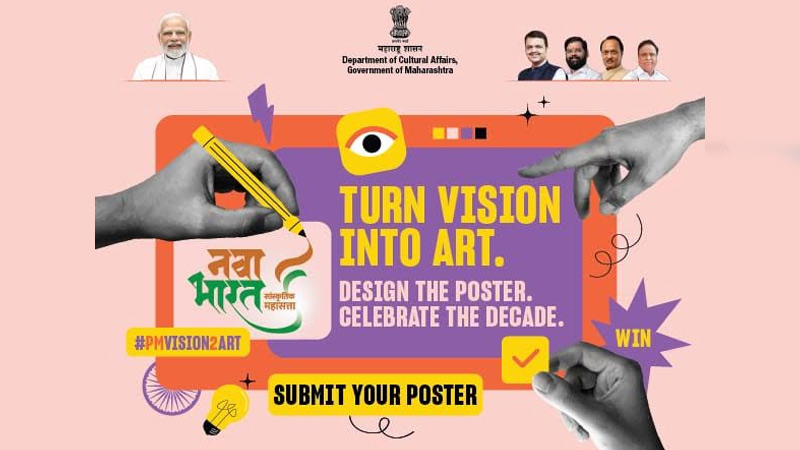
    MUMBAI: Brush up your creativity. The government of Maharashtra’s department of cultural afairs, in collaboration with the Advertising Agencies Association of India, has extended the deadline for the Turn Vision into Art: Pmvision2art campaign to 15th October 2025.

    The nationwide initiative invites designers, agencies, and creators to craft iconic posters celebrating India’s transformative programmes over the past decade, from Make in India and Digital India to Swachh Bharat AbhiyanAtmanirbhar Bharat, Beti Bachao Beti Padhao, Skill India, and the International Day of Yoga.

    Seventy-five winning entries will be showcased at major art galleries, featured in a commemorative coffee-table book, and highlighted on national platforms to inspire millions. Poster submissions should be A2 size and entries can be made via www.pmvision2art.com.

    Minister of cultural affairs Ashish Shelar said, “Creativity has the power to shape how we remember history and imagine the future. Turn Vision into Art is our invitation to the nation’s creative minds to capture the essence of India’s progress through art.”

    With this extension, the campaign offers artists a golden opportunity to make their mark while celebrating a decade of India’s visionary initiatives.

  • Vandana Singh takes the helm of FAII’s Aviation Cargo Wing

    Vandana Singh takes the helm of FAII’s Aviation Cargo Wing

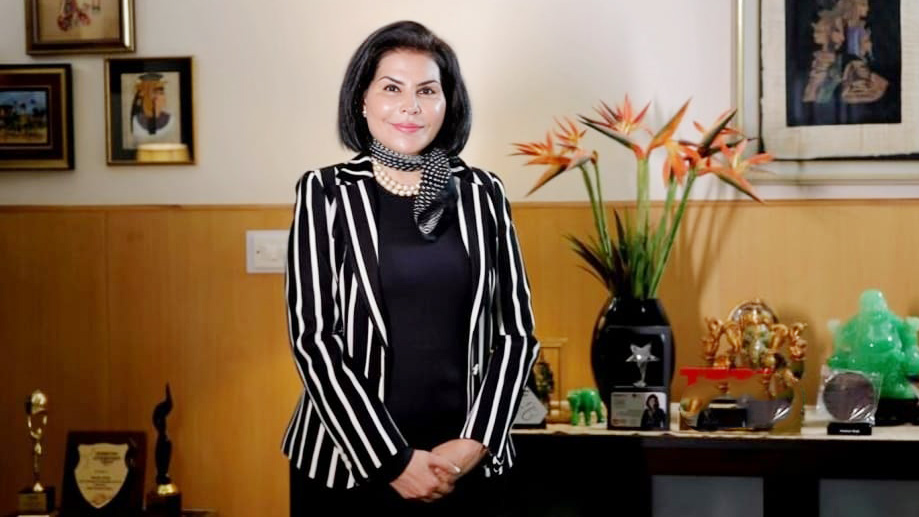
    MUMBAI: India’s aviation cargo just got a major lift-off! Vandana Singh, with over 28 years of experience in aviation and logistics, has been appointed as the new chairperson of the Aviation Cargo Wing at the Federation of Aviation Industry in India (FAII). With her at the helm, the sector is set to soar to new heights.

    Speaking about Singh’s appointment FAII director general Arun Kumar Sharma remarked, “Her expertise in aviation cargo will be pivotal in driving innovation, boosting global collaboration, and positioning India as a leader in the sector.”

    Singh, added, “This is an incredible opportunity to shape the future of India’s aviation sector and enhance its global standing. Together, we will build a robust ecosystem that’s ready for the future.”

    Known for her innovative approach and strategic leadership, Singh aims to revolutionise India’s aviation cargo sector, driving efficiency and sustainability while aligning with the national objectives of ‘Make in India’ and ‘Atmanirbhar Bharat.’ Her appointment signals FAII’s deep commitment to advancing India’s aviation industry in sync with the nation’s growth trajectory.
     

  • Hyundai powers ‘Atmanirbhar Bharat’ with localisation and EV breakthrough

    Hyundai powers ‘Atmanirbhar Bharat’ with localisation and EV breakthrough

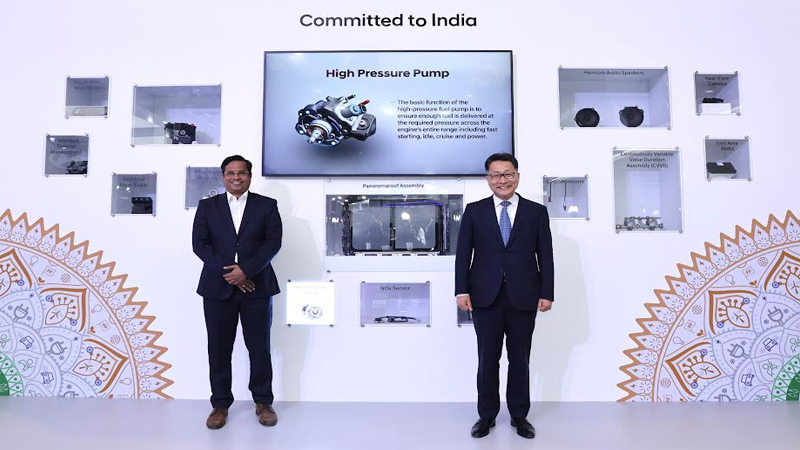
    MUMBAI: Hyundai Motor India Limited (HMIL) isn’t just making cars; it’s making waves. With a roaring 92 per cent localisation in manufacturing and a game-changing battery-pack assembly plant in Chennai, Hyundai is taking its ‘Make-in-India’ commitment to full throttle. If this isn’t a rev-up moment for India’s automotive landscape, we don’t know what is.

    Let’s talk numbers—1,238 indigenised parts, 194 vendors, and a whopping $672 million in forex savings (over Rs 5,678 crore) since 2019. Hyundai’s localisation journey is no leisurely Sunday drive; it’s a turbocharged race to leverage India’s resources and engineering talent.

    Hyundai’s whole-time director & chief manufacturing officer, Gopalakrishnan Chathapuram Sivaramakrishnan, put it perfectly, “Our indigenisation aligns seamlessly with India’s ‘Atmanirbhar Bharat’ vision. The launch of the battery-pack assembly plant is not just a milestone; it’s a testament to our commitment to delivering world-class technology made in India.”

    Oh, and did we mention that Hyundai’s Creta Electric now boasts locally assembled battery packs? Talk about an electrifying debut!

    Why is everyone talking about Chennai? Because Hyundai and Mobis India have launched a state-of-the-art battery-pack assembly plant, complete with an annual capacity of 75,000 packs in phase one. Whether it’s NMC (Nickel-Manganese-Cobalt Oxide) or LFP (Lithium-Iron-Phosphate) batteries, this facility has it all.

    Hyundai isn’t just building cars; it’s building them with 100 per cent locally sourced components like alternators, alloy wheels, catalytic converters, and shark fin antennas. Fancy tech like tyre pressure monitoring systems and panoramic sunroofs? Yep, localised too.

    The company is also looking ahead with plans to replicate this success at its Talegaon manufacturing plant in Maharashtra. Can we hear a round of applause for the future?

    In its localisation journey, Hyundai isn’t just saving forex; it’s creating jobs—1,400 direct employment opportunities, to be exact. The company’s engineering prowess and strategic partnerships are redefining what it means to be ‘Atmanirbhar’.

    In a world racing toward electric and sustainable solutions, Hyundai’s efforts are more than just industry milestones—they’re a blueprint for automotive evolution. The localisation strategy isn’t just a business move; it’s a bold statement. And with the Creta Electric leading the charge, Hyundai is proving that Indian manufacturing isn’t just capable; it’s competitive.

  • Where dreams take flight: ABP Live’s Future Forward Startup Conclave 2024

    Where dreams take flight: ABP Live’s Future Forward Startup Conclave 2024

    MUMBAI: In a land brimming with ideas and untamed ambition, startups are the modern-day dreamers charting a bold path through challenges and uncertainties. Their journey is fueled by an insatiable hunger for recognition—the kind that cements their place in the nation’s story. And what could be more exhilarating than earning a spotlight on a national platform?

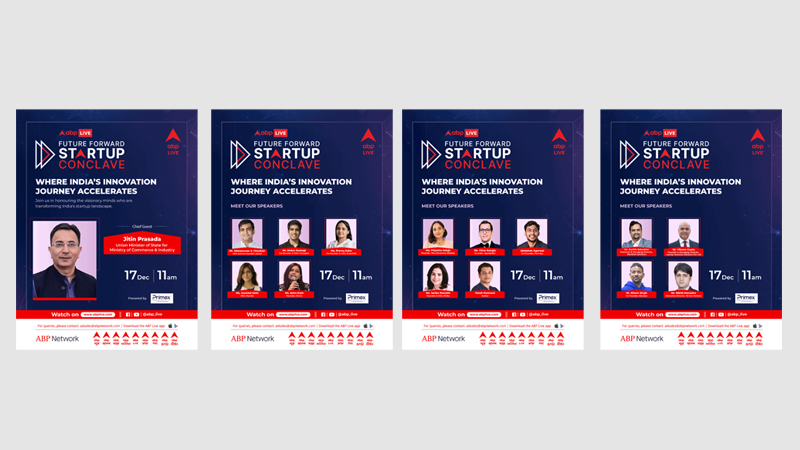
    This 17 December, ABP Live raises the curtain on Future Forward Startup Conclave 2024 in the heart of New Delhi. A celebration of grit, innovation, and the audacious spirit of Indian entrepreneurship, this premier gathering promises to be a melting pot of ideas and possibilities. It’s not just an event; it’s where visionaries meet their moment, where leaders, innovators, and changemakers converge to script the next chapter of India’s startup saga.

    Anticipation runs high. The stakes are real. The spotlight is waiting. Are you ready to be part of the revolution?

    The event will begin with a keynote address by Union minister of state for Commerce, Industry, and Electronics & IT, Jitin Prasada. This will be followed by engaging discussions led by some of the country’s most innovative leaders, including:

    1   Daalchini co-founder & CEO, Prerna Kalra

    2   The Cinnamon Kitchen founder, Priyasha Saluja

    3   Flyrobe CEO, Aanchal Saini

    4   Classplus co-founder & CEO, Mukul Rustagi

    5   Clovia co-founder, Neha Kant

    6   AppMySite founder, Vikas Nangia

    7   Zostel co-founder & CEO, Dharamveer Singh Chouhan

    8   JiViSa founder & CEO, Sarika Pancchi

    9   Farmley co-founder, Abhishek Agarwal

    10  Vertex Venture executive director, Nikhil Marwaha

    11  Bluetea founder, Nitesh Singh

    12   Blackhat Syncidus chairman & MD, Sachin Salunkhe

    13   IvyCap Ventures founder & MD, Vikram Gupta

    14   Acclaimed author, Harsh Pamnani

    As of May 2024, India has solidified its position as the world’s third-largest startup ecosystem, boasting a valuation of $349.67 billion. With over 1.25 lakh startups and 110 unicorns, the country has emerged as a global leader in innovation, particularly in sectors such as fintech, healthcare, and technology.

    According to the Confederation of Indian Industry (CII), Indian startups are projected to contribute an additional $1 trillion to the nation’s economy by 2029-30. The CII further anticipates the emergence of 300 new unicorns between 2024 and 2035, underscoring the sector’s significant potential for growth and its role in shaping India’s economic future.

    Initiatives like Startup India and Atmanirbhar Bharat have played a pivotal role in propelling India to the forefront of global innovation, creating jobs, driving economic growth, and earning international recognition.

    Audiences can witness the event live on www.abpLive.com on 17 December from 11 AM.

  • GUEST ARTICLE: How marketers can free their digital campaigns from poor media quality

    GUEST ARTICLE: How marketers can free their digital campaigns from poor media quality

    Mumbai: India recently celebrated its 75th Independence Day—a notable landmark to look back at and cherish all the achievements of our young yet grandiose nation. Our march towards progress, led by our leaders, has witnessed the evolution of brand India. The influence of marketing strategies is evident in the making of brand India; especially, the smart and catchy “Atmanirbhar Bharat” movement. Now, countries have become brands and navigated their way to the hearts of the masses. However, it is important to note that marketers still face an uphill battle when it comes to achieving independence from poor media quality. A new Juniper Research study has found that the value of digital advertising spend lost to fraud will reach $68 billion globally in 2022, rising from $59 billion in 2021.

    Going with the theme of the month-Independence Day-let us look at a few solutions designed to help marketers overcome every challenge and take advantage of every opportunity that digital media presents to gain independence from poor media quality.

    Contextual targeting for stronger consumer connections: Google recently announced that cookie depreciation has been delayed to 2024, allowing more time for marketers to adapt and strategize for the seismic transition of cookie-less ad targeting. Advertisers need solutions for reaching their desired audiences in suitable spaces, and contextual targeting solutions deliver precision to maximise the impact without relying on third-party cookies. Artificial intelligence (AI) and machine learning (ML)-backed technology solutions comprehend content the way a human would, ensuring that your message reaches the consumers who will connect the most with your brand.

    Integral Ad Science (IAS) recently released a study titled “Ad Context & Attention” conducted in partnership with Tobii, the global leader in eye tracking and a pioneer in attention computing. The study revealed how increased consumer attention to contextually relevant ads leads to greater purchase intent and brand favorability. Contextual relevance was effective in generating a positive impact on brand engagement, favorability, and memorability. Key findings from the study are mentioned below:

        Contextual targeting strategies yield stronger consumer attention

        Contextually relevant ads drive outcomes, significantly boosting brand favorability and consumer purchase intent

        In-context ads generate higher memorability and increase brand recall and awareness among consumers

    More attention means better conversion: Marketers who rely heavily on digital advertising constantly emphasise the ever-increasing and high cost of digital advertising. Therefore, it becomes essential to understand and implement solutions that tackle low attention in digital marketing. For digital ads to make an impact, they need to be seen — not just served. However, as many as one-third of digital ads go unseen by consumers in certain environments.

    In today’s world, marketers need to reach the right consumers, in the right places, and in the appropriate context to help build a connection between the potential customers and the brand. Before this happens, ads need the opportunity to be viewable. To emphasise the importance of the environment or consumer interaction, a prime example is avoiding the placement of a car ad on a news report about a car crash. Such an ad placement is unsuitable for a car manufacturer. Interestingly, IAS’ research on whether media quality drives attention and outcomes uncovered that viewability and time-in-view have a medium correlation (which intuitively makes sense). Moreover, when only looking at impressions on contextually relevant pages (i.e., a Toyota ad on an automotive site), the correlation becomes more vital. For example, when we analysed the automotive vertical, we saw that when the context was relevant and optimised for viewability, there was an 8.3-second increase in time-in-view for every 10 per cent increase in viewability rates. This was 2.4x higher than in a non-optimized context.

    Here’s a preview of what we discovered:

        Time-in-view increases as viewability and brand safety increase

        57 per cent increase in conversions for viewable and brand-safe impressions compared to non-viewable and not safe

        171 per cent increase in conversions for impressions with time-in-view greater than 15 seconds

    Attention remains the bedrock of media quality assurance. The longer your ads are in front of consumers—in the right environment—the greater the opportunity to leave an impression.

    Use technology to optimise highly effective advertising campaigns: When you are building a brand and trying to establish a connection with a potential customer, every moment and impression counts. For example, total visibility, a solution from IAS, helps advertisers gain impression-level financial insights and media quality verification to find the true cost of flagged media. Total visibility saves advertisers an average of 24 per cent of the budget that would otherwise be lost in the supply chain.

    In addition, IAS’ automated tag solution with Google reduces tag wrapping time to seconds, provides mid-flight optimization, and streamlines reporting, so you can launch and modify campaigns faster.

    As automated ad sales gain traction and sophistication around the world, media quality levels will also rise. Programmatic solutions will help marketers and advertisers alike take their digital campaigns to the next level. For the modern-day marketer, it is imperative to know exactly where every rupee of their ad spend goes. With the right technology by your side, it becomes easier to maximise your media spending and minimise waste. To gain independence from poor media quality, marketers must take control by using technological solutions to ensure their digital advertising campaigns are highly efficient.

    The author of this article is IAS’ India lead for strategic partnerships Saurabh Khattar.

  • SAP, TV9 Network join hands to empower and celebrate India’s SMEs

    SAP, TV9 Network join hands to empower and celebrate India’s SMEs

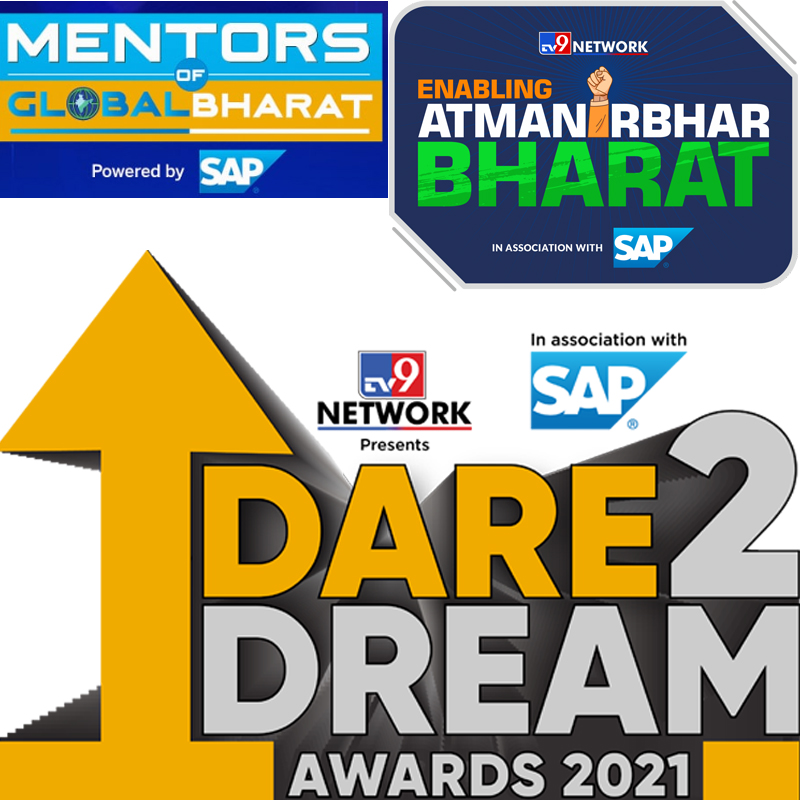
    Mumbai: After the stupendous success of the ‘Leaders of Global Bharat’ series that aimed at empowering Indian SMEs hit hard by pandemic-induced lockdowns last year, TV9 Network and SAP India have again joined hands to forge two pioneering initiatives to help homegrown businesses rise and shine in enabling an Atmanirbhar Bharat.

    With the objective to engage our business heroes from SMEs in more meaningful pursuits to inspire a whole new generation to take on the mantle of entrepreneurship and also acknowledge their contribution to India’s growth, SAP India and TV9 Network announced the launch of Mentors of Global Bharat series and Dare2Dream Awards 2021.

    These two ambitious programmes were announced at Enabling Atmanirbhar Bharat forum, which saw participation from technology thought leaders, eminent policymakers, and business stalwarts.

    Stating that TV9 Network is happy to be associated with SAP in this exciting journey, TV9 Network chief growth officer (television & digital), Raktim Das said, “SME sector is indeed the growth locomotive of Indian business & economy. They provide critical depth to the manufacturing and service sectors, foster entrepreneurship, and generate substantial employment. Enabling and empowering them to build an Atmanirbhar Bharat is an imperative.”

    “While Mentors of Global Bharat will be a platform where aspiring entrepreneurs will meet business icons and get to learn from their success stories and business best practices; Dare2Dream Awards will look at recognizing business leaders who had the resilience to not only tide over the pandemic induced crisis but also come out stronger by resetting their business models,” added Das.

    Commenting on the programme, SAP president of Asia Pacific – Japan Paul Marriott said, “We have seen the unprecedented adverse impact of the pandemic on business and economy – with supply chains being disrupted and demand drying up. There is no playbook or prescription that can guide businesses to emerge from such impact and resurrect themselves rapidly.”

    “In the many interactions that we have had with our SME customers, we realised that many entrepreneurs felt the need to interact with mentors who have successfully traversed the same path before. Peer-to-peer learning and recognition of digital-led innovation are both very important in these times and any platform that facilitates these is a step in the right direction,” he added.

    On SAP’s constant endeavour to empower homegrown businesses, SAP Indian subcontinent president and MD Kulmeet Bawa said, “Our Global Bharat program was introduced to support MSMEs last year. Taking this program forward, we are today launching these two pioneering initiatives.”  

    “While the Mentors of Global Bharat programme is designed to help SME entrepreneurs to learn and get inspired by industry leaders and peers who have successfully navigated the new normal, the Dare2Dream Awards series was established to recognize visionaries in the SME sector who have demonstrated innovation and digital mindset and create business impact in adverse times,” Bawa added.  

    Terming it one of the most required programmes aimed at helping entrepreneurs, SAP India midmarket vice president Subramanian Ananthapadmanabhan said, “Whether one is just starting out or looking to improve their SME’s quality and turnover, it can be hard to know what direction to go next and it’s completely normal. No business owner knows everything at the start. That’s part of the reason why being mentored as a business owner is such a brilliant idea.”

    The series was launched in Enabling Atmanirbhar Bharat forum which saw participation from eminent policymakers 15th Finance Commission chairman NK Singh; Noted economist and former chief economic advisor Dr Arvind Virmani, and SIDBI chairman Sivasubramanian Ramann.

    Speaking on the role of MSMEs in enabling an Atmanirbhar Bharat, Singh said, “It’s a force multiplier. India’s quest for becoming a $5 tn economy and more rests majorly on the SME sector. The quest for generating gainful employment is also primarily dependent on how we provide a fillip to the small and medium businesses. I regard our homegrown businesses central to India’s quest for increasing productivity and efficiency and also emerge as a leading global player.”

    Dr Arvind Virmani said, “We must ensure that there is a level playing for our SMEs. The taxation reforms for new manufacturing enterprises is a welcome step. SMEs are critical to India’s inclusive growth and to ensure that as a country we sustain a growth momentum for the next 30 years. Corporations like SAP will drive productivity to make SMEs successful.”

    Mentors of Global Bharat got a shot in the arm with Paramount Cables chairman and CEO Sanjay Aggarwal and Insecticides (India) Ltd managing director Rajesh Aggarwal, who joined as mentors for the initiative. They also lauded the objective behind the mentorship programme.

    More industry leaders will be joining as Mentors of Global Bharat in the coming weeks.

    Watch the full episode here:

    https://www.facebook.com/TV9Bharatvarsh/videos/851419602205284

    To know more about the initiative, visit: https://www.growthmattersforum.com/global_bharat_program

    https://growthmattersforum.com/new-launch/dare2dream-awards-and-mentors-of-global-bharat/