Tag: ATM

  • SC refuses to stay demonetisation

    SC refuses to stay demonetisation

    MUMBAI: The Supreme Court of India on Tuesday refused to stay the Central Government’s notification demonetising Rs 500 and Rs 1,000 currency notes but asked it to enlist the measures to minimise public inconvenience. It asked the Centre to take immediate steps to alleviate the hardships of the common man. “Discontinuing of higher denomination notes appears to be carpet bombing, and not a surgical strike,” the court said.

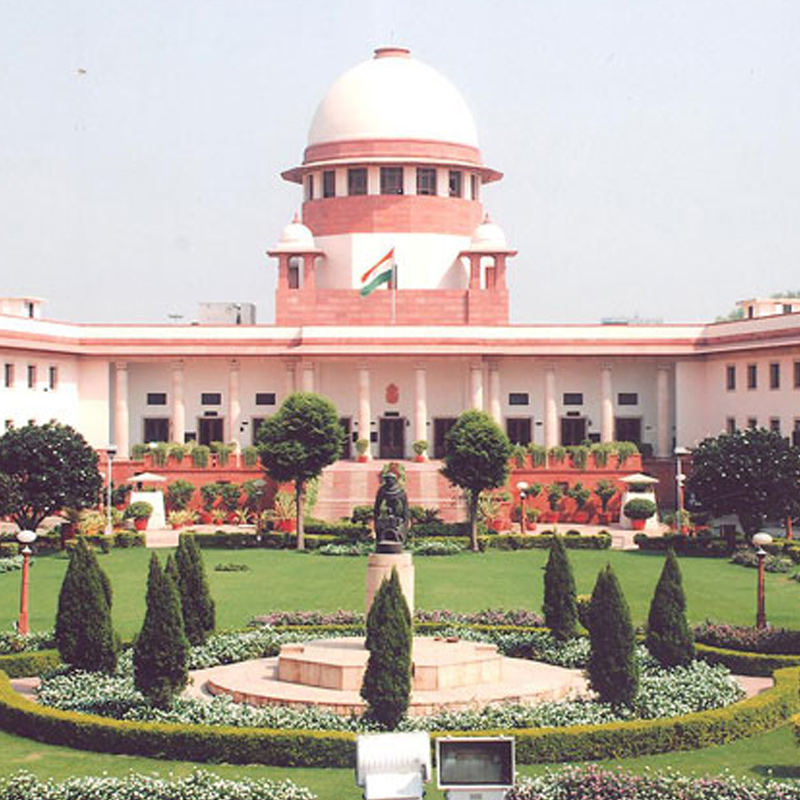
    The apex court was hearing a bunch of petitions demanding the rollback of the decision to scrap old notes. Without issuing any notice to the RBI or the Centre, the apex court posted the matter for further hearing on 25 November. “We will not be granting any stay,” a bench comprising Chief Justice TS Thakur and DY Chandrachud said. The remarks were made after some advocates insisted on a stay.

    Senior advocate Kapil Sibal, however, said he was not seeking a stay on the notification but seeking answers from the government about the steps taken to lessen public inconvenience. The bench asked attorney-general Mukul Rohatgi to file an affidavit about the measures already undertaken by the government and the Reserve Bank of India to minimise public inconvenience and the steps likely to be taken in future.

    The Centre, which had filed a caveat in the matter, sought dismissal of the petitions challenging demonetisation on several grounds including that they were “misconceived”. Rohatgi outlined the idea behind demonetisation and said large number of counterfeit currency has been used to finance terrorism in various parts of the country including in Jammu and Kashmir and northeastern states.

    Rohatgi informed the bench that Rs 3.25 lakh crore were deposited in the banks since 10 November, and Rs 11 lakh crore would be added in the next few days. He also said there were as many as 24 crore bank accounts including 22 crore opened under the ‘Jan Dhan Scheme’, and the Centre was hopeful to “ramp up” the outflow of the cash to banks, post offices and two lakh ATMs across the country.

  • TV production temporarily impacted by cursed Rs 500-1000 notes

    TV production temporarily impacted by cursed Rs 500-1000 notes

    MUMBAI: In what may be called a Herculean step, PM Narendra Modi banned Rs. 500 and Rs. 1000 notes as of midnight intervening 8 and 9 November. His live television broadcast came as a surprise to millions of unassuming Indians and the world at large, to say the least.

    Once understanding of the gravity of his announcement hit, throngs rushed to the ATMs, super markets, and chemist shops in a bid to rid themselves of the cursed notes which were to transform into waste paper overnight. In fact, retail shopping giant Big Bazaar, luxe watch chain Ethos, among many others seized this opportunity and allowed shoppers in till midnight, rightly expecting a rush. Petrol stations saw long queues even as late as the night of 9 November as desperate Indians tried to shed their 500 and 1000 notes. Foreign tourists despaired about the dud notes they had in their possession, as they neither hold bank account or post office accounts; the only currency they had was useless to them.

    By demonetizing Rs 500 and Rs 1000 notes, Modi has taken a bold stance to curb the raging black money menace and counterfeit currency that has been gnawing at the country’s economy for decades. The speed at which everything had transpired was astonishing, and many netizens lauded the move on social media.

    While this historic move is expected to contribute greatly towards nation-building, the transition phase will not be smooth. With banks shut for another day, ATMs dysfunctional temporarily until new legit denominations are restored in the banking system, life is proving tough for the public, to put it mildly. Different sectors have braced up for the varied impact this decision will bring, including the Indian television production industry.

    “For production houses like us, there are certain requirements for action props — flowers, food items, etc, which we usually buy in cash. Moreover, everyone’s travel and other conveyance compensation are also paid in cash. Not to mention the daily labour and daily-wage workers that a shoot employs… so yes, this ban has definitely created an a problem, especially with the banks shut,” explains Sol Production’s Fazila Allana.

    “Our ongoing shooting in Delhi for the show ‘Small Money Big Makeover’ which airs on FYI is currently stuck. It requires us to go out and buy stuff from the local market, and with today’s cash crunch situation, that is difficult,” she adds.

    Allana isn’t hindered by that, however, as she strongly believes that it is only temporary. “In the long term, I believe it is good for the industry. “A lot of these union workers often used to insist on cash payments, but now this sector can be regulated more effectively.”

    Asked if any of the long-running daily shows would be affected by this temporary turmoil, Allana reassured that it was highly unlikely. “Mega serials, as they are often called, will be the least affected as their shoots and contracts with artistes etc mostly operate on a monthly basis. They might be slightly inconvenienced by the sudden prop requirements, but that is all.”

    Allana, however, expressed concern over the lack of clarity on the upper limits of withdrawal for companies and the corporate, as it will be next to impossible to function if the cap for company usage is also Rs 2000 per day.

    BBC Worldwide India SVP & GM Myleeta Aga has welcomed the Prime Minister’s bold move calling it ” good to happen” to our industry.

    “There will be inconvenience, but we should all manage the inconvenience. It won’t stop our work. We mostly function with partners with whom we have long-term associations. They too understand the current situation, and are cooperating accordingly. We can use credit notes and the right available denominations for the next few days. As long as they are providing a legit service and are being paid in a legit way, there is nothing to worry about,” she adds.

    “The industry simply needs to be mindful while making cash payments in these two to three days,” says the optimistic CEO of The Contiloe Entertainment, Abhimanyu Singh.

    Asked if the TV industry will be majorly affected by this crackdown on black money hoarders, Singh says, “I don’t think the TV industry has something to worry about, most of our accounts are clean and every transaction is accounted for.”

    “In the short run, businesses will have to compromise with the change but I have faith the government has thought this out, and will effectively take action to normalise the situation. I don’t believe the prime minister would want businesses to shut down,” Singh added.
  • TV production temporarily impacted by cursed Rs 500-1000 notes

    TV production temporarily impacted by cursed Rs 500-1000 notes

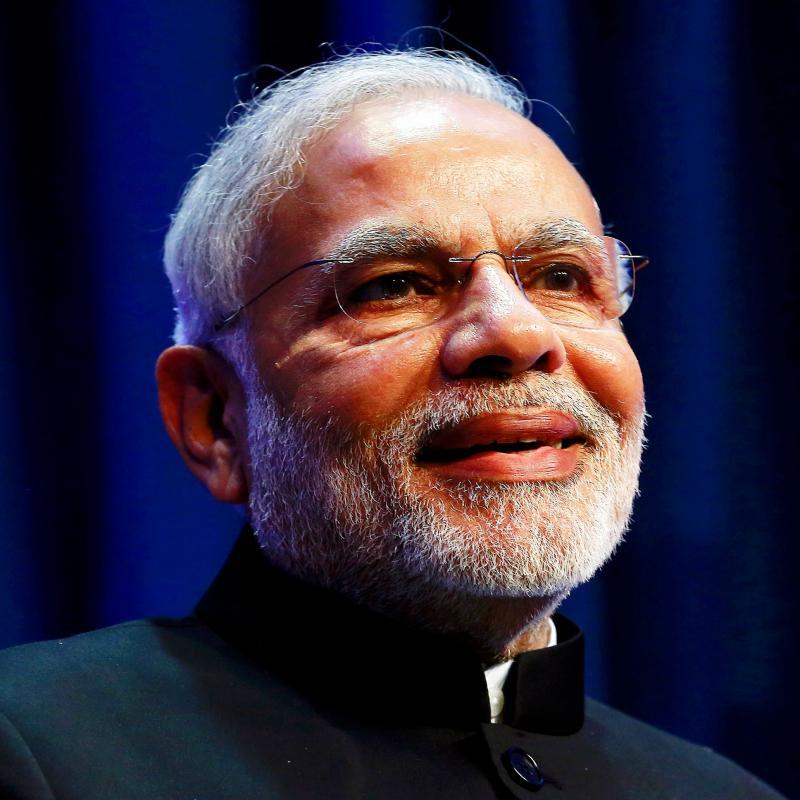
    MUMBAI: In what may be called a Herculean step, PM Narendra Modi banned Rs. 500 and Rs. 1000 notes as of midnight intervening 8 and 9 November. His live television broadcast came as a surprise to millions of unassuming Indians and the world at large, to say the least.

    Once understanding of the gravity of his announcement hit, throngs rushed to the ATMs, super markets, and chemist shops in a bid to rid themselves of the cursed notes which were to transform into waste paper overnight. In fact, retail shopping giant Big Bazaar, luxe watch chain Ethos, among many others seized this opportunity and allowed shoppers in till midnight, rightly expecting a rush. Petrol stations saw long queues even as late as the night of 9 November as desperate Indians tried to shed their 500 and 1000 notes. Foreign tourists despaired about the dud notes they had in their possession, as they neither hold bank account or post office accounts; the only currency they had was useless to them.

    By demonetizing Rs 500 and Rs 1000 notes, Modi has taken a bold stance to curb the raging black money menace and counterfeit currency that has been gnawing at the country’s economy for decades. The speed at which everything had transpired was astonishing, and many netizens lauded the move on social media.

    While this historic move is expected to contribute greatly towards nation-building, the transition phase will not be smooth. With banks shut for another day, ATMs dysfunctional temporarily until new legit denominations are restored in the banking system, life is proving tough for the public, to put it mildly. Different sectors have braced up for the varied impact this decision will bring, including the Indian television production industry.

    “For production houses like us, there are certain requirements for action props — flowers, food items, etc, which we usually buy in cash. Moreover, everyone’s travel and other conveyance compensation are also paid in cash. Not to mention the daily labour and daily-wage workers that a shoot employs… so yes, this ban has definitely created an a problem, especially with the banks shut,” explains Sol Production’s Fazila Allana.

    “Our ongoing shooting in Delhi for the show ‘Small Money Big Makeover’ which airs on FYI is currently stuck. It requires us to go out and buy stuff from the local market, and with today’s cash crunch situation, that is difficult,” she adds.

    Allana isn’t hindered by that, however, as she strongly believes that it is only temporary. “In the long term, I believe it is good for the industry. “A lot of these union workers often used to insist on cash payments, but now this sector can be regulated more effectively.”

    Asked if any of the long-running daily shows would be affected by this temporary turmoil, Allana reassured that it was highly unlikely. “Mega serials, as they are often called, will be the least affected as their shoots and contracts with artistes etc mostly operate on a monthly basis. They might be slightly inconvenienced by the sudden prop requirements, but that is all.”

    Allana, however, expressed concern over the lack of clarity on the upper limits of withdrawal for companies and the corporate, as it will be next to impossible to function if the cap for company usage is also Rs 2000 per day.

    BBC Worldwide India SVP & GM Myleeta Aga has welcomed the Prime Minister’s bold move calling it ” good to happen” to our industry.

    “There will be inconvenience, but we should all manage the inconvenience. It won’t stop our work. We mostly function with partners with whom we have long-term associations. They too understand the current situation, and are cooperating accordingly. We can use credit notes and the right available denominations for the next few days. As long as they are providing a legit service and are being paid in a legit way, there is nothing to worry about,” she adds.

    “The industry simply needs to be mindful while making cash payments in these two to three days,” says the optimistic CEO of The Contiloe Entertainment, Abhimanyu Singh.

    Asked if the TV industry will be majorly affected by this crackdown on black money hoarders, Singh says, “I don’t think the TV industry has something to worry about, most of our accounts are clean and every transaction is accounted for.”

    “In the short run, businesses will have to compromise with the change but I have faith the government has thought this out, and will effectively take action to normalise the situation. I don’t believe the prime minister would want businesses to shut down,” Singh added.
  • IBM analytics solution to power Indusind digital marketing campaigns

    IBM analytics solution to power Indusind digital marketing campaigns

    NEW DELHI: IBM today announced that IndusInd Bank will use its IBM’s Cloud commerce solutions to transform customer engagements and enhance its cross-sell platforms, in line with the bank’s strategy.

    As a part of a three year strategic agreement, IBM will provide a cloud and predictive analytics based multi-channel campaign management solution that enables IndusInd Bank to strengthen its online banking presence while improving the product holding per customer.

    In the highly competitive Indian retail banking space, businesses need digital marketing solutions capable of sifting through large amounts of transactional and interaction data from various touch points as well as strong analytical capabilities capable of evaluating customer behavior from the call centre, branch locations, website, mobile app, ATMs and more. Using customer behavior analysis and real-time contextual marketing, banks can ensure that customers connecting with the bank on any channel will receive relevant and timely communications and offers that address their unique needs.

    In this first of its kind project for Indian industry, IBM combines its Digital Marketing and Analytics consulting, hardware, software, cloud, and business process services offerings to provide digital marketing as a service which helps centralize and standardize activities such as campaign planning, execution and management, while infusing deep analytics and process expertise. As a result companies can better understand customer behavior and increase quality of campaign execution without having to incur the cost of setting up full infrastructure in-house.

    Indusind Bank Head Personal banking and Decision Sciences Sameer Gupta said, “Our objective is to build a cognitive framework powered by an automated marketing platform in conjunction with advanced analytical models which enables us to engage with our clients in a relevant and timely manner. This unique managed marketing partnership with IBM helps us leverage their market leading UNICA platform as well as their proven expertise in technology delivery. It allows us to focus on our client and business delivery without having to worry about technology components, capital costs, operations management and talent management. The solution will also enable us to engage across whichever channels the client may prefer from the contact centre to their relationship manager in real time where relevant.”

    IBM India SouthAsia Executive Director/Partner Banking and Financial Services Sachin Seth added: “The financial services sector is constantly looking at innovative marketing methods to enhance customer outreach. IBM’s digital marketing-as-a-service model combines powerful cloud and predictive analytics capabilities with our extensive experience in this sector which together can disrupt and transform how businesses such as IndusInd Bank meet the changing needs of their customers.

  • IBM analytics solution to power Indusind digital marketing campaigns

    IBM analytics solution to power Indusind digital marketing campaigns

    NEW DELHI: IBM today announced that IndusInd Bank will use its IBM’s Cloud commerce solutions to transform customer engagements and enhance its cross-sell platforms, in line with the bank’s strategy.

    As a part of a three year strategic agreement, IBM will provide a cloud and predictive analytics based multi-channel campaign management solution that enables IndusInd Bank to strengthen its online banking presence while improving the product holding per customer.

    In the highly competitive Indian retail banking space, businesses need digital marketing solutions capable of sifting through large amounts of transactional and interaction data from various touch points as well as strong analytical capabilities capable of evaluating customer behavior from the call centre, branch locations, website, mobile app, ATMs and more. Using customer behavior analysis and real-time contextual marketing, banks can ensure that customers connecting with the bank on any channel will receive relevant and timely communications and offers that address their unique needs.

    In this first of its kind project for Indian industry, IBM combines its Digital Marketing and Analytics consulting, hardware, software, cloud, and business process services offerings to provide digital marketing as a service which helps centralize and standardize activities such as campaign planning, execution and management, while infusing deep analytics and process expertise. As a result companies can better understand customer behavior and increase quality of campaign execution without having to incur the cost of setting up full infrastructure in-house.

    Indusind Bank Head Personal banking and Decision Sciences Sameer Gupta said, “Our objective is to build a cognitive framework powered by an automated marketing platform in conjunction with advanced analytical models which enables us to engage with our clients in a relevant and timely manner. This unique managed marketing partnership with IBM helps us leverage their market leading UNICA platform as well as their proven expertise in technology delivery. It allows us to focus on our client and business delivery without having to worry about technology components, capital costs, operations management and talent management. The solution will also enable us to engage across whichever channels the client may prefer from the contact centre to their relationship manager in real time where relevant.”

    IBM India SouthAsia Executive Director/Partner Banking and Financial Services Sachin Seth added: “The financial services sector is constantly looking at innovative marketing methods to enhance customer outreach. IBM’s digital marketing-as-a-service model combines powerful cloud and predictive analytics capabilities with our extensive experience in this sector which together can disrupt and transform how businesses such as IndusInd Bank meet the changing needs of their customers.

  • NGC India premiers The Blackout

    NGC India premiers The Blackout

    MUMBAI: The thought of a complete blackout can give you goose bumps. But tonight at 9:00 pm, you can experience that as National Geographic Channel rolls out its two-hour, gripping new feature film -The Blackout. The film envisions the story of a national power failure in USA caused by a cyber-attack. Gritty, visceral and completely immersive, the drama exposes just how vulnerable the modern day reliance on technology has made our urban populations, and the hellish realities of a 10-day blackout.


    Just imagine how difficult life would be if you can’t use the ATM, or don’t get warm water for your daily showers, there’s no way to connect to the internet. We often don’t even think that these things can happen, but in the case of a blackout, this can be a reality. The film explores all these ideas and much more.


    The Blackout combines startling user-generated footage from real blackouts in New York & San Diego as well as when disasters such as Hurricane Sandy struck – all of this intercut with scripted, dramatic footage shot in feature-film style, resulting in a terrifyingly real feeling that this disaster could very likely be yours.


    “It isn’t science fiction anymore. Our team of researchers interviewed leading experts in various fields – cyber security, search and rescue, emergency medicine, sociology, engineering and more. This film is obviously a drama, but we were determined to be as informed as possible, and we spent countless hours trying to get it right. We needed to know everything that would be affected in a 10-day nationwide blackout … and that turned out to be basically everything,” said Raw Television director Jonathan Rudd. Raw Television is a multi-award winning production company behind the hit series Banged Up Abroad and the acclaimed feature documentary, The Imposter.


    Talking about the relevance of the path-breaking concept behind this film, National Geographic & FOX International Channels VP Marketing Debarpita Banerjee said, “While The Blackout is based on a cyber-attack that strikes USA and causes a complete power wipe-out hence, the truth is that any city or nation is just as susceptible to a crisis of this nature. In India, electricity and power issues are as acute as they could get. Add to that the fact that electrical back-up for our every need is something we take for granted. Poised at a time of technological advancement, such as this, if our power grids were to fail at a macro level, our lives would get paralysed, and we would be left feeling crippled in a very significant way. The Blackout gives the thinking viewer a subject to chew on, and tips to combat this very real ordeal.”


    So why don’t you get ready and open up your eyes for a similar calamity that might happen!

  • Green Tree ropes in cowi India as structural designer

    Green Tree ropes in cowi India as structural designer

    Green Tree Homes & Ventures Pvt. Ltd., one of the leading real estate developers in the state, today announced a strategic alliance with COWI India Private Ltd., an ISO 9001 : 2008 certificated company providing engineering services in the fields of Roads & Airports, Railways, Tunnels & Bridges, Marine Engineering and Buildings. COWI India will be the Structural designer for Green Tree’s 101, 1001 and 201 projects.


    Green 101, comprises of 3 BHK houses spread over 2 acres at Korattur in Chennai and Green 201 is spread across 3.81 acres comprising of 2BHK and 3 BHK, ranging from 1040 sq.ft to 1367 sq.ft.


    Speaking on the occasion, Mr. Pon Ravichandran, Director, Green Tree Homes & Ventures Pvt. Ltd. said, “At Green Tree, it will be our constant endeavour to provide quality in every aspect of residential real estate development – material, technology, design, timelines, delivery and after sale services…our ultimate ambition being to create lasting impressions in customers’ mind. With advanced construction practices, procedures in quality control, time management and unique style, we aim to bring about ‘value for money’ for our resident buyers. We found COWI to be the apt partner to take up these challenging project’s which involves designing mechanical and electrical installations from scratch and transforming greenfield land into a modern, functional community.”


    COWI India will be responsible for the structural designing for all the houses and for all external services such as street lights, water supply, sewerage and drainage systems for all the three projects.


    Says Mr. Nicolai Opolzer, Head of Department – Buidlings, COWI India Private Ltd., “We want to offer our clients excellent services to realise the full potential of their projects. Through this strategic partnership we are dedicated to offer a set of high quality, focused services that will change the benchmark in the consultancy services sector in India. Together with Green Tree, we are confident that we have the best expertise working on the projects. We look forward to a very rewarding long term relationship for both the companies.”


    Life at Green Tree projects promises to be a blend of convenience and luxury, with several popular brands of restaurants, shopping centres, hospitals and prestigious educational institutions being within or in close proximity to all the projects. Residents can enjoy numerous amenities including back-up power for individual houses, convenience store, multipurpose hall, STP, clinic, ATM, landscaped park and storm water drainage.

  • Recharge Tata Sky connections through Yes Bank ATM

    Recharge Tata Sky connections through Yes Bank ATM

    MUMBAI: Recharging your Tata Sky connection couldn’t get easier. The direct-to-home service provider and Yes Bank have come together to provide its respective customers an easy medium to recharge the DTH connection. The Yes Bank customers can simply walk into any Yes Bank ATM to recharge their Tata Sky account.

    “The purpose is to make recharging of Tata Sky connections easier for customers,” says Tata Sky CEO Harit Nagpal. The ATM recharge method is the newest addition to Tata Sky’s already existing options of recharging through retailers, debit/credit cards, call center, mobile app, WAP and SMS recharge. “We have taken a step towards making recharges available to customers in a convenient way,” adds Nagpal.

    Yes Bank is the first of the lot from the banks that Tata Sky has approached for activating this facility. “We are in touch with many other banks. There will be many more such activations that will take place in the time to come. Yes Bank is a start,” says he.

    Commenting on the tie up with Yes Bank, Tata Sky chief commercial officer Vikram Mehra says, “We are proud to be associated with Yes Bank, known for its customer service centricity for this offering. Tata Sky has constantly endeavored to customise its bouquet of product and services for its evolving subscriber base. With the advancement of technology; the option of instant ATM based recharge facility will help reach out to subscribers spread across the country. Using the wide spread network of the bank along with other touch points, Tata Sky looks forward to increasing convenient modes of payments in the future.”

    Yes Bank with its 1100+ ATMs pan India is hoping to better its services with this addition. “This is a result of our ever endearing efforts to offer superlative ‘consumer convenience’ across the board. And it gives us immense pleasure to find like minded partners, to work closely towards jointly achieving a platform aimed at ‘Customer Delight’,” adds Yes Bank senior president & country head, liabilities, cards & direct banking Chitra Pandeya.

  • DoT grants ILD & NLD licenses for BT India

    DoT grants ILD & NLD licenses for BT India

     MUMBAI: BT announced that it has been granted international long distance (ILD) and national long distance licenses (NLD) by the Department of Telecommunications, Government of India. These licenses enable BT’s newly-formed joint venture company, BT Telecom India Pvt Ltd, to offer services for the first time directly to multi-site corporate customers in the Indian market.

    BT plans to provide corporate customers who have sites in India with virtual private network-based (VPN) services using technologies such as internet protocol-based multi-protocol label switching (MPLS) and ATM.

    BT Global Services CEO Andy Green said, “This is fantastic news, allowing BT to establish and manage our own operations in India. It’s also great news for our multinational customers doing business in India and our Indian customers wanting to access a BT-managed network which is connected to BT’s comprehensive global network across Asia Pacific, Europe and North America.”

    Minister of Communication and IT M Maran said, “To further promote investment into India and enhance business opportunities for Indian companies operating overseas, India must have the best and latest infrastructure. These licenses will allow BT to bring its 21 CN services to India’s IT and ITES sector and increasing their competitiveness through connectivity, availability, quality and responsiveness on a global scale.”

    The company also predicted in 2006 that its revenues from India will be US$250 million by 2009 and that it is looking to increase its Indian employee strength by hiring an additional 6,000 people within the next two years. In February 2007, BT signed an agreement for the acquisition of i2i Enterprise Pvt Ltd, a Mumbai-based enterprise services company specialising in internet protocol (IP) communications services for major Indian and global multinational companies.BT also plans to add additional resources to support its already substantial capabilities in outsourcing and systems integration services.