
Tag: Atari

  • Discovery takes an in-depth look at the video gaming industry

    Discovery takes an in-depth look at the video gaming industry

    MUMBAI: The video game revolution, underway for decades, has progressed from simple amusements created in the 1950s to an all-pervasive force in today’s popular culture that rivals films and television. What began as a sub-culture pastime has evolved and transcended genres to become a e form of expression impacting everything from modern warfare to interpersonal relationships. Discovery will give viewers an insight at this successful multi-billion dollar behemoth in the show I, Videogame.

    The show will air eevry Thursday at 10 pm from 1 March 2007.

    The show will explore the past, present and future of video games and video gamers. Featuring interviews with giants in the gaming industry of yesterday and today, this five-part series examines the evolution of the videogame and its cultural impact on the world of entertainment today.

    From the early days of Pong to today’s ever-popular Halo 2 and from Atari 2600 to Nintendo and PlayStation, the show narrates the story of the people, their ideologies, the technology behind video games and how it exploded into a cultural phenomenon.

    The first episode shows how the concept of the video game came into being. In the 1950s, the Cold War quickly evolved between the world super powers of the United States and the Soviet Union. Mutually assured destruction enforced an uneasy stalemate, yet also drove computer technology to create missile simulations in order to predict the results of a nuclear war.

    This same computer technology was used to develop the first computer game in 1958 – Tennis for Two. The space race and Vietnam coincided with Steve Russell’s game Space War and the emergence of the first true giants in the video game business – Nolan Bushnell and Atari. Space Invaders and Pac-Man soon followed, and the Golden Age of videogames was born. Video games emerged as a form of entertainment where the player was in control, as opposed to the more passive diversion of watching television.

    The second episode looks at the scene in the late 1970s, 1980s and 1990s. Instead of controlling things like spaceships and tennis rackets, video game technology let players command recognisable characters with real faces and back stories. Game developers were liberated to create more complex videogames with heroic journeys – and Japanese creators like Shigeru Miyamoto rose to prominence with star characters Mario, Donkey Kong and Zelda.

    But in the 1990s, Generation X emerged and the games of their childhood couldn’t satisfy the new teen angst that now permeated pop culture. With Sega’s Genesis and Sony’s PlayStation, gamers dismissed cute cartoon characters in favour of grittier heroes like Sonic the Hedgehog and anti-heroes in games like Grand Theft Auto III. This episode features interviews with Trip Hawkins (Silicon Valley entrepreneur and co-founder of Electronic Arts), Al Lowe (creator of Leisure Suit Larry), Tim Schafer (creator of Full Throttle) and other figures in the gaming industry.

  • Atari to bring video game ‘Godzilla: Unleashed’ to Wii, Nintendo DS & PSP

    Atari to bring video game ‘Godzilla: Unleashed’ to Wii, Nintendo DS & PSP

    MUMBAI: Atari, Inc., third-party video game publisher has announced the development of Godzilla: Unleashed, a giant fighting monsters game which will tear its way onto Wii, Nintendo DS and PSP (PlayStation Portable) system in fall 2007.

    “We are building on the famous Godzilla franchise by focusing on multiple story paths, devastating urban destruction, and utilizing the most imposing creatures in film history, all in one hard-hitting fighting game,” said Atari, Inc director – marketing Rick Mehler. “In Godzilla: Unleashed for the Wii, players will tap into their inner monster powers when using the system’s wireless, motion-sensing controller.”

    Godzilla: Unleashed is a fighting game on a giant scale. The game stars the legendary Godzilla and a slew of the most renowned monsters of all-time. Gamers are challenged to ultimately save the planet from mayhem and destruction. Set in urban arenas, Godzilla: Unleashed’s interactive 3D cityscapes, big destructible buildings, soaring skyscrapers and towering alien formations provide the backdrop to epic worldwide destruction, informs an official release.

    Players will claw, kick, stomp, throw and blast their way through the streets of major world cities in order to claim the beastly title: King of the Monsters. In addition to a fully reinvented combat system, Godzilla: Unleashed will feature an non-linear storyline which will allow players to influence how the story unfolds through their choices within battles.
     

  • ‘The only thing that supercedes creativity is accountability’ : Laurence Boschetto – DraftFCB president & COO

    ‘The only thing that supercedes creativity is accountability’ : Laurence Boschetto – DraftFCB president & COO

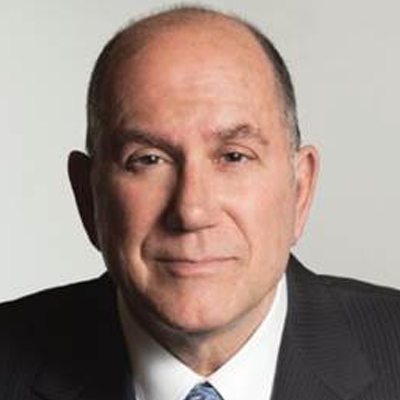
    It was in June that media conglomerate Interpublic combined its Draft and Foote Cone & Belding (FCB) units around the world to create a channel-neutral agency model DraftFCB. Heading DraftFCB as its president-COO is Laurence Boschetto, previously president-COO of Draft.


    Hardly has Boschetto had time to gather his breath on the ramifications of the new entity has come an even more radical announcement. Which is that Interpublic is reorganizing its media operations with Initiative becoming aligned within DraftFCB and Universal McCann coming under McCann Worldgroup.


    The reorganisation came just ahead of news that the newly integrated DraftFCB has been awarded the account of retail behemoth Walmart worth an estimated $570 million. That the monster win came on top of new business that DraftFCB had won from Citigroup, Merrill Lynch and Atari has been more than a validation for Boschetto and the team at DraftFCB.


    In conversation with Indiantelevision.com, Boschetto, who over the last three weeks “has been on the road to every single region introducing them to the new model”, throws some light on just what’s happening at DraftFCB, as too the vision thing with IPG.


    Excerpts:

    Is it fair to say that IPG’s reorganization of its media operations represents the most significant example of support for those against the unbundling of media that we have witnessed over the last 20 years or so? And extending that posit, can we then argue that making media and creative interdependent is the best way forward?

    Over the last decade we stripped everything out of an agency, we have taken strategic planning, we stripped away media and now they have basically become interchangeable parts, the ‘value has been devalued.’ So what we are doing right now is we look at the client, we look at the demands and pressures that they have, we look at the environment that their end user works in and we say ‘how do we change the game.’


    This might look like the old model but it’s packaged in the new model formulation, an offering of complete integration of products and services but not doing it syllogistically under the model.


    What we are saying is that there is one management team, there’s one P&L and the palette consists of all the different skill sets, so the clients don’t have to manage all those relationships and the agency can come back with a business solution orientation based on the real business issues rather than the disciplines that they are confident in.


    Today we often hear clients say, ‘I want channel agnosticism and discipline neutrality.’ Yet there isn’t really any channel agnosticism. We didn’t build organizations in the industry that way, we have people that are proficient in strategic planning, in branding, in advertising, in PR and in retail. Now they are asking for renaissance marketing communications people, that’s what this whole model is about, it’s about building another class of business builders in the marketing communication field.

    The new media strategy represents the third major organizational change Interpublic has instituted this year. What is the broad direction that IPG is taking with all this?

    When you take a look at the advertising industry, you cannot ignore client structuring and their constituent parts because this tends to have a ‘domino effect’. The environment that the customer lives in has radically changed, technology has changed they way that they live and breathe, how they interact and connect with each other, this has created one basic phenomena ‘immediacy’.


    Technology has changed the way we work and engage. This has put tremendous pressure on the CMOs, as they also live in an environment and at a time when their CEOs are demanding performance in their books. It is estimated that every CMO has a life expectancy of roughly 24 months. However, if they have to produce they will have to figure out how to navigate through a company, what the alliances are, who their end user is and quarter after quarter their performance based on real business metrics will determine what their life expectancy will be.

    Over the last decade we stripped everything out of an agency, we have taken strategic planning, we stripped away media and now they have basically become interchangeable parts, the ‘value has been devalued’

    If you say that a CMO has an average 24 month life cycle, what happens if he continues to deliver what the client demands?

    As defined, stage I is to develop a way of operating to deliver that media and channel neutrality and agnosticism and that’s by bringing together not just one person to lead the business but all the discipline leaders at a round table, to form a team for the client.

    Now, if one client is more strategic in nature then they may have a strategic person in the key position, while someone else who is more data driven might have the data person heading it, but the way we think through the issues are holistic. The goal is that over time we are not expecting that someone who is highly proficient in strategic planning and database modeling to be interchangeable. But the person who heads up strategy must be able to think more holistically, so that when they come to a business situation they determine what’s right for the client.

    But will these individuals continue to function within their respective units?

    The goal is to make sure that the purity and the authority of every discipline still resides in an agency so that we never lose that foothold. In the process of giving clients that ‘channel agnosticism’, the days of only the account person holding that relationship, we are saying that before we get there we need to have a team consisting of media, strategic planning, account services and a creative database all sitting at the table and having an equal voice in determining how to solve a business issue.