Tag: Association

  • Tokyo Paralympics 2020: Indian Bank joins hands with PCI as banking partner

    Tokyo Paralympics 2020: Indian Bank joins hands with PCI as banking partner

    Mumbai: Indian Bank has signed an MOU and partnered with the Paralympic Committee of India (PCI) as one of the banking partners ahead of the Paralympic Games, Tokyo 2020, scheduled to commence from 24 August.

    “The Bank, through its year-long association with PCI, will provide financial assistance, in an endeavour to support the Paralympic athletes prepare for the coveted sporting events in the domestic arena as well as global platforms for a year,” said the press statement.

    PCI president Dr Deepa Malik and Indian Bank field general manager (Delhi), Ravindra Singh emphasised while signing the MOU that the resources offered by the bank will be channelised towards meeting the requirements of the Indian para-athletes ranging from their training, nutrition, equipment, certifications to name a few. Timely financial aid provided to these sportspersons will encourage them to focus their efforts on the game and win laurels for the country.

    On this occasion, Indian Bank MD & CEO Padmaja Chunduru said, “We are delighted to have partnered with PCI to work towards promoting the Paralympic ecosystem and making resources available for differently-abled athletes in our nation. Even though the Paralympic movement is at a nascent stage in India, several young and talented athletes have been training rigorously to represent India in an international arena. It is our belief that this initiative will empower many athletes to take up sports as a career without experiencing any dearth of resources. At Indian Bank, we have always strived to maintain an inclusive environment and supported employees who have exhibited a flair for sports.”

  • Mumbai Police violated Supreme Court guidelines in Arnab Goswami’s arrest, says AIBA

    Mumbai Police violated Supreme Court guidelines in Arnab Goswami’s arrest, says AIBA

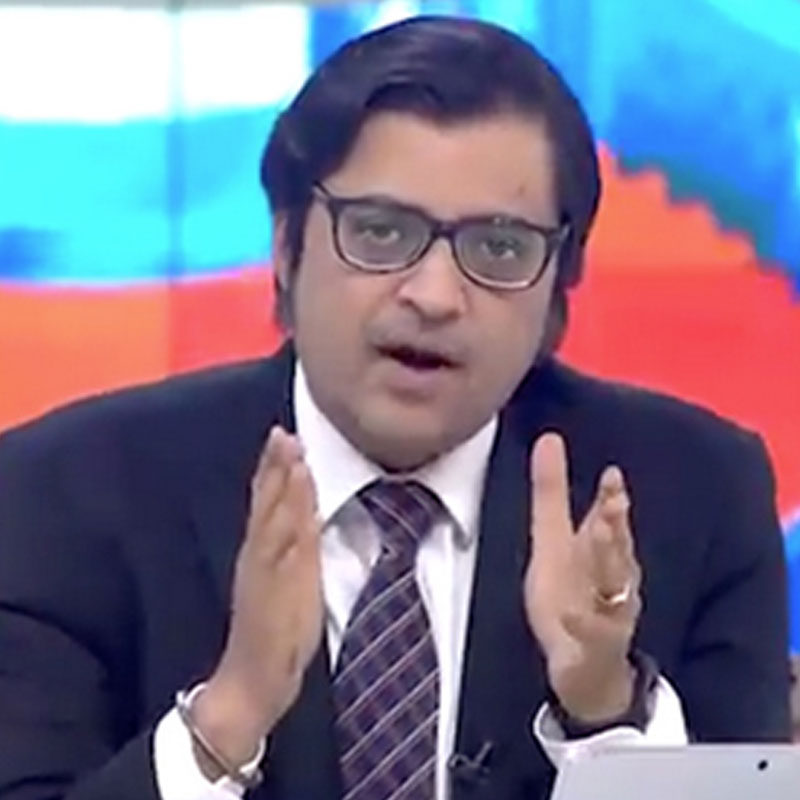
    NEW DELHI: The arrest of Republic TV’s editor in chief Arnab Goswami has evoked a response from multiple sections of the industry.

    Senior bureaucrats and news federations have condemned the arrest and called upon the chief minister of Maharashtra to conduct a free and fair investigation in the matter without exercising the authority of the government on media.

    In the latest development, All India Bar Association (AIBA) has condemned the arrest of noted journalist Arnab Goswami by Mumbai Police as it has violated the landmark guidelines to protect the rights of arrestee as enumerated in judgment delivered by Hon’ble Supreme Court in D. K. Basu v. State of West Bengal (AIR 1997 SC 610).  

    In a letter to the governor of Maharashtra, AIBA chairman Adish C Aggarwala, senior advocate, appealed for immediate release of the journalist as it is blatant misuse of power by Maharashtra Govt. against Republic TV and Arnab Goswami. The illegal arrest is an attack on individual freedom and the fourth pillar of democracy. 

    The following guidelines of
    honourable Supreme Court in the judgment passed in D. K. Basu v. state of
    West Bengal (AIR 1997 SC 610), have been violated by Mumbai Police in
    the matter of arrest of Arnab Goswami 

    Duties of Police Making
    Arrest and Handling Interrogation: All Police personnel should wear name tags clearly indicating their name and designation.

    Police must enter the complete details of police officials conducting interrogation in a register.

    Arrest Memo: The police officer making
    an arrest has to prepare an arrest memo that records details of the
    arrest. The arrest memo must contain:

    a. The signature of at least one witness, who can be a relative of the arrestee or a respectable person of the locality where the arrest is made. 

    b. The time, date, and place
    of the arrest. The arrested person should sign the arrest memo after it is
    properly prepared.  

    Inspection Memo: If the arrested person requests it, the arresting officer must record any minor/major injuries on his/her body in an inspection memo. The memorandum should be signed by the arrested person and the arresting officer. A copy of the Memo  must be given to the arrested person.

    Information About the Arrest & Detention: The arrested person has the right that his/her relative/friend is informed about the arrest. The police must contact and inform the relative/friend of the time and place of arrest, and the exact location where the arrested person is detained, at the earliest. If the relative / friend is in a different district / city, the concerned police station should be informed by telegraph within 8-12 hours of the arrest and then convey the  information to the relative / friend. The information of the arrest should also be sent through the district legal aid committee.

    Right to a Lawyer: The arrested person has the right to meet and consult a  lawyer during his/her interrogation. The police cannot deny this.  

    Illaqa Magistrate: The Police must send one copy of all documents, relating to the arrest (including the Arrest and Inspection Memos) to the Illaqa Magistrate for his/her records.

    Police Control Room: Police Control Rooms should be set up in all district and state headquarters. The arresting officer has the duty to inform the control room about the place of detention of the arrested person. This has to be done in all arrests.This information must be sent to the control room within 12 hours of the arrest. This information must be displayed clearly on the notice board of the Control Room. Duties of Police making arrest and handling interrogation: 

    These directions should be mandatorily followed. Refusal to do so results in the initiation of contempt of Court proceedings.

    Departmental action should be initiated against police officials who have violated above safeguards guaranteed to the citizens of the country. 

  • Film Writers’ Association gets new name, logo; new direction

    Film Writers’ Association gets new name, logo; new direction

    MUMBAI: Keeping pace with the changes in media and its consumption, the Indian Film Writers Association has donned a new avatar. On 17 July 2016, the trade body — with members ranging from lyricists to script writers — amended its constitution as well as its name following a meeting of life and regular members in Mumbai. ScreenWriters Association (SWA) is how it will be known from this year.

    The reason behind the refresh, says honorary general secretary Kamlesh Pandey, is that “the industry is no longer limited to film writers; TV writers outnumber film writers, and writers for the digital media outnumber TV writers. The only thing common between them is the screen – from a screen (70 MM cinema screen) to cellphone — hence, the name was changed.”

    And even its constitution was amended to reflect this change. “With this, the association is poised to face new challenges, new horizons and achieving new heights,” adds Pandey.

    The association says that its revenues have picked up ever since it moved the processes online. Close to 1000 to 1200 scripts are being registered online (as against 800-1000 in 2014-2015), leading to revenues of about Rs 100,000 a month. Altogether 3,145 members have collectively registered 20,000 plus scripts online. The association has collected revenues of about Rs 1 million through online payments.

    The association has Rs 4 crore in fixed deposits with the banks, and it generated an income of Rs 1.5 crore in the year to 31 December 2015.

  • Film Writers’ Association gets new name, logo; new direction

    Film Writers’ Association gets new name, logo; new direction

    MUMBAI: Keeping pace with the changes in media and its consumption, the Indian Film Writers Association has donned a new avatar. On 17 July 2016, the trade body — with members ranging from lyricists to script writers — amended its constitution as well as its name following a meeting of life and regular members in Mumbai. ScreenWriters Association (SWA) is how it will be known from this year.

    The reason behind the refresh, says honorary general secretary Kamlesh Pandey, is that “the industry is no longer limited to film writers; TV writers outnumber film writers, and writers for the digital media outnumber TV writers. The only thing common between them is the screen – from a screen (70 MM cinema screen) to cellphone — hence, the name was changed.”

    And even its constitution was amended to reflect this change. “With this, the association is poised to face new challenges, new horizons and achieving new heights,” adds Pandey.

    The association says that its revenues have picked up ever since it moved the processes online. Close to 1000 to 1200 scripts are being registered online (as against 800-1000 in 2014-2015), leading to revenues of about Rs 100,000 a month. Altogether 3,145 members have collectively registered 20,000 plus scripts online. The association has collected revenues of about Rs 1 million through online payments.

    The association has Rs 4 crore in fixed deposits with the banks, and it generated an income of Rs 1.5 crore in the year to 31 December 2015.

  • HDFC Life, Amole Gupte join forces for ‘Hawaa Hawaai’

    HDFC Life, Amole Gupte join forces for ‘Hawaa Hawaai’

    MUMBAI: It isn’t uncommon for brands to piggyback cinema as the medium with arguably the greatest mass outreach.


    HDFC Life is no stranger to this strategy; having co-promoted the franchise Spiderman in 2007 and in 2010, followed it up with an association with the Hindi film, Patiala House. This time round, the brand has gone a step further with in-film placement and theme integration with director Amole Gupte’s upcoming film, Hawaa Hawaai, about the triumph of the human spirit in the face of insurmountable odds.


    Through this collaboration, HDFC Life wants to send out the message that strong determination and sound planning (pakka iraada and pakke plans) go a long way in helping you fulfill your personal and financial goals.


    Of the association, HDFC Life marketing, product, digital and e-commerce senior EVP and head, Sanjay Tripathy says: “As a brand, HDFC Life has always propagated ‘independence and self respect’ or ‘Sar utha ke jiyo’ as a way of life and the film’s core message is a perfect fit with our brand philosophy. Through this film, we are celebrating people who help fulfill others’ dreams through their efforts and live life with their head held high.”


    Gupte’s team has gone so far as integrating the line, Sar Utha Ke Jee, in a song from the film to bring out the strong thematic and philosophical connect.


    Associating with films is not new for brands across FMCG, banking, financial services, and insurance (BFSI), what with marketers constantly searching for newer and better ways to reach out and connect with customers. HDFC Life has consistently launched marketing campaigns that bring out the relevance of life insurance for consumers.


    “Our core brand thought – Sar Utha Ke Jiyo – is about ‘financial independence’ and ‘self respect,’ which has always been a core value for all Indians. We stand for and celebrate achievement of every individual’s dreams and aspirations, being triumphant against all odds, and thereby, living life with the head held high,” says Tripathy.

  • Tamil Nadu Film Exhibitors Association imposed penalty by CCI

    Tamil Nadu Film Exhibitors Association imposed penalty by CCI

    NEW DELHI: The Competition Commission of India (CCI) has imposed a penalty of Rs 41,393 on the Tamil Nadu Film Exhibitors’ Association (TNFEA) (now known as Tamil Nadu Theatre Owners’ Association).


    The penalty has been imposed in respect of information filed by Reliance Big Entertainment (RBE) alleging contravention of the provisions of Section 3 and 4 of the Competition Act.


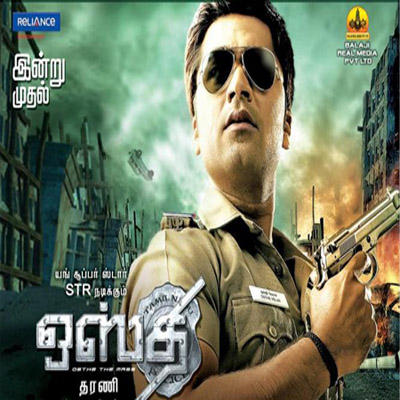
    RBE alleged that it was entitled to distribute a film titled Osthe in Tamil language that was a remake of Hindi film Dabbang. However, TNFEA boycotted this film with an effort to secure a claim of its members against a third party Sun TV.

    CCI in its investigation concluded that the decisions and conduct of TNFEA in respect of the boycott against the film Osthe and other films dealt by Sun TV were in contravention of the provisions of Section 3 (3) (b).


    The penalty of Rs 41,393 has been imposed at 10 per cent of the average turnover of the Association for the relevant last three years. This penalty is to be deposited within 60 days of receipt of this order.


    The CCI has also directed TNFEA to cease and desist from indulging in such anti-competitive conduct in future.

  • MSM enters into association with KEPL to produce ‘Mango’

    MSM enters into association with KEPL to produce ‘Mango’

    NEW DELHI: Bajatey Raho, produced by Multi Screen Media in a co-production with Eros International, is the first of a slew of movies this year through the motion pictures division of MSM.

    The film is being released on 26 July which has been co-produced with Eros International. It is a revenge comedy starring Dolly Ahluwalia, Vinay Pathak, RanvirShorey, RaviKissen and Vishakha Singh.

    The next movie being produced in association with KEPL is titled Mango and has been directed by Abbas Tyrewala. It will star Rannvijay, Harman, Monali Thakur, Chandan Roy Sanyal and Swara Bhaskar.

    Image result for MSM enters into association with KEPL to produce 'Mango'

    Mango also marks the return of KEPL with a romantic comedy after Saathiya. Set in the heart of Goa, Mango is all set to recreate the same magic that Abbas created in his directorial debut movie, Jaane Tu Ya Jaane Na. The cast of the movie includes Rannvijay, the winner of Roadies and an accomplished host who has made his mark in the film industry with his Hindi and Punjabi films. It also stars the critically acclaimed Chandan Roy Sanyal, best remembered for his role in Vishal Bharadwaj‘s Kaminey.

    Based in the calm atmosphere of modern Goa in the monsoons, this frenzied film traces one night in the life of five manic individuals, whose stories intertwine in a completely unlikely manner. It is a story of love, life, friendship, relationships and betrayal. Primary, secondary and even incidental romances share the spotlight here with the main characters where while some chase love, the others chase money here.

    Image result for MSM enters into association with KEPL to produce 'Mango'

    MSM CEO Man Jit Singh said, “We realise that there is a huge untapped market in the motion picture business and the sector has immense growth potential. We have the expertise and experience in this domain and hence it was a logical extension for us. We plan to produce movies across different genres.”

    MSM COO NP Singh added: “Mango is a rom-com with a twist. Shot in the beautiful locales of Goa the film captures the tale of five youngsters whose lives are entwined by destiny. Mango is a young film and will appeal to masses. It will break the clutter through its refreshing content and fresh casting.”

    Bobby Bedi from KEPL added, “One of my most successful films was my first foray into mainstream Bollywood – that is Saathiya – a rom-com with a difference. Today I re-enter the same space with some of my best colleagues – Abbas, who wrote Maqbool, Aradhana, who designed Fire, Allan – action director for Bandit Queen and Mulchand who has lit every single work I have ever done. Together we are producing what we believe is a really funny and fast paced film, deliciously called Mango”.

    Tyrewala said, “I‘ve never had more fun making a movie”

    Mango, with its engaging storyline portrays lives of five youngsters in the city of Goa. But, soon things are about to change in their lives.

  • ‘Global animation studios will set up shop in India for captive backend facilities’ : Ronald D’Mello – Maya MD and CEO

    ‘Global animation studios will set up shop in India for captive backend facilities’ : Ronald D’Mello – Maya MD and CEO

    Two years back, Maya Entertainment Ltd. was in trouble with two of its business verticals in the red. What followed was a restructuring and the education vertical since then has seen exponential growth to post over Rs 1 billion in FY‘09.

    The studio business has also grown and Maya is in the midst of releasing its first animated movie, Ramayana The Epic.

    Promoted by Bollywood filmmaker Ketan Mehta, the company went through an ownership change. Enam Securities holds 45 per cent stake, Bhukhanwala Holdings 20 per cent and Intel Capital, with three rounds of funding, around 12 per cent.

    The company faces new challenges as it scales up and plans to raise funds.

    In an interview with Indiantelevision.com, Maya MD and CEO Ronald D‘Mello, who is preparing for a new innings, reflects on how the company managed to turn around in the last two years.

    Excerpts:

    When you took over as CEO of Maya Entertainment Ltd, there was a need to restructure the company. What are the measures you took?
    There were substantial corporate hygiene issues which threatened the very structural stability of Maya as a company. In November 2007, we engineered a major restructuring exercise in our education vertical, risking almost half of our business, to eliminate conflict of interest positions of some of the key executives and employees of Maya, the group which went on to form a competing business. Thankfully, the exercise not only resulted in a clean and transparent Maya but also laid a strong foundation for substantial growth.

    On the studio side, the challenge was both on business development and internal operational disciplines which we were able to overcome.

    Did this mean that the key management of the education business changed?
    We terminated 13 educational franchise centres in north India which collectively contributed to 50 per cent of our turnover. The result was extremely satisfying. We were able to grow the education vertical billings by over 300 per cent over the last two years to make it an over Rs 1 billion activity in billing in FY‘09. In terms of number of franchise centres, we grew from 38 ( at the end of the restructuring exercise in 2007 ) to 70 by June 2009.

    We consolidated our position in animation education to become the largest player in career-oriented animation education. We created an Advisory Board comprising the stalwarts of animation industry to build a constant interaction between industry and academia so that the courses we offer are suited to industry needs. We converted the outlook of our courses from software to creativity- focussed. We also created a product ( MAAC Junior Toon Club ) for young students in the age group 7 to 14 as a creative enrichment platform to integrate with art and craft curriculum of schools across India. Association with IGNOU for degree program in animation and VFX was also a feather in our cap during this period.

    And on the studio front?
    We went on to have the most productive year in FY‘09 where the total output between international service work, own IP and domestic service work was amongst the largest in Indian animation studios.

    When you joined two years back, animation was on a high-growth curve. Did that help Maya ride the tide in any way?
    All industries go through highs and lows. Challenge is to get the best out of it when the industry is on a growth curve and to pro-actively future proof your business for industry lows. We did have the benefit of industry highs as much as everyone else in the segment did. But our growth probably outperformed industry and competition.

    are the challenges the Indian animation industry faces today as the global economy is in the midst of a downturn?
    I would rather not get too influenced by the downturn in global economy as it is the ‘uncontrollable” factor all are faced with. In isolation, I see Indian animation industry far slower than the hype it has created for itself. If we believe the global animation and VFX consumption numbers at over $60 billion, what India has managed to get in terms of service outsourcing is abysmally low even if you assume content production constitutes 10 per cent of the global animation consumption pie. Also, the demographics of India population indicate a good future for more youth friendly animation, gaming and VFX content.

    Unfortunately, most of the early entrants in Indian animation production space lack a long term strategy to sustain market penetration and growth over a longer period of time. Even the development of talent has suffered due to this short term approach. If you see the IT sector and how it grew over the years, you will find sustained long term stay over decades by some of the dominant players to make India the hub of IT services and create a large industry today.
    ‘Indian animation studios may not be in the position of strength, both creatively or in market reach, to be up on the value and risk chain on co-productions‘

    Several companies have ventured into animated movies for the domestic market as a scale up strategy. But most of them have flopped at the box office. How do you think this is going to impact the business?
    This is what I meant by short term approach. If anyone thought of producing an animation movie thinking it would be a huge success, it is a wrong base to start with. Animation movies, like any other movies, are not free from the risks familiar to film producers. Moreover, you have the task of playing in an unestablished segment of viewership. I am afraid it would take few more movies to fail and learnings from those taken, before we see the domestic industry evolving in animation. Till someone takes that risk and has a sustained agenda to create this segment, it would be hard to imagine the domestic industry to mature.

    In a period of hype, even Disney entered into a joint venture with Yash Raj Films for an animated movie Roadside Romeo when one thought they didn‘t require a local partner to aid them in what they are best at. Since the movie bombed, this may discourage international companies making animated movies for the Indian market. Are we entering a different phase of the business cycle?
    I don‘t think any international studio considers failures as end of the road. I am sure Disney and Yash Raj Films have drawn considerable learnings from their first attempt which will only help them to make it better next time, both in terms of content creation and market exploration.

    Is getting into co-production arrangements for international movies and TV series a more viable business model?
    It all depends where you place yourself in the value and risk chain. If you are the last man standing in the chain, no international co-production can change the game for you. I am afraid, Indian studios may not be in the position of strength, both creatively or in market reach, as of now to be up on the value and risk chain on co-productions. Hence, it may be a while before it happens to its spoken potential.

    What are the steps you took at Maya to prepare the company for producing an animated movie?
    Ramayana The Epic, Maya‘s first animated film, was already in its baby steps when I joined. We decided to provide a development budget to the director and team so that the idea can be taken to a script, few key character designed and a three-minute sample fully animated and composed sequence developed. At the end of this exercise, we were fully convinced that the team can deliver an astounding product and decided to move on.

    What is the budget for Ramayana and how have you de-risked the project?
    We would have loved to have some co-producer coming in through its production phase. But the overall economic slowdown and Indian film ( specifically animation films ) sector dampness did not help us. The film is now complete and being shown to potential distributors.

    How much does Maya depend on outsourced projects? How does it scale up its studio business?
    Maya is predominantly a service studio, barring the first IP we produced over the last year. I cannot really comment on the future strategy for the studio scale up as it would be now left for Maya board to drive the company.

    Are there too many animation companies fighting for too small a pie?
    The pie is big, but someone needs to take a really long term view of the potential and have sustained existence to bear the desired fruit. Meanwhile, I see international animation producers and studios setting shops in India for captive backend facilities which will open new avenues for talent.

    How tough is it for the small-sized animation companies to raise capital and survive?
    Raising capital is dependent on the industry perception, company fundamentals and overall investment market climate. I presume in the present scenario it would be difficult for an animation production player to raise funds as none of the above three are in favour. Education industry will attract investor interest for businesses which have good fundamentals and clear future focus.

    Is Maya planning to raise funds? How much, how and for what?
    Yes, we have been on it since last year. But I can‘t give you more details.

    You are quitting Maya at a time when it has still to grow. What do You think is the future of such companies?
    I suppose I cannot comment on this. I am sure Maya will be able to attract the next anchor and drive the business forward.

    You are quitting Maya at a time when it has still to grow. What do You think is the future of such companies?
    I suppose I cannot comment on this. I am sure Maya will be able to attract the next anchor and drive the business forward.

    How tough is it for the small-sized animation companies to raise capital and survive?
    Raising capital is dependent on the industry perception, company fundamentals and overall investment market climate. I presume in the present scenario it would be difficult for an animation production player to raise funds as none of the above three are in favour. Education industry will attract investor interest for businesses which have good fundamentals and clear future focus.

    Is Maya planning to raise funds? How much, how and for what?
    Yes, we have been on it since last year. But I can‘t give you more details.

    You are quitting Maya at a time when it has still to grow. What do You think is the future of such companies?
    I suppose I cannot comment on this. I am sure Maya will be able to attract the next anchor and drive the business forward.