Tag: Asit Modi

  • TMKOC welcomes Monaz Mevawalla as Mrs Roshan Singh Sodhi

    TMKOC welcomes Monaz Mevawalla as Mrs Roshan Singh Sodhi

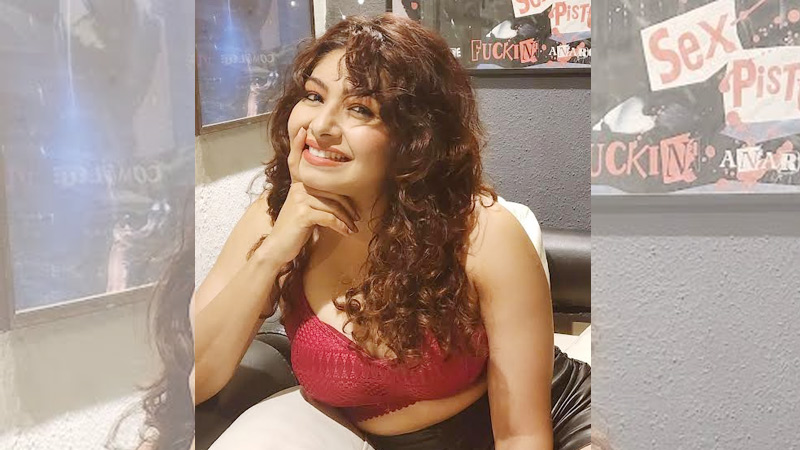
    Mumbai: Taarak Mehta Ka Ooltah Chashmah, one of the most beloved Hindi general entertainment shows, welcomes Monaz Mevawalla as Mrs Roshan Singh Sodhi. TMKOC has been a household favourite, capturing the hearts of audiences with its engaging storytelling and endearing characters.

    Taarak Mehta ka Ooltah Chashmah creator and producer Asit Modi, extended a warm welcome to Monaz, stating, “We are delighted to have Monaz Mevawalla. Her talent and passion for acting will undoubtedly add a new dimension to the character and the show. We welcome her wholeheartedly to the TMKOC family. Her portrayal is anticipated to bring a new dimension to the already beloved series, captivating audiences with her performance.”

    Expressing her enthusiasm, actor Monaz Mevawalla shared, “I am thrilled and proud to be part of the TMKOC family. I love the role and am grateful to Mr Modi for this opportunity. I’ll put all my energy and heart into this character. Having previously worked with Mr. Modi, I love his passion and dedication for every TMKOC member for the past 15 years. I’m sure that all the TMKOC fans will shower me their love and support.”

    Monaz will bring her unique flair and energy to Mrs Roshan’s character and further enrich the viewing experience for fans across the nation.
     

  • Neela Mediatech announces strategic partnership with JioGames

    Neela Mediatech announces strategic partnership with JioGames

    Mumbai: Neela Mediatech’s gaming platform TMKOC PLAY, built on the leading IP, Taarak Mehta Ka Ooltah Chashmah has announced a strategic partnership with JioGames. With this partnership, the company aims to roll out over 50 games on the JioGames platform targeting a significant base of Indian mobile and cloud gaming users.

    JioGames users will now have the opportunity to enjoy a diverse selection of games centred on the theme of ‘TMKOC’ and immerse themselves in the roles of their cherished characters from the series. This partnership will enable JioGames to welcome fresh users from the existing audience of over 60 million captivated by the ‘TMKOC’ intellectual property.

    Announcing this partnership, Neela Film Production and Neela Mediatech creator, producer and MD Asit Modi said, “TMKOC and Jio are familiar names in households nationwide, and their user base extends even to the remote corners of cities and towns. Therefore, it’s a strategic move to capitalize on each other’s strengths. This partnership will facilitate an expansion of our user base, providing an exceptional digital entertainment experience.”

    Neela Films, the production house recently invested Rs 24cr into Neela Mediatech, the gaming, animation and e-commerce business as an extension to Taarak Mehta Ka Ooltah Chashmah IP. The company has recorded 5 million game downloads, and their YouTube rhymes channel has expanded its subscriber base from 1.5 million to 3 million in a brief span. This growth encompasses multiple languages, including English, Hindi, Marathi, Punjabi, Bengali, Bhojpuri and Gujarati.

    The platform will host free-to-play games and cloud-based adventures, for both single-player and multiplayer gamers. Bhide Scooter Race, TMKOC Air Hockey, Bhide Pickle Delivery, Gokuldham Kite Flying and Tapu Skating Adventure are the first of many games that are available on the platform.

  • Taarak Mehta Ka Ooltah Chashmah Rhymes now available in Gujarati and Bhojpuri

    Taarak Mehta Ka Ooltah Chashmah Rhymes now available in Gujarati and Bhojpuri

    Mumbai: The widely acclaimed and loved Taarak Mehta Ka Ooltah Chashmah (TMKOC) Rhymes YouTube channel are now available in Gujarati and Bhojpuri. The channel’s entertaining and educational content has gained a huge fan following among children and families worldwide.

    Featuring the famous characters from the TMKOC show, the inclusion of Gujarati and Bhojpuri versions expands this cultural enrichment to a broader audience that has already won the affection of more than 36 lakhs families and aiming to connect with 100 million families by 2024.

    Creator, producer and Neela Film Production and Neela Mediatech MD Asit Modi said, “We are overjoyed by the love and support our Rhymes have received. This has inspired us to create more engaging content for our viewers. We’re aiming to reach a wide and diverse audience, creating a multicultural experience and spreading joy and knowledge through our content, always.”

    Having garnered a daily viewership of 56,000, TMKOC Rhymes has become a household favourite among toddlers and parents.

  • “Adapting to evolving consumer trends: Key to media and entertainment industry success”: Asit Kumarr Modi

    “Adapting to evolving consumer trends: Key to media and entertainment industry success”: Asit Kumarr Modi

    Mumbai: In 1995, Asit Kumarr Modi’s ground-breaking vision led to the establishment of Neela Tele Films Private Limited, a television production company that would later evolve into the renowned Neela Film Productions. Through this venture, Modi embarked on a path to redefine television entertainment, giving birth to iconic shows that have left an indelible mark on the hearts and minds of viewers. Among his illustrious productions is the timeless serial “Taarak Mehta Ka Ooltah Chashmah,” a beloved household name that continues to captivate audiences with its humour and relatable narratives. Modi’s creative prowess also extended to other remarkable shows such as “SAB Khelo SAB Jeeto!,” “Wah! Wah! Kya Baat Hai!,” “Krishnaben Khakhrawala,” “Meri Biwi Wonderful,” and “Yeh Duniya Hai Rangeen,” each a testament to his boundless imagination and dedication. Asit Kumarr Modi’s legacy is characterized by innovation, excellence, and an unwavering commitment to bringing joy and laughter into the lives of millions. His journey from theatre to television production exemplifies his remarkable evolution, and his contributions continue to shape the landscape of Indian television.

    Today, Neela Films is one of the top production houses in India and enjoys immense goodwill in the television fraternity. Their current show Taarak Mehta Ka Ooltah Chashmah (on-air SAB TV) is presently the No. 1 Sitcom on Indian Television. Owing to its immense popularity amongst audiences of all ages, the show has been running successfully for over 15 years and continues to amuse the masses.

    Taarak Mehta Ka Ooltah Chashmah is one of the longest- sitcoms that aired first in 2008 and is now in its 15th year with over 3700 episodes. Other than its flagship show, Neela Film Productions Private Limited also streams Gukuldhamchi Duniyadari in Marathi and Tarak Mama Ayyo Rama in Telugu on YouTube. The shows along with the character universe are authored and created by Asit Kumarr Modi.

    Indiantelevision.com in conversation with Neela Film Productions Pvt. creator, producer, managing director, Asit Kumarr Modi, on the longest running show on TV and much more……

    Edited excerpts

    On ‘Taarak Mehta Ka Ooltah Chashmah’ being the longest-running shows, now in its 15th year

    “Taarak Mehta Ka Ooltah Chashmah” has firmly established itself as one of India’s enduring television series, becoming a fixture in countless households. Its impact goes beyond mere entertainment; it has been a catalyst for fostering unity, joy, positivity, and laughter among our viewers.

    In its initial years, the show swiftly captured attention due to its distinctive storyline and its ability to humorously depict everyday life. With its unique talent for addressing societal issues and delivering moral lessons through humor, it quickly endeared itself to families across the nation.

    The series introduced a vibrant cast of characters residing in Gokuldham Society, each representing a different Indian state. These characters, along with the catchphrases they popularized, became integral parts of daily life for many.

    Over the years, the show has received numerous awards and accolades, including recognition from prestigious institutions like the Indian Television Academy Awards and the Indian Telly Awards. These honors acknowledge its outstanding contributions to the television industry.

    The show has also found resonance in international markets, particularly among the Indian diaspora, further expanding its global audience and influence. As the oldest running show on Indian television, it continues to thrive, offering family-friendly programming that entertains while delivering important social messages.

    On TMKOC venturing into edutainment, gaming, and e-commerce

    The decision for Taarak Mehta Ka Ooltah Chashmah to enter the realms of edutainment, gaming, and e-commerce can be attributed to a strategic vision aimed at diversifying its offerings and embracing innovative approaches to engage its audience. This move aligns with the evolving preferences of viewers, especially among younger generations, allowing the show to stay in tune with emerging trends.

    By venturing into these new domains, the show has the opportunity to extend its brand reach beyond the confines of television, thereby connecting with a broader audience spanning various demographics. Gaming and e-commerce platforms present a unique avenue for enhancing viewer engagement and enabling interaction with the show’s characters and storylines.

    Furthermore, by providing multiple avenues for fans to connect with the show, including through interactive games and merchandise, the production team can foster a deeper sense of loyalty among viewers while nurturing a vibrant sense of community. Additionally, by incorporating rhymes that encourage the use of local languages, the show can further connect with diverse audiences and celebrate linguistic diversity.

    It’s worth noting that the decision-making process behind this strategic move likely involved a blend of these factors, possibly complemented by insights from market research and an awareness of the ever-changing dynamics within the entertainment industry. The overarching goal is to amplify the show’s reach, engagement levels, and revenue prospects, all while remaining true to its core values and mission of delivering entertainment that resonates with its audience. In an industry as competitive as media and entertainment, adapting to shifting consumer behaviours and preferences is essential to maintaining a strong and lasting presence.

    On TMKOC starting off as a comedy show, but over the years it has picked up social issues, built gender awareness, and promoted a positive outlook toward life

    The TMKOC show has earned a special place in the hearts of its viewers, leaving a positive impact by addressing societal concerns and driving constructive change through its episodes.

    The show has actively supported initiatives like the Swachh Bharat Abhiyan, promoting hygiene and cleanliness. It celebrates India’s diverse culture by thoughtfully depicting various festivals, fostering inclusivity and cultural unity. TMKOC has effectively advocated for traffic rules and road safety, even earning recognition from the Mumbai police.

    The show also raises health and environmental awareness, encourages eco-friendly practices, and highlights the importance of water conservation. It portrays women as strong and independent, challenging traditional gender roles, and embracing the significance of senior citizens.

    TMKOC’s ability to seamlessly blend humor with meaningful content has made it a powerful vehicle for promoting positive change and raising awareness on a wide range of societal issues. As the world evolves, the show remains committed to adapting and evolving along with it.

    On any plans in venturing into a web series and any plans for future projects in other channels

    Given the immense popularity of the existing IP, we aim to create additional IPs with several shows, and films and continue our growth journey in animation, and games.

    On the vision for Neela Films in the coming years

    In light of the success of our current intellectual property, we have diversified our ventures by launching Neela Mediatech Pvt. Ltd., supported by a substantial investment of INR 24 crores. Our primary goal is to cultivate growth in the domains of Gaming, Animation, and E-commerce, all the while extending our presence across various platforms, with the ultimate aim of creating an extensive TMKOC universe. Additionally, we are in the active process of developing multiple new television shows to enrich and diversify our content portfolio.

  • With Taarak Mehta Ka Chhota Chashmah, Sony Yay! wants to get parents & kids co-watching

    With Taarak Mehta Ka Chhota Chashmah, Sony Yay! wants to get parents & kids co-watching

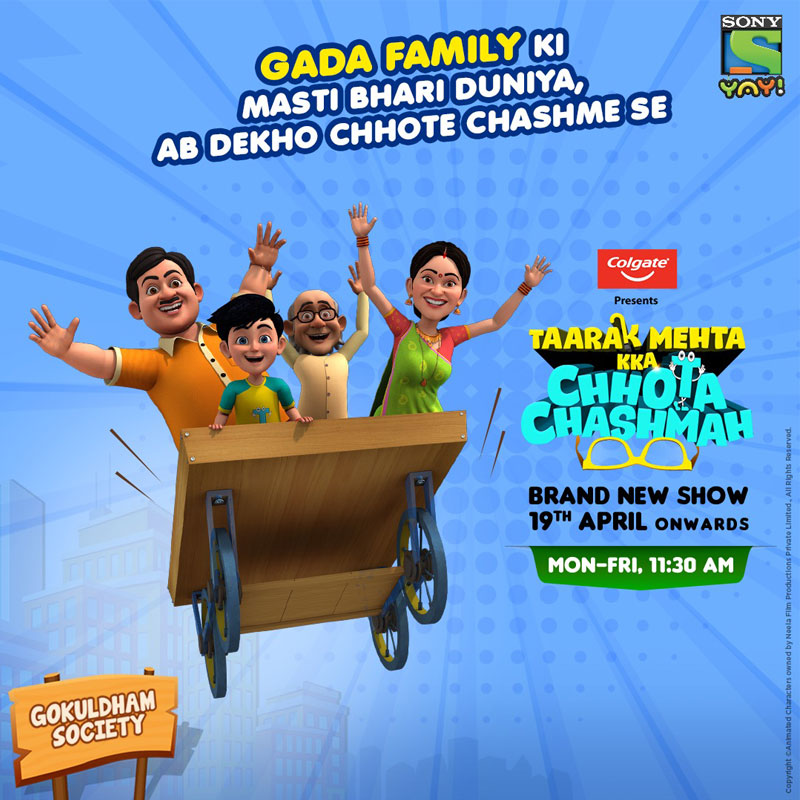
    MUMBAI: Four years after it made its foray into the kids’ genre with Sony Yay!, Sony Pictures Networks India (SPNI) is all set to launch an animated version of one of its most popular TV shows- Taarak Mehta Ka Ooltah Chashmah (TMKCC).

    The animated show titled Taarak Mehta KKa Chhota Chashmah (TMKCC) will hit the airwaves on 19 April. Set against the backdrop of Gokuldham, the show will witness iconic characters – Jethalal, Bapuji, Dayaben, and Tapu in their animated avatar.

    However, this time, the entire show has been created from the lens of kids’ favourite characters, Tappu and Daya, who will be the protagonists. "The characters will remain true to their original role, but we have moulded the entire show from the lens of Tappu and Daya, as Tappu is immensely popular among young kids. The situations will revolve more around children's issues," said SPNI kids EVP and business head Leena Lele Dutta.

    Animated show that appeals to parents and kids alike

    Produced by Asit Kumarr Modi under the banner of Neela Telefilms, Taarak Mehta Ka Ooltah Chashma remains one of the longest-running shows on Indian television after it crossed the 3,000-episode mark in October last year. It reached out to 22.7 per cent of the children's population in India and has recorded a higher viewership than any other show.

    The channel mainly caters to kids in the age group of 6-10 years. However, this time, the idea was to create a show which caters to both parents and kids even in the animated avatar,” said Dutta.

    The property will be jointly executed by Neela Telefilms and SPNI, where SPNI will manage the production, while Modi handles the creative storytelling. The show will be launched with around 40 episodes; the makers are already creating a bank for season two and have hired multiple scriptwriters to take it ahead. The animation production has been done by Hitech studio based out of Kolkata and Green Gold Animation.

    According to the channel, TMKCC will mainly target the Hindi-speaking markets of Maharashtra and Gujarat. The channel has also planned a Gujarati market feed three months before the actual launch to enable the state residents to watch it in their native language. Colgate has associated with the show as the title sponsor, Play House is the co-powered sponsor.

    Journey of Sony Yay!

    The kids' channel category has evolved ever since Cartoon Network, the first channel exclusively dedicated to kids’ content, was launched in 2014. The category has grown by eight percent during FY2018-2020 and according to BARC data, five channels –Nick, Sonic, Hungama, Pogo, and Disney – dominate the top share.

    However, according to Dutta, the growth of Sony Yay! has been three to four times more than the category, with some popular shows like Shinchan, Doraemon, Chhota Bheem, and its most successful homegrown series Motu Patlu.

    “We are the fastest-growing channel in the category. Sony Yay! has exponentially grown at the rate of 42 per cent since 2018. We have faced many challenges in these four years. In 2020, we were exposed to Covid2019 pandemic, the year before that was NTO implementation, but we managed to sail through all this,” she shared.

    According to the latest data, the Indian Kids entertainment industry reaches over 73.2 million kids and counting (India U+R, TG: 2-14 All NCCS, Universe 183 million). Due to the current situation and curbs, kids are expected to spend more time indoors which will further broaden their interest in all things new.

    “Overall, the kids’ entertainment category occupies eight per cent of the viewership pie of television but receives only 3.5 per cent of the revenue share of advertising, making it a highly under-indexed category. That said, incremental growth will also be led by licensing and merchandising followed by character/brand integrations,” said Dutta.

    New shows to bolster the summer slate

    The channel is also planning to tap into the ever-increasing demand for fresh content this summer and will offer viewers a wide range of choices of new characters and fresh narratives this year. This includes new characters and narratives with shows like Kikoumba, Chimpoo Simpoo, Bhaalu Yeh Bindaas Hai, Chorr Police, Obocchama-Kun, new movies, and episodes of its existing properties Honey Bunny ka Jholmaal and Paap-O-Meter.

    “In an average Indian family, the non-prime time is when kids gain control of the TV sets and we have always conceptualised our strategy around these time bands. It has also led us to constantly evolve and enhance our content strategy into a wide array of 16 shows to match the demand of fresh and differentiated content,” detailed Dutta.

    This summer, the channel will also curate special content for its audience which includes episodic snippets, interactive games, contests, a gamut of entertaining content in seven different languages along a barrage of exciting virtual summer workshops. The makers will also have a 100-city canter activation followed by nine-city mall activation covering key markets in Gujarat, Punjab, Madhya Pradesh, and Uttar Pradesh with some engagement touchpoints incorporated.

  • Sameer Nair on Applause Entertainment’s shows, content creation and trends [Part 2]

    Sameer Nair on Applause Entertainment’s shows, content creation and trends [Part 2]

    MUMBAI: This is the second part of Indiantelevision.com’s conversation with Applause Entertainment CEO Sameer Nair. You can read the first part here.

    So within your company, is a format kind of a lab being developed going forward? Because I see opportunity in format, paper formats too while you’re creating content and you’re going to start licencing it in stage two I presume. That will be next year after the first wave is sold out.

    We hope the first of our shows streams at the end of March, so let’s see.

    So when will your agreements allow you to sell those globally?

    It depends. Some will be after a year.

    In the meanwhile are you looking at setting up a format lab? Like Zee has set up a format lab which is working on creating formats, Star is working on formats in house.

    No, I don’t think we are doing that. Currently, we are focusing on drama and fiction, not so much on the non-fiction part of business. And within that, if we find something that we really like, we proceed to make it. We are not really making a paper pilot or a pilot.

    We are not really making globally relevant content whereas the Turks make it, the Koreans are more advanced as a culture so their shows travel, but Indian shows are not really travelling, we’re getting $200, $250, maybe a Porus might get $3000 or $2000 per hour but not all shows are getting the money that they should.

    Actually, apart from US content which is the English content and which is what makes it a globally dominant soft power, I don’t think any other content is genuinely travelling.

    Today Turkish content is going at $150,000 an episode in west Asia.

    What I’m saying is that we’ve got a very large market, we’re a billion Indians. In any case, you’ve got to decide who you’re making this content for. There’s something known as primary audience and secondary audience. Narcos was not made for us, it was made for Latin American and North American audiences. We happened to like it, it went on to become a global hit and well, good luck. Like that, I’m sure a 100 other shows are made which we haven’t heard of. So what I’m saying is that as far as we are concerned, we are focused on telling great stories and we are catering to an extremely large Indian audience.

    Some shows do travel but you can’t set out to make something thinking it will straddle a global audience, even the Americans didn’t do that. When the Americans made Seinfeld, they didn’t make it to make Indians or Koreans or Japanese laugh, they made it to make Americans laugh. That the rest of the world laughs with The Big Bang Theory or FRIENDS or House of Cards or whatever is a happy outcome. So I think from a content creation point of view, we’ve got to focus on how we can tell great stories, how we can monetise those great stories and how can we make this business profitable.

    So you’re investing in production value, you’re investing in writing and I see that you’re investing in the cast.

    You’re investing in good actors, you’re investing in good writing, you’re investing in production values, good directors, you’re making these like essentially extended films, it’s all produced at one go, it’s post-produced at one go, so we are doing that and we should invest.

    Will all of these travel or will some of these travel?

    Some of these will travel, all may not. For example, The Office comes from abroad and I believe that a show like that should be made in every country because every country would have this dull sleepy office with the horrible boss from hell and the other terrible people we work with. But some will travel, I think something like City of Dreams will travel, that’s a nice political story. I find too many of my colleagues in this business stand on the shore and look towards the sea. I think we are a large enough country to stand on the shore and look inwards.

    That’s why Hollywood is a soft power.

    Hollywood is a soft power not for what they’re doing, it’s because it’s driven by the language.

    Roma is a Mexican film that went on to win so many Oscars.

    You know what, it is a cool fashionable thing to say that we should be all making stuff that the world applauds.

    But if you put sub-titles, everybody watches.

    I’m not disputing it, I’m saying that you’ve got to run a business, it is called showbiz. There’s show and there’s biz and they go together. So when you’re running a business you must be clear as to why you’re doing it. It cannot be for an amorphous global audience. If it’s a good story, the world will watch.

    There’s a science to get the world to watch, getting recommended, the social bars, etc.

    That comes after you’ve made a good story.

    Do you have a strategy to build this globally? Would you be investing as much to push these globally?

    It’s a process. You don’t plan for all these things, you’ve got to make it, you’ve got to put it out there, it gets some traction, it builds an audience, the word of mouth spreads, when things are going well you keep adding to it, it’s a process. I don’t think Ramesh Sippy set out to make Sholay, he set out to make a movie that proceeded to become Sholay. That’s how it goes. Everything happens like that.

    I believe that you’re more evolved than Ramesh Sippy in terms of understanding the ecosystem.

    No, not like that. I’m saying that even when you take a movie like Dangal, it went on to become a big success in China. In hindsight, we can all be geniuses and have 100 million reasons why that happened. But in the process of making it, it was not being made for that audience, it was being made for an Indian audience is what I’m saying.

    So around IP sharing, you’ve always told me that put your skin in the game then I’ll give you a piece of the action. The industry has started putting money where their mouth is. Producers like Siddharth Tewary, Abhimanyu Singh, Asit Modi have been putting their skin in the game and they’ve been retaining IP. How’s that going for you now that you’re on the other side?

    I remain exactly where I was. I think there should be a share of the spoils definitely because there’s a certain degree of a creative investment, there’s a certain degree of financial investment. I think it’s fair enough for people to want to have a share of it. So we are continuing with a similar model, we’re happy to do that. When I talk about putting skin in the game, I mean that. Not everyone has money, but there are different ways to do that. But again there’s so much debate that keeps happening about IP, that where are the shares of IP? I think the first important thing is to create IP. If you create intellectual property then you can derive value from them.

    I find too many people talking about IP without ever having created IP. So I think that focus is important. Beyond that, different models will emerge, we are already doing that. A lot of the international shows that we buy are represented by format owners who then proceed to give a share of what we have sold it for back to the original creator. It’s a process, internationally it’s been done forever. So I think it will happen in India as well. If the content community is not careful at this point in time, then it will just be a replica of TV.

    Do you fear that it could end up being a replica of what happened in TV?

    Currently, it seems to be approaching it in that manner, as in you get commissioned and that’s it, you have nothing left. If you indeed want to have a play beyond that, you must be willing to give up something, you must be willing to put something and you have to figure a way around it.

    So what are the different models that are available? Do you give the story rights, dubbing rights, sub-titling rights, Indian language rights, film rights or animation rights?

    No, this is an evolving market. Currently, the position is that we give nothing or we get nothing. But I think as it gets along it will sort of play out.

    Which of these will play along in the market or be more relevant to India?

    There are at least 10-15 streaming platforms. These are the early days, everyone is well funded, obviously serious competitors, nobody’s going away in a hurry, so I think the next 2-3 years will help define that as to who pulls ahead, who falls back, what kind of content works, how India responds to it and all of that. Currently, the default position of all the broadcast players is, well we want everything, even if it never goes on TV.

    So in terms of exports, we haven’t really grown.

    Again, now what will happen is you’ve created this great show, and it’s going to go onto a global platform, but now the platform itself wants to dub it into all international languages.

    If they give you a piece of it?

    So you’ve got to work all that out, it’s got to be figured out but the thing is that everyone is pushing in that direction. So your dream of having an Indian show that the whole world watches is around the corner now.

    Do we need legislation in place?

    I think that ship has sailed. Legislation and the opportunity of making a law out of this is long gone. This happened in the US in the 60s. Now I think if we indeed want to resolve this problem, we’ve got to be more creative about this. They’re not going to get a law passed.

    Javed Akhtar did that for the music industry.

    It’s a royalty thing. And the control of monetisation still rest with the music companies, it’s not with the composer.

    So at least, could we move in that direction?

    No, so the way to do that is for all the content creators to sort of galvanise and unite and work together and try and attract more money to the content creation business and have people believe in the process, believe in the thing that you can create content and that content can then be sold. Currently, the thing is that it sounds very risky, you’ve got to get commissioned from someone. If somebody is going to give you the money then I’ll move and make something. As long as it exists in that manner, it’s always going to be a hard sell and especially for something as large as a content business. A piece of music, a song, these are smaller pieces of content

    So you don’t see a solution?

    Not legislation, not at all.    

  • Sameer Nair on Applause Entertainment’s shows, content creation and trends [Part 1]

    Sameer Nair on Applause Entertainment’s shows, content creation and trends [Part 1]

    MUMBAI: Sameer Nair isn’t a man in a hurry. The seasoned media and entertainment industry executive describes the content creation business as a real get rich slow scheme and not a get rich quick scheme. He’s in it for the long haul and he’s here to stay. The Applause Entertainment CEO, who has been witness to many seismic shifts in showbiz, is among the most important and influential figures in the OTT ecosystem as India and the word scrambles to deliver consistent and credible content to consumers. During the third edition of Indiantelevision.com’s The Content Hub 2019, Nair gave the audience a tour d’horizon of the Indian and global content landscape. In conversation with founder, CEO and editor-in-chief of the Indiantelevision.com Group Anil Wanvari, the 53-year-old offered key insights into his company’s plans, creating content in today's age and making shows that grip the audience.

    You're collaborating with a diverse range of producers, there’s Deepak [Dhar], you’ve got BBC and you’ve got Nagesh [Kukunoor], so how did you go about selecting these guys to produce for your studio model?

    Actually, I’ve been working with all of them for all these years so we’ve done a lot of work before. When we set up Applause, the thought was to invest in content. I didn’t want to set up a company and be a production house because that’s not what we are, what we are is a studio which is investing in the production of content and we’re working with the best talent, best production houses, best writers, international formats, books, all sorts of things and we are investing money in content and then once its ready then we show it to platforms and hopefully they like it.

    So the thing was that you knew these guys and you knew that they could deliver, what if there’s someone absolutely new but has great ideas?

    No, actually it’s a mix. For example, Rasbhari is made with a producer called Tanveer Bookwala of Ding. I’ve known him from Balaji, but his is a relatively new company. Rasbhari has been selected for the Series Mania Festival in France as the only show from India, so it’s a big deal. It’s not necessarily about the big names, it’s really about storytelling and there’s a lot of creative talent out there and I think this premium drama series opens a whole new world because there is daily soap television for the fiction space and then there are the movies and that's a totally different beast. This is opening up a whole new world for writers, for directors, for creators and for actors. It’s not star-dependent, we work on great stories.

    So how far down are you on the road that you want to take? You’ve got about six series on board?

    Now we’ve produced 10, we’ve also done something in Tamil, we’ve also done a show in Bhojpuri, and we’ve of course done Hindi. We’ve got another 10 in production, we’ve got another 15-20 in development, so it’s actually quite a lot.

    Are you getting a good price on these or are they licensing deals?

    It’s both, it can be licencing, it can be outright, as in it depends and different platforms have different strategies and not necessarily every show works for everyone. Different people have different ways of doing it, but either way, I am here to help the platforms and work with them. They’ve got the harder job because they are the B2C business, they are the ones who’ve got to acquire customers, they’ve got to retain customers, and they’ve got to spend millions of dollars in doing all of that. What the biggest driving factor in customer retention is the quality of the content and the price you’re giving it at. 

    Are you getting the prices you want or is there a gap? My understanding is there is a gap.

    There’s no such thing as prices you want. We are not in any sort of 'get rich quick scheme'. This is a real 'get rich slow scheme'. I’m in no hurry. We’d like these shows to be liked by the audience, which should then allow us to do multiple seasons. That would be the thing. The platform should be happy and it should get a lot of traction.

    So that’s going to be the first outlet of sale. What happens after that? Do you go out globally with this or do you retain it for a while?

    It depends. On some shows our platforms are international platforms, they tend to be everywhere. In some cases, we have domestic platforms so there’s something left on the table for us to continue to sell. We are talking about language dubs, both domestic and international. We are talking about making the same show in another language when we get a chance. It’s brand new, we are a year and a half old, now we are doing our first round of deals, the shows will come out, and we’ll do a lot more.

    I think this is a great time, so we are investing in content and I think this is the time for all content creators to genuinely put their money where their mouth is because you keep hearing this debate about IP and ownership and is there anything left for us and all of that. This is the moment in time where it is possible for all the creators to get out there.

    Let’s talk about creativity in India. I’m seeing a bit of unfurling of creativity, a lot of creativity is being unleashed. Do you think that it has or there still needs to be a lot more unleashing of creativity?

    I don’t agree with this that we are somehow unleashing creativity now. If you take Indian cinema as an example, every year, and you can pick any year at random, has always produced a mainstream blockbuster that has gone out to become a hit, it’s also produced a big mainstream blockbuster that has bombed. In the same year, there have been sleeper hits and there have been art house movies.

    But now what appeared to be art house movies are becoming big hits.

    No, I’m saying even if you take the year for example when the movie Naseeb released, it was the big AB (Amitabh Bachchan) movie of the time. That was also the year Jaane Bhi Do Yaaro came. It was not an art house, but it went on to become a very successful movie. So this has been happening always, so what happens this year, happened last year, happens every year. I don’t think we have a problem with creativity. India is a very creative country. We are creative with accounting, we are creative with politics, and we are a creative country.

    But that being said, I think what is happening now is that the market has grown so we are spending more money on it. But the focus should be on content because that is the soul of the business. Finally, the consumers don’t know what’s behind the screen, they only know what’s on the screen and in this new digital world they just push play and if it captivates them and it holds them, they’re watching or they go away. So while all the tech is important and everything else is important, finally the consumer interface is the content.

    Haven’t you got stories being told that could not be told before?

    Of course.

    So in that sense, it’s unleashing the writing.

    It’s a good thing. Actually when you think about it, before satellite TV came Doordarshan used to do this. Doordarshan has done Tamas and Khandaan. Doordarshan has done a partition story. So there has been great work that has already happened on Doordarshan. Then satellite TV came along and it took the market in a direction and then the daily soap operas came along and took the market in an even more skewed direction. But that doesn’t mean India has not done that. So this is a good opportunity.

    But the filmmakers are looking at this as an opportunity too..

    This actually happened in the US in the late 90s. In the late 90s, TV had got to a point and Hollywood had become really big and that’s when premium drama broke out in the US, starting with HBO and Sopranos and then Showtime and everything else. In fact, a lot of Hollywood, all the film guys moved to TV. That was the golden age of American television and radio and it continues today. This, I hope, is going to be for India.

    Have we developed a Chuck Lorre in India? Will you do that?

    We will do that. It will happen. It’s just started. We are trying to work on an animated series, we are doing a lot of development on all sorts of new genres, all sorts of crazy shows. Rasbhari is that kind of show. We are doing a show called Salt City. It’s just about relationships, there’s nothing else to it. So there are so many things that are happening.

    I want you to commit that you’ll get a Chuck Lorre kind of a guy who can do the shows that he does in America in India.

    It depends. Chuck Lorre does a lot of shows, so it’s not just one type. So in that sense, many of these shows have been made and they have been made in India, some have worked very well, some have not. I don’t think Asit Modi is anywhere lesser than being Chuck Lorre. He is our version of it. We shouldn’t be bedazzled by that, but on the other hand, of course, there’s so much to learn, there’s so much creativity and so much stuff that they’ve done which we can adapt, which we can learn from. I don’t like to rip off anything, so I prefer to adapt.

    (Part 2 of this interview will be released tomorrow) 

  • Neela Telefilms welcomes Darshan Ashwin Trivedi as COO

    Neela Telefilms welcomes Darshan Ashwin Trivedi as COO

    MUMBAI: Neela Telfilms Pvt Ltd has announced the appointment of Darshan Ashwin Trivedi as the COO of the company. He is responsible for the day-to-day operations and development of new projects.

    He has been in the media and entertainment industry professional for about 20 years. Beginning his career at the age of 10 as an artiste in radio and television, Trivedi has worked with Reliance Broadcast Network Ltd, Zoom Entertainment Networks Ltd, Sony Entertainment Television, Radio Mirchi, Zee Interactive Learning Systems, Triologic Digital Media Ltd, Memesys Cultural Lab Pvt Ltd, The Moving Pixels Company and L J Institute of Media and Communications as a senior resource.

    He has directed feature film, short films, documentary films, has produced and directed thousands of hours of television and radio content. He holds a PhD degree in Sociology and Law from Gujarat National Law University.

    Trivedi is also a founder of Gujarati Film Fraternity, an initiative to support Gujarati Cinema.

  • GST: TV prod biz bemoans lack of clarity and increased paperwork

    MUMBAI: Minister of information and broadcasting M Venkaiah Naidu, writing for a business newspaper, opined: “At the midnight of June 30, India will make a tryst with history by heralding the much-awaited GST regime and turning a new leaf in the annals of the country’s taxation system.”

    “There might be some teething problems initially, but, in the long run, GST will help both the traders and consumers as it will cut down red tape — there will be no inspector raj, harassment by taxmen or check posts at borders. The officers will have no discretionary powers. It will ensure transparency, reduce inflation, bring down prices, improve ease of doing business, create a level-playing field, increase tax compliance and help achieve higher economic growth.”

    The aim of the Goods and Services Tax (GST) — one nation, one tax — may be lofty, but clearly many segments of the media business don’t seem to agree with Naidu’s optimism — at least in the short term. And, television and film production houses are one such category.

    Executives at production houses feel accounting and operational processes would definitely escalate, thus needing more staff in a largely insecure business environ, although most are hopeful that irritants would iron out in the long run.

    “Accounting and operational processes would increase to a large extent. I am sure we would learn, adjust and settle down in the new system,” said Swastik Production producer Rahul Kumar Tewary. Although, he feels there wouldn’t be much impact on the television industry owing to a new indirect taxation regime that GST seeks to usher in, he explained, “The producers will claim additional tax from the broadcasters who, in turn, will recover it from the advertisers.”

    In fact, a uniform tax system will help the largely unorganised industry become organized and, according to Tewary, it will “benefit the content makers and producers” who will get more input credits under GST as there will be no distinction between service tax, entertainment tax and VAT. However, the paperwork will definitely increase. Neela Telefilms director Asit Modi admitted paperwork will be a “big problem”, especially when shooting outdoors as then production houses will have to file “three (tax) returns in a month.” His worry is compounded by the fact that more paper work would warrant employing more human resources in the presently financially insecure production business.

    Still & Still Media Collective founder Amritpal Bindra pointed out some big impacts of GST. Dubbing increased tax filings a “clerical impact” of GST, he said, “Administrative hassle in the beginning will lead to a simplified tax structure substituting multiple taxation in the long run.”

    Pointing out that high taxation (28 per cent) on movie tickets priced over Rs. 100 would be a challenge for the industry, Bindra explained teething pains as paving the way for “transparency, unique management, discipline and good corporate governance in the industry.”

    The reason for his relaxed attitude towards GST? “We have been trying to pay more people through cheque and also insisting on raising relevant invoices so that our partners could pay taxes in their individual capacities. Unlike the norm of 90-120 days payment cycle in the industry, we make sure the vendor is paid within 30 days after raising an invoice,” Bindra explained.

    Some executives are approaching the new system differently. Contiloe Pictures COO Anup Vijai is looking at the new tax regime in two parts — commercial and compliance. “There is a cost perspective and the other is process compliance,” he remarked, “We are a production house that is subjected to service tax. When we raise an invoice for a TV channel, we add service tax separately. We believe that GST would lead to reduction in costs, but are unclear on the process of filing the new tax.”

    Some other production house leaders complained about the new tax regime, nevertheless. Hats Off Production founder JD Majethia said that more funds would get blocked as they would have to pay the actors in advance and, according to him, things such as makeup, food and vanity van, covered under GST, would become expensive.

    “Under GST, the cost of food provided to actors could be set off, which is good. But, if we ordered from hotels (outdoor catering), it may be dearer under the new regime,” Majethia said. He expected the situation to be prevalent for a couple of years, but hoped GST would boost economy.

    Another production house executive chided the government for “poor marketing” of the new tax system. Paperback Films co-producer Pradeep Kumar found GST to be beneficial, but was unhappy about its marketing and lack of a thorough awareness and literacy drive about GST.

    “GST may hurt because there will be a penalty for delayed or missed payment of GST,” he said, adding, “We would have to ensure that vendors and caterers, etc raised invoices by the end of every month so that we are in a position to do the taxation process in the next ten days.” He also described a surge in tax from 10 to 15 per cent as “tax terrorism”, saying that GST may simplify taxation in the long run, but an increase in the quantum is a “liability”.

    Whoever said `no pain, no gain’ probably had GST in mind and for the media industry and production business, in particular, it seems to be quite true. The long-term simplification of a multiple taxation regime brings along pains in the form of short-term uncertainties as India is still largely a cash-economy and formal invoices and a process-driven system a rarity.

    ALSO READ:

    http://www.indiantelevision.com/regulators/ib-ministry/gst-benefits-come-with-daunting-compliance-increased-paperwork-say-sector-stakeholders-170628

    http://www.indiantelevision.com/dth/dth-operator/under-gst-taxes-on-cable-dth-entertainment-services-to-come-down-170523

  • Amala Thomas, who epitomised professionalism in the media, is no more

    MUMBAI: Creative Producer and senior television professional Amala Thomas, who was the very epitome of professionalism all her life, is no more.

    The creative genius passed away on 17 March 2017 of a brief illness quite suddenly as she was very active. Amala is survived by her mother, sisters and brother, and the large number of friends whose lives she impacted in different ways, and the teams at all the production houses that she worked with and led so ably.

    Amala was the Business Head for Television at NeelaTelefilms until her untimely demise.

    “I have had the privilege of knowing Amala for the past twenty years. A thorough professional, it was her core value as a wonderful human being that made her stand apart. As the Business Head for television at Neela Telefilms, she led the team by example. Amala was extremely committed to her work. Once she took over a responsibility, I could rest assured that it would be done to perfection – she was someone I could trust without a doubt. Amala has left an indelible mark on all those of us whose lives she touched.God Bless her soul. R.I.P”, said her colleague Asit Modi of Neela Telefilms.

    A post-graduate in Mass Communications from the University of Hyderabad, Amala had more than 20 years of experience in both the creative and technical aspects of broadcast television. She worked as a Senior Manager with broadcaster Sony Entertainment Television & subsequently as a Producer and Business Head with production companies such as Hats Off Productions, Show M and Shashi Sumeet Productions. She was known to adhere to exacting standards as a Producer and was a successful and popular team leader.

    “Amala represented everything good about our television industry. Great ethics, intense commitment and fair practice. She was a beacon of light in situations that needed clarity. Her gentle yet strong demeanour made her a much loved colleague and loyal friend. I miss her terribly,” said Ravina Raj Kohli.

    Amala was also a tremendous peoples’ person. She believed in the potential of her team members and helped them grow in their jobs even as she inculcated in them the high values that everyone aspires for.

    A few years ago, Amala was responsible for bringing a unique educational programme called ‘Genius Mind Technology’ to India and worked hard for it to be adopted across schools here, hoping that it would help transform the lives of all school going children. She was also a guest lecturer at the University of Bubhaneshwar, Odisha.

    A sample of her work abilities and relationships in the industry is available in the recommendations on her LinkedIn Profile.

    Some of which are reproduced here: “Amala is an extremely good communicator and coordinator, qualities particularly useful for TV and Movie production. She is time conscious and result oriented.Most importantly she is very trustworthy and sensitive.” – Kunal Dasgupta.

    “Amala Is an energetic television programmer and creative director. She has varied and unique ideas and works diligently at executing them. She brought calm, order and process to the business. She is an asset to any organisation she works for.” – Sunil Lulla.

    “Amala is a good problem shooter and has the knack to extract the best from the team. She inculcated good work ethics among teams and her ability to guide and lead teams in an organized manner is commendable. She had good working relationships with the people she interacted with that naturally got her the respect she deserved.” – J D Majethia.

    “For most of us, who have reported to her across the many responsible portfolios she has held, she was always the quintessential “GO-TO person” for just about everything. I have imbibed – a great deal of professionalism, commitment, punctuality and a ‘never say die’ attitude from her!” – Mohit Bakshi.

    As those who know her remember her at her memorial meeting, their thoughts go back to the wonderful person that she was. May Her Soul Rest in Peace.