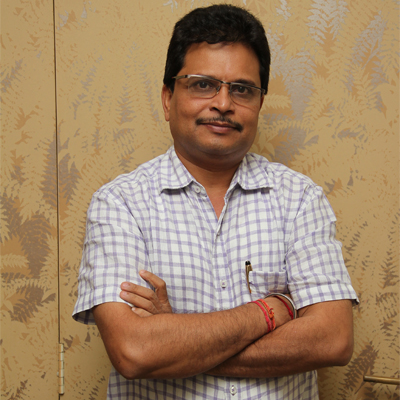
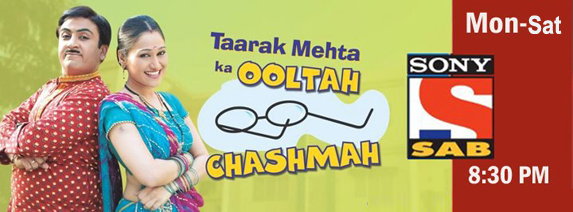
MUMBAI: At a time when daily soaps the likes of Kyun Ki Saas Bhi Kabhi Bahu Thi and Kahaani Ghar Ghar Ki ruled the small screen, one man dared to differ. Asit Kumar Modi of Neela Telefilms nurtured a dream – to produce a daily comedy based on Taarak Mehta’s column ‘Duniya ne oondha chashmah’ in the popular Gujarati weekly, Chitralekha. Friends found the idea ridiculous while general entertainment channels (GECs) simply trashed it. However, Modi stuck to his guns and finally found a taker for his show Taarak Mehta Ka Ooltah Chashmah! in Sab TV. Today, the sitcom has not only completed five years but has acquired sort of cult status, maintaining its position among the top ten TV shows of all time. In a heart-to-heart with Disha Shah of indiantelevision.com, Modi casts a long and close look at the journey thus far…
If there was one thing Modi knew he would have to face is repeated rejections. Indeed, it took eight long years for his show to come on-air. “In between 2000-2008, no GEC was ready to accept comedy. Every channel wanted to focus on saas-bahu and drama soaps because that was the trend at the time. However, I through that ‘if a daily drama can run, then why not a daily comedy?’” he says. Modi was also aware that writing a daily comedy was a huge challenge as one had to churn out something new every day to keep viewers hooked.
His friends laughed at him when he told them about his plans. “They de-motivated me and said that viewers are not going to accept a daily comedy; a genre like this will be accepted only over the weekends. But somehow, I had the confidence in me that channels would have to accept a daily comedy,” he recalls.
The show had to convey the harshest truths in the funniest possible way. Also, when he purchased column rights in 2001, all characters were Gujarati. He faced the uphill task of bringing in characters from different communities to appeal to a universal audience. “I wanted to showcase the lives of middle class families; how they live, eat, sleep, and even go through stress laughingly. Moreover, I wanted to showcase different cultures living together in one society; how they celebrate festivals together, the bond between them and so on in a simple but humorous way,” he remembers.
So, he researched each and every character he had in mind for the show and considering Mumbai’s cosmopolitan background, created mixed combinations like a Parsi and Punjabi family, a Tamil and Bengali family etc.
Armed with a concept, Modi approached channels including Star Plus and Sony (four times) but in vain. At the time, Sony had just taken over Sab TV, and NP Singh invited Modi and asked him to produce the show for Sab TV. That’s how Modi finally got a platform to showcase his talent. Apparently, Disney too had approached Modi but the channel wanted to feature only children, which is why Modi had to turn them away.
Casting was most difficult and took Modi over two months to finalise, what with each artist being auditioned five times to ensure the right fit. “I wanted faces with which people can identify. Dilip Doshi (Jetha) was always my first priority when it comes to comedy. Daya’s role was suggested by Doshi and a few other artists; I had watched her plays but wasn’t sure because she hadn’t really dabbled in comedy. I was a little confused, but when she mimicked a few personalities, she was excellent,” says Modi. He would often take the actors to the sets to familiarise them with their characters. “Whenever the set was in a developing stage, I used to take the actors and tell them that this was their society where they would stay and so on. In the beginning, I had to mould each of the actors personally. While it took time, at the end of the day, the whole team worked equally hard,” he says.
 |
Working within budgets was the other big constraint, considering Sab’s budgets were very low at the time the show was launched. “For the first six months, I incurred heavy losses. I had to create a huge society. Usually, a daily soap demands one set- either a house or a haveli or other methods of living. I had to create two sets – Gokhuldam exterior sets and interiors showcasing everyone’s houses,” reveals Modi. The one thing that kept Modi going was his belief that if your show is good, you can build the slot and become the slot leader as well. Besides, he had an understanding of the ways of TV, having been associated with it since the days of Buniyaad and Hum Log. “There was a time when people did not consider afternoon slots. But shows like Shanti, Bhabhi and Swabhiman on Star Plus made people watch TV during the afternoon as well. There was also a time when shows like Mahabharat and Ramayan made people watch TV on Sunday mornings,” he explains. “Your content should be good; it will anyway attract people. I believed that if I made a good show, there would be a loyal audience for Sab TV as well. With lots of households having just one TV set, we decided to cater to the entire family.”
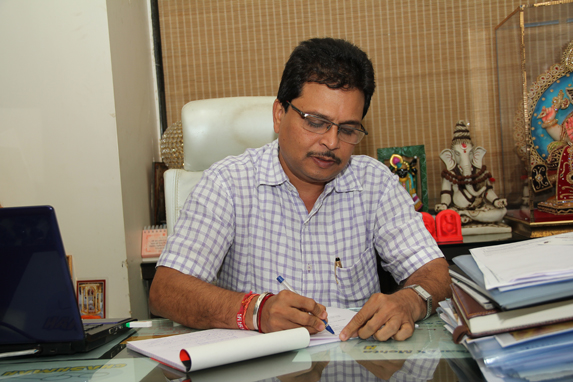
Putting a team in place was the third challenge. “The writers who came to me for work were all new; they didn’t have any experience in writing. So with my kind of experience, I had to train them and utilize their talents in the best possible manner. I have designed this show, so it is in my blood,” says Modi, adding, “We get our reward when we manage to make people smile at the end of a hard day.” Currently, Modi has about seven to eight people in direction, and around 10 people in editing. “I have an in-house editing studio and three to four writers. I am always aware of what’s happening in terms of the screenplay. I don’t want those ‘yes, sir’ type of people, otherwise how will I grow? In the creative field, one has to constantly grow and reinvent. And for this, you need people who can pinpoint your weaknesses,” he says. As it is a daily comedy, editing happens 24×7. “We do it shift-wise. Compared to daily soaps, comedies need much more editing. One needs to understand that comedy is more dynamic and hence, there is more work,” says Modi. The staff strength including directors, script writers, technicians and laborers is nearly 150. “What is wonderful is that my whole team has remained with me through these years. About 98 per cent of crew members have stuck with me. We all work as a team, a big family,” he adds with pride.
Looking back, Modi feels he has succeeded in making it a one-of-a-kind show. “In television, you work for the audience. One needs to be aggressive. You will lose the audience, if even one or two episodes are not up to their expectations. It will leave your target audience disheartened. They then have options of switching to other channels. So, for the stickiness of the show, I made the show as real and as simple possible. With daily soaps taking tons of leaps, in my show, I have taken no leap. No double meaning comedy jokes, it’s all about simplicity. The show is different and unique in its own way and that is the reason it is running strong for years,” he elaborates.
|
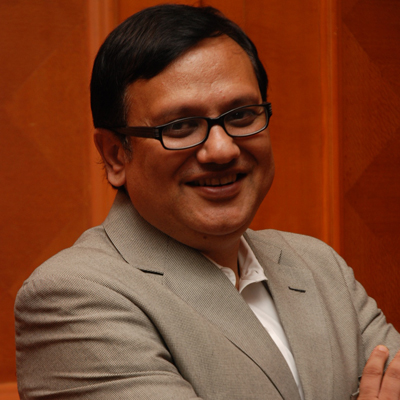 Anooj Kapoor, Senior EVP and Business Head, SAB TV Anooj Kapoor, Senior EVP and Business Head, SAB TV
|
While media experts observe that Sab TV’s reach would be lower than say, that of a Star Plus or Colors, the higher TVTs enjoyed by Taarak Mehta… mean that the show is watched more intently by viewers as compared to other offerings in the same time band. Thus, great content on Sab TV has translated into stickiness for the channel. Sab TV executive vice-president and business head Anooj Kapoor could not agree more on this. “When we defined our brand promise of ‘Asli Maza, Sab ke saath ata hai’, the idea was to showcase light-hearted entertainment that the entire family can sit together and watch. So, that was our brand promise. Modi interpreted our brand promise in a very nice manner by showing people of different communities living together in a fun sort of way.” Kapoor feels casting is the best thing to ever happen to the show, with the characters of Daya and Jetha becoming extremely popular.
Ask Kapoor the reason for Taarak’s success and he says: “In Taarak, because there are so many characters from such diverse backgrounds and different communities, that they are able to create a wide array of plots and keep the show robust and that is the reason why it continues to be successful.”
He informs that in the last six years, Sab TV has grown 600 per cent in terms of ratings despite a reach of 40 and a budget which is one fourth of the total. “That has been possible firstly, because of our unique decision taken as a channel and secondly, because of successful shows like Taarak and so on. “
Elaborating on Sab TV’s strategy as a channel, Kapoor says: “Our strategy was differentiation through innovation. We tried to create several different brands with each having a very distinctive kind of an image. So, the entire bouquet fell together very nicely which was ably led by the success of TMKOC.”
Going by industry experts, the stickiness has enabled Sab TV to rake a premium for its leading show. A 10-second ad spot on the channel goes for Rs 50,000. Its popular show commands a premium of 15 to 20 per cent. Taarak Mehta Ka Ooltah Chashmah sees its ad slots being sold for Rs 80,000.