|
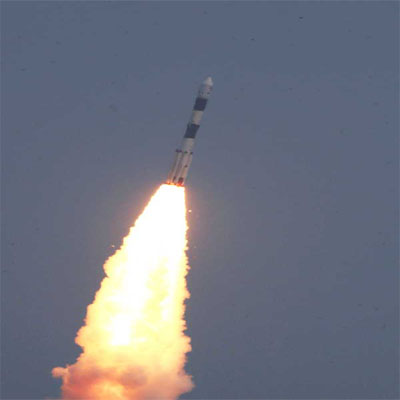
MUMBAI: Space launch company Space Exploration Technologies (SpaceX) and AsiaSat has inked an agreement to launch in 2014 two communications satellites using SpaceX’s Falcon 9 rocket.
The regional satellite operator in Asia will, thus, expand its fleet from four to six satellites in 2014. |
|
Asiasat president, CEO William Wade said, “We are pleased to have SpaceX as our launch partner for the two upcoming missions. We look forward to the timely and successful launches of AsiaSat 6 and AsiaSat 8, thereby expanding our fleet from four to six satellites in 2014 to provide more high quality and comprehensive satellite services in the Asia-Pacific region”.
AsiaSat 6 and AsiaSat 8 are scheduled to launch in the first half of 2014 from SpaceX’s launch complex at Cape Canaveral Air Force Station in Florida, USA. |
|
Asiasat 6 will have 28 high-powered C-band transponders while Asiasat 8 will have 24 Ku-band transponders and a Ka-band beam. The high-powered transponders on the satellite will enable the use of small antennas on the ground. The two SS/L 1300 satellites will serve Asia, the Middle East and Australasia. SpaceX CEO, CTO Elon Musk said, “SpaceX is proud to be the choice of AsiaSat, a pioneer in advancing satellite communications in Asia. We are producing the most advanced launch vehicles in the world, and the international launch market has responded–commercial launches now represent over 60 per cent of our upcoming missions.” |
Tag: AsiaSat
-

Asiasat to launch 2 satellites, expand fleet to 6 in 2014
-
Asiasat to be privatised
MUMBAI: Asian satellite service provider Asiasat has said that its major shareholder plans to take the company private to allow management to focus on business development in a competitive market.
Under the proposed privatisation there will be a scheme of arrangement under which all shares, including all shares underlying American Depositary Shares (ADS), not already held by Asiasat’s controlling shareholder will be cancelled in exchange for the share offer price of HK$18.30 per share.
For Asiasat shareholders, the cancellation price of HK$18.30 per share represents a premium of approximately 30.7 per cent over the closing price of HK$14 per share as quoted on the Hong Kong Stock Exchange on 8 February 2007, the day prior to the suspension of Asiasat’s shares.
An announcement said that the privatisation follows persistent over-supply of transponder capacity and the slow introduction of new applications in the Asia-Pacific region. As a result, the satellite market in the region remains very competitive, and Asiasat’s share price has not performed satisfactorily.
The offeror is a BVI incorporated company jointly owned by Able Star, an indirect wholly-owned subsidiary of CITIC Group, and GE Equity, an indirect wholly-owned subsidiary of General Electric Capital Corporation. The General Electric group is also proposing to acquire an interest in AsiaSat’s controlling shareholder. On completion of the acquisition and the privatisation, Asiasat will be jointly indirectly owned by CITIC Group and General Electrical Capital Corporation.
In the three year period prior to the announcement date, the price of AsiaSat’s shares decreased by 11.9 per cent compared to an increase of 51.1 per cent in the Hang Seng Index over the same period. The proposed privatisation would give the management of AsiaSat greater flexibility to focus on the development of business and marketing activities.
It would also relieve Asiasat of the heavy financial and administrative burden of dual listings on both the Hong Kong Stock Exchange and the New York Stock Exchange, which are disproportionate to the benefits of maintaining such listings. The proposed privatisation is subject to a number of conditions. It is the intention of Offeror to maintain the existing business of AsiaSat upon the successful privatisation of AsiaSat. No major changes to the existing operating and management structure are expected to be introduced as a result of the implementation of the privatisation. For AsiaSat customers, there will be no change.
The total amount of cash required to effect the privatisation is approximately HK$2,235 million, which will be financed with from the existing resources of CITIC Group and GE Equity.
-

Peter Jackson of AsiaSat wins Casbaa chairman’s award
MUMBAI: AsiaSat satellite system operator CEO Peter Jackson has been awarded with the Casbaa chairman’s award 2006 for outstanding contribution to the Asia Pacific multi-channel cable, satellite and broadband pay-TV industries in the previous 12 months.
Jackson has been a member of Casbaa for almost all of the association’s 15 year history and a member of the board of directors for seven years.
The Casbaa chairman’s award 2006 was presented at the conclusion of the Casbaa TV advertising awards held on the final day of the Casbaa Convention 2006 in Hong Kong.
Casbaa chairman Marcel Fenez said, “With his pan-regional responsibilities and a background in telecommunications, Peter has developed an almost unique understanding of media and telecoms issues which has hugely benefited our industry and the association.”
The formal citation for Jackson’s award reads, “In recognition of Peter Jackson’s unparalleled professionalism and integrity in one of the most competitive sectors within our industry and his ongoing commitment to the association.”
“Beyond that, Peter’s contribution’s to the association as a board member and the leading representative of the satellite sector has helped enormously to create the credible industry voice that we are today,” added Fenez.
Jackson said, “I am honoured to receive this award. But the honour is as much for the team at AsiaSat as it is for me. I also think the award is an endorsement of the general achievements of Casbaa itself in the years that I have been involved. “
Prior to joining the listed AsiaSat as CEO in 1993, Jackson was the regional director, Asia Pacific of cable & wireless, which he joined in 1970 with responsibilities for several satellite telecom ventures around the region. He has also worked in the Caribbean, the United Arab Emirates and China.
The other nominees for the 2006 Casbaa chairman’s award were:
HBO
For the launch (and marketing) of the new HBO multiplexes which maintain programming quality whilst adding to customer choice and ease of proposition understanding.Nokia
For the promotion of the DVB-supported DVB-H standard and its efforts to generate a greater understating of the mobile TV opportunity to both mobile platform operators and content providers.PCCW – NOW TV
For the continued expansion of its subscriber base and the proactive marketing of a secure and advanced pay-TV platform with a growing interactive capability.Star TV
For establishing a broad range of tailored channels, to cater to specific needs (such as South India programming). The network has also demonstrated a deep understanding of the industry’s future, both on-air and into platforms such as mobile. And STAR TV has been a leader in branded content.Starhub
For aggressively expanded its channel line-up and invested in enhancing and marketing its services. The total number of channels has increased to 94. Starhub recently introduced a digital video recorder set-top box; launched pay per view service, FlexiWatch – engaged in an HD trial; and, launched a new brand campaign ‘For the life that I love, I am a hub’ to drive subscription.Marketing Magazine (Singapore)
In recognition of its excellent work in promoting the delivery of key demographics by cable and satellite channels to advertisers. -

Brunei’s RTB International using Asiasat to expand presence across Asia
MUMBAI: Asian satellite operator Asiasat and Brinei’s pubcaster Radio Television Brunei (RTB) gave signed a lease agreement.
This is for the use of C-band capacity on Asiasat 2 for free to air distribution of the ‘RTB International’ channel, serving viewers in Asia, Australasia and the Middle East.RTB International has commenced broadcasting on Asiasat 2. It offers programming in Malay and English languages 24 hours a day on a range of content including news, current affairs, religious, dramas, musicals, game shows, documentaries, sports, magazines and educational programmes.
“We are very excited to expand our broadcast service to the whole of Asia, and further to the Middle East and Australasia via Asiasat 2. We have been using Asiasat 2 for the Asiavision daily television news exchange service with many other Asian broadcasters for the last few years.
RTB director Lim Sam Lee says, “We are very satisfied with Asiasat 2’s service and we found it a very popular satellite among Asia’s leading broadcasters. Our launch of service on Asiasat 2 would enhance our capability to access more viewers across the Asia Pacific region and to introduce to international audiences the socio-economic and cultural development in Brunei Darussalam”.
Asia CEO Peter Jackson says, “We are very pleased to have RTB International on Asiasat 2. The introduction of this channel further strengthens Asiasat 2’s Asian content offerings. This, along with the other television programming from the Middle East, Europe and the US affirms Asiasat 2’s position of being Asia’s most comprehensive and popular broadcast platform for international broadcasting”.
RTB International will be available on AsiaSat 2 in C-band with the following reception parameters:
Transponder: 5B
Frequency: 3786.5 MHz
Polarisation: Horizontal
Modulation: QPSK
Symbol Rate: 6.00 Msym/sec
FEC: 7/8 -

Asiasat sees HK $475 million sales till 30 June ’06
MUMBAI: Asian satellite communications provider Asiasat has announced interim results for the six months ended 30 June 2006.
It managed sales of HK $475 million which represents a rise of seven per cent.
Profit attributable to equity holders HK$239 million a rise of 29 per cent. Overall utilisation rate up four per cent despite overcapacity in many Asian markets. During this period it expanded blue-chip customer base with long-term contracts. It started the process of construction of Asiasat 5 in May.
Turnover for the first half of 2006 was HK $475 million including a one-time receipt of HK $46 million for early termination of a contract, an increase of HK $30 million. As of 30 June 2006, the Group held contracts worth HK $2,785 million , of which approximately HK $381 million will be recognised in the second half of the current year.
Despite the slow market, Asiasat says that it has been able to make a number of improvements and maintain its backlog level.
Asiasat chairman Romain Bausch said, “Despite some encouraging signs, there is little evidence emerging to indicate that these will make significant changes to Asiasat’s results for the second half of 2006.
“Thus, it is unlikely that the results for the full year will be materially different from those of the prior year. However, the group is in excellent shape and is making solid progress wherever possible in the development of our customer products and services, particularly with the contracting of our new satellite. As the market leader in the region, we recognise our role in setting the standards for quality and service and we remain optimistic about future growth. Asiasat’s reputation for excellence and its market leadership position the company well for the future.
“The economic improvements that we have noted in recent reports continue to be evident in the Asia-Pacific region. However, the persistent overcapacity present in many markets across the region is still holding down transponder rates and causing the satellite market to remain stubbornly flat. As a result, despite an increase in demand in our business and a concerted effort to capitalise on opportunities, little positive impact has come through in the results for the first six months of 2006.
“In these circumstances and with a view to the longer term, it is pleasing that I am able to report that, following the 18 per cent increase in our overall utilisation rate during last year’s difficult market, we achieved a further four per cent increase in the first half of 2006. This is an encouraging improvement amidst otherwise unimpressive results.
“Asiasat, however, continues to attract and maintain an enviable blue-chip customer base with long-term contracts. The company is also debt free and has no need to make any provisions for doubtful debts in the period under review. Looking at the longer term, our confidence in a bright future for satellites in the Asia Pacific is unchanged, as is our belief in Asiasat’s potential to benefit from this in due course. For these reasons, we continue to focus on our customers and on enhancing our products and services so as to further consolidate our market leadership and be ready for the next growth phase.
“Underlining our continued confidence in the future of the Group, in May this year we announced the signing of the construction agreement to design and build AsiaSat 5, and we also announced its Launch contract. This new satellite, a replacement for Asiasat 2, is scheduled for launch in the second half of 2008,” said Bausch.
-

Asiasat selects Zenith rocket for Asiasat 5 launch
MUMBAI: Satellite operator Asiasat has signed a launch contract with Sea Launch for the launch of Asiasat 5 aboard a Zenith-3SLB rocket on the Land Launch system.
The launch will take place in the second half of 2008.
As had been reported earlier by indiantelevision.com, Asiasat 5 will be built on a SS/L’s 1300 series satellite platform and will carry 26 C-band and 14 Ku-band transponders with an estimated operational life of 15 years. It will replace Asiasat 2.
AsiaSat 5’s C-band footprint will offer an extensive pan-Asian coverage and its high power Ku-band beams will focus on both East and South Asia, with a steerable beam that will cover anywhere within Asiasat 5’s geographic coverage.
Asiasat CEO Peter Jackson says, “We are pleased to have completed this major milestone in our procurement of Asiasat 5. The Land Launch Zenit-3SLB rocket is based on a mature, flight-proven design; it is a highly reliable launch vehicle that offers the schedule assurance that meets our requirements for a 2008 launch.”
-

Asiasat contracts Space Systems/Loral to build Asiasat 5
MUMBAI: Satellite operator Asiasat has signed a construction agreement with Space Systems/Loral (SS/L) to design and build Asiasat 5, a replacement satellite for Asiasat 2.
Asiasat 5 will launch in the second quarter of 2008. It will be built on a SS/L’s 1300 series satellite platform and will carry 26 C-band and 14 Ku-band transponders with an estimated operational life of 15 years.
Asiasat 5’s C-band footprint will offer a more powerful pan-Asian coverage than that of AsiaSat 2. Its Ku-band coverage will consist of three high power beams, two of which will cover East Asia and South Asia and an in-orbit steerable beam that can be positioned to provide service anywhere within Asiasat 5’s geographic coverage.
Asiasat 5 is designed to replace Asiasat 2 at the orbital location of 100.5 degrees East in advance of Asiasat 2’s scheduled retirement of 2010. Launching Asiasat 5 satellite two years earlier than required allows sufficient time to construct and launch a replacement satellite if necessary.
Asiasat CEO Peter Jackson says, “The SS/L 1300 series satellite is a space-proven platform and it offers the performance, reliability and cost effectiveness our customers require for AsiaSat 5. This satellite will allow Asiasat to expand our capacity and provide Asiasat with the capability of serving more diverse satellite services from this popular orbital slot of 100.5 degrees East.
“Planning this project well ahead of Asiasat 2’s retirement confirms our commitment to ensure continuity of service to our customers in the years ahead.”
-

Zee English and Zee Movies go on the blink
The two babe-in-the-wood channels blanked out yesterday on the day of their launch for a cumulative period of 45 minutes. The first black out came between 9:30 and 10 pm and was followed by another shutdown between 11 and 11:15 pm. The channels are being beamed off.
Zee TV officials are looking into the development. However, Asiasat officials point out that an unknown carrier barged in on the same frequency of the two chanels leading to their disappearce. However, they add that they have not been able to ascertain who it was and whether the interfering transmission was intentional or accidental.
Sources, however, indicate that there was a problem during the transmission of the channels, which could be attributed to a mismatch of the symbol rate at which the transmission was being done and the symbol rate at which the Philips boxes – which are being used receive the two digital channels – were set. That resulted in a blackout.