Tag: Asianet

  • BCCC directs Sony to run apology scroll on 30 Dec

    BCCC directs Sony to run apology scroll on 30 Dec

    MUMBAI: On 17 December, the Broadcasting Content Complaint Council (BCCC) had held a meeting in Mumbai to discuss the 30 – 40 complaints received against numerous channels and what action should be taken.

    One of the biggest decisions taken from it was for Sony. The channel management has been asked by the council to run an apology scroll on 30 December. The complaint was filed with regards to the display of a board promoting abortion in Madana Khurd village during an episode of Kaun Banega Crorepati (KBC) aired on 19 August.

    However, sources from BCCC said that the issue was raised against the show’s producers a couple of months back on a complaint by the Haryana Health Department. As per reports, the board read “500 rupees me garbhpaat karwao aur 5 lakh ka dahej bachao (Get the abortion done in Rs 500 and save dowry of Rs 5 lakh).”

    As per the directive, the channel has to run an apology scroll in Hindi and English during now-off-air KBC’s time slot i.e. from 8.30 pm to 9 pm on 30 December.

    Of the numerous complaints, the independent council, set up by the Indian Broadcasting Foundation (IBF) to examine complaints about television programmes received to ensure that the programmes are within the self-regulatory content guidelines, also discussed complaints against Zee TV amongst other networks as well.

    “One of the episodes of Zee’s popular programme Qubool Hai showed a woman being tortured and hence, a complaint was filed against it,” informs the source from the council while adding that an explanation has been asked from the channel and the decision on what should be done next will be taken on 20 January.

    Similarly, south India’s Asianet also received complaints against its two programmes out of which one was disposed off while the other’s decision will be taken on 20 January as well.


  • ‘Ningalkkum Aakam Kodeeswaran’ season 3 on Asianet

    ‘Ningalkkum Aakam Kodeeswaran’ season 3 on Asianet

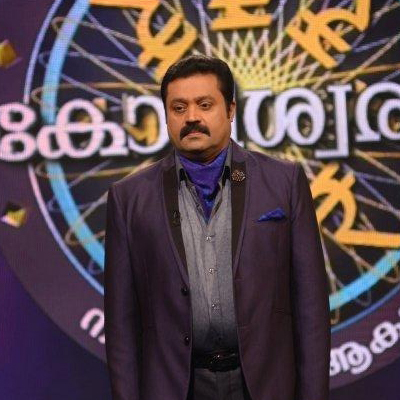
    MUMBAI: Popular quiz show ‘Ningalkkum Aakam Kodeeswaran’ season 3 (NAK Season 3) will be telecast on Asianet Channel from 29 December.  The third edition of ‘Ningalkkum Aakaam Kodeeswaran’, which saw actor Suresh Gopi donning the hat of an anchor with elan, offers a prize money of Rs 1 crore, so far unsurpassed on South Indian television channels.


    The game show will test the competence of the participants in general knowledge , current affairs and all the major fields of knowledge. The preliminary round had participants vying for opportunity to attend the phone-in, written test and interview. The finalists can join the anchor in the hot seat and try their luck in the 15 rounds of the game.


    The finalists play a ‘Fastest Finger First’ round to make it to the main game. From there on, they play rounds with increasing levels of difficulty, and winning higher amounts of money, culminating in the Rs 1 crore prize. Contestants can stop at any time having viewed the next question.


    Asianet & Big Synergy Media have produced the show. The show will be telecast on Asianet at 8.00 PM on Every Monday to Thursday.

  • Cisco expands reach in Indian digital homes

    Cisco expands reach in Indian digital homes

    KOLKATA: US technology major, Cisco has expanded its reach to more than 40 million digital homes across India with its video guard conditional access (CA) and digital rights management (DRM) solutions.


    Using the industry estimated average of five people per household, Cisco is now enabling a rich and advanced TV experience for more than 200 million viewers in India, an important milestone that  reinforces the company’s leadership at a time when the pay-TV industry is on the cusp of a major transformation, view the analysts.


    Cisco’s CA and DRM technology ensures critical protection of premium content with a zero piracy track record. A strong team of engineers working at the research and development center in Bangalore is dedicated to the technology needs of leading satellite and cable service providers in India and worldwide.


    Cisco is a pay-TV technology partner for more than 150 pay-TV operators as well as media and entertainment companies worldwide, including leading direct-to-home and cable operator customers in India, such as Airtel Digital TV, Asianet, DEN, GTPL, Hathway and Tata Sky.


    “In the changing landscape of pay-TV services in India, this milestone highlights our continued growth with several leading MSOs in the country,” said Cisco Service Provider Video Software Solutions vice president sales Asia Pacific Sue Taylor.


    Cisco India and SAARC president Dinesh Malkani said, “Achieving the milestone of 40 million homes in India reinforces our commitment to the government’s mandate to digitise the cable industry and also speaks of our ability to provide best in class solutions and technology. We work closely with our customers to enable them to provide an unparalleled experience to their subscribers as well as help monetise their investments.”

  • Asianet Television Awards 2014 to be aired on 24 & 25 May

    Asianet Television Awards 2014 to be aired on 24 & 25 May

    BENGALURU: Asianet is all set to broadcast its Television Awards 2014 this Saturday and Sunday between 7 and 11 pm. The eight hour long event will be aired in two parts inform company sources.


    The event was held on 10 May at the Marine Beach ground in Kozhikode.


    The company says that about 10,000 people attended the live event that saw a cross section of south Indian film and television stars.


    Some of the awardees/ awards included: Director Ranjith presented the Asianet Life time Achievement Award to the veteran actress Valsala Menon for her outstanding contributions to Television Industry; ‘Parasparam’ won the award for the best serial; Jayakumar and Harison won the award for the best director for the serial ‘Balaganapathi’. Vivek Gopan won the best actor award for his role in ‘Parasparam’ while Rekha  Ratheesh took home the best female actress trophy.


    Asianet has roped in Manjilas brand Double Horse as the title sponsor, the event is powered by Travancore Builders; with John’s Umbrellas as first associate sponsor,  Josco Jewellers, , KLF Kokkanad , Malabar Gold& Diamounds, Pothy’s, Vivel, Cera, Libero, Paragon, Prestige Cookers, DHFL as  associate sponsors.

  • SRK honoured with the ‘International Icon Of Indian Cinema’ by Asianet

    SRK honoured with the ‘International Icon Of Indian Cinema’ by Asianet

    MUMBAI: Millions of viewers of Asianet, Kerala’s number one channel, have selected Shah Rukh Khan as the ‘International Icon Of Indian Cinema’. This prestigious laurel was presented to SRK at the 16th edition of Asianet Film Awards by South Indian Cinema’s superstars Mammootty and Mohanlal. The award function was held at Medan, Dubai on Friday, 10 January, 2014.


    “It is a great honour for me to receive this award by Asianet.  And to be given the award and so much love by Mammootty and Mohanlal sir was an amazing feeling. They are the artistes who have inspired me as an actor always. I have always worked towards making or being a part of cinema that entertains all and is meant for all. It is humbling to know that it gets noticed in the same capacity. Awards always motivate me to work harder and make more cinema that brings a smile on everyone’s face. I wish Asianet many more glorious years of entertainment and success,” said Shah Rukh after receiving the award.


    At the awards ceremony, Mohanlal sang an entire song from Dilwale Dulhaniya Le Jayenge and SRK along with both the South film veterans danced on Chennai Express’ song, Lungi Dance.

  • Suvarna to present first Kannada mythological daily Shivaleelamrutha

    Suvarna to present first Kannada mythological daily Shivaleelamrutha

    BANGALORE: Asianet’s Kannada GEC Suvarna is set to present Kannada television’s first daily mythological serial – Shivaleelamrutha.

    Airing from 9 June, the serial is based on legendary stories of the Hindu deity Shiva.

    Shivaleelamrutha will be telecast Monday to Friday, between 9 and 9.30 pm. It will replace Puranik’s historical daily serial ‘Sangoli Rayanna’ which has been moved to the weekend slot at the same time. The channel has roped in construction house Kristal as lead sponsor.


    Producer-director Suneel Puranik has already canned 30 episodes (each 22-23 minutes long) of what could be a mega-opus spanning 260 episodes. The first phase calls for about 80 episodes.

    “We are spending about Rs 150,000 per episode. If successful, we will extend it beyond 260 episodes,” informed Puranik while speaking to Indiantelevision.com. Puranik is the CEO of production house Samruddhi.


    Each episode of a mythological like Shivaleelamrutha takes about three days to complete, as against two episodes per day for conventional serials, revealed Puranik. “One scene of around 4 minutes with animation and SFX, the background graphics, etc. took a whole day for composing, rendering and finishing,” added Puranik to stress that directing a mythological serial is a different ball game altogether as compared to conventional television content.


    That Suvarana is betting big on this serial to bring in sagging ratings is obvious from the fact that it has set aside a Rs 6 million advertisement budget to be spent over 60 days. A big budget Kannada film spends less than this for marketing and advertisement, informs an industry source. Suvrana has booked 200 billboards across Karnataka and as well ads on major local newspapers across Karnataka to promote the serial.

    Promos will run on both its channels – Suvarana and Suvarana News. The channel proposes to have radio jingles too. At present it is considering AIR, since the major Kannada stations in the city address a yuppie and younger generation, rather than the more serious Kannadiga. However, it has still not completely kept these stations off its radio advertisement radar altogether.


    Cost of production has been the main inhibiting factor that has prevented the production of mythological serials in Karnataka. The Kannada industry does not permit dubbing of other language films and serials into Kannada. Hence, the Kannadiga has been deprived of mythological fare in the local lingo.

    NDTV Imagine proved lucky with Ramayan and has restarted the trend with other GECs following suit. Suvarna hopes to repeat the same success recipe with Shivaleelamrutha in the state of Karnataka.

  • Tamil Nadu & DAS: Arasu issues notice against MediaPro

    Tamil Nadu & DAS: Arasu issues notice against MediaPro

    BENGALURU:  Even as the Madras High Court has warned the Telecom Regulatory Authority of India (TRAI) not to take any coercive actions against Tamil Nadu Arasu Cable TV Corporation (TACTV), the latter has taken steps to protect its interests in the state. 

    The government owned MSO issued a public notice on 25 December, cautioning subscribers that the channels under MediaPro Enterprises India (MediaPro) would be disconnected 21 days after the issue of the notice.

    Arasu has a presence in 27 districts in Tamil Nadu, having leased the headends of private MSOs there. 

    The public notice states that the MSO has decided to take this action as the aggregator is in breach of letter of acceptance and non-conclusion of price negotiation between the two.  It warns subscribers and LCOs that they may not be able to view the channels on their TV sets 21 days from the date of publication of the notice. However, the MSO informs its subscribers and LCOs that alternate channels will be available for viewing in place of these 59 channels.

    The notice has been issued under section 4.2 of the Telecom Regulatory Authority of India’s (TRAI) Telecommunications (Broadcasting and Cable Services) Interconnection Regulations 2004.

    Unconfirmed reports allege that TNACTV has been arm twisting pay channel broadcasters and distributors to pay carriage fees to make up a for a mismatch of revenue and payouts to pay channels  of about 40 percent. According to TRAI, Arasu Cable, that is still delivering its services on analogue, has about 6 million subscribers under it in Tamil Nadu making up for a huge chunk of the 13 million cable TV homes in the state.

    MediaPro was unavailable for comment at the time of filing this report. There are 59 channels listed including Star Vijay, Zee Tamizh, Asianet, Asianet Plus and several other Hindi, English and regional channels from the Star and Zee stable which MediaPro distributes. 

    Whether the impact of Arasu clipping Mediapro will be heavy or not, nobody is willing to bet. However, prima facie the channels which would be impacted would be the English entertainment and movie channels, Zee Tamizh, Star Vijay, Asianet, and to a certain extent the kids, sports, news and factual entertainment channels which go to form the Mediapro  bouquet  However, the main drivers of the bouquet Zee TV and Star Plus would be impacted marginally, since Hindi is not a preferred viewing option in Tamil Nadu. 

  • Regional television struggles to find its voice

    Regional television struggles to find its voice

    BENGALURU: What good would a FICCI MEBC event be in Bengaluru without a discussion on the current status of regional TV, ratings, content and formats? The session moderated by indiantelevision.com CEO and editor in chief Anil Wanvari saw four personalities – TAM CEO L V Krishnan, Asianet and Star Suvarna Business Head Anup Chandrashekaran, TV serials director Shruthi Naidu and actress Malavika Avinash – talk about the evolving genres in the south TV market and the tussle that that the industry has with the TAM ratings.

    According to the FICCI Deloitte report, the south Indian TV industry was valued at Rs 13, 470 crore in FY 2013 and is set to grow at an estimated CAGR of 20 per cent over the next four years. TAM’s Krishnan added that it also accounts for 20 per cent of national viewership. To top it all, south Indian viewers are glued to their TV sets almost 30 per cent more than their northern cousins. The former spend 150-200 minutes a day watching soaps, series, movies, drama and non-fiction as compared to HSM viewers who spend 100-110 minutes disclosed Krishnan.


    Kannada TV is in a strange predicament and its viewership is eroded because of the fact that the state shares its borders with others such as Tamil Nadu, Andhra Pradesh, Kerala and Maharashtra which means viewers in these regions watch TV shows in the languages prevalent in those states. To make matters worse, only 35-40 per cent of Bengaluru’s populace speaks Kannada. This despite, Krishnan is optimistic that Kannada TV will do well. “It has grown by 25 to 30 per cent in the last five years in terms of engagement and the next four years will see the viewership increase by 20 to 25 per cent,” he says.

    Chandrashekaran said that the south TV industry is experiencing changing consumption patterns. “Fiction consumption is growing here as compared to HSM where non-fiction is taking over,” he said. “There has been de-growth of film consumption in the states of Karnataka, Andhra Pradesh and Kerala. Movies are unviable on TV today everywhere else except in Tamil Nadu,” he said. “We pay Rs 2.5 crore to acquire a title; but we spend around Rs 70,000 to Rs 80,000 an episode for fiction and we get the same or better viewership. Then, big ticket formats are also slowly spreading such as the Kannada and Tamil versions of KBC,” he added. “Then ETV produced Bigg Boss in Telugu and Kannada.”

    Both Avinash and Naidu bemoaned the fact that budget restrictions in Kannada have led to creativity and innovation being stifled in the region. “The protagonists in most shows are becoming younger – in their late teens or early twenties, which leaves limited scope for actors like us who have been around for 15 years,” wailed Avinash. She, however, added that her Oprah Winfrey-like conflict resolution show has given her a good platform for her to exploit her creativity.

    Chandrashekaran said that the younger protagonist strategy is being resorted to because broadcasters are trying to draw in younger audiences – apart from the plus 45 year olds – to watch television. Krishnan pointed out that the broadcasters strategy is on the button as TAM Media research has shown that boys 14 and above tend to follow what their fathers are watching, mainly sports while girls follow their mothers and watch serials.

    Chandrashekaran said the economics of programming dictate that higher budgets for shows will work in a broadcast network scheme. “If we can produce and amortise our costs over various languages like Tamil, Telugu, Malayalam and Kannada it will make our shows viable,” he explained.


    Naidu agonised over the fact that Kannada broadcasters are increasingly resorting to making adaptations of successful Hindi shows rather than encouraging and experimenting with original stories from Karnataka. Chandrashekaran said that this was happening because there is a paucity of scriptwriters in the region and the novelists and literature writers from the state tend to look down on TV as below their creative dignity. “We do a lot of interactions with our viewers and we only focus on filling whatever our focus group studies throw up as viewing need-gap.” Avinash pointed out that emotion and drama work very well with TV audiences which is why adaptations of Hindi shows in the form of soap, drama and series are working on regional television.

    The topic also shifted to the credibility of TAM with her asking whether TAM data is rigged due to inconsistent ratings as compared to the popularity and visibility of shows. To this, Krishnan said that they have checks and balances in place to prevent any penetration or doctoring of the data. “Yes, I am honest enough to say, one can reach out to our people meter sample, but we have policing mechanisms in place which will immediately penalise anyone who is trying to do that,” he emphasised.

    Niche genres are missing in the south with most of the channels being GECs or film channels. But Chandrashekharan says that the potential to harvest niche genres is there.

    “With the 10+2 ad cap coming in, we will see a lot of advertiser funded programs (AFPs) specially in Tamil Nadu because its base is huge,” he said. “I am very optimistic about our future and I can only see rosy pickings for everyone.”
  • Seven Indian channels added to StarHub TV in Singapore

    Seven Indian channels added to StarHub TV in Singapore

    MUMBAI: Festive season is the time when channels make the best use of the opportunity served to them. This time, it’s also happening overseas as StarHub TV, Singapore’s only cable operator service has decided to give its viewers a treat of seven new Indian channels to view, increasing its lineup of channels from the country to nine.

    The channels that are now a part of the bouquet include: Life Ok, NDTV 24 X 7, NDTV Good Times, Verna, Zee Tamizh, Zee Khana Khazana and Zee TV HD. While the channels became a part of StarHub from 18 October, subscribers can get a free preview till 4 November.

    StarHub TV also has a facility called ‘Anywhere TV’ that allows subscribers to view TV on their personal devices through a subscription plan. Except for Life OK, remaining six new channels along with three others Vannithirai, Zee Cinema and Zee TV can be viewed through ‘Anywhere TV’.

    “India is a colourful country with a rich cultural tapestry,” said StarHub TV head of media business unit Lee Soo Hui. “The diversity of content across these seven new channels will ensure that our customers are now spoilt for choice when it comes to Indian programmes,” she added.

    As part of Diwali celebrations, the existing channels will also be available for free from 1 to 4 November. These include Colors, Asianet, Channel V India, Sony, Star Gold, Sony Max, Star Plus, Star Vijay, Sun Music, Sun TV and Zee News apart from the nine that will be available on ‘Anywhere TV.’

    A ‘Manoranjan’ pack gives eight entertainment channels including Life Ok and Zee TV at $25.90 per month while the NDTV pack comes at $6.24 per month. Verna and Zee Tamizh are available at a la carte price of $8.56 and $6.42 respectively per month.

  • Cisco providing pay TV to 150 million viewers in India

    Cisco providing pay TV to 150 million viewers in India

    NEW DELHI: Cisco today claimed it was now enabling a rich and advanced TV experience for over 150 million viewers in India, using the industry estimated average of five people per household.

    Thus, it said it had established itself as the leading provider of enhanced TV viewing experiences to more than 30 million Indian homes, a milestone that reinforces the company’s leadership in the digital pay-TV solution market in India.

    Cisco service and solution platforms are in the prime position to address the changing needs of pay-TV operators now and into the future, with more than 10,000 R&D experts in Bangalore. It claimed that the company currently enjoys a leading market share in conditional access and middleware. (Source: MPA Media Route, 26 February 2013).

    Cisco claimed it is a trusted pay-TV technology partner for more than 100 operators worldwide, with leading direct to home (DTH) and cable operator customers in India including ADN, Airtel Digital TV, Asianet, Atria, CCN, Darsh Digital, DEN Networks, Fastway, GTPL, Hathway, JAK Communications and Tata Sky, to name a few.

    Cisco is fully committed to supporting the cable TV industry to meet the government mandate to roll out digital addressable systems in a phased manner by 31 December 2014.

    India is the leading DTH satellite market in Asia Pacific with the most subscriber homes and is second only to the US DTH satellite market, which it is expected to overtake in the next few years.

    Cisco is committed to delivering a host of world-leading, affordable and innovative solutions and services to help its satellite and cable customers to differentiate their services in their markets in India, which has an estimated 135 million pay-TV homes.

    Cisco India and SAARC senior VP sales Jeff White: “The Indian pay-TV industry is one of the fastest growing and most dynamic in the world. India now accounts for nearly a third of Cisco‘s subscriber homes in the Asia Pacific region. We are excited about our leadership in the industry, deep commitment to our customers and sharp focus on innovation in India.”

    Cisco service provider video technology group senior VP & GM Jesper Andersen said: “Achieving the milestone of over 30 million digital homes in India is a testament to our commitment to India over the last 18 years and our partnerships with some of the most successful cable TV and DTH satellite platforms in the country. The Indian pay-TV industry is one of the fastest-growing and most dynamic in the world. We confidently expect tens of millions more households to benefit from Cisco’s enhanced TV-viewing experiences, as the demand for advanced services and applications surges.”