Tag: Asianet News

  • Kerala’s Biggest Onam Celebration is at Thriuvananthapuram

    Kerala’s Biggest Onam Celebration is at Thriuvananthapuram

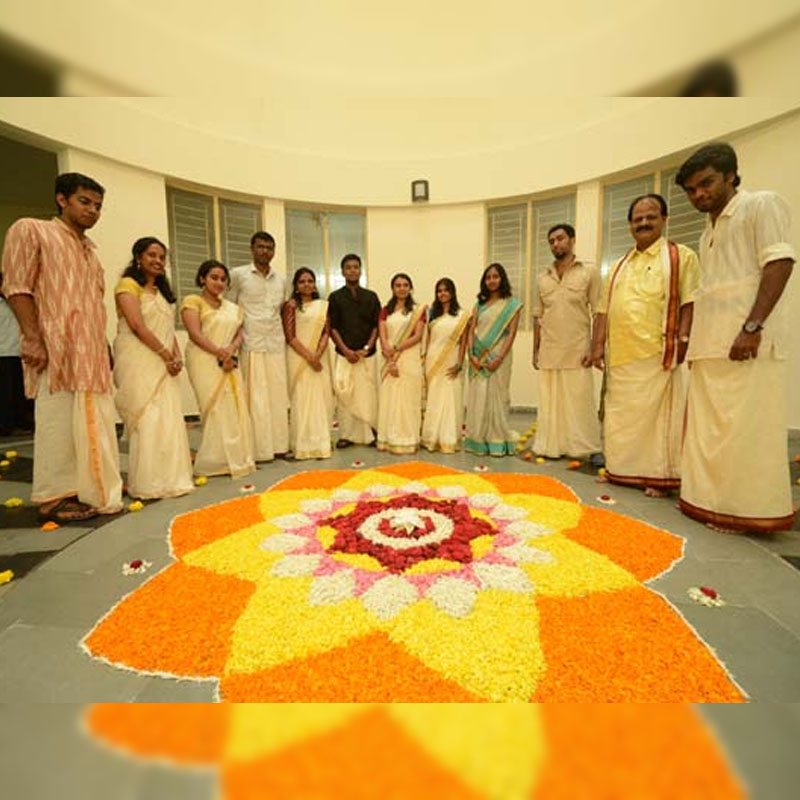
    Mumbai: This Onam, ensure your brand stands out at Onakkoottayma 2024 — Kerala’s premier Onam festival! From September 13th to 22nd at Kanakakkunnu Palace, Thiruvananthapuram join thousands of Malayalees for vibrant entertainment, captivating performances, exciting competitions, and diverse cultural showcases.

    With guaranteed footfalls of minimum 2.5 lakhs, this is the best opportunity to showcase your brand and connect with a wide audience during the Onam festivities. Don’t miss this chance to make a lasting impression!

    Entry Fee of Rs 50 will be collected, a part of which will be contributed to Chief Minister’s Distress Relief Fund for Wayanad.

    For brand associations:          98460 61164  /  97428 88438

  • Asianet News’ digital business turns profitable

    Asianet News’ digital business turns profitable

    Mumbai: Asianet News Media and Entertainment, one of the leading players in the Indian media industry has closed the financial year 2021-22 EBITDA positive for its digital business. The group has a multi-media presence across the country in multiple languages via its digital platform (asianetnews.com, indigomusic.com), TV channels (Asianet News and Asianet Suvarna News), print publication (Kannada Prabha) and radio channels (Indigo).

    On the back of significant revenue growth and cost optimisation, the digital business of AMEL delivered positive EBITDA for the first time. During the year, the company has re-organised many parts of its business with a focus on increasing ARPUs and on delivering positive unit economics.

    Executive chairman of the group Rajesh Kalra spoke about how tough times brought people together to deliver despite all odds. “It has been phenomenal to witness how our teams came together during the most trying times to optimize and grow at a record rate. The determination and discipline that our hands-on leadership team and our immensely talented colleagues have tirelessly demonstrated has resulted in this outstanding performance. I am confident that this is just the start of much greater things to come for the group,” he said.

    “FY-22 was a tough year on multiple fronts. Many of us lost near and dear ones, but the way our teams with complementary skill-sets have supported each other and remained focused towards our common goal was heartening to see,” commented Asianet News chief operating officer Ruchir Khanna. “Top/bottom line growth is only a reflection of a healthy ecosystem that we have been able to form in the last year. We will continue to pull on our P&L levers in the coming year, and launch several new products that will drive our audience reach, engagement and retention.”

    Commenting on this achievement for AMEL, chief business officer Samarth Sharma said, “The last FY posed several challenges at both personal and professional levels. The synergies drawn from the adversity that the teams witnessed last year have translated into our digital business delivering record revenue There have been several innovative revenue initiatives from our teams across the globe that contributed to this success and we’d like to thank our client, agency, data and intelligence partners for showing faith in us in our journey.”

    Besides strengthening its Indian language footprint across the country, Asianet News has also made significant investments in English and Hindi to extend its dominance pan India.

  • Asianet News rolls out employee stock ownership plan

    Asianet News rolls out employee stock ownership plan

    Mumbai: Asianet News Media and Entertainment has rolled out an employee stock ownership plan (ESOP).

    The stock option plan will be extended to Asianet’s long-term employees as well as new team members who have displayed exceptional performance, said the statement.

    “ESOPs form a critical part of employee value proposition and we want to reward those going over and above their responsibilities,” said Asianet News chief operating officer Ruchir Khanna. “The policy has already been initiated and the ESOPs have been granted to the employees who have been an important part of Asianet’s growth. This shall remain open to other employees falling in the eligibility criteria in the future as well.”

    The group has a multi-media presence across the country in multiple languages via its digital platform, TV channels, print publication and radio channels.

    “It is a matter of great privilege and pride that we are able to recognise our team members, who have been a part of our business growth story, as shareholders,” said Asianet News chief business officer Samarth Sharma. “This initiative should provide a fillip to our employees to work towards a common goal. We’d also like to thank our client and agency partners besides our strategic partners for their support in our growth.”

  • Asianet News drives Covid awareness as anchors appear on air with masks on

    Asianet News drives Covid awareness as anchors appear on air with masks on

    MUMBAI: In an attempt to raise awareness among the general public regarding the usage of face masks to combat the spread of Covid2019, Asianet News anchors have been using face masks while on air over the past few days. The move by Asianet is now receiving positive responses from all corners, as this is for the first time in Indian television that all the news anchors in a channel are appearing on screen with their masks on. 

    “The primary aim of this move is to create awareness among the general public. We have been discussing for a long time that all reporters and news anchors should wear masks, as it will give a positive message to the public. Moreover, we are also giving masks to guests who are attending the news shows without a face mask. This message has to go deep down, and that was the intention behind this mask-wearing campaign,” said Asianet News editor-in-chief MG Radhakrishnan. 

    Following Asianet’s lead, a few other Malayalam news channels are also planning to make their news hosts wear masks when they go live. 

    “I am very happy about the fact that a message has been conveyed to people regarding the vitality of wearing masks. Moreover, I feel glad that Mathrubhumi News has also followed our path after two days since our news anchors started wearing masks,” added Radhakrishnan. 

    Talking about the challenges of wearing face masks while news reading, the media veteran said, “We pretty much know that news reading is all about communicating with the general public. Some people told me that communication is not effective when news anchors are wearing masks. However, we have a bigger message to convey, especially at this time of pandemic, and I believe we have succeeded in our attempt.” 

    Radhakrishnan also underscored the necessity of giving journalists the status of frontline workers who should get priority in the vaccination rollout program. 

    “The government should do something to classify journalists as frontline workers, as media people have been working from the front since the day of the pandemic outbreak. Media personnel are getting infected by Covid, and it is very much necessary to classify the entire community as frontline workers. The government should consider us as frontline warriors, and should give vaccination,” he concluded. 

  • Battleground Kerala: News channels face off over election coverage

    Battleground Kerala: News channels face off over election coverage

    MUMBAI: Kerala is the most literate state in the country, and as a result, news consumption among Keralites is also on the higher side. At the turn of the millenium, television news channels gained massive popularity in the state, and now, it boasts of ten exclusive news channels – Asianet News, Manorama News, Mathrubhumi News, 24 News, Kairali News, News 18, Janam TV, Reporter TV, Jai Hind, and Media One. 

    News channels competing heavily in Kerala

    As the state legislative assembly elections in Kerala are going to be conducted on 6 April, news channels in the state are going toe-to-toe to affirm their dominance in the industry. All news outlets in the state have been vigorously covering election news since the announcement of the polling date, and this trend will last until 2 May when the results will be declared. 

    When it comes to viewership on television, Asianet, being the early bird in the industry, has clear dominance. The channel conducted a pre-poll survey in association with C-Fore. Asianet's pre-poll survey telecast was anchored by Asianet News editor-in-chief MG Radhakrishnan, and anchors Vinu V John and Sindhu Suryakumar. 

    "C-Fore and Asianet have been conducting pre-poll surveys since 2009. We have conducted surveys for five elections in these 11 years. The surveys were conducted in a very professional manner, and most of our predictions in the past have turned true except having some minor changes when it comes to seat counts," said MG Radhakrishnan while anchoring the survey. 

    The survey conducted by Asianet suggested that the Left Democratic Front (LDF) led by CPI(M) will win 82 to 91 of the 140 assembly constituencies in Kerala in the April election; the United Democratic Front (UDF) will bag 46 to 54 seats, while the National Democratic Alliance (NDA) will end up with three to seven seats. 

    Apart from the survey, Asianet News' satirical program Gum also succeeded in impressing audiences during this poll season. 

    Celebrated journalist Venu hosted Mathrubhumi's pre-poll survey that was carried out in association with C-Voter. Findings of the Mathrubhumi's survey also hinted at LDF dominating the 2021 elections. 

    Analysis, debates, and public polls

    Although Manorama News also conducted a pre-poll survey, it was Manorama's program Vottu Kavala that garnered positive responses from viewers. Vottu Kavala was basically a journey through 140 constituencies in Kerala which allowed the general public to participate in the show. Manorama News' Counter Point anchored by Shani was another segment that helped the channel to stay on top among Malayalam news channels. 

    Due to their Left Democratic Front leaning, Kairali News did not succeed in garnering viewers apart from their niche audiences. However, one program on the channel that impressed everyone was Votography hosted by senior journalist John Brittas, and firebrand writer Renji Panicker. Votography analysed the political scenarios in all 140 constituencies. 

    24 News conducted a mega pre-poll survey hosted by Arun, one of the most popular news anchors in Malayalam. With the implementation of advanced technology in news telecasting, 24 News is slowly emerging as one of the frontrunners among Kerala-based news channels. The channel also has a strong social media presence, and its viewers on YouTube live streaming is much ahead of Asianet News, Manorama News, and Mathrubhumi News. 

    Nikesh Kumar's Walk with Candidate was one of the top election programs aired on Reporter TV. Out of the several episodes aired, it was Walk with Superstar Suresh Gopi that garnered the maximum number of viewers for the channel. During the program, the BJP candidate lashed out at Nikesh Kumar, and videos of the incident went viral on online spaces. 

    Apart from regional Malayalam channels, popular national news channels in the state including India Today, Times Now, NDTV, and Republic TV will be also covering Kerala legislative assembly elections religiously. As the BARC data is not available, it is still unclear which channel will fare well in the upcoming Kerala polls coverage. However, regional language channels are expected to win big when it comes to a share of the viewership pie. 

    Keralites will cast their votes on 6 April, and the state will wait until 2 May to know the results of the legislative assembly elections. During this 26-day span, news channels will most likely try to keep their momentum going by conducting post-poll opinion surveys. Apart from this, news debates during prime time are also expected to draw viewers in the coming days. 

  • Asianet News celebrates glorious 25 years of broadcast

    Asianet News celebrates glorious 25 years of broadcast

    NEW DELHI: In 1993, journalist Shashi Kumar and his businessman uncle Reji Menon launched Asianet, one of the very first private television channels not just in Kerala but in India as a whole. The arrival of Asianet to the market was warmly welcomed by Keralites, as the channel offered an all-new visual treat to the viewers who were dependent on state-owned Doordarshan offerings that had only a handful of programs airing in Malayalam. On 30 September 1995, Asianet moved a step ahead and aired its first news bulletin at 07.30. 

    Glorious 25 years of news broadcasting

    The journey of Asianet was not an easy walk, especially in its initial days. During those times, the number of viewers was very limited for a regional language like Malayalam, and the households that had television sets were also very few.

    "Right from the beginning, it was an adventurous journey. At that time, when compared to Hindi and Tamil, the market for a Malayalam satellite channel was very small. Hindi and Tamil channels had an international market as well, while our market was very narrow. However, Kerala and Malayalam always have that great tradition of being vibrant towards media outlets. Secondly, the media penetration in Malayalam was the highest, even during the time of print," said Asianet News editor-in-chief MG Radhakrishnan. 

    The media veteran also lauded founder Shashi Kumar for trusting the Kerala audience while starting a channel exclusively in Malayalam. 

    "The gulf diaspora had also played a crucial role in determining the success of Asianet News. By that time, Kerala's economy was coming out of its long tradition of stagnation. During those times, the per-capita income of Keralites started overtaking the national average; thanks to globalisation and gulf money. All these factors helped Asianet to find a perfect market. Slowly, advertisers also started trusting us, as they understood that there was a section of people who watch our channel. By that time, Kerala's consumption rate also grew. Kerala was a huge consumption market. Kerala was actually treated as one metro by big companies," detailed Radhakrishnan. 

    Challenges faced by Asianet

    In 2008, Asianet and Asianet News parted as separate companies. Now, Asianet News is based at Housing Board junction, TVM- The Studio and newscasting happens from there, which is taken by an optical fiber link to the uplink facility in Noida, UP. 

    In the meantime, several news channels including Manorama News, Mathrubhumi News, Kairali News, and 24 News hit the airwaves. Amid heavy competition from channels and online news portals, Asianet continues to dominate the news industry in Kerala. 

    "Asianet always has that early bird advantage. Post-2000, several news channels like Indiavision, Manorama News, and Mathrubhumi News entered the market. It should be also noted that Manorama and Mathrubhumi have a rich tradition of being top leaders in print. Indiavision was the first exclusive news channel. Now, 24 News has also entered the market,” stated Radhakrishnan.

    Despite all these challenges, Asianet News has maintained its leadership position, while the second and third are way behind, he remarked. Additionally, the channel’s growth has been augmented by a strong digital presence.

    “When it comes to social media, we have a very strong website, and we are one of the top names in the country when it comes to regional websites. As television is the number one news source, our 25 years of experience in the industry is helping us to maintain the top position," added Radhakrishnan. 

    The Asianet News editor-in-chief also talked about new technologies which are being widely used in news reporting and news presenting. Staying in step with the changing time, shooting, distribution, and archiving are going to be in HD format soon, he revealed.

    "All the major programs including the News Hour are being telecasted from a green studio. But why we became a bit late is because we have a legacy technology which dated back to the 1990s. As most of the other channels started their operations post 2000, they could actually start with greenfield technology. Right from the beginning, they have new technology. But now, we actually are on par when it comes to technology with all other channels," concluded Radhakrishnan. 

  • The news must go on! How news channels work during lockdown

    The news must go on! How news channels work during lockdown

    MUMBAI: A deft usage of virtual technology means is helping news broadcasters to stay afloat and produce the round-the-clock fresh content amid the spectre Covid2019 pandemic. Be it getting a live link from reporters or getting a guest for a live debate show, news channels have taken recourse to various video calling applications or broadcast-friendly video transmission software tools such as TVU and LiveU.

    With TV production coming to a halt, news is the only genre that has been generating fresh content for viewers. It has also been placed under the essential services category by the government during the lockdown so as to inform and create awareness.

    Tools like TUV indeed have come to the rescue of broadcasters in these unprecedented times. 

    The TVU Anywhere mobile app has seen a large increase in global use recently as TV reporters and anchors have migrated from traditional studios to reporting from living rooms, balconies and shared living spaces within their homes and apartments. The app's ease of use and fast set up – requiring just a download to the user’s mobile phone – allows anyone needing to do safe remote reporting to go live instantly. 

    TVU Anywhere can also be used remotely for non-live interview reporting. It’s PiP feature supports the use of prerecorded video. A reporter can comment live while the recorded video is playing. TVU has been working with news stations and government offices in different countries. 

    “TVU is committed to work with all broadcasters across India to support their efforts to deliver crucial updates and information to their viewers during this unprecedented time. We are providing our cloud and IP based solutions free at this time to help broadcasters transition as seamlessly and as quickly as possible to remote production to minimize disruption,” said Sushant Rai, VP, sales – South Asia, Middle East and Africa, TVU Networks. “In addition, TVU will continue to provide its renowned 24/7 global service and all support personnel are fully mobilized to support customers as well as the larger broadcast community.”

    The news channels have started taking the help of technology to keep the business running. And video calling applications have become a saviour for broadcasters along with video transmission software tools that they had already been using, such as TVU and LiveU. Most channels rely on Skype, Zoom and WhatsApp applications to bring panellists on TV screens virtually.

    Times NOW’s editor-in-chief Rahul Shivshankar says: “In the current scenario where social distancing needs to be practised as a norm, connecting with guests and experts via video (calling) applications is the most suitable option. Apart from Whatsapp and Skype, we rely on Microsoft teams.”

    “Our producers talk the guests through the procedures well in advance and even offer technical solutions to ensure that they adjust to them,” says Shivshankar. He says that the channel will also continue to largely engage with guests and viewers virtually as a means of practising social distancing.”

    Apart from video calling apps, the channel has also been using video transmission software called LiveU. All the reporters of the channel have been given access to the mobile app of the software for either a live reporting or sending a recorded link to maintain the broadcast quality.

    Malayalam news channel Mathrubhumi News has also been using the LiveU mobile application to get information from reporters. The channel uses it as per guests’ convenience for connecting them virtually to a live show or debate.

    Mathrubhumi News chief executive officer Mohan Nair says: “Each guest has their preference and understanding for a video calling application; hence we have been using the video-calling application as per their choice such as Zoom, Hangout, Google Duo, WhatsApp, etc.”

    A source close to a leading Hindi news channel also agrees that the channel is majorly dependent on Skype and LiveU. However, the channel, lately, has also been trying a video calling app called Zoom. “Not just reporters but we have given the access of LiveU application to guests, who join our debate shows. And, if need be we also send a camera crew to the guests’ place while ensuring precautions.”

    The reporters are also using the LiveU mobile application to report a story from the field. The application allows the producers to connect the reporter and other panellists without disturbing the broadcast quality.

    Echoing a similar view, Nair says: “In pre-pandemic period, the virtual connections used to take place on a smaller scale but lately this crisis has forced everyone to be connected virtually. People watch new channels for information and they do so irrespective of whether a guest comes to the studio or connected from his/her home.”

    Asianet News assistant executive editor Sindhu Sooryakumar explains that the current lockdown situation has also forced the reporters to multitask; they not only report the story but also have to fit into the shoes of the cameraman by ensuring proper video frame setting, background, and sound.  

    “The reporters and anchors of the channel use TVU mobile application to report and present news stories; a person sitting at the production control room in a newsroom patches everyone to give a flow to the show,” says Sooryakumar, who anchors a show called Cover Story on the news channel.

    What about the broadcast quality?

    Indeed, the two major issues facing the news channels while connecting guests through video calling applications are: Internet connectivity and video quality. The latter is somehow either adjusted by the producer, but the former has been the major concern of the news broadcasters.

    The broadcast quality is somewhat maintained due to the TVU mobile application as compared to other video calling software tools, Sooryakumar adds. News channels are taking extra effort to bring information to the audience and ensure that they give disclaimer about the fact that they are working from home.

    “Bandwidth issues and call drops definitely act as deterrents as it does affect the audio and visual experience. However, these challenges are beyond anyone’s control and in the current scenario, video calling is the best way to work with. We are also glad that both our guests and viewers are cognizant and accommodative of intermittent lags,” says Times NOW editor-in-chief.

    Echoing the same view, Mathrubhumi News CEO says: “The internet connectivity issue is major hindrance during a live show; however, to be flawless in our programming we do a multiple trail with guests, who are connected through a video call before going live. We ensure video quality is good, bandwidth is uninterrupted as well as the sound and background of the video frame is appropriate.”

    Another source close to a leading English news channel says: “All our reporters and guests use LiveU application for video transmission as it helps maintain the broadcast visual quality and the app also helps the producer to patch the call quite quickly and smoothly, be it a single or multi-windows.”

    He adds: “Internet being the primary issue for every news channel, we are not much concerned about the video quality as the panellists already occupy meagre space on screen as we, generally, never had less than eight experts for a live debate show on both of our news channels.”

    It is likely that the Covid2019 crisis is likely to give birth to advanced virtual connections for guests and reporters joining a show on news channels. Such technological means may become the new normal for broadcasters in the days to come just like the work-from-home phenomenon.

  • News channels under lockdown burden

    News channels under lockdown burden

    MUMBAI: The extension of nation-wide lockdown has affected the business of news broadcasters which are burdened with increased operating costs and less advertisement revenues.  

    The government has put the news channels under the essential services category. Going forward, the news channels will face the daunting task of sustaining operations with little or reduced ad revenue. The operating costs are the expenses for the maintenance and administration of business on a day-to-day basis.

    Asianet News Network chief operating officer Abhinav Khare is of the view that the extension of lockdown may impact the news channels’ business adversely. “From 30-45 days earlier, the network now is running on exceptional 90-day working capital due to this unprecedented virus situation.”

    “Revenue collection has become a massive issue for news channels and they are likely to face cash crunch issues sooner or later”, Khare says. “The advertisers are not able to pay news broadcasters immediately as their businesses are not operational due to the lockdown.”

    The lockdown, in a way, has come as a blessing in disguise for the news channels as they have been able to cut down on the operating costs of news channels. “Reporters don’t have to go out for reporting like they used to do before; they do stories digitally. Guests are joining shows virtually. Transport costs have also come down as employees have been asked to work from home,” a source from a leading Hindi news channel says.

    “Operating costs are currently manageable and measures to curb it will only be decided once this extended lockdown ends,” says Mathrubhumi News chief executive officer Mohan Nair. “With Kerala likely to be re-opened partially from Monday, there are chances that the situation may get back to normal.”

    Nair believes that it would be too early to predict anything about the future course of action with respect to the network’s business. “This is indeed true that we are unable to get advertisers on board, but expect that operating costs would normalise with the situation returning to normal.”

    Concerned about high operating costs amid the lockdown, News Broadcasters Association president Rajat Sharma has written to the central government either to reduce, remove or bring the goods and services tax in line with the print media industry. GST on advertising for the broadcasting industry is at 18 per cent and for print media it is at five per cent.

    ABP News Network chief executive officer Avinash Pandey says: “In terms of COVID-19-related programming, we have taken numerous initiatives and introduced innovative line-ups on all our news channels. These specially curated shows have garnered tremendous viewership and we have roped in sponsors for our channels.”

    Pandey, however, indicated that there won’t be any retrenchment or salary cut in order to reduce the operating costs. He believes that once the crisis is over, the network will be able to come back stronger with its strong content and programming line-up.  

    Brand and agency experts believe that despite high viewership, news channels are unable to attract maximum advertisers due to the substantial reduction in overall ad spend. They have been re-working their advertising strategy due to the COVID-19 situation.

  • The show must go on! When news anchors broadcast live from homes

    The show must go on! When news anchors broadcast live from homes

    MUMBAI: The COVID-10 pandemic has virtually thrown every aspect of human life out of gear. The television media, in particular the news genre, teetered on the brink of breakdown in the face of an unprecedented lock-down. But, as they say, the show must go on. Most of the news channels, in the face of the pandemic, have acclimatised to the situation by changing their reporting style and adopting the work-from-home mode to practice social distancing. And the change has been palpable. Anchors, who usually appear on screen in their flamboyant best, are now anchoring from their homes with minimal makeup and in casual attire. 

    The slick get-up has given way to a casual one.

    There are, however, challenges, especially on the technical and connectivity fronts. Mirror Now news editor and anchor Tanvi Shukla, who hosts the prime time debate show The Urban Debate, believes, “The biggest challenge is communication with the team while preparing and presenting the show. For example, the time lag makes holding a debate a challenging task.”

    At home, everything is amateur: the lighting, camera angle, backdrop and makeup, because when an anchor works from home as he/she has to set up everything and be ready for the show to roll, says Asianet News assistant executive editor Sindhu Suryakumar, who anchors the show Cover Story.

    The news anchor is considered to be the face of a news channel. And to maintain that, broadcasters not only groom them but also take good care of their makeup, hairstyle and wardrobe in order to make the look and feel of the channel appealing.

    Usually, before an anchor goes live from the TV studio, there are dozens of people involved in creating that face value. They strive to make the anchor look presentable and flamboyant. Makeup, hairstyle and wardrobe play critical roles. All these paraphernalia has now been done away with, as work-from-home mode has become the new normal in these days of social distancing.

    “I do my own makeup now. Over the years, I have picked up a trick or two and keep it pretty simple,” says ET Now senior news editor Tamanna Inamdar, who hosts prime time debate show India Development Debate. “What many don't realise is that makeup is important because of the studio lights and at the end of the day, the focus is to be presentable and bring the facts for our viewers.”

    So, no more wardrobe rooms with stylish shirts, blazers and pants to choose from. Anchors appear now in their own clothes!

    Fashion stylist Mitali Ambekar, who has worked with prominent brands such as Netflix India, says: “We are living in a visually-appealing society. People entertain you only if you appeal to them visually first. Appropriate attire is the most important factor. An anchor must look presentable, be at home or office. Unless an anchor is professionally dressed, the audience may not take the anchor and channel seriously, and of course, that could eventually impact viewership. While working from home, not only does the attire matter but also the frame background, wardrobe, colour and light setting.”

    Other factors that enhance the look and feel of the channel include camera framing, background, lighting and quality of the video. “A video camera and live unit has been set up in one corner of my apartment and I connect it myself,” says Shukla. She also states that the camera is never moved from that corner in order to maintain the background, light and other aspects.

    Unlike Shukla, Inamdar uses a phone camera, with an app that helps her go live. Similarly, Suryakumar says: “We have this set-up called T-view which is positioned at an anchor’s house and the T-view Anywhere mobile app helps reporters and anchors go live.”

    Gaining and maintaining the trust of viewers is a major channel asset. So, all anchors add a disclaimer while on-air, informing their audience that they are beaming live from their homes. Inamdar says, “I have been mentioning that I am anchoring from home as a message to viewers to practice social distancing and fight COVID-19 together.”

    Asianet is also following the same protocol. The disclaimer also helps avoid any embarrassment if there is a technical glitch. “Technological evolution has somehow made the life of anchors and journalists easy,” says independent journalist and former Mirror Now executive editor Faye D’Souza. “Today, you’re just one click away from going live on any platform and, of course, the same thing is possible when broadcasting live news on TV, except for a few technical hindrances.”

    She also predicts that the work-from-home module is going to change the whole ball-game in the future. With new tricks in the kitty, things won’t go back to the same old system which requires heavy manpower.

    Agreeing with D’Souza, Suryakumar says, “Work-from-home will see a bring about a change in work culture. It, of course, increases productivity as people have become more responsible and accountable. However, this module is not feasible 100 per cent for a 24×7 news channel considering there are things which have to be done only through the office such as production and transmission, among others.”

    Inamdar points out, “The experience has been a huge learning curve with me having to pick up skills that were not necessarily in my domain, like a camera set up.”

    What drives a news channel is real-time content. The look and feel are secondary, but important aspects. However, during unprecedented times even the audience understands their compulsions. D’Souza believes that the audience is appreciative of the efforts put in by every person in news channels, including anchors and journalists, who are getting them the real-time updates during testing times.

  • Govt lifts ban on Kerala TV channels

    Govt lifts ban on Kerala TV channels

    MUMBAI: The Central Government on Saturday lifted the 48-hour ban on transmission or re-transmission of Malayalam television channels Asianet News and Media One.

    While the ban on Asianet News was lifted at 1.30 am, the prohibition on the other TV channel was lifted at 9.30 am on Saturday.

    Earlier, the government had prohibited the channels for 48 hours on any platform throughout India with effect from 7:30 on 6 March till 7:30 on 8 March 2O2O in view of their coverage of last month's communal violence in Delhi.

    The government took the action by using the powers conferred by sub section (2) & (3) of Section 20 of the Cable Television Networks (Regulation) Act, 1995 and under paras 8.1 & 8.2 of the guidelines for uplinking from India.