Tag: Asia-Pacific

  • Global ad spend up by 4.3 per cent in 3Q: Nielsen

    MUMBAI: The global ad market saw healthy growth during the third quarter of 2012, according to US media research company Nielsen‘s quarterly Global AdView Pulse report.

    Spending was up by 4.3 per cent over Q3 2011, to $139 billion. This gain outpaced the 2.7 per cent growth seen in the first half of last year.

    An influx in advertising investments drove growth in the Middle East and Africa (up 18.9 per cent YTD), as well as in North America. The North American market showed a five per cent increase through September, bolstered by an impressive 10.2 per cent increase during the third quarter.

    In the US, both the automotive and industry and services categories increased by double digits year-over-year, for both the year-to-date and Q3. The industry and services category includes political ads, a big spend area leading up to the US presidential election.

    Nielsen global head, advertiser solutions Randall Beard said, “Growth in global ad spend accelerated in Q3.The Olympics, a major media event in all parts of the world, and the US presidential election helped drive investment up. We‘ll be watching carefully to see if the growth was sustained in Q4 and into 2013, or if there‘s a dip in comparison to this year.”

    Ad spend also grew in the Asia Pacific region, reporting a 2.7 percent increase in ad spend for the year-to-date through September and a 3.5 per cent increase for Q3. Ad spend for the region was supported by the recovery of China‘s advertising market, which showed positive ad-spending trends in Q3 (up 3.1 per cent) after two consecutive quarters of decline.

    Western Europe, which reported a 2.7 per cent decrease in year-over-year ad spending during the first half of 2012, saw deeper Q3 cuts in advertising (-4.8 per cent), as advertisers watched their budgets carefully due to ongoing economic instability. This decline contributed to a year-to-date decrease of 3.4 per cent in Europe.

  • Dentsu Comm Kochi’s first win is Jos Alukkas biz

    MUMBAI: Dentsu Communications has won the creative mandate of South Indian jewellery retailer Jos Alukkas. The agency‘s Kochi office will handle the account. This is the Dentsu‘s Koshi‘s first win.

    Established in 1964, Jos Alukkas now plans to expand by scaling the national market and the Asia Pacific region. The brand plans to invest over Rs 5.5 billion in the following year to establish itself further in the southern markets while slowly moving into the four metro cities at the same time.

    Jos Alukkas chairman Jos Alukka said “We are happy to be associated with the Dentsu team who will partner us in our journey ahead. The team has a good understanding of the market and we believe they‘ll help us connect better with our customers.‘‘

    Dentsu Communications CEO Arijit Ray said, “Jos Alukkas is a brand of great stature and enjoys a deep connect with people in the south. We are absolutely thrilled to have a reputed jewellery house like Jos Alukkas as our first client in our Kochi operation. Apart from being a great brand we are delighted to work with some great people at Jos Alukkas.”

    Dentsu Communications head of planning Suresh Mohankumar said, “Jos Alukkas as a brand has always defined itself very well. The core of the brand is ‘bandham‘. At a time when most of the stories on jewellery are transactional in nature it gives us a great opportunity to use this core to further distance Jos Alukkas from competition. For creators of stories Jos Alukkas is a virtual gold mine.”

    Dentsu Communications regional ECD south Ashwin Parthiban said “I‘m really looking forward to working on a brand with such a sharply defined raison d‘?tre.”

    Jos Alukkas corporate marketing manager Jeejo PP said, “The campaign that broke recently with South Super Star Vijay and his mother Shobha Chandrashekar is the talk of the town. We‘re looking forward to do more exciting work with the Dentsu team which will stand out from the clutter.”

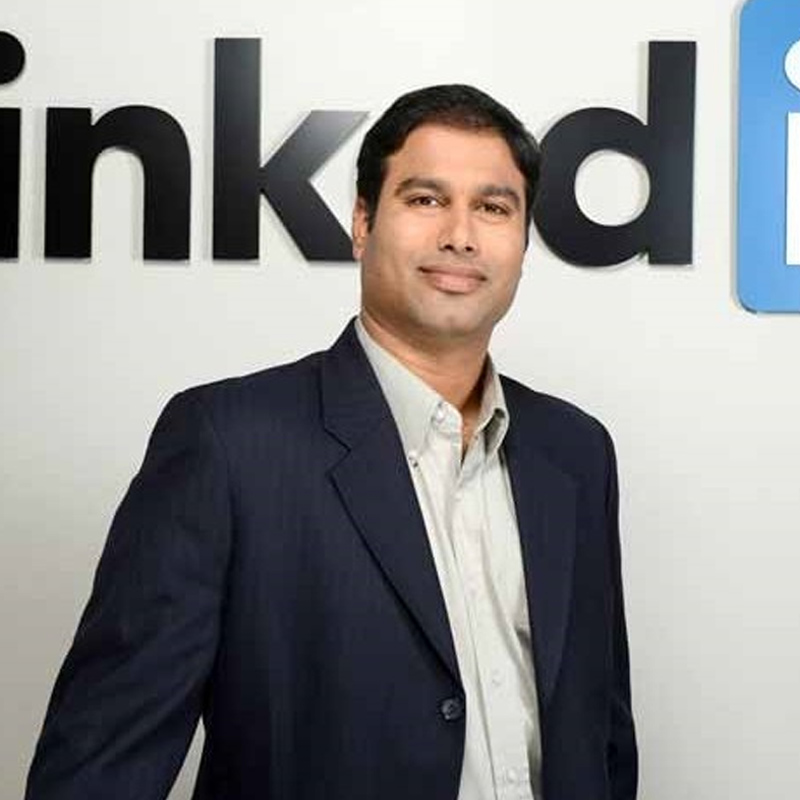
  • LinkedIn appoints Nishant K Rao as country manager

    LinkedIn appoints Nishant K Rao as country manager

    MUMBAI: LinkedIn has appointed Nishant K Rao as the new Country Manager for India.

    Rao‘s appointment at LinkedIn India comes following the promotion of former country manager Hari V Krishnan into a larger role as managing director of Asia Pacific and Japan.

    In his new role, Rao will focus on scaling up operations and staying committed to LinkedIn‘s value proposition of connecting India‘s professionals to make them more successful and productive and helping enterprises hire, market and sell effectively, the company said.

    Rao said, "With a member base of 18 million professionals, India is one of our fastest growing markets and the largest outside of the US. Indian marketers and recruiters are fast realising the potential of LinkedIn‘s affluent member base and are leveraging the platform for targeted and thought leadership oriented campaigns. I am excited about the opportunity to work with the LinkedIn India team to serve our customers and members in India."

    Prior to being appointed as LinkedIn India‘s Country Manager, Rao was director, business operations – head of global sales strategy at LinkedIn‘s headquarters in Mountain View.

    He has been with LinkedIn since September 2011.

    Rao has over 10 years of industry experience with a healthy mix of sales, strategy management and entrepreneurship. He has held leadership positions with companies such as McKinsey and ARIBA Inc and was also one of the founding members of Epicentre Technologies, one amongst India‘s first call centers.

  • India ad spend to grow 9% in 2013: Warc

    MUMBAI: Advertising spends in India are expected to grow 9 per cent in 2013, according to the International Ad Spends 2012 report released by advertising data research service Warc.

    The report says that global ad spends will grow at 4 per cent in 2013, which is a downgrade of 1.5 per cent from the previous prediction released in June. The forecast for 2012 has been downgraded by 0.5 per cent to 4.3 per cent. Taking into account forecast inflation, the report predicts that global ad spend will rise by just 1.8 per cent and 1.6 per cent this year and next. The reduction in the forecast has been attributed largely to a shaky global economy.

    The report is based on Nielsen figures for global ad spend in 2011 which is $498 billion. Applying Warc‘s growth estimates to this base sum, 2012‘s ad spend is expected to be around $519 billion and 2013‘s to be nearly $540 billion. The study took into account ad spends in 12 major markets across the globe (US, UK, Australia, Russia, India, Japan, China, Brazil, Canada, France, Germany and Italy).

    The BRIC (Brazil, Russia, India and China) countries are expected to lead the race for ad spends growth in 2013 with Russia growing at 14.6 per cent, China at 12.5 per cent, Brazil at 9.5 per cent and India at nine per cent.

    Australia, China, India and Japan are in Asia-Pacific. For these markets, Warc expects China to lead in 2013 with growth of 12.5 per cent, followed by India with 9 per cent. Ad spend in Australia is seen growing 2.6 per cent and Japan just 1 per cent in 2013.

    The US which was predicted to garner ad revenue to the tune of $153 billion in 2012, is expected to expand at 2.5 per cent next year (as opposed to predicted growth of 4.1 per cent this year). The main drivers for this year‘s ad growth were the US Presidential Elections and the Olympics, the absence of which next year will hit ad revenues hard. UK shares a similar fate with predicted ad spend growth at four per cent.

    In another study conducted by Warc which researched inflation in cost of television media, it reported that India is pegged to see media inflation (in television) at seven per cent.

    According to Vivaki Exchange CEO Mona Jain, “The critical inflation is coming in the general entertainment channels wherein there could be increased demand. Also, there is fragmentation in television. You have more no. Of channels and the channels are expanding their programming time slot, genres, there are more viewing options now hence it is influencing the price hike. However, the inflation is curbed because of the low market sentiments otherwise it could have been 10-11 per cent. The brands which spend premium have been more conservative.”

    MPG India MD Mohit Joshi said that Havas anticipates inflation of 10 per cent. “Inflation is largely a result of fragmentation (around 7 per cent) and the balance due to actual price inflation,” he added.

    The report shows that looking to 2013, television and online were expected to yield double-digit increases in China, India and Russia.

  • Global net spend up, print down: Nielsen

    MUMBAI: Advertising is on the rise around the globe and across nearly all media types, according to Nielsen‘s Global AdView Pulse report.

    Gains in areas such as Internet (7.2 per cent), radio (6.6 per cent ) and TV (3.1 per cent ) offset the 1.3 per cent decline in magazine spending in the first half of 2012, leading overall ad investment to be up 2.7 per cent.

    Internet advertising made a powerful surge in the emerging markets of the Middle East and Africa (30.3 per cent) and Latin America (20.6 per cent). Interestingly, despite being down in overall ad spend, Europe saw the third highest increase in Internet ad spend of any region (11.2 per cent ).

    While television continues to hold the majority of advertising dollars globally (61 per cent), the medium saw the biggest increases in Middle East & Africa (30.1 per cent), Latin America (6.2 per cent) and North America (4 per cent). TV investments declined 2.2 per cent in Europe and grew nominally in Asia Pacific (1.4 per cent).

    Magazine spending fell significantly in both Europe and North America, but magazines and newspapers both saw growth in other markets including Latin America, Asian Pacific, and the Middle East and Africa.

    Cinema experienced a noteworthy 40.2 per cent gain in the Asia Pacific market and a marginal gain in Europe of .4 per cent. This led to an increase of 5.9 per cent globally despite decreases in Latin America (-21.1 per cent) and the Middle East & Africa (-19.1 per cent).

    Outdoor media ad spend grew during the first half of 2012, with the biggest gains in the Middle East & Africa (38.8 per cent) and the Asia Pacific (16.7 per cent).

    Radio, which saw a global increase of 6.6 per cent, was also up in all regions measured.

  • Geo-targeting is biggest perceived benefit of mobile marketing: Mobext

    MUMBAI: The most important benefit of mobile marketing is geo-targeting or the ability to target on-the-go consumers. This aspect of it comes out in a recent study by Mobext which reveals that 84.3 per cent advertisers currently invest in mobile marketing.

    This, according to the study, is followed by 64.8 per cent respondents who say that mobile marketing gives ability to communicate one-to-one with consumers on a personalised or targeted basis while 63 per cent believe it helps in real-time messaging. Only a little over a third of respondents each believed mobile marketing to be cost-efficient (37 per cent) and easy to use/implement (36.1 per cent).

    According to the agency, even though advertisers appreciate the ability of mobile to do geo-targeted as well as one-to-one communications, a majority of marketers are still not convinced that mobile is a cost-efficient and easy-to-manage advertising channel.

    The APAC region is believed to be the largest and fastest-growing mobile market in the world with more than 2.5 billion mobile subscriptions and 70-90 per cent average mobile customer penetration in many countries. Although certain Asian markets already invest heavily in mobile (Japan, in particular), the rest of Asia still represents a small percentage of the total mobile advertising market globally.

    Mobext, Havas Media’s mobile marketing agency, conducted this research to delve deep into Asian advertisers’ attitudes towards mobile marketing, particularly the “non-Japan” APAC market which lags behind in mobile spending

    According to the research finding, marketers are clearly struggling with measuring return on their mobile investments. 57 per cent of respondents said that it is too early to tell and they are not sure if returns are commensurate with their mobile investments. Only 3.7 per cent of respondents said they are “extremely” satisfied with results of their mobile investments, while 23.1 per cent said they are“moderately” satisfied.

    The study also revealed that 47.6 per cent of respondents agreed that mobile would be equally important as TV in the next two years while 44 per cent said that mobile will be more important than radio in the next two years.

    Also, 60 per cent of surveyed respondents said they do not use a third-party organisation (such as a mobile agency) to manage their mobile marketing efforts.

    In general, the agency felt that the outlook for mobile marketing in the six surveyed Asian markets is very positive. Among those not currently investing in mobile marketing, 55 per cent said that they plan on investing in mobile in the next 12 months.

    The survey revealed that while marketers are attracted to smartphone and tablet-based marketing, a significant portion of marketers still “heavily” associate mobile with SMS or text-based marketing. They believe that SMS still represents the single biggest mass reach opportunity for marketers.

    When asked to choose a phrase that they associate the most to mobile marketing, 63.5 per cent respondents chose mobile or smartphone ads, 61.3 per cent chose SMS/text messaging and 59.4 per cent went for mobile apps as their top-of-mind options.

    The survey shows that advertisers in the covered Asian markets are increasingly embracing mobile,with 53.5 per cent per cent of respondents saying that they currently invest in mobile marketing.

    Among the markets covered in the survey, Hong Kong (63.8 per cent of respondents), Singapore (48.2 per cent) and Malaysia (38 per cent) report the highest rate of adoption for mobile marketing among advertisers

    More than half (56.5 per cent) of the current investors in mobile marketing feel that it’s too early for them to say if the returns are commensurate with their investments in mobile. Around 23.1 per cent are moderately satisfied with their returns (results have met expectations) while about 14.8 per cent are not satisfied (some campaigns have not met expectations).

    For those who currently invest in mobile marketing, the top three roles of mobile marketing are: raising brand awareness (61.1 per cent), increasing the customer purchase intent (50.9 per cent) and increasing customer-base by attracting new customers (48.1 per cent).

    Based on the data, most marketers are currently focused on utilising mobile as an awareness building channel as well as an activation channel to help drive both purchases and consumer spending, and at the same time, also increase customer base. A majority of marketers have still not fully taken advantage of the potential of mobile in increasing brand loyalty through targeted one-to-one communications, or by integrating mobile in existing loyalty programs, the report said.

    The study revealed that among those respondents who currently invest in mobile marketing, the three main mobile marketing methods that they have invested in are mobile apps (59.3 per cent), mobile websites (53.7 per cent), and SMS to an opt-in database (48.1 per cent).

    The company said that despite the potential of mobile in driving purchase (via mobile coupons and mobile commerce), majority of marketers still do not invest heavily in mobile commerce (only 9.3 per cent) and mobile coupons (only 17.5 per cent).

    By far, however, the biggest anticipated trend is the convergence of social and mobile, with advertisers planning to increase investment in this area significantly. With mobile increasingly becoming the main access point for social media, particularly in the APAC region, advertisers are interested in scaling their investments in campaigns that integrate social and mobile.

    Another point to note is that while investment in SMS/text to opt-in database is expected to decrease (from 48.1 per cent of current mobile advertisers investing in it, to 34.3 per cent planning to invest in it in the future), more firms are planning to invest in mobile CRM/one-to-one messaging (from only 7.8 per cent to 32.4 per cent of current investors planning to invest in it in the future). The implication is that marketers will increasingly shift from mass communication methods via SMS, to more targeted, one-to-one, personalised communications, the company said.

    While current adoption of QR codes/bar-codes is high (48.1 per cent), fewer advertisers (35.0 per cent) are planning to invest in them in the near future. Other areas of mobile marketing that are expected to undergo drastic changes in investment include:


    Methodology Current
    investment
    Planned
    investment
    Increase/
    Decrease
    Mobile CRM/one-to-one
    messaging
    7.8% 34.0% 26.2%
    User-generated content 6.8% 23.3% 16.5%
    Mobile Couponing 17.5% 34.0% 16.5%
    Mobile Commerce 9.7% 25.2% 15.5%
    Location-based marketing 22.3% 36.9% 14.6%
    Social media mobile
    marketing
    39.8% 54.6% 14.8%
    Text/SMS to opt-indatabase 47.6% 35.0% -12.6%
    QR codes/Barcodes 48.5% 35.0% -13.5%

    The research report shows that the two biggest barriers that are holding mobile marketing from assuming a greater role in the marketing mix are: lack of a reliable, uniform framework to measure or prove mobile marketing success (56.5 per cent) and lack of enough knowledge or case studies to provide effectiveness and RoI of mobile marketing (55.6 per cent).

    A few other issues highlighted by current advertisers are technology constraints, including poor 3G/4G connectivity (53.7 per cent), limited resources or expertise in this domain (50 per cent), and consumer privacy issues (44 per cent).

    Majority of respondents (55.1 per cent) not currently investing in mobile marketing say that mobile marketing would gain importance for their brand in the next twelve months.

    Mobext conducted this online survey from 9- 23 August 2012. It got responses of 271 respondents representing more than 230 companies across six markets in Asia-Pacific, specifically Indonesia, Philippines, India, Hong Kong, Singapore and Malaysia.

    The markets covered in the study were purposely selected in order to cover the non-Japan Asia-Pacific market, with a balance between advanced economies (Hong Kong, Singapore, Malaysia) and developing markets (Indonesia, Philippines and India).

    Approximately 85 per cent of the respondents are mid-to-senior level marketing functional leaders in their respective organisations, while the surveyed companies represent various industries, specifically retail, consumer goods, fashion and apparel, travel and hospitality, media and entertainment, telecom, tourism, and financial services.
  • Havas post 7.7% rev growth for H1 2012

    MUMBAI: The Havas Group posted revenue of $654.41 million for H1 2012 ended 30 June 2012. This is a 7.7 per cent increase from $607.58 in H1 2011.

    The group‘s income from operations for H1 2012 increased by 4.21 per cent to $125.72 million, compared to $120.64 million reported for H1 2011.

    Geographically, Europe continued to be the media group‘s strength with $529.34 million coming in revenue from the region followed by North America ($358.10 million) and Asia Pacific and Latin America bringing in $165.08 million.

    The group‘s Q2 revenue stood at $561.28 million, a 9.40 per cent rise from Q2 FY12‘s $513.03 million. During this period too, Europe led the share of revenue with $284.45 million followed by North America with $185.40 million and APAC+Lat Am bringing in $$91.43 million.

    Havas CEO David Jones said, “All our regions continued to deliver growth in the first half led by Asia, Latin America, digital, media and healthcare. New Business performance strengthened in H1 2012, delivering one of the best half-year new business results in recent years with major wins including Novartis, GSK, Hershey‘s (digital), Intel Asus, (global), Sony Playstation, New York Life, Atlantic City, Lycra (USA), Yili in Asia, Nokia in India and Volvo in China, to name but a few. We made a number of targeted acquisitions during the first half of 2012, bringing into the group innovative agencies and talent adept at using digital technology and creativity to meet the future needs of our clients.”

    Over the first half of 2012, Havas made a number of acquisitions of agencies representing a total investment of approximately $44.45 million. These targeted acquisitions made to reinforce the group‘s digital, technology and creative resources and are in line with the Group‘ strategy.

    The group acquired agencies Boondoggle, Ignition, Victors and Spoils, Creative Lynx, Mediaxis and launched Havas Media Ortega in Philippines.

    The agency won some prominent accounts like Expedia (Euro RSCG 4D Matrix), Nokia (digital business won by Euro RSCG), Parle (media account won by MPG) and TVS Tyres (media account won by MPG) in India.

  • GroupM snaps up South Korean agency Alchemedia

    MUMBAI: Expanding its operations in the Asia Pacific region, global communications conglomerate WPP Group has acquired South Korean media planning and buying agency Alchemedia for an an undisclosed amount.

    The South Korean agency was founded in 2004. Alchemedia‘s audited revenue for the year ended 31 December 2011 was 1.4 billion Korean won (KRW), with gross assets of KRW 10.0 billion.

    Alchemedia is based in Seoul and will be merged with GroupM Korea. The combined client list of the two entities include brands like Audi, GSK, Hicos Fragrances, IBM, LG Electronics, Lock & Lock, Procter & Gamble, Sejung Fashion, Red Bull, Rolex and VW.

    Recently, WPP announced during the 59th Cannes Lions Ad Festival held in France that it has acquired one of the biggest independent digital agencies AKQA for an estimated $ 540 million.

  • WPP posts 5% jump in revenues for first four months of 2012

    MUMBAI: Global media conglomerate WPP has posted a revenue of $5.1 billion for the first four months of 2012, registering a five per cent growth over the year ago period.

    Continuing the trend form 2011, advertising and media investment management and branding and identity, healthcare and specialist communications (including direct, digital and interactive) were the strongest services sectors.

    Also in continuation was the pattern of slower growth in the mature markets of the United States and Western Continental Europe. Asia Pacific, Latin America, Africa and the Middle East and Central and Eastern Europe continued to post strong growth.

    Growth in the BRIC countries was over 14 per cent, while Latin America continued to show the strongest growth of all of our sub-regions in the first four months with constant currency revenues up 16.1 per cent. The Middle East remained the most challenged sub-region, although April showed a significant improvement over the first quarter.

    BRIC countries accounted for over $760 million revenues, including associates, in the first four months and over $2.3 billion in the full year 2011.

    For the remainder of 2012, the company’s focus will remain on growing revenues and gross margin faster than the industry average, driven by its leading position in new markets, new media, consumer insight, including data analytics and the application of technology and ‘horizontality’, the company said.

    At the same time, it will concentrate on meeting its operating margin objective by managing absolute levels of costs and increasing cost flexibility in order to adapt structure to significant market changes.

  • Mindshare APAC ups Srivastava & Gowthaman

    MUMBAI: Mindshare Asia Pacific said Wednesday its new ‘global to local‘ structure will be under a leadership team helmed by Ashutosh Srivastava.

    APAC CEO Srivastava will now take up the position of chairman and CEO for global emerging markets. He will also be new global leader for products/services and talent development. Under his shadow will also fall Greater China which he will directly oversee.

    Under the new restructuring, R Gowthaman will take up the charge of CEO for South and South East Asia. He was earlier chief client officer.

    Both Srivastava and Gowthaman will be based in Singapore.

    Agency‘s Australia CEO James Greet will add Japan, Korea and New Zealand to his responsibilities, and also be the APAC regional leader for talent. He will continue to be based in Sydney.

    Srivastava will focus on emerging markets such as Russia, in addition to APAC. He will also work closely with global and regional leaders in London and Asia to drive new products and services – and with the agency‘s talent development community, work to strengthen the agency‘s talent pool and leadership globally.

    Mindshare Worldwide CEO Nick Emery said, “I‘m delighted that Ashutosh is taking on the global role to drive Mindshare’s development. Ashutosh is the epitome of a new world leader and our product, people and growth markets are in safe hands.”

    Srivastava’s promotion is accompanied by a change in the structure of Mindshare in the region, re-organising it around three clusters.

    “In Ashu, James and G’man there is no better leadership trio and I am privileged to work with them,” Emery added.

    Talking about his new role Srivastava said, “James has in a very short time turned our Australia office into a powerhouse of great work and talent. G‘Man has crafted our success in India, which is a world class office – and in the past few months built up our product for regional clients. Alongwith China, they have been the driving force behind the momentum we have across Asia Pacific. They are both outstanding leaders, and I look forward to working with them in their new roles.”

    Prior to joining Mindshare in 2010, Greet founded and ran talent recruitment firm The Ladder. Since 2010 he has turned around Mindshare‘s business in Australia.

    The new structure of Mindshare in Asia Pacific brings it into line with Mindshare‘s operation in Europe, which is also organised around a cluster approach, and provides a global to local approach for the agency around the four core areas of trading, emerging markets, new products/services and talent development.