Tag: Ashwini Vaishnaw

  • Cable TV lobby urges tax cut to 5 per cent as sector reels under strain

    Cable TV lobby urges tax cut to 5 per cent as sector reels under strain

    NEW DELHI:The All India Digital Cable Federation (AIDCF), the apex body of cable operators, has petitioned information and broadcasting minister Ashwini Vaishnaw and finance minister Ashwini Vaishnaw  to slash goods and services tax on cable television from 18 per cent to 5 per cent.

    The appeal rides on prime minister Narendra Modi’s push for “next-generation GST reforms” and a two-rate structure. The federation argues that cable remains the cheapest mass medium, reaching 64 million households and sustaining 10–12 lakh jobs, yet is under siege from rising costs and unregulated OTT rivals.

    Powered by 852 multi-system operators and 1.6 lakh local cable operators—mostly small entrepreneurs—the sector was even recognised as an “essential service” during the pandemic. But the economics are dire. Broadcaster fees have surged nearly 600 per cent, pushing up subscription costs by 35–40 per cent. With consumers balking at higher tariffs, margins are collapsing.

    “Market dynamics have become unfair for MSMEs in cable TV, as they are bound by tariff regulations while OTTs operate without comparable oversight,” AIDCF wrote.

    The lobby claims a GST cut would restore affordability for households, ease working capital pressures, enable fresh broadband investment under Digital India, and protect lakhs of jobs.

    AIDCF secretary general Manoj P Chhangani urged the government to table the matter at the next GST Council meet: “A reduction will safeguard the viability of MSOs and LCOs and preserve cable’s role in inclusive connectivity.”

    Industry watchers caution that while OTT is growing fast, cable still dominates in small towns and villages. A tax reprieve, they say, could decide whether it remains India’s broadcast backbone—or fades into obsolescence.

  • Rajya Sabha clears sweeping ban on online money gaming despite opposition uproar

    Rajya Sabha clears sweeping ban on online money gaming despite opposition uproar

    NEW DELHI: The Indian parliament on Friday pushed through a controversial law banning the operation, facilitation and advertising of online money games, amid noisy opposition protests over the lack of debate.

    The Promotion and Regulation of Online Gaming Bill, 2025—passed by voice vote in the Rajya Sabha a day after clearing the Lok Sabha—makes online money gaming punishable with up to three years in prison and fines of as much as Rs 1 crore. Offences will be cognisable and non-bailable.

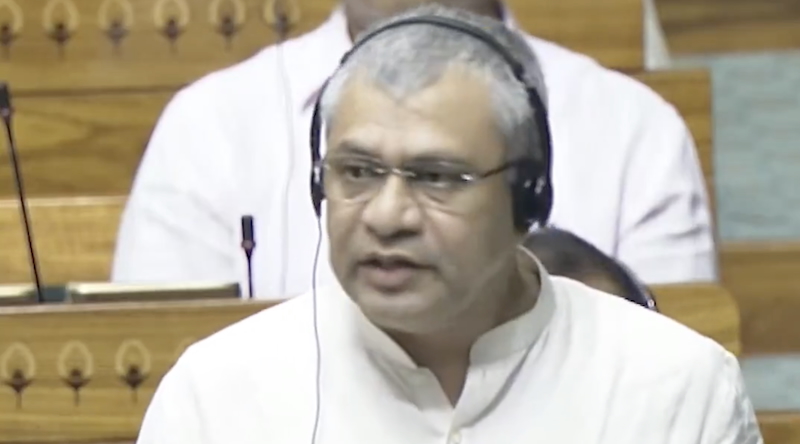
    Tabling the bill, electronics and IT minister Ashwini Vaishnaw likened money-gaming addiction to drug abuse and accused powerful vested interests of fuelling terror finance through gaming platforms. He said roughly 45 crore Indians had lost money online, with annual losses pegged at Rs 20,000 crore.

    The legislation bans all forms of online betting and gambling—from fantasy sports and poker to rummy, lotteries and other card games—and bars banks and payment providers from processing related transactions. 

    Advertising such services will invite up to two years’ jail and fines of Rs 50 lakh, while facilitating payments could mean three years in prison and Rs 1 crore in penalties. Repeat offenders face enhanced sentences of up to five years and Rs 2 crore in fines.

    Opposition leader Mallikarjun Kharge hit out at the government for forcing the bill through without discussion, even as union minister Kiren Rijiju said protests made a debate impossible.

    Vaishnaw stressed the bill distinguishes between harmful money games and esports. Speaking to ANI, he said the government aims to “promote and encourage the good parts” of online gaming, and to make India a hub for development through the planned Indian Institute of Creative Technologies.

    Prime minister Narendra Modi, addressing an NDA meeting, hailed the online gaming ban as a reform with “far-reaching impact”, while accusing the opposition of reducing the monsoon session to disruption.

    NDTV reported that the government will also act against “big people” attempting to sway opinion through media and social media campaigns against the ban.

  • India draws battle lines between esports and online gambling

    India draws battle lines between esports and online gambling

    MUMBAI: India’s Lok Sabha has passed the Promotion & Regulation of Online Gaming Bill 2025, creating a stark divide between legitimate esports, casual gaming  and what lawmakers term predatory gambling platforms. The legislation, which now heads to the Rajya Sabha, has split the gaming industry down the middle.

    Real-money gaming firms are crying foul, claiming the bill sounds their death knell. But esports pioneers are celebrating what they see as long-overdue recognition. Rajen Navani, chairman and managing director of JetLine group, says the cabinet’s approval “is a decisive step that separates esports and social video gaming from wagering-led real money gaming.”

     Minister of railways, information & broadcasting and electronics & information technology Ashwini Vaishnaw,  pulled no punches when tabling the bill. “Online money gaming firms are opaque in nature,” he told parliament. “There are multiple hazards linked to online money gaming. This also impacts national security such as money laundering and terror funding.”

    The minister drew a clear distinction between educational esports and what he characterised as destructive gambling platforms. “The government wants to support esports and casual games. We want to protect the interest of society,” Vaishnaw said, urging unanimous passage.

    The legislation establishes a central regulatory authority with Rs 50 crore in initial capital expenditure and Rs 20 crore in annual recurring costs. The watchdog will oversee compliance, shape policy and encourage innovation in legitimate gaming.

    Crucially, the bill formally recognises esports as competitive sport, promising government backing for training academies, research centres and technology platforms. Social and educational games will receive similar support, with built-in safeguards ensuring age-appropriate content.

    For Navani, who pioneered esports in India, the clarity provides “a strong tailwind” that should boost investment in tournaments, infrastructure and jobs. 

    Real-money gaming operators, however, face an uncertain future as regulators prepare to separate wheat from chaff in India’s booming digital gaming market.

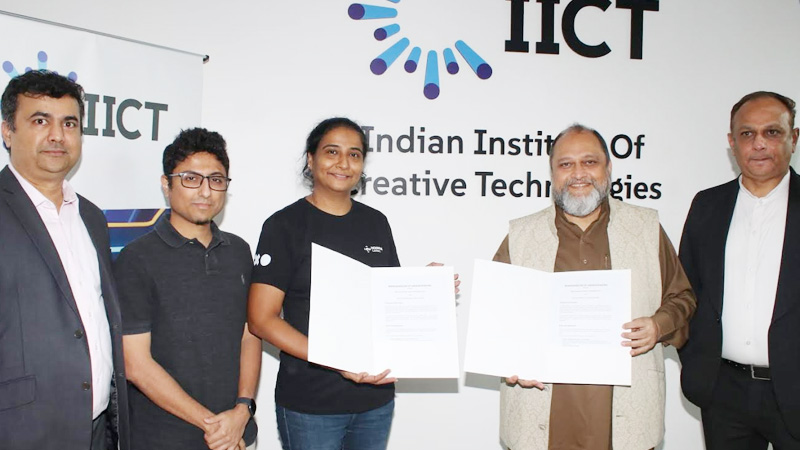
  • WPP partners with IICT to boost creative and digital talent in India

    WPP partners with IICT to boost creative and digital talent in India

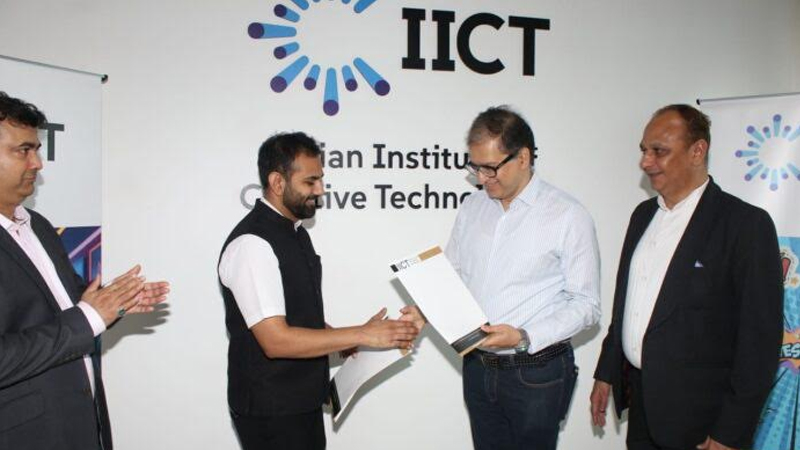
    MUMBAI: When ad world muscle meets academic hustle, you get a creative spark like no other. In a move that blends Madison Avenue with Mumbai’s media dreams, WPP, the global giant in marketing services has signed a landmark Memorandum of Understanding (MoU) with the Indian Institute of Creative Technologies (IICT), a Ministry of I&B-supported initiative that aims to revolutionise creative and digital skilling in India.

    This partnership positions WPP as the first agency group to formalise such a comprehensive engagement with IICT, joining the league of global tech titans like Google, Meta, Microsoft, JioStar, Nvidia, and Adobe all of whom have pledged support to build India’s creator economy.

    India, WPP’s fifth largest and fastest-growing market, now becomes the testing ground for a powerful alliance between academic rigour and industry firepower.

    Under the collaboration, WPP will Co-develop IICT’s curriculum to reflect real-world creative, media, and tech skills, Provide mentorship for IICT’s startup incubator, Engage faculty on live projects and joint research, Support technology planning for the IICT campus, Assist with promotional and outreach strategies.

    “This collaboration is a testament to WPP’s deep commitment to nurturing talent and driving innovation in India’s dynamic media and entertainment sector,” said WPP country manager for India CVL Srinivas. “By combining IICT’s academic rigour with WPP’s global industry leadership, we aim to equip the next generation of creative professionals with the skills and insights needed to thrive in a rapidly evolving technological landscape.”

    The alliance comes close on the heels of IICT’s inauguration at the newly established IICT–NFDC campus in Mumbai, a high-profile event attended by Ashwini Vaishnaw, union minister for railways, information & broadcasting, and electronics & IT, and Devendra Fadnavis, chief minister of Maharashtra.

    IICT board member Ashish Kulkarni added, “With WPP, we are bringing together the best in creative, technology, and media. This partnership will help make IICT a world-class institution on par with IITs and IIMs, preparing market-ready talent for tomorrow’s India.”

    With India inching closer to becoming a global creative powerhouse home to over 75 crore internet users and a booming content economy, the timing couldn’t be more apt. If the next big idea is born at the crossroads of commerce and creativity, WPP and IICT might just be laying the road.

  • From Panels to Portfolios Comic Con and IICT Team Up for Creator Power

    From Panels to Portfolios Comic Con and IICT Team Up for Creator Power

    MUMBAI: When cosplay meets classroom and panels turn into portfolios, you know India’s creative industry is getting its origin story right. In a move straight out of a well-scripted crossover, Comic Con India and the Indian Institute of Creative Technologies (IICT) have inked an MoU to jointly supercharge India’s animation, gaming, comics, and extended reality (AVGC-XR) ecosystem.

    The partnership, announced during the launch of the IICT-NFDC campus in Mumbai and the unveiling of the WAVES Outcome Report, was signed by Ashish Kulkarni, Board Member, IICT, and Shefali Johnson, CEO, Comic Con India. The high-powered event also saw the presence of government heavyweights like Devendra Fadnavis, deputy chief minister of Maharashtra, Ashwini Vaishnaw, union minister for I&B, Railways and IT, and Sanjay Jaju, secretary, ministry of information & broadcasting, a clear signal that India’s creative economy is getting serious state backing.

    Comic Con India, now part of Nodwin Gaming, has long been the country’s pop culture mothership, attracting fans, creators, and cosplayers in droves. On the other side, IICT, a newly announced National Centre of Excellence for AVGC-XR aims to be the IIT of the creative world, with a mission to train top talent, foster original IP, and bridge academia with the industry.

    The MoU packs in more than just fanfare. IICT students will get a dedicated showcase zone at Comic Con India events, along with masterclasses from top creators in gaming, comics, animation, and XR. The partnership also includes hackathons, design jams, behind-the-scenes internships, and initiatives to promote youth-led fan art and indie content creation.

    The collaboration comes at a time when India’s AVGC-XR sector is levelling up. As per the FX & Beyond: Shaping India’s AVGC Landscape report, the sector accounted for 20 per cent of the broader M&E industry in 2023, with revenues of 3.9 billion dollars. That figure is projected to rise to 6.8 billion dollars by 2026. Perhaps more crucially, AVGC-XR is expected to generate 160,000 new jobs annually with a roadmap to reach over 2 million direct jobs by 2030.

    “We are proud to collaborate with IICT as part of the broader AVGC-XR vision for India,” said Shefali Johnson. “Through Comic Con, students can gain mentorship, connect with pop culture communities, and better understand the commercial dynamics of their craft.”

    Ashish Kulkarni added, “This partnership aligns perfectly with the government’s vision of making India a global creative content hub. We aim to carve pathways for Indigenous IP using a transmedia ecosystem and build a vibrant pipeline of cultural ambassadors from India.”

    For fans, creators, and students alike, this crossover has franchise potential. With India looking to go from content consumer to content powerhouse, the IICT-Comic Con alliance might just be the origin story the AVGC-XR sector needs.

    Get your pens and pixels ready.

  • India’s creative future gets a cinematic campus

    India’s creative future gets a cinematic campus

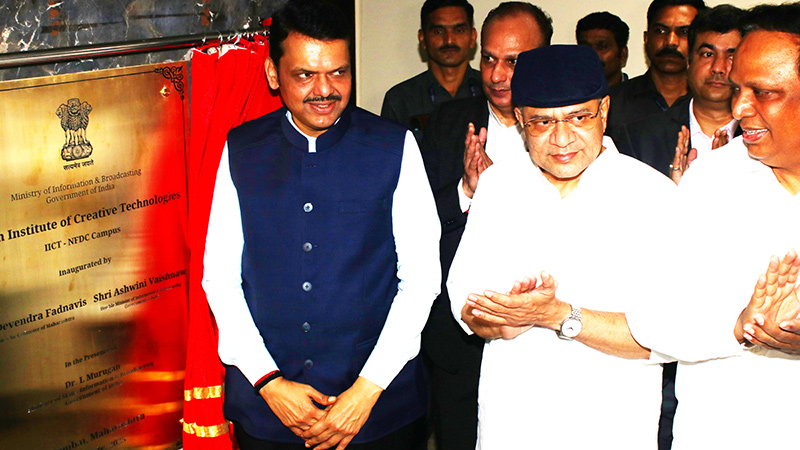
    MUMBAI: Mumbai just got its own Hogwarts for creative tech. Union I&B minister Ashwini Vaishnaw and Maharashtra chief minister Devendra Fadnavis rolled out the red carpet today for the Indian Institute of Creative Technologies (IICT), a new-age media and entertainment education hub set inside the iconic NFDC Films Division Complex on Pedder Road.

    Joined by Sanjay Jaju, secretary, Ministry of Information & Broadcasting, and Maharashtra’s cultural affairs minister Ashish Shelar, the top brass didn’t just cut a ribbon, they launched a vision. The duo unveiled IICT’s official logo and announced that the institute’s first academic batch will kick off from September 2025. Built with global standards in mind, the spanking new campus is loaded with future-forward infrastructure: think high-spec media labs, post-production suites, XR zones, and full-throttle animation and VFX bays.

    Speaking at the inauguration, Vaishnaw said, “In this creative world, technology has become an integral part and it is important that we empower people who want to be part of the creator economy. I am glad that in such a short span we have inaugurated the first NFDC IICT campus in Mumbai. I have personally gone through the architectural presentations in detail for the campus in Film city, Goregaon, and I assure you it is going to be one of the finest campuses.”

    The inaugural batch will admit 300 students, with the promise of a second campus already in the works at Filmcity, Goregaon — expected to open within the next two years.

    Shri Devendra Fadnavis added, “This is not just an event; it is a moment — a moment that is now transforming into a movement. As part of this movement and its legacy, the announcement of IICT was made, and the campus was inaugurated in a remarkably short time. In the coming years, under the excellent guidance of Ashwini Vaishnaw, IICT will emerge not only as an institution of world-class education but also as an architectural and cultural landmark that attracts people from across the globe. Just as WAVES revolutionised the entire creator economy, IICT stands as a testament to all that hard work.”

    India’s media-tech dreams have found their newest stage and the lights just came on.

    (If you are an Anime fan and love Anime like Demon Slayer, Spy X Family, Hunter X Hunter, Tokyo Revengers, Dan Da Dan and Slime, Buy your favourite Anime merchandise on AnimeOriginals.com.)

  • Rising Bharat Summit 2025 fuels bold vision for India’s global future

    Rising Bharat Summit 2025 fuels bold vision for India’s global future

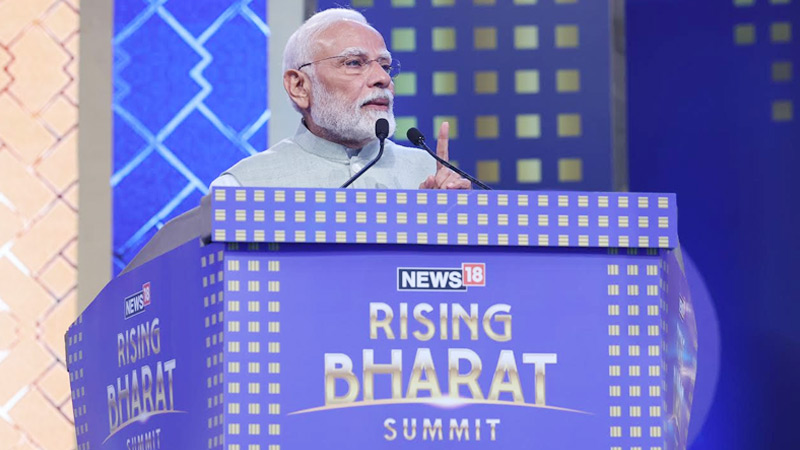
    MUMBAI: The News18 Rising Bharat Summit 2025 unfolded as a dynamic exchange of ideas, direction and determination in New Delhi, spotlighting India’s youthful energy and its ambitions to become a developed nation by 2047.

    Centred on the theme ‘Youthful Aspirations, Dream Big, Achieve More, Rise Together,’ the summit brought together an influential line-up of ministers, policy shapers, global experts and cultural icons to present India’s vision across governance, trade, diplomacy, technology and social equity.

    In a charged keynote, prime minister Narendra Modi spoke of urgent, performance-based governance. “The Waqf Amendment Bill ensures true social justice, ending appeasement and protecting Pasmanda Muslims from land mafias. In our first 100 days, we’ve delivered tax relief for youth, reforms in space, nuclear, and gig sectors, and launched WAVES to boost creativity. India cannot afford delays, our progress must be driven by performance,” he said.

    Home minister Amit Shah, addressing electoral concerns and national unity, added, “I want to reassure our southern states that the delimitation process will be fair and proportionate. The opposition is creating fear to divert attention from its own failures… The idea of ‘One Nation, One Election’ is rooted in efficiency and unity, values our youth must uproot politics of appeasement.”

    Commerce & industry minister Piyush Goyal responded to global trade shifts stating, “We remain committed to fair and balanced trade relationships… Our trade policies, guided by the ‘India First’ principle, reflect growing strategic maturity.”

    On India’s evolving geopolitical stance, minister of external affairs S. Jaishankar said, “We see opportunities even amid global uncertainties… The global community increasingly acknowledges Pakistan’s role in terrorism, and India stands firm in defending its national interests.”

    Technology and infrastructure also took centre stage. IT and I&B minister for railways Ashwini Vaishnaw remarked, “This year, we will see India’s first indigenous semiconductor chip. In AI, India has the talent and vision to lead… Our approach is not just timely, but responsible.”

    On infrastructure and road safety, minister Nitin Gadkari shared, “The rules apply to everyone, including myself… Real progress comes from a sense of shared responsibility.”

    International insights came from professor Jeffrey Sachs, who said, “India is in a unique position… With its scale, talent, and resolve, India is poised to become the world’s second-largest economy, not by imitation, but on its own terms.”

    The summit also welcomed an eclectic mix of national figures including justice D.Y. Chandrachud, Scott Kelly, Abhinav Bindra, Aravind Srinivas, Børge Brende, Sunny Deol, and Kajol, reflecting the convergence of innovation, governance, space science, sports and culture.

    The 2025 edition of the Rising Bharat Summit stood as a clarion call for collaboration and purpose. It celebrated a confident, inclusive India, placing youth at the centre of policy, progress and global ambition.

  • Indian govt presents Waves 2025 to 100 ambassadors and high commissioners

    Indian govt presents Waves 2025 to 100 ambassadors and high commissioners

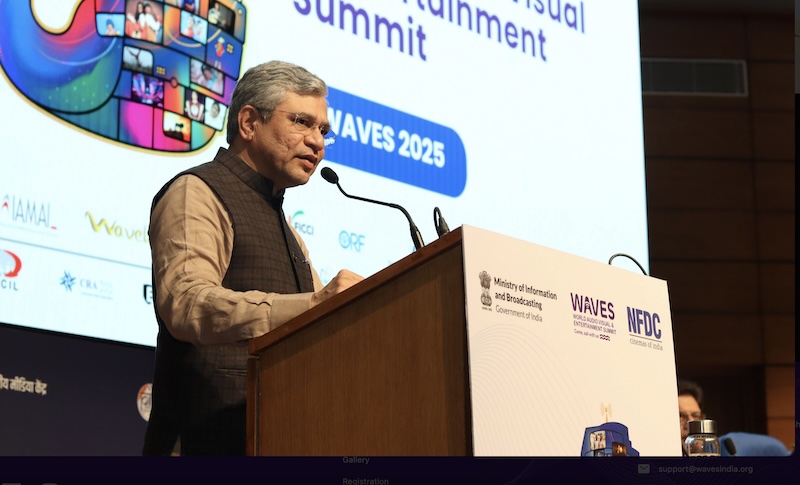
    MUMBAI: In a glitzy push to make India the hotbed of global media action, the government rolled out the red carpet for its ambitious World Audio Visual & Entertainment Summit (Waves) 2025  today at Sushma Swaraj Bhawan in New Delhi in the presence of 100 ambassadors and high commissioners. MIB officials made a  hard sales pitch  to prod them and make them realise that the Indian government is extremely serious about Waves 2025 and they in turn should carry this message back to their national governments and ensure robust participation from their respective countries. 

    Waves 2025—set to make a splash in Mumbai from 1 to 4  May 2025—promises to be a star-studded affair that will see the worlds of tech, media and entertainment collide in spectacular fashion.

    Union minister for external affairs S. Jaishankar didn’t mince words about the summit’s significance: “Economic and political rebalancing is moving towards cultural balancing. We are not truly global if we are not truly local. Waves 2025 captures the spirit of this endeavour.”  

    He urged the ambassadors and high commissioners to familiarise their governments regarding the opportunities of global collaborations courtesy the Waves 2025 initiative.

    Meanwhile, information & broadcasting minister Ashwini Vaishnaw turned up the heat, declaring that “the intersection of creativity, media and technology is transforming the media landscape of the world and reaching a new level of convergence.” He teased that “some of the biggest names” in the industry would be gracing the Mumbai bash.

    Not to be outdone, Maharashtra chief minister Devendra Fadnavis jumped into the fray, drumming up Mumbai’s credentials as the “financial and entertainment capital of India” that serves as the “perfect backdrop” for the summit.

    “Waves 2025 is a movement,” Fadnavis proclaimed, while welcoming the establishment of the Indian Institute of Creative Technology which the government has committed to set up in Mumbai with Rs 391 crore being allocated for it. He expressed hope that “media will continue to be a force for good,” in a world where technology and creativity are increasingly getting into bed together.

    Minister of state for information & broadcasting, L. Murugan effusively stepped up to say that Waves  2025 will open  the door  “to joint ventures, co-productions, and business expansion, enabling global media companies to engage with India’s creative sector.  We remain steadfast in creating a conducive environment for the M&E industry, supporting ease of doing business, content localisation, and infrastructure development.”

    Information & broadcasting secretary Sanjay Jaju revealed that the four-day extravaganza will feature multiple tracks designed to make waves across the industry:
    * A global media dialogue featuring ministers and policymakers
    * Thought leaders Track with knowledge-sharing sessions
    * Waves exhibition showcasing storytelling innovations
    * Bharat pavilion highlighting India’s media heritage
    * Waves  Bazaar to facilitate business networking
    * WaveXcelerator to back media startups with mentorship and moolah
    * Waves Culturals featuring performances that blend Indian and international talent

    Also present was  Maharashtra government chief secretary Sujata Sauni who exchanged a memorandum of understanding relating to Waves 2025 with Jaju. 

    The organisers are also playing up Waves 2025’s integration with the orange economy, positioning the summit as a catalyst for economic growth and job creation through creative industries.

    With Mumbai ready to throw open its doors to thought leaders grappling with issues from AI to streaming revolutions, intellectual property rights, misinformation, and media sustainability, Waves 2025 is gearing up to be the first summit of its kind to tackle these hot-button issues by promoting cultural diversity, innovation, and equitable access to media platforms.

    As the countdown begins, all eyes are now on whether this media matrimony can truly deliver on its lofty promise of becoming “the biggest unifying factor between country to country, people to people and culture to culture in the digital age.”

  • Waves Bazaar: Indian govt’s optimistic attempt at content trading platform

    Waves Bazaar: Indian govt’s optimistic attempt at content trading platform

    MUMBAI: Here’s another effort to set up an online marketplace for content trading despite the hundreds of carcasses that line the road of those who tried and failed. And it’s coming in from the Indian government’s ministry of information and broadcasting as well as the electronics and information technology ministry. 

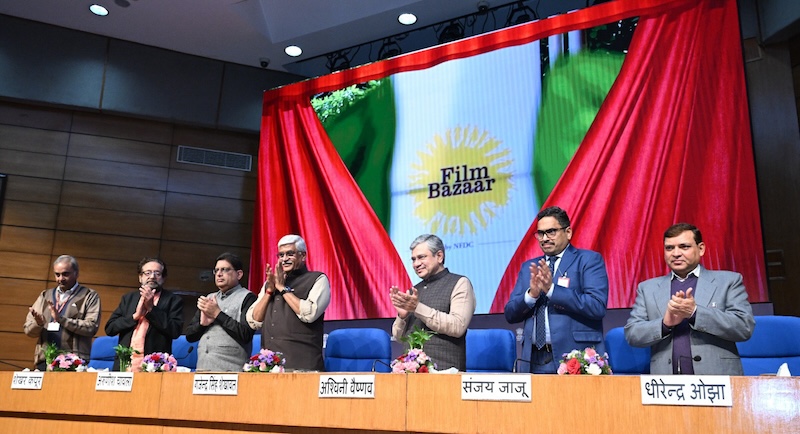
    Called Waves Bazaar, it was unveiled recently  at the National Media Centre in New Delhi, by MIB, railways and electronics &IT, Ashwini Vaishnaw, alongside minister of culture & tourism Gajendra Singh Shekhawat. The launch was attended by senior officials, including MIB secretary  Sanjay Jaju and  filmmaker Shekhar Kapur.

    The platform is being touted as a pioneering one which will transform the global media and entertainment 
    industry.  What it hopes to achieve is becoming a central hub for professionals across film, television, gaming, advertising, music, animation, and emerging technologies such as AR, VR, and XR. Designed to facilitate seamless collaboration. The optimistic view is that  the platform will enable industry players to expand their reach, secure investment, and form high-value partnerships.

    It will feature global networking opportunities, structured buyer-seller meets and transactions, and exclusive access to industry events. The platform is divided into verticals catering to specific sectors, including film production, live events, advertising, game development, music, and digital content.

    For sellers, Waves Bazaar is being positioned to provide a structured environment to showcase services, from VFX and sound design to publishing and advertising. Film producers can connect with distributors, animation studios can pitch to gaming companies, and marketing agencies can engage with brands seeking media solutions. Buyers—including OTT platforms, media agencies, and event organisers—gain access to a streamlined platform for discovering talent and securing content.

    Users register on wavesbazaar.com, create profiles, list services or project requirements, and engage with prospective collaborators. By eliminating geographical barriers and enhancing industry connectivity, Waves Bazaar aims to redefine how business is conducted in the creative sector.(Have we not heard this one before?)
    The launch of Waves  Bazaar coincides with preparations for the inaugural World Audio Visual & Entertainment Summit (Waves 2025), scheduled for 1-4 May in Mumbai. Organised by the Indian government, the summit will showcase India’s creative and technological prowess across broadcasting, film, animation, AI, social media, and digital content.


  • India’s Waves conference  finally scheduled from 1-4 May 2025

    India’s Waves conference finally scheduled from 1-4 May 2025

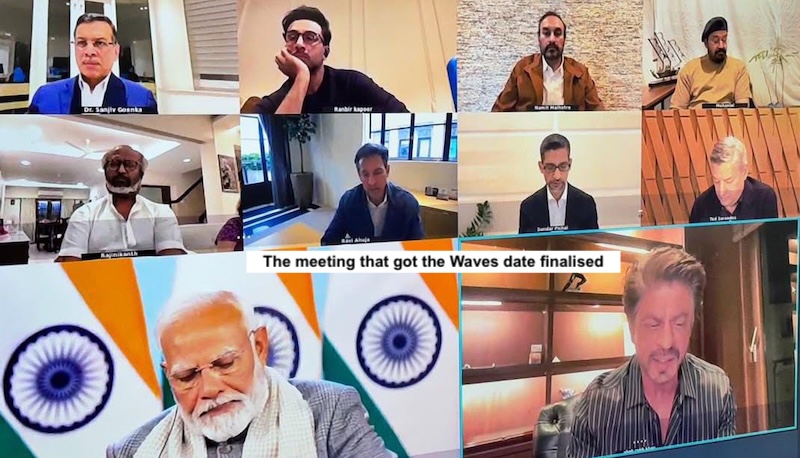
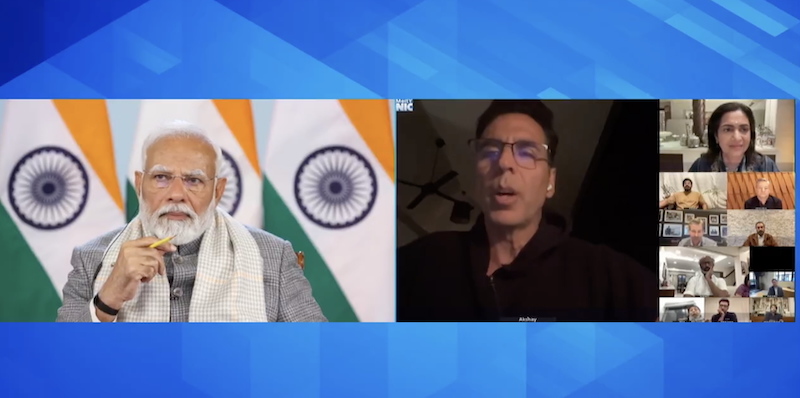
    MUMBAI: It required the intervention of some of the top industrialists and entertainment executives from India and globally, the information and broadcasting minister Ashwini Vaishnaw, and most of all the prime minister Narendra Modi to nail the final dates for the inaugural  World Audiovisual Entertainment Summit (Waves). Vaishnaw announced on 8 February that Waves would be held from 1-4 May 2025 in Mumbai.

    And the venue: the fabulous JioWorld Convention Centre and the JioWorld Gardens in the famous Bandra-Kurla Complex.

    Said Vaishnaw on X: India is laying the foundation for becoming the creative powerhouse of the world! #WAVES2025 Following an inspiring meeting of the Advisory Board with the PM  @narendramodiJi, the 1st World Audio Visual Entertainment Summit (WAVES 2025) is levelling up to make India the global content hub! This summit will bring together the world’s top media CEOs, biggest entertainment icons, and creative minds from across the globe—unifying entertainment, creativity, and culture like never before! Mark your calendars. Pack your dreams. Get ready to ride the WAVES! 1st – 4th May 2025 .”

    Industry, can be assured now that Modi and Vaishnaw have stamped the dates, there will be no further postponments going forward like there were twice in the past.