Tag: Ashwin Pinto

  • ‘Around 20-25 per cent of our revenues in the Asian region come from India’ : Ricky Ow – SPE Networks Asia GM

    ‘Around 20-25 per cent of our revenues in the Asian region come from India’ : Ricky Ow – SPE Networks Asia GM

    This has been a busy year for Sony’s international channels AXN and Animax. The task has been to pace up to the market competitiveness while staying sensitive to content that the government views as being “indecent.”


    Realising a vacuum in the youth market segment, Animax has repositioned itself by adding live action into its programming mix.


    AXN, on the other hand, had to be taken off the airwaves by the government at the start of the year for its potrayal of indecent content. Since then, it has focussed on differentiating itself through original content and raising the bar on acquired shows.


    Indiantelevision.com’s Ashwin Pinto caught up with SPE Networks Asia GM Ricky for a lowdown on the content, revenue and digital plans for the two channels in India.


    Excerpts:

    India is transitioning to digitisation. What opportunities does this present for Sony Pictures Television?
    In the long run, the cost of technology will go down. It will help the overall penetration of pay television. For content providers this means that more viewers will have access to their offerings which will allow them to invest more.


    Digitisation gives us opportunities to launch more channels across the region. We recently launched three channels including one for women in Singapore on Singtel’s IPTV platform. English entertainment makes sense due to the great economies of scale.

    In terms of revenues, how important is India vis-?-vis the rest of Asia?
    India is a key market driver for us in the region. Around 20-25 per cent of our revenues come from here. India offers room for a lot of growth as it is not yet a mature market.

    Are you seeing growth on the advertising front?
    I would say that this year is better compared to last year. For our key partners, we will look at more branded content which will come through our original productions. On the mobile front, we are talking with a couple of firms for getting on board. We are looking to conceptualise content so that clients can be active participants and not just passive ones.

    The government has been acting against adult content. Was AXN’s late night content modified in any manner in India after the government took action earlier this year?
    We had a block called Hot N Wild which we had taken out long before the ban. We, however, still had shows on that which reflected the edginess of that time block. We air shows that offer the brand promise of action and adventure, but we are not pushing ourselves as being a sexy channel.

    Do you feel that the India should have a watershed hour like what the UK has?
    We follow the law of the land. We only ask for clearer guidelines and for more leeway. A watershed hour means that the regulator believes in the maturity of the people. The regulator believes that people can decide for themselves what is appropriate. Whether or not this happens in India is for the people to decide.

    The English entertainment space in India is getting more competitive. How is AXN improving its programming mix to maintain share?
    Our current template has been working fine for us. From abroad you have driver shows like the CSI franchise. Then we do two to three local productions. We will be doing The Amazing Race 2.


    This is a point of differentiation for us. We don’t just produce content for a single market. We produce it so that it can travel across the region. As Indians become more sophisticated in taste, our formula will grow in appeal over the years.

    Have you noticed any changes in viewership patterns in India and Asia over the past year?
    Earlier we used to rely more on movies to drive the channel. Then when movie channels launched, this kind of content started to play a lesser role for us. It was a blessing in disguise for us as it let us concentrate on high quality TV shows.


    We are seeing a trend in India where TV serials are getting more viewership than in the past where it was mostly English movies. There will an upward curve for them in the coming two to three years. While most of our viewership is male, the number of women tuning in has also gone up.

    How did the idea of doing a pan Asian version of The Amazing Race come about?
    We have been airing the US version for a number of years. Fans kept writing in, asking how they could participate. Obviously to participate in the American version you need a Green card. So we decided to do an Asian version of the show. We were the first broadcaster to do the show after CBS.


    The show is inspirational and we wanted to do a show that would reflect what our viewers aspire to be. This show celebrates the human spirit which is why it connects so well with our viewers. It is not just about a race per se. Luck plays a part as well. The budget for the show will keep growing as we do more editions of it.


    What is most interesting is that the most number of entries have come from India. Entry is not just about sending in an SMS or filling up a form. It is about shooting a video of yourself and the partner.

    There is a vacuum that exists in the youth market which Animax is looking to fill. Our aim is to make it grow in popularity by having more diversity in our line up

    What were the key challenges and learnings from the first season?
    Getting visas for the contestants is the biggest problem. This is exacerbated by the fact that they do not know which countries they will be visiting. The Indian team needs a visa for every place they visit and this is an uphill task. For the US version, you don’t need a visa for most of the places you visit.


    The other learning was that some viewers preferred the Asian version over the US one. The Asian version is competitive but not ruthless. It offers good drama and touching moments. In my view the Asian contestants are more sincere. One team will not try to destroy the other. If one team is down and struggling, then you could find them being given a helping hand by other participants.

    How did you cope with logistics?
    Everyday you have to move from one city to the next. The core production team comprises 70-80 people. They travel with the contestants. When they reach the next destination, there will be another 70-80 people waiting. Sometimes you plan for the race to end at say 3 pm in the afternoon, but some teams take so long they arrive at 3 am. This means that we have to organise lighting. Some of the production members have worked on the US version as well. So they have the experience.


    We also work with the local players in each place we visit. The partnership really helps. We also build relationships with the airline. This way we can move equipment a lot quicker.

    What are the key attributes that AXN is looking for in participants?
    Personality is important. They must be outgoing. I remember an Indonesian couple last time around. There was talk about when they would get eliminated but they lasted till almost the last round. For each edition we look for a different relationship between the contestants. For our second edition there will be surprises.

    When does the second season kick off?
    We are looking to do it towards the end of the year. Last time around, it was more Asia focussed. The time contestants will travel outside the region as well. In fact, more than half the show will be outside Asia.

    What are the other pan Asian reality concepts that AXN has in mind this year?
    Our aim is to look at a winning formula and produce a show for a multiple number of markets. Local channels find it difficult to do this due to the comfort level and costs involved. We are doing a local version of the boxing-based reality show The Contender.


    The Contender is being done out of Singapore. India, though, does not have a representative in this show. This show is not as big in India as it is in some of the other Asian countries. But we are hopeful that it will grow. In Asia boxing is seen as a form of exercise like Yoga.


    Another show we are looking at is called Ultimate Xtreme that we are casting for. This where friends recommend that a person take part in a show without his/her knowledge. It could be that the person has been working hard without a rest and so the boss feels that this might be a good way for the employee to take a break. It will be positioned as the ultimate experience for that person.

    In terms of foreign shows, what is coming up?
    We have a major show called Damages coming up. It was done by SPTI for the US and stars Glenn Close. It is a legal thriller set in the world of New York City high-stakes litigation. The series which provides a view into the true nature of power and success, follows the turbulent lives of Patty Hewes, the US’ most revered and reviled high-stakes litigator, and her bright, ambitious, protégé Ellen Parsons as they become embroiled in a class action lawsuit targeting the allegedly corrupt Arthur Frobisher, one of the country’s wealthiest CEOs. As Patty battles with Frobisher and his attorney Ray Fiske, Ellen Parsons will be front and center witnessing just what it takes to win at all costs, as it quickly becomes clear that lives, as well as fortunes, may be at stake.


    Last year Sony did a magic show abroad. We are looking to bring it to Asia and India. Acquisition costs have gone up and so we have to be more clever in terms of what we buy.

    Animax recently introduced live action. Is it fair to say that Animax was forced to go this route as Indian viewers feel that animation is for kids?
    That seems to be the perception in the market. That is not true actually. This move was done for Asia as well. Last year we changed our positioning from an anime channel to a youth oriented one.


    We needed to add components to make it more rounded. So we have gaming, movies. In some markets there are music shows. At the same time, we are not compromising on the anime content. 70-80 per cent of the content is anime. The response to the repositioning has so far been good.

    A lot of Indian broadcasters are launching youth targetted channels. How confident are you that Animax will be able to stand out from the crowd?
    Some youth targetted genres are struggling like the music ones. We are seeing that MTV has scaled down their operations in Asia. A channel must have content that viewers really want to watch. If you are a music channel it might not be a good idea to have reality shows as that can be had anywhere else.


    There is a vacuum that exists in the youth market which Animax is looking to fill. Our aim is to make it grow in popularity by having more diversity in our line up. The net savvy youth are more exposed to anime content than any other TG.

    How has Animax used interactivity and on-ground events to get closer to viewers in India and Asia?
    The Animax Awards have been successful for us. This is a scriptwriting competition. Each country has a winner. The competition then reaches the next stage and competes also with Japan. An Asian panel chooses the wining entry.


    I am impressed with the Indian entries as one always feels that Indians are relatively less exposed to animation compared with other Asian countries. We also connect on-air and on the ground through gaming. We were one of the first channels to use gaming as a platform in India. I think that gaming will become big especially in the metros.

    As far as new media is concerned, both Animax and AXN launched mobile offerings recently. How has the response been and how many telecom partners do you have?
    It is a question of finding the right partners to work with who understand and share our vision. It is not just a question of money. Right now the money in this sector is small but with our strategy the future is bright.


    AXN offers customised short form versions of shows like The Amazing Race. This you will not find on the channel. Animax will have long form programming. This means that you can catch up on episodes that you have missed on the mobile. It is still a learning phase for us.


    What we have learnt so far is that users will use our mobile content more if it is reasonably priced. This means that the content cost and airtime cost package have to be affordable. There is no point in having low priced content if the airtime cost to download the content is high. We have to be smarter in terms of how these two costs are packaged.

  • ’50 per cent of the challenge of filmmaking lies in marketing’ : Ashok Amritraj – Entertainment chairman and CEO

    ’50 per cent of the challenge of filmmaking lies in marketing’ : Ashok Amritraj – Entertainment chairman and CEO

    Former tennis player turned Hollywood film producer Ashok Amritraj has reason to celebrate. Having spent 25 years in filmmaking, he was recently in India to collaborate with English movie channel Pix from the Sony stable to kick off a reality show titled ‘Gateway.’


    Amritraj’s new hunt: to discover the “hidden filmmaking talent in India.” His firm Hyde Park Entertainment will act as a platform for this talent to go international.


    In an interview with Indiantelevision.com’s Ashwin Pinto, Amritraj shares his insight into the business of filmmaking in the West, his relationship with studios and the experience of working with top talent in the industry like Bruce Willis and Steve Martin.


    Excerpts:

    What opportunities does the burgeoning Indian media and entertainment scene offer for Hyde Park?
    The good news for India is that the entertainment industry is growing. The television industry has seen enormous growth. The motion picture industry will hit a steep curve over the next five to seven years. The younger generation of filmmakers are much more globalised. They understand filmmaking in a different way compared with their predecessors.


    There are interesting opportunities in a growing industry. My business is in Hollywood first and foremost. But I have always felt a great affection and affinity for the country where I grew up. This year is the 25th anniversary of my being in Hollywood and I have made over 95 movies. It felt like the time was right to come back and do something here.

    How did the idea for ‘Gateway’ come about?
    Young Indian filmmakers have a lot of talent. Around a year ago over dinner with Sunder Aaron (Pix’s business head) I expressed an idea that involved a search for a talented aspiring filmmaker who would be given an opportunity to work with my company and make a Hollywood film.


    Pix was interested and so we started to evolve the whole idea. The concept got bigger and better. We are excited about seeing ‘Gateway’ come to fruition.

    In the US Mark Burnett and Steven Spielberg did a film-based reality show On The Lot which didn’t fare as well as had been expected. What went wrong and how confident are you that ‘Gateway’ will take off?
    I don’t think that anything went wrong. It comes down to a person’s take on a certain kind of a show. At the end of the day our show will pick a director and give him an incredible opportunity. Spielberg’s show was the same way.


    However, the way of getting there and the tasks that they go through the elimination process is completely different. In one way it is close to The Apprentice as I will act as a mentor. In another way it is also close to Project Greenlight, which was done by Ben Affleck and Matt Damon.


    There are different things being done. Our show is very India centric. It is for Indians. The aim is to make the path of a talented Indian filmmaker to Hollywood easier. We are looking to provide a platform for a young fresh Indian director to showcase his/her talent on the world stage. He/she is guaranteed a distribution of his movies between Sony and Hyde Park Entertainment.

    What brought you and Pix together?
    Our relationship with Pix is based on their tagline – We Tell Stories. This is the basis on which Pix was launched. A lot of what they do is story based. Top Hollywood producers also feel the same way.


    Money is available from a myriad of sources like hedge funds. However stories, talented and original storywriters are hard to find. When you do an initiative like Gateway you could find an extraordinary talent like an Ang Lee or an Alejandro Gonzalez Inarritu.

    What are you looking for in candidates?
    I often speak at schools and colleges and also at UCLA, AFI and so on in the US. I say that PQ plus CQ will always beat IQ which means that in films the passion quotient combined with the curiosity quotient will always trump the intelligence quotient.


    You also need abilities like how to handle actors, how to work with creativity, how to formulate a story, how to keep a producer happy. As you put all these pieces together and add to that a personality that can work, you try to frame the whole picture.

    Are you looking at other television projects?
    No! I am a film guy. I have not done television. Internationally Gateway represents my first foray into television. This project is personal. It is less about doing a TV show and more about finding hidden filmmaking talent in India.

    Last year you had mentioned that Hyde Park was looking at a JV with an Indian animation firm. Has anything happened on this front?
    Practically everyone has come to us to do something. We are going to make a film here in October called The Other End Of the Line. We will use an Indian actress who could be a newcomer or who has done a couple of movies. It is a question of finding talent. Hyde Park is looking to act as a platform for Indian talent to go international. Bollywood films may not crossover into Hollywood but I certainly think that Indian directors and actors can achieve this.

    In general what does Hyde Park look for in a project before giving the go ahead?
    Everything starts creatively. Our creative team in Los Angeles is presented with around 100 pitches each month. These include novels, books, videogames, comics, screenplays. We look at over 1000 projects a year. We develop a dozen and make three to four films. Those three or four films are chosen on the basis of creativity, gut feel and the kind of film we are looking to make.


    Secondly you look at the distribution paradigm and you look at who will want to watch this kind of a film. The distribution team gets involved and lets us know what will work and where. Then we get a casting director to tell us things like a certain project will only work if Brad Pitt is involved or it will only work with Kevin Bacon. All these pieces are put together which is why it comes down to only three to four films.

    When you work with a big star like Steve Martin on Shopgirl how much of a collaborative process is it?
    I am closely involved with every film we make which is why we only make three to four films a year. I could make ten movies a year but we do not as I would not be able to give enough attention to each one of them.


    The areas where I am very personally involved is developing the screenplay to a point where I as a producer am happy with it. I am closely involved with getting the principal cast and the director. Then I get hands on post-production. During the production period the director runs the project.


    We start with storyboards. So you have the movie laid out before you pretty much. We know where the camera angles are, where the locations are. We then do a read through with the whole cast. Sometimes we take a complicated scene from a camera point of view and computerise it. For me the post-production process in terms of the cutting, sound and music becomes very critical.

    Could you talk about some of your favourite experiences of working with creative talent?
    I have worked with a number of very talented actors over the years. Steve Martin is brilliant as he is a writer as well. We worked very closely together on Shopgirl as it was his novel which he entrusted to me. He wrote the screenplay and produced it with me. I also worked with him on Bringing Down The House which was a completely different experience. Queen Latifah was a complete pleasure to work with. She is a great character.


    I did Bandits with Bruce Willis, Billy Bon Thornton and Cate Blanchett. That was a dynamic experience as was working with Anjelina Jolie and Antonio Banderas on Original Sin. All these actors are extraordinarily professional. They arrive on time and treat their craft as a business. They are very disciplined which results in success.

    As a producer when you have a film like Bandits with more than one big star, how much of a challenge is it to deal with egos?
    Actors always have to check their egos. That is a task I have to deal with. It is also part of the director’s job. When we pick a talented filmmaker through our Gateway initiative, he is going to have to understand that managing actors is a large part of the job.

    Filmmaking is getting democratised with the use of mobile phones & Youtube

    How did a tennis player from India like you get accepted in Hollywood?
    The first six to seven years were an incredible struggle. Nobody wanted to make a movie with me as our family was not involved in the movie business at all.


    I got lucky in 1984. I met a young chap who was a limousine driver. I met him again in 1990 at the Cannes Film Festival. He said that out of 800 photographs he had sent, only I had responded. The person was Jean Claude Van Damme and we made Double Impact. Then people in the industry found messages that I had called two years earlier. They got back to me and things started to roll.

    You have been making films for two decades now. What is the biggest change you have noticed in the industry?
    There have been many. In 1984-85 when I started to make movies for half a million dollars, there was at that time a fight between two formats – VHS and Beta Max. VHS won in the end. Then the international market for Hollywood grew. Satellite movie channels became more prominent.


    The digital revolution is amazing. You just have to look at what George Lucas did with Star Wars. A more recent film 300 was shot against a green screen. It is an exciting time to launch Gateway as directors today have more tools at their fingertips.

    Would you say that filmmaking has become more democratised?
    Absolutely! Democratised is a great word to use. One can use a mobile phone to make a movie. There is Youtube through which you can get millions of film fans to view your film and comment on it. Anybody can make a film.


    You do not have to be the son or daughter of someone famous to enter filmmaking. You don’t need to have a huge film background to get into it. You need talent, vision and creativity. Gateway is a democratisation of filmmaking.

    Are new forms of distribution like VoD making it easier for a film producer to recover costs?
    It is another revenue stream. But I agree with guys like Scorcese and Tarantino that a film has to make money theatrically if it is to be anything on video or video on demand.

    When you started out you focussed on action and comedy. Are you looking to branch out further in terms of genres?
    I hate to sound egotistical but I have worked in all genres. I have done action films like Double Impact, action comedies like Bandits, serious films like Shopgirl, Moonlight Mile and family films like Dreamer. The thing that I like about Hollywood is that I can do different things.


    We just released Premonition with Sandra Bullock. We will release Death Sentence which is a gritty action film. It is not a ‘shoot them up’ film and I believe it will make audiences think a lot. It is about an ordinary man being put in an extraordinary position and to what extent he would go. It stars Kevin Bacon and Kelly Preston.

    You co-produce films with different studios. How would you describe your relationship with them?
    I have worked with pretty much every studio. My main deals today are with Fox and Disney. I have a first look deal with Fox and a second look deal with Disney. Death Sentence is being released by Fox on 31 August. I am also close with the guys at Sony and Paramount. I made Dreamer with Dreamworks. I have made ten movies with MGM.

    How does the Bollywood system compare with Hollywood in terms of creativity and professionalism?
    The Bollywood system has worked for many decades now. I think that they are now gravitating towards fully completed scripts before shooting commences. There are more storyboards in Bollywood now as you cannot shoot visual effects without them.

    Are films like the Oscar winner Crash a sign that Hollywood is becoming more multi-cultural now compared to the early 1980s?
    Definitely! When I started out 25 years back, I could not find another Indian guy. Today there are Indian agents, studio executives. There are Asians all over the place. Also, Hollywood is getting inspired by stories from Asia and so you have films like The Ring, Dark Water and The Grudge. Also you have Asian stars like Chow Yun Fat, Michelle Yeoh, Gong Li, Jackie Chan and Jet Li.

    Do you feel that there is a lack of respect for IPR in bollywood?
    I think what is lacking is good quality writers. Writers need to be encouraged more here. They are the lifeblood of the Hollywood business.

    Why can’t India have a global film like what China is doing with films like Crouching Tiger Hidden Dragon?
    I think that songs and dances in Bollywood films are a cultural barrier for someone in Idaho. However the way for Indian cinema to succeed overseas is to make films that emotionally resonate across the globe. That is what The Last King Of Scotland did. That film could have been made by anyone. Little Miss Sunshine and Letters From Iwo Jima did the same thing. The casting was also great. Emotionally resonant films come out of great stories and not necessarily from simply having a big star like Tom Cruise.

    Finally how much of a threat do you feel new forms of entertainment like gaming will be to films five years down the road?
    I know that I am not only competing against other films but also with other forms of entertainment. Marketing will have to become more savvy. At Comic Con which was recently held in Las Vegas, we gave away products to push our new film. That is one way in which you can differentiate yourself in a cluttered media environment. Fifty per cent of the challenge of filmmaking lies in marketing.

  • ‘Home entertainment is not a commodity but a content- driven business’ : M.N. Kapasi – Excel Home Video MD

    ‘Home entertainment is not a commodity but a content- driven business’ : M.N. Kapasi – Excel Home Video MD

    For Excel Home Video, it is time to expand as big companies like Anil Ambani’s ADAG are planning an entry. The firm recently added MGM to its portfolio of Hollywood studios it has deals with. It is also tapping the TV DVD segment aggressively this year.


    Eventually, Excel plans to get into local content as well for the overseas markets. Indiantelevision.com’s Ashwin Pinto caught up with Excel Home Video MD M.N. Kapasi to find out more about the home video market and the company’s growth plans.


    Excerpts:

    With how many studios does Excel have deals structured?
    We are the home entertainment licensees for among others Fox, Touchstone, Hit Entertainment and Merchant Ivory Productions. Recently, we added MGM to our catalogue. We also have a lot of independently acquired international content. These include documentaries and special interest products. We also have some children’s titles. We recently launched an educational product called Love And Intimacy.


    We have a revenue sharing arrangement with the studios. We also have the master license of Electronic Arts.

    What is the share of Hollywood studios have in the home video market? How is Excel faring and what is the growth rate you are expecting?
    Studies have shown that international content in the home video business has a large share. For Planet M, for instance, 45 per cent of home videos sold are international.


    Within this category, Excel has a 40 per cent market share. We expect growth of 25 per cent CAGR.

    Generally how many units do you sell on an average for a title?
    This is difficult to pull out. The industry which is nascent, is still hits-driven. One big hit or a flop, can skew the average. A big title normally does 15000-200000 units. An average performer sells around 10,000 units.


    For this year so far, our top sellers have been Dor, Pirates Of The Caribbean: Dead Man’s Chest, Night At The Museum, Cars and The Devil Wears Prada.

    Excel has been scouting for a strategic investor for quite some time. Has anything moved on this front?
    We are always open to this option. A partner would add to the speeding up of our growth. The partner could be forward or backward integrating.

    How has Excel gone about improving its distribution model?
    The addition of our gaming division has strengthened our distribution. That is because every gamer is a movie buff.


    We have chased the non traditional distribution model quite aggressively. This includes having a presence in major retail stores which do not have music but have movies and games. A division in our firm actually looks after this aspect.


    We do not have baggages. Firms that are older than us came into the home video area with baggages. They had the psyche that home entertainment is more a rental product than a retail one. Our aim was to make the home entertainment space an ownership business rather than just a renting one.

    Could you talk about your Movies and More division that launched last tear?
    It is a retail chain division focussing on films. It also sells games and music. It is run by movie buffs and targets a captive audience. We are now looking at category management tie ups.


    Right now there are 14 outlets in Mumbai and Pune. The target is to reach 40 outlets across different cities by the end of the year.

    Now you have ATM machines and online selling companies dealing with DVDs. How is Excel adapting in this changing environment?
    We are a technology savvy firm. We know how online buying happens in most developed countries. We have used the internet in the past for gift ideas, pre order campaigns. The internet works well for this.

    One problem for a Hollywood fan is that only a fraction of the films released in the US are available on home video in India. That is also the case with theatrical releases. Do you see this situation changing or is there not enough demand for Hollywood beyond blockbusters and franchise properties?
    The scope is there to expand. We have tried new things over the last couple of years. We have released direct to video titles. This year we are looking at TV titles.


    However the certification process is the one factor that slows us down. Even though home video is a private decision, unlike cinema which is public we still have to get our products certified. The TV show Prison Break has been sitting with the censors for the past seven months.

    We are open to strategic investors. A partner would add to the speeding up of our growth

    Could you elaborate more on the television DVD plans?
    This is a very niche segment still in India but there is a market for it. Due to the size of our population even that niche is large. This year we are focussing on this area.


    We are looking to have 20 titles here. Six to seven titles are already present in the market. We will launch new seasons of shows like 24, Desperate Housewives, Lost, Alias. Commander In-Chief is another show that we will launch on DVD. TV shows on DVDs in developed markets contributes 22 per cent to home videos revenues. We expect similar growth in India.

    Does Excel have plans to get into the rental business as well?
    Our Movies and More division is capable of adapting to the rental model. We had the idea that it should be like Netflix- a rental, online hybrid. But there are challenges.


    As you said, there is a lot of content in the US that we don’t even have a fraction of. You find rental products in the grey market and through parallel imports. For instance, the film Borat has not been rated and is available for rental. If we were to get into rental, then we would have to compete with this. A level playing field does not exist. Having said that, firms like Reliance are setting up rental outlets and we are looking forward to seeing how they fare.

    You mentioned the tie up with Electronic Arts last year for interactive gaming. What progress has been made in this area?
    There were start up issues and the tie up was novel. We had aggressive price points and avoided titles which have parallel imports. The gaming industry like home video, has parallel imports.


    We brought in new capabilities. We released the Harry Potter And The Order Of The Phoenix game which was at the same time as the global launch. Next year there will be Fifa 2008. At this point in time we are not talking with Indian game publishers. Electronic Arts realised that we have in-house synergies which would help the games business.


    Since we have the market leader in gaming with us, we would like the business to settle down before distributing other firms’ products. The amount of money that Electronic Arts puts into making a game is sometimes equal to a Hollywood blockbuster. That is why their products are at least twice as superior to the competition.

    Packaging is important when it comes to purchasing decisions. What innovations has Excel done recently in this regard to distinguish its products?
    It is around 15 per cent of the effort that we make in product presentation. It is important that packaging connects with the film. We also provide value adds and also in terms of the picture and sound quality. International content has DTS, THX certified sound on them.


    There are only two Hindi films that have DTS sound on the DVD. Both of those titles, Lagaan and Parineeta, were released by us. Parineeta was the first Indian DVD to have a director’s commentary.

    What are the major titles coming up?
    We have Pink Panther, Bond titles to launch from MGM. We will be launching the TV show The Simpsons on DVD. We will be releasing films like The Last King Of Scotland, Eragon, Peter Pan Special Edition, Apocalypto.

    In terms of marketing what are the kind of activities that Excel does to create buzz around new titles?
    The home video segment has a limited marketing budget. So we innovate. One programme is exchanging VCD tiles and the consumer only has to pay the difference to get that title in DVD. This has worked well.


    We find that this particularly happens for premium classic titles like Titanic, Sound Of Music. We also have a money back guarantee for all our products.


    We do tie ups with hardware retailers. So if someone buys a DVD player from a certain retailer there will be our coupons offering a discount. That way it makes it easier for the customer to immediately start a library. In the past we have also done synergy marketing like re-releasing a film on home video when its sequel was being released theatrically.

    There is a lot of talk about low prices of DVDs. Does Excel have plans here to reduce prices which would lead to more sales?
    We have around 30 different price points. We have animation VCDs priced at Rs 50. Then we sell a complete season of a TV show like Lost for Rs 2000. Sometimes we also have different price points for the same product. For instance while the Parineeta DVD was sold at the Rs 300 price point, we came out with a Collectors Edition for the film which cost Rs 600.


    This is based on consumer research. I don’t think that home entertainment is a commodity business; it is a content driven business. Do you buy a book just because it costs Rs 30?


    We do consumer price point promotions. We have a promotion running with 200 titles. Each is not more than Rs 333. Our dubbed VCDs are cheaper than the English VCDs.

    The challenge in local content is that prices are coming down. How will you cope with this?
    In terms of prices, the feedback we have been getting is that often cheaper priced DVDs have the quality of a VCD. It is the equivalent of buying cheap T-shirts from street vendors that quickly get ruined in the washing machine. Does the consumer only care for a low price and not for quality? When we get a nod to this answer, then we will have a re-look at our strategy.


    Right now we do not want to compromise on quality. Parineeta, Corporate and Dor sold over 1,00,000 units at price-points that are 10 times higher compared to low priced DVDs that you refer to. Great content, good quality at the right price-points and penetrative distribution will always have the ‘Consumer’ with it.


    We also want to sell Indian content on home video abroad in countries like the US, UK, Australia from next year. The NRI market is underserved in this area. We have already started putting plans in place for this. In those markets the content on home video might be there but the quality is lacking in terms of presentation. We will make sure that our products are available with as many retailers as possible. We, however, do not plan to set up our own stores abroad.

    What are your expansion plans?
    We will have more local content next year. While some film producers have started their own home video label, there are also independent producers who do not have their label. They do not have an outlet as they do not have the economies of scale of putting it in place.


    Our aim is to release six to eight films next year. We will scale this up as we go along. We are looking at a revenue sharing model with the producers and we are confident that this will happen as we are transparent in our operations.

  • ‘PPC plans to pump in Rs 5 billion over three years’ : Shailendra Singh – Percept Holdings joint MD

    ‘PPC plans to pump in Rs 5 billion over three years’ : Shailendra Singh – Percept Holdings joint MD

    These are busy times for Percept Holdings as it plans to build a strong growth engine in the entertainment space. The company has a war chest of Rs 5 billion and 17 movie projects are in pipeline. Talks are also on with Rupert Murdoch’s estranged heir Lachlan Murdoch to sell 30-40 stake in Percept Picture Company.


    Murdoch has already entered into a JV to form Percept Talent Management. Percept is also looking at scaling up its sports marketing business.


    In an interview with Indiantelevision.com’s Sibabrata Das and Ashwin Pinto, Percept Holdings joint MD Shailendra Singh elaborates on his ambition to become one of the top Bollywood studios in India.


    Excerpts:

    Percept has identified entertainment as an important growth engine. Inside entertainment, is it mainly movies?
    In communications, the margins now are pretty tight and competitive. We will continue to give it due attention as it is our bread-and-butter. But we want to also build strong pillars in media and entertainment. We have done on ground events, live shows and celebrity endorsements for the last so many years. We realise that we now have to be aggressive in the movie space as we spot dynamic changes in the marketplace.

    How much is Percept Picture Company (PPC) planning to invest in the venture?
    We are planning to pump in Rs 5 billion over three years. We have already lined up 17 projects and our investment over the next one year will be in the region of Rs 2 billion.

    Will Lachlan Murdoch pick up a stake to support PPC’s growth plans ?
    We are in talks to sell 30-40 per cent stake to Lachlan Murdoch. There is a strong possibility of an association as we share a strategic fit. We have already entered into a 50:50 joint venture with his company Illyria Pty Ltd (Australia) to launch a new initiative in the business of talent management. We believe Murdoch can provide a lot of strategic inputs. Historically, we have always been with partners for strategic rather than pure funding reasons.

    What is the brand of movies that PPC will be making?
    We make movies for all audiences and our ultimate goal is that in 2010 the consumer should identify our films as a PPC film. We want to catch everybody – from a six-year to a 60-year-old adult. That is because we make clean films. We have made a conscious effort that our films should not expose cleavages. India is a traditional society and we have to maintain our values.

    Which is why you have made movies like Hanuman for the kids?
    We have such a large kids population and yet we haven’t put our focus on kids films. So we made Makdee. Hanuman has the drama, romance and climax to succeed – and it did! We are now making a sequel to Hanuman.


    Our kids have been growing up on Disney and Hollywood. Is that fair? We have our own mythology, superheroes. PPC plans to come up with two animation films soon. Hanuman’s sequel returns and will be released in November 2007. The second is an international film that will be released in summer 2008.

    Have you locked up with different directors for multiple movies so that you can widen the slate of your offerings?
    We created challenging cinema not just for the kids but also for the metro urban audience. We made MP3, Corporate. We have also touched rural viewers and made movies like Malaamaal Weekly. There is a lot of strategic thinking that goes into filmmaking and it comes from the long years that we have spent towards understanding the consumer. Our relationship with firms like Airtel and Hero Honda among others, have helped us achieve this.

    Percept has been involved in 18 completed films that include Page 3, Corporate, Malamaal Weekly, Home Delivery, Traffic Signal and Hanuman. And the directors we have locked in for multiple movies include Nagesh Kukunoor, Priyadarshan and Madhur Bhandarkar. We lay a lot of focus on directors rather than on stars.

    The perception in the industry is that you hijacked Sahara’s movie business?
    Not really. We made our first film eight years ago called Pyaar Mein Kabhie Kabhie with newcomers. Then we made a movie called Makdee. We made Phir Milenge independently and then gave it to Sahara. When we were involved in the management of running Sahara One, anything that we did on the content side we gave it to Sahara. Even today, we are keen to offer Sahara the rights to movies like Hanuman (sequel) and Malaamaal Weekly (sequel) if they want it.

    But Sahara was left with no contracts with directors?
    Madhur Bhandarkar came to us because he shared a comfortable relationship with us. That is how this industry works. Sahara One’s movie business received a setback as they lost key people in the organisation to TV 18. And let me reinforce this again; we continue to enjoy a strong relationship with Sahara as an agency. They have been our client for over 13 years.

    Do you stick your neck out and make the cinema you believe in?
    There is a huge demand for quality and niche cinema. This is
    risky, but it also helps build a brand. The advantage we have is that we also own P9, an in-house marketing company. And we are not shy of partnering with our competition at this stage. We, for instance, had Adlabs distribute a movie for us. We know that we are playing a tricky game but this is the only way we can produce 12-14 films a year. It is crucial that we are successful at this stage. The ultimate aim is to own the entire value chain.

    Which is why you acquired Spiderman3 to spruce up your distribution?
    We had been waiting for the right product to launch our distribution business; Spiderman3 was obviously the most appropriate. Initially we will be concentrating on Hollywood films as we believe that there is a huge untapped market for them in India but in due course we will start pursuing Bollywood film distribution as an independent business vertical.


    The decision is completely demand driven. We believe that while all other aspects of cinema like production, marketing and even exhibition have seen radical changes in recent years, the distribution business continues to be as it was and we are confident that we will be able to make a big difference in this area. The unprecedented success of Spiderman3 is proof that effective distribution can really help create super success.


    Currently we have allocated well over $10 million for infrastructure development and acquisition of content for Hollywood and Bollywood distribution. We will be targeting all big Hollywood releases in the year.

    Are you getting into home video?
    We will be launching our home video label by late 2007. It will include all our films but we will be pursuing others as well. We are developing our plans at the moment but there is a likelihood that this could be an acquisition or a joint venture.


    The pricing today is competitive. We will keep our DVDs probably in the Rs 60 region. But our plan is to provide some value add; we will give more than a movie. And we are trying to provide a total solution. We recently bought two animation films and a South Indian film for a 360 degree distribution on all platforms. This shows that we have arrived as a brand. It is my dream that PPC will be that kind of a studio where people will see value in the knowledge that we carry as opposed to production details.

    Independent producers will not survive by making two films a year. Getting critical mass fast is the order of the day

    Are you planning to produce regional movies?
    We are in the process of setting up a joint venture with one of South India’s largest and most respected studios and that will give us an entry into the south Indian film industry which produces almost as many films as Bollywood.

    Since Sahara contracted you to run their entertainment business for a particular period of time, hasn’t this fuelled your ambition to get into the broadcasting space?
    Owning a channel is not on the radar. It is a tough business and needs years before it can turn profitable. We want to make content for broadcasters and, if asked, help run a channel. We want to be experts at creating content for all platforms whether it is TV, mobile, cinema. We have just launched our mobile content division.

    Is it fair to say that on the TV content side you haven’t made much progress?
    We were running Sahara One as management consultants.
    In the process, we produced television shows and launched a television division for ourselves. Due to our selfish interests, we only focused on supplying content for Sahara One. This included Shobhaa De’s chat and India’s first live game show. We did six shows for Sahara One. We also outsourced to other production houses.

    How has the experience with Sahara One helped you capitalize on the opportunity?
    For us, it was like taking a diploma course at Harvard. Our first task was to build a broadcasting image which was upwardly mobile and young. We changed the name of the channel, its look and logo. We then had to create content that the consumers wanted. This was tough as the channel was carrying a hangover of the past of Sahara Manoranjan.


    The second stage was to appropriately monetise the current library. We had to clean up several film contracts that were done before we took over. We had to do a lot of fire fighting.


    After that, we began a new era. We brought into our basket several films like Page Three. Sahara only lost money on Home Delivery.


    We also strategically launched Filmy and we created a unique space in a market where there was already a clutter of three other Hindi movie channels (Zee Cinema, Max, Star Gold with B4U not making much impact).

    The common opinion is that Percept gained at the cost of Sahara?
    The market cap of Sahara One has gone up after we took charge. Investors also came in.

    How do you plan to make a mark in the TV content business?
    We are getting back as far as TV content is concerned. The market thought that we are an in-house production company for Sahara. We had to change that perception. It took us some time to do that.


    To go big we need to get into formats. In India, we think of big ideas and execute small. We are trying to create formats that we can produce here and then get it exported globally.

    Do you see a studio system emerging?
    Absolutely. You will have six top studios including Yash Raj Films, Adlabs, UTV and PPC. You need the muscle to play the game. Independent producers will not survive by making two films a year. Getting critical mass fast is the order of the day.

    In the field of sports marketing, do you see any alternate emerging to cricket?
    There is no true second sport challenging cricket. I am confident that the sponsors, media and fans will bring cricket back.


    The issue is that when the World Cup debacle took place, people wondered if they should support other disciplines. Is putting all the eggs in one basket good for business? That thinking did happen. The BCCI should have had a chat with the sponsors to sort out the issues concerning the future of cricket.

    With stars like Sachin, Saurav, Dravid and Kumble probably retiring at the same time, how will it affect money coming in from sponsors?
    You create the next level. As brand marketers, that is what we do. You create Dhoni, Yuvraj Singh. The fans and marketers create the next level with the help of new talent that is seen as being cool.


    When we thought that Shah Rukh was God, Hritik came into the picture. Clients need to have brand consultants who will tell them that there is an age and a time to position yourselves in a certain manner.

    Are you looking at sports marketing for other sports?
    We are looking at soccer and baseball. We have identified four corporates and we are talking to them about the benefits of being associated with these sports. It is a tough task as the federations do not want it. The facilities at the stadiums are awful.

    Why baseball?
    Baseball is about a ball and bat. It is an American sport and we have a hangover for all things American. It is a throw ball sport and anyone can do it. The challenge is to make it commercially successful. We have bought some rights. We are looking at a 10-15 year programme which is interesting. We can play baseball in existing cricket stadiums at night. Infrastructure is not an issue.

    What are the expansion plans for Percept Talent Management (PTM) after Lachlan Murdoch has bought a stake in the company?
    PTM is the talent management wing of Percept Holdings. PTM will identify, acquire raw talent, and give them the much needed professional edge required to catapult their career into the big league. PTM will ensure that they provide effective and efficient turnkey solutions to their talents. I see huge potential for this business going forward. We will leverage the great depth of talent resident in India and abroad through this partnership with Lachlan Murdoch.

    How do you see yourself creating an entertainment empire? Will it rest on movie as the backbone?
    Entertainment is not just Bollywood. Cricket and Bollywood are huge in India. But there is so much more happening with the advanced technology these days – gaming, mobiles, retail, exhibitions etc. We will look at various opportunities based on our consumer research and feedback and look to providing services at various touch points. For example, Percept Holdings plans to bring a unique Bollywood experience (cafe, rides, Bollywood tours, 3D gaming booth etc) for Indian filmbuffs. We’ll offer a slice of what Brand Bollywood could be like in a 50,000-100,000 square feet area in Mumbai. We also have a separate vertical at PDM called PDM-Entertainment which will create and IPR new entertainment properties for clients.

  • Moser Baer entertainment business CEO Harish Dayani : Harish Dayani- Moser Baer entertainment business CEO

    Moser Baer entertainment business CEO Harish Dayani : Harish Dayani- Moser Baer entertainment business CEO

    Moser Baer is shaking up the home video market with its low pricing. While VCDs are available at Rs 28, DVDs are priced at Rs 34.


    Will the market dynamics change as new players like Adlabs hatch plans to enter the business?


    In an interview with Indiantelevision.com’s Sibabrata Das and Ashwin Pinto, Moser Baer entertainment business CEO Harish Dayani elaborates on how the home video market will never be the same.


    Excerpts:

    Why did Moser Baer decide to get into the entertainment and home video market?
    Moser Baer is the world’s second largest optical storage manufacturer. As we make 10 million discs a day, we have economies of scale. We can manufacture a disc at a price that not too many people in the world can match. Having such a strong backend in this form of business, we were somewhere in the commodity space. The obvious forward integration for us was to add content. In India, there is nothing like entertainment as far as replication on a product like a disc is concerned. This is where the whole thing started around a year ago – and we had the money to do it.

    When several home video players like Time have folded up, what made you think that Moser Baer could fix it right?
    We felt there were gaps in the industry which we could fill. The home video market is fragmented and has local players. We saw an opportunity in this to have a pan India presence. Distribution is another area that needed attention. Also, consumer branding is important.

    How did you take care of the content?
    We realized that if we were to be a major player, we needed to own content on a large scale. We acquired 7000 movie titles and have become the largest content owner, controlling one-third of the entire film production chain. We picked up content from different sources (including from Time). We decided to be the first company that deals with home video in all languages.

    Isn’t regional films a significant component of this?
    We have close to 1800 Hindi titles. The rest is regional – Tamil, Telugu, Marathi, Punjabi, etc. Besides, we have around 600 international titles sourced mainly from independent producers.

    But how do you source top content when the big Bollywood studios like Yash Raj Films have set up their own home video labels?
    We simply can’t. But there are many who don’t have their home video labels. And we ourselves will be in the film production business.

    Pricing seems to be an important strategy for Moser Baer. How much volumes do you have to reach to make this a profitable business model?
    People say that Moser Baer sells products at a low price. For us, price was the outcome of other factors; it definitely was not the starting point. Surely, we wanted to have a pricing that the masses would find attractive. So we priced DVDs at Rs 34 and VCDs at Rs 28. And it is not that we are operating under negative margins.

    When you start buying big Bollywood movies and have to pay a high content cost, will your operating margins not puncture?
    We have all kinds of movies. For me, a 1950 film is as important as Munnabhai as it will generate a certain amount of interest among a certain section of audience and be commercially viable. The concept of old and new movies are irrelevant. In terms of recent titles, we have films like Life Mein Kabhie Kabhie, Ek Chalis Ki Last Local. Apne has yet to come. We also have two films of Venus.

    How do you align with the international studios as they are already having exclusive distribution deals with the other home video players?
    We will be busy for a year with the amount of titles that we have. Even if we release 30 titles a day, it will take me over a year and I am not a magician. In terms of tying up with big international studios, the question is in terms of adding value. We are setting up our business. When we have established ourselves, then we can talk to other players with confidence and authority. We have to demonstrate how our business model works.

    How are you sprucing up your distribution network?
    When we were toying with the idea of entering into the home video market, we realized that we could have a strong backend but that does not necessarily make for a business model. Home video distribution, or for that matter the entire entertainment distribution, is wholesale-oriented. Entertainment firms have a few select group of wholesalers; what the wholesalers do after they get the product, nobody knows. We felt the need for a distribution network that is similar to an FMCG system. We wanted to have our own distributors spread across the country.


    Most home video businesses have 20-40 distributors across the country. We have 500. We feel that every town must have a distributor. We do not want to depend on a wholesaler in a large town who will cater to a small town. We tell distributors to give the product to retailers in their area. Entertainment product in this country is available in some 20,000 stores. Our product is available in 100,000 shops and we are just two months old. The aim is to take this to a chain of 300,000.

    What are the margins you are offering to the distributors?
    The wholesale distributor has a five per cent margin while the retailer enjoys a 25 per cent margin.

    Home video market is fragmented and has local players. We saw an opportunity in this to have a pan India presence. We decided to be the first company that deals with home video in all languages

    How crucial is branding as part of Moser Baer’s strategy?
    The myth in the entertainment industry is that people just go and buy titles at any price and it does not matter who is selling them. We want to break that myth. Our message is that Moser Baer is adding a lot of value in terms of the quality of manufacture. We have a certain image. It is not just Munnabhai MBBS; it is Moser Baer Munabhai MBBS. It is important that we reinforce faith in our product in the mind of the consumers.

    Will you have your own stores as part of the branding exercise?
    We have two – one in Pondicherry and the other in Ahmedabad. We will have 50 by the end of the year and 250 by the end of 2008.

    How has the deal with Pyramid Saimira helped expand your reach?
    Pyramid Saimira makes and distributes films. We have the first right of refusal for home video rights. They also have a chain of theatres and have deals with malls. We are looking at opening Moser Baer franchisee stalls there. Our products will be available in the vicinity where people come. We are also talking to tie up with other theatre and mall owners.

    Are you looking at entering the rental market?
    Firstly, this is an unauthorised business. If someone buys a Moser Baer disc for commercial exploitation, then it is against the law. We do not have plans to enter the rental business. However, we are not trying to discourage this. If somebody approaches us to do business with them, we would consider licensing our content.

    How about getting into alliances with broadcasters so that you can acquire wholesome rights?
    We look at satellite content only if we find that we are not getting the home video rights. Do I need to align with other players? If I have 7000 titles and another firm comes up to me and says that he also has 7000 titles, then we might join hands to tackle the market together. This way we can take our own decisions that would be best for us.

    What are the plans on the film production front?
    We have signed a co-production deal with filmmaker Anubhav Sinha for a basket of 12 movies. We have also signed up with Anthony D’Souza (Ishaan) and Priyadarshan. We are also negotiating with four big filmmakers. The first movie to kick off, though, is Shaurya.


    We will also produce movies that we will release for the home video market. This should happen sooner than later. We also plan to get into the film distribution business but at a later stage.

    Are you looking at producing regional language movies?
    We have signed with Prakash Raj for three films in Tamil and are also looking at other languages. Our eventual aim is to make films in all languages.

    How much are you pumping in for your entertainment business?
    We intend to invest Rs 5 billion over three years. A major chunk of this, of course, will be towards the home video business.

    With low pricing, what growth can we expect in the home video sector?
    Our estimate is that it would grow at four to five times the current size in three years. We want to have a 50 per cent share of this.

    Is the home video market dynamics up for total change?
    Will consumers look at our price and wonder why other titles from other firms are priced much higher? Possibly. That is for them to decide. Some players may charge higher but eventually the price will come down from where it is now for everybody. I don’t believe premium or popular content can command a three figure price. The home video business model will be viable for those who are able to stay around in it.

    You have moved into HD DVD. Won’t the conflict between the two incompatible formats Blu Ray and HD DVD prevent quick uptake of the technology?
    This is still five years away from happening in India. VCD players still dominate, though the number of DVD homes is growing.

    Does Moser Baer nurture ambitions of eventually becoming a studio?
    Consolidation is happening in the entertainment space across the globe. This will also happen in India. Corporates are entering into the movie business and aggregation is taking place. We are also trying to be in the different entertainment value chains.

  • ”Music channels need to differentiate themselves’ : Amit Jain- MTV India managing director

    ”Music channels need to differentiate themselves’ : Amit Jain- MTV India managing director

    Viacom’s channels in India have not had an easy time in the last couple of years. For starters, the music genre has been stagnating in terms of viewership. Nick, which is being given a push now, had also failed to compete with the likes of Turner and Disney.

    The company’s recent focus has been to improve operating margins by removing unproductive costs. It is also looking at its brand solutions business as a way forward.

    Indiantelevision.com’s Ashwin Pinto caught up with MTV India MD Amit Jain to find out more about the company’s growth plans.

    Excerpts:

    MTV globally has positioned itself as a brand solutions provider. What is the strategy to transpose that to India?
    As a backgrounder, we have brands in the music, kids and entertainment space. The challenge is to evolve this into a business model which is viable, profitable and works in the long-term. MTV globally is different from other channels. We don’t believe that we simply air content. We are brands. Our channels stand for a specific brand promise to a specific audience.

    We are not about simply putting a pipe out and putting in content that tests well. We have a whole consumer focus which is investment in consumer insight, investigating tastes and preferences of audiences, their lifestyles. We are then able to take decisions based on insight as opposed to taking a show concept and doing research.

    We looked at whether we could take the attitudes of our listeners which is talent, careers and getting double big results in half the time and use that as an insight into our positioning and channels.

    You have brands, research and most importantly in-house creativity. A typical channel thinks of a show concept and gives it out to a production house.

    We, however, have a deep rooted philosophy where we create our own content. 90 per cent of our content is in-house and this allows us to get more aggressive in our programming. We have only outsourced news from a learning perspective. You have everything from A-Z under one roof. On Nick, while we haven’t done local productions before we now have the confidence to do it ourselves.

    Finally instead of being space sellers our team over a period of time has been very client focussed in terms of offering solutions and client integration. While everybody does it here you have a small repertoire of clients. Our managers sit down and discuss with them. They are invited to meetings.

    Agencies take us for client meetings. We are invited to talk about youth branding. We are in a position to understand consumers and clients requirements when we create solutions in-house. We are not a middleman who puts things together and gives it somebody else.

    We use our VJs, events, international properties to create solutions. We are in a position to create value for clients that goes beyond plain vanilla advertising.

    In this manner, we are feeding of our own competence. Viacom Brand Solutions is a premium service for select clients. We are not going out there and making pitches. We work with clients who seek us out and want to do innovations. Our top 10 clients want to work with us in a more effective manner.

    When was the service launched and who are the clients?
    We launched it in January. We have a roster of over five clients. We have worked with Cadbury’s, Unilever, Nokia. The most interesting one was what we did for xBox.

    xBox invited us to popularise the concept of gaming. With MTV we did a short film. It was featured on MSN’s desktop ads. VH1 created modified videos which had gaming characters. Nick had Jimmy Neutron making gaming simple for children. We extended this to the web and now we are looking at other applications. Nokia wanted to position a phone brand strongly in the music space. We tied up with a band pentagram and they gave us the music score. We invited user generated content and a video was to be created. We were stunned at the sheer creativity of untrained minds. The rub off that VHI and Nokia got through the advertising, on the website was good. VH1 did a creative job of making the first user generated music video in the country. Any of around 50-60 entries could have been used.

    Cadbury’s was very different. They wanted to do an innovation around Bytes. It launched with a new package and on purchase of the package it gave the consumer an opportunity to download an MTV ringtone.

    It brings together our expertise in partnerships in the mobile space, our creative expertise. We got seven mobile operators for this deal and around 85-90 per cent of the country’s mobile users were covered by the promotion. Cadbury’s also asked us to work with agency and create a commercial spot. This is an A-Z solution. The technical delivery across different platforms was very good. We had some operators calling up and complaining that the download of the ring tone was not working.

    Our guys were scrambling in places like Madhya Pradesh where the ringtone was not activated on Idea Cellular. There were tense moments but when it came together it rocked. Most recently we worked with HLL. This was Lux Body Wash. They worked with our team to create music videos. They wanted to own the space of dancing, music. We created a music video for them based on their brand positioning. The music video is called Friday Night Fever. The song was written in-house and produced within our own studios. They have asked to make one more video and this time around we are working with an internationally famous VJ. We have international scriptwriters. While it is early days if clients are saying that they want to do more, it is a pretty good report card. We have three more upcoming projects.

    So a recent media report that says that MTV is looking to outsource ad sales is rubbish?
    Yes! You could not have summarised it better. I don’t know where that came from. It doesn’t make logical sense. The beauty of the Brand Solutions division is that we are not in conflict with anyone. The client and media agency welcome us. We are in a joint venture with the creative agency. It is a truly collaborative effort and we are not substituting anyone at anytime. Brand managers constantly look at ways to activate consumers in a unique way. There aren’t too many options of activating consumers in a relevant manner. We offer solutions to address youth and kids. The solution will never be mass market though.


    MTV globally is in restructuring mode. Is this impacting India in any way?
    We now report directly to MTV international. Earlier we reported to London. Bob Bakish who is the head of MTV International is my boss. There is better focus and we get a lot of support from MTV International. For a lot of our brand solutions we are getting excellent help from our global digital team. There is a lot of sharing of experience.


    Could you talk about the new team that has been put in place?
    This is my favourite topic. The big challenge is that while we have always had a creative team, how do you convert it into a business? We have put in place a completely empowered matrix structure. There are three general managers. They are Ashish, Keertan and Nina. Then you have functional experts – head of ad sales, distribution. The general manager and functional expert jointly run the channel. This is the innovation that we have brought in. I do not make too many decisions.

    I set the policy and hire people. My job is to drive the culture and set a course for the future direction. I look at the vision three months to a year. We are a collaborative organisation. I run a skip level lunch for those who have been with the company for a couple of months. There are no bosses and no hierarchy. Everybody for a secretary to a general manager attends the lunch. We have freewheeling dialogue about how the experience has been. We are a young organisation. All our general managers are in their mid-30s. Sanjeev Hiremath and myself are the only 40 plus grey hairs in this organisation.

    One of MTV’s key goals globally is to increase operating margins. What is the gameplan in this regard in India?
    It is simple. Identify unproductive costs and convert them into productive costs. Drive the yields. We used to outsource 40 per cent of production, editing and post production work. We have invested in an integrated production and editing facility. The easiest thing that I see people do is outsource jobs that they do not want to do. That is not what we are doing. We are among the most cost effective content producers in the country today. We also cut costs. Last year the entire leadership team including myself did not stay in a five star hotel or fly business class. While these measures will not affect the bottomline, they are symbols of the importance of belt tightening.

    We took out overheads and invested them back into the business. We focussed on remunerative clients. We were not afraid of letting clients go who were not paying us a remunerative rate. We improved our client mix in a challenging year. We brought down our inventory by 30 per cent as we wanted to clean the environment. We took down our inventory and took up our use. We now have a strong revenue line on the back of less inventory, We are looking at a high double digit revenue growth.

    Tam data indicates that ratings for music channels are falling. What is the way forward for MTV?
    This is the most important question. The genre has been stagnating for quite a while. So what do you do about it? There is a lot of fragmentation happening in this genre. Last year four more music channels launched. We have held on to our share. Now you have 16 music channels. Typically the leader gets affected. We have however managed to avoid that.

    In difficult times Ashish and his team have done a creditable job in keeping up in the midst of competitive pressures. After eight years what generally happens is that new entrants take bites out of the leader. It is never number three or four that is hit. We however have not been hit despite being the leader. We are sitting on 34 per cent of viewership.

    A few things need to happen. From an industry point of view music channels need to differentiate themselves. This is critical. Being the leader, we have to show the way. Consumers listen to Bollywood music. You cannot be presumptuous and tell them to listen to other stuff like ghazals instead of Bollywood music. Led by consumer insight, we found that for youngsters getting up in the mornings is the most dreary part of the day. Getting a lift is very important.

    So we launched MTV Kickass Mornings. It starts with a high energy promotion with two ninjas. We have hits, humour, horoscopes and health. Most content here is audio driven. For instance health tips like how to cut down on spicy food, how much water to drink are spoken. Whatever you are doing, you will not miss out.

    Music channels get 30 second, 60 second clips as an entry point. As they do not have to pay, they are happy to play them. We are investing in content though. We are doing full length music videos. Thanks to our relationship with music labels we normally get a first look. The entire Kickass Mornings is about new music. From 100 videos a maximum of 30 are chosen. We are offering a newer and richer music experience than anybody else. And we are packaging the whole proposition. MTV helps your day get brighter and better. This is our message.

    We also recently started Soundcheck. As a leader we want to take a call and put our reputation on the line by saying what works and what does not. It is a music ratings service. There are speakers that determine the rating. Music experts are helping us make these choices as to what is emerging music as opposed to what is selling. We are not afraid to take on big names saying that their music is absolute rubbish. Some popular videos have been thrashed by us.

      http://www.indiantelevision.com/sites/drupal7.indiantelevision.co.in/files/styles/large/public/Amit%20copy.jpg?itok=e0oJYruk

    How important is MTV’s reality portfolio in the programming mix and is it mostly males tuning for this?
    Research shows that youth are tiring of fiction. They genuinely see soaps as there is no alternative. If they are given quality programming in their space they will switch despite the presence of single TV homes. Last year we took a punt on ramping up Roadies. There was an 18 city audition and covered 3600 km from Kerala to Kashmir down to Sikkhim. It was niot stage managed. We did not handpick good looking faces.

    There were kids selected by the sheer dint of their talent. We had a fantastic partnership with Hero Honda. Their ability to manage large selection was invaluable. The show had a rating of 1.9 in the metros which is really good for a special interest channel. The Roadies finale got a rating of six. Reality among the urban youth is a conceopt that will work really well.

    How would you describe your relationships with the Indian music labels and film producers who always want more in terms of license fees?
    We have a win-win relationship with them. A lot of labels look at us as an extension of them. That is because we are careful about partners. We see ourselves as a marketing arm. If you look at the likes of Yash Raj Films most of them give us a first look.

    We premiered the making of Tara Rum Pum on MTV. If it is in the youth space, film producers give us a first look. We are not victims of hard bargaining. They see the value we deliver in marketing to the right audiences. We do not have the buyer seller relationship. It is a genuine partnership.

    Could you talk about how taking up social causes like Aids has helped boost MTV’s brand image and perception?
    In terms of perception it come down to whether it is fun and frolic or does MTV have a larger meaning. It adds a reason for our existence. We are now going into an additional initiative and we are taking up the cause of illegal human trafficking on an international level across borders. We are looking to build awareness around that.

    The Indian government recently banned FTV and earlier AXN on the grounds of obscene content. What steps has MTV taken to ensure that its music videos and shows do not offend anyone?
    I must admit that early last year we faced this challenge. We got a notice. Our response was to fly down and apologise. We promised that it would not happen. We later told them why it would not happen.

    The entire MTV team showed them a new system that has been put in place. Since that incident the Ministry has complimented us for the work that we have done.

    I would appreciate your views on the proposed content code.
    This should be formulated by dialogue involving all parties. Accountability should not rest with one party. Besides the broadcaster the content cerator should also be held accountable.

    Could you elaborate on Nick’s strategy to challenge Turner and Disney?
    I am a believer in doing the basics and not trying to do too many things at one time. We will not take on Disney in the South. We have to be a serious player among the first two to three channels in the Hindi Speaking Markets. Now we are not yet there. But six months back we were the number seven market player. Now we are going to be number four.

    In six months the stickiness on Nick has doubled. The time spent has moved form the 50’s to the 90’s. Distribution, time spent, promos are in place. Now we are focussing on marketing and brand building. In the last four months a strong brand building promos are in place. They are not multi crore promos. We did a Bakra Pakdi initiative and got 80,000 entries.

    Nick has appropriate and safe content. We take our responsibility as a broadcaster seriously. We avoid violence. We are the safest babysitter available. If a mother is to leave her child in front of the television it would most likely be Nick. I can say that with confidence. We like to be the best destination for comedy. So Nick is about fun, smiles and seen from a child’s point of view. I would be surprised if we are not number three by the end of the year.

    Has the deal for ad sales with NDTV worked?
    Well our MTV and VHI teams have fared so well people wondered what we were doing. Here is where I come from. When you grow a business you need a portfolio approach. You have to make choices.

    Strategy is about what to do and what not to do. That is what I tell my team. You cannot do a little bit here, a little bit there and hope to succeed. Last year people were shocked that nick did not invest in marketing. We were focussed on building up content.

    Now in the priorities of Nick do we want to make a multi crore investment in a sales team or do we want to put the same money into brand building? We have chosen to do the latter. The deal with NDTV allows us access to several hundred clients for a share of revenue. We have limited resources and we decided to build the brand and let an expert handle client management.

    How is VH1 faring?
    It is a uniquely different brand in the Western music and lifestyle space. There is no brand close to it in this space. BH1 is delivering the highest quality audience in the country. While it may be small it delivers the highest incidence of car, refrigerator, mobile owners etc. We target a high propensity to consume buyers. Clients get no wastage. Its wastage factor is the lowest in the industry.


    On the distribution front what progress has been made to boost the reach of the channels across Asia?
    When we launched in Pakistan late last year people were sceptical. But if you look at it over the last three years with the growth in the Pakistan economy siome disposable income has come into the hands of the youth.

    Economic growth leads to a more Westernised consumption culture. Over the last three to four years the McDonalds, KFCs, Pepsis, Cokes and mobile operators have opened the doors of consumer culture. Their economy is growing as fast as ours. This has formed a middle class.

    The television industry in Pakistan is ad driven. If you do not have consumption expenditure among a large audience you cannot have an ad sales proposition. MTV was also waiting to have enough content to have a sustainable 24 hour channel. Their music video content is as good as ours. Sometimes it is better. We have Indus Television as our partner. We did research about the brand MTV. Will it be rejected? Are there going to be any negative connotations by some elements of society?

    The consequences have been positive. We trained the Pakistan team in terms of promotions, packaging.

    Then we launched Nick in Pakistan with Ary. It launched this year in English. Our markets are all licensing deals except for Pakistan which is ad driven. The tourism economy has helped us grow in the Maldives. A lot of our revenue comes from the resorts there.

    With India going through digitisation with Cas and DTH the time seems ripe to bring in more channels. Are there any plans in this regard?
    We are waiting for the digital platforms to consolidate. Let DTH reach four million homes and then we will examine options. Comedy Central is one channel I would look at bringing in. Spike TV is a channel for men is another as it is a clear differentiator. There is a correct time to do things.

    VH1 launched at the right time. I come back to the point about what I tell my team – strategy is not only about what to do. It is also about what not to do. In hindsight one can say that Nick should not have been launched so many years ago. If the management team at that time was not going to invest in it then the launch should have happened later. It is now that we are investing in it and giving it a clear direction and goals that it is moving towards.

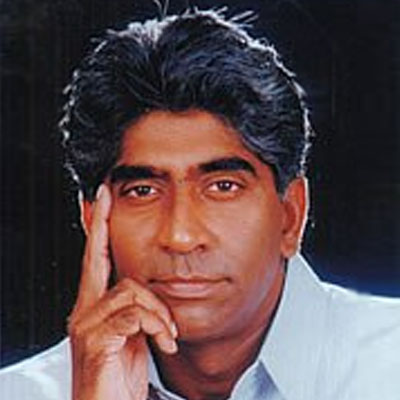
  • ”In the entertainment field there is nobody else who does what E! does’ : Kevin MacLellana – Comcast Entertainment Group, International president

    ”In the entertainment field there is nobody else who does what E! does’ : Kevin MacLellana – Comcast Entertainment Group, International president

    With the advent of digitisation in India, more international broadcasters are looking to launch channels in the country. A case in point is E! Networks. It runs E!, which focusses on Hollywood news, stories and features. It will also launch its fashion and lifestyle channel Style internationally later this year.


    E! Networks is looking to launch at least one, if not both of these channels before the end of the year in India. It is in talks with distribution networks to negotiate deals. Indiantelevision.com’s Ashwin Pinto caught up with Comcast Entertainment Group, International president Kevin MacLellan to find out more.


    Excerpts:

    Could you give me a brief overview of E!’s international business and the content it offers?
    E! has two sources of revenue. One is its programme sales. It has been selling foreign programming into foreign markets as far back as 1992. This was after it launched in 1991. Then in 2002 we started to sell the E! Network into foreign markets in 2002. Over the last five years we have garnered 46 million subscribers in over 100 countries.

    How important is Asia in terms of content consumption and revenue vis-?-vis Europe and the US? Which are your top three markets in this region?
    It is very important. The 46 million subscribers that I mentioned did not exist till five years ago. Over a third of E! Networks subscribers come from outside the US. Malaysia, Indonesia and Singapore are the top three markets in Asia. They account for 65 per cent of viewership in Asia.

    We have 12 feeds globally not including the US. In Asia there are three feeds.

    India is going through a period of digital transition with Cas and DTH. How do you view this market in terms of potential and has a timeline been set to launch E! and Style?
    The Indian market has always been extremely interesting to me. I was part of the team that helped launch Sony in the 1990’s. India has been interesting on account of the success of HBO. I was quite skeptical about how it would fare as I felt that Bollywood would be the programming that everybody wanted to see.

    Now it has become apparent to me that due to the upper echelon of Indian society in terms of the wealthier people with larger disposable incomes they have a significant interest in Hollywood films. From our perspective, India is a big market to reach for in Asia. The problem was that E! launched internationally pretty late in the game in 2002-2003. Analogue was pretty full by then.

    We had to find other platforms that had available capacity. We are so pleased to see DTH, IPTV taking off in India. We believe that the audience that has the money to invest in these platforms has a strong interest in Hollywood. We would like to launch E! and Style by the end of this year.

    The English entertainment and lifestyle segment in India is getting more competitive. What is E!’s USP that you feel will help it stand out from the other players?
    In general, entertainment and lifestyle programming is becoming more popular everywhere. In the entertainment field there is nobody else who does what E! does. We are the experts in Hollywood. We are not experts in Bollywood and to try and pretend to be anything we are not is a big mistake. We have learnt that by going into many markets, whether it is the UK, Italy, Japan, Malaysia.

    We cover Hollywood better than anybody else and this is what sets us apart. To find out everything on Hollywood and see it done in a high quality rich looking channel is what viewers expect from us.

    From Style’s point of view there are many lifestyle channels out there from the likes of Discovery and Scripps. Most of those channels appeal to 25-49 year old females. The Style channel has been successful in the US as it appeals to a younger female crowd. You are talking about a 12-34 year old female. Women at that age are just setting their buying trends. They are choosing brands that they will use for the rest of their lives. Style targets a young, technologically savvy woman. E!’s target is 18-49.

    The similarity between the two networks is that we are appealing to what we call the ABC1 demographic. This refers to a high income, highly educated, metropolitan audience.

    Over the last three years how has E! gone about creating awareness in Asia?
    Our aim was to go into each market and secure sophistication. There is no point in marketing unless you are strong in distribution. So what we have done is countries like Thailand, Hong Kong, Singapore, Indonesia is spending money with the local operators. Due to the limited distribution in all Asian markets doing general marketing like ads in newspapers makes very little sense. It is important to market to viewers who can access the channel.

    A good way to do that is to do marketing campaigns with the operators themselves. We do outdoor campaigns and it helps that E! has famous faces appear on the channel. We can do ads in print magazines with pictures of Brad Pitt, Angelina Jolie, Jennifer Aniston. The A-list names grab people’s attention a lot more than say an ad for a documentary would.

    In India you have licensing deals with broadcasters like Zee and Star. When you launch, will this side of the business get affected?
    Yes! I believe that there is an important mix between sales and channels. While we do sell content to channels it is important for the viewers to know that the main place to get E! content is on the channel itself and not on other networks. Viewers must know that the best place to get news on Hollywood is E!.

    However, to go back to the marketing issue, it helps to put a little of your content on the bigger networks with a broader reach. It helps familiarise the audience with the E! brand. I am sure that there will be a reduction in the content we sell once we launch.

    Right now, we do volume deals with Indian broadcasters where we sell 200-250 hours of programming. This will change. The number of hours sold will come down.

    Apart from India, China is a key market for most channels but has proven difficult to crack. What is your gameplan there?
    We have been lucky in China. We shoot the content ourselves. We own the rights. Other studios have financing partners and they all have some rights. We produce 1100 hours of programming. We do not acquire programming nor do we commission very much. We own our content across multiple platforms. We have the flexibility to be more realistic in doing deals in China.

    What has prevented some studios and production firms from being able to have a business in China is that they are inflexible in terms of what they are willing to do with their rights. We can sell 700 hours each year to multiple channels. On CCTV for instance there is an hour of content. CCTV can also use this content as they expand their broadband and mobile businesses.

    The disappointment in China is not our ability to sell there. It is to have our brand be available. However the good thing about China is that the rules for online are not as restrictive. So we can sell our content on television and maintain a brand presence online.

    What is the split between advertising and subscription revenues? What targets have been set?
    In Asia it is all affiliate revenues. There is no advertising. In Australia and New Zealand we have a significant amount of ad revenue – 35 per cent. In Latin America most of our revenue comes from advertising as is the case with the US.

    Our biggest goal is to launch Style later this year globally and to increase the subscription revenue of E!


    Are you looking at working with retail firms as well with Style as it is about fashion and accessories?
    What is good about Style is that it comes built in with a bunch of cross-promotional exercises. In the US the network has a lot of high-end brands. We have worked out global ad sponsorship deals. For instance, we do a programme that focusses on the Versace fashion shows.

    To what extent has E! Networks’ programming budget gone up over the last couple of years?
    It has gone up hugely by over 50 per cent in the past five years. Most of this is due to the amount of money being spent on high end reality shows. There was a time when reality shows were inexpensive. They are now becoming almost as expensive as scripted drama and comedy. Talent has become more expensive. In general I would say that there is more creativity in the reality genre.

    There was point when you had elimination reality shows and home based reality shows (like Big Brother) where you lock people in a house. Now you see reality shows that are based on game shows that are on mockumentary formats. This would be a hybrid scripted reality show. You will see more shows like MTV’s Laguna Beach, which is partially scripted and partial reality.

    I believe that there is an important mix between sales and channels. While we do sell content to channels it is important for the viewers to know that the main place to get E! content is on the channel itself and not on other networks.

    What are the new shows that E! is developing?
    There is a show called Paradise City, which is similar to Laguna Beach. It follows the biggest performers of Las Vegas. One character can be a playboy bunny. Another one can be a rock star.

    Another show Sunset Tan looks at Beverly Hills, Malibu beach life. The wealthiest mansions and homes in the Summer become vacant. They rent for $30,000 a week from June till the end of August. Rich families from across the world come in. Their kids hang out in nightclubs, drive sexy cars.

    We are doing a show on the New York socialite scene. Our aim is to expand beyond Hollywood. We will look at other wealthy people who are becoming a part of what we call pop culture.

    I believe that you are creating original content for Asia. Could you shed light on this?
    We will premier a show called Young Hot Asia. This is a documentary about 15 of the hottest young Asian stars. They are making a mark not just in Asia but also in Europe and the US. There have always been the Jackie Chans. Chow Yun Fats and Michelle Yeohs but in the last three years you are starting to see Asian talent that nobody had heard of before making a noise
    overseas.

    We will do specials on film festivals held in Asia. We will look at how Asian content is influencing television content in the US and in Europe. Ideally with India there should be 70:30 mix of
    Hollywood and Bollywood content. We can also have the Indian perspective on Hollywood. We can shoot in India and focus on people who are fascinated with Hollywood.

    The problem is that since we are launching on digital tiers it cannot support a great deal of local production.

    You recently hired American Idol host Ryan Seacrest. How has he helped boost the channel’s profile?
    He has become more than just our news anchor. He is also our Red Carpet host like for the Oscar Awards. He is pretty much the spokesman for the channel now. Our news ratings have risen by 50 per cent.

    The median age for our news has dropped to 32 from 38 which is very low. It is also rare. National broadcast news tends to have a viewer age above 50. Ryan is bringing the younger American Idol audience with him.

    What are the challenges in doing celebrity news vi-a-vis regular news?
    Access is a challenge. The audience has an unending desire for gossip and for paparazzi type footage of celebrities. They want to celebrities particularly when they are not on the Red carpet all beautiful and made up. There is huge interest in looking at celebrities when they are not prepared. With E! our main source of content are celebrities and their publicists and agents.

    We have to ride the line to feed the audience what they want. A lot of people cover celebrities in a mean spirited way. We need to avoid that and provide the audience with what they are looking for. When cover celebrity news you have to remember that the publicists are very powerful. Unlike other kinds of news where you are just reporting the facts here you have publicists and PR agents who are constantly trying to skew the way we cover things.

    Don’t you get accused of pandering to the stars to get access?
    (Laughs) We are not a news company like CNN whose aim is to report in an unbiased manner. We pander to the stars on some shows but there are others where we do not. We have a documentary series E! True Hollywood Story that looks at stars who have fallen due to factors like drug use, sexuality, extra marital affairs.

    We are doing one on Kirsten Dunst who am I sure is not going to be happy about everything that is on the show. We did not get information by talking to her but through sources. It is covered in a very realistic, unflattering way. On the other hand Celebrity Profile celebrates stars. So we do both types of programming. We don’t apologise for it.

    What are the other channels in E!’s portfolio?
    We have a channel called Versus. It focusses on outdoor sports like skiing, hockey, snowboarding. It is not about extreme sports but sports that viewers are very familiar with. The other channel is G4 and it focusses on videogames. Its target group is boys 12-29. We will not launch Versus in Asia right away.

    That is because you buy sports regionally. So it is difficult to have a pan regional network for it. I am more interested in launching G4 in Asia and India. Internationally G4 will launch late next year.


    In India the government has banned FTV for two months. A similar fate had fallen on AXN at the start of the year. I would appreciate your views on government regulation.
    India is not quite as strict as Malaysia and Singapore. We have a feed for those two countries and the content is not as open as what we air in Australia and New Zealand. We could air the Malaysia and Singapore feed in India.

    This feed is more on the conservative side. As India grows I would eventually look at having a feed just for India. At the moment though the digital platforms in India do not make it economically viable to have a feed just for this country. Any international broadcaster who is planning to enter India and have a separate feed just for it has no plans to breakeven. When subscribers grow for our channel in India then we would look to have a separate feed and we would be looking for more leeway compared to Malaysia and Singapore.


    One challenge for media firms in the digital age is re-purposing of content for mobile and the Internet where consumption is increasingly taking place anytime, anywhere. How is E! going about this task?
    We have done well in this regard as we own all our content. Normally people who make films, dramas and comedies do not own the rights to their properties. We do not face this difficulty. Broadband and mobile can be done on a region-by-region case. We have group called Short Programming and New Media Content (Spanc).

    They launched a year and a half back and already everyday we put 90 minutes of streamed content up for mobile. It is a cut down version of the shows we make and the news that we provide. Operators can also take 20-25 minutes of clips either on a VoD basis or on a SVoD basis. Some operators only take the streamed content while others only take the VoD content. Some take both.

    Online we have a broadband channel called The Vine. It is available at E! Online. The site has 80 editorial people. The Vine is streaming video. One popular section is called Planet Gossip. It has video stream segments from gossip columnists all over the world.

    What role are merchandising and DVDs playing in helping E! diversify its revenue streams?
    I am just launching a DVD business. E! has never released DVDs overseas. We will be coming with an international DVD called Beverly Hills Plastic Surgery Secrets. It features 10 of the top plastic surgeons in Beverly Hills talking about the best way to do procedures. It looks at what procedures leave scars and which ones do not.

    How has E! Online boosted its content offerings?
    We cover entertainment news from an aspirational perspective. Other sites only have a section for entertainment news. Some sites cover entertainment from a paparazzi, lowest common denominator view.

    We were profitable through the dotbomb era and it is still profitable. Our site has been profitable for the last seven years.

    E! Online 2.0 will launch this Summer. This will have social networking. So people can chat about their favourite stars. They can go into our library, find photos of their favourite stars and swap them with each other. One can upload one’s photo of a star if one has a digital camera. Taking photos of stars is happening more frequently in Los Angeles.

  • ‘You cannot build a sample on psychographics’ : LV Krishnan – TAM India CEO

    ‘You cannot build a sample on psychographics’ : LV Krishnan – TAM India CEO

    Media research agency Tam is in an expansion mode. Recently, it increased the number of peoplemeters from 4800 to 6917. And as direct-to-home (DTH) and conditional access system (Cas) took root, it also came out with the Elite Panel. The aim: to give broadCasters and media planners an idea of what the cr?me de la cr?me consume.


    Indiantelevision.com’s Ashwin Pinto caught up with Tam India CEO LV Krishnan to find out how the agency is gearing up to meet the challenges that new distribution technologies are throwing up.


    Excerpts:

    With conditional access system (Cas) and direct-to-home (DTH) taking root, what is Tam’s strategy going to be?

    We expected digitisation to happen sooner or later. We have been getting ready for it since a year. In April 2006 we released our first study under the Blinx series where we had the first DTH penetration data coming out. We also did a multi-city study on what was happening on Cas. We looked at the international availability of technology that could be used to measure these two platforms.


    We began work on the digital peoplemeter which we call the TVM5. Today all the six metros are completely aligned to the TVM5 digital peoplemeter. The peoplemeters are technologically hybrid. This was stage one done last year. We expanded the panel two weeks back and introduced the Elite Panel. After that, quite a large number of homes in the Elite Panel have moved onto DTH. In the regular panel a significant amount of homes are converted to Cas.


    This is clubbed with the C&S (cable & satellite) data and sent to the industry for usage. While this happens and the market moves from analogue to digital, there is growth in DTH and Cas for both panels. To validate this we are doing a regular penetration study. The data for this month will be out shortly. We will do studies in February and March to find out DTH and Cas penetration in the notified areas. It will be matched with our Elite Panel penetration also to see if it matches with those kinds of homes. Then data will go out to the user.

    Will Cas or DTH prevail and why?

    It is difficult to say which one will succeed. Each has advantages. Finally it is the service ability that counts. The demand is there. Pricing is important.


    Then there is the marketing activities done. Feedback is that demand for set top boxes is rising dramatically. But the service ability is the need of the hour. This is preventing more penetration.

    Tam has also increased the number of Peoplemeters and coverage area. Could you talk about this?

    We have been working with the joint industry body (JIB) for the last year and a half to look at the next step. Hence the decision to go to 7000 peoplemeters.


    Three things prompted the expansion. Firstly the universe has changed since the last expansion that happened in 2002 – 2003. The number of C&S homes has increased. New towns have been added on different strata of the population. The second reason is the sheer amount of fragmentation that is happening. With the number of channels available, TV viewing has become more fragmented. To look at data from specific segments of the population you need to go deeper. The Hindi speaking markets which is the North and West is where the bulk of the new metering has been done.


    In the South, the time spent on viewing is higher in proportion to the number of TV homes present. More samples have been added there. Then we wanted to plan for the future with new platforms coming in. You will see further fragmentation with DTH and Cas arriving. IPTV is also soon to launch. We wanted to be ready for this change.

    How much has Tam invested and what have the challenges been?

    The expansion has taken 10 months of work. We started last February. We moved from 73 towns to 151. We brought in the digital peoplemeters. At the same time we needed to ensure that the homes are counseled to deliver quality research. It has been great working along with the industry. Over Rs 250 million has gone into the expansion.

    Why did it take it so much time to expand?

    We touched 4800 in 2003. In 2004 there was no establishment study. We had to wait for 2005 to see the kind of growth rates that have happened. When we got NRS 2005 there was also census data for 2001 which came out in 2005. That data came to us in the second half of 2005.

    We are examining the possibility of expanding the Elite Panel to other markets like Bangalore, Chennai and Kolkata

    How do you choose the homes and how is user compliance ensured?

    The homes are chosen on the basis of key control variables divided into primary and secondary variables. The former are socio economic classes, the ability to watch C&S or terrestrial television. Number of home members is another variable. Apart from that, secondary variables include ratio of colour to black and white TV sets. In 2007 we have added a new variable, which is the presence of kids. A metric is used to gauge the compliance of a home to the peoplemeter which is button pushing. So we do surprise checks with these homes. Once we are sure that they are stable we add them to the reporting data.

    Rival ratings service aMap talks about the importance of pyschographic profiling and that 25+ SEC A is not enough if you want to know what for instance an executive consumes. Your views on this?

    You can include additional variables. However a panel needs to be put on strong foundation stones. They have to be stable over a period of time. Then you look at SEC, cable and satellite or terrestrial. Pyschographic variables are ever changing in nature. You cannot build a sample on psychographics. If you list pyschographic variables, which could be 100, you diminish your sample to miniature levels.


    You cannot have attitudinal factors being linked to viewing behaviour patterns. Attitudinal factors can be included in one off studies. But to expect a panel to give you solutions for every little thing will not be possible. A panel is supposed to give continuous behaviour changes so that you can do projections for the future based on past behaviour.


    In a dynamic market you have a cable operator changing the channel line-up, marketing etc. If you can pick up these changes and tie it to the numbers you can make better sense of the data rather than try to report things based on things that are affected by changing attitudes. It is important to have data that gives a clear picture of the changing marketplace rather than have a variable that is there for the sake of it.

    How has the channel standings been affected by the expansion of the panel?

    In general the expanded panel has come in with Cas implementation. Pay channels have taken a hit in Mumbai, Delhi and Kolkata. But the figures will improve as homes move to Cas or DTH. Distribution is key in the towns. Also when you geographically expand your ratings presence you see a difference in terms of power cuts. This environmental factor also affects channel shares. A strong distribution of channels in smaller towns will mean that share is not affected.


    Regional channels share has gone up. So has news. The free to air channels are also faring better. The mainline channels continue to stay strong. Certainly there is more fragmentation. Music and the English entertainment channels are stagnating. This has to do with content along with marketing. Colour TV sets have jumped to 70 per cent in the C&S homes. Remote control penetration has also grown. There is faster surfing and more sampling. The ad rate viewership is slipping vis-?-vis programme viewership. There is a 20 per cent difference. News has eaten into the share of GEC.

    What findings has the Elite Panel thrown up?

    The elite segment spends a limited amount of time on television. It is around an hour and a half each day compared to two hours and 10 minutes for the general panel. For those who own a DVD player it goes down further to around an hour and 10 minutes. The more the leisure opportunities present, the less he/she watches television. They are extremely choosy. What is interesting is that although the main language of 45 per cent of the Elite Panel is English, the time spent on watching Hindi content is more watched. English entertainment needs to touch the heart of the consumer better.


    It is clear that the members of the Elite Panel do not approve of the quality of content on the English entertainment channels, which is one reason why they are not spending much time watching television. They are basically surfing through the English channels and then going back to the Hindi shows. The English channels need to understand what the viewer requires. The elite segment represents an opportunity.

    Can you highlight any other findings that emerged from the Elite Panel?

    Firstly we need to segment general entertainment into two parts. One is soaps and the other is reality shows. The former is consumed by the housewife while the latter is consumed by the youth. On a national scale you have one TV set homes mostly. But in the Elite Panel there are multiple TV set homes. So while the overall numbers are the same when you break it down into soaps and reality shows the viewing is split evenly in the Elite Panel. This means that the second TV set is being used to watch reality shows by the younger members. This gives channels an idea of the kind of shows that can be created for the Elite versus what is being done for the rest of the country.


    The Elite segment has nuclear families with bigger homes. There are two kinds of homes. One is executive which has lesser kid’s, while some of them are Dink (double income no kid’s) homes. The business family is larger. The day parts both watch are different as also is the content.


    Another difference is the behaviour of this audience towards weekends. In a national panel time spent declines. Here it goes up. News is watched a lot. Sports viewing depends on the significance of an event. It needs to be interesting. They will watch an event whether it is cricket or tennis or Formula one if the match is interesting. Schumacher’s last Grand Prix touched a rating of over three in the Elite Panel while in the national panel it was 0.22. Viewing of sports depends more on the quality of the match rather than on the tournament per se. Kids and movies fare better on the Elite Panel.

    What has the media feedback been like for this service?

    It has been good. We are examining the possibility of expanding it to other markets like Bangalore, Chennai and Kolkata. It has been two years since we started work on the panel. The challenge was to keep the panel intact. We have 125 homes in Delhi and 125 homes in Mumbai.


    Technologically we had to make sure that data could be downloaded which is not easy given that the telecom infrastructure is already overloaded. We did special techniques to recruit homes. We spoke to them in terms of what we are trying to do. We had trained people visiting the homes with laptops.

    Can sports viewing for non-cricket grow?

    There are some learnings from cricket. Firstly you need star appeal. Would you watch cricket without Sachin, Saurav, Dravid and Dhoni?


    Secondly media coverage is crucial. The reason why the soccer World Cup last year fared so well was due to the enormous coverage and hype in the media particularly in newspapers. Then there needs to be drama. Cricket has controversy, which creates aura. For instance Saurav coming back sparked debate.

    What is your outlook for radio this year?

    We have expanded our measuring to 32 stations now for AdEx. Earlier it was 13 stations. We are seeing radio ad expenditure growing.

  • ‘User generated content is popular in news, music and sports genres’ : Pankaj Thakar – Cellcast Interactive India CEO

    ‘User generated content is popular in news, music and sports genres’ : Pankaj Thakar – Cellcast Interactive India CEO

    With user generated content (UGC) on the rise globally,UK-based Cellcast is betting that its Sumo.TV platform for broadcasters would catch on in India and other parts of the world. People can send in video content and if it is fit for television viewing, it will be put up.


    Cellcast is also looking to launch shows on different TV channels for which it buys airtime. Indiantelevision.com’s Ashwin Pinto caught up with Cellcast Interactive India CEO Pankaj Thakar for a low-down on the company’s plans in India.


    Excerpts:

    Could you give me an overview of Cellcast and the services it provides?

    We work in the area of developing participative content. People watch television and consume it either by mobile or IVR or the internet. Cellcast is a technology and a format company mixed into one. We have integrated technology that is inexpensive to use. Both small and big broadcasters depending on what they want can use our formats.

    What are your different revenue sources?

    Our main revenue source is through mobile, IVR and internet. People pay for premium services like SMS, MMS, Wap, GPRS. We have a show called Bid2win which be participated through SMS or IVR or you can go to the net and log on to the website. We buy airtime on channels and showcase our content.

    In India you worked with Star on their reverse auction format and with Zee on their PlayTV channel. How was that experience in terms of viewer uptake and channel response?

    We did some projects with them. The results were positive with both and the projects were big. We got PlayTV off the ground pretty fast. However we feel that we have to be in control of our own destiny. We are out of PlayTV. We have bought airtime on Sony, Zee, Sahara, Zoom. That is why we could not continue with PlayTV.


    For PlayTV, we did a Housie format. We used formats that work in a diptest environment so you know whether or not the audience is ready to respond. We are now looking to increase the number of formats on air on different channels. By March we hope to have six formats on air.

    Could you talk more on this?

    We currently have bid2win and Bollywood Dhamaal. The latter was launched on Max on 7 January. In the first episode alone we got 100,000 responses. It is a game show where two anchors talk to the audience.


    There are some puzzles shown on TV. Some people get to call live and if they solve the puzzle they win prizes. At the end there is a jackpot round for Rs 100,000.

    What are the other formats being looked at?

    We have a sports format called Beat them All. We have been talking to Max about this. We are talking to Max to use this as the World Cup is coming up. It is a virtual cricket set up that you play along with. If you beat six top players you win Rs 10 million. We did an offline test with a mobile operator and we got 100,000 responses for an India versus South Africa match. This works via SMS and IVR. We are looking at an interactive astrology show, a social networking show, a music show and a matrimony show.


    By social networking, I mean making friends through television. Already it is happening on the net through sites like MySpace. For astrology a viewer can send in an SMS and the astrologer will answer the query. The matrimony show will involve helping the person make the initiative to find a partner. TV is a powerful social medium and can attract people from all parts of life if it is put in a social environment. I am not sure if girls would want to do this but a guy can put his picture and say that he is looking for a bride and this is his background.

    How cost effective is it to acquire airtime?

    It is cost effective in a sense. If the response rates are good, you will be fine. The rationale behind buying airtime is to show people that our formats work. 250 episodes of bid2win got 20 million responses. It has generated $1.4 million in revenue. It is a clear-cut winner. A broadcaster otherwise has to produce his own content, find advertising money. Here we give them free content and pay for the slots. So it is a win-win situation for everybody.

    Could you talk about your channel business in the UK?

    We run six channels on the Sky platform. We also have airtime on Freeview. We have been operating them since 2002. Since we run our own channels, we can experiment with different types of content, technology. This is then exported. Our channels include a psychic astrology channel. We started with one hour and the channel has grown. We have a network of psychics who take calls. We have a dating channel and so people can call up and find people and do matchmaking. We have a shopping and auctions channel.


    Apart from this we operate a channel in China in Shenzhen called Mymobile TV. We operate quite differently outside the UK. We form partnerships with broadcasters to provide programming or buy airtime.


    We would like to eventually start a channel in India on a DTH platform. Our goal is to set up channels on satellite in different countries. We have experience in running small, vertical channels in a multi-platform environment. Our speciality besides providing content lies in running channels in different genres. Our dream would be to run an auction channel and a game show channel in India for sure down the line. However we have not set a timeframe.

    What have the key learnings been from running your own channels?

    I think that it is in terms of the nature of your whole business model. To bring in a niche audience you have to really know how to engage that audience and look for alternative sources of revenue. There is no advertising and subscription income. While profits have taken a hit our revenues in the UK are strong.


    Our channels in the UK are freely available for those who have Sky. You have to provide an engaging experience that people are willing to pay for. Our motto is pay and play. Our experience has been that people will pay for services like an auction.

    Won’t it be difficult to launch a channel in India as DTH has a transponder space problem?

    We face universal constraints. Measat 2 has launched for South Asia. Suddenly space for 400 channels is available.

    bid2win got 20 million responses and generated $1.4 million in revenue. We will increase airtime buying on channels

    How did the concept of Sumo.TV come about and what were the technical challenges initially faced?

    It came out of the participative content that we do. In the UK when we did MMS participation, people sent pictures, lots of videos. We realised that since there is a huge market out there we can actually encourage people to create their own content and send it to us. The challenge was to build a content management system. The other challenge is how do people who participate be a part of the value chain. With mobile technology that allows you to download services we have solved that puzzle also.


    Sumo.TV basically invites individuals to share their personal or creative videos that can be featured on primetime television. Sumo.TV has already launched in China and in the UK. In fact in the UK we have started a 24-hour channel where content is distributed solely by the viewers. This exceeds what youtube and MySpace can do. All content can be shared through the site, www.sumo.in, where viewers can through the net or mobile post their content, which can then be viewed and shared.

    How does the monestisation process work?

    It is very simple. If you download content through mobile or net we charge for it. The content creator gets a percentage of the revenue accrued. There is a pre-agreed revenue sharing arrangement for all the partners in the value chain. Every time content is downloaded by another user or shown on television or streamed on the mobile the creator gets a percentage of revenues. Effectively Sumo.TV users are being invited to set up their own mini-channels. In the UK everyday the site gets 80,000 unique visitors. Of course there is a filtering process and so all submissions are not accepted. This is how we are different from youtube. Whatever is accepted must be fit for television viewing.

    What about India?

    We are talking with Indian broadcasters regarding airing user generated content on their channel.

    Have any special services been introduced in India?

    Cellcast India has introduced three services in India. One is Sumo Ki Pehchaan. This is where you submit a clip and the best one wins Rs 100,000. Then there is Sumo Ki Sangeet. Here you can submit a video of you singing or playing a band. While Indian idol gives an opportunity to talent, Sumo.TV will open avenues to talent that had been previously hesitated to come forward. Then there is the Super Sumo challenge. Here one can submit a short socially relevant film. We will look to help broadcasters build on content.


    A UGC platform like Sumo.TV allows for expansion of content and the most important part is that it connects viewers to viewers. Right now 100 TV programmers decide what a billion people should watch.

    But while India is a huge mobile market the concept of user generated videos is new. Mobile participation is as of now mostly limited to SMS, chat. How long do you feel it will be before UGC takes off in India?

    Well 30 per cent of mobile phones in India in 2009 will have a camera. This means 60 million camera phones or one camera for every 20 Indians. The question will be whether any event can remain in the private domain.


    An event which can’t be published in a newspaper or be seen on television can be put on Sumo.TV by someone who feels that the event is important. More video content will be consumed. This will however not replace traditional television. The fact that Apple has come out with the iPhone, which has video ipod, web, camera, shows convergence. Right now there are nine million phones that are GPRS enabled. This itself is a big number.


    The UGC process can be described as aim, shoot, compose, post and share. Our strategy with broadcasters will be with licensing and revenue sharing. The first step will be to help them aggregate content. Once that is done there will be licensing fee and a revenue share with downloads if for instance Sony asks viewers to send in content.

    What genres are popular with UGC? How do you authenticate content?

    In the short-term shock therapy works. So news, music videos and sports are the three main genres. For authentication we are developing tools. Doctored video we have figured out. But as far as the authenticity of the actual event is concerned, it is for the broadcaster to figure out.

    What are the advantages for advertisers in a participation environment?

    You can tag the product lines, do product placement along with return messages. Participation means a two way communication process. There is a chance for the advertiser to put in a tagline. At first advertisers did not understand the power of UGC. They were also worried about issues of IPR. Once those get sorted out, they will be more than happy to come on board.

    Could you talk about how Cellcast is taking advantage of the synergy between mobile and the internet?

    Going forward, five years from now net will be as present on the mobile as it is on the PC. I do not see a reason to treat them as two separate mediums. Once bandwith prices get rationalised, people will use the mobile to access the net.

    How important do you feel India will be for Cellcast five years down the line in terms of business being generated?

    India is a key market along with UK, China and Brazil. That is where the mobile uptake has been at its most healthy. It has been a long, hard road to get to where we are in India but now we are stable. We have a team that is expanding. From two people, we are now 30 people. We get creative work outsourced from India as the talent here is fantastic.

  • ‘Fall in STB prices make digitisation affordable in low ARPU countries.’ : Dr. Abe Peled – NDS chairman & CEO

    ‘Fall in STB prices make digitisation affordable in low ARPU countries.’ : Dr. Abe Peled – NDS chairman & CEO

    With conditional access system (Cas) coming in next year and DTH already in, the time is right for television technology firms to take a serious look at India. One such firm is NDS, which provides technology solutions for digital pay-TV. It has opened a dedicated sales and support operation in Mumbai. Indiantelevision.com’s Ashwin Pinto caught up with NDS chairman and CEO Dr. Abe Peled for a lowdown on the company’s plans and the emerging digital age.


    Excerpts:

    For NDS, DTH is a high revenue earner. How is the company gearing up to new delivery technologies, particularly at a time when investments are coming into IPTV and growth in DTH subscribers is slowing?

    The market for satellite is getting competitive and complex because of triple play. We have 70 per cent of our revenues coming from DTH. We expect our growth in this area to stay strong as DTH service providers are going in for advanced technologies. We will benefit not primarily from subscriber growth but because of penetration of new technologies. We, for instance, have shipped 4.2 million digital video recorders (DVRs) and there is a scope for explosion in this segment as prices drop. But we realise that IPTV is also offering opportunity and have 14 different contracts including Yahoo in Japan which has 200,000 subscribers.


    You have just acquired for $107.5 million Jungo Ltd. which is a leading provider of software for residential gateways. Will this help you penetrate the broadband television market?

    It will definitely help us better serve the telecom network operators to offer reliable video over broadband services. We are looking at acquisitions in the IPTV and mobile space even as pay-TV operators are looking at different delivery platforms.


    With Cas coming in next year and DTH already present, how is NDS tapping the growing opportunity in India?

    We actually started selling our products in India three years back with Hathway Cable & Datacom. The reason why DTH and Cas are coming in now is that the technology is sufficiently inexpensive to be able to be used even in countries where subscriber revenue is a few dollars each month. The first set-top box (STB) launched by DirecTV in the US cost $700. But now the cost of the STB is below $50. Also, the cost of digital compression has fallen. All this makes digitisation affordable in countries which have low ARPUs (average revenue per user). China and India are key growth markets for us.

    NDS is seen as a high-cost encryption system. Do you have a pricing strategy for the low ARPU countries like India?

    We have a product called VideoGuard which addresses this issue. There is a myth spread by our competitors that we are not affordable. We are very competitive and cable operators will have to take a long term view. It is not the Cas mandate that they have to service but also look at interactive features. Besides, we see a consolidation take place in the cable TV industry here.


    DTH has grown wherever there has been premium content. How do you see the Indian DTH market evolve?

    I have a word of caution. While we would like to supply technology to lots of people, the experience is that in satellite very few places have room for more than one player; it is just not cost effective. In France, the two operators merged this year. The US has two operators as it is a large country. So maybe India will follow the US. But surely there can’t be space for so many players who have expressed their intent to join the fray. Exclusive content is also not allowed and the sectoral cap on DTH of 20 per cent stake by broadcasters can seriously hamper big capital coming into the business. But Tata Sky is off to a good start. And with DVR prices falling, we see it as an incentive to push digitisation.


    Are you in talks with the major telcos like Reliance Infocomm for IPTV?

    We are looking at expanding business in India and are in talks with several companies. But I can’t give any specific details. We have opened office in Mumbai specifically for this purpose.


    Are you also ramping up the research and development facility in Bangalore?

    We have almost 600 people in our Bangalore lab and are still hiring. We have just moved into our new office premises which can house double the capacity we are operating in now. Bangalore is a key part of our research and development operations. The EPG (electronic programme guide) was developed out of here and the middleware was adapted for our two clients, Tata Sky and Hathway, in India.

    What are the challenges that lie ahead for NDS?

    As the media landscape changes, pay TV operators are facing more competition. There are new modes of delivering and distributing content that perhaps bypass traditional avenues. Our challenge is firstly to help our pay TV customers embrace new technologies and broaden the entertainment experience that they offer. At the same time, we want to work with telecom firms or people who want to distribute content directly to the PC or are keen to get into triple services play. We will be an enabler in this changing, fluid media landscape.


    How has NDS been able to quickly identify consumer tastes and preferences with evolving technology?

    While consumers are not our direct customers, our success critically depends on them enjoying the entertainment experience. For example, in the early days of interactive television the first instinct was to say that we will allow consumers the technology to access the web to view television. We did not do that, as we understood that is not the case. We, instead, moved towards enhancing the television experience, which means interactive sports and other programmes. Companies came to us wanting to sell stuff through interactive TV. MTV wanted to sell music CDs. But we learned quickly that there isn’t a good enough business model to do that. The margins are not enough after you account for all the costs. We focussed on things that allowed channels to increase their viewership share like interactive quizzing. This way they could hike their ad rates. One of the key lessons was that T-commerce does not really work. We are working with Nickelodeon in the UK for games that you can overlay onto the programme.


    There is something called Pie in the face. So if you score enough points you can throw pie on an actors face. These things enhance the television experience.

    Is there a resistance from consumers for digital TV?

    The only resistance from the consumer is the price. They appreciate what the DVR and EPG have done. Price is determined by two factors. One is the absolute cost of the technology, which is coming down. Second is the business model of the operator. Will they bundle the cost into subscription and spread it out over several years or expect consumers to pay upfront? That is what dictates the rate of adoption. If the payment asked for upfront is modest, the adoption is quite quick. If the upfront is higher, the adoption is slower.

    What are the key markets for NDS in terms of revenue?

    The US accounts for 35 per cent of our revenues while 20 per cent comes from the UK. Asia is about 11 per cent. Our hope is that in five years time Asia will contribute at least 20 per cent. Last year in China, one million STBs with our technology were deployed in Shenzhen. This year we expect three million deployments.

    Market for DTH service providers is getting competitive & complex because of triple play

    Has China been a more difficult market to penetrate vis-a-vis the rest of Asia as you need to show demonstrable commitment and the fact that the Chinese government takes a personal interest in how TV technology develops?

    The Chinese government takes an active interest in content. I don’t think that it takes a greater interest in technology than governments in other countries. We have a small development lab in Beijing as we are committed to it. The challenge is that there is no premium content that an operator can offer. So digitilisation is a result of government initiatives rather than a demand from consumers for getting more premium content. NDS has contracts with the larger Chinese provinces.

    How is NDS coping in the face of competitors like Kudelski and Irdeto?

    In terms of scale, NDS has 66.6 million STBs deployed worldwide. Irdeto has two to three million. Kudelski, a Swiss firm, is our main rival but we are ahead. The fact that we have so many deployments gives us the scale to invest in research and development. That enables our technologies to be more sophisticated and secure.


    Secondly NDS has a much broader offering for pay TV operators. While conditional access is necessary, you have other technologies like interactivity and games. None of our competitors have this broad range of technological capabilities. It is not just about providing Cas but also about providing an enhanced experience. We are at much better place to do that vis-avis our competitors. Our competitors can offer price but we are competitive there as well.

    NDS recently was ranked as the top research and development investor among all UK-based software companies. Could you talk about your R&D centers and their importance?

    We believe in being a leader in television technology. We spend over 30 per cent of our revenues on research and development. We have centres in Israel, UK, Bangalore, France, Korea, US etc.

    Is NDS also working in the mobile sphere which allows for content viewing anytime, place?

    We have a DVB H system that we are doing trials with. Korea is the most advanced country in terms of mobile deployment. We are doing a trial there with WiFi Hotspots. If you go into that Wi Fi it will pick up different channels that you can watch by streaming.

    Finally what are the major changes you see in the digital television landscape five years from now in India and Asia?

    A large percentage of homes will have a box. It will offer interactive TV. A percentage of that will be DVR I would hope at least eight per cent. A similar percentage will have broadband capabilities. I am not sure about the potential of High Definition. It will be a small percentage.