Tag: Ashwin Pinto

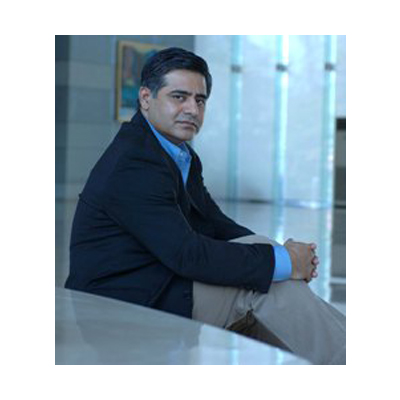
  • ‘Working on an umbrella brand strategy is a good way to build a presence in the entertainment space’ : Rajesh Sawhney – Reliance Entertainment President

    ‘Working on an umbrella brand strategy is a good way to build a presence in the entertainment space’ : Rajesh Sawhney – Reliance Entertainment President

    As 2007 comes to a close, Reliance Entertainment president Rajesh Sawhney is an apt choice for our year-ending interview, not necessarily in the context of what Anil Ambani’s company has done in the broadcast space this year, but because of the expectations from industry, going forward.


    On the television front, the journey of being a broadcaster starts next year with the launch of two movie channels (first Hindi and later English), a logical extension from Reliance ADAG’s existing film production and distribution business. The broadcast piece will add to a list that ranges from multiplexes to movies, home video, FM radio, direct-to-home (DTH) and IPTV.


    On radio, the aim is to consolidate its position. It will also be active in distribution with its DTH platform coming up. Thomas Abraham and Ashwin Pinto caught up with Sawhney to find out about the plans and the kind of impact that Reliance is looking to have on the entertainment space.


    Excerpts:

    Firstly, 2007 was the year when Reliance Entertainment sowed the seeds for what is to come. What were the landmarks for this year?
    We are a young player only two years old. Our journey into entertainment kicked off with the Adlabs acquisition. Then we moved into radio in 2006. We started rolling it out by the end of last year. Then we moved into other ventures like Zapak, our gaming portal. From my perspective, we are still in the incubation phase and the larger consideration is that the entertainment and media industry is where telecom was five years back. The media industry will be worth $25 billion in five years time. A lot of value creation will happen in the coming five years similar to what was seen in telecom.


    The second big thing will be the emergence of digital entertainment. Platforms are now set. This will be a large driver.


    The third thing is that with the economy growing at 10 per cent, the Indian consumer is spending more and more on entertainment. The first indication of this is the multiplex boom. Now even monies spent on entertainment at home like DVD rentals, pay per view are growing.


    The entertainment industry is worth $ 11-12 billion out of a trillion dollar economy, which means 1 per cent of the economy. Globally it is 3 per cent. In the US, it is 5 per cent. If we take the telecom parallel, revenue is 3-4 per cent. In India it is 2.5 per cent. India has a convergence deficit in this sense. This is where the real opportunity is going forward.


    I see Indian players having strengths in certain verticals. Some are strong in print, others in movies while others focus on radio. Nobody is building a comprehensive brand presence across media. This strategy would allow you to capture the three per cent deficit. This is what we are chasing.

    What is the kind of impact that Reliance is hoping to have on the entertainment space across the different verticals?
    Let us take the movie industry. It is on a huge cusp of change. If you go back 10 years there were no multiplexes, no DVD formats. Home entertainment will be the next value driver for the movie industry in the coming decade. DVD and home entertainment revenues are the biggest source of revenue for Hollywood. Here it is less than 10 per cent. We are going through the first phase which is theatrical revenues. Home entertainment will be the next phase.


    For this you need concepts like Big Flicks which will make organised retailing possible. It will make home entertainment delivery through broadband, DTH, IPTV possible. Pay per view revenues will be created for the Indian movie industry. Content in the long tail form across different platforms will offer more choice. The companies who are preparing for this will gain big time as far as the movie industry is concerned.


    The second revolution happening in the Indian movie industry is on the content side. So production values have risen. Talent is getting a huge amount of value which is getting aligned to global values. Content will get value from overseas markets, home entertainment, satellite markets. A $10 million movie has become the norm. I can see a situation where $100 million movie is viable but this will take time to happen. You will see Hollywood and Bollywood collaborating more.

    How will Reliance benefit from the synergy between Reliance Communication and Reliance Entertainment?
    Reliance Communication is building distribution capabilities on mobile, DTH, IPTV and broadband platform. Reliance Entertainment is building a presence and capabilities on the content side across different verticals – content, broadcasting, themed entertainment and new media.

    A large part of your plan involves targeting the youth across different verticals. How are you going about this?
    We are a youth focussed company. This has a commercial reason. We believe that youth drives entertainment. Youth is driving the movie consumption business. India has the best youth demographic platform in the world. We are the youngest country in the world. We keep youth in mind in whatever we do whether it is radio with Big FM or making movies or Zapak.

    The government should allow news and current affairs. This is why you do not have talk radio

    You have taken the brand name Big for your businesses like Big FM, Big Flicks. Is the aim here to convey to the consumer an idea about the size and scale of the brand?
    Unlike many companies that work with a house of brands strategy we believe that working on an umbrella brand strategy is a good way to build a presence in the entertainment space. The choice of the name is predicated on three reasons. Firstly it is simple to understand. Everyone, regardless of language, understands Big. The second reason is it is simple to communicate. A mass brand needs to be understood by everyone. And third, the brand name must give people an understanding of the scale at which we want to bring entertainment to consumers.

    How important is the broadcasting space for Reliance?
    It is very important for us. Our first investment has been in radio with Big FM. We won 145 licenses in 2006. We will take part in the next round of bidding when the government goes ahead. We are the largest radio station in the country with 40 stations. With the execution of radio we have shown a clear commitment by executing the fastest. In Delhi, Bangalore and Mumbai we have emerged as a top player. We have created a leadership position not just by the number of stations but also in the markets where they operate, including those that are entrenched. We want to consolidate our position next year.

    Radio needs to differentiate itself instead of just going after the widest lane with popular Hindi songs. Why isn’t this happening?
    I do not blame the private players for this. I blame government policy. The government should allow news and current affairs. This is why you do not have talk radio. Multiple stations should be allowed. At the moment only five to six stations are available in the Metros. The government should ensure that 30-40 stations are available. One company can run five channels in a state. The government should introduce policies to facilitate the next growth phase. Niche formats become viable if frequencies are made available at lower rates. Running a Gujarati channel at a license fee of Rs 30 crores (Rs 300 million) does not make sense in Mumbai.

    Are you also looking at online radio?
    Yes! In the West, radio is a mature industry. Online is a growth industry there. In India FM and online are coming at the same time. The biggest opportunity is in FM. It is hugely underserved India should have 10,000 FM stations. Now there are less than 300 stations. I can run stations in different languages in Mumbai with viability as long as I am allowed to do so. There is also an opportunity to serve the non resident markets.
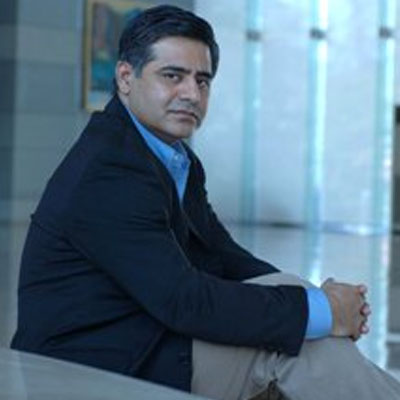
  • ‘Working on an umbrella brand strategy is a good way to build a presence in the entertainment space’

    ‘Working on an umbrella brand strategy is a good way to build a presence in the entertainment space’

    As 2007 comes to a close, Reliance Entertainment president Rajesh Sawhney is an apt choice for our year-ending interview, not necessarily in the context of what Anil Ambani’s company has done in the broadcast space this year, but because of the expectations from industry, going forward.

    On the television front, the journey of being a broadcaster starts next year with the launch of two movie channels (first Hindi and later English), a logical extension from Reliance ADAG’s existing film production and distribution business. The broadcast piece will add to a list that ranges from multiplexes to movies, home video, FM radio, direct-to-home (DTH) and IPTV.

    On radio, the aim is to consolidate its position. It will also be active in distribution with its DTH platform coming up. Thomas Abraham and Ashwin Pinto caught up with Sawhney to find out about the plans and the kind of impact that Reliance is looking to have on the entertainment space.

    Excerpts:

    Firstly, 2007 was the year when Reliance Entertainment sowed the seeds for what is to come. What were the landmarks for this year?
    We are a young player only two years old. Our journey into entertainment kicked off with the Adlabs acquisition. Then we moved into radio in 2006. We started rolling it out by the end of last year. Then we moved into other ventures like Zapak, our gaming portal. From my perspective, we are still in the incubation phase and the larger consideration is that the entertainment and media industry is where telecom was five years back. The media industry will be worth $25 billion in five years time. A lot of value creation will happen in the coming five years similar to what was seen in telecom.

    The second big thing will be the emergence of digital entertainment. Platforms are now set. This will be a large driver.

    The third thing is that with the economy growing at 10 per cent, the Indian consumer is spending more and more on entertainment. The first indication of this is the multiplex boom. Now even monies spent on entertainment at home like DVD rentals, pay per view are growing.

    The entertainment industry is worth $ 11-12 billion out of a trillion dollar economy, which means 1 per cent of the economy. Globally it is 3 per cent. In the US, it is 5 per cent. If we take the telecom parallel, revenue is 3-4 per cent. In India it is 2.5 per cent. India has a convergence deficit in this sense. This is where the real opportunity is going forward.

    I see Indian players having strengths in certain verticals. Some are strong in print, others in movies while others focus on radio. Nobody is building a comprehensive brand presence across media. This strategy would allow you to capture the three per cent deficit. This is what we are chasing.

    What is the kind of impact that Reliance is hoping to have on the entertainment space across the different verticals?
    Let us take the movie industry. It is on a huge cusp of change. If you go back 10 years there were no multiplexes, no DVD formats. Home entertainment will be the next value driver for the movie industry in the coming decade. DVD and home entertainment revenues are the biggest source of revenue for Hollywood. Here it is less than 10 per cent. We are going through the first phase which is theatrical revenues. Home entertainment will be the next phase.

    For this you need concepts like Big Flicks which will make organised retailing possible. It will make home entertainment delivery through broadband, DTH, IPTV possible. Pay per view revenues will be created for the Indian movie industry. Content in the long tail form across different platforms will offer more choice. The companies who are preparing for this will gain big time as far as the movie industry is concerned.

    The second revolution happening in the Indian movie industry is on the content side. So production values have risen. Talent is getting a huge amount of value which is getting aligned to global values. Content will get value from overseas markets, home entertainment, satellite markets. A $10 million movie has become the norm. I can see a situation where $100 million movie is viable but this will take time to happen. You will see Hollywood and Bollywood collaborating more.

    The government should allow news and current affairs. This is why you do not have talk radio
    _____****_____

    How will Reliance benefit from the synergy between Reliance Communication and Reliance Entertainment?
    Reliance Communication is building distribution capabilities on mobile, DTH, IPTV and broadband platform. Reliance Entertainment is building a presence and capabilities on the content side across different verticals – content, broadcasting, themed entertainment and new media.

    A large part of your plan involves targeting the youth across different verticals. How are you going about this?
    We are a youth focussed company. This has a commercial reason. We believe that youth drives entertainment. Youth is driving the movie consumption business. India has the best youth demographic platform in the world. We are the youngest country in the world. We keep youth in mind in whatever we do whether it is radio with Big FM or making movies or Zapak.

    You have taken the brand name Big for your businesses like Big FM, Big Flicks. Is the aim here to convey to the consumer an idea about the size and scale of the brand?
    Unlike many companies that work with a house of brands strategy we believe that working on an umbrella brand strategy is a good way to build a presence in the entertainment space. The choice of the name is predicated on three reasons. Firstly it is simple to understand. Everyone, regardless of language, understands Big. The second reason is it is simple to communicate. A mass brand needs to be understood by everyone. And third, the brand name must give people an understanding of the scale at which we want to bring entertainment to consumers.

    How important is the broadcasting space for Reliance?
    It is very important for us. Our first investment has been in radio with Big FM. We won 145 licenses in 2006. We will take part in the next round of bidding when the government goes ahead. We are the largest radio station in the country with 40 stations. With the execution of radio we have shown a clear commitment by executing the fastest. In Delhi, Bangalore and Mumbai we have emerged as a top player. We have created a leadership position not just by the number of stations but also in the markets where they operate, including those that are entrenched. We want to consolidate our position next year.

    Radio needs to differentiate itself instead of just going after the widest lane with popular Hindi songs. Why isn’t this happening?
    I do not blame the private players for this. I blame government policy. The government should allow news and current affairs. This is why you do not have talk radio. Multiple stations should be allowed. At the moment only five to six stations are available in the Metros. The government should ensure that 30-40 stations are available. One company can run five channels in a state. The government should introduce policies to facilitate the next growth phase. Niche formats become viable if frequencies are made available at lower rates. Running a Gujarati channel at a license fee of Rs 30 crores (Rs 300 million) does not make sense in Mumbai.

    Are you also looking at online radio?
    Yes! In the West, radio is a mature industry. Online is a growth industry there. In India FM and online are coming at the same time. The biggest opportunity is in FM. It is hugely underserved India should have 10,000 FM stations. Now there are less than 300 stations. I can run stations in different languages in Mumbai with viability as long as I am allowed to do so. There is also an opportunity to serve the non resident markets.
  • ‘India can become our number one market in Asia’ : Simon Phillips – Marvel Entertainment International president

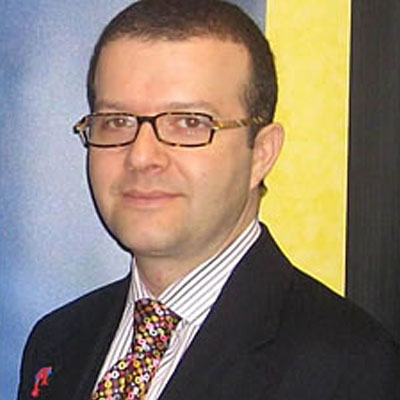
    ‘India can become our number one market in Asia’ : Simon Phillips – Marvel Entertainment International president

    Marvel Entertainment is tapping the comics business in India. Holding the rights to iconic characters like Spiderman, X-Men and Hulk, it has appointed Kids Media India (KMI) as a subsidiary of Spacetoon Media to represent its licensing, merchandising, publishing and promotional rights in the country.

    Marvel superheroes will be immediately available for licensing on a wide range of consumer products including apparel, stationery, publications, toys and games, party goods and accessories.

    In an interview with Indiantelevision.com’s Ashwin Pinto, Marvel Entertainment International president Simon Phillips talks about the company’s plans for India.

    Excerpts:

    From a commercial standpoint, which are Marvel’s top five characters?
    The number one character is Spiderman. We have had three successful movies with Sony. An animated Spiderman TV series, with 26 half-hour episodes, is scheduled to come out next year. Then there is the comic book programme.

    Our number two character is the Hulk. The TV show in the 1980s, which played globally, grew this character. A movie comes out next year.

    Our number three character is the X-Men. This is a combination property and we have made three movies with Fox. A number of animated TV shows have been made around the X-Men.

    Ironman is another character and we are putting a lot of efforts in launching it as a film. This will be the first film that Marvel Studios has done and will star Robert Downey Jr and Gwyneth Paltrow.

    What is great is that Ironman is a superhero without superhero powers. While Spiderman got his powers after being bitten by a spider and Wolverine has claws, Ironman gets his strength from a suit.

    Tony Starr is also clever and can analyse situations very well. For us, it is about the relationship between the consumer and the character. The closer it is, the more chance there is to develop characters and create a broader licensing programme.

    The great thing is that our characters are flawed, and this makes audiences identify with them. Spiderman, for instance, has financial difficulties and so he has to take a job in a pizza parlour.

    Globally, is there is a difference in the popularity of these characters?
    Each country has different characters for comic books. In Australia, Elektra is a very popular character. Jennifer Garner played her in a film.

    The great thing about Marvel is that we appeal to a broad spectrum. Since we have 5,100 characters, we expose as many of them as possible. If you are a comic book fan, you would know that the Marvel storylines are all interlinked. Thus, you have comics where Hulk meets Spiderman and others where Ironman meets Hulk and Captain America. The more comics people read, the more familiar they become with our various characters.

    Marvel’s business is divided into four operating segments – publishing, licensing, toys and film production. How much does each contribute in terms of revenues?
    The break up changes every year. For example, this year we have had three very successful movies. We started off with Ghost Rider with Nicholas Cage, which, in India alone, generated $4 million. We followed that up with Spiderman 3, which was one of the biggest movies of 2007.

    We rounded off the year with Fantastic Four: Rise of the Silver Surfer. Although our roots lie in comic book publishing, our box office presence coupled with our publishing business meant that our licensing and merchandising programme grew significantly.

    How much of Marvel’s business comes from Asia?
    The global comic market is fragmented. What you have is traditional comics, and when you go to Korea and Japan you have Manga. We are breaking into that area. If you talk about traditional comics, Marvel is number one.

    Asia is a growing market for us. Japan, the Philippines and Singapore are our top three markets. However, I see this changing over the coming years.

    How does India fare?
    We entered India late last year. We had a successful merchandising programme for Spiderman 3. We have a successful publishing programme for Spiderman in India for many years with Gotham Comics. We have also published an Indian version of Spiderman.

    What I am learning is that while the market is a niche vis-?-vis the population, in terms of numbers it is huge. I would like to think that within four years, India would be our number one market in Asia. With Spacetoons, we will be on track to achieve this goal. We have already started working with Spacetoons in the Middle East.

    For India, why did you decide to go with Spacetoon?
    We went with Turner for Spiderman 3. However, Warner has DC Comics, and so we realised that continuing the relationship would not be beneficial for either party. We did research on the intermediate market. We are happy with the work that Spacetoons does in the Middle East for us. We are impressed with how they have invested and grown that market.

    Which are the key areas being looked at for India?
    We have three areas to develop our licensing programme. These are publishing, television and films.

    As far as publishing is concerned, we will work with Gotham comics. Over the next three years, they will be developing localised, Indian content around Marvel. It is not just about publishing in English; it is also about publishing in Hindi and regional dialects. We don’t want to create an elitist view of Marvel. The characters belong to everybody.

    Our movies have worked well in India. Ironman and The Incredible Hulk are slated for release next year. Another movie called The Punisher will also be released. In 2009, Wolverine with Hugh Jackman releases. It shows the origins of this X-Man.

    We follow this with television. The great thing is two of our animated shows are being made in India. Ironman is being produced by DQ Entertainment and Wolverine by Toonz. These will complement our film offerings.

    The emerging trend for us is movies, followed by animation and then merchandising. We are able to be consistent on air, and that is why the consumer has a better relationship with our characters on a continuous basis.

    We need to look at Bollywood and animation in India. We want to see how Indian storytelling can be incorporated into the Marvel world

    In terms of merchandising, what are the key categories being looked at?
    In India, apparel will be key. This wil include T-shirts, shorts, caps, etc. Back-to-school backpacks will also be there. But the main area for us is promotional tie-ups.

    India has challenges. Retail is fragmented. It is not as developed as it is in the UK or US. You do not have multiple stores yet. They are coming though. We have to look at the available channels and then decide what will work the best. Our aim is to develop programmes that will cater to consumers at all levels.

    We are looking forward to generating Rs 250 million in revenue from licensing in the first year. We are also keen on promotions as it will help FMCG companies cut through the clutter. For instance, two companies come out with mineral water. If one of them has the logo of Spiderman, that company gets an edge.

    In addition to Spiderman, which are the other characters well known in India?
    Hulk has a strong fan base as well. Ghost Rider was a bigger film than Shrek 3. In fact, it wasn’t far behind Pirates of The Caribbean 3. The aim is to benefit from the success of films to introduce characters to India. Then we develop merchandise and benefit also from animation shows that we will launch. Not just in India but in many other countries as well, Ironman is seen as a new character by kids. The film is a great opening for us to tell them about this character.

    Are you speaking to production houses regarding licensing your characters for film and TV?
    I haven’t looked at this yet. India has a strong animation business. I want to see Marvel find more production opportunities in India and in other countries. We need to look at Bollywood and animation in India.

    In every culture including India, you have stories of heroes. Some characters might have mystical powers. I don’t see those being too different from Marvel characters. Marvel characters live among us. Spiderman lives in New York. The X-Men characters are from San Francisco. We want to see how Indian storytelling can be incorporated into the Marvel world.

    ACK Media recently acquired Amar Chitra Katha while filmmaker Shekhar Kapur and Richard Branson did a JV last year. Is Marvel also looking at acquiring an Indian firm, which has iconic Indian characters in its portfolio?
    We would grow our business in different ways. I am always looking for the right deal, and if there are Indian characters that can enrich the Marvel portfolio, then we could consider it. But 5,100 characters give us a full portfolio.

    What do you feel about the quality of animation production available in India?
    When I see the two different types of animation shows being done for us in India, I realise that the technical quality is strong.

    I would like to see Indian companies not just being production houses but also being distributors. At the moment, they are a factory. I would like to see Indian companies come to us for licenses, develop the stories, produce the work and then distribute it globally. At the moment they are more a development resource. I would like to see them progress to a level where they become partners.

    How important are videogames globally?
    We have the biggest licensing programme of any comic book company for this category. We have multiple partners. Sega is launching the Ironman game, while Activision has the Spiderman franchise. We work across multiple platforms – PS2, PS3 Xbox, PSP, PC-based games.

    Is innovation important to keep the comics genre fresh?
    Innovation is key. Marvel recently launched the first digital comic website. You have a growing consumer base who want to own a product. It is something better than having just a printed comic which is wonderful in its own way.

    We launched virtual Marvel comics where you can read our offerings online. It is not just HTML text where you simply keep scrolling. We have created a technology whereby you zoom in on different parts of the comic.

    Key partners for Marvel include Sony for films, Sega for video games and Jakks Pacific for toys. How have these relationships evolved over the years?
    The relationships differ across the various segments. Our relationship with Sony has been for the Spiderman films. We are also doing a TV series with them. With Fox, we did the X-Men and Fantastic Four movies. Our biggest toy partner is in fact Hasbro. The innovation that Hasbro does and the marketing muscle that it puts behind our toys is important. Playskool is another partner. Our deal with Sega helps us embrace new technology and help kids and adults enjoy our offerings at new touch points. In Italy, we have a partner who makes toys, stationery and candy items. But they are not a big part of our US business.


    What is the revenue split for film between theatre, DVD and merchandise?
    It depends on the title. Sometimes merchandise contributes almost as much as the box office. In some markets, DVD is booming while in others it is giving way to VoD.


    Is Marvel nurturing ambitions of becoming a studio to be reckoned with a few years down the line?
    We have established Marvel Studios in Los Angeles. David Liezel heads it. He and his team are putting together the Ironman and Hulk movies. We want to bring the richness of our characters out into the market in a more effective manner. For Ironman, Paramount is our distribution partner, and for The Incredible Hulk, our partner is Universal.


    While Spiderman is a hero, The Punisher can be seen as a dark antihero. To what extent, has this affected his appeal?
    It appeals to a different audience. Spiderman is a crossover product. Everybody relates to Spiderman. The Punisher appeals to an older audience. Not every character can appeal to a universal fan base. The important thing is to remind them of the relationship they have through great content.


    There is also a trend in films like Spidreman 3 and Batman Begins where the superhero has a dark side. It is also getting more violent. Can we expect more of this going forward?
    Our characters reflect humanity. The dark side of Spiderman after he was infected with Venom was not an effort to do deep analysis. It is at the end of the day overcoming the dark side. Good must triumph over evil.

    In terms of violence, Marvel comics are violent. They are not U-rated comic books.

  • ‘Burgeoning distribution costs eating into money that should have been spent on content’

    ‘Burgeoning distribution costs eating into money that should have been spent on content’

    Marvel Entertainment is tapping the comics business in India. Holding the rights to iconic characters like Spiderman, X-Men and Hulk, it has appointed Kids Media India (KMI) as a subsidiary of Spacetoon Media to represent its licensing, merchandising, publishing and promotional rights in the country.

    Marvel superheroes will be immediately available for licensing on a wide range of consumer products including apparel, stationery, publications, toys and games, party goods and accessories.

    In an interview with Indiantelevision.com’s Ashwin Pinto, Marvel Entertainment International president Simon Phillips talks about the company’s plans for India.

    Excerpts:

    And while the arguments for and against regulation are many, the fundamental thing is that any attempt to legislate a free media has to be done with a great deal of care. It is at the heart of Indian democracy. And as the world acknowledges, we may have a myriad problems but we are a robust democracy despite all odds: it is too valuable to risk.

    On the Content Code there has been a discussion for well over a year, and the government has been open to dialogue, which is excellent. The broadcasters have offered to create their own Code for self-regulation.

    The government has welcomed the offer of the industry to develop its own Code, as it has accepted and notified the ASCI Code for advertising. ASCI is a voluntary body, so the government has encouraged self-regulation, which is great.

    The single biggest problem in the industry today is distribution. It is getting more and more competitive, as more and more channels come into business. The cost is enormous and growing wildly, and it is hurting every broadcaster from the biggest to the smallest, FTA or pay.

    In this battle MSOs and LCOs point fingers at each other, but either way it is costing the broadcaster. And money that could and should have been spent on content is getting spent on distribution instead, and it weakens the industry.

    And as that burgeoning cost is eating into money that could and should have been spent on content, in the end it is affecting the viewer, with no medium term solution in sight.

    Digitisation is the only real answer. Digitisation is slowly coming in the non-CAS areas, but the operative word is ‘slowly’. Anything that the government can do to accelerate digitisation will be for the good of all, mostly for the good of the consumer.

    The other important thing with growing competition is the issue of audience measurement. Periodically there is heated debate, and everyone has an expert opinion on the subject. But listen to what each broadcaster says, and you know how good their ratings are: why else are yesterday’s critics silent today and why were today’s critics silent yesterday, when the system has been the same for years?

    And even as broadcasters and agencies criticize the measurement system they continue to use the data to help in buying and selling Rs 5-6,000 crore worth of advertising, on the nonsensical plea that some data is better than no data.

    There have been impassioned complaints about how the broadcasters and production houses are victims of the rating system, how every Friday when those wretched numbers come in they have to slog overnight to fix the content according to what the numbers tell them.

    That’s like a hypochondriac taking his temperature and blaming the thermometer. No one is forcing anyone to use the data, much less what to do about it. If you choose to be tyrannised by it, that’s your choice.

    That is not to say the current system is perfect. That it needs upgrading is beyond doubt. The industry has taken the initiative in that, with the formation of the Broadcast Audience Research Council.

    Whatever the outcome, it can only lead to a better, more robust measurement system.

    The best thing that has happened this year?

    It may sound like a strange thing to say, but to my mind the best thing that has happened is the ongoing debate about the Broadcast Bill and the Content Code. It brings many issues to the fore, many things that we need to be more aware of and many that we need to engage with the government about.

  • ‘We are keen on bringing in more channels’ : Deepak Shourie – Discovery Networks India MD

    ‘We are keen on bringing in more channels’ : Deepak Shourie – Discovery Networks India MD

    For Discovery Networks India, 2007 has been a year of growth. The company carried out a slew of local initiatives including celebrating 60 years of India’s Independence. It is also looking at airing more HD content from overseas, coming out with thematic week slots for Discovery Travel and Living, and doing local productions.


    In an interview with Indiantelevision.com’s Ashwin Pinto, Discovery Networks India MD Deepak Shourie talks about the company’s eagerness to bring in more channels, address different target segments, and prepare the ground for exploiting new media.


    Excerpts:

    Discovery globally has been undergoing major restructuring this year. Has India been impacted?
    There is more sharing of resources happening now. We see Discovery as one brand rather than saying, for instance, that what is happening in the UK is separate from other countries.


    India is an important part of this brand story. We take content from other parts of the world and what we produce in India travels abroad. With India today being the flavour of the world, this of course helps.

    As cable operators digitalise their networks, do you see this as an opportunity to bring in more channels from the Discovery stable?
    We are examining this possibility. We are keen on bringing in more channels even though we realise that there is no space on analogue cable networks and getting distribution is tough. Cable operators are in a position to demand higher carriage fees due to lack of space. Digitisation will not become a complete reality unless consolidation within the cable industry happens.

    Are you satisfied at the growth of digitisation in terms of Cas and DTH?
    With direct-to-home (DTH), we are happy to see Tata Sky and Dish TV spreading their reach. But with Cas (conditional access system), what we feared would happen has happened. We have been saying that Cas can’t be mandatory; it has to be voluntary. You can’t force it down people’s throats. That is why the uptake of set top boxes (STBs) in the Cas areas has been low.


    Broadcasters are suffering as they have no idea as to how many homes have taken their channels. The multi-system operators (MSOs) do not have a proper billing system in place.

    We are entering a phase when we will see the launch of more English channels. How do you view this scenario of fragmentation?
    We are happy to see more channels come in. Since Discovery is a well established brand, we are not worried about our share of viewership; we have grown to be the number one international channel in the country. We have achieved the aim of making Discovery mainstream as opposed to being niche. The new channels that come in will find it difficult to build viewership.

    Discovery has boosted its reach partly due to its Hindi feed. Are you looking at regional languages?
    No! We were evaluating this possibility. However, we decided that these two languages give us enough reach. In the South, English is well respected.

    For Discovery, we are seeing more male viewership. Discovery Travel and Living targets SEC A men and women. For Animal Planet, a global strategy is being worked out

    Has there been a change in terms of how viewers have consumed the channel over the last couple of years?
    For Discovery, we are seeing more male viewership. This is because of the kind of shows we air. We focus on things like engineering, science and cars which appeal more to men.


    Discovery Travel and Living targets SEC A men and women.


    For Animal Planet, a global strategy is being worked out. We are waiting for this.


    India is a young country with high aspirations. Over time we will see some movement away from entertainment television towards television that is informative. This is how growth will happen for us.

    One of Discovery’s major initiatives was celebrating 60 years of India’s independence. How has the experience been working with India’s scientific and technological community?
    Our aim was to showcase innovations at a grassroots level. It seemed a good way to show the progress India is making. We also want to encourage innovation. The technological community was very open and appreciative to what we did. Local shows play an important part in driving viewers to the channel.

    What has Discovery’s strategy been to lure in more viewership?
    Our main aim has been to ensure that the primetime is very strong. We start with the ‘Wild’ section, then move on to technology, trends and India hour.


    Our aim is to two-fold. Firstly during primetime, the content on our channel must be important and matter to our viewers. Our second aim is to ensure that viewers return to our channel even during non-primetime.

    What are the major properties coming up on the channel?ce?
    The biggest one is Atlas which will kick off towards the latter part of next month. This will look at different countries – India, Australia, Italy and South Africa. The show looks at different facets – be it culture, topography, etc. It has been filmed in high-definition. It looks to combine the quality of a blue-chip documentary with the detail and clarity of HD.


    Another property we are excited about is Into Alaska With Jeff Corwin. Alaska has America’s highest mountain; it has a great element of wilderness as well as fascinating animals. A population of less than that of New York City spreads out over an area three times the size of Texas. Jeff Corwin brings this wilderness to viewers.


    Race To Mars looks at the race to first reach the Red Planet by 2030. China is leading the way.


    Once again, America and its partners, including Canada, are thrust into a winner-take-all space race. Six individuals from Canada, the US, Russia, France and Japan are selected for this gruelling two-year mission. This crew sets out on humanity’s first expedition to another world; nothing can prepare them for the unexpected danger and staggering wonder of what they will experience.

    Abroad Discovery is focussing on the environment with its major eco green initiative. Are you looking to do something in India along these lines?
    We will air this in India. Discovery US has tied up with Leonardo DiCaprio for the eco green initiative. Once this content becomes available we will see what can be done in India to add value.

    Discovery Asia and Nokia teamed up for a filmmaker’s initiative. How has this worked out?
    It was a marketing relationship. This was for mobile filmmaking where the winner got the chance to work in Discovery Asia’s Singapore headquarters and learn about making documentaries. The initiative gave people the chance to innovate.

    How does Discovery Travel and Living reach its viewers?
    Viewers have found us. We have more SEC A viewers watching us than any other channel. Income levels are going up. Where will this money be spent? On lifestyle. That is why they will watch us for information and also entertainment.


    It is a difficult proposition for most channels to catch this audience. People in this segment do a lot of things during their leisure time.

    Has this helped you in roping in big advertisers?
    We have sold most of our inventory. Every lifestyle brand that launches a new product comes to Discovery Travel and Living. At the moment we are doing something for India Today Travel Plus. In the past we have done initiatives for companies like AmEx Platinum Card.


    Is the channel also looking at forging tie-ups with tourist resorts, tourist boards etc?
    In the past, we have done shows for states like Chattisgarh. We did a France Week recently and we did a press event at the French embassy. Sometimes, tourism boards advertise on our channel.

    Could you shed light on Discovery Travel and Living’s plans for the first quarter of next year?
    We have a couple of interesting shows lined up. There is a show called The Petra Nemcova Project; it is about this international supermodel who is grooming six other potential models. The show chronicles the real story of what it takes to be a model in New York City, without staged eliminations or contrived challenges.


    Six new models are brought to the biggest stage in modelling and viewers follow them from their first test shoot to the runways of New York Fashion Week.


    Nemcova serves as a mentor and friend to the prospective models, as they learn the trade of modelling and the business of fashion. Using her own life experiences, Petra advises the models on how to succeed and underscores the importance of having a well-rounded life.


    We will also premiere a show called Nigella Express. Nigella Lawson is a popular TV chef on our channel.


    She takes viewers on a quick and easy journey through the world of getting fabulous healthy food on the table fast. It is the sort of food viewers can cook fast around the clock, any day of the week, to fit whatever amount of time is available. Starting with everyone’s everyday nightmare of what to eat for dinner, to getting entire banquets on the table in less than 30 minutes, this is a series that will resonate with everyone struggling with hurried, time-squeezed, modern life.


    We are also looking at a couple of Indian productions.

    The channel is doing thematic weeks. Could you elaborate on this?
    These run from Monday to Friday at 9-10 pm. It allows us to showcase special programming for viewers. This also works for advertisers as they can sponsor a particular week’s programme. During this quarter, we are doing a lot of country-specific programmes, looking at the adventure spots and opportunities for tourism and travel.


    Abroad, Discovery has looked to expand through new media. What plans are there in India to tap into mobile and internet?
    Both of these are under review. Global strategies are being worked out for them. It will be a different ballgame as the mobile screen is small; it will complement traditional TV viewing as it is good for snippets of news, music and sports.

  • ‘Sports broadcast ad market to grow to Rs 7 billion this year’ : Rukin Kizilbash – Taj Television India GM

    ‘Sports broadcast ad market to grow to Rs 7 billion this year’ : Rukin Kizilbash – Taj Television India GM

    It has been a busy and somewhat testing time for Ten Sports. Last year Zee took a 50 per cent stake in its parent Taj Television while this year the channel has had to make do without any India cricket showcase. As a result, it has had to push other properties.


    Additionally, a plethora of cricket rights that it holds come up for bidding in the coming months. Indiantelevision.com’s Sibabrata Das and Ashwin Pinto caught up with Taj Television India GM Rukin Kizilbash to find out more.


    Excerpts:

    How has not having India cricket this year impacted Ten Sports?
    It has impacted us quite a bit. It is a fact of life that things are not as smooth without India cricket. For each India series you make in the region of Rs 700 million to Rs 1 billion. Last year, Ten Sports had one series. The year before, there were two.


    However our reach and GRPs have not been impacted. This is in part due to WWE (wrestling). Our reach is at 30 per cent.


    Next year should be better though as we will have India’s tour of Zimbabwe and Sri Lanka.

    But wouldn’t it be a crucial phase for Ten Sports as two prime properties – Pakistan and Sri Lanka boards – come up for bids next year?
    It will be a crucial 12 months for us as the rights for Pakistan, Sri Lanka and West Indies come up for renewal. But we expect to renew our contracts.

    Will the acquisition price for these rights shoot up with Sony back in the race and the others showing hunger to pocket more cricket properties?
    I don’t think that the acquisition price will shoot up drastically. India, after all, visits them just once in four years. So when you buy board rights, you basically buy one India tour. It is not like the ICC events where India always participates.

    Why is it that you recently bought the South Africa rights for just one year?
    We got the rights for South Africa and Zimbabwe for one year. We will hopefully get these rights for five years once the current period gets over. India visits South Africa in 2010.

    Is cricket saturated in terms of ad rates?
    No! We believe that the spot rate can keep going up. To give you a parallel, in the US a 30-second spot for the Super Bowl sells for $2.5 million. For us it sounds unbelievable but in the US clients like Budweiser and Microsoft are willing to spend $25 million on one match. They create campaigns just for that event. An India series costs $4 million to sponsor. So there is room to grow.


    We sold the India Pakistan series last year for Rs 350,000 for a 10-second spot. I believe that ESPN Star Sports sold the final of the T20 World Cup for Rs 750,000 per 10 seconds. The next India versus Pakistan series could see spots sold for Rs 500,000 per 10 seconds – or even more. Advertisers realise that India cricket is the only way to reach the entire country at one shot. Even the highest rated soap does not reach the entire country. Its primary audience is the Hindi belt.

    Which is why the sports broadcasting market is going to see ad revenue growth this year?
    We expect the sports broadcast ad market to be in the region of approximately Rs 7 billion this year, up from Rs 4.5 billion a year ago.

    Industry estimates Ten Sports’ ad revenue to be around Rs 600-700 million this year. Is this true?
    I can’t comment on our revenue figures.

    In terms of rates, how do India cricket series stack up
    against each other?

    India versus Pakistan would be number one, followed by the series against Australia. A series against South Africa would be third. Clients need India cricket to create a big bang. Also a lot of the ad rates depend on when a series is held. Is it coinciding with the summer season or Diwali?

    To what extent did T20 rejuvenate cricket?
    It turned the sport upside down. It is certainly worth a lot more from an advertisers perspective than a 50 over ODI. The ratings for the T20 World Cup were double what you got for the India Australia ODI series. There is a lot more viewer retention as it lasts for just three hours. The instant cricket that T20 offers fits in with today’s lifestyle.

    IPL and ICL will not get in each other’s way. One initiative is from the governing body, while the other is from a private player trying to boost the game’s popularity and reach. They can co-exist

    Have ratings gone up for other sports?
    Not substantially. There has been some growth though for tennis, soccer. Moto GP has also shown a decent jump. We have gone from maybe 0.2 to 0.4.

    And what about ad rates?
    We are seeing a surge in football. When we telecast the World Cup in 2002, we got an ad revenue of $2.5 million. We believe ESPN Star Sports got around $8.5 million this World Cup.


    The ad revenue you get from a non-India series like Australia versus South Africa is probably about the same as what you make for a season of Uefa Champions League.

    How do you view the opportunities for broadcasters to grow other sports in India?
    The opportunities are there for other sports to grow. Soccer, hockey, tennis are doing quite well, which we are trying to develop. Having said that, Indian cricket drives the sports broadcasting space. The challenge is to take the other sports on par with India cricket.


    We have to figure out how to deliver more TRPs and revenues from these sports. India will evolve from being a one sports nation but it will take time – and a lot of marketing effort from sports broadcasters to push these properties.

    Can you offer an example of a non cricket sports event that has grown through nurturing?
    A good example of nurturing is the soccer World Cup. The response it got last year surpassed all expectations.


    When EPL first started airing in India not many people were familiar with it. It has developed over the years due to sustained coverage. We will be doing the same with our properties including motorsports.

    What marketing innovations are being done by Ten Sports to push these events?
    We are doing an On Tour innovation. This is a six-month on-air promotion and the sponsors are Tata Sky, Idea and McDonalds. We take four contest winners each month for a different event. We started off in September with WWE in Paris. In October we took them to Kuala Lumpur for the MotoGP. This month is the Uefa Champions League and next month is Sri Lanka Cricket.


    In January, we will be featuring South Africa cricket. In February, there will be horse racing in Dubai. And we are marketing them in different ways.

    Do you see Olympics becoming bigger in India this time?
    I would rather say that the Olympics as an event was bigger in the 1970s and 1980s compared to now. For next year I have heard that ESPN is looking to air it, besides DD. If that happens then the event will get a bigger marketing push that usual. Still the fact that Indian participation in the Olympics as well as performance is limited means that interest will accordingly be limited.

    What are the rights you have recently bagged?
    We have bought the soccer rights to the Dutch and French leagues. We believe that if we nurture them they can over the next three years reach the status of EPL.


    In terms of upcoming rights, the Australian Open tennis Grand Slam rights are currently being bid for. Wimbledon rights come up next year.

    There is a trend of sports broadcasters doing long-term deals with a few clients. Is Ten Sports examining this route?
    No! We prefer to do yearly deals as we know exactly what is on our calendar. Also if you do a long-term deal, you do not know what the ad rates will be the next year and the year after that. You could be under-selling.


    Another issue is that if I say lock in Pepsi for three years, then I exclude Coca-Cola and who knows? Maybe next year Coca Cola ups their marketing budget and launches three new products. I miss out on that action. With long-term deals you run the risk of ticking off companies by blocking them completely off the channel. These companies will then be more than happy to hop on to a rival channel.

    How do you see the ICL and IPL faring?
    ICL will rock. At the moment there is some uncertainty as it is a new format. But once it starts, it will catch on in a big way. You have established names, good production values, good stadium facilities. There will be Bollywood glamour. So it will be a fun experience for the family.


    While it is early for me to say anything about IPL, I don’t think that they will get in each other’s way. One initiative is from the governing body while the other is from a private player trying to boost the game’s popularity and reach. They can co-exist.

    After acquiring stake, why did Zee decide to sell ads through Ten Sports for its own sports channel?
    We already have a dedicated ad sales team in place. We are selling ICL for them. We are selling it on air while they are selling it on-ground. Sometimes we package some of Zee Sports’ properties along with our channel. At other times like for Indian soccer, it is done separately.


    It also depends on the client. If say someone like an LG is spending Rs 10 million, he may want to split it between the two channels. So we work out a package. We have products that Zee Sports does not have and vice versa. So it helps us sell better. It is a joint effort in terms of sales.

    Are you looking at organising a sports event at a
    grassroots level?

    Yes! We are working with Zee. We have identified three sports and we are deciding how to go about things. We might create an event from scratch or we might associate with an existing one and take it to another level. Zee is working with soccer. ESPN is working with hockey. We too are looking at a sport.

    In terms of other sports, do you see soccer or hockey
    becoming a number two sport?

    It is difficult to say which will come out on top. Hockey has picked up with our recent win and the whole Chak De spirit. Unfortunately, we are not playing in the Champions Trophy. Hockey has had its ups and downs. In terms of soccer, the Champions League is taking off. Both sports will depend on how India fares at them. But currently, soccer is bigger than hockey.

    How is Ten Sports gearing up for new media? And is marketing on the mobile going to go beyond just SMS?
    We are planning to do this next year. We are talking with Idea and Reliance in terms of how to take this forward. We are looking for a bigger platform.

    You did a film innovation last year where you aired
    sports films. Are you planning more of the same?

    Absolutely! We are planning to have the next batch soon. It is a question of getting sports movies. We are currently showing a series Simply the Best. Each episode looks at a great sports person like Sir Donald Bradman, Jesse Owens. Mohammed Ali, Sachin Tendulkar.

    Is a one-sport channel like a Golf channel economically
    viable with new distribution platforms like direct-to-home emerging?

    I think that a couple of years down the line it will be. When DTH reaches 5 million homes, you will see niche channels dedicated to topics like cooking, golf, travel and action adventure coming up.

  • ‘Teenage audiences are hard fish to catch’ : Orion Ross- Turner Entertainment VP creative and original content

    ‘Teenage audiences are hard fish to catch’ : Orion Ross- Turner Entertainment VP creative and original content

    Turner is looking to take localisation efforts for its kids channels to the next level. It has announced a slew of five locally produced shows which will air on Pogo while two will be on Cartoon Network.

    Turner also wants to expand associations with more local production houses as the talent pool in India is huge.

    Indiantelevision.com’s Ashwin Pinto caught up with Turner Entertainment VP creative and original content Orion Ross to find out more about Turner’s plans in India.

    Excerpts:

    The aim this year is to take local efforts to the next level. How is this being done?
    We are building on the successes that we have had over the past few years. We are trying to do more shows. We started in 2004 with 50 hours of original production on Pogo. We have built it steadily every year. Today we have reached critical mass where we are able to announce the launch of seven shows. This is an exciting milestone for us as what was a trickle earlier turned into a stream and then a flood.


    What is the ratio between international and locally produced content that you are looking at?
    It is important to have a strong variety. Krishna works as does Harry Potter. Tom and Jerry works as does M.A.D. I don’t want to talk about percentages but conceptually it is a mixture of both on the channels.

    We are putting Ben 10 into the premiere 6 pm slot on Cartoon Network. This is the after school must see TV slot. M.A.D. and Skatoony are on Sunday mornings.

    I don’t think that the number of hours is an important metric. What matters is what are the key destinations that people know your channel for? What are the flagships of your brand?

    Pogo has to have Harry Potter and M.A.D. These are the two pillars of the brand. Cartoon Network has to have Krishna and Ben 10.

    Could you shed light on the production values and budgets of these shows?
    I can’t talk about budgets. However, we probably spend more on M.A.D. than what channels might spend on a throwaway soap opera. This is because we want M.A.D. to be repeatable.

    It repeats really well. In the first season we found that the repeat episodes had more ratings than the premiere. So M.A.D. has built up its audience. We invested a lot into this production to ensure that each episode has a lot of content. It takes more time to shoot. It has to be well researched.

    Before every series we do a full workshop where we go and try out 20 theme ideas. We build all the stuff to see what it looks like. So before we go into production we make sure that it will actually work. Our per half hour cost is pretty high. Ben 10, for instance, is a combination of an international style with anime touches.

    Is Turner looking at taking a stake in an Indian production company?
    We are happy with how things are working out for us. We get to pick the right production company for a project. We want to start with the idea and then follow it wherever it takes us.

    There are some companies that are better suited to some ideas than to others. We like the flexibility of being able to pick a la carte.

    With which Indian production houses does Turner have tie ups with?
    Miditech has done a couple of shows with us including Galli Galli Sim Sim. We are working with Endemol India on the finale of the Pogo Amazing Kids Awards. Contiloe is doing Cumballa Investigation Agency. DJ Creations is doing Sunaaina for us.

    We are also really happy to be working with Siddhartha Basu and Synergy Adlabs on FAQ. For the science show they bring a lot of expertise to actually making educational science shows.

    Before you give the go ahead to a local concept, what are the key things you look for?
    We look for a show that has never been done before in a certain manner – something that is innovative and will connect with our audiences. We have a close relationship with our audience in terms of research and focus groups. We do a lot of studies like New Generations to try and really understand what kids do all day, and what is really important to them.

    We talk to mothers. We get a lot of mail. So we are informed by all of this. What we would do from a local concept point of view is that when someone comes to us with an idea, we ask is it right for the channels? Does it fit our brand? Is it positive, optimistic, of global standard, and off-centre?

    We want everything we make in India to be world class. M.A.D. is a show that can be comfortably compared to any kids show on any channel anywhere in the world. If we get a good idea, it turns into a creative development process. This is about finding the right writers, production company, right graphic designers if required, the right people to build game show mechanisms. Every show has a different kind of gestation process.

    You mentioned the importance of innovation. Could you give examples of this from the new slate?
    Cumballa Investigation Agency is a mystery whodunit show. There has not been a kids show like this one – five kids solving mysteries. People look at kids television and throw in a lot of magical stuff like magic lamps. They tend to have genies. While there is a place for that, the thing about our show is that it is more hard-hitting and naturalistic. An idea earlier one was that an alien would arrive.

    But we decided against doing X-Files kind of show. We are not going to do magic lamps, genies. This show takes kids and mystery solving more seriously.

    This doesn’t make it any less exciting. There are still these quirky stories that happen. While we like to have a lot of fun, Pogo takes its audience seriously. We never talk down to kids. We figure that it is better to treat kids a little bit older than they are – as opposed to the other way around.

    The worst thing you can do is talk to a 14-year-old like an eight year old. It is always better to err on the side of being too smart.

    As far as M.A.D. is concerned, people have been doing arts and crafts shows on children’s television for five decades. However, nobody has done it in the way that Rob has. He has brought a lot to the table in terms of his own take on things. Nobody has incorporated music, art and dance together. The idea that every show has a dance number is very Indian.

    M.A.D. is an Indian take on the format. It hasn’t been tried anywhere else in the world but it works well here. With Skatoony for the first time you have kids and cartoons in one show.

    Skatoony is a unique concept in that it fuses live action and animation. How does this work?
    We shoot the game show round first with the kids. It is pretty straightforward to work with from a production standpoint. It is real game play and the kids are competing. All the questions are written in advance. We have cartoons on the set. There is some post production work involved.

    Galli Galli Sim Sim looks to strike a balance between entertainment and education. Is this going to be an important focus area for you going forward?
    Yes! The second season has just kicked off. We are committed to the project for five years. It is an ambitious project about getting an educational message to pre-schoolers out onto as many platforms as possible. It is on Cartoon Network, Pogo, DD.

    We also have an outreach programme so that it even travels to places where people do not have television. It is a different project form your regular TV show. It is about benefiting all kids and making pre-schoolers better prepared for school and life.

    It is a challenge to reach all kids with one show. There are many diverse socio-economic backgrounds. But the thing about this show is that despite the gritty message, it is also a lot of fun. It has to be both educational and entertaining at the same time. Otherwise, neither mission works.

    Will locally produced shows also travel to other markets like the US?
    The format of M.A.D. can travel. Cumballa Investigation Agency is a format that can work really well. We will launch our local animation projects in the future. Those will also travel well overseas.

    Does localisation play an important role across Asia?
    Our focus is on animation in the other Asian markets. We are looking at doing Skatoony in other markets. It is a good way to get kids closer to the Cartoon Network brand. We have an animation development programme across Asia.

    So we are doing animation series in Thailand, Australia, Taiwan, Korea, Japan and Hong Kong. We focus on animation across the region as there is so much talent. We also feel that if there is a really funny guy in say Thailand who comes up with a cartoon, then it will travel really well. We have a lot of shows in the early development stages.

    How much of your revenue goes back into original productions?
    I cannot talk about numbers. However, original productions are not cheap to do. The money does not come out of some magic box. It is based on the expectation that it will drive our business.

    Are you also looking at making original films?
    We are looking at some long form projects on Pogo like having a movie-of-the-month kind of concept. We wouldn’t rule out making films.

    Our focus is on animation in the other Asian markets. It is a good way to get kids closer to the Cartoon Network brand. We have an animation development programme across Asia

    How do you see the kids genre evolving over the next couple of years in India?
    In India, the situation is acute in that kids are watching what grown ups watch. 85 per cent of kids viewing in the age group of 4-14 goes on to non kids channels. Obviously, the 15 per cent that we get can grow.

    As the market matures and with the different players in the kids market working together, we can grow the genre. That is why we welcome competition. Having investment and attention focussed on this sector not just by us but also by other players will benefit everybody in the long run.

    One challenge is that with youth channels now launching, the upper age of your audiences may migrate. How do you see things panning out?
    I know that one of these channels is planning to send their fans into space. 35 per cent of our audience is over 14 years of age. But our core audience is still 4-14 years. We think that teenage audiences are very hard to capture. They are constantly on the move. Music channels are finding out just how tough it is to capture this audience.

    Teens watch less television. They are more engaged with doing other activities. They socialise more. Their studies become more intense. They have less time for entertainment. So good luck to channels chasing this audience segment. They are very hard fish to catch. They will not necessarily sit and watch a linear network.

    What plans do you have to exploit new media platforms?
    As broadband penetration grows in the country, more content will become available online through streaming. Our on demand services will grow.

    We already have a number of mobile content deals. Short cartoons are a perfect packet for the mobile. Sending a fan a sentimental cartoon on his/her mobile is a great way to forge closer connect. It is important for us to get people to experience our brands in as many ways as possible.

    But it is not just high tech stuff. Our theme parks are coming up outside Delhi. This is another platform. With M.A.D. we have a publishing deal. Fans can get books and learn how Rob does all his stuff.


    When is the theme park coming up and are attractions modelled after characters and shows like what Disney is doing?
    The Pogo park is launching early next year. There will be attractions based on shows. Disney is the grand daddy of all theme parks. Our parks will be a little bit different, but fans will experience our brands up close and personal in this environment.

  • ‘The game development and design visualisation markets have grown the quickest for us’ : Rob Hoffman- Autodesk Global product marketing manager media and entertainment division

    ‘The game development and design visualisation markets have grown the quickest for us’ : Rob Hoffman- Autodesk Global product marketing manager media and entertainment division

    Autodesk which manufactures software technologies for the media and entertainment industry as one of its major activities, is looking to grow the business in India.


    Realising that a lot of production facilities in the US are doing their film, TV and gaming work from India, the company is keen to aggressively tap this market segment.


    Indiantelevision.com’s Ashwin Pinto caught up with Autodesk Global product marketing manager media and entertainment division Rob Hoffman to find out more on how the firm’s software is helping the media industry.


    Excerpts:

    For a software solutions company catering to manufacturing, building and construction, how much of revenue does the media and entertainment segment contribute?
    The 3D entertainment space is a sizeable business for Autodesk. Our core areas have always been R&D and designing products like Autocast. We cover the areas of film, television, game development and design visualisation.


    For us, the game development and design visualisation markets have grown the quickest. You now have next generation gaming consoles like Playstation 3, Xbox 360 and Nintendo. There is a huge demand for game titles.

    Could you shed light on how your solutions accelerate collaborative digital content creation workflow?
    We have 3Ds Max 2008 and Maya 2008. We have done a lot of work to accelerate the creative work that our clients do. We do this in two ways. We have worked on the two softwares so that they perform much faster on the new generation of hardware – whether they be multicore or multiprocessor workstations, latest operating systems or graphics cardsware.


    We are trying to take advantage of new technologies coming out and take advantage of the speed these technologies give our software. We have also done a lot of work with the user interface and the workflows of both our softwares. The aim is that artists complete their projects much faster. Something that takes six steps to complete in the past we have managed to reduce to three steps.


    This is a very important goal for us as it represents time savings for the artist. Modelling and animation type features have helped us achieve this. Our aim is to enable clients achieve their tasks with much more efficient tools.

    In what manner have your products been used to enhance films?
    Our 3D products are used extensively on films like Pirates Of The Caribbean, Shrek, Spiderman. Maya has been used a lot here. It has been an extensible software from the standpoint that production facilities and artists are able to enhance the software or extend its capabilities through different kinds of scripting. The software also has rich features in animation, modelling and the ability to create different types of visual effects.

    You mentioned gaming as growing the quickest. What is the work being done here?
    We work closely with the large game facilities globally to find out what challenges they face and then we try to address that within our software. We have added games specific features and functionality in the 2008 releases of our software.

    Could you shed more light on how the two products have been enhanced?
    With Maya one of the big things that artists and production facilities have been telling us is that they needed the product to run faster not just on existing hardware but also on new hardware.


    They also need the artists to work faster on the software in terms of the graphic user interface and the workflow. We have done work on modelling capabilities. We have enhanced the functionality of features that artists are used to.


    We have also done a lot of work on performance. So we have done a lot of work to take advantage of either a single core or a multicore workstation. We have rewritten a lot of the software algorithms to make it inherently faster.


    The Maya Mesh Smooth workflow, for instance, has been dramatically streamlined. You can now preview a smoothed mesh while editing the mesh cage – with a strong performance, particularly on multiprocessor workstations. Other much-requested workflow enhancements include the ability to position objects along a curve, replace objects within a scene, and convert instances to objects.


    To make it more effective on game consoles we have a new hardware shader API. With Maya clients can effectively create and display sophisticated looks for content destined for the next-generation game consoles. In particular, native support for DirectX HLSL shaders in addition to the existing CgFX support lets clients work with assets in the viewport and see them as they will be seen on the target console. Artists get better representation of the content they are creating using Maya. They don’t have to continuously go back and forth between Maya and the game engine.


    We have also done work on character animation. We have new rigging and skinning capabilities. We have got new non-destructive skin editing capabilities. The animator can now add more bones to an arm without disturbing the surface object. Maya also supports a large number of operating systems from Windows to Linux. We now also support Windows Vista 32 and 64
    bit.

    What about 3Ds Max?
    For 3Ds Max we have worked on the viewing of a large, complex scene. It has been known to work with large amounts of data. Artists can have a character with several million polygons. The performance is really good. The issue was that if the artist had tens of thousands of objects with millions of polygons the performance would be slow.


    We have worked on 3DS Max so that the artists will get the same performance with several objects that they would get working with one object.


    It is about being faster and working with larger amounts of data. Our aim is to allow the artist to focus on the art itself as opposed to focussing on the tools and spending time trying to find out how to use them. Our product also allows artists to get a better representation within the interactive environment. Clients also do not have to go through a trial and error process.


    We have done a lot of work on the pipeline. A lot of artists have used scripting as a way to automate or enhance 3Ds Max. We have made the software become more intuitive for artists who are not as technically savvy. This way the scripting capabilities are opened up for artists who traditionally would not have used it in the past.

    What advantages does Autodesk provide vis-?-vis the competition?
    Our products are industry standard software. So there are more people trained on our software. This is because our software is used widely. Artists can get a job more easily if they know how to use our software. We also spend heavily on education. We invest in building an education curriculum for schools.


    We also print our own learning tools. We have DVDs. We do community work as well. We have a community website where artists can come and share ideas. Since Autodesk is a big and stable company it allows to invest in supporting software development or customer service or technical assistance.

    Due to education programmes we are seeing the number of artists grow rapidly in India. We see India as a market that has come in and will help out the rest of the world create content

    What potential do you see in India for growing the business?
    The potential is great. Right now you are seeing more work being done in India not just to create local content but also for the global market. A large number of talented artists can be found in India. So a lot of production facilities in the US are doing their film, TV and games work from India.


    Due to education programmes we are seeing the number of artists grow rapidly in India. We see India as a market that has come in and will help out the rest of the world create content.

    How many Indian clients do you have and what is the strategy being followed to grow the business here?
    We have a huge number of artists using our software. It is growing daily. We are doing different types of awareness activities. We will be conducting roadshows across the country. We will have super user events where we will bring customers from large production facilities like Industrial Light and Magic. People will talk about projects like Pirates Of the Caribbean.


    A lot of development work for our software has been done in India. As far as partnering with Indian software firms to enhance our offerings, this is something we will always look into. It is a question of whether or not it makes sense at a certain time to do so.

    Globally who are some of your major clients and what have been the key learnings working with them?
    We have clients throughout the world. Some of them are Planet Digital in New Zealand, Industrial Light and Magic, Disney, Dreamworks in the US, The Moving Picture Company in Europe. These firms really push the capabilities of the software. So we constantly learn about their requirements and challenges.


    They do things never done before. It is about learning where the industry is going and what are the issues that will come up.

    What are some of these issues?
    There are two challenges right now. The first one is that there is a need for talented artists. If an artist has talent, any job they want can be done with any production facility in the world. This is why we work on education initiatives. We do a lot of work on learning tools and work with schools and universities.


    The other challenge is that the entertainment industry’s work is getting more complex. Films like Lord Of The Rings mean that viewers expect to see bigger and more beautiful effects. So production facilities have to constantly outdo themselves. In television we are moving from standard definition to high definition.


    The themes and characters are more complex. On the games front, the amount of data the consoles can handle is larger than the amount of content that the companies had to deal with in the past. Can software work with these large amounts of data in an efficient manner? That is what clients look for.


    With the transition from standard to high definition in television, there is a need for new software capabilities. For those working in traditional broadcasting they have to now adopt a more film like production process. The data complexity that they work with is starting to come close to film.


    The other issue that they run into is that although they are working with more complex data, their budgets are much smaller compared to film. The timelines to finish the production are much shorter. Our aim has been to see that artists get high quality of work in a less amount of time. Our software has been used in commercials, interviews as well as episodic TV shows.

    Could you talk about Autodesk’s R&D facilities?
    For 3Ds Max we have development facilities in Montreal, and Toronto. We have development groups working on the software. We also have a pure science group that works on new technologies. They work on different ways to approach problems.


    The other thing to remember is that when we develop software, we work closely with the production facilities using them. We use their knowledge to help our developers create better software. Production facilities give us their perspective and ideas on how we can better serve them.

    What role does the Autodesk reseller network play in expanding your presence globally?
    They play an important role globally for us. They are the ones who work and talk with our customers on a day to day basis. We have a close relationship with our resellers throughout the world.


    Resellers give us feedback on customer’s opinions. We also ensure that our resellers are knowledgeable and skilled. They have to be familiar with the industry they are addressing.

    What is Autodesk University?
    This is a networking event held annually. As of now, we only hold it in the US. This year it will be in Las Vegas. The event allows us to better understand the requirements of clients.
  • ‘Convert pirate users into paying consumers & gaming industry will be worth Rs 3 billion’ : Vishal Gondal – Indiagames founder

    ‘Convert pirate users into paying consumers & gaming industry will be worth Rs 3 billion’ : Vishal Gondal – Indiagames founder

     Gaming firm Indiagames is on the move. It recently came back into the online gaming space with its Games on Demand concept. UTV also took a majority stake in the company. Indiantelevision.com's Ashwin Pinto caught up with Indiagames founder Vishal Gondal to find out how the company has evolved and the plans ahead.

    Excerpts:

    How has your business model evolved over the years?
    We started off as an online games company. We did free flash games where money came from advertising. However, we found that it was not scalable and limited. So we took a call to move out of online gaming and into the services business.

    Then we saw the opportunities in mobile gaming and so we became a developer and then a publisher of mobile games. Last year we returned to online gaming with a new strategy games on demand. We have a subscription based gaming service. Users can play unlimited games for a flat fee.

    Right now we are at a time when gaming is starting to take off in India. How do you see the gaming space faring vis-a-vis traditional entertainment like TV, films?
    Globally gaming is bigger than film. In the US, it is bigger than Hollywood. The same thing will happen in India eventually. In every mature market where it has spread it has done that – like Korea, China. India has a lot of young people who do not watch 'Saas Bahu soaps.

    They are not as much into current television, which is dominated by the housewives. I am not saying that this segment is bad. However going forward more people will get into interactive entertainment. Gaming is part of this, along with activities like Second Life. More and more people will take to the virtual world.

    What would you say is the main challenge gaming faces
    in India?

    The problem in India is not that people don't game. The problem is that people buy pirated games. Nobody was paying for legal games. Indiagames is trying to build an eco system where price points are such that the consumer does not want to pirate anymore.

    If we are able to convert the pirate users into paying consumers, that alone will make the gaming industry worth Rs 3 billion.

    'We are about to launch a Godzilla game; we are about to release a cricket Twenty20 game'

    What kind of price points are you looking at?
    To give you an example; for the games on demand service we offer unlimited games for Rs 200. Today when you pay Rs 150 for cable TV, do you want to buy pirated tapes of TV content? Our logic is the same. When consumers can get all games for Rs 200 why would you buy pirated games for Rs 100?

    Who are your partners for games on demand?
    We have partnered with pretty much all the major gaming publishers in the world for content. So we have distribution deals with firms like Popcap, Atari, Activision, Codemaster Playfirst. We also have a tie up with MTNL, Sify, among other platforms. We also work with Qualcomm, Microsoft to make sure that our games are cutting edge.

    UTV recently bought a majority stake in Indiagames.
    What synergies do you see here?

    UTV is an integrated entertainment firm. If you see what Ronnie is doing, he is building a business that encompasses the entire gamut of entertainment from TV, to films, to online entertainment. So the UTV deal allows us to be a part of the bigger picture. Bindass is UTV's effort tap into the youth. The youth want gaming and so we will work with Bindass to see how we can integrate gaming with their offerings.

    UTV also has a stake in Ignition, which is a console game publisher. Between Ignition and us we have capabilities across all platforms. We will be looking at how we can exploit IP into the console space and vice versa. UTV will also create IP in the form of movies and TV shows. So we can adapt some of these into games, which we then market.

    Are we going to see more tie ups like this as traditional entertainment firms seek to broaden their horizons?
    The Indian film and media industry are getting more professional. They are also converging a lot. Previously, the film industry was a different silo, the broadcasting sector was a different silo the net industry was a different silo.

    However Fox buying MySpace triggered off a chain of events where media firms want to have their share of the pie in every segment to boost customer interaction. So if customers are increasing their time spent on the internet, mobile then for traditional media firms who are in TV or print it is a natural progression for them to look at exploiting the other screens too.

    You will see more corporate deals. Traditional media firms realise that it is difficult to build a new media business from scratch. It is better to buy such businesses from market leaders in their respective fields. Adobe and Cisco also have a stake in Indiagames.

    What targets have been set by Indiagames in terms of market share?
    It is too early to talk about revenue targets. On the market share front on the mobile side we enjoy upwards of 50-60 per cent share. On the online front we are the only firm to offer games on demand service. The other players are trying to sell MMOPGs which is a niche segment. It is early to say if there is competition online as the market is new.

    What have been some of your biggest properties so far
    and what have you learnt from their success?

    We have worked on properties like Bruce Lee, Jurassic Park, Rush Hour 3. In India, we also distribute content from the likes of Electronic Arts, Fifa, Batman, Transformers.

    It is important to work on the right kind of property. You cannot take any movie or any story or any character and convert it into a game. The brand has to lend itself to gaming. In the past games have come out of family drama. However cricket, action, sports games work better than love stories.

    Which are your five big markets globally and how many
    partners do you have?

    We have 150 partners globally, Our key markets are the US, Australia, Japan, Europe and India. We have offices in London, Los Angeles, Beijing, Mumbai. These are the core hubs where we do business from. We recently set up an office in Madrid, Spain to cover Southern Europe.

    What would you say is the main difference between
    developing games for the internet and for the mobile?

    The screen size is the first major difference. Attention spans differ. For the mobile you design a game for someone on the move. His time with a game is limited. He/she also has limited access to 10 different keys. Online people tend to spend more time on a game. The control is wider.
     
    When you work with a firm like NBC how much of a
    collaborative process is it?

    It is very collaborative. We have to work with the production team, share creative ideas with them. We have to get approval for game concepts. We work together to exploit the complete commercial value of the property.
     
    Could you shed light on the relationship between gaming and social networking?
    Gaming was the first social network. If you look at xBox Live you see gamers wanting to connect with other gamers. This is how social networking was born. After that social networking was adapted to other common interests. We have had social networking since the first multi player games came up.
     
    Where does Indiagames get creative ideas for new games from?
    We have a team that brainstorms on creative ideas. We have to see whether properties are relevant in different markets. You do not want to have a situation where a property is only well known in one market. So we have to do research to find out whether people in the US, Australia, Europe, India know about the property. If it is less or more in one country then what is the extent? Our business is about taking calculated bets.
     
    From a client viewpoint what does Indiagames bring to the table vis-a-vis the competition?
    People know that India is good for technical execution. India has been looked at as an outsourcing base. We have changed this perception. We were the first firm to start licensing games from India. Nobody in the world thought that Indian firms could go the publishing route. Our first success was Spiderman which we worked on with Marvel. We proved that we could not only produce quality stuff in India but that we could market the same globally.
     
    Going forward are you looking to sign long term deals with entertainment conglomerates like NBC Universal for games or will it still be on a project to project basis?
    It is better to work on a project to project basis as all projects that they do may not be relevant for us and vice versa. I don't know if this will change in the future but as of now we work on a case by case basis.
     
    What are the major projects Indiagames is now working on?
    We are about to launch a Godzilla game. We are about to release a cricket Twenty20 game.
     
    Do you think that game developers in India have an advantage in terms of being able to learn from the experience of mature markets like Korea?
    There is always an advantage in being able to learn from different markets. At the same time each market has its own nuances and challenges. It is important not to just blindly follow what a country like Korea is doing as there are cultural issues and local intelligence.

    Indian preferences for games tend to lean more towards the West than the East. Indians play games like Counter Strike, Fifa, need For Speed. China and Korea on the other hand have a lot of massive multiplayer online gaming.

    How important is organising on ground events for you?
    Very! We have been doing the Cybergame championships for sometime now. We are working with the CII and the government to see if T-Sports and gaming can be recognised professionally as a sport. It should be given equal status as any other sport. We have the Indian national champions who will be going to Seattle to compete in the Cybergame Championships. We also organised an India versus Pakistan event where Kapil Dev was the chief guest. They played various games like Counter Strike.
     
    Finally where do you see Indiagames five years from now?
    Right now we are leading in the mobile space. Five years from now I see Indiagames leading in all gaming spaces.
  • ‘Language feeds can get us 30 per cent more viewership’ : Shashi Kalathil – Neo Sports CEO

    ‘Language feeds can get us 30 per cent more viewership’ : Shashi Kalathil – Neo Sports CEO

    Neo Sports has had a testing time. The distribution deal with Star did not work out and the two channels – Neo Sports and Neo Sports Plus – did not find space on cable networks. This, in turn, impacted ad revenues.

    Now with Australia and Pakistan touring India, Neo is ramping up the distribution of its two channels. And it is hoping that strong content will drive in viewership and revenue.

    In an interview with Indiantelevision.com's Ashwin Pinto, Neo Sports CEO Shashi Kalathil reveals the gameplan for the company.

    Excerpts:

    Has Neo Sports gone through a rough weather ever since its launch almost a year back?
    The going has been tough. There was uncertainty on the regulation front. We had mandated Star to handle our distribution, but our channels had serious problems of being carried on cable networks. Cricket also went through its ups and downs, with the World Cup being the lowest point for the sport. There was a lot of media hype which made a not – so – good situation worse.

    What were the factors that made you terminate the distribution contract with Star and decide to do it on your own?
    We had an arrangement with Star. While I do not want to get into details as the matter is under arbitration, I will admit that we got almost zero delivery. We found that we would not be able to survive as a channel if we did not reach anyone. Besides, the payments that were contractually due to us were delayed – or never arrived.

    Did it also badly impact your ad revenue?
    Our ad revenue was hurt as a result of the Star deal. We got away with it to some extent in the Sri Lanka series by keeping ad rates high and through strategisation where some matches aired on Doordarshan. However, we could not fully exploit the Bangladesh Test series. That would have been worth at least Rs 70-90 million. We could not realise even one fifth of that.

    How have you worked out on your distribution strategy?
    We have covered one third of the cable networks. We went to the smaller towns first as there the declaration is much better. A lot of viewership comes from rural areas. We signed with direct-to-home (DTH) service provider Tata Sky. We expect to sign with Dish TV soon. We are also stitching deals with the south-based cable networks.We are now approaching the big multi-system operators (MSOs) like Incablenet, Hathway Cable & Datacom and Siticable. By the time the Australia series starts we will be in three fourths of cable & satellite (C&S) homes.

    Since the matches have to be shared with Doordarshan, doesn't it affect the kind of deals that Neo is able to strike with the cable operators?
    No! The sharing of feed has been going for a long time. The 2003 World Cup was shared. There are guidelines. Last year for a while, the Supreme Court had taken a view on this kind of activity. India-South Africa was a rare example where DD did not air the matches.

    We have a situation where the pubcaster does not bid for cricket but takes feed when it wants to do so. Besides, there is the issue of encryption.

    What was the write off that Neo Sports got from BCCI due to the non-encryption of DD's signals?
    DD's footprint extends from China to the Middle East. We had a protection clause in case of circumstances that dilute the value of our BCCI rights. If DD sends an unencrypted signal, then how can you sell the rights in those markets?

    Right now there are a lot of cricket rights coming up for grabs. Is Neo Sports going after any of these or are you first trying to justify the BCCI investment?
    It isn't a sequential process. If there are rights that are of value, we will bid for them. Right now what we are seeing is that the price appreciation for these boards has not been as high as what it was for the ICC and BCCI rights.

    If someone gets the BCCI rights which are huge, you will see polarisation happening around the ICC rights. These two rights are the definitive ones in the cricket world; nothing else comes close. About 70 per cent of cricket that India plays in the next 13 months will be on Neo. That is an awesome depth to have.

    For the Australia and Pakistan tours, in terms of coverage what are the kind of innovations being looked at?
    We are keen on language feeds. You can get 30 per cent viewer addition doing this. Traditionally, the South has been neglected in terms of the regionalised feed. Neo Sports Plus will be broadcasting the matches in Hindi, Tamil and Telugu while Neo Sports will have English language transmission.

    We are looking at virtual advertising and programming innovations. We are also looking at interactivity on DTH.

    How challenging is it to push up ad rates to match rising acquisition costs?
    The cricket market is well set up. There are certain clients who advertise heavily in it. The economy is opening up which will allow you to have better inventory utilisation. There are ways to exploit cricket like having multiple language feeds.

    There is also a proliferation of general entertainment and movies channels which is resulting in further fragmentation. This will make the monolithic viewership of cricket more cost effective for brands and more valuable. Break viewership is becoming a serious issue for advertisers. On movie channels, often the break might be too long and people surf. Cricket's format is built to counter this.

    You will eventually be able to do multiple visual feeds for advertising. Now, though, it is still expensive and messy. With addressable delivery platforms like DTH coming in, the dependence on advertising will gradually fall.

    'If someone gets the BCCI rights which are huge, you will see polarisation happening around the ICC rights. These two rights are the definitive ones in the cricket world'

    How would you describe the perception of cricket at the moment among viewers and advertisers?
    I don't think that it is changing. Yes, there is noise made in the media on perceptions of how India is faring. It has to do with the quality of the opposition, how they are perceived. However, I do not think that cricket viewership or ad revenues are as sensitive as what the media says it is. When India did not do well in South Africa last year, people said that the sport was in trouble. Then we did well at home against Sri Lanka and the same media said that this was the best team for the World Cup.

    There is huge interest in the Australia series as it takes place during the festive season. Cricket in media parlance offers viewership that other programming cannot match. This will not change.

    Which are the clients with whom Neo Sports has signed long term deals?
    Perfetti and Hero Honda are our anchor sponsors. The concept is to have someone who wants a long term relationship with cricket on board. We have predictability to our calendar. So a client knows that Australia, Pakistan England, South Africa or Sri Lanka will be visiting us. So if a client does media activity, he knows that a footprint is available.

    How many anchor sponsors do you want to have?
    Initially, we had thought of having four anchor sponsors. However, the media space is getting so competitive that we held back a little bit as we did not want to preclude a large media buyer. There are emerging segments like retail and financial services that will become large. We are waiting for the media environment to settle down before we make more long term deals. There is a risk and also a de-risk in long term deals. You might end up paying more. You might end up paying less. Management is about dealing with it.

    During the World Cup there was a lot of grumbling about the deluge of ads. Steve Waugh went public about it in a column. What is Neo Sports' gameplan to ensure that commercial considerations do not interfere with viewer enjoyment?
    Cricket has a certain format which allows you space for ads – between overs, when a wicket falls, and also during the lunch interval. I think that the World Cup was a situation where matches were going beyond midnight. So perhaps the broadcaster was trying to get in as many ads as possible in the first half as viewership would certainly drop precipitously during the second half.

    In terms of domestic cricket with the push that has been given to it by Neo Sports, has there been any increase in viewership?
    We have had a good experience with domestic cricket. Now that our distribution issues have been settled, we will do innovations around domestic cricket.

    We don't air every domestic match. Cricket is tiered at various levels. We broadcast the best part of it. I have heard arguments about having less matches and fewer teams which I will leave for the administrators to settle. But at the end of the day, a Ranji Trophy final has value. It is the question of packaging it. There is also an awareness issue. People have not gotten used to watching domestic cricket. However when they find that the coverage quality is as good as what you get for an international match, there is stickiness. Last year's data shows that domestic cricket has potential. It is for us to develop that.

    However, the ad fraternity does not seem to be getting on board domestic cricket. Is there a perception problem in the market?
    The product needs to be developed and defined. Once you do that and take it to the advertiser, it will draw interest. But it will not happen overnight. There is still work to be done.

    What is the status regarding your second channel Neo Sports Plus?
    One part of its identity is to be an adjunct to Neo Sports. So Neo Sports Plus airs cricket in local languages. We were clear at the beginning that we wanted to adopt a regional multi language feed for it.

    Neo Sports Plus also airs other sports like German soccer, Italian league. We have badminton, cycling, motorsports. We have also found that rugby got a strong niche viewership among males.

    Can we flesh out the definition of Neo Sports Plus to go beyond cricket? That is something we are working on. Other sports have a growing niche. In the long term, you can grow it to a mass level like what EPL has done. Activities were done that led to the product definition being unique. However, no other sport can substitute cricket. The assumption that if India does poorly, a cricket fan will watch another sport is wrong. Our research tells us that a lot of ODI watchers in India do not watch any other sport.

    Could you shed light on the investments made in technology?
    We are set to go live with broadcast management system ForeTV from MSA Focus. This follows the solution's recent implementation at Neo's Mumbai headquarters for $4 million. The Fore TV Broadcast management system allows Neo Sports the ability to efficiently manage the proliferation of new revenue streams that these rights will inevitably generate.

    Unlike traditional systems which treat each stream separately, ForeTV offers a consolidated solution for total revenue management, encompassing income from Internet Protocol Television (IPTV), advertising, sponsorship, pay-per-view (PPV), interactive (iTV) and video on demand (Vod). This system will be fully integrated into workflow of the channel, automation, editing and financial software allowing seamless process from acquisition, production and post production, transmission and billing at the end of the process.

    On the production front, we have installed Vizrt Virtual studio, a virtual studio for sport production. This allows Neo to create a number of different sets for each sport and change it at the flick of a button. There is no need for storing and changing physical sets. The advantages of using Vizrt virtual studio are flexibility in different backdrops, virtual monitors in the set and incorporation of sport results directly to the set. Vizrt Graphics are template based, allowing for rapid changes and are especially suited for the ever changing sport environment.