Tag: Ashwin Pinto

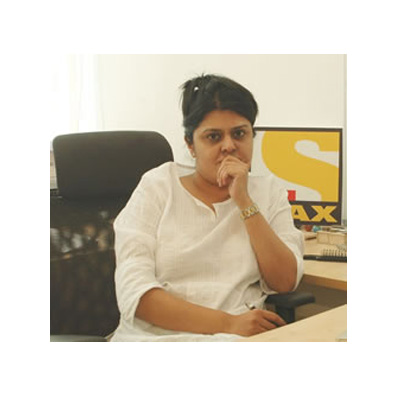
  • ‘What we need to do now is concentrate on our week day prime time band’ : Sneha Rajani – Max business head

    ‘What we need to do now is concentrate on our week day prime time band’ : Sneha Rajani – Max business head

    It has been an eventful time for Max. It recently aired the champions Trophy. Having successfully shored up its share on the weekend due to its focus on Sunday, it is now concentrating on strengthening its week day prime time band. It is also putting together plans for next year’s cricket World Cup.

    Indiantelevision.com’s Ashwin Pinto caught up with Max business head Sneha Rajani for a quick chat. She recently took over from former head Albert Almeida who was tapped to head Sony.

    Excerpts:

    Firstly, could you talk about the push given to The Champions Trophy by Max?
    If you look at the, ratings you will see that once again cricket on Max has delivered higher ratings than on any other channel. This started four years back. The non-India match ratings have been a revelation. It has been the highest since the World Cup. Our ratings were certainly helped by the buzz that Extraaa Innings bought and the innovations we did.

    Some advertisers I spoke to were not too happy. Do you feel there would be some cooling off in the next edition of the event?
    One grouse is that a lot of the matches including the final finished way too early. I think the advertisers are smart enough to understand that its in nobody’s hand whether the game ends before 100 overs or goes on till the end. This Champions Trophy has been fascinating from a cricket point of view as it has been unpredictable. When you have a high scoring game you have an idea of who will win and lose. Here dodgy totals kept viewers in suspense. It could swing either way. This is why the non-India ratings were more than what was achieved in 2004. So I don’t think it would in any way effect the next year’s Trophy.

    A lot of matches did not last 100 overs as it was a bowlers tournament?
    Matches ending early is in nobody’s hand. As an advertiser, if you decide not to put money the next time around in 2008 because of this and most matches last 100 overs it will be a lost opportunity. You cannot pre-empt anything.

    What is Max’s game plan going to be to build up buzz and anticipation ahead of the World Cup?
    We tailor our campaigns around where an event is happening. The campaign is always skewed to reflect the country a tournament is being played in. So when the Champions Trophy was in Sri Lanka it had a sub continental feel to it. In England we incorporated the stiff and proper mannerism into our campaign.

    In India we did the Shaadi campaign to emphasize the spectacle. Everything was shown as larger than life and melodramatic. Now when we go to the West Indies the campaign will be around beaches, sun and sand. It will have a carnival atmosphere.

    You are doing a ‘Host ka Dost’ hunt. What are the logistics involved to find someone to go the West Indies?
    This initiative is being done in collaboration with Reliance. It is a hunt for someone who’ll be part of the Extraaa Innings team for the World Cup and other cricket that we may have.

    If one is selected from the call they would be asked to come for an audition at Reliance Webworld, where they have to give a two to three minutes performance in front of the camera. There will be five finalists who would be further shortlisted by public voting. At present we are just at the call stage. We should wrap this up by the second week of January.

    Matches ending early is in nobody’s hand. As an advertiser, if you decide not to put money in 2008 because of this and most matches last 100 overs it will be a lost opportunity

    What are the big properties that Max has lined up for now till March?
    We signed some big movies recently. Fanaa is coming up as a weekend premiere. We also have Apna Sapna Money Money. January and February 2007 is where big titles will be shown. In terms of thematic blocks right now we have a King Khan festival.

    Certainly having a theme block associated with a star brings in loyalty. We will also have a comedy festival lined up for December.

    How do you push the non-blockbusters?
    It’s simple. We market and promote them in a way that has not been done before. It is all about the buzz you create – old wine in a new bottle. On air promotions are a key. You find a key moment that defines a film and you push that. We had a movie called Nayak, which tanked at the box office. It has delivered tremendous ratings for us though.

    In the past you focussed heavily on Sunday with housefull and then the blockbuster at 1 pm. How did this help grow your share over the weekend?
    Our reach has grown by 20 per cent. A 12-hour slot delivers an average of 1+. We will continue to focus on Sundays as well as festivals that happen once in a month. What we need to do now is concentrate on our week day prime time band. The evening slots are fine. The afternoon band is doing well where we have a block for women.

    My job is to strengthen the Monday – Friday prime time band from 9 pm. There will be a mix of titles. We have 36 China Town, Golmaal.

    What libraries were recently acquired?
    To name a few we have acquired Sajid Nadiawalla’s library, Yash Chopra’s library and Ramesh Behls library recently. Our library is over 1000+.

    What are the changes that have happened in the acquisitions process in the past couple of years?
    We have always focussed on acquiring the top five to six films in a year and that will stay. The scenario has changed with more players. More buyers for the same product means that the pricing has become buoyant. Competition is good and It keeps us on our toes.

    One big change that has happened, especially in the past year is that films are acquired before their theatrical release. This is a risk that all broadcasters are taking. This was not the case earlier on. Then it was more staid. You now go by track records in buying films pre-release. We just presume that a certain star cast with so and so director and producer should be doing well.

    If you go with established producers you should be fine. Sony has great relationships with them. Shaadi Se Pehle was a title that we bought pre release. The acquisition process is very organised. The producers are fairly realistic, they know which film is to be priced at one crore and which at 10 crores.

    How important are dubbed Hollywood films?
    Extremely! We launched Hollywood Hungama two and a half years back. It is one of the most loyal slots on our channel. Each year we acquire 25-30 titles.

    You had in the past done the innovation of the onebreak film. What further innovations can we expect to boost viewer loyalty?
    It worked for us initially and then it did not. Viewers got worried that why is the channel not having a break. They might feel that one ad break equates to a channel not doing well. They are conditioned to having breaks in between a film. Also we had a lot of ads on our plate to schedule. The one ad break did not prove to be economically viable.

    We keep looking at innovations that will surprise people. In this Champions Trophy we had huge cut-outs of Mandira Bedi and Virendra Sehwag at Mahim. We will do some wrap around programming on films and we are also looking at an innovation during our ad breaks. We do outdoors on special occasions, like for Lucky we had done an outdoor and we might do it for Fanaa too.

    Are you also looking at new formats like chat shows, news related film specials to add variety or is there too much of this already on Indian television?
    No! We already have Sony and Sab for this kind of content. We have a news show Current Bollywood but we will not be adding to this.

    New media segment is growing in importance in terms of mobile and the internet. What can we expect from Max in this regard?
    We did a lot of mobile activity for the Champions Trophy. It was very interactive. We offered movie trivia on the mobile and did contests as well. Clips we do not offer as the rights belong to either a mobile firm or a producer. Whether we go beyond will be an a decision that will be taken as an organisation and not as a channel. We won’t rule it out though. On the net right now Max site basically offers film information.

    One way that Max has separated itself in cricket has been through personalities like Mandira Bdei. Are you planning to extend this association further through the film platform?
    We already do this. She used to anchor Extraaa Shots which was a wrap around show for our films. Manish Vanicha is now anchoring the show. He is now doing stuff on cricket. So while Mandira moved from a cricket anchor to a film anchor Manish did the opposite. Next year you will see more personalities.

    Besides cricket and films what other events is Max looking at over the next few months?
    We have the Max Stardust awards coming up. We have been doing that for the last two years. I would say that it was the best looking awards show last year. Concerts air across the network.

    Could you talk about how your client portfolio has grown as well as ad rates?
    In the last year our client base has grown by 25 per cent. I am not in a position to talk about revenues or increase in ad rates.

  • ‘There are lot of shows out there about Hollywood and actors. But if it does not contribute to the movie watching experience, then it will not suit Pix’ : Sunder Aaron – Pix business head

    ‘There are lot of shows out there about Hollywood and actors. But if it does not contribute to the movie watching experience, then it will not suit Pix’ : Sunder Aaron – Pix business head

    These are busy times for Sony in the English entertainment space. Earlier this year it launched an English movie channel Pix. It also revamped Animax which is now a youth and lifestyle brand as opposed to being a kids brand earlier.


    AXN meanwhile is taking its local initiatives to the next level with Amazing Race Asia which kicks off next month.Indiantelevision.com‘s Ashwin Pinto and Renelle Snelleczk caught up up with Pix business head and AXN, Animax India country manager Sunder Aaron for a lowdown on the plans.


    Excerpts:

    How much of a challenge has it been to push Pix into homes both on a distribution level and on a sampling level for the consumer? In a sense it is a niche within a niche.

    Our library is a mix of older and newer films. The point is that we want to show films that have great stories It does not matter if it is old or new. When you say niche within a niche you are thinking of a classic film channel. We are not that. Our marketing and positioning focusses on telling good stories.


    What you find is that a lot of English movie channels are focussed on brand new titles, big stars, big budgets, big special effects, big Hollywood stars. That gets you as lot of people who don’t even speak English just checking the channel. They touch it which gives wide reach. What we have though is a high tel appeal. My audience is a little more older, more affluent and they stay with us a little longer.


    Strong stories are what guarantees a good movie. There are lots of examples of films with big stars, budgets etc which are not good. Getting into homes wasn’t that big a challenge as we are with the One Alliance. It already has relationships with the cable fraternity Our focus is on the main Metros. Cable operators make it difficult. We are growing though and have surpassed Zee Studio.


    We have been careful in our communication and marketing efforts. Our communication makes sure that our viewer gets the message that films are specially chosen after going thousands of titles.

    Then there is the question of adult films not being allowed. How is Pix coping with this situation in terms of getting titles cleared?

    The different parties are meeting with the I&B secretary this week. Hopefully a solution will be found. When you think Adult you normally think of nudity or sex.


    However a lot of English films are rated ‘A’ because the themes are mature.

    Do you feel that an exception should be made for DTH as technology allows for parental control?

    While the technology is there how many people will use parental locks? The greatest control at the end of the day is parental. What you are saying is taking the job of the parent and putting it on the programmer and service provider. It also comes down to what one considers to be an adult film.

    A show like Inside the Actor’s Studio gives Pix variety. What plans do you have as far as showing content other than films is concerned?

    We have ideas. But the important thing is that it should not distract from the fact that Pix is a movie channel.


    There are lot of shows out there about Hollywood and actors. But if it does not contribute to the movie watching experience, it it does not feel like a cinema oriented show then it will not suit Pix.

    The Man’s World returns for a second season. There
    will be a kickoff on 17 November. It has been on my
    mind to look at a sports based reality show

    You had earlier mentioned plans for localisation as as getting titles from independent studios. Has any progress been made here?

    We will be airing Being Cyrus next month and 15 Park Avenue soon after that. Down the road we will create original shows that are reality based.


    We are going to Mipcom this week to get titles. We will also go to the American Film Market in Los Angeles. Pix will be also be used as a vehicle to push theatrical films like Casino Royale. This will be part of an integrated 360 degree marketing campaign.

    You are now going after the advertisers with Pix. What is the pitch being made?

    The pitch is that we have content that have great stories which will draw in viewers. Our philosophy which is stated in the film Field of Dreams is that if you build it they will come.

    What is happening with AXN?

    AXN will unveil The Amazing Race Asia next month. It was produced out of Singapore and was a pan regional effort. The Indian team taking part will add local interest.


    The teams basically travel across Asia in a race to finish first. As is the case with the US edition there is a gradual process of elimination. We have been secretive about the show in terms of locations the teams will visit and other details since if word gets out about who won or lost interest will dissipate.

    What else can we expect from AXN on the localisation front?

    The Man’s World returns for a second season. There will be a kickof on 17 November. It has been on my mind to look at a sports based reality show. Once these two initiatives that I mentioned conclude then we will be in a position to focus on the other ideas.

    Any other new initiatives?

    We have a marathon for Diwali. This is from 20-22 October 2006. It starts with a seven hour marathon of the World’s Most Amazing Videos. Then Fear Factor will have an eight hour marathon the next day. There will be three phases. The first is about adrenaline junkies facing their fears. The second phase deals with families and friends.


    The third is where people are competing to win a million dollars. Then there will be a movie marathon. We have the Elite Weekdays at 11 pm from Monday –Thursday and the Elite Weekends from Saturday to Sunday from noon to 2 pm. We have shows like Nip/Tuck,CSI airing here. This is for the serious, thinking audience.

    Animax was originally positioned as a kids channel.
    What we realised was that the animation we are showing is much more sophisticated in the sense of the storylines. So it wasn’t really appealing for little kids

    Could you talk about the revamp of Animax?

    Animax was originally positioned as a kids channel. What we realised was that the animation we are showing is much more sophisticated in the sense of the storylines. It is like dramatic serials. There is more conflict, human emotions, deeper characterisation. So it wasn’t really appealing for little kids.


    The target audience that we are focussed on now that we should have focussed on in the beginning is 15-24. It is young adults who are just starting to consume. It is an exciting group to go after.


    They are going to cafes, getting a new phone every few months. They wear designer jeans. There is nexus between Animax and gaming and all those teenage aspirations. While Animax’s programming is animated it is not kiddie cartoons. It is what we call animation grown up. For the revamp we changed some of the colours. The appearance and look were changed. We also have animated hosts. We have also taken off shows that could be construed as being for kids. You will see more and more young, mature stuff. We also have new programming blocks.


    There is Aniblast in the evenings. A little later on there is AniSutra which is more cutting edge. AniFlix on Saturdays shows films. It will take time though for the viewers perception to change. It will take several months to completely change market expectations whether it is viewers or advertisers. It will feel like a lifestyle and animation channel.

    So you are also competing with the likes of Star World and Zee Cafe?

    I would say that we are also competing with the likes of MTV, Zoom, Discovery Travel And Living. Right now we are still seen as competing with kids channels and the challenge is to get the message out that we are not in the same space as Cartoon Network.


    We will talk more to our viewers. We wil go out talk to our TG and put them on the channel. There will be local vignettes. Gaming is an area we are looking at. We already have Gamemax on the channel.


    Eventually we will get to a point where we can commission some shows. But that is still some time away. Right now it is an English feed. The problem was that we had Hindi mixed in earlier which confused operators and viewers. Down the line as the channel gets re established we will look at a Hindi feed as well.

    You are also looking at on ground activities?

    Yes. We are planning one that will be campus oriented towards the end of the year. We are also looking at doing a gaming event year on year. We are looking to provide a touch feel experience which is what AXN has done really well. AXN is a badge of pride brand for viewers. That we are hoping will happen for Animax also. Even if you do not get the stories it is cool in terms of the visuals.


    Our marketing has also changed. We will not do a school contact programme. It will be a college campus connect initiative. Animax might help people get jobs in the animation industry or do career counselling. The profile of advertisers will also change. Brands like Nike, Pepsi will be seen instead of say a kids health drink brand.

    Is merchandising also an option?

    We feel that there are a few shows that look promising in this area. It will not be as big an area for us as Disney though. We will use merchandising to push the channel. Disney does the opposite.

    Looking at the English entertainment scene DTH and addressability does give players the chance to launch channels dedicated to specific genres like crime which AXN has done in Europe. Are there plans to launch more channels like this in India sometime in the future?

    Let’s see. We have a challenge to see that the channels we have including Pix which we launched earlier this year, Animax which has repositioned itself this year do well. We always have ideas and we are considering launching other channels in India.


    The best way for a channel owner to thrive is to launch new channels which I am sure we will do sometime down the line.


    If for some reason cable addressability again gets stalled is there a chance that Sony might take the English chanels off cable and put it only on DTH?

    I don’t think so. As distributors of content we want to take it to as many platforms as possible and as many modes of distribution as we can. We are agnostic when it comes to that. The basic game for any programmer is to distribute content on any platform whether it is DTH, IPTV, mobile or cable.


    Of course we want a fair price. This is where the challenge lies in India. English entertainment is a growing niche. The affluent English speaking
    population is very desirable. So though we are relatively small businesses compared to the main Hindi channels it is nonetheless expanding. Each English entertainment channel from Sony has a unique offering. The more the number of viewers exposed the better they will do. That will not be the case if we do not have it on one platform.

  • ‘I forecast that in three years time there will only be two sports broadcasters who will have any kind of market share’ : Harish Thawani – Nimbus Communications chairman

    ‘I forecast that in three years time there will only be two sports broadcasters who will have any kind of market share’ : Harish Thawani – Nimbus Communications chairman

    Early this year in February, Nimbus shook up the sports broadcasting sector by bidding $ 612.8 million for the rights to India cricket. Driven by the vision of its chairman Harish Thawani, the company has just launched its cricket centric channel Neo Sports. A second channel Neo Sports Plus, which will look to converge somewhere between sports and entertainment, is soon to follow in the next few months.

    It then signed a distribution deal with Star, which besides cable is also looking at Neo Sports to push DTH. Nimbus has also put a team in place to run Neo Sports. Indiantelevision.com’s Ashwin Pinto caught up with Harish Thawani over lunch for a lowdown on the company’s plans, the importance of improving stickiness, the advertising game plan, and a possible shakeout in the sports broadcasting sector.

    Excerpts:

    These are exciting times for Nimbus. First, the acquisition of India cricket, which allows you to enter the big league. Now you will be launching two sports channels. What is the vision you have for Nimbus Sports Broadcast?
    These are exciting times for the Indian broadcasting sector as a whole. We are seeing growth rates that are unprecedented and not slowing down. The growth forecast is robust for the next three to five years. The broadcasting sector is growing faster than the economy. We are seeing 7.5 – 8.5 per cent growth rates in the economy while for broadcasting, it is growing at 17-19 per cent.

    The interesting thing is that the sports sector seems to be growing the fastest. The spends on sports, whether it is on air or sponsorship or even on leisure activities, is big. You will notice that the sales of sports products like Nike, Adidas are all up.

    It is interesting that we are entering the sports broadcasting industry at a time when new alignments, new partnerships are taking place. The industry is maturing in such a way that you can compete with one party in one segment and collaborate with them in another segment of business.

    Our distribution alliance with Star is an indication of the growing maturity of the marketplace.

    So yes, I would say that we very much look forward to the impact that Neo Sports will make, not just on the broadcasting sector but also on consumers.

    More than Neo Sports, which is obviously cricket centric, we are even more excited about seeing the impact that Neo Sports Plus will make. It will be relatively slower as cricket being a bigger driver allows Neo Sports to be the bigger channel of the two. In the medium term, which is one to two years, we will be able to see what Neo Sports Plus has been able to achieve. Preliminary research shows that there is a huge appetite for a channel that converges its programming somewhere between sports and entertainment.

    When they launch, what will the programming of Neo Sports and Neo Sports Plus look like?
    We are launching only Neo Sports first. The launch date of the other channel is yet to be firmed up. We had earlier scheduled to launch it in the second quarter of 2007 which is April – June. But I can confirm that we are likely to bring that forward. We have been able to get ready faster. It is running ahead of schedule. For Neo Sports, the momentum will start building up towards the end of December just ahead of the first major international series.

    The industry is maturing in such a way that you can compete with one party in one segment and collaborate with them in another segment of business

    ESPN Star Sports had tried a soap concept Dream Team. That did not work out. Will you be doing this kind of programming on Neo Sports Plus?
    I am not off hand familiar with what ESPN Star Sports tried. I do recall them running some internationally syndicated football show.

    If that is what they chose to do then our vision is different. We have hit upon insights that may be unique. More importantly, as a company that has produced both sports and entertainment at disparate ends with more than reasonable success, the skill sets that we bring to the table are perhaps somewhat unique. It is not just based on understanding the consumer but also being able to deliver what the consumer wants.

    To pick up the case study of ESPN Star Sports, I think that running an English language soap opera on a minority interest sport like football is perhaps not the formula for succeeding and establishing an audience that is loyal to the concept of sports entertainment. English language soap per se does not do well.

    Football, while being a global sport, still lags significantly behind cricket in India. A Hindi language football soap opera might have done better. A Hindi language cricket soap opera will do even better.

    We are not planning to do that. We will move away from the obvious and move towards the slightly more complex solutions. I hasten to add that the perception of sports entertainment is presenting sports in an entertaining manner. That is now what we are attempting to do. We are looking to converge the two.

    Could you talk about the team that is being put in place to run the channels as well as the organisational restructuring?
    Shashi Kalathil has joined as chief executive of Neo Sports. We wooed and persuaded him because of the outstanding track record he has as a senior management professional. He is said to be a great motivator and is a young CEO. His many years at Pepsi have given him unique insights into how large advertisers buy cricket. He has been on the customer end to what was then the largest buyer of sport in cricket in India.

    It was also possibly one of the top five buyers of sport worldwide.

    Traditionally the tendency of a broadcaster is to look for a domain specialist out of broadcasting. We found that we needed domain specialists from the consumer products side of things. The second advantage he brought to the table is that he has worked in a startup Aircel. A startup has its own unique set of issues to confront.

    Scott Ferguson is the Asia-wide COO. He came out of the Sky Sports system. He worked with Orbit in the Middle East. We then tried to ensure that everybody under Shashi was from the broadcasting sector. Ranjith Rajasekharan is our marketing head. He come to us from MTV. Sanjay Goyal is our VP research and planning. He came back to us from CNBC. Sunil Manocha is the ad sales head and returns to us from Mindshare.

    Sonali Rege is our head of production. She comes to us from Channel [V]. Hitesh Sabbarwal is our VP affiliate sales. He comes to us from Zoom, and before that Sony. Each one of them is a domain, sector specialist.

    Shashi is spared the headache of having a role of having to tweak the broadcasting side of things. Customer acquisition, brand focus, revenue growth are the areas that Shashi will be able to focus on without having to worry about the back office so to speak.

    Where does Digvijay Singh fit in all this?
    He runs Nimbus Sport, which is the international sports rights management agency and production company. He does not fit into Neo Sports. Interestingly enough, Nimbus Sport and Neo Sport will compete in certain segments like rights acquisition.

    They are two different, separate arms. There will be conflict between the two and why not? Star Sports is a partner with ESPN and Star India is our distribution platform.

    This is an example where a business of one company may compete with another business of the company. The theory for us is that if 10 per cent of Nimbus Sports’ profits are eaten into by Neo Sports then it is fine.

    Cumulatively, they will profit much more than one entity might have done on its own. There is also a physical separation between the two entities. One is headquartered in Singapore. One is headquartered from India. Except for rights there is nothing in common with the two. One is a service provider for the industry. The other is a product delivered to the consumer.

    Nimbus Sport may provide services to Neo Sports. Nimbus Sport is a global player in rights management while Neo Sport will only focus on acquiring India rights.

  • ‘Our aim is to give history a more broad based appeal, which is why we are focussing on entertainment’ : Nikhil Mirchandani – The History Channel India MD

    ‘Our aim is to give history a more broad based appeal, which is why we are focussing on entertainment’ : Nikhil Mirchandani – The History Channel India MD

    Live the Story! With the aim of competing better in the English entertainment space The History Channel is pursuing a new strategic direction in India. The aim is to spread the appeal of the channel to more viewers and increase the stickiness level through a variety of shows. These include television movies, documentaries, mini series and long running series.


    Indiantelevision.com’s Ashwin Pinto caught up with The History Channel India MD Nikhil Mirchandani to find out about the plans and what lies in store.


    Excerpts:

    Could you talk about The History Channel’s new direction?

    I would like to point out that we have not changed our positioning. We own the theme of history and will continue to do so. Our aim is to give history a more broad based appeal, which is why we are focussing on entertainment. Over the last three years we did a few things that set the stage for what we are trying to do today.


    We established our positioning of history that no other channel has. History is our middle name so to speak.


    In a scenario of over 300 channels distribution is very important. We are the 16th best distributed channel in the country. We managed to do that since we are a part of the Star family.


    We established a loyal viewer and advertiser base. We have also marketed ourselves well like getting Diana Hayden to host Biography. Moving towards entertainment is the next logical stage of evolution in our product lifecycle. Our aim is to attract more viewers and advertisers.

    In what way has the programming strategy been embellished?

    We begin our primetime with factual content at 8 pm. Then there are drama series at 9 pm There will be classic product from our library at 10 pm. At 11 pm there will be a thriller band. On the weekends you have a television movie on Friday at 9 pm For example Hitler The Rise of Evil.


    There will also be a combination of fact and fiction. For instance you could see a biography of Marilyn Monroe followed by a drama or a television movie. We are also targeting women in the afternoon with programming that we are confident will appeal to them.


    The primetime moves from a youngish factual content to drama to thriller. That evolution of our programming blocks is logical.

    According to research how do viewers perceive the channel?

    Viewers perceive us as a well respected credible authority on the subject of history. They have constantly expected that of us and we will not dilute that offering. They find us interesting as we deal with personalities like Hitler, Helen of Troy.


    The great thing about the History Channel is that it is not restricted by formats. That is not the case with a movie channel that focuses on blockbusters. If they deviate one immediately notices that. Our only concern is whether the story is historically relevant. I would say that English movie channels are undifferentiated from each other.


    We have a wide basket from the lifestyle genre, to thrillers to even perhaps stories on 9/11. It will be in terms of formats. By this I mean documentaries, movies, series, one off biopics, long series. The topics have also grown. We will also showcase concerts like Woodstock. History is never going to be the same again and we take advantage of that.

    ‘The new stories we are telling are universal. Also with our dubbing initiative in Hindi we see the appeal spreading beyond the current TG that we have

    Is it fair to say that the audience has become more sophisticated and demanding in the last three years as their exposure has grown?

    They have more options today. A time will come not far from today when they will have options to choose how they watch content whether it is through cable or IPTV or DTH. He will also have the choice of when he wants to watch it. The environment is also getting more sophisticated in terms of addressability.

    What is the viewer mix like on the channel?

    It is pretty equally distributed between male and female. While our core audience is male-female SEC A, B 25-44 Metros and mini Metros we do realise that there are viewers coming in from other demographics.


    The new stories we are telling are universal. Also with our dubbing initiative in Hindi we see the appeal spreading beyond the current TG that we have. Having said that our acquisition and scheduling strategy is governed by the SEC A,B TG in the Metro cities.

    To what extent have acquisition costs gone up?

    Significantly! The drama content are all epic big budget productions. We will leave no stone unturned.


    Over a million dollars has been invested in the acquisitions and also on dubbing and marketing activities.

    Could you talk about the strategy The History Channel has followed to debunk the theory that history is boring and staid?

    We have done focus groups to find out what our viewers think. We tested the entertainment initiative out. Previously they might think that history is boring and what they remember from school as in being a textbook, black and white.


    However when we shown them our content where history is brought to life then they want to immerse themselves in the story, the cultural setting. Production values also help a lot. One viewer even told us that our television movie Spartacus reminded him of Gladiator. Their minds open up and their imagination works overtime. It becomes a great story that they want to know more about which they may have only read about previously.

    Apart from Biography which of your other shows have proven to be popular?

    Conspiracy, Crusades, Secret Agents, Breaking Vegas were appreciated. The last one was about MIT graduates who cracked the codes in Vegas and made history. They were able to fool the casinos. That is what I mean by becoming more broad based. This is about the glamour of Las Vegas and not dull black and white.

    We think that we should be close to the English movies and English entertainment space. This is between 0.4 – 0.6% of the total C&S viewership

    What are the major property acquisitions that have been made in the past couple of months?

    There are many. There is Marilyn and Me. There is Nero, Augustus, Saint Peter. We have formed alliances with BBC, Disney, Granada, Universal, Warner Bros.

    There are two major media events coming up. One is the release of the film The Da Vinci Code. The other is the Fifa World Cup. Will you be showcasing any specials around these two events?

    In June you will see interstitial on the World Cup. June will a Rome month. We will debut the show Rome: Engineering an Empire. This is to coincide with the film release with Tom Hanks. For Fifa there will be short form programming like biographies.

    What targets have been set in terms of viewership?

    We think that we should be close to the English movies and English entertainment space. This is between 0.4 – 0.6 per cent of the total C&S viewership. Our dubbing will help here.

    Who does the dubbing for you?

    UTV does the work for us. Drama dubbing is more difficult than documentary. There is a lot more dialogue, emotion involved with fiction shows. The drama has to be put forth succinctly.


    When you dub emotions the talent involved needs to be far better We already offer a parallel feed. In the North and West regions we find that a lot of people prefer the Hindi feed. But down South they would rather have English.

    One challenge for the English entertainment genre is to create a 360-degree environment. This means interacting with the consumer through other mediums besides on air. What plans does The History Channel have in this regard?

    As I pointed out earlier when we exposed out content in our focus groups their minds opened up. This showed us that we need to constantly expose our content to viewers at different outlets. They need to sample us more. So we will use the Star network.


    Cinema halls will be important as an audio visual medium best brings out our offerings. We will also use Internet auditoriums. Here you can download links and watch clips, promos. This lets people touch and feel us. This will help us break the myth that history cannot be entertaining.


    We are looking to have a presence in malls as they have high footfalls. We also realise that History Channel aficionados also watch movies and read books. So we are trying to tap into them at bookstores and DVD rental libraries. We are looking to expose our content through them through posters.

    Is The History Channel taking a cue from the success NGC has had with its mission property in terms of on ground initiatives?

    We are exploring available opportunities. It wouldn’t be fair though to compare the History Channel to NGC as the content is different.

    Is The History Channel looking to localise? Kindly elaborate.

    We will shortly be airing a show on the Mughals. Next year is the 150th anniversary of the 1857 uprising. We will be doing something around that. We have in the past aired biographies on Gandhi. We constantly talk to production houses to do work. This will unfold over the next couple of years.

    Are you planning initiatives like maybe school and college contact programmes to create awareness about your product?

    This will depend on the show. Most of our audience as I mentioned earlier is in the 25-44 age bracket. If however there is a property that demands that we go to a school then we will.


    For example if ninth class students are reading about Mein Kamph or are studying about Hitler then it makes sense for us to show themHitler the Rise Of Evil. That will give them a perspective. As Mein Kamph was written by Hitler a complete perspective is not present. This I am sure will make the subject more exciting for them.

    On the advertising front how is The History Channel being sold to clients? What targets have been set?

    We are looking to double our revenues in the next fiscal. We have a transparent rate card. We are looking to allow the advertiser to pick and choose the content he wants to be associated with. This marks a change in how television channels are sold.


    It is not clubbed with NGC. The History Channel has a separate dedicated team and they have their own set of targets. Nokia, L’Oreal, Samsung are some of our major clients. We have received positive feedback from them on our new initiatives.

  • ‘We expect our involvement with cricket to improve our market impact by 25-30 per cent’ : Sandeep Tiwari – LG Electronics India marketing head

    ‘We expect our involvement with cricket to improve our market impact by 25-30 per cent’ : Sandeep Tiwari – LG Electronics India marketing head

    Having been in the country for nine years now LG Electornics is for the first time using a Bollywood star as its brand ambassador. It has signed on bollywood actor Abhishek Bachchan to endorse its line of consumer durables like refrigerators, air conditioners. The aim is to connect better with women. This year the company is targeting a turnover of Rs 90 billion.


    Indiantelevision.com‘s Ashwin Pinto caught up with LG Electronics India marketing head Sandeep Tiwari on the sidelines of a media briefing.


    Excerpts:

    With the signing of Abhishek, LG is changing its strategy by moving away from relying only on cricket. What prompted this?

    I won’t say that our strategy has changed. It has been enhanced. Quite a few people expect us to exit cricket. That is not the case. We realise though that two growth engines as far as the advertising fraternity is concerned will work. One is all around cricket and the stars. The other will revolve around entertainment.


    We are going with a double engine effect. Cricket delivers numbers and reaches masses. It however alienates women. It does not address that gender with the same amount of passion. Cricket is better for a consumer electronics television oriented effort for the male audience. It also partially delivers in the air conditioner category as men to some extent make decisions for this product. But when it comes to pushing mobile phones, washing machines, microwave ovens, refrigerators it does not deliver the full impact.


    We will be launching a mobile phone campaign later on. That TG is very young from the late teens. Our brand has to become younger, their generation brand. We do not want to become a brand that is for an older generation just because we have been around for several years. We have learnt from what Coke, Pepsi have done over the years to remain young. This will helps us address all sections of consumers. We want to become a consolidated consumer driven brand that also encompasses mobile and IT.

    Could you talk about LG’s brand positioning in the market and how it allows for differentiation?

    We are differentiated from the Indian and foreign brands. LG does not get classified as either. It is easy for Indians to relate to it. The brand has a multinational lineage while delivering what Indians require. We don’t show any foreign ads.


    Our communication language is not that of a foreigner. Emotions work a lot in India. The warmth and affection that a brand showers upon its target audience will be reciprocated. A brand may be ranked higher but if it is not relatable then it will not do well.

    Has this positioning been tweaked in any way recently?

    I would not say so. In 1997 we were represented in high end markets. We were niche. Today we sell different TV sets, refrigerators. We don’t just have SEC A+ 35+. Our target is total. So our communication must address everybody. You cannot have one for the higher end and another for the lower end.


    That is what we are looking to achieve with a celebrity. The sheer rub off of that celebrity will draw in masses for a high end product. It connects mind to mind. This is where a Saurav Ganguly works.


    This is also what Abhishek Bachchan will do for us. Even in Allahabad, Benares it will work. At the same time we do not use a celebrity for everything. For television sets our positioning has been around the eyes. We used an average child.


    Conventional wisdom says that television watching is bad as it causes strain. Our communication showed that with LG’s eye technology it is not harmful. The position was very different in that we showed that it will give the child a world of knowledge. The child plays a crucial role in terms of buying a TV set. We looked at the TV as being an infotainment medium and not entertainment.

    Speaking of television what are the plans in the television manufacturing area and how challenging are price points as in consumers waiting for prices to fall and then buying TV sets?

    In this area we are targeting a 100 per cent growth for flat panel displays year on year in terms of the number of units sold.


    It is going to be interesting to see how we fare with little penetration of plasma sets and high acceptability of that category. People want a TV that can be hung from the ceiling or mounted on a wall. The big size experience at home is an aspirational product.


    As far as pricing points are concerned I will give the example of mobile phones. Though prices will fall nobody waits. People cannot wait to upgrade and change. People accept that gadgets will not last a lifetime. They want what is the best option as long as the brand is delivering what it promises.


    The consumer has become more experimental in nature. 35-37 per cent of revenue comes from television. Electronics along with IT contribute around 48 per cent of our revenues. Appliances contribute around 36 per cent.


    In 1997 when we started our group turnover was Rs 125 crores (Rs 1.25 billion). In 1999 we crossed Rs 1000 crores. Last year it was Rs 7500 crores. We are looking to touch Rs 9000 crores this year.

    What is a more powerful platform – Bollywood or cricket?

    They complement each other. No brand in our position can afford to ignore one or the other. The cricketing calendar is limited. We take the time for which they are played. For a lot of the months we cannot device our season vis-a-vis the cricket calendar.


    But with a film star we can plan better. A cricketer is only relevant when a game is being played. His performance affects how a brand that uses him is perceived to an extent.


    Brands go through highs and lows. When a cricketer fails the public reacts badly to the ad featuring the cricketer. A Bollywood campaign though cannot only be attributed to the star involved. Actors do not always play themselves. They show more versatility in negative, positive roles. It offers a wider spectrum.

    ‘The 1999 World Cup in England was our first mass awareness programme right from our carton boxes to communication. It became known to everyone

    In what way has the brand communication for home appliances evolved and why choose Abhishek?

    Till now the home appliances communication platform had the health message. Today that platform is being adopted by a lot of me too brands.


    We felt that we therefore needed to break way from that by graduating to a Health Plus objective. From here came the idea of Intello. This means that the products are technologically intelligent and futuristic.


    We want to position the brand as being young, vibrant and premium. So we picked Abhishek as he portrays Indian values. He also exudes an aura of aristocracy.


    The signing of Abhishek marks the start of the second phase of our marketing strategy in India. It is the marketing of a leader phase.

    Which are your key products that will be given a marketing thrust this year?

    Mobile phones are key for us this year. Flat panel displays are also important. Laptops will be third in importance but from the long term point of view as in 2010 laptops will be second.


    ACs have experienced good growth and the market shares are high. The aim is to sustain AC growth.

    To what extent is the marketing budget going to rise this year? How much of this will go towards television?

    The marketing budget will increase marginally compared to last year apart from cricket due to the Champions Trophy.


    We expect our involvement with cricket to improve our market impact by 25-30 per cent. Media advertising constitutes 40 per cent of the marketing spend. Out of that 40 per cent is spent on television and print.

    Does LG feel that there is scope for using television in a more interactive manner to reach consumers? By interactive I mean engaging the audiences in a more active manner.

    This is going to be very important. Using a celebrity is a classical way to approach that. If you could increase market share by simply putting ads then there would be no need for marketing professionals.


    Wittiness and innovation play a crucial role in breaking the clutter. It is not money versus money. It is not a question of Rs 250 crores versus Rs 280 crores. The content of communication and synergies created are what the focus should be on.

    LG is one of the ICC’s official partners. How has this benefited the brand over the years?

    When we associated with them in 1999 it was a big transitional phase. This was because it was our first attempt at national penetration and visibility. From 1997 till 1999 we did not have any television commercials. We were not represented among the masses in a true sense. We were just represented in towns through hoardings, newspapers.


    The 1999 World Cup in England was our first mass awareness programme right from our carton boxes to communication. It became known to everyone. Subsequently the two Champions Trophies and the 2003 World Cup became a mainstay in our efforts to build the brand.


    The ICC association has given us the stature of a mammoth brand. This would not have been possible through regular communication. The ICC association is more to do with the LG logo as a whole rather than with simply different parts of the company like a fridge or an AC. No other medium would have given us that.

    The pre purchase and post purchase experience are important towards enhancing brand value. In the long term word of mouth publicity is key

    How is LG looking to leverage the Champions Trophy which will be held in India?

    What is interesting is that it is coinciding with Diwali. It will be from the second week of October to the second week of November. Diwali falls somewhere in between. We have to figure out how the two communications of Diwali and cricket can work together.


    There will be two objectives to be achieved simultaneously. Can they be jelled to leverage the best out of the two? This is one of our biggest marketing challenges of the year.

    LG and the other ICC partners met recently. What transpired?

    There are two huge events coming up. It certainly required some getting together to figure how to leverage that.


    LG, Hutch, Hero Honda and Pepsi met with the ICC to discuss how we can work together to maximise opportunities.


    These are four large brands that do not compete or fight with each other. We discussed avenues that can be worked on together. How successful this is time will tell.

    Are below the line activities and promotions growing in importance for the brand?

    Significantly. 60 per cent of our budget is spent on these kinds of activities. It is crucial because no technology will work well until it is explained to the customer. At the ground level the product must be on display. The experience that a customer goes through on ground is equally important as using mass media.


    The pre purchase and post purchase experience are important towards enhancing brand value. In the long term word of mouth publicity is key. We have around 1,150 in shop demonstrators and 1,000 counters across the country. This is a force and manpower that no other competing brand has. Exhibitions play a significant role across the country. The portfolio that we have cannot be addressed with just one showroom.


    One showroom can only accommodate 30 per cent of our product line. Exhibitions give us the opportunity to display more products and do something meaningful. We concentrate on training our sales people and upgrading their sales skills.


    Mobile vans and road shows will play a crucial role going forward. We are also using malls as a place for display as a lot of people visit them. In-house demonstrations of products after purchase are another area of focus. Cookery classes for our microwave ovens tells the customer that LG does not just sell microwaves. It is also teaching him how to cook.


    Ladies come to learn cooking and they also learn about the other products available from the range. This activity will be strengthened over the years as India cannot be addressed by only going to 10 or 20 towns. The major growth will have in those middle markets.

    As a marketing tool what potential do you feel the mobile has?

    All our portfolio except for laptops and mobiles are in house. You can only see someone else’s Airconditioner by going to their living room. They remain inside. A mobile phone is flashed around as a personality trait. If you sell a LG phone to a school or college student you are preparing him/her to be a future LG television, washing machine, refrigerator customer.


    So we are catching them young. The mobile phone in the future will be the first entry product into the customers home. After that will come television sets and washing machines.


    It becomes a brand that a person is proud of. However we are staying away from SMS and MMS communication activities on ethical grounds.

    Are you happy with how global sports organisers have combated the threat of ambush marketing?

    I do not think that it is a very big issue. There are enough marketing opportunities for everyone.


    I do not think that media alienation for a certain period of time makes a big difference.

    There are lots of major sporting events this year. So how is LG splitting up its ad spend?

    We are staying away from cricket apart from the Champions Trophy.


    Every brand has limited resources and cricket is no longer an inexpensive proposition. Conserving of resources for better utilisation is what optimisation is all about. We will be doing activities around the Fifa World Cup though.


    We are yet to roll out ideas at the storyboard level. This activity will be in select markets like Goa, West Bengal.

    How do you work with your creative agencies?

    It is a partnership right from the concept generation level to how it shapes out to seeing it delivered to the marketplace. We even address the media together.


    The competitive business environment leaves little room for chance. It has to be a team effort.

  • ‘Organising a fashion event is a question of management – order, discipline, logistics, delivery’ : Simon Lock – IMG Fashion Asia Pacific managing director

    ‘Organising a fashion event is a question of management – order, discipline, logistics, delivery’ : Simon Lock – IMG Fashion Asia Pacific managing director

    IMG Fashion Asia Pacific MD Simon P Lock, the man who thrust Australian fashion onto the world stage, is in town for the Lakme Fashion Week, which kicks off tomorrow in Mumbai and runs till 1 April 2006.


    Lock, the founder and former CEO of Fashion Innovators (AFI), as too the region’s premier fashion event, Mercedes Australian Fashion Week, took over as head of IMG Fashion AsiaPac after his company was bought out by IMG in October 2005. The acquisition by IMG also included the management and production of the Mercedes-Benz Start Up program in Australia and New Zealand, the Mercedes-Benz Asia Fashion Award program that is currently held in six countries throughout Asia, the Singapore Fashion Festival and other fashion events around the Asia Pacific region in development, including events in India, China and Japan.


    Indiantelevision.com’s Ashwin Pinto caught up with Lock to find out more about IMG Fashion and its plans.

    How has IMG expanded its presence in the fashion world in the past five years?

    Quite significantly! Here in the Asia Pacific they acquired my company in Australia AFI which produces the Mercedes Fashion Week in Sydney. It also produces the Singapore Fashion Festival. So that has become a part of IMG Fashion family. In India we have the Lakme Fashion Week. New fashion weeks have started in many cities including Los Angeles and Miami. IMG Fashion is also involved closely with a number of Fashion Weeks in Europe.

    Anything else?

    IMG Fashion also has IMG Models. I am involved with developing that sphere as well and we are doing a lot of work in the Asia Pacific region. IMG Models represents some of the leading models in the world. They include Kate Moss, Heidi Klum and Giselle Bundchen. My role is to look for opportunities for those girls in Asian markets. My job is also to spot new talent who can become a part of the IMG fold globally.

    In what way has the business model evolved along with the industry?

    The business model of IMG Fashion is primarily based on the ownership and the development of fashion events. They can be trade events for the industry or events for the public who are fans of fashion. The revenue model revolves around contributions fro m designers to participate in these events and also sponsorship to drive the events.

    How difficult is it to find sponsorship?

    It is always a challenge. You are competing with other parts of the marketing spend. This is the advertising spend, public relations spend. IMG has vast opportunities because it has such good significant properties around the world.


    So if you are an international brand like Lakme or Olympus or Mercedes Benz and looking to create an association with the fashion industry and therefore reach consumers then IMG Fashion can be a valuable partner for you.

    How has the takeover of the takeover of IMG by investment company Forstmann Little & Co impacted the company?

    It has added value to both management and the operational structure. Forstmann has great vision which they have been able to transfer into the development of IMG Fashion. They are bringing in some new things like a focus on the internet and new media.

    We are seeing designers images going up on the Internet straight away and retailers copying them. Many designers are considering pulling out of online galleries

    How is IMG Fashion looking to leverage the Internet and new media?

    New York is the best example of what we are looking to do. Recently we created a partnership with Microsoft and Sprint to deliver fashion show content online.


    This is the first time it has been done live anywhere in the world. It was successful. The site imgfashionworld.com started to rank alongside other great event sites around the world like Wimbledon, US Open. It is a win win value proposition and allows us another window to showcase our collection.

    Is the mobile also an opportunity?

    Definitely. We are in discussion with a lot of operators. With the advent of 3G and mobile, TV people are coming to grips with what the consumer wants. Do they want five minutes edited highlights of fashion shows? Do they want to be able to see what is happening backstage? Do they want critiques? Do I want to watch it while traveling on a bus or while I am at work?


    As consumers we do not know what we want out of this new media. But IMG Fashion is well positioned to deliver the content in whatever manner it suits the consumer. It is a question how we apply content to the medium.

    How important a market is India for IMG from the fashion side compared to other Asian countries?

    It is significant and we have been here for six years already. India has a vibrant fashion industry that we are partners with. India has a huge growing consumer population. They are getting more involved with fashion.

    Could you talk about some of the learnings from other countries that you have applied for the Indian market?

    Lots! I have been running fashion Weeks for 10-12 years. We bring 20 years of running them and it benefits India. There is a lot of detail, procedure, information.

    What are the ways in which IMG is leveraging the synergies between fashion and the worlds of music and entertainment?

    We did an innovation recently in Singapore. This was a collaboration with MTV. We produced a special MTV Fashionably Loud. This the epitomy of live music rock concert married to a fashion show and developed into a brilliant television programme which will air across Asia, including India, on 9 April 2006.


    It stars top designers like John Paul Gautier, Gucci, Prada. We have an indirect relationship with the film world. Many designers who participate in our fashion Weeks dress film celebrities.

    The overall challenge is in fighting for the consumer dollar against different industries like cosmetics, entertainment, food etc

    What role do major events like the Oscar Awards play in increasing synergy between the world’s of entertainment and fashion?

    The first hour of a major film programme, whether it is the Oscar Awards, the Golden Globes, the Baftas, focus on what people are wearing. On the red carpet the interviewers are more interested in the outfits than on the films. This is a huge opportunity for designers to get noticed in a way that otherwise would not be possible.


    The downside is that some of the mystique is lost when viewers find out that the dress is being returned tomorrow along with the jewelry. This is something though that the industry has to learn to live with.


    When you have a celebrity for a fashion event the danger is that he/she might have their own aims. This need not be promoting their designers. When the relationship works well in terms of the celebrity talking about the designer and vice versa. It needs to be balanced though. A personal connection helps when a celebrity likes to wear a particular designers clothes, as it looks good on them. It does not always happen though.

    Could you talk about how IMG increases the brand equity of a fashion event through its expertise?

    We have a series of production partners who help us produce events. We have contractors around the world. IMG Fashion also has experienced executives who help manage sponsorships, marketing and bringing in international buyers and producing events. It helps create better outcomes for the participants. Designers will sell more clothes and the media coverage for Lakme Fashion Week will grow exponentially.


    So they know that the return on investment is strong. At the end of the day we bring measurable outcomes to participants. Without commercial outcomes we cannot commercially substantiate our involvement or their involvement.


    Our aim is never to create a homogenous Fashion Week circuit. In New York it has its own style and personality of showcasing sports wear. Los Angeles, Mumbai, Sydney are also distinctive. The inherent nature of the industry allows each event to be different. Indian designers have a certain, style, feel and way of doing business. We have no intention of taking this spirit away. We want to embrace and enhance that spirit. Lakme fashion Week has sense of community and that is the spirit.

    What is the main difference between organising a fashion event and a sports event?

    The basic principles are the same. You need organisational skills for both. However, a specific expertise a required to run fashion events. This means that you have to understand the industry. Organising a fashion event is a question of management – order, discipline, logistics, delivery.

    What are the ways in which IMG meets these challenges?

    It is about having a plan that will offer a successful outcome. You need to be very structured and focussed. You need great creativity and logistical execution. You need to balance both.


    There is no point in having a creative Fashion Week if the sets fall down. If it is not run on time or the media is not getting what is going on, then the event will be affected.

    Are you satisfied with how television channels cover the fashion industry or do you feel that there is a need for greater in-depth coverage? What I am trying to get at is that the genuine understanding of the fashion business is very low in India among journalists in particular and the media in general.

    It is a good point. Designers need to be more prepared to deal with the media. They need to be more educated. The media needs to understand the subject matter and then put it in an international context.


    If an Indian designer comes out tomorrow on the catwalk with a Gucci rip off then the journalist must be able to spot it. That is your responsibility to the consumer.


    To do that you have to take your journalism and research equity very seriously. We need to see more of that in India. What ultimately works is mutual respect between the two parties.

    On its part what efforts is IMG taking to make its fashion events more TV friendly?

    We have excellent lighting and sound. So the quality that we can get out of our events is good. We have great partnerships like with Zee here. We also did one with Microsoft in the US. IMG owns one of the largest television production companies in the world -TWI. So we have a lot of experience in this area.

    In India one problem that the fashion industry commonly faces is charges of copying of designs. What in your view is the solution and is this problem faced in other countries?

    This problem is faced everywhere. We are seeing it now with designers images going up on the Internet straight away and retailers copying them. Many designers are considering pulling out of online galleries. I am not sure of what the solution is to this problem.


    The overall challenge is in fighting for the consumer dollar against different industries like cosmetics, entertainment, food etc. Hopefully we will get our fair share and this can be done by providing people with the right products.

    Could you talk about IMG’s expansion plans globally on the fashion side?

    We have development plans for new events across the Asia Pacific region. We can talk about this when the time is right.

    What are the plans that IMG has for India going forward?

    The way forward is to grow and develop the Lakme Fashion Week. You grow it by getting more buyers and more media to attend. They write for more orders, the designers get bigger. Both parties come back. It is cyclic.


    The event has to be of a high quality so that designers want to participate. So content has to grow.

    Then again there is no good having great content if you do not tell people about it. Our job is to tell people globally what is going on here.

  • ‘Clients want better research insights, high quality data and speed’ : Tim Balbirnie – Synovate Asia Pacific CEO

    ‘Clients want better research insights, high quality data and speed’ : Tim Balbirnie – Synovate Asia Pacific CEO

    The world of market research in India is growing. Both channels and advertisers are seeking more clearer understanding of the consumer and his/her evolving media behaviour.

    One firm that helps in this regard in market research firm Synovate. Indiantelevision.com’s Ashwin Pinto caught up with Synovate Asia Pacific CEO Tim Balbirnie for a lowdown on the company’s activities and how it adds value for clients.

    What are the ways in which Synovate is helping add value to your offerings?

    We are finding an increasing number of clients are looking towards our online capabilities. We are expanding our global panel, ViewsNet, to facilitate the increasing demand for online research. More and more, we find clients appreciate our assistance with brainstorming workshops as a complement to the report.

    How much does the media and entertainment sector contribute to your revenue stream?


    Our media division makes a significant contribution to our revenue. However, we do not break up our revenues by division or indeed, area of specialisation.

    The media sector is important because it is very high profile within the overall research industry. It is also challenging work to conduct from a sampling and analysis perspective.

    Could you give me an idea about the time and effort involved in conducting major studies like Synovate Pax?

    It is significant. It is an ongoing effort to continue enhancing a media currency survey like Synovate Pax. Synovate has invested 10 years; a lot of time and energy; and intellectual rigour in ensuring the survey delivers accuracy, representativeness and meets the needs of major media owners, specialists and agencies across the Asia Pacific.


    We are using sophisticated data collection techniques to collect information from the most affluent segments of the population in Asia. In less developed markets this has its own challenges.

    How is Synovate able to work within tight deadlines without compromising on quality?

    As with all service industries, clients are – quite rightly – demanding more. They want better insights, high quality data and speed. Synovate is putting a great deal of emphasis on technology to help us deliver high quality work with faster and faster turnaround times.


    We now have a global chief information officer who is seizing this opportunity to drive the group forward from a technical perspective. Synovate is focussing on support services which had previously been regarded as back office functions and utilising those services as a way to deliver all the benefits of our global scope, reach and scale to clients.


    One of the things we will not do, regardless of deadlines, is compromise on quality. All Synovate offices have implemented quality control standards of the highest degree. Nothing we do will negate the need for maintaining these standards.

    ‘Moving customer loyalty to the centre of your business strategy requires a well thought-out plan. Our customer relationship architecture provides that guidance’

    What recent additions have been made to your product portfolio as far as the media and entertainment sector is concerned?

    Over the past 12 months we have added the ‘Media Atlas’ survey in Hong Kong, Malaysia and Bangkok. This study shines the spotlight on local media consumption and is being welcomed as a valuable alternative to information that has been in the marketplace for decades.


    This is also being introduced in the Philippines. Over the coming months further markets will be added. We have also introduced ‘Media Brand Values. This measures the relationship between C level executives and their media of choice.


    In addition, our ‘Young Asians’ survey looks at the media consumption as well as attitudes, brands of choice etc for eight to 24 year olds across the region, including India, and kicks off its second year later this month. This survey, given the importance of youth across Asia, is attracting much interest among clients.

    Have you acquired any research firms in Asia recently to add to your repertoire?

    Less than six months ago, we acquired Market Equity in Australia, a large independent firm. That acquisition, coupled with Aztec Information Services which was acquired in March 2005, has made Synovate a top five player in the Australian market. Australia is an important market to many of our regional clients. So it is a real benefit to now have a seamless Synovate regional operation throughout the major markets.


    Market Equity re-branded to become Synovate in December 2005. We also completed the purchase of the Filter Group, a youth marketing research company late last year.

    Could you talk about the kind of out of the box solutions that Synovate’s customer Loyalty practice division offers clients?

    Moving customer loyalty to the centre of your business strategy requires a well thought-out plan. Our customer relationship architecture provides that guidance. This blueprint is customised for each client, and built from a solid, proven framework.


    We work with every business in a different way. How we work with a company depends on its goals and where it is in building its own customer relationship architecture. We have some solutions that are starting points addressing aspects of loyalty such as customer, organisation, event, brand, market, employee and reputation.

    Could you give me an idea of what advertising development research entails? How does Synovate work with media planners and FMCGs in this regard?

    At Synovate our philosophy is to integrate media measurement into brand and advertising tracking. This allows our media expertise to be of direct value to major advertisers.

    In what way have clients’ needs and expectations from Synovate grown in the past couple of years?

    Not too long ago, research companies were just producing data. Now we are doing so much more for clients – analysing, consulting and so on. I believe that we are an increasingly vital part of marketing.


    The research industry needs to move towards this model across the world. The way we are approaching this at Synovate is to work harder and better at understanding our clients’ needs and the analytics before we start a project. This understanding then carries all the way through the project and beyond.


    We are building our consultancy skills – investing in people that have both marketing and research backgrounds to drive this throughout the organisation.

    ‘We understand that everything revolves around business. Pretty graphs are not worth it unless they can be translated into actions – actions that improve business’

    How does Synovate move beyond just providing reports that contain lots of data?

    To move beyond just the data, Synovate is working more and more on client workshops, brainstorming and consulting. We are working to make our service more than a report. We want to help clients make their reports meaningful and help improve their marketing and business strategies. The bottom line is – well – the bottom line!


    We understand that everything revolves around business. Pretty graphs are not worth it unless they can be translated into actions – actions that improve business. We are all about applying the theory of research to real life in the business world.

    Often marketers tend to not define precisely what they require when they buy research. Also they have unrealistic expectations at times. How does Synovate cope with this difficulty?

    Again, we are working harder and better at understanding our clients’ needs and the analytics before we start a project. This is a two-way process.


    We understand clients better and they understand us. This understanding then carries all the way through the project and beyond. Our clients in general tend to have a clear understanding of what it is they need to know or find out.

    As per Synovate findings what role will new media play in the media consumption landscape?

    New media is without doubt influencing the decisions of advertisers who are seeking additional methods of communicating with their target audiences in an era where the consumer is increasingly in charge of media choices.

    Speaking of which, one issue that is coming up more and more is that of media clutter. With the multiplying of media options, the efficacy of research activity in tracking ever-more complex variables are being put under the scanner. Your comment?

    We have several tools which allow us to track consumer media pathways in real time. Mobile phones provide an excellent method because they are the one device which people carry with them day and night, and which allow us to interact with respondents to find out their media and advertising exposure across the day.

    Market research industry across all of Asia Pac is still growing quickly. Growth in some markets is running at 15-20 % & most markets are above market predictions. A lot of this growth is linked to China, but more & more India is gaining sway’

    What kind of growth can we expect in the market research business in India and Asia?

    Historically, we have always achieved double-digit growth in the Asia Pacific region. I am confident we will maintain these levels of growth for the foreseeable future.


    Indeed, the market research industry across all of Asia Pacific is still growing quickly. Growth in some markets is running at 15-20 per cent and most markets are above market predictions.


    A lot of this growth is linked to China, but more and more India is gaining sway. I was at a seminar on regional forecasts the other day and the talk was of ‘China plus One’. Companies and investors don’t want to put all their eggs in the one basket.


    So they are investing in China and somewhere else in the region. Increasingly that ‘somewhere else’ is India. So as foreign investment increases in India, marketers will invest more and more there too. I see the country as a growth engine for Synovate – not our only one, but a significant one.

    What are the plans as far as India is concerned? How important a market is it as far as Asia is concerned?

    India is very important to us. We will continue to develop and grow our business there. As I mentioned India is becoming a significant market and a major consideration for most MNCs.

    Have you signed any recent deals with any Indian television channels to do research on their behalf?

    We work with several large media players in India. Synovate has a fully-fledged team in India to service media clients covering the entire genre of print, television, magazines and of course internet.


    Since its inception, the media research division has done a lot of work in the areas of image and brand tracking studies, positioning studies, and of course on Synovate Pax. This study is the barometer to measure the media consumption habits of the affluent in India.

    There have been reports that WPP is looking to acquire Synovate. Has anything progressed in this area? Is consolidation in the market research arena something that you expect to see this year?

    It is certainly flattering to be the object of our competitors’ attentions.


    But, despite some discussion last autumn, the fact is that no one has made a serious offer to buy us and that continues to be the case.

    Finally what does the future hold for Synovate?

    It’s a very bright future. Certainly, there are challenges from other industries which see research as a good thing to be in, but the demand is increasing significantly year on year. The nature of research is also changing.


    So while the core people skills will always be in demand, the focus will shift to more technologically based solutions such as online surveys, which are already with us.


    Our belief has always been to stay one step ahead of the competition – we believe this has helped drive our success in the past and will continue to do so in the future.