Tag: Ashwin Padmanabhan

  • GroupM India names Ashwin Padmanabhan as president – investments, trading and partnerships

    GroupM India names Ashwin Padmanabhan as president – investments, trading and partnerships

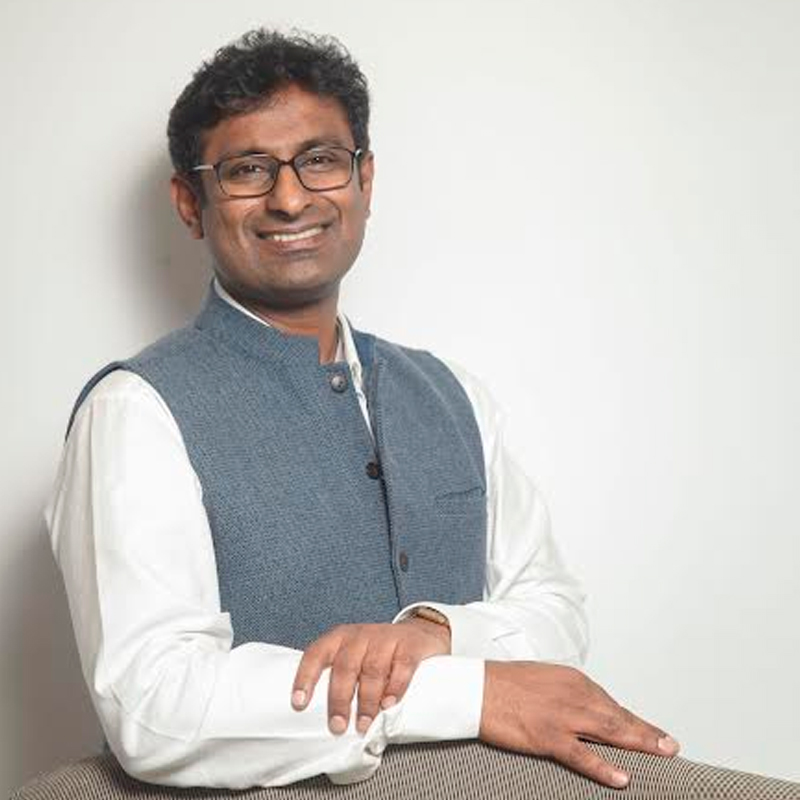
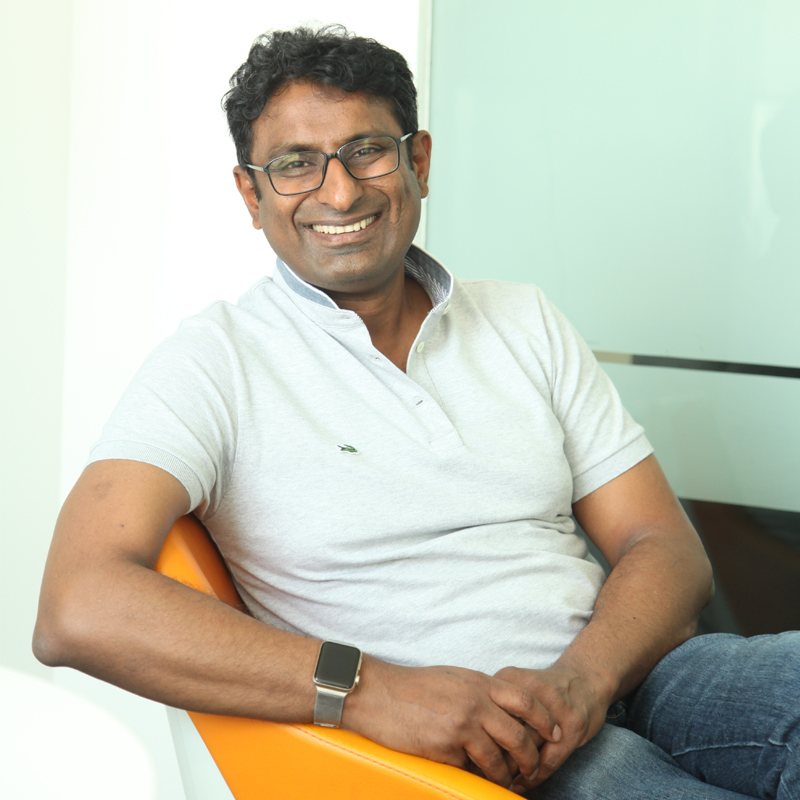
    Mumbai: GroupM India announced on Wednesday that Ashwin Padmanabhan will be promoted to president-investments, trading, and partnerships. Padmanabhan, who earlier led ‘Trading’ and ‘Partnerships’ will now also be taking on the ‘Investments’ portfolio from Sidharth Parashar. Parashar will be joining the APAC Mindshare leadership team as chief investment officer, Mindshare APAC, and will now be based out of Singapore.

    Padmanabhan will continue to report to GroupM South Asia CEO Prasanth Kumar and be based out of the Gurgaon campus. Over the next three months, Parashar and Padmanabhan will work closely to ensure a seamless transition into their respective new roles along with their key leadership team.

    GroupM South Asia CEO Prasanth Kumar said, “Sidharth has had a phenomenal career journey where the organisation has witnessed his evolution from a practise expert to a leader over the last 18 years with GroupM. He has successfully led investment mandates across all media, elevating the practise through innovative products and exceptional value for our clients. I would like to wish him the very best and will continue to work closely with him as he drives the regional investment strategy for Mindshare.”

    “I am also excited to see Ashwin taking over this additional role. He has a deep understanding of the business, and we continue to benefit from his knowledge of the media ecosystem. Focusing on cutting-edge innovation backed by his solid process orientation is a value-add for clients. His ‘start-up’ mindset has helped GroupM venture into new practices, deploying creativity to our products and solutions, keeping client delight at the helm,” he added.

    Parashar will report to Mindshare APAC chief executive officer Helen McRae, and work on enhancing Mindshare’s local market investment strategy and driving thinking on the opportunity of good growth and intentional investment for the region.

    Helen McRae said, “I am very pleased that Sid will be joining our regional team. He brings a tremendous depth of expertise and will be a great champion of good growth for our clients.”

    Sidharth Parashar said, “It has been an amazing journey at GroupM, and I am delighted to now take over this new Mindshare APAC investment role. I look forward to this opportunity in new markets to build value for our client’s business.”

    Ashwin Padmanabhan said, “GroupM has been a fertile ground for innovation and creating value in a highly entrepreneurial environment. This expanded remit motivates me to renew my focus on the GroupM value proposition for our clients, media partners, and technology partners. We want to keep the momentum up with these relentless efforts toward improving today for a better tomorrow.”

  • Brands are allocating nearly 25-30% of their budgets to influencer marketing: GroupM’s Ashwin Padmanabhan

    Brands are allocating nearly 25-30% of their budgets to influencer marketing: GroupM’s Ashwin Padmanabhan

    The advertising & media landscape in the country is evolving every day, especially with the exponential growth of all things digital during the pandemic. According to market research firm Statista, the influencer marketing industry in India- a relatively new-age advertising segment- has grown robustly and is worth Rs 9 billion, as of 2021. It is projected to grow at a compound annual growth rate (CAGR) of 25 per cent over the next five years to reach Rs 22 billion by 2025. There has also been a perceptible paradigm shift from banking on celebrity endorsers to engaging influencers for product placements in recent years.

    On the sidelines of its flagship content summit Brew, IndianTelevision.com had an in-depth conversation with GroupM’s president of partnerships and trading Ashwin Padmanabhan, to find out whether influencer marketing has finally come of age in India.

    Padmanabhan also weighs in on the importance of responsible advertising, while sharing insights on the marketing & advertising strategies brands and OTT platforms are adopting to improve the bottom lines in today’s uncertain inflationary times, with consumers tightening their purses.

    Edited Excerpts:

    On has influencer marketing reached a stage in India where brands are now keeping aside a substantial part of its annual adspend towards it

    Absolutely. If we look at our clients in the GroupM universe, currently, close to 150 odd brands actively use influencer marketing as a strategy to reach their consumers. Importantly, they are using it in more than one area. One is to drive consideration because the nature of influencer marketing is such that influencers create content which their followers are highly engaged with. That’s one of the reasons that influencers are becoming very relevant in a brand’s marketing mix: to drive engagement.

    We are also seeing some brands now moving from driving consideration to engagement to actual action, as the tech infrastructure becomes increasingly better, to enable a call-to-action where the consumer can directly click on a link to buy a service or product. So we are seeing that shift too with brands in a mid-to-lower funnel.

    In fact, during the lockdown, nobody could go out & shoot content or create TVCs, etc. That’s when we started working with a lot of brands as an alternative to traditional television commercials or traditional web commercials, and influencers became very relevant in that environment. But as brands started working with them, they realised that they can start working with influencers on a standalone basis- as an integral part of their marketing strategy, and not just because they can’t do something else. And that’s the shift that has happened in the last two years.

    On how much percentage of a brand’s annual marketing/ ad spends is allocated today to influencer marketing

    The way we look at brands right now we see three buckets of clients: There are brands which have become native to influencer marketing who allocate close to 25-30 per cent of their budgets to influencer marketing. It’s a very integral part of their marketing strategy. D2C brands make up a large mix within this, but we are seeing even FMCG and especially, personal care brands allocating more than 15-20 percent of their budgets on influencer marketing. They may not be in the top four or five, but they are surely in the mid to lower funnel range. These brands have realised that it’s a great way to create ‘Share of Voice’ (SOV). They can’t fight the ‘big boys’ in the media space, especially in the CPG (consumer packaged goods) category, SOV is very critical. And influencer marketing becomes a great tool to drive SOV. And hence these brands are over-indexed in influencer marketing than their peers, which are the larger organisations.

    Loreal- one of our clients- although a big name, in specific categories like personal care and especially in cosmetics range like Maybelline, they are highly over-indexed in influencer marketing. They had an ‘always-on’ influencer marketing strategy throughout the year. And that’s the other shift we are seeing from stand-alone campaigns. It also allows you to have a threshold level of visibility, engagement, and driving action from the consumer through the year- that’s the beauty of influencer marketing.

    Also, there’s the middle bucket of the brands which have become mature, that would have anywhere from 10 to 25 per cent of its ad spend allocation. These are brands which have tried using influencer marketing and continue using it but it’s not part of their ‘always on’ strategy for them. They look at it very tactically, a lot of their influencer marketing is around events that they do. And then the set of influencers they work with amplifies the work they do. So, they use it differently as a strategic mix. But even here we see anywhere from five to ten per cent spending allocation.

    And then there’s still a very large bucket of clients who are curious and they are wondering how to work with influencer marketing. They are trying to gauge and test the waters & see what’s in it for them, and what kind of metrics they can work with. So they have a lot of questions in their mind on how they quantify their investment, how they define ROI in this case, is there some kind of measurement that’s credible. And that is where we come in with INCA. With the tech that we have built, today we can analyse anywhere close to 45,000 influencers in India & have a very detailed understanding of not only what space they create content in. We also have a detailed understanding of their audiences, their demographic, and what part of geography they come from. Stuff like this has not been organised in many years as it’s an evolving space,  which is also why we took out the INCA influencer marketing report- the first edition of which came out last year.

    Our estimate about the industry last year was close to Rs 900 crore, and this is not the money being spent on media or the money being spent on boosting the content being created. This is money being spent specifically and directly on influencers, which is a significant number. And it’s only growing 25-30 per cent YoY.

    And not just data, but also a lot of qualitative research as well that’s going into it, to quantify the ROI or shift that’s happening when we work with an influencer or celebrity influencers. And the more we do it, the more we see brands getting warmed up to it. It’s suddenly moving out of a space they didn’t understand to a space they can make sense of their investment.

    On ASCI stricture of ‘paid sponsorship’ tag affecting the influencer marketing revenue

    Not really because the way we advise our clients to work with influences is not to force the influencer to post your content. The idea is to create content that’s organic to the influencer and has a brand message embedded. As long as brands do that, there’s content for their followers to consume that’s in line with their expectations. The moment you stray from that and you start using the influencer purely as a reach medium then I think we are moving away from the basic principles of influencer marketing. So it’s not really about the guidelines, which are only making it clear that whatever content you are consuming is sponsored by someone. It’s a disclaimer or statement we are making upfront so it’s transparent. That’s a good thing, and as long as the content remains true to what the influencer makes regularly there’s no difference. On the other hand, even without that paid content tag if you stray away from this principle you’ll not get the required reach.

    On how GroupM ensures it stays in the realm of “responsible advertising”

    Creativity doesn’t mean a licence to abuse or licence to harm someone. Creativity is about connecting with people in ways that surprise them positively, not negatively. And for us “responsible investment” is a very huge part of what we do at GroupM. We have something called the Responsible Investment (RI) framework that we started applying to the content that we produce.

    One is the content that we produce with influencers around INCA. Then there is the long-form content we produce in the motion content group, such as web series, films as well as TV shows where we are bringing RI.

    From this perspective we have defined four goals or areas for us: The first is around sustainability, second is DEI (Diversity, equity and inclusion) with a magnifying glass into gender equality. The third is around primary education, because in India about 40 percent of kids drop out of school after fifth grade, and there are a lot of companies which are trying to do something to change this. The fourth is around financial inclusion. So these are the four pillars that we have defined.

    So the question we are asking is how can we bring any of these themes into the shows we are doing. And we believe that if we need to truly make a difference in the world then habits have to change. And I think “content” is the most powerful way to do that. Content creates cultures, passion and habits, even the way we behave with each other. And one of the routes to driving RI is how we create this content. We believe as an organisation we have to be the catalyst for the world to come around these four principles. 

    Creators and platforms are forever chasing a formula that they think works. Today, there’s a conflict in the creative space when it comes to content. Where at one level we are probably becoming more regressive because we have seen that certain regressive content has worked, and everybody wants to do the same kind of thing. On the other side, we see a lot of independent creators who want to create content which makes a positive difference. That’s why we are committed to them and putting our money behind them. These productions are investments done by GroupM, as we believe as such an important player in the media space in India if we don’t do it then we can’t expect others to do it.

    On how Netflix introducing ad-supported plans impacts OTT viewership

    The fact is that there’s some great content being produced today, but the access to that content is limited today because of the sheer investment a subscriber/ audience has to make to watch that content.

    On OTTs, unlike on TV, if somebody wants to watch content across different platforms and different languages, then they need to be in the top one per cent in the country, otherwise, nobody can afford it. So clearly, from an economic perspective while it does make sense for the channels as they will be able to get more viewership. But from the audience’s perspective, it makes the content more democratic. So I think it’s great if more platforms open up to that and understand that.

    On getting brands to achieve cost efficient & strategic ad spends during these times of rising inflation, and the impact on AdEx

    We don’t anticipate it to impact AdEx as much, it’s more about how those spends can stretch longer or do more for me. What it is potentially doing is, forcing organisations to go back to the question of efficiency. So, you start moving towards value communication at such times. But the value in the equation is being driven by questions such as how can we make it reach more people, are there different ways to reach them, and can I engage with them more and drive more actions?

    One big trend I’m seeing is that it’s forcing organisations to look inwards. And ask what are those systems and processes that they can build more efficiency to save cost, so as to reduce impact on the consumer. Be it in the way they are packaging their products, or the way they are distributing them physically. So, they are trying to build more efficiencies into their own processes to be able to cut costs, so they don’t need to pass on the burden of inflationary pressure they are facing onto the consumers.

    The other question is, how do they help the consumer get to their product in different ways which are not necessarily the way in which they have been used to buying the product. So new distribution channels, whether its D2C or e-marketplaces or whether its small kiosks or QSRs that have been set up to create a physical space as well. So there’s a lot of innovation happening at the ‘point of sale’ and how the consumer accesses the product.

    Yes, there is some part of the pressure which gets passed onto the consumer but that’s being done in different ways. Like, probably reducing the size of the product while keeping the price same as before, so it won’t pinch your monthly budget as much. The reality is that outside of the one per cent of the country’s population, these pressures that we are going through mean a lot to everybody else. If you are not sensitive to what consumers are going through, it’s not good business as well. And honestly, we are seeing this sensitivity very clearly across our clients. These are some of the biggest CPGs (consumer packaged goods) that we manage. And CPG is where one feels the pinch the most because these are staple, everyday items which you need to run your home. These organisations are being extremely realistic about the fact that they need to start at home before they start putting pressure on the consumer.
  • When brands think like publishers: CMS Asia 2016

    When brands think like publishers: CMS Asia 2016

    MUMBAI: As more brands are waking up to the perks of content marketing, they increasingly realise the need to think like a content platform or publisher. But, are they doing it right? — was the question raised in the panel discussion at CMS Asia 2016. The panellists were — Autocar’s Hormazd Sorabjee, Mxm’s Pradyuman Maheshwari, Scoopwhoop’s Sattvik Mishra and Reliance Broadcast Network’s Ashwin Padmanabhan. Qyunki’s Sameer Bangara was the dynamic moderator.

    The panellists had a mix response to Bangara’s question – What are brands missing when they try to act as publishers? Maheshwari pointed out that brands often didn’t see the various possibilities that content can provide, being closeted in their traditional mindset. “Rarely do I see branded content that has actually explored the concept more radically. I don’t see why a Lux, backed by HUL’s money and business acumen, can’t have a content wing that does interviews with celebrities?,” he asked.

    Mishra pointed out how brands need to take Ad Blockers and Youtube’s ‘skip ad’ statistics seriously and think deep into why its failing. “That’s why branded content becomes important to engage the consumer. A user doesn’t care if it’s branded or not, as long as the story is entertaining, albeit it needs to be mentioned that it is a branded content. The problem is brands want to do marketing first, and content later,” Mishra frankly stated.

    Sorabjee criticised how brands often are in it for the one-time association, and are quick to seek results. “Content marketing doesn’t work that way, one needs a continuous engagement with the consumer. Long-term association is the key to content marketing, provided the communication is consistent. Brands that are in it for the short spurt may not see much of a difference in their brand uplift.”

    Padmanabhan urged brands to look at different metrics when it comes to content marketing and not go for a single standard measurement. “With the amount of data available today, it is easy to get confused but the CMO needs to identify which of those figures really align with the brand objective. Do views matter, or likes? Or shares? Or, the time spent on engagement…each brand will have different metrics to look at depending on the target they have.

    Seconding Padmanabhan, Mishra added, “We give brands something we call a ‘brand lift’ where, if the brand was spoken about X number of times before engaging in a campaign with us, we show them that, after the campaign, the brand was spoken of 3X times, hypothetically. We have 3rd-party agencies who work on these numbers and internal machinery as well to provide these numbers to the brands.”

    When it came to the measurement of a campaign’s success, Sorabjee differed from the rest of the panellists. “Numbers don’t really matter, I don’t believe in them. In content marketing, brands should, and they do look at the quality of your reader or viewer of a certain publisher. Therefore, the key is to keep your reader as the first priority . A publisher shouldn’t decide on the content based on what the brand wants but what its readers want to consume, and trust me, brands too want to reach that reader,” he said, adding that both, brands and publishers, shouldn’t compromise on content for the sake of metrics and numbers.

  • When brands think like publishers: CMS Asia 2016

    When brands think like publishers: CMS Asia 2016

    MUMBAI: As more brands are waking up to the perks of content marketing, they increasingly realise the need to think like a content platform or publisher. But, are they doing it right? — was the question raised in the panel discussion at CMS Asia 2016. The panellists were — Autocar’s Hormazd Sorabjee, Mxm’s Pradyuman Maheshwari, Scoopwhoop’s Sattvik Mishra and Reliance Broadcast Network’s Ashwin Padmanabhan. Qyunki’s Sameer Bangara was the dynamic moderator.

    The panellists had a mix response to Bangara’s question – What are brands missing when they try to act as publishers? Maheshwari pointed out that brands often didn’t see the various possibilities that content can provide, being closeted in their traditional mindset. “Rarely do I see branded content that has actually explored the concept more radically. I don’t see why a Lux, backed by HUL’s money and business acumen, can’t have a content wing that does interviews with celebrities?,” he asked.

    Mishra pointed out how brands need to take Ad Blockers and Youtube’s ‘skip ad’ statistics seriously and think deep into why its failing. “That’s why branded content becomes important to engage the consumer. A user doesn’t care if it’s branded or not, as long as the story is entertaining, albeit it needs to be mentioned that it is a branded content. The problem is brands want to do marketing first, and content later,” Mishra frankly stated.

    Sorabjee criticised how brands often are in it for the one-time association, and are quick to seek results. “Content marketing doesn’t work that way, one needs a continuous engagement with the consumer. Long-term association is the key to content marketing, provided the communication is consistent. Brands that are in it for the short spurt may not see much of a difference in their brand uplift.”

    Padmanabhan urged brands to look at different metrics when it comes to content marketing and not go for a single standard measurement. “With the amount of data available today, it is easy to get confused but the CMO needs to identify which of those figures really align with the brand objective. Do views matter, or likes? Or shares? Or, the time spent on engagement…each brand will have different metrics to look at depending on the target they have.

    Seconding Padmanabhan, Mishra added, “We give brands something we call a ‘brand lift’ where, if the brand was spoken about X number of times before engaging in a campaign with us, we show them that, after the campaign, the brand was spoken of 3X times, hypothetically. We have 3rd-party agencies who work on these numbers and internal machinery as well to provide these numbers to the brands.”

    When it came to the measurement of a campaign’s success, Sorabjee differed from the rest of the panellists. “Numbers don’t really matter, I don’t believe in them. In content marketing, brands should, and they do look at the quality of your reader or viewer of a certain publisher. Therefore, the key is to keep your reader as the first priority . A publisher shouldn’t decide on the content based on what the brand wants but what its readers want to consume, and trust me, brands too want to reach that reader,” he said, adding that both, brands and publishers, shouldn’t compromise on content for the sake of metrics and numbers.

  • AIDEM co-founder Vikas Khanchandani joins RBNL

    AIDEM co-founder Vikas Khanchandani joins RBNL

    MUMBAI: Reliance Broadcast Network Limited (RBNL) has appointed Vikas Khanchandani as chief business officer.

    With over 20 years of experience working across digital, television, ad and media technology, Khanchandani will be responsible for driving strategic business initiatives – new technologies and customer engagement. He will be reporting to RBNL COO Ashwin Padmanabhan.

    On the development, Padmanabhan said, “We are happy to have Vikas on board who comes with a wealth of experience and domain expertise. With his extensive knowledge across the television and digital medium, we are confident that he will be able to further accelerate the growth story of the group.”

    Prior joining to RBNL, Khanchandani was the co-founder of AIDEM Ventures where he played the dual role of managing existing businesses of AIDEM even while he was aggressively driving the growth agenda of building a unique and valuable media sales and services company.

    He was also the part of the core leadership team which set up NDTV Media. Under his leadership, the channel witnessed phenomenal growth, creating a benchmark within the news genre and leading the category. He started his media career with Star India as a key member of the strategic planning and management team which worked on sales strategies for the Network’s channels.

  • AIDEM co-founder Vikas Khanchandani joins RBNL

    AIDEM co-founder Vikas Khanchandani joins RBNL

    MUMBAI: Reliance Broadcast Network Limited (RBNL) has appointed Vikas Khanchandani as chief business officer.

    With over 20 years of experience working across digital, television, ad and media technology, Khanchandani will be responsible for driving strategic business initiatives – new technologies and customer engagement. He will be reporting to RBNL COO Ashwin Padmanabhan.

    On the development, Padmanabhan said, “We are happy to have Vikas on board who comes with a wealth of experience and domain expertise. With his extensive knowledge across the television and digital medium, we are confident that he will be able to further accelerate the growth story of the group.”

    Prior joining to RBNL, Khanchandani was the co-founder of AIDEM Ventures where he played the dual role of managing existing businesses of AIDEM even while he was aggressively driving the growth agenda of building a unique and valuable media sales and services company.

    He was also the part of the core leadership team which set up NDTV Media. Under his leadership, the channel witnessed phenomenal growth, creating a benchmark within the news genre and leading the category. He started his media career with Star India as a key member of the strategic planning and management team which worked on sales strategies for the Network’s channels.

  • RBNL rebrands Big Magic Ganga as Big Ganga

    RBNL rebrands Big Magic Ganga as Big Ganga

    MUMBAI: Reliance Broadcast Network Limited (RBNL) has received approval from the Ministry of Information and Broadcasting (MIB) to rebrand its Bhojpuri channel Big Magic Ganga as Big Ganga.


    The network had earlier reached out to the Ministry to allow it to change the channel’s logo and name.


    The Big Ganga channel will sport a new logo and the change has primarily been brought about to create a distinction between its two channels – Big Magic and Big Magic Ganga.


    Speaking to Indiantelevision.com, RBNL COO Ashwin Padmanabhan said, “This change will not change the ethos of Ganga. We will continue to explore new opportunities and create new shows to give brands a bigger platform to garner more eye-balls.”


    The network received the approval in 31 December, and the new look will be unveiled from today (6 January).

  • One week in DD Freedish takes Big Magic Ganga to number two from five

    One week in DD Freedish takes Big Magic Ganga to number two from five

    MUMBAI: Television audience ratings measurement body Broadcast Audience Research Council (BARC) India after the roll-out of its rural data has changed the entire dynamics of television viewership. BARC India’s rural roll-out resonated Bob Dylan’s famous lines in every ear as an alarm. Don’t speak too soon, for the wheel’s still in spin. And there’s no tellin’ who That it’s namin’. For the loser now Will be later to win, For the times they are a-changin. The rural data certainly gave all the followers wings of fire which got them right over the leaders who probably never thought of trailing.


    But once that has happened, it was time for the erstwhile leaders to act and act fast before too much damage was done. Big Magic Ganga, the Bhojpuri channel from Anil Dhirubhai Ambani’s broadcast conglomerate Reliance Broadcast Network Limited (RBNL) had been leading the urban tally with over 45 per cent of the viewership share since BARC’s inception. Week 41 ratings of BARC India which had the rural data included in it saw the channel sliding down to the fifth position with a humongous difference when compared to the leaders.


    The top brass then got together to work out a strategy and the permutations and combinations lead them to the best friend of rural India – DD Freedish. DD Freedish is Doordarshan’s direct-to-home innovation which enables one to watch content for free. There is only a one time charge that one needs to bear and after that it’s free for life.


    “In the urban market we were undisputed number one. But after BARC started to roll out its rural data we lost our position. 85 per cent of the total viewers in Bihar and Jharkhand are DD Freedish subscribers, hence we decided to have a presence on the platform” says RBNL COO Ashwin Padmanabhan  


    The decision did not take much time turn the tables, as with a rating of 38455 (000s Sum) the channel leapfrogged to second position, below Bhojpuri Cinema which garnered 41361 (000s Sum) in week 45. “We are happy to see the surge and it has been just a week. The others on the list were there on DD Freedish since a very long time” explains Padmanabhan.


    Big Magic Ganga has 5 to 6 hours of original content curated keeping the local sentiments in mind. The programming is also a strong weapon for the channel says Padmanabhan. Elucidating further he says, “From the beginning we have believed that content is what drives the channel to success. We invested on setting up a local team which works extensively to create relevant content. Recently we did a special programme on Chatt and it emerged as one of the top 5 shows in the genre. We will continue to explore and create original content which the viewers will cherish.”


    Phase III of digitisation has a deadline of 31 December. Padmanabhan feels that the mandatory shifting to DAS might see a huge number of consumers shifting to DD Freedish. “Buying a set-top box itself is an expensive proposition and after that the cost per house will also go up. Why will people pay more while they can watch content for free on DD Freedish. Having said so, digitization will help us grow the subscription revenue so it’s good for broadcasters” says Padmanabhan.


    There is no subscription revenue that comes out of DD Freedish, since it is a free platform. In markets like Bihar and Jharkhand a channel like Big Magic Ganga does not rely on subscription revenue at this stage informs Padmanabhan. The COO says, “Advertisement is directly proportional to viewership and quality of content. Our advertisers are happy to associate with us as they know the content we create is relevant to viewers and hence it provides them the platform to garner eyeballs.”


    FMCG leads the tally while is comes to category of advertisers closely followed by automobile companies. Two wheelers and affordable cars are seen frequently during breaks. Local advertisers which want to target that particular audience are also seen frequently between breaks.


    A media planner on condition of anonymity says, “The ad rates for a 10 second slot in a channel like Big Magic Ganga used to be close to Rs 1000. But after the rural roll-out now it would be somewhere between Rs 2000-3000. Post January we might see a further inclination to the ad rates depending on how the broadcasters plan out their strategy.”


    Creating content is not enough to reach out to a huge number. Every initiative needs to be backed by aggressive marketing says Padmanabhan. He further adds, “We believe in marketing each and every product independently. If a particular product needs an aggressive on-ground push, we opt for on-ground marketing initiatives. Depending on the product, we curate our marketing strategy. Radio, print, outdoor, cross network promotions are the mediums that we normally use.”


    The COO wants to see the channel an undisputed leader not only in terms of viewership but also content and revenue. “170 – 180 GRP is what I am eying at in terms of viewership while a 200 to 300 per cent surge in the ad rates is my target in terms of ad-revenue growth. I am confident that by January once the new rating phenomenon settles down we will meet the target” Padmanabhan concludes.

  • Big Magic Ganga kicks-off ‘Big Memsaab’ with extensive marketing

    Big Magic Ganga kicks-off ‘Big Memsaab’ with extensive marketing

    NEW DELHI: The reality show Big Memsaab, aimed at exploring the hidden talent of women in Bihar and Jharkhand, has commenced its sixth season on Big Magic Ganga with extensive marketing.


    The show is telecast every weekend from 8 – 9 pm. Apart from 92.7 Big FM and Big Magic, the activity will be promoted across through on-ground activation, OOH, print, digital and cinema. Brands that have associated with Big Memsaab season 6 are Xpert, Horlicks, Parle Top Spin, Mohini Tea, Catch Salt and Spices, Dabur, Senco, Vasmol and 92.7 Big FM, amongst others.


    The show has celebrities Madhu Sharma and Rashmi Desai as judges, whereas Vinay Anand is the host.


    The trio were part of a gala opening ceremony in Noida, where the sixth season is currently being shot for Big Magic Ganga.


    Parle Products general manager – marketing Pravin Kulkarni said, “Big Memsaab is a fantastic property to hone the talents of housewives and we are extremely proud to be associated with it. Big Magic Ganga has been doing commendable work in the region and Parle Top Spin is the perfect fit for an activity such as this, which helps the brand to reach the deepest pockets in the region.”


    Reliance Broadcast Network COO Ashwin Padmanabhan added, “After receiving an enormous response for our last five seasons, we have come up with a brand new season of the show. Being the No1 regional channel of the heartland, we only strive to provide original content, which is entertaining and can engage maximum viewers. To make this platform available for maximum number of housewives we are reaching the deep pockets of the market through multiple touch points.”


    Big Magic Ganga senior vice president for TV programming Partha Dey said, “There is no such platform for housewives where they can showcase their creative side. To hone that talent, we are providing a platform so that the nation can recognise and appreciate it. Big Memsaab has been a successful show with five great seasons and we are sure season six will be a huge hit as well.”


    Auditions for Big Memsaab season 6 saw the highest turnout in the region. They were held in 12 key markets, which started in Kolkata and followed with Kanpur, Allahabad, Jamshedpur, Ranchi, Varanasi, Dhanbad, Gorakhpur, Bhagalpur, Patna, Muzzafarpur and Darbhanga. Following the auditions, 35 contestants were shortlisted for the finals, who will now compete for the title of Big Memsaab season 6.

  • Big Magic targets young adults with two new shows

    Big Magic targets young adults with two new shows

    MUMBAI: With an aim to provide humour and unpredictable content that appeals to the urban audience, Big Magic is coming up with two new male centric shows targeting young adults within the age group of 15 – 30. The first show is called Boyz, which recently went on air, whereas the other show  Pyar Marriage Shhhh (PMS) will begin airing from 7 September.


    Reliance Broadcast Network COO Ashwin Padmanabhan said, “We have successfully created a position of our channel in the comedy space. Our new programming content is based in an urban kind of setting.”


    What’s more, Big Magic is also planning to launch another three to four shows and short formats in the coming months. “We are working on a talk show format, which is likely to launch in the next three months. We are also getting multiple short formats like Chutki and Shopkeeper, which has become very big already. We have introduced another short format called Mania Ki Dunia. The short-format YouTube content, which already has 20 million views, will also be put on radio, television and online. As we started building comedy as a genre, our effort is to create relevance of this genre across multiple platforms,” he added.


    Elaborating the story of new shows, Padmanabhan said, “The theme of Boyz is about three college friends and their crazy experiences of coming out of their comfort zone and discovering life. So it’s a typical college story but like every other boy, they carry the fantasy of not just the perfect job but also the girl of their dreams. Each character is sketched extremely sharply and differently. The show will fill in the gap of urban TV viewing male audience with an edginess that has hitherto been unavailable on television.”


    The theme of Boyz captures the target audience who are in a similar phase and hence the youth can relate to it. “This high octane comedy is another innovation in Big Magic’s attempt at strengthening its new positioning in providing edgy and contemporary content,” Padmanabhan added.


    Speaking about Pyar Marriage Sshh, Padmanabhan said, “The show has a very interesting plot about three friends and revolves around the crazy things that happens to them. These guys are neighbours who come together and become friends. Every episode shows something new happening in their life.”


    Being the only channel that focuses solely on the comedy genre, Big Magic has a clear cut vision to make young India laugh out loud and the programming strategy is based around the same philosophy.


    The channel will now also venture into the episodic format. Speaking on the same, Padmanabhan informed, “The story starts and ends with the episodes. It’s just like F.R.I.E.N.D.S wherein every episode is new and different in its own way. A story will not carry forward into the next episode. It’s the kind of content that works with the current generation.”


    Following the international format, Boyz will have multiple seasons and each season will have a run period of six months. Following the format, Big Magic has already re-launched Hazir Jawab Birbal, which was earlier named as Akbar Birbal.


    Addressing the need gap for male centric entertainment shows, Big Magic took the humour approach to attract its TG. Padmanabhan added, “There’s not much good content available for men on television and that’s why men tend to consume more news or sports. Humour has a wide appeal so, if we present a story from a man’s perspective, the kind of humour gets integrated across the audience.”


    Big Magic will be promoting the shows across platform. “Digital is a very key component of marketing strategy. Apart from that, we are also using television channels that are targeting young adults like MTV and Bindass as well as news channels. Along with promotions, we are also doing a whole lot of integration. Funny portions of the content is cut and tweaked for radio. RJs from our networks as well as partner networks are supporting this campaign. In radio, apart from the in-house Big FM, we have also roped in Fever 104 and Red FM as partners,” he informed.


    The marketing initiative will cut across major cities like Ahmedabad, Pune, Chandigarh, Delhi, Mumbai, Kanpur, Lucknow, Baroda and Surat.


    The campaign has been developed by Grey Worldwide, whereas MEC is the media buying agency. The digital campaigns are being handled by Resultrix Media.


    Throwing light on the research that was done before launching the shows, Padmanabhan said, “From the show perspective, we do a pilot testing, which has been done across some centres in Mumbai, Delhi and other metro cities. On the basis of that, we received good feedback. We are not only testing the shows but are also testing the promos online.”


    There was a pre-launch campaign rolled out for Boyz where people were asked to give their feedback on the promos that were uploaded on YouTube.