Tag: Ashutosh Gowariker

  • 15 Films to Compete for Golden Peacock at IFFI 2024

    15 Films to Compete for Golden Peacock at IFFI 2024

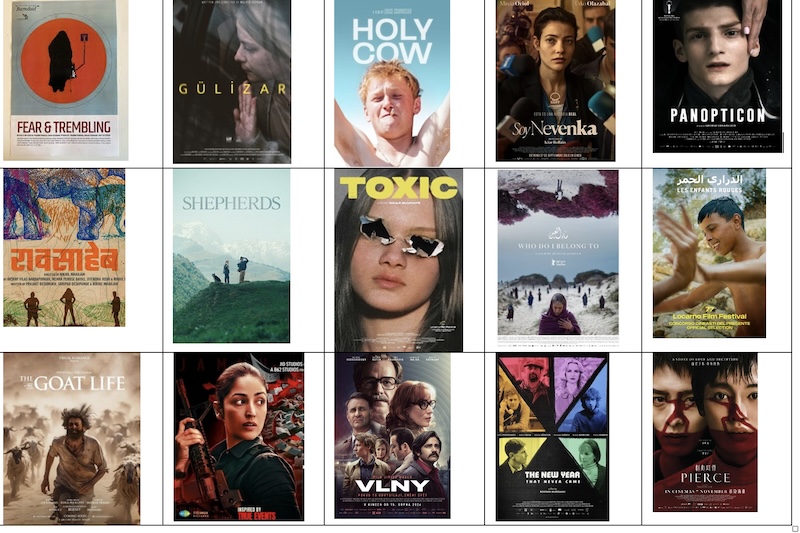
    MUMBAI: Fifteen films, showcasing powerful storytelling from around the globe, are set to compete for the coveted Golden Peacock at the Fifty fifth International Film Festival 2024 to be held in Goa next week.  This year’s line-up features a mix of 12 international and three Indian films, each selected for its unique perspective, voice and artistry.

    Presenting the best of global and Indian cinema, each of these films offers a unique take on human values, culture and the art of storytelling.

    The  Golden Peacock Jury is  led this year by Indian filmmaker Ashutosh Gowariker and includes award-winning Singaporean director Anthony Chen, British-American producer Elizabeth Karlsen, Spanish producer Fran Borgia, and legendary Australian Film editor Jill Bilcock. Together, the jury will adjudicate winners in categories including best film, best director, best actor (male), best actor (female) and the special jury prize. The winning film will take home a prize of Rs 40 lakh along with one of the festival’s top honours.

    Here’s a glimpse of the remarkable nominations:
     
    1. Fear & Trembling (Iran)

    Two of Iran’s most respected women filmmakers, Manijeh Hekmat and Faeze Azizkhani, present a poignant tale about Manzar, an older woman grappling with fear and loneliness in a rapidly changing world in their film Fear and Trembling.
    This Iranian film is a world premiere in this year’s IFFI. It reflects on personal transformation amid societal shifts and depicts the challenges faced by women in the modern-day Iran. 
     
    2. Gulizar (Turkey)

    In her debut feature, Turkish writer-director Belkis Bayrak delves into the life of Gulizar, a young woman battling trauma and the societal expectations in her quest for independence. 
    Garnering attention across the festival circuit, the film has already premiered at the Toronto International Film Festival 2024 as well as the San Sebastián International Film Festival, 2024. 
     
    3. Holy Cow (France)

    French filmmaker Louise Courvoisier’s debut feature Holy Cow is a delightful coming-of-age comedy-drama that follows 18-year-old Totone, whose carefree life is turned upside down as he takes on responsibility for his younger sister. The film won the prestigious youth award in the  Cannes Film Festival, 2024.

    This charming film set in the mountainous region of the Juca in the western French Alps, portrays the turbulence of growing up and the responsibilities of adulthood faced by the main protagonist. 
     
    4. I am Nevenka (Spain)

    I Am Nevenka by Goya Award-winning director Iciar Bollaín is a bold story of a woman fighting society’s injustice in her own way. The film won the Euskadi Basque Country 2030 Agenda Award, at the San Sebastian International Film Festival held in 2024. 
    The film dramatizes the case of Nevenka Fernández, a member of the Ponferrada City Council, who in 2001 became the first woman in Spain to win a court case on sexual harassment against a high-ranking politician. 
    Inspired by true events, it chronicles the fight for justice and explores the larger societal and cultural implications of harassment and gender equality in Spain. 
     
    5. Panopticon (Georgia-USA)

    In Panopticon, Georgian-American director George Sikharulidze’s gripping debut feature, a young Georgian teen confronts questions of identity, morality, and self as he navigates his life. The film won the Ecumenical Jury – Special Mention, at Karlovy Vary 2024. 
    A poignant coming-of-age story, the film examines the challenges of growing up in a contemporary post-Soviet Georgian society. 
     
    6. Pierce (Singapore)

    Former national fencer and rising filmmaker of Singapore, Nelicia Low’s Pierce received the best director award at Karlovy Vary International Festival this year.
    A psychological thriller, the film delves into the complexities of family and sibling rivalry. Set in the high-stakes world of competitive fencing, the film follows two brothers as they struggle to balance their ambition. 
     
    7. Red Path (Tunisia)

    Prolific Tunisian theatre and cinema director and producer Lotfi Achour’s latest feature Red Path tells the story of Achraf, a young shepherd, as he navigates trauma, tradition, and personal loss in a hauntingly beautiful landscape. The film premiered at the prestigious Locarno International Film Festival in 2024. 
     
    8. Shepherds (Canada-France)

    One of the leading figures of the new Quebec cinema, Sophie Deraspea’s Shepherds is a visually stunning film on self-reinvention and the harsh realities of rural life.
    The film is her latest feature which won the Best Canadian Feature Film Award in the Toronto International Film Festival, 2024. 
    The film follows a Canadian copywriter who, seeking solace and a fresh start, moves to the French Alps to live life as a shepherd. But as he confronts the isolation and hardship of his new life, he must grapple with his past. Deraspe’s masterful direction compels the viewers to explore the ideas of human resilience and strength of character. 
     
    9. The New Year That Never Came (Romania)

    Award-winning Romanian writer and director Bogdan Mure?anu’s The New Year That Never Came takes viewers through the lives of six individuals during Romania’s 1989 revolution. The film won the Orizzonti Award for Best Film, and Special Mention: Authors Under 40 Award in the Venice International Film Festival, 2024. 
    A historical drama with a deeply personal story, Muresanu’s film weaves together political upheaval and human stories of resistance, loss and hope.  
     
    10. Toxic (Lithuania)

    In her debut feature film, Lithuanian filmmaker and screenwriter Saule Bliuvaite delivers a raw and haunting coming-of-age story of friendship amidst toxicity.  
    Toxic explores the complexities of adolescence, friendship, and self-destruction, as the filmmaker delves into the darker side of youth, winning critical acclaim for its portrayal of emotional turmoil and the pressures of growing up.

    The film won the Golden Leopard, Swatch First Feature Award, and Ecumenical Jury Prize at the 77th Locarno International Film Festival, 2024.
     
    11. Waves (Czech Republic)

    Czech actor, scriptwriter and director Jiri Madl’s Waves is his third feature film, and has been selected as the Czech Republic’s official entry for best international feature film at the ninety seventh Academy Awards.
    The film is a powerful historical drama set during the 1968 Soviet invasion of Czechoslovakia. The film revolves around a group of journalists risking everything to report the truth as their country’s freedom is in danger. 
     
    12. Who Do I Belong To (Tunisia-Canada)

    Who Do I Belong To, is noted Tunisian-Canadian filmmaker Meryam Joobeur’s debut feature. This is a high-octane yet poignant drama about a broken family. The film tells the story of a Tunisian woman, who is caught between her maternal love and her search for the truth when her son returns home from war and unleashes a darkness throughout their village. 
    The film premiered at the Berlin International Film Festival 2024. The film weaves a complex narrative of maternal love and personal sacrifice. Joobeur’s work has already garnered praise for its emotional depth and strong performances. 
     
    13. The Goat Life (India)

    In The Goat Life, national award-winning Malayalam film director Blessy tells the true story of an Indian migrant worker struggling to survive in the harsh desert of Saudi Arabia. 
    The film is an adaptation of the  best-selling Malayalam novel Aadujeevitham by the author, Benyamin, which is based on the real-life story of Najeeb, a Malayali immigrant labourer in the gulf.
    This gripping drama explores the themes of migration, survival and the human spirit amidst the adversities of life.
     
    14. Article 370 (India)

    Article 370, directed by the national award-winning filmmaker Aditya Suhas Jambhale, is a tense political thriller set against the backdrop of India’s tumultuous constitutional changes.  
    The story delves deep into the intricacies of Article 370, which granted special autonomy to Jammu and Kashmir. The film masterfully portrays the socio-political landscape of the region. The director expertly weaves a narrative of struggles of power and personal sacrifice in the film. 
     
    15. Raavsaheb (India)

    Raavsaheb is a much-anticipated Marathi crime thriller film directed by national award-winning filmmaker Nikhil Mahajan. This film is a world premiere in this year’s IFFI. Nikhil Mahajan’s crime thriller centres on the man-animal conflict in tribal lands and a quest for justice. The film is a gripping tale set in the tribal lands of India.

  • Jio Studios & producer Mahaveer Jain launch Newcomers to encourage new talent

    Jio Studios & producer Mahaveer Jain launch Newcomers to encourage new talent

    Mumbai: At Ficci Frames Fast Track 2022, Jio Studios along with producer Mahaveer Jain, launched an initiative, Newcomers.

    A consortium of 23 leading Indian filmmakers like Rajkumar Hirani, Rohit Shetty, Sukumar, Ashutosh Gowariker, Kabir Khan, Imtiaz Ali, Gauri Shinde and R. Balki, Aanand L Rai, Anees Bazmee, A.R.Murugadoss, Ashwiny Iyer Tiwari and Nitish Tiwari, Ram Madhvani, Ali Abbas Zafar, Siddharth Anand, Raj & DK, Abhishek Sharma, Mrighdeep Singh Lamba, Amit Sharma, Jagan Shakti, Vishnuvardhan has been formed. They will mentor and launch new talent.

    On Twitter Jio Studios said, “A special announcement today at @FICCIFRAMES 22!

    23 Leading Filmmakers of the Country have come together to Mentor & Launch New Talent under a unique initiative called #Newcomers.”


    “It’s our humble attempt to give back to the industry, by providing a platform to new actors, writers, directors, music talent and a wide range of technicians in this landscape. Together, we will work to build our tomorrow,” said Mahaveer. He conceived this idea along with Ficci media and entertainment committee chairperson & Viacom 18 CEO Jyoti Deshpande.

  • Netflix acquires first Indian documentary

    Netflix acquires first Indian documentary

    MUMBAI: Over the top (OTT) service provider, Netflix, made a big bang launch across the world and in India on 7 January, has picked up its first documentary film from India.

    Titled What’s Love Got To Do With It?, the documentary is directed by Rohena Gera.

    The film is available on its Indian site as well as in four other territories including US, Canada, UK, Australia and New Zealand.

    What’s Love Got To Do With It? is a fun, moving documentary, which explores why urban individuals often choose arranged marriages over love.

    On seeing the film, filmmaker Ashutosh Gowariker said, “What’s Love Got To Do With It? is the first fun documentary that I’ve seen. It addresses our national preoccupation of arranged marriages with humour. It’s not only funny, but also insightful, while being entertaining, and hence I like to call it… a FunDoc!”

    Gera added, “I am delighted and honoured that Netflix has chosen What’s Love Got To Do With It? I feel that this signifies the democratisation of cinema in many ways. If a tiny-budget film like mine can be on a platform side by side with big Bollywood films, independent gems and grand classics I feel there is a lot to look forward to for filmmakers and audiences alike!”

  • Hit at the box office, flop on TV

    Hit at the box office, flop on TV

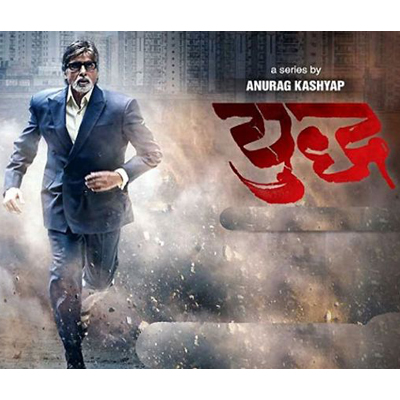
    From Anurag Kashyap’s Yudh for Sony Entertainment Television (SET), Ashutosh Gowariker’s Everest on Star Plus, Vipul Amrutlal Shah with Pukaar – Call For The Hero on Life OK, Anil Kapoor’s 24 to Sanjay Leela Bhansali’s Saraswatichandra on Star Plus, the small screen has always welcomed big filmmakers with open arms. However, it is a different story that not many of them have been able to make a mark on television.

    Despite having deep pockets, the crowned kings of weekend box office, somehow fail to rule weekdays on television. Moreover, these were not your “typical Indian daily soaps.” With oodles of star power and mammoth production budgets, these shows took programming on Indian television to a different level.

    Producers are now pumping in more money in daily soaps, be it for grander sets, better special effects or skilled writers and directors. For instance, each of these episodes costs upwards of Rs 1.25 crore as compared to the normal budget of Rs 6-8 lakh for 30 minutes of fiction.

    Moreover, these handful of shows are attempting to push the fiction envelope in the Rs 43,000-crore Indian television industry today.

    Unfortunately, the production cost incurred by these shows fails to justify the visibility the shows garner.

    Let’s start with Yudh. This was one of the most talked-about shows of 2014 with Bollywood megastar Amitabh Bachchan making his television fiction debut on Sony. The show ran for four weeks, with five episodes a week. The estimated cost of the show, per episode, was around Rs 3 crore. While the channel promoted the property extensively, the buzz hit the rocks when it clocked an average of 1,199 TVTs in its opening week. The industry termed it as ‘dark’ content for the 10 pm slot on Indian television. 

    Similarly, Bhansali’s Saraswatichandra spent close to Rs 12 lakh per episode, little higher than what a fiction daily soap would spend. Though it started on a good note with 5,730 TVTs, it later lost track and the numbers fell drastically.

     After Bhansali, Star Plus brought Bollywood filmmaker Gowariker back to the small screen with Everest. Touted as one of the most expensive fiction shows, it was shot at locations like Nepal, Uttarakhand and the Dokriani glacier. With technical equipments like GoPro cameras, 4K technology etc, the production cost per episode was around Rs 35 lakh. The channel had pinned high hopes on the show but it failed to generate ratings as expected. It registered 2,845 TVTs in its opening week.

    Another show with a different perspective titled Pukaar had men as the main protagonists. Based on a story with an army background, it saw filmmaker Vipul Shah making his debut on television. Close to Rs 13 lakh had been spent per episode on production. Needless to say that Pukaar failed to call in the audience.

    While more often than not they’re armed with a magic formula for success on the big screen, why do these filmmakers’ high-budget television stint fail to bring in viewers?

    Indiantelevision.com spoke to industry experts to know whether Bollywood biggies have simply lost their way or have audiences grown tired of their particular brand of filmmaking?

    Media planners feel that no matter how much money a maker puts in, if the content doesn’t reflect the taste and preferences of Indian viewers, the show is bound to flop.

    Helios Media managing director Divya Radhakrishnan opines that television and movies are very different mediums. “In a movie, you get two hours to tell your story and a maker knows how to build it section by section. Television is 22 minutes in and out. How you can link the 22 minutes and have a 24-hour gap before you come up with next 22 minutes is important. So, there is a different knack of doing television, which is very different from movies,” she says.

    Similarly, Radhakrishnan believes that television makers can’t do movies. “Look at the mindset, for instance, from a hijack sequence in Diya Aur Baati Hum to a wedding scene in Yeh Rishta Kya Kehlata Hai, a viewer’s mindset is changing constantly. Assuming that a person is watching Star Plus end-to-end, this is the kind of graph that goes on television. However when you are watching a movie, a viewer, right from the first minute to the end of the three hours, is fully in tune with the character. Movie format is very different from that of television.”

    Another observer feels that film producers are so oriented towards movie making that they have to re-orient themselves for television, which is very difficult for someone of creative caliber like Gowariker, Bhansali etc.

    “It’s not about a show doing well or not doing well, but when BARC rollout happens, the benchmarks are going to change. The mindset of a Baalika Vadhu viewer will be different from that of a Yudh viewer,” adds Radhakrishnan.

    Concurring with Radhakrishnan, a media analyst feels that the grammar of storytelling on television is different from films. “On the big screen, filmmakers have support of huge stars, which is one reason for the film doing well. On TV, big filmmakers will definitely have the money to pump in but no big stars, which can back them up with the content they deliver. Shooting at exotic locations and increasing production cost are not necessarily recipes of good content.”

    Argue that Yudh failed to make an impact on viewers despite having probably the biggest star there ever has been in Bachchan and the burden of failure immediately falls on the frail shoulders of content, which invariably is king.

    Another point to factor in here is the crew that works on the production. A media analyst feels that by getting the crew that works on films will not necessarily work on television. “The way creative people think for movies and television is way different. You can’t get the same set of film people to write or direct for television,” the analyst opined.

    From a purely demand and supply point of view, mainstream watchers do not look for intellectual content after a day full of hardship. “They just want entertainment, which Yudh failed to deliver,” opines a top executive of a production house. “After full day of work, who would want to watch ‘dark’ content? What one needs is good content, which can de-stress the mind.”

    Another observer believes that in the US, TV series form a substantial market for various studios, and it is taken quite seriously by all participants like studio, writers, producers, director, actors and the audience. “In India, the television industry is yet to achieve that status. For this to happen, the content and formats on Indian television needs to witness a sea change.”

    While one has caught a glimpse of this change wherein big-budget shows like 24, Bigg Boss, Satyamev Jayate and Mahabharat have worked, the fact remains that such shows are far and few. A media planner says, “Why is it that these high-budget shows worked on television? It is because the content directly clicked with the audiences as the makers understood what the audience of today wants.”

    Offering a different take, a Hindi general entertainment channel (GEC) executive says, “The target audience for most Indian TV shows is households that don’t prefer watching anything sophisticated but only the typical serials. For many years, saas-bahu serials, in which Ekta Kapoor thrived, ruled the roost. Over the years, many other themes opened up like dance, music competitions, historical serials etc. However, in all these the inherent style remains the same, just the setting changes.”

    How important is time slot for the success or failure of shows? To this, Radhakrishnan says, “People chase good content. For instance, last year Colors filled up the 9-10 pm slot with two shows Beintehaa and Rangrasiya, which did average in numbers and less in viewership. Why didn’t these shows work in the primetime slot? However, now the channel airs Ashoka Samrat in the same time slot. The show has a very strong base and so it’s doing well. At the end of the day, it’s all about having good content.”

    A trait that people lack today is patience. Radhakrishnan argues that people are not patient nowadays and will go wherever they find content that appeals to them. It boils down to the game of content and the appeal it brings to the table. “Otherwise Saath Nibhana Saathiya at 6.30 pm and Yeh Hai Mohabattein at 11 pm wouldn’t be the top rated programmes in the genre. Similarly, Diya Aur Baati Hum for a very long time was the top rated show on the TAM TV ratings chart. However, the last four weeks had a different story to tell when the numbers dropped drastically with the show losing its numero uno position. Thus, to get the audiences back, the show took a generation leap to bring it back on track. In the interim, KumKum Bhagya of Zee has become number one.”

    High production budget and big names don’t necessarily result in getting the eyeballs. So while Karan Johar may produce a show tomorrow starring Shah Rukh Khan and Katrina Kaif, if the content is not strong enough, be rest assured that the viewer is not going to lap it up.

  • UTV Disney to release Hrithik Roshan’s Mohenjo Daro in August 2016

    UTV Disney to release Hrithik Roshan’s Mohenjo Daro in August 2016

    MUMBAI: UTV Disney will release the Hrithik Roshan starrer Mohenjo Daro on 12 August, 2016.

    The movie, which is directed by Ashutosh Gowariker, will also be the debut vehicle of Pooja Hegde, who has been cast opposite Roshan. 

    Mohenjo Daro is produced by UTV Disney in association with AGPPL.

    The movie will get the advantage of the Independence Day long weekend, which is likely to give a fillip to its box office collections.


  • Will ‘Everest’ be able to climb the peak?

    Will ‘Everest’ be able to climb the peak?

    MUMBAI: It all began nearly two years ago, when the numero uno channel Star Plus started brainstorming to develop a content which can break the clutter and should help in taking television to the next level.

    To do so, it joined hands with one of the finest filmmakers – Ashutosh Gowariker to produce a series set against an extraordinary background of the magnificent Mount Everest.

    Produced under Ashutosh Gowariker Productions Private Limited (AGPPL) banner, the show – ‘Everest’ is in line with the GEC’s strategy of offering innovative and differentiated content. It has been conceptualised, shot and presented on a scale never seen before on TV.

    The channel re-defined television when it brought a talk show that spoke about social issues in Satyamev Jayate (SMJ) in 2012, and 2013 saw its mythological series Mahabharat. According to Star Plus general manager Gaurav Banerjee, ‘Everest’ is the next step.

    With the first episode telecast on 3 November, indiantelevision.com spoke to people from the industry to know their views on the concept of the show and whether it will re-define television the way shows like SMJ and Mahabharat did in their respective genres.

    According to Havas Media managing director Mohit Joshi believes that Star has taken the right step by going youth with shows like Airlines and now Everest. For Joshi everyone wants to cater to the youth today and traditional housewives’ viewership is not going to be something on which it can sustain for coming years.

    “With the new age viewers being the way they are, I think it is very important to engage with them in multiple test parts and that is what Star is doing through the show. Audiences today are looking for content, doesn’t matter if Star is delivering it or MTV.  With mobile phones in their hands, it only takes a minute for them to switch between devices. So if you give them promising content to watch, you are the king.”

    Agreeing with Joshi, Maxus managing partner north and east region Navin Khemka believes that right from the production quality to the look and the feel, the show seems extremely well done. He further goes on to say that as more and more such programmes launch, the ratings increase, acceptability increases and the channels will be left with no choice but to increase the production quality level and engagement level with the viewers.

    Penned for about 110 episodes, almost 90 per cent of the shoot was canned before the telecast of the show in locations like Mount Everest, Jodhpur, NIM and Mumbai. It has also used a lot of heavy technical equipments like GoPro cameras, 4K technology and a lot more.

    Joshi feels the concept is enterprising and coming from the AG portfolio with big names, it will be able to garner decent amount of visibility. However, he further reasons that overall the viewership has gone for a toss. “The overall fragmentation has led to a lot of drop as far as viewership is concerned which is why all the shows are not performing at the level they used to perform a couple of years ago,” he says.

    He cites an example of SMJ and says that nowadays numbers are not important, but content and the traction from social media buzz plays a major role. “Like for SMJ, more than the numbers it was social media buzz that showed that the program was a hit.” Joshi feels the way SMJ is activating all the social media platforms on television, the channel has done for Everest as well. At present, on Facebook, SMJ has six million likes and Everest has more than 2,000 likes.

    Khemka states that Star has always been a leader in terms of content they provide to the viewers. He presents the example of shows which airs on sister English GEC Star World such as Homeland which is at par with any Hollywood movie. “A similar transition will happen in India. And as more and more channels started investing in content which is of the standard of Everest and as viewers gradually start accepting it, channels will have no option but to change their programming content,” he narrates.

    The series is presented by Fair and Lovely and co-powered by Godrej Ezee while Vinod Cookware has signed up as an associate sponsor. Joshi is confident that the channel should be able to get good mileage from the advertisers’ side too.

    Talking about the ad-rate per 10-second slot, Madhok earlier revealed that the cost of the show is significantly more expensive than anything else on the channel. “As sponsors have demonstrated, this is top quality television produced by an iconic filmmaker so people are happy to be associated and pay the premium required,” he said.


  • ‘Everest’ will break the clutter like ‘Mahabharat’: Nikhil Madhok

    ‘Everest’ will break the clutter like ‘Mahabharat’: Nikhil Madhok

    MUMBAI: A regular girl’s struggle to win her father’s acceptance is a story which we have all seen on television screens, but what differentiates this one from the others is the treatment.

    Set against extraordinary background of the magnificent Mount Everest, the upcoming show, ‘Everest’, on Star Plus aims to create history.

    Star India CEO Uday Shankar believes that the channel has always aimed to bring audiences, innovative content that takes the Indian television viewing experience to the next level and Everest is another big leap in that direction.

    He says, “We are proud to have partnered with a visionary like Ashutosh Gowariker who is one of the most adept story-tellers of our country. ‘Everest’ is a stunning visual delight and an attempt at presenting something never-seen-before to our viewers. I am sure that the story of our protagonist Anjali will resonate with millions in India and inspire them to conquer their own Everest.”

    In the same not, the channel’s general manager Gaurav Banerjee adds, “The series will re-define how television is made in this country considering its visual appeal and the way it will be presented.”

    Produced under Ashutosh Gowariker Productions (AGPPL) banner, the show is in line with the number one GEC’s strategy of offering innovative and differentiated content, it has been conceptualised, shot and presented on a scale never seen before on TV.

    With the use of a lot of heavy technical equipments like GoPro cameras, 4K technology and a lot more, 90 per cent of the show has already been canned in locations like Jodhpur, Mount Everest, NIM and Mumbai.

    The concept took shape in Gowariker’s mind about two years ago where he was confused between two themes. “First was about a girl child, about women empowerment and the other theme was about a sport that was not much talked about (mountaineering). I was not getting anywhere in terms of both the scripts. Then I thought why not to combine the two themes into one.”

    He further says that the whole idea of the show actually began with an insight that what are you willing to do for your dreams? A project of this scale demands a cast who will do complete justice to the roles endowed on them and Gowariker hand-picked the actors for each role after an extensive search.

    The series has brought together some of the finest artistes from both Bollywood and the Indian television industry. The show launches Shamata Anchan as Anjali Singh Rawat, the gutsy girl who is willing to climb Mt Everest in order to win her father’s love and respect. The two male leads of the show are Sahil Salathia as Arjun Sabharwal and Rohan Gandotra as Akash Joshi. The stellar cast also includes Suhasini Mulay, Mohan Kapoor, Milind Gunaji, Rajat Kapoor, Kishori Shahane and Manish Choudhary.

    And hence, the channel is pulling all its marketing muscles out to create buzz for it. The show emanates from a belief that everyone has a personal Everest they aspire to conquer, however the question is how far are they willing to go to conquer it?  

    Keeping this in mind it will launch a campaign asking viewers, #WhatsYourEverest. “We want to make this show feel very relevant to the audiences. People should not feel that this is a show about a mountaineering expedition,” states the channel’s SVP marketing Nikhil Madhok.

    The on-air promos talk about cancer patients winning over their Everest as they fight the disease, sports personnel making into the Indian team as they overcome their Everest. “This is the thought that we are building and we have activated this thought in digital and radio to establish to people that while the show is about Anjali’s journey, it is relevant to everybody,” answers Madhok.

    For the first time on television, a two and half minute theatrical promo has been made for a television series and while this will play on Star Plus at 7.58 pm on 18 October, it will also break in theatres with Shah Rukh Khan starrer ‘Happy New Year’.

    The channel has tied up with some of the outlets of Costa Coffee and has created an ‘Everest’ zone there wherein the temperature would be at just 5 degrees and waiters will serve the customers cold coffee wearing jackets. Customers will also be given a jacket when they enter the coffee shop and will find snow on the ground. Starting from 22 October, the activity will take place throughout the day for couple of weekends across various cities. “Basically the idea is to make sure that people get an experience of how Everest feels like,” says Madhok.

    It has also tied up with Fair and Lovely foundation and through the course of the series the channel will invite people, especially young women to write about an Everest in their life and will help them in conquering it.

    “That assistance could be anything – be it in terms of counselling or monetary assistance. It could be in face of education, somebody wants to get money to become a doctor, somebody wants to actually climb Mount Everest but don’t know how to fund the course. So, we will help them in these things,” reveals Madhok. For a certain set of lucky winners, the channel will help them achieve their Everest.

    The extensive 360 degree marketing campaign includes not just the entire Star Network and 30 other channels, but also activations on radio, outdoor innovations including 3D hoardings. It will be aggressively available in print as well and a huge presence on digital including the YouTube masthead and page takeovers in MSN and Yahoo.

    The new series will replace the on-going Sooraj Barjatia’s show – Pyaar Ka Dard Meetha Meetha Pyaara Pyaara, which has been constantly delivering good ratings at the TAM ratings chart and will air at 10 pm.

    Both Madhok and Banerjee believe that the last year has been good for the channel. “Most of the slots that we operate are the slot leaders. Wherever we would have put this show, it would have replaced a well-performing show,” says Madhok.

    Agreeing to Madhok, Banerjee adds: “At 10 pm, what we felt was that some of our iconic shows in the past have come at 10 pm and all the shows have worked wonders for us.”

    Madhok goes on to say that it did not do so much of number crunching and analysis because between 8-10 pm the audiences available are very similar. “Differences that you see are in very early prime time and LC1 markets are bigger. Those audiences sleep off at 10.30. Outside of that for us, all the slots are very viable.”

    The channel wanted to launch the show around winter and Madhok is confident that with winters coming in, people will enjoy the series more.

    Star Plus has got Fair and Lovely on-board as its title sponsor. It is co-powered by Godrej Ezee while Vinod Cookware has signed up as an associate sponsor.

    Talking about the ad-rate per 10-second slot, Madhok reveals that the cost of the show is significantly more expensive than anything else on the channel. “As sponsors have demonstrated, this is top quality television produced by an iconic filmmaker so people are happy to be associated and pay the premium required,” adds Madhok.

    He hopes that one of the things that ‘Everest’ will do is like ‘Mahabharat’, it will break the clutter. “It will look and feel different on television. And anything that breaks the clutter is something that brands want to associate with and are also happy to pay premiums.”

    “The first important thing when the show goes out is it should break the clutter and it should help in taking television agenda to the next level. Second thing is it should find a good strong loyal audience base,” responds Madhok.

    Though Madhok refused to divulge any numbers, media planners feel that the ad-rate for the new series will be four times more than the average regular rates that a fiction show demands. “Rates differ a bit depending on which show and at what time. For example, a show like Diya Aur Baati Hum will be much more expensive than a show like Suhani Aisi Ladki which airs at 6.30 pm,” states a media planner.

    Talking about the marketing spends; planners believe that in terms of share of marketing it will not be different from what Mahabharat demanded. Out of the total budget, planners estimate that 20 per cent would be spent on marketing.


  • Star Plus to its viewers: ‘What’s your Everest?’

    Star Plus to its viewers: ‘What’s your Everest?’

    MUMBAI: It was in 2012 that Star Plus brought uncomfortable realities to television screens with Satyamev Jayate, then in 2013 the biggest mythological series with Mahabharat and keeping with the trend, the number one rated channel is back in 2014 with Everest.


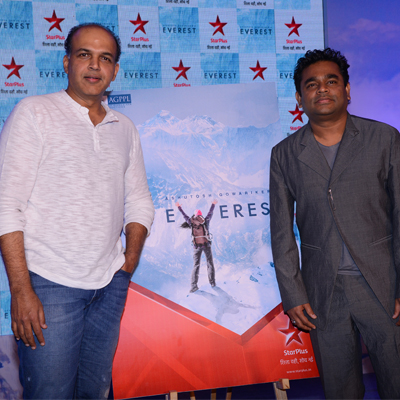
    Bringing to the viewers a great blend of drama, adventure and inspiration, Star Plus and celebrated filmmaker Ashutosh Gowariker have come together to present this finite series. The show is produced under Ashutosh Gowariker Productions (AGPPL) banner and has music by A R Rahman.


    “I wanted to tell a story on television, but films kept me busy,” says Gowariker who previously had made television shows like Fauji, Circus and Kachchi dhoop.  He further goes on to say that the journey with Star Plus began two years back when they first met and started ideating about the project.


    According to Star Plus general manager Gaurav Banerjee the decision was critical to its strategy thought ‘Rishta Wahi Soch Nayi’. “For a channel like ours which is always working on getting new ideas onboard, it takes a lot of time to execute any idea to perfection. One really has to gear up the story telling environment and shape an idea into certain direction.”


    Banerjee adds, “Youth focus is something that we are consciously working on from past one year and Everest was on our horizon.”


    According to the channel’s SVP marketing Nikhil Madhok what appealed to them was Gowariker’s innovative unique ambition and the vision behind the concept. “Two years ago we were toying with the idea of what is going to be the next big thing for us, and then Gowariker came onboard.”


    Madhok believes that this is a show that the youth will relate to and also find resonance in the large population of the country.


    Why Gowariker decided to make television series and not a film? “There are many sides to this story, which I wanted to tell, as each character has its own tale,” he says while adding that if he had to make a film on the subject then it would end up being a 15-hour-long movie.


    The story is about a 21-year old Anjali, who aspires to conquer her own personal Everest. She gets a rude shock when she discovers that her father, who is her hero, never really wanted a daughter. Faced with the biggest conflict of her life, she is forced to question her very own existence. To redeem herself and find a place in her father’s heart she decides to accomplish his unfulfilled dream.


    A project of this magnitude and scale, which demands extreme physical and mental strength, required a world-class crew to do complete justice to the concept. The core team consists of Joh Jeeta Wahi Sikandar and Akele Hum Akele Tum fame directors Glenn Baretto and Ankush Mohla, screenplay for the series (writer) is done by Mitali Mahajan, who was also the assistant art director on films like Swades, Jodhaa Akbar, Munna Bhai MBBS and many more.


    Episodic screenplay has been done by Bhavani Iyer (her first film as a screen writer was Black), dialogues penned by Preeti Mamgain, makeup design by Vikram Gaikwad who has won four national awards for movies like The Dirty Picture, DOP is by Mahesh Aney (he won the national award for best cinematography for Swades), Alphonse Roy (has worked with Oscar winner DOP, Conrad Hall Jr for an American film ‘Oka Amerikee’) and Piyush Shah (worked on films like Salaam-E-Ishq, China Gate and etc), stunt director Amar Shetty who has worked on movies like Om Shanti Om, art director Aparna Raina who has worked on films like Khosla Ka Ghosla , Namesake and etc and costume stylist Preeti Sharma who has done movies like Fashion, Bombay Talkies, Paying Guests and many more.


    For cameramen, shooting was the most crucial part considering unfavourable climatic conditions. Aney says, “The weather was so unfavourable to shoot. We had to test the cameras every now and then. While shooting at the top of 12,000 and 15,000 ft, we had to fight a lot of hurdles like light, batteries draining out etc. However, safety was always a priority for us.”


    “The cold really hampers the number of hours one can shoot. Everybody in the crew lost tons of weight. They have really climbed the Everest,” laughs Banerjee.


    Gowariker further reveals that while shooting a lot of heavy technical equipments were used for the first time like GoPro cameras, 4K technology and a lot more.


    Technology has been a big enabler for the makers. It was there to help and make it easier believes Banerjee. “The show has been masterfully crafted by Gowariker.”


    Madhok further says that if you are able to take out 20 minutes of content in regular studio conditions, one will barely get one minute of content in the mountains considering its climatic conditions.


    As per the nature, usually a show starts three months before the telecast but this is a show that came into being almost two years before. “A show like this requires a completely different financial model where you are committing to a large monetary resources not really knowing when the show will see the light of the day,” says Madhok.  


    With the shoot almost on since last December, almost 90 per cent of the episodes have been canned in locations like Jodhpur, Mount Everest, NIM and Mumbai. For extremely dangerous sequences, the channel had created a set in Naigaon.


    What was the reason behind not signing famous faces for the show? “We wanted to be very real in terms of casting. And we wanted our characters to be 21 years old because young faces brings a lot of energy,” reasons Gowariker.


    Talking about the marketing part, the communication line of the marketing campaign is going to revolve around the thought “‘What’s your Everest’? ‘Hum Sabki life Mein Everest Hota Hai Jisse Hume Jitna Hota Hai’.”


    “We feel that by doing that people will be able to connect with it and make them think, ‘even I have a challenge in life, so let me watch this girl’s story and how she overcomes it’,” states Madhok.


    Though Star officials refused to divulge any financial details regarding the production cost per episode, sources from the industry believe that it ranges anywhere between 30-35 lakhs per episode.


    “If we decide to shoot 90 episodes before the telecast, it is going to be expensive. The fact that we have shot in different locations, none of them is cheap. We have been careful that we have resourced it well,” concludes Banerjee.


    Though the time slot has not been locked, the show is slated to hit the television screens two months down the line and is going to be a weekday property (Monday – Saturday) and will run for less than six months.

  • &pictures takes interactivity a notch higher!

    &pictures takes interactivity a notch higher!

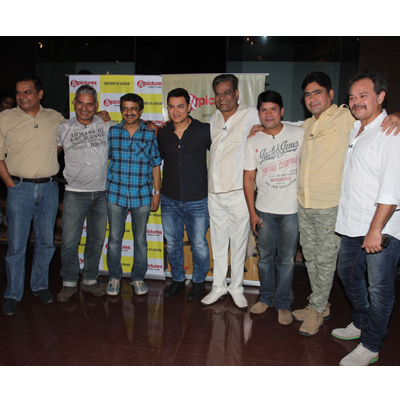
    MUMBAI: &pictures, the channel known for providing ground-breaking interactive content to its viewers since its launch, created a first time record of a LIVE interactive initiative with Bollywood’s superstar, Aamir Khan. Taking interactivity to the next level, &pictures hosted Aamir Khan in a LIVE event where he interacted with his fans through calls, tweets and sms. Separately, the channel also gave an opportunity to select lucky winners across India to watch the film with Mr. Perfectionist himself in Mumbai.


    During the interactions, Aamir disclosed that ‘Chale Chalo’ – the making of ‘Lagaan’ is very close to his heart. It was not only the story and script that appealed to him but also the on-set experiences that made this film special for him. Interestingly, while Lagaan was directed by Ashutosh Gowariker who is known for his remarkable cinematic style, ‘Chale Chalo’ was shot by an amateur cinematographer. Supremely talented director-producer and TV chat show host, Karan Johar added to the excitement as he came with Aamir to curate the event and the screening of the movie. Karan Johar who once said that ‘Aamir Khan is Indian Cinema’s game-changer’ was truly excited himself as he found the real life drama and content of Chale Chalo really intriguing.


    Mr. Akash Chawla, ZEEL Marketing Head, National Channels, said, “&pictures being a true reflection of the subtle evolution of movies and movie viewing experience, has its positioning revolving around two keywords- interactivity and engagement. For this movie, we built up an extensive curiosity campaign to intrigue our audiences and we are very excited with the response we have received. It has been a pleasure to work with Mr. Aamir Khan and we look forward to creating any more such interactive experiences for our viewers in the future on &pictures”.


    Mr. Ruchir Tiwari, Vice President -Head of Programming, ZEEL – Hindi Movie Channels, said, “At &pictures we always aim at providing interactive content and Chale Chalo is the proof of the pudding. While the movie was an enthralling experience in itself, the live segments, tweets and sms’ by Aamir himself took created very exciting break content.”


    A very excited Aamir Khan said “This movie is closest to my heart. When we were making the film, we were not thinking of releasing it at all… we just made it out of passion. I am really excited that I have got this opportunity with &pictures to showcase my film to the television audiences.”


    Hurdles, obstacles, tears of joy, real emotions and feelings – ‘Chale Chalo’ had it all; and so did Aamir. &pictures gave its audiences a one of its kind opportunity to watch the film and have a t?te-e-t?te with their favourite star, the one and only, Aamir Khan!

  • Star Plus goes for finite fiction on Sundays

    Star Plus goes for finite fiction on Sundays

    MUMBAI: With an overkill of reality shows during weekends on most television channels, Star Plus is taking the road less travelled. The popular GEC will air its existing fiction shows from Monday to Saturday and if sources are to be believed, starting end June or beginning July, it will launch three finite fiction shows to be telecast exclusively on Sundays every week.

    The trio is expected to fill up vacant slots left after Mad in India was pulled off air after it failed to live up to audience and channel’s expectations.

    “Star Plus is known to create content which is different from other offerings. At a time when other channels are focusing on non-fiction properties, we at Star have decided to take a completely different route with finite fiction shows,” a source told this website.

    It is learnt that of the three new shows, the first, produced by Miditech India, revolves round the aviation industry and is tentatively titled Airlines.

    Host of The Great Indian Love Challenge on NDTV Good Times, VJ Yudhishtir aka Yudi, will play the male lead while Mere Yaar Ki Shaadi Hai fame Tulip Joshi, who made her Bollywood debut as Sanjana will be cast as the female lead. Shooting is already said to have started in the capital.

    A la Anil Kapoor’s Hindi version of American series 24 on Colors, Star Plus’ second show will be the desi adaptation of Shonda Rhimes’ hit series Grey’s Anatomy starring Ellen Pompeo, Sandra Oh and Patrick Dempsey. Tentatively titled Hospital, the series will be produced by Endemol.

    The third is Ashutosh Gowariker’s much-hyped show Everest which tells the story of a young girl who wants to prove her mettle to her father by living his dream of scaling the Mount Everest. The shoot took place not so long ago at the Nehru Institute of Mountaineering (NIM). Everest stars Rohan Gandotra who is seen in the new Dermicool ad and Shamata Anchan who appears in the Garnier commercial. The 25 to 30 episode show will have a finite beginning and a finite end, according to the same source.

    In addition to these three shows, rapper-actor Yo Yo Honey Singh of Blue hai paani paani fame will make his small screen debut with a music reality show called India’s Raw Star which aims at tapping raw talent from all corners of India.

    Singh will be seen as judge cum mentor on the show. The promos are already out on the digital platform and feature Singh egging on young singers to think out of the box to get an entry into the show.

    At the time of penning this article, the video uploaded on YouTube had already got more than 55,000 views. The auditions too will be only through digital where contestants will have to shoot their music videos and upload the same on the show’s official website. India’s Raw Star is likely to go on air by end July and will mostly be telecast on Saturday and Sunday.

    Participants can log on to www.starplus.in/indiasrawstar via web or mobile. Alternatively, one can           download the India’s Raw Star mobile app and submit his/her audition video along with the requested details.

    A media planner expressed the view that having finite shows over the weekend is advantageous. “I think this different approach will do well for the channel. Understanding the nature of the audience and their requirement, I think it’s the right step taken by the channel, where others are ruling in the dancing and comedy space. But only worry is the content. It should have a strong reason for making people switch to another channel when they are used to watching dancing and comedy,” he said.

    Click here to watch the promo