Tag: Ashok Venkatramani

  • ABP Majha celebrates excellence in Maharashtra

    ABP Majha celebrates excellence in Maharashtra

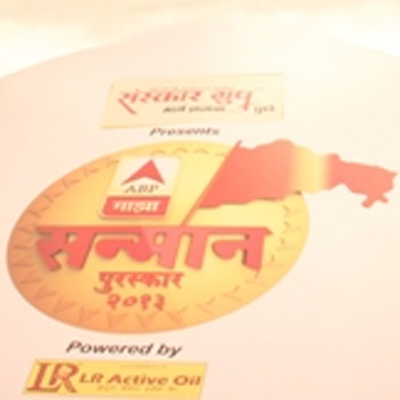
    MUMBAI: “Delhi gave me birth, Mumbai brought me up. This state and this city have made me what I am today,” said superstar Shah Rukh Khan at Majha Sanman Puraskar, ABP Majha’s pioneer initiative which celebrates the contributions of Maharashtrain’s in different fields.

    ABP CEO Ashok Venkatramani says, “We started this for recognising all the achievements that Maharashtrians have won, through excellence in their own fields and in the process have brought glory to the nation. It is a great motivator and it elevates people to greater heights that they deserve. We usually look at the last year or two and pick up stories of success and stories of excellence of Maharashtrians or people from the state of Maharashtra.”


    The awardees were selected on the basis of excellence in their respective feilds


    In its fourth year, the award function was indeed a memorable evening with union cabinet minister Sharad Pawar as the chief guest and Khan as the star attraction along with the ABP family. What more? The grand trophy is designed by eminent artist – Arzaan Khambatta who beautifully captures the dynamism, alertness, and effort of a Mahrashtrian to move ahead and benefit the society at large.

    ABP Majha recognises the work of Vijaya Mehta in the field of art

    Venkatramani informs,”This is a very well received award. It helps us to bond with our consumers and with our viewers. We are able to bring out unknown stories of excellence which is there all around the state, which otherwise does not get the focus and attention. By rewarding those achievers, we are rewarding not only from ourselves but on behalf of all our audiences.”

    (L-R) Kiran Nagarkar, Sharad Pawar and Aveek Sarkar

    ABP recognised and felicitated 11 living legends of Maharashtra, who have brought excellence in their chosen fields and have added to the pride of Maharashtra through their immense contribution.
    ABP COO Avinash Pandey emphasises: “All the people that we awarded, you wouldn’t find them getting awarded by all sections of the society. These individuals, at their individual level have done extra-ordinary service to the society. And we have recognised their contributions, irrespective of any commercial pressure. We don’t give award to anybody who doesn’t deserve it. And that’s the strength of ABP unlike many other awards which are available in the market.”

    Union cabinet minister Sharad Pawar graces the occasion as the chief guest

    The awardees this year included various personalities from Maharashtra who contributed greatly to the society in fields like art, literature, music, sports, fashion, entertainment and business. The winners are – Sanjay Nahar in Rashtriya Ekta, Rahi Sarnobat in sports, Sneha Khanwalkar in culture, Shri Milind Kamble in Industrialist, Amrishbhai Patel & Suresh Khanapurakar in social service, Dr. Chetan Chitnis in research, Prabhakar Kolte in Art (painting), Shrimati Vijaya Mehta in Art, and Shrimati Kishori Amonkar in music.

    Indeed, this is a wonderful brand property for the network considering that this gives it the opportunity to connect with the Marathi Manus sentiment of ABP Majha’s viewer’s base.

    Delhi gave me birth, Mumbai brought me up. This state and this city have made me what I am today, says Shah Rukh Khan

    Pandey talks about the importance of the awards from the business perspective. “This award function stands for three things. One, it generates extra-ordinary content for Television; Second, it helps as a party of the society as we are representatives of the society. It is our way of giving back to the society. This is our natural responsibility as a business. Third, it helps my advertisers to integrate well with the cause and the content and deliver a remarkable story to the viewers. This is why from year on year we make it better than what we did last year.”

    The evening kicked off with a fabulous performance by Sharbari Dance troop enthralling the audience with traditional Ganesh Vandana. Post this, ABP group chairman Aveek Sarkar shared his vision for ABP Majha and lauded the ceaseless commitment they put towards being a responsible and progressive News channel.

    Majha Sanman Puraskar goes on to add a commendable CSR initiate for the ABP network. What does ABP stand for as a news channel in India? Pandey concludes in his response: “I have worked in news companies all my life. ABP is one such company that it does not do anything, unless it adds immense value to the viewer, advertiser or reader. If it is not valuable information, they will not go for it.”


  • Industry reacts to move to net billing

    Industry reacts to move to net billing

    MUMBAI: After nearly three weeks of speculation, debate and discussions, the advertising agencies, represented by the Advertisng Agencies‘ Association of India (AAAI), and the broadcasters, represented by the Indian Broadcasting Foundation (IBF), the bodies have come to a consensus about shifting to net billing.

    The decision came as a relief to both agencies and broadcasters as the latter had stopped airing ads on their respective networks. Clients were yelling blue murder at the agencies for not being able to promote their products to TV viewers. Indiantelevision.com spoke to some of the network officials to get their views on what they thought about the settlement between the two:

    Says MCCS CEO Ashok Venkatramani, “I welcome it completely. It‘s the right thing and I am very glad that the issue is resolved and I think we have done the right thing moving to net billing. It should have happened earlier, but it‘s better late than never.”

    AXN Networks India business head Sunil Punjabi feels that the new net billing system is not going to affect broadcasters. “It doesn‘t make a difference from a channel‘s perspective. It is just that things will be more transparent. From a tax perspective things will be clearer.” He however adds that from an agency’s perspective there could be an impact pertaining to commission. “Earlier on a bill of Rs 100 we were paid Rs 85. The rest was the agency‘s commission. Now we will charge Rs 85 and get paid that.”

    Venkatramani adds that the industry was “just hanging to the system which is completely outdated and nobody was gaining. It was just a paper number, paper figure or you can say paper transaction and it doesn‘t make much difference to their (agencies‘) life. They just need to sit with their clients and renegotiate their actual fees.”

    Taking a slightly milder tone, Colors CEO Raj Nayak said, “I am glad that both the IBF & the AAAI have been able to come to a mutually agreeable solution on the net v/s gross billing issue. This is an industry issue and we have to address it together keeping the interests of all stakeholders in mind.”

    NDTV group CEO Narayan Rao is in complete agreement and adds, “We were part of that decision and we fully supported it. I am glad that the IBF leadership and also some of the CEOs of our broadcasting channels have been able to achieve this conclusion.”

    Helios Media CEO Divya Radhakrishnan feels that the standoff between the two stakeholders of the industry served little more than proving a point one way or another. She said, “Broadcasters and agencies are working in the same space of providing communication solutions for brands. Hence there can be no reason for working at cross purposes. An amicable solution works for all concerned. Such stand offs serve no purpose other than wanting to prove a point. Lastly, if a stance has to be taken then it cannot be selective.”

  • Traditional media has to change ways of communicating with people

    MUMBAI: The All India Management Association (AIMA) two-day 3rd World Marketing Congress highlighted the need for a fundamental change in marketing in the age of digital media and empowerment of the consumer.

    ABP News CEO Ashok Venkatramani said, “As world of marketing is changing rapidly every day, traditional media has to change ways of communicating with people and have to go where the audience is going rather than where media wants to take them”.

    The theme of the congress was “Marketing Myopia 2.0”. On the second and the final day of the event, the eminent speakers shared their insights on many urgent marketing issues, including big data and analytics, future relevance of the traditional media, the role of NGOs in marketing social causes and the relevance of advertising agencies in the new era.

    Talking on the relevance of traditional media in the current scenario, . Microsoft India CMO Shefalika Saxena said,” Traditional media is not at all losing relevance. Media is only media and not new or old, which is constantly changing and evolving. It’s not about newspapers or television or any other media but it’s how one uses that media to engage with the customers to sell or to market a product.”

    Speaking about the importance of analytics in marketing, Clifford Patrao, Director and Leader, Strategy & Transformation-Global Business Services, India/South Asia, IBM India, said: “Analytics are for enriching customers experience and to make product branding more user friendly. We are seeing an era where data is empowering marketing and marketers.”

    During the two-day event the participants also discussed the new age consumers, extending product life cycles, defining business based on customers and not products, using Internet to gain competitive advantage and the rising importance of earned media.

    On the first day of the congress, the Congress Chairman & Chairman & R K Swamy BBDO MD Srinivasan K Swamy emphasised the challenges faced by the marketers in this age of digital media and consumers changing behaviour.

    Making a presentation on the occasion, AIMA president D Shivakumar had highlighted the fundamental change in marketing, denoting the era to brand experience rather than of product branding. He also stressed that marketers could no longer treat the digital media as a niche.

    The highlight of the event was the presentation of the AIMA’s R K Swamy High Performance Brand of the year Award, which was bagged by Apollo Tyres this year. Rajesh Dahiya, National Head, Sales & Marketing, Apollo Tyres received the award.

    The Congress was conducted in an experience-sharing, interactive mode, encouraging high level of participation by the delegates. The event format included presentations and experiences by some of the most renowned names of the marketing world.

    The Congress attracted more than 350 participants. The Congress afforded the delegates an opportunity to learn from the experts and share branding experience and insights with their peers.

  • MCCS unveils new logo

    MUMBAI: After the exit of Star, Media Content and Communcations Services (MCCS) has rebranded its bouquet of channels with ABP as the mother brand.

    MCCS said Monday the on-air launch of the rebranded news channels – ABP News in Hindi (earlier Star News), ABP Ananda in Bengali (earlier Star Ananda) and ABP Majha in Marathi (earlier Star Majha) – will be effective 1 June.

    The communication is based on the theme ‘Our Stars don‘t change, our News does not change, only our name changes.‘

    The mass communication campaign kicks off today. The creative part of the communication has been undertaken by Lowe Mumbai and the media buying plan has been developed by Mindshare.

    MCCS said over the next eight weeks there will be an aggressive communication talking about the change. A combination of TV, print, radio, outdoor and Internet will be used in order to familiarise the audience and stakeholders with the new logo.

    MCCS CEO Ashok Venkatramani said, “The three news channels of MCCS have developed into market leaders in their segments over the last eight years, which has helped MCCS evolve as a strong and respected broadcast news company. It has quality resources in its employees and has built good equity amongst its stakeholder – loyal viewer base, clients, distribution partners and vendors.”

  • Star, ABP announce divorce; Star News to be ABP News

    Star, ABP announce divorce; Star News to be ABP News

    MUMBAI: Star and Ananda Bazar Patrika (ABP) Group said Monday they were parting ways, allowing the Rupert Murdoch-controlled company to retreat from the news business in India to focus on entertainment.

    Star’s decision comes in the wake of the current regulatory environment and structural issues ailing the news genre in India. The government caps foreign direct investment at 26 per cent in TV news, making it less attractive for foreign investments to pour into a sector that is hit hard by slow revenue growth, high carriage and staff costs and an abundance of players.

    The discontinuation in phases will complete within 2-4 months. Indiantelevision.com had earlier reported that Star would exit the TV news business in India and would split from ABP within three months, finally selling its 26 per cent stake.

    With the divorce, the eight-year affiliation with the ‘Star’ brand has come to an end. Media Content and Communications (MCCS), the company that owns and operates the news channels, said Monday that after the split, Hindi news channel Star News would be named ABP News, Bengali news channel Star Ananda would become ABP Ananda and the Marathi news channel Star Majha would be called ABP Majha.

    Says MCCS chief executive officer Ashok Venkatramani, “Star and ABP have decided to discontinue the Brand Agreement where Star News has lent the brand to MCCS. Right now Star continues to be a shareholder in MCCS.”

    ABP, whose core business is news, will continue to “promote and establish” its own brands in the broadcast news space through its subsidiary company – MCCS.

    Media buyers have expressed concern about the shedding of the ‘Star’ brand. “Hindi news channel Star News could be hit the hardest as ‘Star’ is a strong brand with its popular entertainment channels having a tremendous impact in the Hindi heartland. There may not be any impact in West Bengal where ABP is a stronger news brand, with its overwhelming print presence. There will be a need to promote the new branding, though all of us know that ABP has a credible equity in the news arena,” says the head of a media buying outfit on condition of anonymity.

    Agrees Lintas Media Group head of planning-Mumbai Dhirendra Singh. “The change in the brand may take some time to sink in. Considering the competitive environment in Hindi news genre, media planners /buyers would like the channel to stabilise first and then invest on it.”

    Crest COO Karthik Lakshminarayan believes that the challenge for ABP would be to maintain its ratings. “As far as the channel maintains its content quality and ratings, I do not see any reason for advertisers to shy away from the channel,” he says.

  • Murdoch set to exit TV news biz in India

    Murdoch set to exit TV news biz in India

    MUMBAI: Rupert Murdoch is set to exit the television news business in India. Star India will sell its entire 26 per cent stake in Media Content & Communications Services (MCCS), the company that owns and operates three news channels, as it shares a rocky relationship with joint venture partner Ananda Bazaar Patrika (ABP) Group.

    Star will not look at any other Indian partner including NDTV till the regulatory climate allows for more foreign direct investment (FDI) into the news sector.

    “Star and ABP could split in June-July if matters are thrashed out by then as the relationship between the two partners has turned sour. It looks like ABP Group, which has 74 per cent holding in MCCS, will buy out Star’s stake,” a source familiar with the development said.

    Star India CEO Uday Shankar refused to comment on the issue.

    The divorce will mean that the ‘Star’ logo will be taken out of the Hindi, Bengali and Marathi news channels. ABP is likely to retain the Ananda brand in Bengali while the Marathi channel may continue with the Majha title. Star News, the flagship Hindi news channel of the JV, will have to be entirely renamed, though the buzz is that the Ananda brand may run common across the channels.

    Star News was launched in March 2004, a year after MCCS was formed, followed by Star Ananda (Bengali) in June 2005 and Star Majha (Marathi) in June 2007.

    The first strains came to public notice when ABP Group launched a Bengali general entertainment channel in July 2011 to compete against Star Jalsha (launched in September 2008). The JV partners have also been fighting over editorial and strategic issues.

    “Star had no control over the running of the organisation. It makes no sense for them to continue with the JV. It is a matter of time but not clear yet whether there will be a slightly longer cooling period,” said the source.

    Star has an ad sales and distribution arrangement with NDTV, which competes in the Hindi space with Star News. “The cracks widened when Star inked a pact with NDTV to handle its ad sales in April 2011. MCCS is in charge of ad sales for its own channels,” the source averred. In 2010, NDTV shifted its distribution from TheOneAlliance to Star Den, a JV between Star and Den.

    So is Star going to pick up equity in NDTV or is “the man who owns the news” going to give up TV news in India? “Star feels that the whole economics of the TV news business in India is not working. You either invest in any business with the hope of making money in future or you look at it as a strategic value. If you are not in the driver’s seat or have no significant say in the running of the operations, it doesn’t make strategic sense at all,” a source said.

    NDTV was earlier the sole news content provider and producer for Star News till Dr Prannoy Roy launched his own news channels in 2003.

    MCCS has operationally broken even since FY’11, from its loss of around Rs 60 million in the earlier year on a revenue of Rs 2.13 billion, according to market estimates. The FY’09 loss is estimated to have been Rs 460 million on a revenue of Rs 1.81 billion. The cumulative loss stood at around Rs 2.6 billion till FY’10, estimates suggest.

    In an emailed reply, MCCS CEO Ashok Venkatramani said, “We are a closely held private Ltd company and our financials are not in the public domain. So I would not like to respond to any of your questions.”

    Market sources say MCCS’ revenue has touched Rs 2.6 billion and it is an operationally profitable company now.

  • Can digitisation heal TV news industry?

    Can digitisation heal TV news industry?

    NEW DELHI: Crippled by high carriage payouts to cable networks, low subscription revenues, muted ad growth and rise in personnel costs, television news broadcasters are looking at digitisation to play the rescue act as they struggle to stay profitable.

    “The success of digitisation is critical for all of us. We will have fatter revenues, better content and investments will go up,” said NDTV Group executive vice chairman KVL Narayan Rao.

    Calling it the “new dawn for the TV news industry,” Rao said digitisation would throw open a huge opportunity for growth as carriage fees reduce and subscription revenues go up. India will have 100 million new viewers in the next five years and with digitisation consumers will have better access to content.

    “Digitisation is the gamechanger. But there needs to be close co-operation among the stakeholders for making it a success,” said Rao, while speaking at the 5th News Television Summit here Wednesday.

    News broadcasters have themselves to blame for the terrible financial mess they are in. Fierce competition, an oversupply of channels, lack of unity and audience fragmentation within the genre have kept advertising prices low.

    “News as a genre is terribly under-priced. There is a lot of scope for us to take it forward if we stand united. We also need to develop new selling techniques and go beyond TAM (the currency for measuring TV audiences) ratings if we are to get the right value for a genre that is so impactful,” said TV Today Network chief executive officer Joy Chakravorthy.

    The international market is also getting spoilt by the new entrants as they launch price wars to grab market share.

    “The industry has suffered because we have not worked together. Considering the current revenue position, the news industry also can’t afford to be lavish,” averred Chakravorthy.

    News broadcasters had committed several mistakes in the past and there is a pressing need to take a U-turn now. “We have converted a potential revenue earner to a huge cost head. The monster called ‘carriage’ is created by us. While it will be too naïve to believe that digitisation is not going to be a panacea to the industry, we must also realise that there is a huge opportunity to grow under a DAS (digital addressable systems) regime,” said Zee News Ltd chief executive officer Barun Das.

    Media Network Distribution (India) Ltd MD & CEO Yogesh Radhakrishnan agrees that DAS could prove to be the turning point. “The news business needs to turn a new leaf. We can’t blame the multi-sytem operators (MSOs) for looking at news channels as a cash cow. News channels, after all, started the carriage system in the TV business.”

    With digitisation set to kick off in the four metros of Delhi, Mumbai, Kolkata and Chennai, broadcasters believe there will be a substantial reduction in carriage costs. “Some of that money that we manage to save will go to the shareholders, some will be used to pay debt and most of it will go towards content. When people have choice, news channels that have build brands will stand at an advantage,” said Rao.

    Den Networks chief executive officer SN Sharma does not believe that carriage costs will evaporate. “The distribution cost has to be attached to the business model in a digital environment. The problem with the news genre is that there is no clear leader and there is no big differentiated content. There is so much of competition in the genre that the last entrant drives up the carriage prices and derails everybody’s business.”

    MCCS chief executive officer Ashok Venkatramani does not share the bullish sentiments echoed by the other speakers. “News channels spend one-third of their costs on carriage. Even if that drops by half, what do we do with the savings? The big question that we need to ask ourselves is whether we are in the right industry.”

    Venkatramani does not think that the time is ripe for launching more regional news channels. “What is the value that we are going to create by launching more channels? Going regional is not the answer. Is there any business in TV news? There is no light at the end of the tunnel. We are all fishing in troubled waters.”

    Das does not agree that there is no room for expansion. “News has a tremendous advantage over general entertainment channels when it comes to regional markets. GECs can’t expand due to language constraints. News channels on the other hand can come up with local content. News proliferation will happen in regional markets.”

    Alternate sources of revenue like mobile TV and 4G have tremendous potential. However, they are too thin to make any significant impact in the near future and TV will stay as the main revenue stream for long.

  • Narayan Rao re-elected NBA president

    Narayan Rao re-elected NBA president

    MUMBAI: NDTV Group executive vice chairman KVL Narayan Rao has been re-appointed president of the News Broadcasters Association (NBA) for 2011-12.

    In the Annual General Meeting held today, Zee News Ltd CEO Barun Das has been re-elected as vice president, while Media Content and Communications Services (which manages news television channels Star News, Star Majha and Star Ananda) CEO Ashok Venkatramani is the honorary treasurer.

    The other members on the NBA board are Independent News Services chairman Rajat Sharma; Times Television Network MD and CEO Sunil Lulla; and Network18 Group COO B Sai Kumar.

  • NDTV hands over ad sales duties to Star

    NDTV hands over ad sales duties to Star

    MUMBAI: In a cluttered environment where news channels are struggling to up advertising rates, NDTV has assigned Star India to exclusively handle the airtime sales of all its news channels – NDTV 24×7, NDTV India and NDTV Profit.

    The five-year deal will come into effect from 1 April, bringing together two broadcasting companies that would fight it out in a marketplace that is unfriendly to ad rate hikes.

    For Rupert Murdoch’s Star India, the commercial alliance will mean that it has news in its bouquet mix. The network had earlier handled the ad sales of MCCS, the news broadcasting company where it owns 26 per cent stake with ABP Group as the senior partner, but that got separated and is now managed independently.

    Said Star India CEO Uday Shankar, “The combination of the NDTV news brand and Star’s leadership should be able to unlock significant value for NDTV. The presence of NDTV news shall strengthen Star’s sales bouquet and enable Star to offer a comprehensive option to advertisers and agencies.”

    NDTV, which has seen a slowdown in its advertising revenue from news operations, will continue its ad sales arrangement with Raj Nayak‘s Aidem Ventures for lifestyle channel NDTV Good Times, while pulling out all its news outfits from the media consulting, marketing and advertising sales company.

    NDTV will focus on content and business development, areas where it is more comfortable with. For consolidating its revenues, it will adopt the outsourcing model. While Star will handle its ad sales, NDTV will depend on Star Den, a 50:50 joint venture between Star India and Den, for its subscription income.

    Prannoy Roy has worked with Murdoch earlier before they split in 2003. After the divorce, Roy went on to launch his news channels and got the company listed in 2004.

    Said NDTV chairman Roy, “Star, India‘s leading and most successful television network, has been a trusted partner in the past and NDTV looks forward to this new initiative which we are certain will be of mutual benefit. In many ways, it‘s a perfect fit.”  
         
      Will the alliance jack up ad rates for the news business? “The deal does not necessarily mean that ad rates will go up for NDTV. News is a cluttered market and all will depend on the demand and supply equation,” said Madison Media group CEO Punitha Arumugam.

    Star India, however, believes that the getting together of the two broadcasting companies will help create value. Said Star India EVP – business development Nitin Kukreja, “There is value to be unlocked with proper packaging. We can command a premium for the news genre.”

    Selling airtime for NDTV will help strengthen Star‘s offering for male targeted advertisers. “We have a bouquet of English channels including Star World, Star Movies and National Geographic. We, however, haven‘t yet decided which of our channels we are going to package with the NDTV news channels and offer to advertisers,” Kukreja added.

    Some senior executives, however, believe that the outsourcing model is not a good strategy. “The reality in today‘s world is that in the news business, there is a lot of healthy interaction between business and content. There is overlap in events and sponsorship. So it is better to have the ad sales functions handled internally,” the CEO of a news broadcasting company said on condition of anonymity.

    Some experts also feel that it won‘t be possible to club general entertainment channels with news channels. “The advertisers are different. The target segments are also different,” a media analyst said.

    Will Star‘s relationship with ABP be strained? Will MCCS, which owns and operates Star News (Hindi), Star Majha (Marathi) and Star Anand (Bengali), be impacted?

    When contacted, MCCS CEO Ashok Venkatramani did not want to comment on the new deal between Star and NDTV.

  • Distressed, news channels seek rescue in digitisation

    Distressed, news channels seek rescue in digitisation

    NEW DELHI: Stung by high carriage costs and a slump in advertising rates, television news channels are looking at tapping subscription revenues to drive growth.

    The subscription income of news channels is pegged at around Rs 2 billion, but is restricted to only a few players like CNBC TV18, NDTV, TV Today Network and Zee News.

    “We have to open up subscription revenues. There is a future there,” said TV Today Network CEO and executive director G Krishnan, while speaking at the 4th News Television Summit organised by Indiantelevision.com.

    News channels are struggling, as they depend heavily on advertising revenues, and media buying agencies do not give them a fair ad price commensurate to their reach.

    “We are not given a premium for the impact that we have. We are treated like commodities by the media buying agencies,” Krishnan said.

    Madison Media CEO Basab Datta Chowdhury, however, did not agree. “The news channels deliver a genre share of 7 per cent while they command a revenue share of 11 per cent. So there is a premium that is given to them. The problem is that there is a plethora of news channels and it is very difficult to differentiate. News is commoditised today,” she said.

    The rise in advertising revenue, though, has come from more inventory utilisation than an increase in ad rates.

    “The 10-second rates have come down. Ad revenue is growing because news channels have flooded the market with inventory. That’s a mistake we have done,” said Krishnan.
            
      News channels have as high as 20-22 minutes of commercial time per hour of telecast, a path they do not prefer to follow, but are led to by a softening of ad rates.

    MCCS (which owns and operates Star News, Star Ananda and Star Majha) CEO Ashok Venkatramani said the value of the content of news channels does not get realised by the agencies. “Media buyers do not look at the profile of audiences. On the cable TV front also, we do not have transparency. There is no proper mechanism at all,” he added.

    BAG Films & Media CMD Anurradha Prasad urged the news broadcasters to get together to fight against “unreasonable carriage fees” demanded by the multi-system operators (MSOs).

    “It is a rat race out there and broadcasters should collectively fight against high carriage fees. And on the advertising front, we are not paid for the reach that we have. We are not getting the kind of revenues that we had anticipated,” Prasad said.

    Media Network and Distribution (India) Ltd (a joint venture with Bennett, Coleman & Co Ltd) Yogesh Radhakrishnan believed at the crux of the problem was the rapid growth of the media industry in a short span of time. “The Indian TV market had grown too fast too soon. But post digitisation, news channels can drive subscription revenues and up ad rates as they create differentiated content,” he said.

    Krishnan, however, is bullish about the TV news industry. “Currently the ability to grow is limited. But five years down the line, we will see strong growth. Digitisation will lower our carriage fees and we can fetch more pay-TV revenues,” he said.

    The challenge for the news broadcasting industry, thus, is to cap ad inventory, aggressively chase subscription revenues and create value for advertisers.