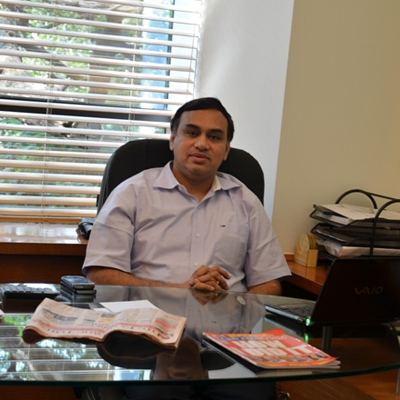
Tag: Ashok Venkatramani

  • NBA apprises new I&B secretary Sunil Arora with revenue models of news b’casters

    NBA apprises new I&B secretary Sunil Arora with revenue models of news b’casters

    NEW DELHI: The newly appointed Information and Broadcasting Ministry secretary Sunil Arora was today apprised of various issues relating to news broadcasters in a wide-ranging discussion with the News Broadcasters Association (NBA). 


    NBA president Rajat Sharma told indiantelevision.com that all issues including the ad cap were discussed with Arora.


    The meeting comes soon after the adjournment of the ad cap case to 23 September by Delhi High Court.


    This is the first meeting of the new secretary who took over on 31 August, 2015.


    Issues relating to carriage with multi system operators (MSOs) and local cable operators (LCOs) and revenue models for growth of the industry were also discussed. 


    The delegation led by Sharma comprised NDTV’s Narayan Rao, Ashok Venkatramani of ABP News, Anuradha Prasad of News 24, Ashish Bagga of India Today, A P Parigi of Network 18 and NBA secretary general Annie Joseph.


    Special secretary J.S. Mathur was also present in the meeting. 


    The delegation also apprised the secretary about the initiatives taken by the broadcasting industry in the direction of self-regulation which includes working of News Broadcasters Standards Authority (NBSA), an independent authority set up by NBA and the two tier mechanism of complaints redressal relating to news channel followed by them. 

  • Increase in FDI cap: a boon or a curse?

    Increase in FDI cap: a boon or a curse?

    MUMBAI: From a recent speech of Information and Broadcasting (I&B) Minister Arun Jaitley, speculation was drawn of a probable increase in foreign direct investment (FDI) cap from 26 per cent to 49 per cent. The current government has always been in favour of FDI and on numerous occasions stated FDI as one of the major aspects behind economic growth and reform. 


    The government has already taken steps towards increasing FDI in various departments, railway and defense being among them. Hence the speculation of increase in FDI cap in media may soon turn into reality.


    Foreign investment will certainly ensure development of channels, more employment and better quality, but will it in return take away editorial freedom? Will Indian media be a victim of foreign dictatorship or will it manage to keep its integrity alive despite foreign investment? Will we have Indian CEOs and reporters after the investment or will strategic affairs slip away from Indian entrepreneurs? A larger democratic debate on the issue is extremely important and Indiantelevision.com took the initiative to find the answers from media stalwarts.


    NDTV executive vice chairperson KVL Narayan Rao said, “On this FDI development my comments are personal remarks and not a point of view of the company. I welcome this increase whole heartedly as it will allow more investments and result to better service in terms of producing quality programmes. And the only difference we are having is added investment; we will continue to have Indian editor in chiefs, reporters and video journalists.”  


    On the speculated increase in FDI cap to 49 per cent, News Nation network CEO RK Arora said, “Increase in FDI will be extremely favourable, news industry needs to expand and the increase in FDI cap to 49 per cent will be a boon for us. Moreover we see increase in other departments so why not in this industry. If we are to match the standards with international content we need investments from foreign investors.” 


    For Arora, there is no harm in increasing FDI to 49 per cent “but the investment should not dictate the strategic affairs, and there shouldn’t be any interference in editorial freedom,” he added.


    Though the news industry is extremely positive about the possible increase, none of them are ready to compromise with strategic and editorial affairs. 


    Focus News managing editor Shailesh Kumar said, “If FDI is increased in news it would be a very good decision as most of the channels are going through a tough time and we need investment from other sources to rejuvenate the industry.”


    ABP News CEO Ashok Venkatramani is of the same opinion. “We (ABP News) are in total favour of the increase and I don’t see any possibilities of editorial or strategic affairs getting influenced due to any investment. If this actually happens then we will develop and grow big. Hence I am very happy that the point has been raised. We welcome the increase in FDI cap,” he said.


    No second thoughts came from any of channels; while they unanimously welcomed the increase in FDI cap to 49 per cent, they also held a firm grip on not compromising with editorial or strategic affairs. 


    Now it remains to be seen how things develop and whether the issue is debated at the top level. Considering the fact that the current government is concentrating on building an open market scenario to ensure economic growth and reform, speculations of a possible increase in FDI cap to 49 per cent can soon be a reality.

  • Shah Rukh Khan inaugurates the new identity of ABP News SBS at Telebrations

    Shah Rukh Khan inaugurates the new identity of ABP News SBS at Telebrations

    MUMBAI: In a star studded evening, ABP News Saas Bahu aur Saazish, the No.1 show of Indian Television News celebrated its 10 year of leadership and revealed the new identity of the program. Right from King Khan- Shah Rukh Khan to leading actress Deepika Padukone, to Abhishek Bachchan, Sonu Sood and Vivaan Shah together with famous faces of Indian Television like Karan Patel, Nia Sharma, Rashmi Desai, Neelu Vaghela etc. inaugurated the much awaited identity of Saas Bahu aur Saazish.

    On this big day, the SBS 10th year evening witnessed hundreds of Television Stars coming together to a glorious evening, wherein the industry, together, felicitated 10 Impact makers of Indian Television. These awards are bestowed to those whose contribution to Indian Television industry is par excellence and they with their zeal and hard work have done path breaking, trend defining work for years. These 10 big stalwarts who received the coveted “Achievers awards trophy 2014” were Annu Kapoor, Prem Krishen/Sunil Mehta, Cineyug (Mazhar Nadiadwala/ Aly Morani), Ali Asgar, Dilip Joshi, Neelu Waghela, Shivaji Satam, Sandip Sikand, and R.D Tailang.

    On the occasion, Ashok Venkatramani, CEO, MCCS India said “Saas Bahu Aur Saazish is the program which has become the household name among Indian woman. 10 years back when we started SBS, the idea was to report all the crucial happening of soap operas which at that time were beginning to engulf the Indian audience. Today with the new identity launch, we are looking forward to become more sharper in our reporting and reach to our SBS Family. On the 10th year of Telebrations, we would like to thank entire entertainment industry, our viewers, and partners who have been supportive throughout. We look forward to provide entertaining content along with keeping the values of reporting alive”

    The team of Happy New Year, who were also the film partner of the Saas Bahu aur Saazish Telebrations, were completely enamoured by the show. Shah Rukh Khan said, “Saal ki Sabse Entertaining Film, Mil rahi hai Saal ke Sabse Entertaining Program se” (This year’s most entertaining film is meeting the most entertaining program of Indian television”) and hence the celebrations is on the card. Shah Rukh along with his complete co-stars (Deepika Padukone, Abhishek Bachchan, Sonu Sood, and Vivaan Shah) called many TV stars on stage and gave them multiple dares including tongue twisters, Dance like Vivaan, speak like Abhishek Bachchan. The highlight of this segment was Deepika Padukone making the leading ladies of Indian soap operas dance on her peppy number “main Lovely ho gayee yaar” thus taking the audience to a huge uproar.

  • Rajat Sharma named as new NBA president

    Rajat Sharma named as new NBA president

    MUMBAI: The News Broadcasting Association (NBA) has just concluded its annual general meeting. India TV chairman and editor in chief Rajat Sharma has been named as the new president of the association for the year 2014-2015.


    Meanwhile, MCCS CEO – ABP News Ashok Venkatramani continues to be the vice president of NBA and News24 Broadcast India chairperson and MD Anurradha Prasad has been named as the honorary treasurer. She takes the place of former Network18 group CEO B Sai Kumar who quit the company a few months ago.


     The other members of the board are NDTV group executive vice chairperson KVL Narayan Rao who was the president for four consecutive years, TV Today Network director Ashish Bagga, Times Global Broadcasting Company MD and CEO MK Anand, Zee Media Corp CEO Bhaskar Das, Odisha Television director Jagi Mangat Panda, Mathrubhumi Printing and Publishing whole time director MV Shreyams Kumar.

  • Going FTA suits most broadcasters and advertisers

    Going FTA suits most broadcasters and advertisers

    MUMBAI: With increasing number of channels in the country, much of the interior towns have found solace in having free-to-air (FTA) channels. Doordarshan’s own Direct to Home (DTH) service Freedish has found 12 million active subscribers in the interior parts of the country with its list of FTA channels.


    Discussing the FTA market were MCCS India CEO Ashok Venkatramani, TAM Media Research LV Krishnan, Zee Entertainment Enterprises chief content and creative officer Bharat Ranga, Reliance Broadcast Network Limited (RBNL) CEO Tarun Katial and RK Swamy Media group senior VP K Satyanarayana. The session was moderated by Chrome Data Analytics and Media Pankaj Krishna.


    Krishna started off by asking Satyanarayana if advertisers are monetising the platform to which he said that Freedish has very few satellite channels and it is not necessary to look at FTA channels particularly for media planning. However, he stated that research shows that Freedish is able to add 10 per cent incremental reach so it has more monetisation scope.


    Venkatramani heads three channels under the ABP brand name which hasn’t yet gone pay and in fact isn’t available on Freedish either. He said, “We haven’t gone pay because the ecosystem doesn’t allow us to do so. The price at which we sell channels to MSOs is not in our hands. Freedish is too expensive and cost per household is Rs 30.” FTA channels depend heavily on advertising revenue and according to Venkatramani, this is not sustainable and he doesn’t see any incremental reach happening in the news genre.


    Krishna questioned LV Krishnan on how TAM ensured fair representation from houses which were either metre dark or power dark. To which Krishnan said that the important metric is to see who the consumer is. “Is this consumer accepting FTA channels because he is economically unable to graduate to pay? What is the value of this customer for targeting advertising? And is it financially viable to create content especially for this industry?” he questioned. The positive points of this market, according to him, is that this audience doesn’t have any distraction and so time available for entertainment is higher than urban audiences. But the issue they face is frequent power cuts.


    Katial said that in its studies, RBNL has found that the northern market is less penetrated as compared to south or east but it needs a unique distribution for which Freedish fits perfectly. “Many advertisers will pay the delta for it whether it is FMCG or Telecom. Metros are fragmented while these markets have low penetration,” he said.


    Zee Anmol is Zee’s FTA channel that shows handpicked content from its channels. Ranga pointed out that a lot of marketwise and platform-wise research is done before deciding which content from its flagship channel Zee TV will work for this audience rather than just replicating the entire set of shows. He also feels that in future there will be three modes- FTA, pay and premium and soon Freedish will also offer pay channels. “Distribution will be far more competitive in the next 10 years. Currently, there isn’t much difference between FTA and Rs 200 for all channels. In future the gap will be large,” he said adding that he expects average revenue per user (ARPU) to rise up to Rs 1500 to Rs 2000.


    While geotargetted advertising is on the rise, Katial feels that is it more suitable for large MSOs and Freedish can’t do it. But the real winning situation will be when the ad cap regulation is resolved. “Today a radio station in Mumbai takes more ad rate than a national news channel,” he informed.


    Ranga said that when a new channel enters the market it can start off as FTA and then convert to pay, which is what Zee does. Krishnan highlighted that the audience doesn’t care about platform but about content. This was emphasised by Satyanarayana as well that the advertisers look at the audience and not the platform. FTA is not actually FTA, because the customer is paying money for the carrier’s bandwidth. In the future, advertising will be aligned either to content, such as in-branding or to the carrier.


    Katial shared the data that across Europe, there is the phenomenon of cord cutting at the rate of 5-10 per cent every month and every year and then going FTA.


    Krishnan shared data that according to their research, while five years ago 4.5 to 5 members of a home were watching at the same time, this has dropped to 3.8 today. However, the repeat gets about 1.5 members. “Broadcasters have started segmenting by ensuring repeats to cater to various age groups,” he informed.


    So while the FTA market has begun in India, it remains to be seen where it will finally head.

  • ABP News Lets Fly The Flag Salutes Bravehearts with Singham

    ABP News Lets Fly The Flag Salutes Bravehearts with Singham

    MUMBAI: ABP News Lets Fly The Flag initiative, started in 2012 has reached a new pinnacle this year. Other than the celebration of 68th Independence Day and the musical performance by an ace artist Irfan, the initiative this year was partnered with Singham Returns to recognize the act of bravery by a common man.


    “Let’s fly the flag is one of the most successful initiatives that have been undertaken at ABP News Network. Though its journey is short but the success is immense-from being just an on air initiative in 2012, it has become an on ground + on air property. This initiative is very intrinsic to the ABP News Network as it is a reflection of all that we believe in-connecting with our viewers. We have celebrated the bravery of common people using this initiative as the platform. And we would continue to do so in the future.” shared Ashok Venkatramani, CEO, ABP Network


    In 15 days of campaign on ABP News, viewers were asked to send entries of their act of bravery and winners were selected using a stringent process. A total of 10 winners were awarded by the entire cast of Singham Returns – Ajay Devgan, Rohit Sheety, and Kareena Kapoor in a ceremonial ground event at Amity University, Noida. The winners of the award were:

     
    •    Promila Katiyar for saving her 5yr old grand daughter from a thief

    •    Shalini Tomar for saving her daughter from kidnappers

    •    Veeru and Ramandeep for saving 2 girls from goons in Delhi

    •    Beni Prashad of 80yrs for educating under privileged children selflessly

    •    Ankita Arora for fighting with 4 snatchers and getting them arrested

    •    Naveen Gulia for fighting against beggar maffia

    •    Sanjay Kumar of CISF for saving life of a person who fell in river in Kullu

    •    Renu Singh for fighting with snatchers and getting them arrested

    •    Maleika Singh Tak for saving herself from kidnappers in Jaipur

     
    The award was followed by enthralling performance of Mohd. Irfan of Banjara song fame. While the award function was happening, Ajay Devgan was very moved and shared “I am inspired to see these real life Singhams. They are the real heroes”. More than 600 people attended the on-ground programme. The show was telecasted on 15th Aug, 8pm onwards on ABP News.


    Lets Fly The Flag was presented by Black Cobra Plywood, Powered by Raj Shree Pan Masala, Co-Powered by Jharkhand Sakrar, Associate Sponsor M-Tech Mobiles, Venue Partner Amity University.

  • NBA makes changes in its board of directors

    NBA makes changes in its board of directors

    MUMBAI: Even though the News Broadcasters Association (NBA) holds an election for office bearers every year, a few changes have been made mid way due to various reasons.


    With Zee Media CEO Alok Agrawal stepping down from his position, Zee Media Group CEO Bhaskar Das has been appointed in his place on the board of directors (BOD) of NBA. The replacement for NBA honorary treasurer B Saikumar, the former Network 18 Group CEO has not yet been finalised.


    Another change in the board of directors is Times Television Network MD and CEO MK Anand taking charge in place of the network’s former MD and CEO Sunil Lulla.


    Other members on the BOD include president and NDTV executive vice chairperson KVL Narayan Rao, vice president and MCCS CEO Ashok Venkatramani, India TV chairman Rajat Sharma, India Today group CEO Ashish Bagga, BAG network chairperson and MD Anurradha Prasad, Mathrubhumi director MV Shreyams Kumar and Odisha Television MD Jagi Mangat Panda.

  • NBA seeks remedy from new I&B Minister

    NBA seeks remedy from new I&B Minister

    MUMBAI: With the new Information and Broadcasting (I&B) Minister Prakash Javadekar taking charge of changing the way the Ministry works in the country, the entire media fraternity is keen to meet him and make him aware of the issues concerning them.


    The latest in the queue to meet the Minister is the News Broadcasters Association (NBA), a body that represents various national and regional news channels of the country. The group included NBA president and NDTV executive vice chairperson KVL Narayan Rao, vice president and MCCS CEO Ashok Venkatramani, India TV chairman Rajat Sharma, Zee Media group CEO Bhaskar Das and India Today group CEO Ashish Bagga.


    The main issues that were put forth were regarding carriage fees and the ad cap. “These are huge problem areas that need to be addressed because all news broadcasters are adversely affected. The minister has said that he would do whatever he can about our problems,” says a source.


    The NBA had challenged the ad cap regulation by the Telecom Regulatory Authority of India (TRAI) in TDSAT which was then taken to the Delhi High Court where it is currently pending trial. News broadcasters say that they have been severely affected due to carriage fees.

  • Santa, are you listening?

    Santa, are you listening?

    It’s the season to be jolly. It’s that time of the year when children are told to be on their best behaviour so that Santa Claus showers them with candy, toys and gifts the night before Christmas. However, it isn’t just kids who are busy making merry and wishing that the portly old man with the white beard brings them a sack full of goodies. Grown-ups across ages continue to believe in the sanctity of Father Christmas. A day before Christmas eve, indiantelevision.com asked people associated with the film, television and cable industry what they would most wish for from Santa. Read on to know what they said…

    This Christmas, I would like Santa to gift me a regulation, which will ensure that all government – both state and central – levies are removed. Also, I would like that post digitisation, the revenue share for broadcasters, multi-system operators and local cable operators should be 1/3rd each.

    Shaji Mathews, COO, GTPL, Hathway


    I would like carriage fees to be wiped out, subscription revenues to be as per world norms and till such time as that doesn’t happen, for there to be no ad cap.

    Narayan Rao, executive vice chairperson NDTV and president NBA


    We want Santa to bring reduction of taxes by the government which currently range between 35 and 40 per cent (note: exemption of Entertainment Tax).

    Anil Khera, CEO, Videocon D2H


    This Christmas, I would like clients to use a lot more of video conferencing facilities to enable less travel, more productivity and less fuel usage. As an industry, we need to look at options which not only help us but the world as a whole too.

    Nandini Dias, CEO, Lodestar UM


    I want Santa to come with a magic wand this Christmas with a click of which, the marketing of my films is taken care of! I want to concentrate on making good content and don’t want to bother about how the content will reach its buyers/target audience. Santa sir, we are creative souls and not bankers/financiers who have to keep bothering about marketing cost more than telling our stories – please kuchh karo.

    Yusuf Shaikh, head – distribution, acquisition and IPR management, Percept Picture Company, Percept Limited


    Rajinikanth once said, ‘If I say it once, I have said it a million times’. So, if I take care of one wish, it will take care of million wishes. I want Santa to be there with me every single day and not once a year. If he will be with me 365 days, he will give me gifts every single day.

    Divya Radhakrishnan, managing director, Helios Media


    Christmas is a time to party. I have two wishes from Santa this year, one on a professional level which is that Santa should give some sanity to the Telecom Regulatory Authority of India (TRAI), so that they can force the multi-system operators to introduce packaging and complete the process of digital addressability. Also, I would want Santa to gift me tickets to Disneyland, so that I can take my five-year-old daughter there.

    Sudhish Kumar, executive director , Sagar E Tachnologies


    I would like better rates from advertisers and inventory from TRAI.

    Ashok Venkatramani, CEO, MCCS


    Too many cases of people in the industry engaging in unfair means. Those who indulge in piracy are not nice. Santa should take them to the North Pole and bury them in ice! So be Good and may Santa visit everyone with good fortune, health and happiness…!

    Pankaj Krishna, founder and CEO, Chrome Data Analytics & Media


    I wish Santa could give me some professionals at the top level to help upgrade Doordarshan.

    Jawhar Sircar, CEO, Prasar Bharati

  • “ABP News has become even stronger after Star” :MCCS CEO ASHOK VENKATRAMANI

    “ABP News has become even stronger after Star” :MCCS CEO ASHOK VENKATRAMANI

    For long Indian media was agog with the news that the Rupert Murdoch-owned Star India was going to part ways with its long time Star News joint venture partner the Anandabazar Patrika (ABP) group. And when it finally did happen the split made headlines. Several questions popped up in the minds of media observers: Would losing the Star brand tag lead to an erosion of audiences? Would the little known Kolkata-based ABP group be able to sustain a national TV broadcast news operations on its own? The ABP group, led by the Sarkar brothers – Arup and Aveek babu (as they are known) – did not let the naysayers get to them. They dug their heels in and mandated CEO Ashok Venkatramani to do whatsoever was needed to keep the news channel operations going.

    Venkatramani – a former Lever India maanger – chose to maintain the status quo, keeping the branding and packaging the same; only changing the channel’s sobriquet from Star News to ABP News. In hindsight, that decision seemed to be a wise one as ABP News has retained its prime place amongst Hindi news channels even a year after the name change, and it is seen to be as strong a player as it was perceived to be under the avatar of Star News.

    Venkatramani spoke to indiantelevision.com’s Vishaka Chakrapani, recalling the challenges he and his team faced while doing the makeover and how they overcame them to create a new name that smoothly replaced the old one. Not just physically, but also in the minds of its TV viewers.

    Excerpts:

    What was the biggest challenge you faced when you became aware that the Star association was going away and you would have to go it alone as ABP News?

    The biggest challenge for us was that for a news channel everything is deposited in the channel’s credibility encapsulated in the brand name. So the brand name of our erstwhile brand was Star so the word Star was very actively there in our brand name and it carried all that it stood for. With Star going away, our biggest challenge was: how do we make sure our entire equity and credibility is transferred from the old brand name to new brand name. Along with the fact that the name will go, there was the risk of losing not just the credibility, but also the business, because everything was linked to our brand name.

    Who all would you credit the handling of the whole rebranding of Star to ABP process to?

    I think credit goes to the entire team in the company. It also goes to our partners who helped us in this, namely, Lowe Lintas that worked on the creative, Mindshare, that worked on media plan, and all our vendors, customers, partners, consumers. They helped us manage this transition by supporting us through this tough phase. So we got unequivocal support from all.

    What do you say ABP has achieved that Star could not manage to get?

    These are very big brands and we can’t compare ‘A’ brand with ‘B’ brand because by definition each stands for something unique. Each has been loved by consumers and viewers for something special. Just like Star, ABP is also loved. However, I think what has happened is that if you see the last year we’ve become stronger than before and a lot of it goes to the effort people have put to make ABP stand alone as an independent news brand. What has differentiated ABP is not the brand but the effort behind the brand.

    Why the decision to do only a name and identity change?

    The decision to change only the name and keep everything constant was deliberate because we were facing a tough challenge migrating the equity and we didn’t want to complicate the task with a relaunch because any relaunch shows shift in brand promise. As the communicating story was that ‘the brand is the same, only the name is changed’ we didn’t want to complicate it by adding a relaunch or anything new.

    The whole parting was amicable and even now Star continues to distribute our channels abroad as we both found it convenient. These are business decisions and they have already explained why they wanted to part ways. Their point of view was respected

    Tell us about codename ‘anamika’.

    It was an internal project because we were losing our name and we did not know what our name was going to be so that’s how the word anamika came – something that does not have a name. It was our way of identifying all the work associated with this project. It was more an internal nomenclature. The fact that our name was changing was not in the public domain, it was not known to all the employees. Only a few people knew so it was an identification codename.

    Would you say that things had already soured between the two company months before the split?

    Actually nothing had soured. Relations have always been cordial. The whole parting was amicable and even now Star continues to distribute our channels abroad as we both found it convenient. These are business decisions and they have already explained why they wanted to part ways. Their point of view was respected.

    Why did you stick to an existing idea of giving a three letter name?

    Given the time and risk we had, if this process had gone terribly wrong we would have had to wind up. Our revenues would have been badly hit; our ratings would have been hit and rebranding takes a lot of money. ABP is a household name amongst advertisers, buyers, newsmakers and the entire eastern part knows the name so the task becomes familiar if there is familiarity with brand and also we own the brand, most importantly.

    What was the effect of the rebranding of Star to ABP on the employees of the company?

    The employees rose to the occasion magnificently. Everyone understood the threat and they put in their best. Our attrition rates this previous year have gone down compared to industry rates as well as our previous rates. The fact that everyone contributed to its resurrection and success proved the point that employees helped the company. We continue to attract good talent. Wherever we had vacancy and wanted people, we didn’t have any difficulty. People who left us have also come back. We had realistic expectations. We did not have the ambition or desire to be the hottest company.

    Could you tell us the process that was undertaken to retain the look and feel of the channel?

    We went through all our key programs and weekly shows. We made sure that the look and feel in terms of music, graphics does not change for a while. Anchors were the same. Even the tone, tenor and language of our news remained same. We didn’t want people to miss out on anything due to logo change. Maintaining status quo was imperative and we did that.

    What about the similarity of the logo to the old one?

    Attachment to ABP does not happen because of the logo but of the overall colour, look, feel, sound, editorial twist, shows and so on. Our logo is very different. It may seem like it is similar in terms of colour and all but that was deliberate.

    How did you market the new name?

    We had a proper media plan. Every conceivable media platform was used to communicate change. It was a multi channel media plan – TV, print, outdoor, radio, internet and social media. We advertised this change like any major brand would do. Our aim was to reach 90 per cent of our news viewing audience in the shortest possible time. Consumers interact with news everywhere and we communicated everywhere that our channel was going. We were distributed across 22 countries in the world.

    Now, after a year what are the changes that you have seen after the rebranding and marketing that you did?

    There’s no big change. Life is continuing. The channel has become better and stronger. All three channels have done better than prior according to ratings. Absolute viewership as well as viewership numbers have gone up.

    Until last year ABP was known only in Bengal and Star was known countrywide. How did you plan and implement your strategy to make ABP as a national name?

    The fact that we were known as a news channel across the country and even outside of it meant that all we had to do was a seamless migration while holding on to our consumer base. That’s just what we did.

    We were clear that we will not lower our rates even if business does not come. The advertisers were extremely supportive. They understood our communication. If we are able to maintain the same reach in terms of reach, audience and news quality then there is not reason why anybody should pay us less

    What were the difficulties or hurdles that came in the process?

    I think the difficulties were many. First was that we did not have much time to do research and so a lot of the decision making was based on our own knowledge. Second was that we had to make the logo change in a way that we had to not lose some of the values which our channel had prior and carry forward those values. Thirdly we had to make sure the brand promise had to be delivered so everyone in the company had to be doing the same kind of work as before. Fourth was the physical challenge that in a very short window of time we had to change the name everywhere it appears – print, videos, historical archives, mic ids. Then next hurdle was communicating to our shareholders, media planners and buyers, newspaper vendors and consumers. We wrote to them and explained why we were opting for this change. This was a mammoth task that was to be completed in a short amount of time. We made sure the look and feel of the channel does not change.

    What are your future plans for marketing/promoting ABP?

    The plan is to build a brand. We started a new campaign a month back to strengthen the brand, its core credentials in the news domain. .

    Star has a different culture compared to ABP, would you agree? Has the organisation too evolved in its culture with the evolution into ABP News?

    Our company had a culture unique to both our parents. Just as a child is not necessarily a replica of mother or father. It has a unique personality. Our company was born out of an association of two parents and our culture is unique.

    Your background as one of the finest consumer organisations in India must be helping you a great deal? What insights do you bring to ABP News even today with your Lever experience?

    Experience does help. What I bring to ABP is not just marketing insights but the whole gamut of business, administration, finance and people management.

    What was the effect of the rebranding on the advertisers? Did you have to change ad rates or have issues with anyone with regard to the change?

    We were clear that we will not lower our rates even if business does not come. The advertisers were extremely supportive. They understood our communication. If we are able to maintain the same reach in terms of reach, audience and news quality then there is not reason why anybody should pay us less.

    Do you think you have been successful? What indicators tell you that you have?

    The whole name change exercise has become a part of history and is also a case study now in IIM Ahmedabad. The fact that we are now consistently delivering, better market share, confidence of advertisers, buyers, trade partners and newsmakers show we have been successful.

    What are other initiatives we can expect from ABP going forward? New channels? What kind?

    We are looking at growth and expansion. Now that we are on a firm footing it allows us to launch newer and better initiatives.