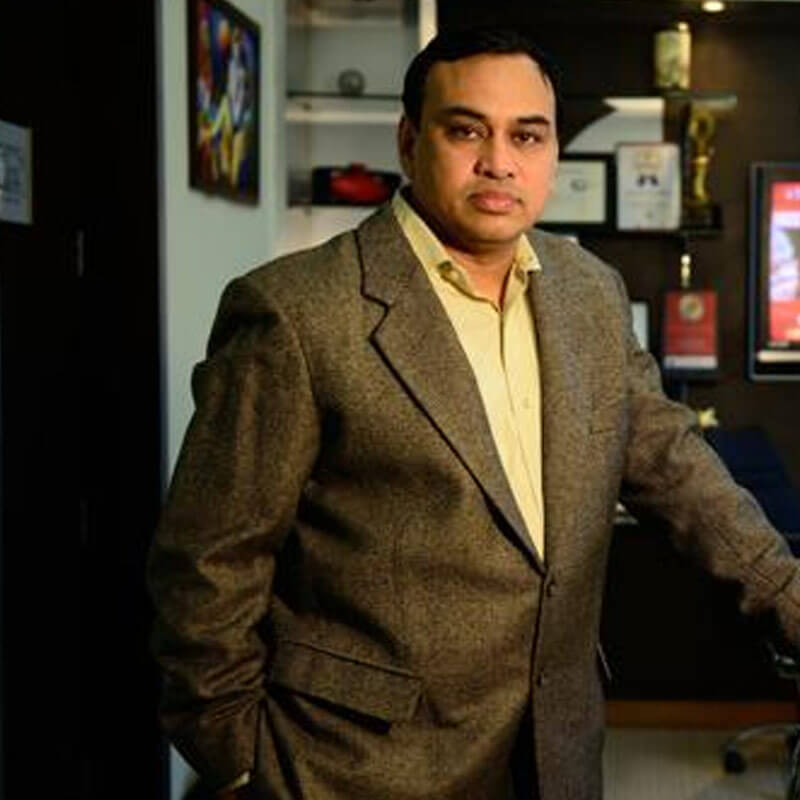
Tag: Ashok Venkatramani

  • Industry’s expectation from union budget 2020

    Industry’s expectation from union budget 2020

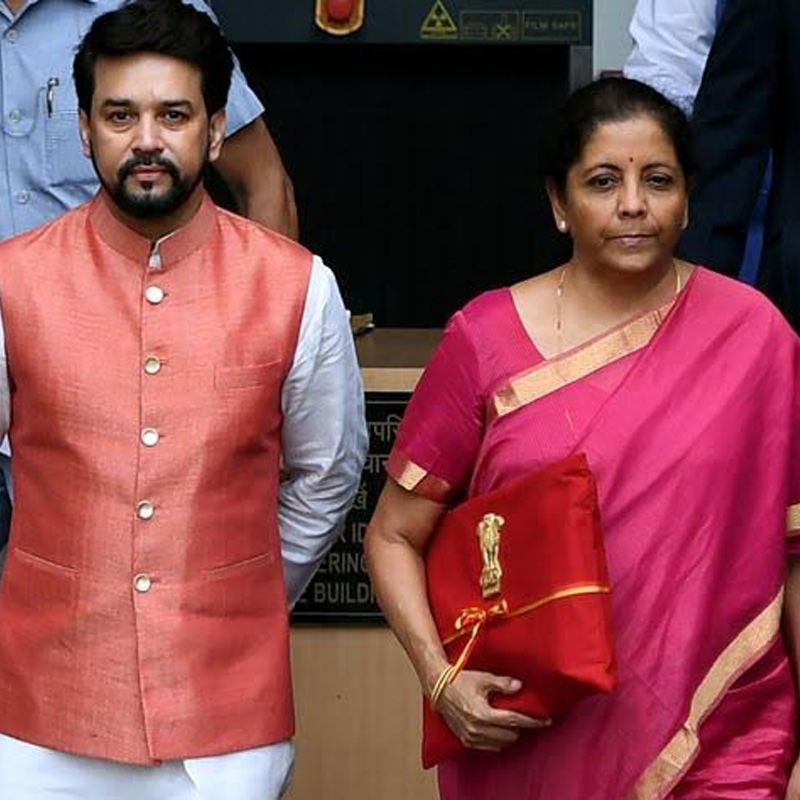
    MUMBAI: Amid ongoing economic tension in the country, finance Minister Nirmala Sitharaman is all set to present her second Union Budget on 1 February 2020.

    It is expected that Budget 2020-21 will put the economy back on track. One of the biggest challenges before the Modi government is to have a plan of action to combat the decreasing growth rate of the country. As the nation waits for the announcements, we spoke to industry experts, strategists and financial experts to know what they expect from the union budget.

    Although there won’t be any direct impact of union budget on the television industry, the economic boost in other sectors like FMCG, automobiles, retail, etc., could add to the pocket of consumers to spend more and lead to more advertising. Experts are expecting some kind of relief in these sectors so that there could be better ad growth.

    Apart from this, experts are also expecting some reduction in GST on cable and internet bill. Currently, 18 per cent GST is added on cable and internet bill and industry wants that to be brought down to 5 per cent.

    Read what people have to say:

    Maharashtra Cable Operators Federation president Arvind Ramesh Prabhoo 

    “We are expecting a reduction in the GST that is being levied on cable television because under the new NTO what we have seen is that the rates have not decreased which was envisaged by TRAI. According to the new NTO, they are expecting the cable operators and the DPOs to give a discount of 60 percent to the second television set but nowhere has the government said we will reduce the GST. We have been stating this now for a very long time that the GST should be reduced from 18 percent to 5 percent. Also what we are expecting is that on the goods of cable television and equipments of fiber to the home (FTTH)  if it is imported there should be a duty deduction or if it is being manufactured in India then there should be a reduction in GST for at least five years. So overall on the entire equipment required for fiber to the home to be incentivised there should be less taxation.”

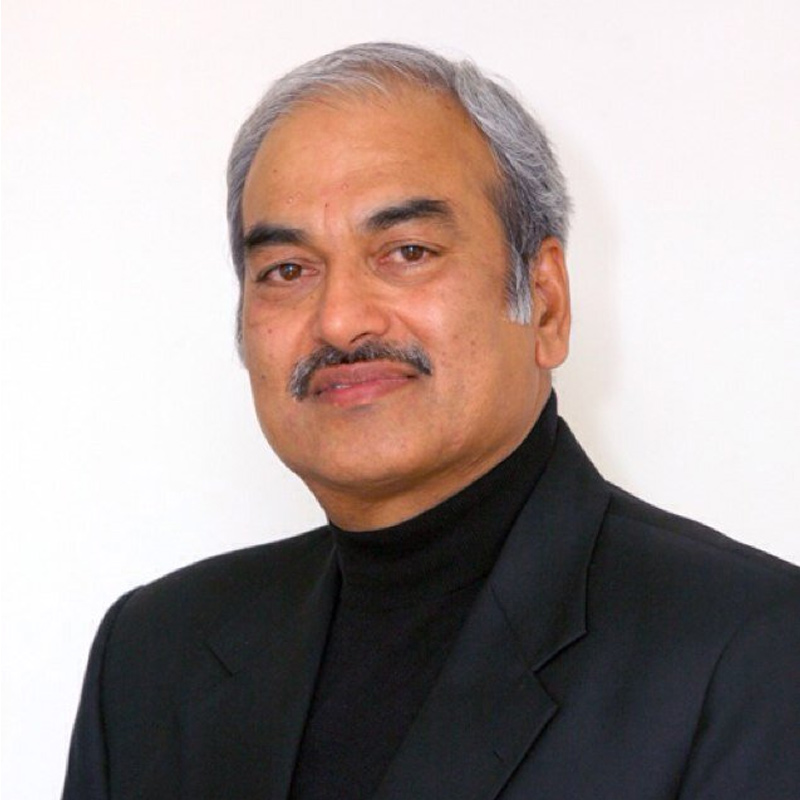
    Zee Media Corporation Limited former managing director Ashok Venkatramani

    “The biggest worry for everyone is whether the government will use this opportunity to seek some of the issues in the Indian economy so that business starts picking up. The overall industry is feeling the effects of economic slowdown because people are not spending. So it is not what the budget does for the television industry as much as it does for the overall economy to bring income flow. I am not expecting a huge structural change in the media industry because the largest part of our issues is governed by TRAI. However, television industry will gain a lot mainly when the revenue starts pumping in and for that to happen we will have to look at how consumption grew, whether it is FMCG or retail and for that. If government could do something to put more money in the pocket of average Indian to spend the consumption will grow up and automatically brands will start advertising more.”

    UCN Cable Network head  of operations Debashis Mohanty 

    “We need GST to be 5 per cent flat. Apart from the GST, I don’t think so there is going to be an exemption in NTO and NTO 2.0. The industry is in a dilemma as the changes proposed in NTO and NTO 2 have not been implemented yet.”

    SBICAP securities head of institutional equity research Rajiv Sharma

    “I don’t think so there is going to be any direct announcement because you have separate regulators and separate policies for it but what has happened is any cut in income tax or any measures to boost the economy will have a positive impact on the ad growth which has taken a toll in the last 18 months. Any measure to boost tourism or give any announcements on the film making side if possible will result in a lot of employment directly and indirectly. Any policy that could bring down the cost of production of films or some relaxation to shoot outdoors will help in revenue generation. Beyond this I am not expecting anything from the media industry perspective.”

    GTPL Hathway  vice president Yatin Gupta

    Hope that government sometime soon should cut down GST on the cable industry. There should be relaxation in customs which impacts our industry.

    Elara Capital vice president- research analyst media Karan Taurani

    "The economy is already in a dry state, there are no major expectations from the budget as such. However, for the television industry, there could be some financial stimulus that can boost the consumer derivative. There is also the expectation in the GST cut as FMCG market place almost 35 percent of the overall aspect of the entire pie and for TV it is around 55 per cent which is quite a sizeable number. So, there should be some kind of relief for the FMCG sector that can lead to better sales growth and then it could turn into a better advertisement growth. This year FMCG TV advertising has been low on the television portion. There is a contribution of nearly 50 percent from the FMCG vertical so some kind of a revival there will lead to better ad growth. Because next year industry ad growth is expected to rise by 8 per cent for the TV industry so if some funds are diverted towards that segment, certain relaxation or some GST cut will certainly help. Rural demand is taking a major hit; it has seen a sharper volume decline as compared to urban decline. So some kind of measures to bring rural demand on track will have a big impact on advertisement growth.”

    Enterr10 Television co-promoter Fakt Marathi Shirish Pattanshetty 

    “If there is q deduction in the personal income tax maybe there should be additional flow in the market in terms of improving business. It might help FMCG companies and other companies to start spending on advertising which will help the industry to get out of the current scenario. While there is the discussion on NTO and NTO 2.0 what government can look at is how they can reduce the 18 per cent GST in the base price of Rs 130 to get it to 5 percent of tax. So, that while we are working so hard to get the consumer pricing down why not the GST pricing also should be reduced on cable and DTH base subscription. On the free channels, they are welcomed to charge 18 per cent but at least at the base price if they can amend anything it might help the cable industry. Also, I believe corporate taxes have already been reduced as a boost but none of the companies are using the corporate tax reduction for outflows. They are using this tax benefit to be more profitable so that they can get a better dividend. The ultimate solution could be the reduction in personal income tax which might help the end-user to use the additional funds for consumption purposes.”

    Madison media vice president Vandana Ramkrishna

    “My expectation from the union budget 2020 will be being dynamic reforms to increase consumption and drive demand. Simplify and liberalise laws that help companies source international funding. Also, educational tax benefits need to be enhanced so that the country is able to upskill. Over and above this rationalisation in GST for electronic media is something that has been in the ask for a while.”

    White Rivers Media chief executive officer and co-founder Shrenik Gandhi

    "India maintained its tag of being the world’s fastest-growing economy, despite grim global projections in 2019 as per IMF, which also projected India’s growth rate at 7 per cent in 2020. This bears testimony to its potential of spearheading global economic growth. Budget 2020 is, therefore, Sitharaman’s opportunity to make a difference not only to Indian but also the global economy. One of the key accelerators to this will be enhancing the net disposable income, which is directly proportional to the income tax cuts, affecting the demand for goods and services, finally snowballing into economic growth or slowdown. Budget 2020 should therefore, focus on expenditure boost by lowering the personal tax rates, leading to higher savings, to pump the economy."

    Alchemy Group CEO Karan Gupta

    "With Modi government 2.0 we hope to see support for Digital 2.0, after significant growth in digital penetration and digital literacy in the country, it's now time for the government to focus more on Tier 2/3 and rural sectors. From more internet penetration to better IT Infra and connectivity empowering the new consumer with content and commerce across categories. Working towards a Digital India dream we hope to see some support for digital-first businesses and other ones that are focused on making the life a consumer more convenient and fulfilled no matter where they are based."

    Digitalabs CMO Agam Chaudhary

    “It’s a near ritual for every industry to expect measures for monetary relief from the annual budget. However this year I’d want to make an exception and expect measures that revive the economy as a whole. Our revenues are tied with both demand and supply ends of consumption. If they have robust growth, so shall we.”

    Pixel Pictures  founder and CEO Prashanti Malisetti

    "Production industry is a labor-intensive field. The entrance of OTT platforms like Netflix and Amazon Prime have changed this industry drastically. We have an opportunity to create new forms of content and explore new genres. It would help to have some incentives to create a different kind of awareness content. The consumption of video content is increasing at a rapid rate and we need to encourage more talent in this industry. Incentives to film schools and students of visual arts would be encouraging."

  • Zee Media MD Ashok Venkatramani resigns

    Zee Media MD Ashok Venkatramani resigns

    MUMBAI: Zee Media Corporation Ltd (ZMCL) announced that its managing director Ashok Venkatramani has resigned, effectively immediately from 9 July. "Ashok Venkatramani has decided to pursue interest outside the company and has accordingly resigned as Managing Director of the company with effect from close of business on July 9, 2019," said ZMCL in a notice to the BSE.

    Venkatramani joined ZMCL on 2 July as MD for a period of three years. However, he has decided to quit the post within a year of appointment.

    Venkatramani is an almunus of IIM Ahmedabad and Harvard Business School. He has over three decades of experience in the FMCG and broadcasting sectors. In his last stint he was associated with ABP News Network as CEO since 2008 before joining ZMCL. He was instrumental in rebranding Star News into ABP News.
     

  • Despite 30% y-o-y growth, Indian digital ad industry lagging behind global market

    Despite 30% y-o-y growth, Indian digital ad industry lagging behind global market

    MUMBAI: Even though the digital advertising industry is showing impressive growth, touching a year-on-year rise of around 30 per cent, there is scope for it to boom when compared to the global market. “If we look at expenditure made on digital advertisements in India, the average is still 4 dollars per view, while in countries like the US and China it is quite higher. China’s ad spends per view are at $88 per view. Even sub-Sahara African regions, which have a different GDP than ours, are spending much more than us,” said Interactive Avenues (a Reprise network company), IPGMediabrands COO Shantanu Sirohi at Future of Video-India conference in Mumbai, recently.

    He was the part of a panel discussing if digital ad spends are shifting back to TV. Joining him on the dais were Dentsu Aegis Network CEO, greater south and chairman, CEO, India Ashish Bhasin, and Zee Media managing director Ashok Venkatramani.

    The panel unanimously declined any possibility of such a shift and maintained that digital is showing tremendous growth and will continue to do so for the foreseeable future. They also said that advertisement on television is also growing, though at a slower pace.

    However, the panel highlighted some of the constraints that might hamper this glorious growth rate of the digital advertising industry in the future. Venkatramani said that the industry has come to realise that one can’t build a brand using just the digital platform. He quoted, “Digital serves a purpose, which is of performance marketing. It creates impact and also high marketability as you know what your input is and what your output is. The spends on digital also give very quick results. But what one can’t do using digital is build the brand in a classical sense.”

    Further highlighting the constraints that can hamper digital’s growth, from an advertising perspective, Ashish Bhasin added, “From an advertising perspective, digital can land into trouble in two areas. One is this whole [issue related to] reliability, credibility and fake news, wherever one’s ad is appearing. That is starting to scare off the people a little bit. And the second thing is the lack of a measurement system. This should be the most measured medium but as an industry, we haven’t come to a consensus on a common currency like BARC or IRS.”

    Sirohi concluded by saying that when it comes to keeping a tab on data, the digital medium has been ‘always over-measured’. He said, “You always have third-party applications that you can run to measure the data. The entire concept of fraudulent e-links or bots comes in when agencies or the clients are not doing what they are supposed to do. They must plan around the media and pass only the end-goal metric to the third party. Otherwise, there always are people who will figure out the way to make a little more money from the advertiser. But on the whole, the internet is not the problem.”

  • Analysis: Latest news television trends and consumption patterns

    Analysis: Latest news television trends and consumption patterns

    BENGALURU: The FICCI M&E 2019 report says that 43 percent of the 885 private TV channels in India are ‘news channels’. It further states that news, which commands a 7 percent share of viewership, garnered a disproportionately high share of advertising volumes.

    The FICCI M&E2019 report quotes Zee Media Corporation MD Ashok Venkatramani : “I am bullish on News TV. With the elections round the corner, its consumption can only go up. TV is still the best bet for getting the least cost reach and impact. Regional and hyper local TV would lead growth.”

    Further, according to a Broadcast Audience Research Council of India (BARC) report, after Hindi GEC and Hindi movies, Hindi news is the most watched genre in the country. The report also says that contrary to popular perception, TV viewership is high amongst youth (15-30 years) even in the digital age. Youth contribute 32 percent to total viewership with a 30 percent and 32 percent split between urban and rural India.

    An earlier BARC report says that news events cannot escape the lure of drama. And drama includes elections and election results, deaths of celebrities, high court and supreme court verdicts on celebrities and sensitive issues, major changes such as demonetisation announced by the central government, major public holidays such as Independence and Republic days, terrorist attacks and counter-attacks, etc.

    Until recently, (week 05 of 2019) BARC has been releasing weekly viewership data across a number of genres – in the public domain this has been limited to viewership data of the top 5 channels and programmes for the specific genre for channels that have its watermark. There are cases, such as Hindi GECs, performances across genres, etc., where BARC releases data across the top 10 channels, and there are genres such as Hindi business news which has only 2 channels, or the youth genre which age. BARC has gone dark subsequent to implementation of TRAI’s new tariff order and has stopped sharing viewership data in the public domain.

    Further, until 2018, BARC released viewership data of the top 5 Hindi news channels in the overall or combined Hindi speaking market or HSM (U+R), rural HSM or HSM (R) and urban HSM or HSM (U) and the top 5 English news channels. Since the first week of 2018,  BARC commenced releasing weekly data of the top 5 news channels in Kannada, Malayalam, Tamil and Telugu. Starting week 35 of 2018, BARC went a step further, it also started sharing data for the top 5 News channels in Assamese, Bangla, Marathi and Odisha languages in the public domain. Hence, it must be noted that the findings contained in this report are limited to viewership data of the top 5 news channels in a language or market.

    This report has been created by an analysis of BARC data of top 5 news channels of the respective channel/market starting from week 35 of 2018 and ending with week 5 of 2019 – hence data across 23 weeks in all. 

    It must be further noted that the period under consideration was eventful – the assembly elections to five Indian states were held during this period, hence the average news consumption during the same is likely to be higher than an annual average.

    So, how do Indians consume news across India? Granted that Hindi news genre is a large genre in its markets – more specifically the Hindi speaking market (HSM) across its rural (R) and urban (U) populations. But how much of it does each person in HSM watch? What is the breakup between HSM (R) and HSM (U) viewership of Hindi news? What about news in other languages? This paper looks at news watching trends across 10 languages and 12 markets. BARC has specified the following demographics of the news channels for the data that it releases in the public domain.

    (a)     Assamese News in Assam / North East / Sikkim(U+R): NCCS All: 2+ Individuals,
    (b)     Bangla News in West Bengal or WB (U+R): NCCS All : 2+ Individuals
    (c)     English News All India (U+R) : NCCS AB : Males 22+ Individuals
    (d)     Hindi News in HSM (U+R): NCCS All 15+ Individuals
    (d.1)            Hindi News in HSM (R): NCCS All 15+ Individuals
    (d,2)            Hindi News in HSM (U): NCCS All 15+ Individuals
    (e)    Kannada News: Karnataka  (U+R): NCCS All: 2+ Individuals
    (f)    Malayalam News: Kerala (U+R): NCCS All: 2+ Individuals
    (g)    Marathi News in Maharashtra/ Goa (U+R) : NCCS All : 2+ Individuals
    (h)    Oriya News in Odisha (U+R) : NCCS All : 2+ Individuals
    (i)    Tamil News: Tamil Nadu/Puducherry (U+R): NCCS All: 2+ Individuals
    (j)    Telugu News: Andhra Pradesh or AP/Telangana (U+R): NCCS All: 2+ Individuals

    To arrive at the per capita viewership or consumption, the author has considered the 23 week average number divided by the respective population of the respective market as per BARC India, households and individuals universe estimate – 2018 (BARC Population Estimates 2018). BARC considers HSM or Hindi speaking market as All India without the four South Indian markets. Hence, the author has subtracted the NCCS 15+ population of the four South Indian markets from the All India NCCS 15+ population to arrive at the HSM 15+ population numbers. BARC’s latest universe estimate 2018 was not adopted from week 01 of 2018, hence there could be a variance in the figures calculated in this report.

    In the case of per capita consumption for South India, the author has taken the sum of average weekly impressions of the top 5 channels for each language and then added the four sums to arrive at the total average weekly impressions for South India, this total average has then been divided by the combined 2+ population figures for each of the four languages/six states as per BARC Population Estimates 2018. In the case of English News, the author has calculated the NCCS 22+ Males population by extrapolating the overall male and female ratio and the ratio of the 22+ individuals with the all India population as per BARC individual numbers for NCCS A 22+ and NCCS B 22+. To arrive at the per capita consumption of news on the top 5 channels for the country, the 23 week average viewership of the 10languages has been divided by the 2+ population of India as per the above mentioned BARC Universe estimates. Individual HSM (R) and HSM (U) viewership numbers have not been considered to arrive at the per capita consumption of news on the top 5 channels for the country.

    Overall, Indians consumed a little more than 2.53(2.5339) weekly impressions of top 5 news channels across languages per person across the country during the 23 weeks under consideration. Comparative numbers for calendar year 2018 have not been indicated because of limitations of BARC data for the four of the languages which, as mentioned above were made available only week 35 of 2018 onward.

    Within individual markets, Malayalam news on the top 5 Malayalam news channels in Kerala had the highest per capita weekly consumption at slightly over 3.89 impressions during the 23 week period under consideration. The 52 week per capita average consumption of Malayalam news on the top 5 Malayalam news channels during calendar year 2018 was 3.34, which also was the highest in 8 markets across 5 languages – these were Hindi, the four South Indian languages and English.

    Assamese per capita news consumption on top 5 News channels in Assam / North East / Sikkim was next – at 3.84 weekly impressions during the 23 week period under consideration.

    From the chart above it is quite obvious that normally Indians consume more of regional news of top 5 news channels per capita in their respective regional markets as compared to Hindi news consumption per capita of Top 5 Hindi news channels in HSM. 

    In terms of absolute numbers, though more Hindi news is consumed than in any other language due to its larger population, the per capita consumption is lower than news consumption in regional markets, the exceptions being Marathi news in Maharashtra/Goa and Bengali news in West Bengal.

    Events such as elections result in a spike in news television viewership – as per the chart above, Hindi news viewership in HSM urban markets had a much bigger spike in viewership than other languages during election results week.

    Hindi, English and South Indian news channels performances during 2018 have already been reported by us.

    Here below are the details of performances of the top 5 news channels in the four languages based on analysis of BARC’S weekly lists released since week 35 of 2018 until week 05 of 2019.

    Assamese News in Assam/North East/Sikkim (Assamese region)

    As mentioned above, Assamese per capita news consumption on top 5 news channels in the Assamese region was just behind Malayalam news consumption on top 5 Malayalam news channels in Kerala. 

    As in the case of the other regional channels, there was one Assamese news channel – News Live 24×7 whose viewership far exceeded the viewership of other Assamese news channels. There were 5 channels that appeared in all the 23 BARC weekly lists of top 5 Assamese news channels.  Please refer to the chart below:

    Bangla News in West Bengal

    Bangla News per capita consumption in West Bengal of Top 5 Bangla news channels was the lowest in East India – at just 1.39 impressions per week during the period under consideration. One Bangla news channel from the homegrown Bengali Media group Ananda Bazaar Patrika (ABP) – ABP News topped ratings during all the 23 weeks under consideration in this paper. Four channels were present in BARC’s weekly lists of top 5 Bangla news channels during the 23 weeks under consideration in this paper. ABP News was followed by Zee Media Corporation’s Zee Bangla. Kolkata TV and R Plus were the other two channels that were present in BARC’s weekly lists.

    Besides the above mentioned four channels, two other channels – Bangla Time (15 weeks) and News 18 Bangla (8 weeks) also appeared in BARC’s weekly lists of top 5 Bangla News channels during the period under consideration.

    Oriya News channels in Orissa

    Ten Oriya News channels  appeared in BARC’s weekly lists of top 5 Oriya News channels during the 23 weeks under consideration. They were-DY 365,Kanak News, News Live 24×7, News World Odisha, News18 Assam, News18 Odia    News7, Odisha TV, Prag News    Pratidin Time, Zee Kalinga News, Zee Odisha. None of the ten channels appeared in all the 23 weeks under consideration.

    Marathi News channels in Maharashtra/Goa

    As mentioned above, Marathi. News per capita consumption of the top 5 Marathi News channels in the Marathi market (Maharashtra and Goa) was the lowest among the languages/markets during the 23 weeks under consideration at just 1.24 impressions. Further, in the case of Marathi News also, all the 5 channels were present in BARC’s list of top 5 Marathi News channels during all the 23 weeks under consideration. 

    ABP’s ABP Majha led viewership in the Marathi News space also. Saam TV was next, and was closely followed by Zee Media Corporation’s Zee 24 Taas. Please refer to the chart below for the performance of top 5 Marathi News channels during the 23 week period.


  • Zee Media appoints Jawahar Goel as editor-in-chief

    Zee Media appoints Jawahar Goel as editor-in-chief

    MUMBAI: Jawahar Goel, younger brother of Essel Group chairman Subhash Chandra Goel and also MD of Dish TV DTH has been appointed as editor-in-chief of Zee Media Network.

    He has been "entrusted with the overall responsibility of editorial affairs of the network" according to an official email sent from Subhash Chandra's office to top executives of the conglomerate.

    Goel would be assisted by current MD Ashok Venkatramani in operational and strategic matters for the network. In addition to being appointed editor in chief of Zee Media Network, Goel will also be the chairman of the media network's 'Editorial Governing Council' which directs the main editorial policy of the network.

    All editors of the national and regional channels would report to Goel on matters regarding editorial and policy guidelines for their respective news channels.

    According to the reports, the email mentions, "As an organisation, we should also be watchful of our costs and therefore as part of the ongoing budgeting exercise, he would also be responsible for driving cost optimisation in the network in order to create a more lean and efficient organisation which is nimble on its feet and create value for its shareholders."

    This is Goel’s second stint at editorial operations at Zee Media. He also played a similar role in the early avatar of Zee TV, the news channel that started its broadcast in the early 90s.

    Zee Media Network comprises leading Hindi national news channel Zee news, an array of regional news channels, an English news channel WION and print media publication DNA.

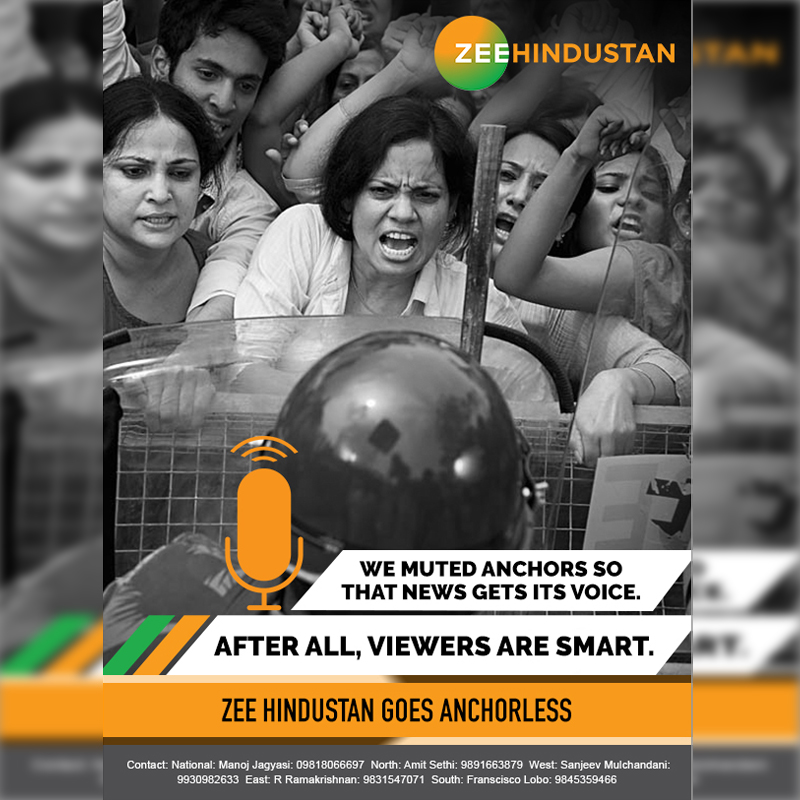
  • Zee Hindustan turns anchor-less

    Zee Hindustan turns anchor-less

    MUMBAI: The Zee Media Corporation Ltd, part of the Essel Group, today took a path-breaking step in television journalism by formally making its Hindi news channel Zee Hindustan anchor-less.

    Rajya Sabha MP and founder of Zee Dr Subhash Chandra said, “The anchors who appear on news channels often appear to give colour to a particular story. The viewers who really want to follow, or just know about the news are left with no choice but to watch that anchor. We at Zee sensed this urgency and decided to come up with an alternative which will just give news, without any views. And this is how Zee Hindustan was born.” Camera never lies, and with this new channel, the story will speak for itself and the viewers will get the correct news stories, he added.

    He also said, “Since the inception of television news in the country, nobody has thought about giving the viewers a channel which can serve this basic purpose. Zee Hindustan fills that void.”

    ZMCL managing director Ashok Venkatramani said, “The country is heading towards the biggest election battle. In a forced opinionated environment, Zee Hindustan will definitely break the clutter and create a niche for itself amongst viewers. The news in purest form and variety of content will put the channel apart from others”.

    ZMCL editor in chief Purushottam Vaishnav said, “It has been a strenuous two-month-long journey for all of us and my team did a commendable job in launching this channel in such a brief time. Zee Hindustan will give you news, without any views.”

    Zee Hindustan is a 24-hour Hindi TV news channel and a part of Zee Media Corporation Ltd. It was launched in May 2017 with the motto 'States Make The Nation'.

    “This was the day 91 years back when my great grandfather founded the firm, which is today's Essel,” Dr Chandra had tweeted on the channel's launch.

  • Zee Media appoints Ashok Venkatramani as MD

    Zee Media appoints Ashok Venkatramani as MD

    MUMBAI: ABP News Network former CEO Ashok Venkatramani has been appointed as the new MD of Zee Media Corporation Ltd (ZMCL) for three years. The appointment will come into effect from 1 July 2018.

    “Based on recommendation of Nomination & Remuneration Committee and subject to requisite regulatory approvals, including approval of shareholders, appointment of Mr. Ashok Venkatramani as Managing Director of the company [is approved] for a period of three years with effect from July 1, 2018,” ZMCL informed the Bombay Stock Exchange.

    Venkatramani brings with him an experience of over 25 years in FMCG and broadcasting sectors. Prior to joining ZMCL, he also worked with ABP group for over eight years having joined ABP News in 2008. 

    Venkatramani started his career with Unilever. He was the VP and business head – skincare for Unilever in India till 2008, before moving as the CEO of ABP News Network, which he headed until 2016. He was instrumental in turning around ABP’s TV news business and successfully managed the transition from Star brand to ABP.

    Venkatramani, 55, is a B. Tech from Bombay University and has done his management education from Indian Institute of Management Ahmedabad and Harvard Business School.

  • Ashok Venkatramani joins Chrome Data Analytics & Media

    MUMBAI: Ashok Venkatramani, the former CEO of ABP news Network, has joined Chrome Data Analytics & Media Private Limited as a director in a consulting capacity. He brings with him an experience of over 25 years in sales, marketing and general management roles in the FMCG and broadcasting sectors.

    Chrome DM has been a pioneer for over eight years in broadcast distribution audits and primary media research in India. Over the years, the company has built strengths across big data and primary consumer research & analytics. In his role, he will be working closely with the group’s leadership team.

    Chrome DM has recently launched a new “Consumer & Market Research Services” vertical.

    This business vertical leverages Chrome’s nationwide field force and proprietary technology tools for primary consumer research. Within a short span of six months, it has already bagged accounts of leading brands & a wide spectrum of clients. Venkatramani’s engagement would further strengthen this initiative. While he would be based out of Mumbai, he would be equally involved with the Delhi team.

    “Chrome has witnessed unprecedented growth over the years, and is today an accepted currency for over 600+ TV channels,” said Venkatramani.

    Commenting, Chrome Data Analytics & Media founder & managing director Pankaj Krishna said, “As a young company, Ashok’s years of experience make for the perfect fit for us. He has been the driving force in his previous roles at Unilever and ABP, and we’re looking forward to the value he will add with his inputs.”

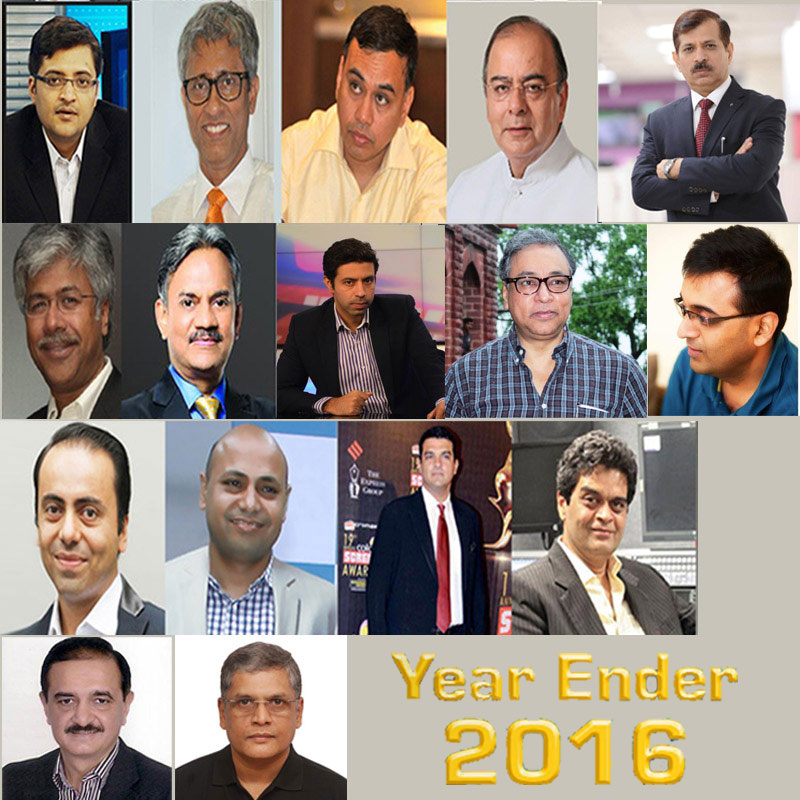
  • High profile executive departures in 2016

    High profile executive departures in 2016

    MUMBAI/NEW DELHI: As the year comes to a close, let’s take a dekko at the major parting of ways between individuals and companies and also in companies themselves that hit the Indian broadcast, cable, satellite TV sectors. The list is definitely not comprehensive but the effort has been to try and cover what we at indiantelevision.com consider major split ups, including in the government.

    Arun Jaitley: One of the most powerful politicians in the country was entrusted by PM Modi some very important portfolios when the BJP-led government came to power mid-2014.

    In a cabinet reshuffle in November 2014, Jaitley was also handed the important ministry of information & broadcasting (MIB) and he headed three ministries at one time, including the all-powerful Ministry of Finance.

    However mid-2016, MIB was handed to M. Venkaiah Naidu. Critics said it was PM’s way of sending a message to Jaitley, but with three ministries under him, it was asking too much from the man even as brilliant as he is. Jaitley retains the portfolios of  Corporate Affairs and Finance — and, probably, could turn out to be PM Modi’s best lieutenant in the all-out war on black economy declared via  demonetisation of high-value currency notes and other proposed measures .  

    Jawhar Sircar: A senior bureaucrat-academecian, he quit the government to take up in 2012 the challenging post of CEO of India’s pubcaster Prasar Bharati, overseeing the monolithic Doordarshan and the widely-reached All India Radio.

    An outspoken person and a hard taskmaster, Sircar attempted to bring about a revolution in Prasar Bharati’s way of functioning and improve its revenue and reach.

    Partially successful, he met with lot of resistance trying to change a slothful giant. In private, he admitted that what frustrated him was that the pubcaster is manned by a bunch corrupt, no-good, job-for-life-security-seeking blokes, who wanted to retain the status quo.

    With his tenure scheduled to end in first quarter of 2017, a “tired” Sircar (as per his own admissions on social media) finally threw in the towel and sought early retirement in October 2016, which was granted by the government. Sircar returned to his home base in Kolkata to lead a  retired life and giving talks on issues related to primarily arts. 

    Arnab Goswami: The popular anchor had made shouting out his guests as the trademark of his prime time show – News Hour on Times Now. So one only expected his departure to be as noisy – though it was unfathomable by many who thought he and the channel were one – conjoined at the hip.

    And Arnab did not disappoint. The media went berserk: mainline and trade portals, social media, could not stop talking about his departure for weeks, months, and they have not stopped even as the year is coming to a close.

    Goswami’s new venture, believed to be on the cutting edge of technology — and news – is christened Republic.

    Ashok Venkatramani: The CEO of ABP News saw the news network being reinvented, rebranded and recreated from Star News to ABP News a few years ago without losing viewership and business. Venkatramani strengthened the companys financials, brough in systems and rigour making ABP News a viable business operation. He improved the company’s margins, keeping costs under control, even as he expanded ABP News Network’s portfolio to five TV channels, six mobile products, six websites and three additional revenue verticals. Venkatramani quietly resigned without any hullabaloo in November after serving out his notice period. He was replaced by Atideb Sarkar, the son of ABP editor in chief Arup Sarkar.

    Rahul Shivshankar: He left News X in November 2016 to fill the the big shoes left behind by Arnab Goswami. The Kartikeya Sharma owned NewsX flourished under his ediorial leadershup of three years during the TAM era. The journey after BARC’s evolution was not  as good, but the former Headlines Today journalist has his own following.

    Known to be an insightful, incisive journalist, Shivshankar joined Times Now on 15 December as Chief Editor, returning to the company after six years.

    Shivshankar was Senior Editor in his previous stint at the Times Now. And he seems to have done well as Arnab’s replacement. Times Television Network CEO MK Anand has come on record to state that the news network’s viewership share has stayed intact, unaffected by the larger than life news anchor’s departure.

    Sameer Ahluwalia: In one of the more controversial moves, Zee Business head Sameer Ahluwalia parted ways with Zee Media Corp Ltd (ZMCL)  Ahluwalia was associated with the Zee Network for 19 years  and was known to be a close confidante of ZMCL chairman Subhash Chandra.

    Samir’s name was embroiled in the case of the alleged extortion of Rs 100 crore along with Zee News Editor-in-chief Sudheer Chaudhary. To make matters clear, the management had immediately accepted his resignation.

    RK Arora: Zee Media has seen a lot of changes in 2016, with RK Arora being one of those who made an entry and then an exit. Known for his industry acumen and powerful contacts, RK Arora quit Zee Media as executive director and chief cxecutive officer after a stint of around 15 months.

    Arora had joined Zee in May 2015 and parted ways in August 2016. The former News Nation strategic and operational head and ITV Network senior executive has moved onto a new venture JK Media and got into the business of running television news once again.

    Zee Media Group CEO News cluster Bhaskar Das: Leadership to him means delivering outcomes and not outputs. Identifying and mitigating pain-points come naturally to him. With a career spanning over three years, he was responsible for driving up the revenue of all news channels from the cluster that includes channels such as Zee News, Zee Business, Zee 24 Taas (Marathi) and 24 Ghanta (Bengali).

    Earlier this year, he was moved to Zee Entertainment’s media sales arm, Zee Unimedia. As the president and chief growth and innovation officer, he heads the group’s news business operations, including the digital properties.

    CNBC TV18 CEO Anil Uniyal: After working with the TV18 Broadcast for more than 15 years, Uniyal decided to hop on to the Raghav Bahl-Bloomberg venture. An insight provocateur, catalyst, a leader, he  served the network in various positions such as business director for Forbes, head of TV 18 Media operations, COO for Network 18 and lastly CEO for CNBC TV 18 and CNBC Awaaz. Uniyal joined as the CEO to lead Bahl’s joint venture with  Bloomberg.

    CNBC Awaaz and CNBC Bazaar editor Sanjay Pugalia: Right after the exit of Uniyal, Pugalia called it a day at Network18. He moved on after 12 years as editor of CNBC Awaaz and CNBC Bajar. Further, under his leadership CNBC Awaaz went to the number 1 position in its segment. Pugalia played an important role in the launch of Star News in India. He went on to join as president and editorial director of both, Raghav Bahl’s The Quint and Bloomberg Quint.

    India TV  CEO Paritosh Joshi: It’s all about respect and relationships for him. Acting as a strategist at India TV since 2012, he was brought on board as CEO in November 2015. While everyone hoped that this would be a long association, it was clearly taxing for him as he continued to commute between two metros. He has completed the circle and is back to being a strategist. The primary reason behind his exit was to return to his family in Mumbai. After quitting as the CEO of Star CJ Network in 2012, Joshi planned on starting his own venture in the media and entertainment space. He founded Principal, an advisory to advise clients on corporate strategy, marketing, revenue enhancement and other issues.

    Zee Digital Debashish Ghosh: With the explosion in the OTT and VOD ecosystem, opportunities are coming a-plenty for professionals. Zee Digital Convergence CEO Debashish Ghosh put in his papers at Zee Digital and hopped on board the Chinese tech and consumer electronics major LeEco. The salt and pepper coloured hair head took over as the new COO at LeEco’s India outfit in June 2016. While at Zee, he had taken charge of all the digital businesses of the Essel Group in India as CEO and whole time board director of India.com network in February 2013. He started his career with the Times of India Group in 1990 and worked as head of technology and advertising operations to becoming Times Business Solutions CEO in 2012.

    Zee TV Business Head Pradeep Hejmadi: From a broadcasting company to an audience measurement system and back to broadcasting, Hejmadi has seen it all. With multi-dimensional understanding of the media businesses, he moved from Nickelodeon India as director for business and operations to spearhead TAM media research as senior VP. He was responsible for revenue generation, client management, new business development and new product development. In July 2014, Zee Entertainment Enterprises Ltd (Zeel) appointed him as the business head of its flagship Hindi entertainment channel Zee TV.  Hejmadi called his last at Zee in May  2016 after spending two years with the company.

    Disney India CEO Siddharth Roy Kapur:  Kapur was one of the newsmakers  of the year 2016. He is married to the beuatiful Vidya Balan and his brothrs Aditya and Kunal have made a mark for themselves in Bollywood as on-screen talent.

    Siddharth quit Disney India as managing director in October to explore his own business interests. He was replaced by Mahesh Samat, the former CEO, who returned to the position that he held between 2008 and 2012, and officially took charge on November 28.

    While working for the company, Kapur introduced the Indian Broadway version of the timeless classic ‘Beauty and the Beast’, which was a huge success, apart from launching a slate of Bollywood projects for the studio and fine tuning the network’s channel bouquet.

    He joined UTV in 2005, took over as chief executive officer of UTV Motion Pictures in 2008 and after the integration of UTV with The Walt Disney Co. (India) in 2012, held the role of managing director-studios.

    He was promoted as managing director of Disney India in 2014.


    S.N. Sharma: He left a company he helped cofound to assist Reliance Industries boss Mukesh Ambani’s Jio to roll out a national cable TV and broadband network. But earlier this year, cable vet SN Sharma quit Jio to go back to his  original home DEN Networks.

    His former boss  Sameer Manchanda gave him a call and told him he needed his help to whip the floundering national MSO into shape. SN – not one to ignore a challenge – took up the assignment. Pradeep Parmeswaran the DEN CEO stepped down,  paving  the way for Sharma to come back, and continued  as an advisor to the company.

    Sharma has his task cut out but he has been taking strong but effective  steps with the company’s national jont ventures and he is steering it strongly into broadband. He  has confessed his stint at Reliance Jio has imbibed in him a telecom rigour which should go a long way in helping steer  DEN Networks into the fast lane.


    Jagdish Kumar Pillai: The buzz was anyway gaining in strength; that Jagdish Kumar was counting his days at the national MSO – probably the most respected nationally. And that he had got the go-ahead to depart from both the Hathway Cable & Datacom management and director Viren Raheja who has been spearheading his father Rajan  Rahejas’s  cable TV venture.

    With cable TV ARPUs being restrained the company is being restructured with Jagidish quitting and being replaced by Hathway broadband president  Rajan Gupta who was named the managing director. President – video business T. Panesar was also elevated as CEO-video business.

    Jagdish who was with the MSO for around half a decade said he was taking a sabbatical before making his  next move.


  • High profile executive departures in 2016

    High profile executive departures in 2016

    MUMBAI/NEW DELHI: As the year comes to a close, let’s take a dekko at the major parting of ways between individuals and companies and also in companies themselves that hit the Indian broadcast, cable, satellite TV sectors. The list is definitely not comprehensive but the effort has been to try and cover what we at indiantelevision.com consider major split ups, including in the government.

    Arun Jaitley: One of the most powerful politicians in the country was entrusted by PM Modi some very important portfolios when the BJP-led government came to power mid-2014.

    In a cabinet reshuffle in November 2014, Jaitley was also handed the important ministry of information & broadcasting (MIB) and he headed three ministries at one time, including the all-powerful Ministry of Finance.

    However mid-2016, MIB was handed to M. Venkaiah Naidu. Critics said it was PM’s way of sending a message to Jaitley, but with three ministries under him, it was asking too much from the man even as brilliant as he is. Jaitley retains the portfolios of  Corporate Affairs and Finance — and, probably, could turn out to be PM Modi’s best lieutenant in the all-out war on black economy declared via  demonetisation of high-value currency notes and other proposed measures .  

    Jawhar Sircar: A senior bureaucrat-academecian, he quit the government to take up in 2012 the challenging post of CEO of India’s pubcaster Prasar Bharati, overseeing the monolithic Doordarshan and the widely-reached All India Radio.

    An outspoken person and a hard taskmaster, Sircar attempted to bring about a revolution in Prasar Bharati’s way of functioning and improve its revenue and reach.

    Partially successful, he met with lot of resistance trying to change a slothful giant. In private, he admitted that what frustrated him was that the pubcaster is manned by a bunch corrupt, no-good, job-for-life-security-seeking blokes, who wanted to retain the status quo.

    With his tenure scheduled to end in first quarter of 2017, a “tired” Sircar (as per his own admissions on social media) finally threw in the towel and sought early retirement in October 2016, which was granted by the government. Sircar returned to his home base in Kolkata to lead a  retired life and giving talks on issues related to primarily arts. 

    Arnab Goswami: The popular anchor had made shouting out his guests as the trademark of his prime time show – News Hour on Times Now. So one only expected his departure to be as noisy – though it was unfathomable by many who thought he and the channel were one – conjoined at the hip.

    And Arnab did not disappoint. The media went berserk: mainline and trade portals, social media, could not stop talking about his departure for weeks, months, and they have not stopped even as the year is coming to a close.

    Goswami’s new venture, believed to be on the cutting edge of technology — and news – is christened Republic.

    Ashok Venkatramani: The CEO of ABP News saw the news network being reinvented, rebranded and recreated from Star News to ABP News a few years ago without losing viewership and business. Venkatramani strengthened the companys financials, brough in systems and rigour making ABP News a viable business operation. He improved the company’s margins, keeping costs under control, even as he expanded ABP News Network’s portfolio to five TV channels, six mobile products, six websites and three additional revenue verticals. Venkatramani quietly resigned without any hullabaloo in November after serving out his notice period. He was replaced by Atideb Sarkar, the son of ABP editor in chief Arup Sarkar.

    Rahul Shivshankar: He left News X in November 2016 to fill the the big shoes left behind by Arnab Goswami. The Kartikeya Sharma owned NewsX flourished under his ediorial leadershup of three years during the TAM era. The journey after BARC’s evolution was not  as good, but the former Headlines Today journalist has his own following.

    Known to be an insightful, incisive journalist, Shivshankar joined Times Now on 15 December as Chief Editor, returning to the company after six years.

    Shivshankar was Senior Editor in his previous stint at the Times Now. And he seems to have done well as Arnab’s replacement. Times Television Network CEO MK Anand has come on record to state that the news network’s viewership share has stayed intact, unaffected by the larger than life news anchor’s departure.

    Sameer Ahluwalia: In one of the more controversial moves, Zee Business head Sameer Ahluwalia parted ways with Zee Media Corp Ltd (ZMCL)  Ahluwalia was associated with the Zee Network for 19 years  and was known to be a close confidante of ZMCL chairman Subhash Chandra.

    Samir’s name was embroiled in the case of the alleged extortion of Rs 100 crore along with Zee News Editor-in-chief Sudheer Chaudhary. To make matters clear, the management had immediately accepted his resignation.

    RK Arora: Zee Media has seen a lot of changes in 2016, with RK Arora being one of those who made an entry and then an exit. Known for his industry acumen and powerful contacts, RK Arora quit Zee Media as executive director and chief cxecutive officer after a stint of around 15 months.

    Arora had joined Zee in May 2015 and parted ways in August 2016. The former News Nation strategic and operational head and ITV Network senior executive has moved onto a new venture JK Media and got into the business of running television news once again.

    Zee Media Group CEO News cluster Bhaskar Das: Leadership to him means delivering outcomes and not outputs. Identifying and mitigating pain-points come naturally to him. With a career spanning over three years, he was responsible for driving up the revenue of all news channels from the cluster that includes channels such as Zee News, Zee Business, Zee 24 Taas (Marathi) and 24 Ghanta (Bengali).

    Earlier this year, he was moved to Zee Entertainment’s media sales arm, Zee Unimedia. As the president and chief growth and innovation officer, he heads the group’s news business operations, including the digital properties.

    CNBC TV18 CEO Anil Uniyal: After working with the TV18 Broadcast for more than 15 years, Uniyal decided to hop on to the Raghav Bahl-Bloomberg venture. An insight provocateur, catalyst, a leader, he  served the network in various positions such as business director for Forbes, head of TV 18 Media operations, COO for Network 18 and lastly CEO for CNBC TV 18 and CNBC Awaaz. Uniyal joined as the CEO to lead Bahl’s joint venture with  Bloomberg.

    CNBC Awaaz and CNBC Bazaar editor Sanjay Pugalia: Right after the exit of Uniyal, Pugalia called it a day at Network18. He moved on after 12 years as editor of CNBC Awaaz and CNBC Bajar. Further, under his leadership CNBC Awaaz went to the number 1 position in its segment. Pugalia played an important role in the launch of Star News in India. He went on to join as president and editorial director of both, Raghav Bahl’s The Quint and Bloomberg Quint.

    India TV  CEO Paritosh Joshi: It’s all about respect and relationships for him. Acting as a strategist at India TV since 2012, he was brought on board as CEO in November 2015. While everyone hoped that this would be a long association, it was clearly taxing for him as he continued to commute between two metros. He has completed the circle and is back to being a strategist. The primary reason behind his exit was to return to his family in Mumbai. After quitting as the CEO of Star CJ Network in 2012, Joshi planned on starting his own venture in the media and entertainment space. He founded Principal, an advisory to advise clients on corporate strategy, marketing, revenue enhancement and other issues.

    Zee Digital Debashish Ghosh: With the explosion in the OTT and VOD ecosystem, opportunities are coming a-plenty for professionals. Zee Digital Convergence CEO Debashish Ghosh put in his papers at Zee Digital and hopped on board the Chinese tech and consumer electronics major LeEco. The salt and pepper coloured hair head took over as the new COO at LeEco’s India outfit in June 2016. While at Zee, he had taken charge of all the digital businesses of the Essel Group in India as CEO and whole time board director of India.com network in February 2013. He started his career with the Times of India Group in 1990 and worked as head of technology and advertising operations to becoming Times Business Solutions CEO in 2012.

    Zee TV Business Head Pradeep Hejmadi: From a broadcasting company to an audience measurement system and back to broadcasting, Hejmadi has seen it all. With multi-dimensional understanding of the media businesses, he moved from Nickelodeon India as director for business and operations to spearhead TAM media research as senior VP. He was responsible for revenue generation, client management, new business development and new product development. In July 2014, Zee Entertainment Enterprises Ltd (Zeel) appointed him as the business head of its flagship Hindi entertainment channel Zee TV.  Hejmadi called his last at Zee in May  2016 after spending two years with the company.

    Disney India CEO Siddharth Roy Kapur:  Kapur was one of the newsmakers  of the year 2016. He is married to the beuatiful Vidya Balan and his brothrs Aditya and Kunal have made a mark for themselves in Bollywood as on-screen talent.

    Siddharth quit Disney India as managing director in October to explore his own business interests. He was replaced by Mahesh Samat, the former CEO, who returned to the position that he held between 2008 and 2012, and officially took charge on November 28.

    While working for the company, Kapur introduced the Indian Broadway version of the timeless classic ‘Beauty and the Beast’, which was a huge success, apart from launching a slate of Bollywood projects for the studio and fine tuning the network’s channel bouquet.

    He joined UTV in 2005, took over as chief executive officer of UTV Motion Pictures in 2008 and after the integration of UTV with The Walt Disney Co. (India) in 2012, held the role of managing director-studios.

    He was promoted as managing director of Disney India in 2014.


    S.N. Sharma: He left a company he helped cofound to assist Reliance Industries boss Mukesh Ambani’s Jio to roll out a national cable TV and broadband network. But earlier this year, cable vet SN Sharma quit Jio to go back to his  original home DEN Networks.

    His former boss  Sameer Manchanda gave him a call and told him he needed his help to whip the floundering national MSO into shape. SN – not one to ignore a challenge – took up the assignment. Pradeep Parmeswaran the DEN CEO stepped down,  paving  the way for Sharma to come back, and continued  as an advisor to the company.

    Sharma has his task cut out but he has been taking strong but effective  steps with the company’s national jont ventures and he is steering it strongly into broadband. He  has confessed his stint at Reliance Jio has imbibed in him a telecom rigour which should go a long way in helping steer  DEN Networks into the fast lane.


    Jagdish Kumar Pillai: The buzz was anyway gaining in strength; that Jagdish Kumar was counting his days at the national MSO – probably the most respected nationally. And that he had got the go-ahead to depart from both the Hathway Cable & Datacom management and director Viren Raheja who has been spearheading his father Rajan  Rahejas’s  cable TV venture.

    With cable TV ARPUs being restrained the company is being restructured with Jagidish quitting and being replaced by Hathway broadband president  Rajan Gupta who was named the managing director. President – video business T. Panesar was also elevated as CEO-video business.

    Jagdish who was with the MSO for around half a decade said he was taking a sabbatical before making his  next move.