Tag: Ashok Patole

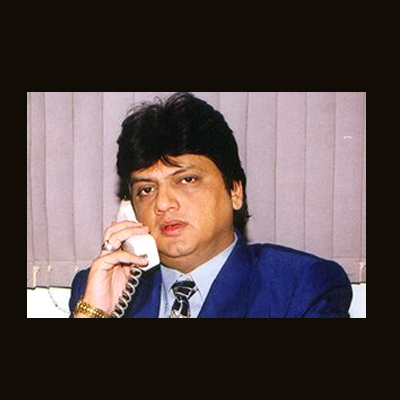
  • “Putting up hoardings here and there does not bring in viewers”  : Markand Adhikari vice-chairman and managing director, SABe (Sri Adhikari Brothers Entertainment) TV

    “Putting up hoardings here and there does not bring in viewers” : Markand Adhikari vice-chairman and managing director, SABe (Sri Adhikari Brothers Entertainment) TV

    “Last year was not good for all channels except one,” Markand Adhikari, vice-chairman and managing director, SABe (Sri Adhikari Brothers Entertainment) TV, has been quoted as saying. Adhikari is confident that 2002 will be different, though. Different, because he believes viewers are getting increasingly fatigued with the same family dramas, whether it is in the afternoons or at prime time. The audiences are looking for some relief and that is what SABe TV will provide, Adhikari avers, mainly through humour based programming.

    Towards this end, on 25 February, a new sitcom Sajan Tu Jhoot Mat Bol is launching. Once that is launched, the 8 pm to 10 pm band will constitute sitcoms. There is also a current affairs band that the channel is developing. And with the recent introduction of the cartoon cult classic Asterix in the 7 pm slot, SABe TV is the only channel where there are no family dramas on show between 7 pm and 10:30 pm weekdays.

    SABe TV is a digital free-to-air channel beaming off Asiasat 3 and was launched on 23 April 2000. The channel claims it now reaches over 28 million homes across India up from 15 million last year.

    Thomas Abraham caught up with Markand Adhikari for a lowdown on where the channel was headed.

    Excerpts:

    What made you decide to position SABe TV as a ‘relief channel’ different from the rest?
    The feedback that we have been getting tells us that viewers are tired of the sameness of it all on the other channels. And they are looking for some relief. Therefore the positioning and our focus on sitcoms.

    When did you launch the new baseline Come Smile With US?
    That has been on since the start of the year.

    ‘Since our programmes are now getting tangible viewer attention, the target is to channelise that into getting advertising.’
     

    Could you elaborate on the programming mix the channel is looking at?
    From 25 February, we are launching a new sitcom Sajan Tu Jhoot Mat Bol. It is directed by Rajan Waghdhare and the writer is Ashok Patole. They have also done Yes Boss and Sriman Srimati for SABe TV. Once that is launched, the 8 pm to 10 pm band will constitute sitcoms.
    Then there is a current affairs band from 10 – 10:30 pm five days a week, with shows hosted by well known names like Karan Thapar, Vir Sanghvi, Priya Tendulkar and Manoj Raghuvanshi.

    What about the weekend?
    There is the Telethriller we launched in December, a one and a half hour show that airs from 9 pm to 10:30 pm on Sundays.

    What about advertising? The ad market has contracted in the last year. And it will obviously have affected the smaller channels such as yours more. Any comments?
    We are yet to complete two years on air, so that doesn’t really apply here as we are still in our early growth phase.

    Which shows are getting you the most as far as ad revenues are concerned?
    We have not reached a stage where we can sell our programmes individually. We are selling the whole channel so advertising is spread across. If you were to mark out one show though, then it would have to be Office Office (SABe TV’s celebrated sitcom).
    SABe TV’s strategy is to slowly increase the rates. Since our programmes are now getting tangible viewer attention, the target is to channelise that into getting advertising.

    In fact, from the next financial onwards, we will be making programme specific sales pitches.

    What about profits? When do you see break-even?
    We have reached a stage now where from the next quarter we will be able to declare a consolidated break-even quarter-on-quarter.

    On 23 January, the BSE imposed a 25 per cent margin on SABTNL shares due to a surge in activity seen around the share in recent times. What do you ascribe the reasons for this to?
    We do not comment on decisions made by the BSE but it should be noted that our share price was grossly undervalued so if there is increased buying, it is a reflection of that.

    There is some talk that the heightened activity could be around rumours of a strategic investor coming on board. Any move in that direction?
    Nothing has been finalised on that. We are open to investment proposals but we are essentially looking for a partner who can add value to the business.

    ‘We are essentially looking for a partner who can add value to the business.’
     

    What about your distribution? The Turner deal collapsed in August so who is doing it now?
    We have our own distribution team in place. An example of how effective our team has been can be gauged from the fact that in Mumbai, a good 40 per cent of C&S viewers get SABe TV in the prime band (the first 12 channels). In UP (Uttar Pradesh), this goes up to 60 per cent. This is as per TAM (AC Nielsen’s TAM Media research) connectivity data and not our own figures.

    Other channels are pumping in big money towards promotional activity that is very visible. As a channel head said, ‘In this business you have to spend to grow.’ But SABe TV does not seem to be doing any promotional spends at all. Will this change or will you continue with your strategem that content alone will drive viewership to your channel?
    To say we do not spend on promotion is incorrect. When we launched, we spent Rs 11 crore (Rs 110 million). This (financial) year we spent Rs 6 crore and we will be spending an equal amount next year as well.

    I don’t believe in blind publicity. Just putting hoardings here and there does not bring in the viewers. We believe we have the right content in the right place. And that is what will take the channel ahead.
  • “My programmes may not find enough takers on TV amid the regressive wave” : Ajai Sinha

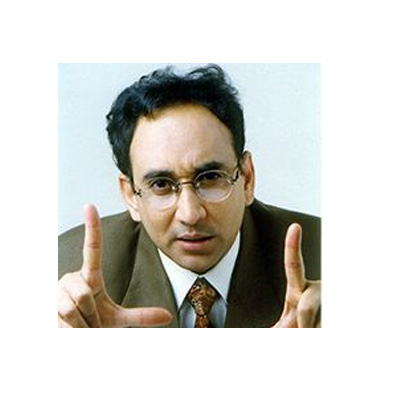
    “My programmes may not find enough takers on TV amid the regressive wave” : Ajai Sinha

    Hasratein was his ticket to fame in the heady early days of satellite television in India.

    The effective, empathetic portrayal of the other woman was a revolutionary concept for Indian TV, but Ajai Sinha made it work. In the seven years since then, he has turned out just a few more serials, content on working one project at a time and maintaining high standards of quality. Justujoo, currently airing on Zee, is just another example. Between Hasratein and Justujoo, Sinha has also directed Gudgudee, a sitcom that ran on Zee for two years and Samay, a weekly serial that boasted a cast of 18 lead characters.

    For someone who started out with ambitions of making it big as an actor but turned into a director midway, it’s been a long way down a road less travelled by.

    Excerpts of an interview with indiantelevision.com correspondent,Amar.

    Is being a producer-director an advantage or a disadvantage?
    A bit of both, actually. The advantage is that I have complete say over financial matters and decisions about the shooting. The director is often constrained by budgetary limits set by the producer and his creative freedom is curtailed to a large extent. This does not hold for me, as I am my own boss. Also, I am in direct touch with the channel over my programme. The disadvantage of course, is that financial and administrative responsibilities that I shoulder sometimes affect my concentration on direction.

    Channels feel more secure handing over another project in the same genre to a director instead of experimenting with something new.

    ____________

    Which subjects appeal the most to you?
    None in particular. I have tried to be as diverse in my subjects as possible. After Hasratein, which was based on an extra-marital relationship, I did a sitcom Gudgudee and followed it up with Samaywhere the protagonist was a 70-year-old woman suffering from Alzheimer’s disease and could not recognize her children correctly.Justujoo is the story of a man who is attracted to his sister-in-law. It is unfortunate that people tend to connect me only with Hasratein and the extra-marital theme.

    But doesn’t the channel do this typecasting for its convenience?
    Probably. Once a director has delivered quality drama, quality comedy or quality suspense, the channel feels more secure handing over another project in the same genre to him instead of experimenting with something new.

    How did the actor in you turn into a director?
    Actually, I wanted to be an actor and acted in several serials. But I always felt I could add much more if I were behind the camera. I have also been a writer, singer and musician. I felt these abilities converged very well into the overall responsibilities of a director. Somewhere I was seeking greater creative satisfaction when I decided to venture into direction.

    I assisted director Padmanabhan on four episodes of a sitcom Kissa Tota Maina Ka. But beyond that, it is my observations of the directorial process while I was acting that came in very handy. I feel my passion for direction compensated for my lack of training.


    On the Sets of Gudgudee
    TV is all about making the audience feel as though a certain incident is taking place in their own lives.

    What are the important factors you bear in mind before starting a new project?
    The most basic and important factor I have in mind is that I should not repeat myself. I like to do something I have not done before.

    And what would you not compromise on as a director?
    I never compromise on the authenticity of a scene. If I feel that a 15 second footage shot in the gym or on the beach will make a scene appear more authentic, I will shoot the scene there instead of the characters narrating the same. This no doubt, incurs an additional cost, which most producers might want to avoid. But I have never fooled the audience.

    Who are your favourite writers?
    Ishan Trivedi, Ashok Patole, Raghuvir Shekawat and Mir Muneer.

    Are you completely opposed to directing serials for outside banners?
    Not totally, but by and large, yes. I have not had a pleasant experience working for an outside banner. I was directing Dollar Bahu for an outside producer. But once the programme started building up, the producer started indulging in excessive and unwarranted cost-cutting. He probably felt that by getting someone else to direct, he would be able to save costs substantially. So, I moved out.

    Today’s serials are basically a conglomeration of high voltage scenes with very little substance in the content.

    Explaining scene to actors on the sets Of Hasratein

    On what basis do you choose a channel for your serial?
    So far, I’ve been with Zee because I find them most open to new ideas. Also, I have a good rapport with them, since I have worked with them for several years. But I am open to other channels. I am negotiating with Mak TV for one of my serials. I had shot the pilot of a sitcom, Jale to Phooljhadi, Phate to Bomb for Star last year, but at the eleventh hour, Star ditched us and gave the slot to Neerja Guleri.

    Do you feel hassled by Executive Producers in channels over storyline, cast and other matters?
    No. Fortunately, I have been able to convince executive producers of my point of view and I don’t remember any occasion when we have had a major disagreement.

    Who are your favourite directors?
    Mehboob Khan, Hrishikesh Mukherjee, Bimal Roy and Raj Kapoor.

    What is the constitution of your production set-up?
    Because I usually do only one project at a time, I have very few people employed with me on a full time basis. But I have my own editing set-up. Besides, my wife as the executive producer functions as the backbone of my production. We also have two production people and an accountant employed on a fulltime basis.

    What do you feel about the quality of serials today vis-?-vis ten years ago?
    I feel the quality has certainly gone down today. Today’s serials are basically a conglomeration of high voltage scenes with very little substance in the content.


    A Clipping From Justujoo

    Who do you blame for this?
    I would blame it on our audience. Whether you accept it or not, the IQ level of our audience is very low. They enjoy regressive, make-believe saas-bahu conflicts but do not like new concepts that would open up their minds. And I will tell you why this is happening. Ten, fifteen years ago, the audience that was going to cinema halls were the lower class, relatively uneducated people while the upper class, educated people would watch TV. Today, the same people who would throng cinema halls ten years back, stay glued to the TV sets while those who would then patronize television are no longer such avid viewers. This is why the entire cycle has reversed. The quality of TV programmes today can be equated with the quality of movies in the eighties; and the quality of movies today can be equated with the quality of TV programmes in the eighties.

    What factors do you consider before taking somebody under your wing?
    I would look for a person with a good educational background, common sense and a good understanding of cinema.

    Are you satisfied with your innings as director?
    By and large, yes. I never expected to win the best director’s award in a competition that had me locked with some of the most influential production houses that had the backing of the most powerful channels. But my winning the award only vindicated the fact that my work has quality and is different from the ordinary. I am pretty satisfied with the work I have done.

    A Scene from Samay

    What is it that distinguishes Ajai Sinha- the director from the rest?
    I try to pump in as much realism into every scene as I can. TV is all about making the audience feel as though a certain incident is taking place in their own lives. The audience has to relate instantly. I will tell you about a scene from Justujoo and you see how close this could be to a real life incident. I have this tendency of sneezing every morning after waking up and I like to see tissue paper kept all around. When I am not able to find tissue paper on waking up, I tend to get irritated. The same scene was enacted in Justujoo, wherein Harsh Chhaya would shout at his wife over this trivial issue. It looked so very real and identifiable.

    Besides, like I said I have never compromised on the authenticity of a scene. See, the attitude of most producers today is to save costs relentlessly, but I have never subscribed to this attitude. Even if a small 15-second scene appears ineffective from the costing point of view, but I feel that this scene is important I go ahead with it.

    What does the future hold for you?
    I plan to venture into film direction. Even though I have never gone by the trend, the fact is that in front of the regressive wave that exists today in programming, my kind of programmes may not find enough takers. So it is always better to venture into films.

  • SABe TV launching new sitcom 25 February

    SABe TV launching new sitcom 25 February

    SABe TV continues on its promise of providing ‘relief’ to viewers with the launch on 25 February of a new sitcom Sajan Tu Jhoot Mat Bol. 

    The show is directed by Rajan Waghdhare and written by Ashok Patole, the same team that has given the well known SABe TV sitcoms Yes Boss and Sriman Srimati.

    Also launching on 25 February are some new current affairs progranmmes which will lock in the 10 to 10:30 pm band five days a week. Karan Thapar hosts two shows, Line of Fire on Mondays and Court Martial on Thursdays. Both the shows are in English. Veer Sanghvi hosts another English show Meeting of Minds on Tuesdays, while Priya Tendulkar anchors Jawab Talab, modelled on BBC’s Hard Talk, Wednesdays.

    To round it off on Fridays there is Khula Manch (open platform) which has Manoj Raguvanshi in the anchor’s seat. Unlike the other new shows, though, Khula Manch is a one-hour programme.

    Once these programming initiatives are instituted, SABe TV will have the distinction of not having a single soap in the time band from 7 pm to 10:30 pm. SABe TV’s family dramas will essentially be confined to the afternoon slot.

    The programming format is as follows:

    Time    Programme
    7:00 pm    Asterix
    7:30 pm    Alif Laila
    8:00 pm    Office Office
    8:40 pm    Sajan Tu Jhoot Mat Bol
    9:10 pm    Yes Boss
    9:40 pm    Sriman Srimati
    10:10 pm    Colonell (a whodunnit detective series)
    10:30 pm – 11 pm    Current Affairs show