Tag: Ashok Nambissan

  • Ritesh Khosla appointed as SPNI’s general counsel

    Ritesh Khosla appointed as SPNI’s general counsel

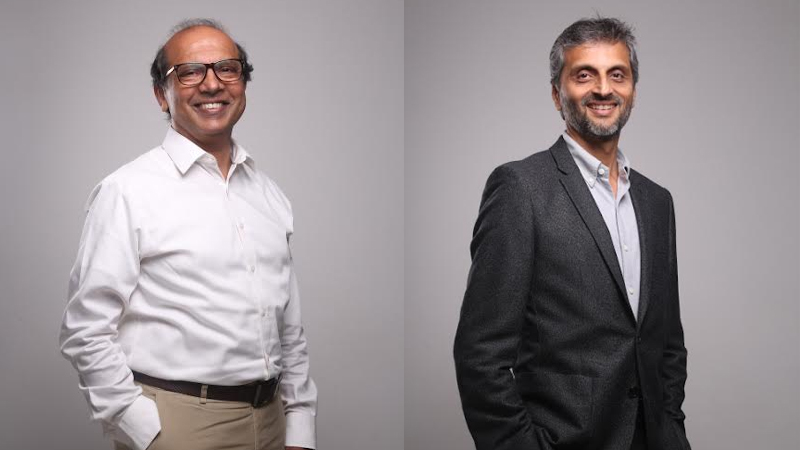
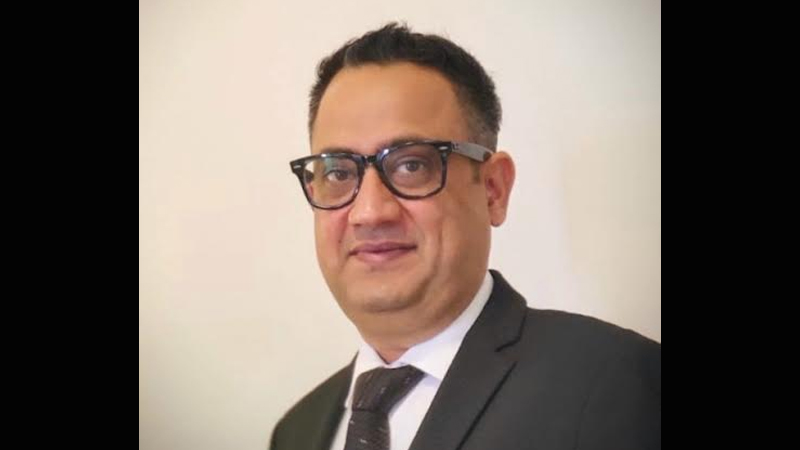
    Mumbai: Sony Pictures Networks India (SPNI) has announced that Ritesh Khosla has been appointed as the new general counsel, effective 1 September 2024. He succeeds Ashok Nambissan, who is retiring after a distinguished career with the company.

    Ritesh began his career as a practising lawyer in a law firm before joining SPNI, where he steadily advanced, serving as deputy general counsel for the past six years. With over two decades of experience, his expertise includes mergers and acquisitions (M&A), joint ventures (JVs), regulatory frameworks, compliance, corporate governance, complex litigation, and intellectual property rights (IPR) protection and enforcement.

    In his new role, Ritesh will oversee SPNI’s corporate relations, legal and regulatory affairs, secretarial and standards & practices functions. He will provide risks and legal guidance, manage the company’s legal risks, and serve as the company’s Ombudsperson. He will report directly to the managing director & CEO of Sony Pictures Networks India.

    Aside from his core duties, Ritesh will lead initiatives to enhance SPNI’s compliance framework, especially in digital and intellectual property rights. He will also strengthen the company’s legal infrastructure in international markets and oversee SPNI’s corporate social responsibility (CSR) initiatives, aligning them with legal and ethical standards. Ritesh’s dedication to mentoring and developing emerging legal talent within the organization is a testament to his commitment to the company’s future.

    Ritesh is known for his strategic thinking and decisive legal skills, which he brings to the table with a commercial mindset for problem-solving and risk mitigation. He has consistently shown leadership in complex legal situations, contributing significantly to the company’s growth and compliance efforts.

    Reflecting on his appointment, Ritesh Khosla said, “I am deeply honoured to become General Counsel at SPNI. My journey here has been incredibly enriching, and I am eager to continue working with our talented team. This role offers a unique opportunity to build on the strong legal foundation established under Ashok Nambissan’s leadership. I am committed to upholding the highest standards of legal and ethical conduct and advancing SPNI’s mission to deliver exceptional content and experiences to our audiences.”

  • SPNI announces Ashok Nambissan & Nitin Nadkarni’s retirement

    SPNI announces Ashok Nambissan & Nitin Nadkarni’s retirement

    Mumbai: Sony Pictures Networks India (SPNI) has announced the retirement of two key leaders, general counsel Ashok Nambissan and chief financial officer (CFO) Nitin Nadkarni, effective 31 August 2024. Their contributions have been instrumental in shaping SPNI’s success.

    Nitin Nadkarni, who joined SPNI in 2005, has been an invaluable leadership team member, driving the financial mandate and leading strategic financial initiatives for SPNI globally. As CFO, head of broadcast operations and network engineering (BONE), and head of commercial, Nitin has been pivotal in optimising SPNI’s commercial operations, ensuring maximum efficiency, and driving profitability through innovative strategies and diligent management. His sharp business acumen and analytical mindset have been instrumental in SPNI’s financial growth strategy. He has guided SPNI on its sustainability journey, implementing numerous initiatives to achieve a zero environmental footprint by 2050.

    With over four decades of experience in the financial sector, Nitin has garnered extensive expertise across industries, including engineering, specialty chemicals, and media & entertainment. His deep knowledge has significantly influenced SPNI’s strategies and operations, providing a solid foundation for the company’s future. Throughout his tenure, he has played a crucial role in fortifying SPNI’s financial resilience, implementing robust internal controls, and enhancing our financial reporting systems. His steadfast commitment to transparency and accountability has set benchmarks within the organisation, ensuring the company’s financial stability and growth.

    “Working alongside the leadership team at SPNI has been an enriching experience. Our efforts have always focused on maintaining the highest financial integrity and operational excellence standards. I am proud of our efforts in fostering a culture of accountability and precision. This commitment to excellence continues to drive our success and innovation in the industry,” said Nitin Nadkarni.

    According to SPNI MD & CEO NP Singh, “Nitin has been a pillar of strength for SPNI. His financial expertise, strategic insights, and unwavering commitment to excellence have significantly contributed to the company’s success. His leadership has been invaluable in navigating complex financial landscapes and driving sustainable growth. We are immensely grateful for his dedication and wish him all the best in his future endeavours.”

    Ashok Nambissan has been a vital part of SPNI since 2007, playing a crucial role in shaping its legal and regulatory framework and ensuring compliance across all operations. He oversaw the corporate relations, legal and regulatory affairs, and standards & practices functions for SPNI’s businesses in India. As the company’s Ombudsperson, he demonstrated exemplary dedication to integrity and ethical conduct. His leadership successfully navigated SPNI through complex legal landscapes, safeguarding the company’s interests and fostering a culture of compliance. Notably, Ashok was instrumental in significant achievements such as renegotiating IPL rights and acquiring Ten Sports. His strategic insights and legal expertise have consistently propelled the organisation forward.

    Reflecting on his time at SPNI, Ashok remarked, “My journey at SPNI has been enriching and filled with growth and learning. I am grateful for the opportunities and the support of my colleagues, who made this journey memorable. Contributing to major negotiations and acquisitions and collaborating with industry bodies to shape regulatory frameworks have been career highlights. I am honoured to have been part of the network’s evolution and the launch of new channels and digital platforms, which have been significant milestones.”

    SPNI MD & CEO NP Singh shared, “Ashok’s contributions have been fundamental to our success. His legal expertise and strategic vision have guided SPNI through many challenges and opportunities. Ashok’s leadership in major acquisitions and his skill in navigating complex legal issues have set a high standard for our legal and regulatory practices. His involvement in initiatives like the joint venture with BBC Earth and the expansion of SonyLIV has been crucial. We extend our best wishes to Ashok for a fulfilling retirement.”
     

  • Sony Pictures Networks India partners with The Indian Performing Right Society

    Sony Pictures Networks India partners with The Indian Performing Right Society

    MUMBAI: Sony Pictures Networks India (SPN), has entered into a licensing agreement with The Indian Performing Right Society (IPRS), thereby being able to mine the IPRS music bank for its broadcast and digital business verticals in India.

    With access to music comprising millions of works from authors, composers and music publishers, SPN has taken the lead in promoting an organized music licensing industry in the country.

    The IPRS is India’s only copyright society, registered under the Copyright Act of 1957, authorized to carry out the copyright business for musical and literary works (lyrics), associated with members comprising authors (lyricists), music composers and music publishers.

     Sony Pictures Networks India general counsel Ashok Nambissan said, “With this licensing agreement, we fortify our endeavor to remain a
    network of choice for the creative workforce in our country.”

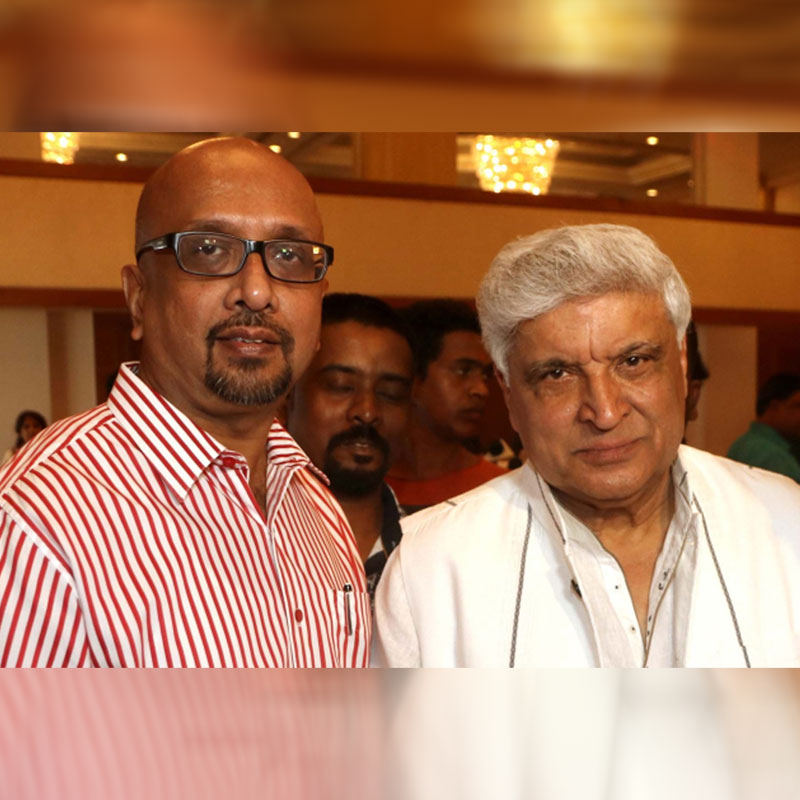
    IPRS chairman Javed Akhtar said “This is welcome news. I would like to congratulate both SPN and IPRS for working collaboratively. The creative community welcomes Sony Pictures Networks India (SPN) to IPRS as a licensee and I look forward to this relationship being
    strengthened further.”

    IPRS CEO Rakesh Nigam adds “We welcome Sony Pictures Networks India into the IPRS family of licensees. We are excited about our new partnership. We commend SPN’s mature approach to doing business and look forward to a successful partnership. IPRS is committed to working
    cooperatively and closely with its licensee partners, their continued success is important for IPRS and all its members.”

  • TRAI open house: Broadcasters root for tariff distinction between subscribers

    TRAI open house: Broadcasters root for tariff distinction between subscribers

    MUMBAI: With an aim to get the broadcasters’ viewpoint on tariff issues related to commercial subscribers, the Telecom Regulatory Authority of India (TRAI) held an open house discussion in Delhi on 18 August.


    While welcoming the open house initiative held under TRAI chairman Ram Sewak Sharma, the Indian Broadcasting Foundation (IBF) member channels discussed issues including differentiation between domestic and commercial subscribers for provision of TV signals, the criteria for drawing distinction between ordinary subscribers and commercial subscribers, tariff framework both at wholesale and retail levels, transparency and accountability in value chain to effectively minimise disputes and conflicts among stakeholders and engagement of broadcasters in the determination of retail tariffs for commercial subscribers.


    IBF president and Star India CEO Uday Shankar said, “It is inconceivable that any sector regulator would actually equate five star hotels and commercial establishments with domestic consumers as far as tariffs are concerned. But that’s exactly what TRAI has done with rates for pay TV channels. I am not sure what exactly the regulator is trying to achieve with the present dispensation, i.e. five star hotels availing TV content at subsidised rates especially when they charge a leg and arm for a room, a meal or even a bottle of water? It appears to be a case of misguided regulatory zeal. I hope better sense prevails and the regulator does what is in the interest of its primary stakeholders, i.e. broadcasters and distribution platforms and not five star and four star hotels.”


    IBF secretary general Girish Srivastava added, “In keeping with the priorities of the current government of improving ease of doing business in India, such fixation is not warranted and forbearance should be the way forward. We believe that the regulator will factor that putting a ceiling on tariff will not help in promoting and protecting the interests of the ordinary consumers but will serve as an aberration to the growth story of the sector. Broadcasters have been unvarying and undeviating on this front and the regulator will hopefully keep this in mind before deciding on a regulation.”


    According to Multiscreen Media Limited general counsel Ashok Nambissan, commercial and residential subscribers are two completely different categories. “The residential subscriber consumes television content for his or her own use whereas the commercial subscriber provides television content for his customers to propagate the business of his establishment. Tariff regulation in today’s age is an anomaly: in any event it should not exist for commercial subscribers as a category whether at the wholesale or retail level and should be left to the market,” he said.


    Zee Entertainment president – legal & regulatory A. Mohan opined, “All along it has been TRAI’s consistent stand that there is a distinction between ordinary and commercial subscribers and the same has been recognised by various judicial forums such as the Hon’ble TDSAT and the Hon’ble Supreme Court of India.  This stand of TRAI is also reflected in various tariff orders of TRAI, except the last one, that the tariff applicable to commercial subscribers is under forbearance. Since the commercial establishments will use the television services for commercial exploitation, whether directly or indirectly, the tariff applicable for ordinary subscriber, which is frozen since the year 2004 (which is a subsidised tariff) cannot be applied to commercial subscribers.”


    Star India president – legal & regulatory Deepak Jacob said, “The Supreme Court has time and again in sectors such as oil and gas and power, clearly upheld the principles of differential tariffs for commercial and domestic subscribers. The rationale of differentiation is based on an understanding of motive and purpose i.e. commercial establishments have a clear profit motive and that the end usage is for a valuable benefit that accrues to and is built in to the charges paid by the consumer. It is also important that the regulator respects the mandate of Parliament and acts in accordance with laws laid down by the legislature by ensuring that the TRAI regulations/tariff orders are not in derogation of or repugnant to the provisions of Copyright Act, which is the principle legislation that governs content owners including broadcasters. The Copyright Act unequivocally provides for a separate dispensation in so far as commercial establishments are concerned and hence we hope that the regulator keeps the same in mind while formulating the new tariff regime.”


    BBC India COO Naveen Jhunjhunwala added, “We strongly advocate a distinction between ordinary and commercial subscribers as far as tariff is concerned since the place of viewing the TV signal and type of usage of TV signals is inherently different in both these categories. Having a global presence, we have seen that the regulators have left determination of tariffs to forbearance thereby ensuring dynamic competition.  With Government focus on making India an easier place to do business, leaving things to market forces will ensure growth and be in line with international scenario.”