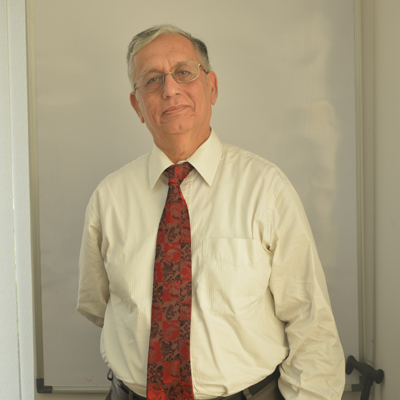
Tag: Ashok Mansukhani

  • Ashok Mansukhani takes over as IMCL CEO & MD

    Ashok Mansukhani takes over as IMCL CEO & MD

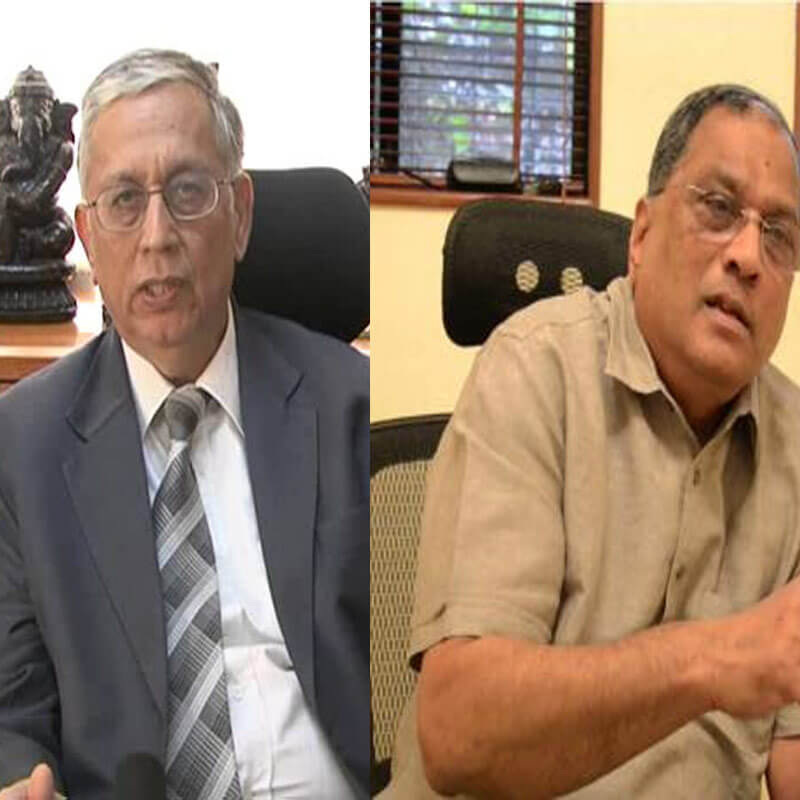
    MUMBAI: Hinduja Ventures Limited (HVL)’s whole-time director Ashok Mansukhani will take over from Tony D’Silva aftre the latter completes necessary formalities.

    D’Silva, after being with the Hinduja group for over four and half years, since August 2012, had expressed his desire to demit office in order to pursue other interests and spend more time with his family.

    On 1 August, 2012, D’Silva took over as the HVL president and strategised the group’s media business. He went on to head Hinduja Group companies — IndusInd Media Communications Limited and Grant Investrade Ltd. – as their MD and CEO, where he completed his service contract on 31 January ’17.

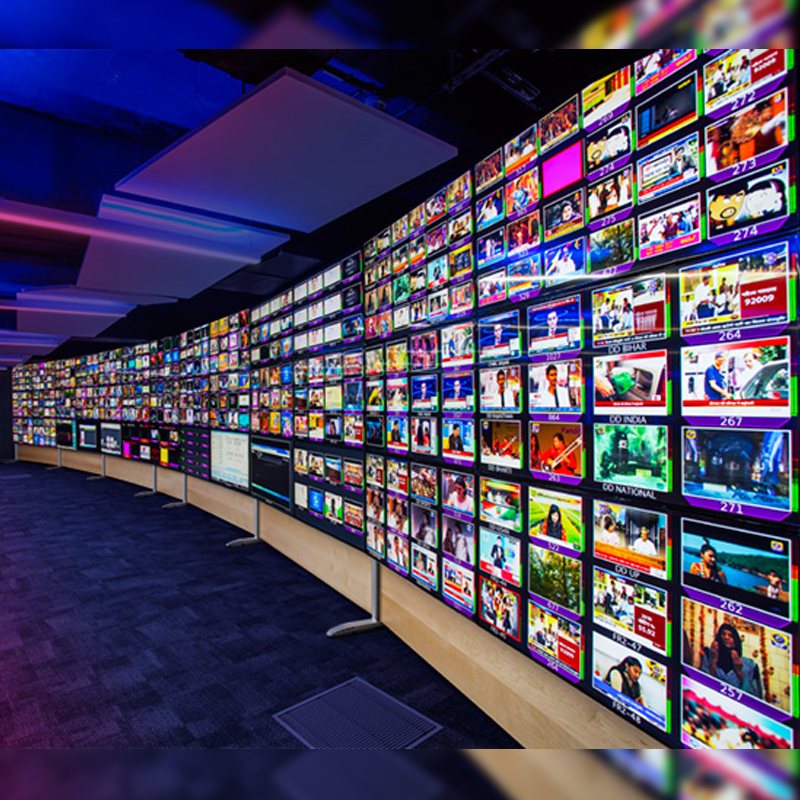
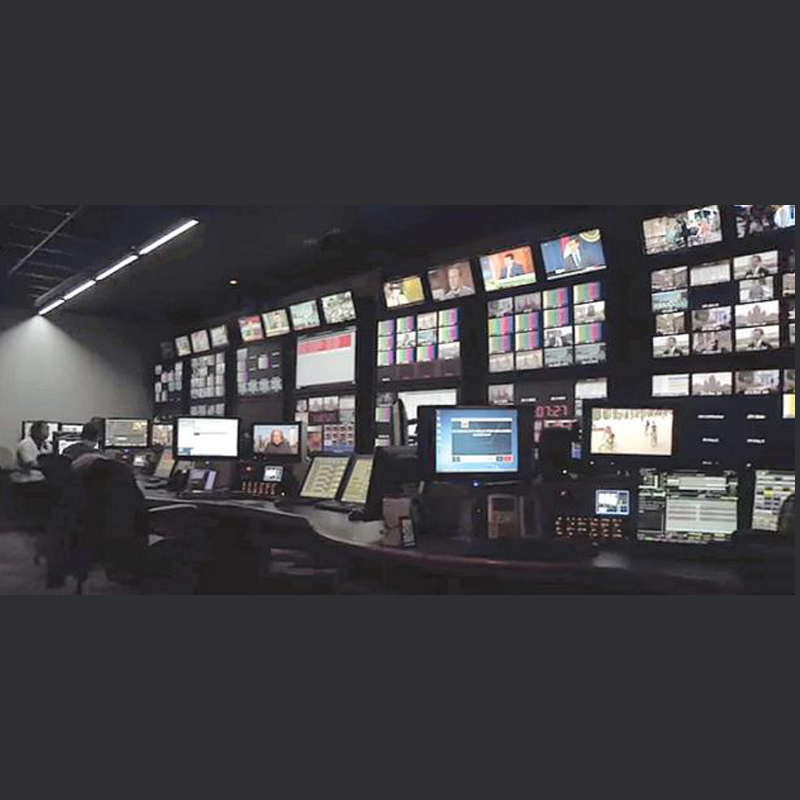
    D’Silva, in a span of around five years, overhauled the group’s media businesses in a challenging and changing environment and put it on a strong platform for growth. Under his leadership, the business conceived and launched the unique Headend-in-the-Sky (HITS) platform, designed to boost the digitisation of local cable operators and MSOs.

    D’Silva and his team established the concept of prepaid model in the cable industry, a revolution in the prevailing system of credit extension which was stressing out business.

  • NXT Digital-InCable merger gets shareholder nod; D’Silva bemoans lack of ecosystem support

    NXT Digital-InCable merger gets shareholder nod; D’Silva bemoans lack of ecosystem support

    MUMBAI: Hinduja Ventures Ltd’s (HVL’s) proposal to demerge its NXT Digital headend in the sky (HITS) business from its subsidiary Grant Investrade Ltd (GIL) and merge it into its cable TV MSO offshoot Indusind Media & Communications Ltd (IMCL) got the thumbs up from its shareholders at its AGM yesterday.

    The cable veteran and IMCL MD & CEO Tony D’Silva says that IMCL is now on the road to fully digest NXT Digital. “We are following the legal process and have already applied to the Bombay High Court and we have also informed the Ministry of Information and Broadcasting.”

    What drove the reorganisation? D’Silva explains: “When we launched NXT Digital, it was incorporated under GIL as an independent company. At that time, we thought it’s better to apply for a licence under GIL and we got the licence. We also thought that it’s better we keep GIL as the company away from IMCL so that no operator will feel that this is a backdoor entry to take over IMCL. But now the time has passed. GIL is an established company and so the NXT Digital move.”

    HVL whole time director Ashok Mansukhani adds that work is already on to integrate both NXT Digital and InCable. Says he: “We are starting with the backend. We are already synergising both the services. We have one of the best subscriber management systems (SMS) in HITS – ICC from Hansen Technologies. InCable is using Magnaquest for its SMS it is also migrating towards ICC. They will be kept separate but there will be one front end irrespective of who the operator is. “

    D’Silva says that more than 700 cable operator premise equipment (COPEs) have been installed so far. “An estimated three million cable TV subscribers are watching television through our HITS platform,” he reveals. “The philosophy of NXTDigital is very clearly to encourage the cable operator to grow and develop his/her business and also that we are a pure service provider. We don’t want to own any network and that message has gone to all the operators across the country.”

    NXT Digital is offering four different packages to MSOs and LCOs who opt for its service. The Gold Cope cost about Rs 13.5 lakh and gives a bouquet of 550 channels, the Silver costs Rs 10 lakh (450 channels) and the Bronze Rs nine lakh (350 channels). A new Eco package has been introduced for Phase IV areas with its price point being Rs 4 lakh (250 channels).

    D’Silva points out that almost 60 per cent of the installations are of the Gold Cope Unit in Phase III areas. “Even smaller markets are wanting HD channels,” he says.

    But even so the management at NXT Digital is pretty frustrated, and are especially concerned about the future of cable TV digitization. Says Mansukhani: “The final date of digitization is the bottleneck for us. Some 50 cases are pending in the high court. On Monday some cases will be hear. On 26 September there will be five cases in front of a chief justice and on 5 October 35 cases will be heard by a single bench. The chief justice has received these cases and whether they were issued in the constitutional law and interpretation of legislation – that decision will be taken on Monday.”

    The nuking of the sunset date for digitization in phase III areas by the various court cases has blown up the progress of NXT Digital. “We had earlier agreed between the IBF, MSOs, TRAI and MIB jointly that till 31 December 2015 the sunset date for Phase III broadcasters would not charge the digital rate to facilitate to process of digitisation,” says D’Silva. “That agreement is valid even today. But broadcasters are charging cable operators analogue rates in Phase III areas and they are slapping us with digital tariffs for the same regions. How is this fair? NXT Digital does not own any network…we are providing services. The same principle should apply to phase IV also where 60 million homes need to be digitized.”

    D’Silva exhorts broadcasters and the industry to give it its total support on HITS as it is a step forward in infrastructure sharing (which is a subject of a consultation paper that the Telecom Regulatory Authority of India put up recently).

    “This must be allowed. How will a big MSO in a small area function when the switchoff happens? He has to come to me. The fact is banks are sharing infrastructure in ATMs. Telcos are doing so too. Why spend money on overbuilding infrastructure,” he asks. “Excepting one broadcaster, all of them are permitting us to provide passive services to MSOs who have a DAS licence and have content agreements with them with the proviso that they pay directly to the broadcaster subject to the SMS report filed by our HITS platform. This one broadcast network is hell bent on undermining our effort to provide television to far flung subscribers in the interiors.”

    He further adds” “Then, the subscriber in Phase IV is paying Rs 60-80 for his channels. With a digitized package it could go up to Rs 160 or so. Even otherwise he may have to pay Rs 40 for just a handful of encrypted channels. The beneficiaries are only the broadcasters and they don’t have any digital model for rural India. The BARC ratings shows more and more free to air channel are popular in rural India. Who is going to pay for pay channels?”

    Asks Mansukhani: “Are we going to have a digital divide in our country? Digitisation will only be limited to metropolitan India and benefits will not flow to rural India. And going by the current goings-on there is a great danger of that happening.”

  • NXT Digital-InCable merger gets shareholder nod; D’Silva bemoans lack of ecosystem support

    NXT Digital-InCable merger gets shareholder nod; D’Silva bemoans lack of ecosystem support

    MUMBAI: Hinduja Ventures Ltd’s (HVL’s) proposal to demerge its NXT Digital headend in the sky (HITS) business from its subsidiary Grant Investrade Ltd (GIL) and merge it into its cable TV MSO offshoot Indusind Media & Communications Ltd (IMCL) got the thumbs up from its shareholders at its AGM yesterday.

    The cable veteran and IMCL MD & CEO Tony D’Silva says that IMCL is now on the road to fully digest NXT Digital. “We are following the legal process and have already applied to the Bombay High Court and we have also informed the Ministry of Information and Broadcasting.”

    What drove the reorganisation? D’Silva explains: “When we launched NXT Digital, it was incorporated under GIL as an independent company. At that time, we thought it’s better to apply for a licence under GIL and we got the licence. We also thought that it’s better we keep GIL as the company away from IMCL so that no operator will feel that this is a backdoor entry to take over IMCL. But now the time has passed. GIL is an established company and so the NXT Digital move.”

    HVL whole time director Ashok Mansukhani adds that work is already on to integrate both NXT Digital and InCable. Says he: “We are starting with the backend. We are already synergising both the services. We have one of the best subscriber management systems (SMS) in HITS – ICC from Hansen Technologies. InCable is using Magnaquest for its SMS it is also migrating towards ICC. They will be kept separate but there will be one front end irrespective of who the operator is. “

    D’Silva says that more than 700 cable operator premise equipment (COPEs) have been installed so far. “An estimated three million cable TV subscribers are watching television through our HITS platform,” he reveals. “The philosophy of NXTDigital is very clearly to encourage the cable operator to grow and develop his/her business and also that we are a pure service provider. We don’t want to own any network and that message has gone to all the operators across the country.”

    NXT Digital is offering four different packages to MSOs and LCOs who opt for its service. The Gold Cope cost about Rs 13.5 lakh and gives a bouquet of 550 channels, the Silver costs Rs 10 lakh (450 channels) and the Bronze Rs nine lakh (350 channels). A new Eco package has been introduced for Phase IV areas with its price point being Rs 4 lakh (250 channels).

    D’Silva points out that almost 60 per cent of the installations are of the Gold Cope Unit in Phase III areas. “Even smaller markets are wanting HD channels,” he says.

    But even so the management at NXT Digital is pretty frustrated, and are especially concerned about the future of cable TV digitization. Says Mansukhani: “The final date of digitization is the bottleneck for us. Some 50 cases are pending in the high court. On Monday some cases will be hear. On 26 September there will be five cases in front of a chief justice and on 5 October 35 cases will be heard by a single bench. The chief justice has received these cases and whether they were issued in the constitutional law and interpretation of legislation – that decision will be taken on Monday.”

    The nuking of the sunset date for digitization in phase III areas by the various court cases has blown up the progress of NXT Digital. “We had earlier agreed between the IBF, MSOs, TRAI and MIB jointly that till 31 December 2015 the sunset date for Phase III broadcasters would not charge the digital rate to facilitate to process of digitisation,” says D’Silva. “That agreement is valid even today. But broadcasters are charging cable operators analogue rates in Phase III areas and they are slapping us with digital tariffs for the same regions. How is this fair? NXT Digital does not own any network…we are providing services. The same principle should apply to phase IV also where 60 million homes need to be digitized.”

    D’Silva exhorts broadcasters and the industry to give it its total support on HITS as it is a step forward in infrastructure sharing (which is a subject of a consultation paper that the Telecom Regulatory Authority of India put up recently).

    “This must be allowed. How will a big MSO in a small area function when the switchoff happens? He has to come to me. The fact is banks are sharing infrastructure in ATMs. Telcos are doing so too. Why spend money on overbuilding infrastructure,” he asks. “Excepting one broadcaster, all of them are permitting us to provide passive services to MSOs who have a DAS licence and have content agreements with them with the proviso that they pay directly to the broadcaster subject to the SMS report filed by our HITS platform. This one broadcast network is hell bent on undermining our effort to provide television to far flung subscribers in the interiors.”

    He further adds” “Then, the subscriber in Phase IV is paying Rs 60-80 for his channels. With a digitized package it could go up to Rs 160 or so. Even otherwise he may have to pay Rs 40 for just a handful of encrypted channels. The beneficiaries are only the broadcasters and they don’t have any digital model for rural India. The BARC ratings shows more and more free to air channel are popular in rural India. Who is going to pay for pay channels?”

    Asks Mansukhani: “Are we going to have a digital divide in our country? Digitisation will only be limited to metropolitan India and benefits will not flow to rural India. And going by the current goings-on there is a great danger of that happening.”

  • Stakeholders welcome easing of FDI norms for broadcasting; want DAS to move faster

    Stakeholders welcome easing of FDI norms for broadcasting; want DAS to move faster

    NEW DELHI: The broadcasting sector and particularly the cable sector welcomed the government’s announcement bringing almost the entire broadcasting sector under the automatic route for foreign direct investment.

    Stakeholders said the step was very timely as the country was on the verge of completing the transformation to digital addressable systems for cable television.

    The government had this morning announced opening up setting up of teleports, direct-to-home, cable networks, headend-in-the-sky and mobile television to 100 per cent foreign direct investment through the automatic route.

    The announcement from the Prime Minister’s office said this had been done with the objective of providing major impetus to employment and job creation in India.

    However with regard to the broadcasting sector, it was made clear that infusion of fresh foreign investment beyond 49 percent in a company not seeking license/permission from sectoral Ministry, resulting in change in the ownership pattern or transfer of stake by existing investor to new foreign investor, will require approval of the Foreign Investments Promotion Board.

    However, Hinduja Ventures Ltd whole-time director and former president of the MSO Alliance Ashok Mansukhani told indiantelevision.com that these changes would have real meaning only if the government is able to bring back DAS ‘on the rails.’

    He said that just around six months were left for the final Phase of DAS and Phase III was already mired in several cases all over the country. Although the Supreme Court had directed that these be transferred to Delhi High Court, this process had not been completed with the result that the High Court could not proceed to hear the matter.

    Phase III was to cover 7,700 cities and Phase four is to cover 61 million (6.1 crore) television households, but all this will be derailed unless the government is able to implement the different phases.

    In a general reaction to the liberalization in FDI, FICCI Secretary-General Didar Singh said“There is no doubt that India today is the most preferred investment destination in the world. While the attraction of our market is known to all, there is now even more reason for global investors to commit themselves for making and doing business in India. Our government is translating words into action and after having made a strongest pitch ever to global investors, it if following up with a major overhaul of the FDI framework so that the interest generated is captured in the form of higher investment flows which are on a rise since the last two years”.

    National Cable and Telecommunication Association President Vikki Choudhuri, while welcoming the move, said the government should also immediately re-look at the regulations which are not favourable for BPOs and the last mile operator.

    Cable Operators Federation of India president Roop Sharma said that while the relaxation for cable and multi system sector going through automatic route was welcome, it would not serve any purpose unless the last mile operator is educated about this.

    As a result, she said it would only lead to creation of monopolies in the hands of a few large cable and MSO operators. This was because cable operators in smaller towns never even came to know about the changes since no effort was made by the government to educate them.

  • Stakeholders welcome easing of FDI norms for broadcasting; want DAS to move faster

    Stakeholders welcome easing of FDI norms for broadcasting; want DAS to move faster

    NEW DELHI: The broadcasting sector and particularly the cable sector welcomed the government’s announcement bringing almost the entire broadcasting sector under the automatic route for foreign direct investment.

    Stakeholders said the step was very timely as the country was on the verge of completing the transformation to digital addressable systems for cable television.

    The government had this morning announced opening up setting up of teleports, direct-to-home, cable networks, headend-in-the-sky and mobile television to 100 per cent foreign direct investment through the automatic route.

    The announcement from the Prime Minister’s office said this had been done with the objective of providing major impetus to employment and job creation in India.

    However with regard to the broadcasting sector, it was made clear that infusion of fresh foreign investment beyond 49 percent in a company not seeking license/permission from sectoral Ministry, resulting in change in the ownership pattern or transfer of stake by existing investor to new foreign investor, will require approval of the Foreign Investments Promotion Board.

    However, Hinduja Ventures Ltd whole-time director and former president of the MSO Alliance Ashok Mansukhani told indiantelevision.com that these changes would have real meaning only if the government is able to bring back DAS ‘on the rails.’

    He said that just around six months were left for the final Phase of DAS and Phase III was already mired in several cases all over the country. Although the Supreme Court had directed that these be transferred to Delhi High Court, this process had not been completed with the result that the High Court could not proceed to hear the matter.

    Phase III was to cover 7,700 cities and Phase four is to cover 61 million (6.1 crore) television households, but all this will be derailed unless the government is able to implement the different phases.

    In a general reaction to the liberalization in FDI, FICCI Secretary-General Didar Singh said“There is no doubt that India today is the most preferred investment destination in the world. While the attraction of our market is known to all, there is now even more reason for global investors to commit themselves for making and doing business in India. Our government is translating words into action and after having made a strongest pitch ever to global investors, it if following up with a major overhaul of the FDI framework so that the interest generated is captured in the form of higher investment flows which are on a rise since the last two years”.

    National Cable and Telecommunication Association President Vikki Choudhuri, while welcoming the move, said the government should also immediately re-look at the regulations which are not favourable for BPOs and the last mile operator.

    Cable Operators Federation of India president Roop Sharma said that while the relaxation for cable and multi system sector going through automatic route was welcome, it would not serve any purpose unless the last mile operator is educated about this.

    As a result, she said it would only lead to creation of monopolies in the hands of a few large cable and MSO operators. This was because cable operators in smaller towns never even came to know about the changes since no effort was made by the government to educate them.

  • Court orders Star to maintain feed, gives InCable 2 days to clear outstandings

    Court orders Star to maintain feed, gives InCable 2 days to clear outstandings

    First it was ESPN Star Sports. Today it was the turn of Star India to get drawn into a legal spat with the Hinduja Group’s InCable Network in Mumbai. The Bombay High Court today ruled on an application moved by the MSO that the existing consent agreement would remain binding on both parties till its expiry on 30 June 2002.

    The HC gave its ruling after InCable moved it to restrain Star India from switching off its feed for the MSO’s not having signed on to the new subscription regime that went into effect from 1 January. According to a notice that was served on InCable on 21 January, that was to expire at midnight, Star had the option of switching off its feed to the biggest MSO in Mumbai if it failed to sign on to the new rates of Rs 40 for the network’s seven channels. InCable has been paying at the rate of Rs 28.50 for all Star channels.

    While the court disallowed Star from switching off, it ordered InCable to pay the broadcaster Rs 16 million within two days for three months in outstanding subscription dues that is still owed to the network for the months of October, November and December 2001.

    The court, while ruling that InCable would continue to pay Star at the rates agreed to in their consent agreement, ordered that the balance remaining as the difference with Star’s new rate structure would have to be deposited with the court by the 10th of every month. The HC left the issue of the new subscriber regime to be resolved through arbitration.

    InCable’s case is that there is a consent agreement in place that is binding on both parties till 30 June 2002. Speaking for the MSO, Ashok Mansukhani, executive V-P, corporate services, HTMT, said the agreement that was signed last year stipulates that there is to be a gradual upward revision of connectivity. From a connectivity of 135,000 when the deal was signed in July it was upped to 150,000 from January and will again be raised to 165,000 effective March 2000, Mansukhani said.

    Mansukhani pointed out that for the cable industry, rate and connectivity were both seen as a component of price. Since InCable had increased connectivity there was no justification in Star’s implementing its new rate regime was what was argued in court, he added.

    “A gradual upward revision is what we are asking from pay channels until the addressable era becomes a reality,” Mansukhani declares.

  • Court orders Star to maintain feed, gives InCable 2 days to clear outstandings

    Court orders Star to maintain feed, gives InCable 2 days to clear outstandings

    First it was ESPN Star Sports. Today it was the turn of Star India to get drawn into a legal spat with the Hinduja Group’s InCable Network in Mumbai. The Bombay High Court today ruled on an application moved by the MSO that the existing consent agreement would remain binding on both parties till its expiry on 30 June 2002.

    The HC gave its ruling after InCable moved it to restrain Star India from switching off its feed for the MSO’s not having signed on to the new subscription regime that went into effect from 1 January. According to a notice that was served on InCable on 21 January, that was to expire at midnight, Star had the option of switching off its feed to the biggest MSO in Mumbai if it failed to sign on to the new rates of Rs 40 for the network’s seven channels. InCable has been paying at the rate of Rs 28.50 for all Star channels.

    While the court disallowed Star from switching off, it ordered InCable to pay the broadcaster Rs 16 million within two days for three months in outstanding subscription dues that is still owed to the network for the months of October, November and December 2001.

    The court, while ruling that InCable would continue to pay Star at the rates agreed to in their consent agreement, ordered that the balance remaining as the difference with Star’s new rate structure would have to be deposited with the court by the 10th of every month. The HC left the issue of the new subscriber regime to be resolved through arbitration.

    InCable’s case is that there is a consent agreement in place that is binding on both parties till 30 June 2002. Speaking for the MSO, Ashok Mansukhani, executive V-P, corporate services, HTMT, said the agreement that was signed last year stipulates that there is to be a gradual upward revision of connectivity. From a connectivity of 135,000 when the deal was signed in July it was upped to 150,000 from January and will again be raised to 165,000 effective March 2000, Mansukhani said.

    Mansukhani pointed out that for the cable industry, rate and connectivity were both seen as a component of price. Since InCable had increased connectivity there was no justification in Star’s implementing its new rate regime was what was argued in court, he added.

    “A gradual upward revision is what we are asking from pay channels until the addressable era becomes a reality,” Mansukhani declares.

  • Big Picture round up: Best time for M&E even as clear policies needed for TV & films

    Big Picture round up: Best time for M&E even as clear policies needed for TV & films

    NEW DELHI: This is perhaps the best time for the media and entertainment (M&E) industry as the sector is being seen for the first time as an exporter and major source of foreign investment.


    This was the general impression at various sessions of the Big Picture summit organised by the Confederation of Indian Industry (CII), where speakers also said that the promulgation of goods and services tax would be a great help.


    However, problems were raised about shortage of screens for the film sector and state governments and the centre were asked to offer whatever help they could to overcome this.


    Even as they were assured by Finance Ministry officials that the GST would be an anathema to their woes, the sector – particularly the film sector – appeared skeptic as it had to content with other problems such as piracy, shortage of screens and a lack of good content writers.


    In the session on Taxing Times for M&E at which Revenue Special Secretary Rashmi Verma and Member Service Tax and GST V S Krishnan sought to allay fears, Film Federation of India vice president Ravi Kottarakara said the film industry had at one time been the most powerful entertainment medium but had now lost its power despite making more than a thousand films in different languages every year. He said this was because the success rate was just five per cent and the competition from other screens had increased apart from the malaise of piracy and multiple taxation.


    The session was moderated by Network 18 advisor to the chairman A P Parigi. 


    Kottarakara said people tended to forget that 95 per cent of the films failed at the box office and lost money and only remembered films, which had created records. The share of the film industry in M&E has fallen from 60 per cent to 13 per cent, he said.


    He also regretted that the film industry was at a crossroads since development in other sectors was at the cost of the film industry and so it was going through one of its worst phases despite going global. In the mind of the government, cinema was akin to sins like lotteries or liquor. Even in Delhi, cinema houses came under the Shops and Establishments Act and not as an art.


    Even banks were wary of financing films and the filmmakers had to struggle for finance.


    Kottarakara described GST as a double-edged sword and said that assurance was needed that the states would not interfere once the new tax regime came in.


    Hinduja Ventures whole time director Ashok Mansukhani said that the media industry exists only on passion. He wondered why service tax was levied on this industry when it was entertaining people and said this appeared unrealistic.


    He said that the first multi system operator (MSO) had come in 1965 and taxes came in much later when the government found a new source of earning money.


    It was also unrealistic of the government to have digitised 30 million cable television homes in the last two years and was expecting to digitise 70 million homes in less than 15 months. “No other country has ever been able to do this,” Mansukhani said.


    Mansukhani wanted GST to be transparent and urged the government to clear transitional problems. “At present there are 24 types of VAT in the country,” he informed.


    Ernst and Young partner and markets leader Farokh Balsara called for a speedier decision on greater foreign direct investment (FDI).


    Zee Network’s legal expert Avnindra Mohan wanted to know if television was considered a media or a goods industry, considering the way it was treated. “The television industry needs equity and fairness, clarity, and a help in development. But all these are missing,” he lamented.


    As an example, Mohan said 50 per cent went into taxes in the direct to home (DTH) industry, 40 per cent into licence fee and only 10 per cent came to the operator.


    In comparison, the session on Increasing Exports was more positive as most speakers felt that this was the best time for the industry as the government was looking towards it as an exporter and foreign export earner.


    Viacom 18 executive vice president Ferzad Palia said Indian television serials had ample scope to travel overseas but were not available in as many as 140 countries.


    Motion Pictures Distribution MD Uday Singh was of the opinion that something had to be done about the low screen density in the country. However, he noted the growth in mobiles and said OTT will spur this growth.


    Wizcraft founder Sabbas Joseph said despite his experience of the International Indian Film Academy (IIFA) Awards, he had realised there were some success stories of Indian artistes overseas but no picture of a unified M&E industry. “There is a need for deep introspection and the dependence on the government is a mistake,” he voiced.


    In a third session on regional cinema conducted by Delhi film critic Shubhra Gupta, the filmmakers were unanimous that regional cinema contained the heart and soul of the country’s culture but that Doordarshan and other channels failed to encourage this.


    Ashoke Vishwanathan of Kolkata said cinema had gone global but had not reached other parts of the country. He wanted an educated National Film Policy. He was seconded by Kannada filmmaker P Seshadhri who said filmmakers had to act as entrepreneurs since there were few distributors for takers of serious regional cinema.


    Assam State Film Finance and Development Corporation chairperson Bobbeeta Sharma said the state government was now helping the industry in the state. She wondered why Doordarshan was not lending a helping hand.


    Drishyam Films CEO Shiladitya Bora related how the attempt was to depend less on the large screen and so made films that appealed to all kinds of audiences. 

  • Ravi Mansukhani to handle content business for IMCL associate Indusind Entertainment

    Ravi Mansukhani to handle content business for IMCL associate Indusind Entertainment

    MUMBAI:  For quite a while now, multi-system operator (MSO) IndusInd Media and Communications Limited (IMCL) has been focused on distribution though it started out with local content. However, the MSO has decided to revisit its core strength, with none other than former MD Ravi Mansukhani taking up the gauntlet.


    Ever since Ravi stepped down from his position in February, making way for Tony D’Silva, speculation has been rife about his next move. In the midst of all this, indiantelevision.com found out that he will be returning to the fold, albeit in a new role. “Digitisation has new content challenges and that content needs to be segmented,” Hinduja group sources say.  “He has played a crucial role in IMCL in the last decade, but prior to that, he was also in charge of content. So, he has experience in different spheres. Now, it is up to the promoters to utilize his services.”


    The Hinduja Group is looking at developing content as a major international vertical.


    Ravi meanwhile said, “Yes, I will be taking up the role. But nothing is finalized yet. The exact role still needs to be discussed,” before clarifying that there would be clarity on his new job profile only after a couple of more meetings.


    The Hinduja Media group , according to industry sources, is not only interested in localised content but also animation and some of this would be sourced from Indusind Entertainment.  If they are to be believed, Ravi may be involved with content related to animation and might be working closely with Ambika Hinduja. Further, the company may also be looking at setting up an animation facility with Ravi working on it.


    With the Hinduja group acquiring the license for its Headend In The Sky (HITS) project, and phase III and phase IV to be tapped by both the MSO and the HITS platform, will foraying into content help? “Content can do well, only if the distribution does,” said a source.

  • “Phase III and IV should be broken into three phases”: Ashok Mansukhani

    “Phase III and IV should be broken into three phases”: Ashok Mansukhani

    Having served as Indian Revenue Service Officer in the income tax department for 22 years, Ashok Mansukhani’s last government posting was as Doordarshan deputy director general (1992-96), during which DD metamorphosed from being a single channel broadcaster to a multilingual and multichannel regional entity reaching over 100 million homes in the country.


    Mansukhani’s association with the cable TV industry started in 1996 when he joined IndusInd Media and Communications Limited (IMCL), the media wing of Hinduja Ventures Limited (HVL), as director. Over the years, he became executive director and then president of Hinduja TMT before taking on the mantle of whole-time director of HVL.


    In his present capacity, Mansukhani is preparing IMCL for a future that is essentially about pay-per-view, video-on-demand and triple-play services, even as his contemporaries grapple with the initial phase of digitization. With his vision and experience, Mansukhani has also been appointed president of the MSO Alliance.


    In a t?te-?-t?te with indiantelevision.com’s Seema Singh, Mansukhani, who is just back from a week-long holiday, talks about the way the industry is moving in terms of digitisation, plans for IMCL, and the growing need for communication among its various stakeholders.


    Excerpts:


    IMCL underwent huge reshuffling a couple of months back. What was the reason behind it?


    There is a new digital era that has come in and the board and promoters may have felt that it would be good to bring in fresh talent, to get professionalism in the analogue regime as we transit to the digital era. And what has really been done is that a new team has been brought in that not only understands media but will be able to carry the media assets of the Hinduja group in the next 10 years. So, it is from that point of view that changes may have been made.


    The company recently got the licence for taking forward its Headend In The Sky (HITS) project. How far has the work progressed?


    Every possible step will be taken to meet the December 2014 deadline. There are certain permissions which are statutory in nature and which need to be taken. There could be perhaps a three to four week lag factor because of elections. But post 15 May, the process will get fast forwarded and personally, I would like to see it operational before the end of the year.


    Will HITS play a major role in phase III and IV markets? How will IMCL cope with these phases?


    Yes it will, because it is meant to really take advantage of the fact that in phase III and IV, there are hardly any MSOs that operate. But there are 6,000 independent operators and 60,000 LCOs and a majority of them are in phase III and IV. Now they will find it tough to meet digital regulations, quality of service norms, subscriber management system, conditional access systems and sourcing of STBs.


    It is a tough task for a small guy, but if he continues to be the proprietor of his network and is helped by a HITS platform to be able to supply high quality 300-500 channels in MPEG 4 capacity, then surely it will cause excitement. To add to it, it will be a prepaid model, having complete transparency.


    Yes, HITS will play a major role, but that doesn’t mean that Indigital will be left behind. From the group’s perspective, both will be developed and both are being developed.


    Incable exists in phase III, but not in phase IV. For phase III, there are already specific cities for which plans are being drawn up. Incable is also pioneering the concept of digital feeds, which is fibre optic based feeds. Because it may not make sense in a city like Udaipur to put up a digital headend of Rs 10 crore, but it may make sense to take a city like Bhopal and set up a headend and the rest of the state can well be served by fibre optic feed, because then the cost of transmission goes down.


    Incable anyways has thousands of kilometres of installed fibre optics of its own, which many others do not have. So we have the capacity and we will now utilize that. Even in phase II, we have digital feeds running through fibre optics. There have been regulatory issues like broadcasters having a different view, but our say to broadcasters is that in digitisation when every box is accounted for and every customer is paid for, then surely the mode by which we transmit should not be the problem of the broadcaster, but should be left to the MSO to work out the best cost effective model.


    Digitisation means that you can use a mix of both. Currently, fibre in India is to the colony gate and in the time to come, it will be to home and when that happens, there will be quadra-play. We will have cable telephony as well coming in, but these are far away, at least 3-4 years away.


     Will we see investments in IMCL as well by the group?


    IMCL is currently being funded by HVL through a preferential share capital based on its requirements for phase III and consolidation of phase II. IMCL will not suffer from shortage of money. That’s not the issue. The issue is that IMCL has to cope with change and with that change, whatever support is needed is available.


    SitiCable has launched local cable TV channels. Is IMCL treading that path? If you have to launch a channel, what kind of content will you have?


    We are the pioneers as far as local content is concerned. In Mumbai for example, we had In Mumbai channel which we started way back in 1995-96. It was operational for a couple of years and was very popular. It had a mix of news, local events, interviews and it was more of a city-specific channel. At one stage, almost every city that Incable was operating in had a local channel and even today there are local channels, but it has typically not been run by the company in the recent past, but has been run by people who had perhaps bought time on the channel or have agreed to share a part of their advertising revenue.


    So basically, they source the content and not the company, since our focus had shifted more on distribution. But today, with a fat distribution pipe being created and video on demand on the way, with two-way to happen with broadband, localization of content, in my view, has a strong public demand.


    It also helps in stickiness in terms of vast competition in MSOs and DTH. So at one stage, when In Mumbai was part of Incable, it was a reason that people stayed with us, because they wanted to watch it. Also we had In News which ran in five languages.


    Localisation, not on the Siticable model, but perhaps reviving the In Mumbai model, may take place.


    While news and sports are important, I feel localized content, like local events, regional events, festivals and community events, have been neglected. The vast progress that we have seen internationally is more of a mom and pop show in India.


    This area can undergo an upgrade, both in terms of quality and quantity. It is an interesting area to look at. Animation is again an interesting area that can be tapped.


    Content can be self generated, syndicated or can be brought in and then re-created. What we have seen recently is that there is enough competition in every sphere of television and yet there is scope. Therefore, our sister company in entertainment will look at it and take advantage. There are 30 million cable TV homes with boxes, another 100 million to follow. 2014 is an ambitious year. Even if we can achieve 50 per cent of this, there will be 80-90 million cable TV homes to tap. 24 hours of programming is needed. It is not easy to really supply that content, so perhaps it’s easier to create content or to source it and then re-purpose it for your own audience.


    The Telecom Regulatory Authority of India (TRAI) recently came out with its regulation on tariff rise in non DAS areas. How does it impact the business of MSOs?


    This simply means that the cost of television has gone up by 27 per cent. When the consultation had started, I had personally taken it up with TRAI and told them that the price shock, if it has to be given, must be in phases. It was expected and long due and in the long run, as long as packaging is sensibly done, a la carte channels are offered, it will benefit all the stakeholders.


    In the beginning, customers will be hit by the price shock, but after that, they will adjust.


    Time has come for MSOs to discipline themselves. The MSO today has to take a stand that it doesn’t make sense for a non-paying or a zero paying LCO to have the signal.


    Every change is resisted initially, but once it happens, things fall into place.  There is a need for more communication in the industry.


     When do you see gross billing starting in Mumbai for phase I? By when will digitisation of 38 cities in phase II be completed?


    There have been discussions and there are amendments in the entertainment tax acts, but the notification has not been issued as yet by the entertainment tax authorities. According to me, in whichever way gross billing has to happen, it will take a couple of weeks more.


    The 38 cities that comprise phase II should be completed by 30 June.


    When do we see packaging of channels taking place in phase I and II cities? Why is it taking so long? What kind of packages can one expect?


    The initial task of installing 30 million STBs was tough. Today, attention has shifted to packaging which will also be a function of the prices at which packages can be obtained from the broadcaster. There is disaggregation that will happen soon, which will lead to re-pricing of packages, possibly from July 1.


    Packaging has to be a joint exercise of broadcasters and MSOs. Currently, it is not. So that’s another aspect which needs to be kept in mind that at the end of the day, it is the product of the broadcaster and the distribution is ours.


    What if packaging teams were to be set up between MSO Alliance and IBF as an example? They could then get together and do a customer research and find out who wants to do what.


    New models for packaging need to come in. Why should I pay ‘X’ amount for sports throughout the year, when during the year, there will be only three times that we watch Sports channels,. So can’t we have variable pricing, say during the world cup?


    The second phase of digitisation will happen when the market will mature. And all this will happen in 2014-15 and 2016.


    DTH today has a much better hold on packaging, than the MSOs. Regional packages need great attention and especially for national MSOs. The need of a customer in Bengaluru is different from that of a customer from Gujarat. Packaging requires research and customer connect. The customer is being currently taken for granted and they do not like it.


    We still need to move to the CPS model and once that happens, the MSO can collect the money and pay the broadcaster. There are people who are still working with an analogue mindset in the digital era.


    One way is to sell the channels on an a la carte, the other way is to shrink the package and the third is to say that I will give you growth, but cannot give the growth you demand which has no relation with the actual size of my network.


    Why is there resistance from broadcasters, every time a new packaging model is suggested? 


    When status quo is disturbed, things change. Also when a particular channel is not available in a package offered to most, then the broadcaster may lose the advertisement support. But in time to come, we will move to a 50:50 regime, in subscription and advertisement.


    What is the impact of the TRAI regulation on disaggregation on MSOs?


    The regulation has given a great level playing field for independent MSOs like IMCL. So far, there has been clear favoritism towards MSOs who are owned by broadcasters and therefore, independent MSOs have had tough times or litigation times and that has taken away from further move to say digitisation. This is a welcome move and yet, sufficient safeguards have been given to the broadcasters. They have got 27 per cent tariff hike. The order should be accepted in the spirit. It is to increase digitisation and not to harm anyone.


    Are you looking at enhancing broadband services, like Hathway Cable & Datacom did recently?


    We have broadband services and that will be a key focus area in the years to come and what I personally look forward to is: pay per view, video on demand and triple play services. But these will take time. These services will be possible more in the prepaid era.


    We always have been operating broadband as we have the ISP licence.


    We don’t want to ape Hathway. They have their own focus point, we have ours. We want to develop digital best practices, keeping in mind what the customers want.


    How would you look at phase III and IV markets? Will Incable compete with HITS in these areas?


    It will be in phases. We will first concentrate on phase III, where we already have a reach, so we will see which cities to cover there. Then we have to decide which cities will be covered by the HITS platform. Which cities will have headend and which will have fibres. These are things that the IMCL management is working on.


    No, the two will not compete with each other, as the markets will be different. There could be synergies in best practices but not in market.


     Should phase III and phase IV of digitisation be taken at the same time? Do you think it can be completed within the deadline of December 2014?


    My view is phase III and IV should be broken into three phases. If it took two phases to do 30 million homes, how can one expect 100 million homes to be done in two phases? The statistics don’t work and then currently, there is no movement in phase III.


    While TRAI gave a start date for implementing digitisation, there is no need to give an end date. The regulator should incentivise those who digitise faster. Tax holiday or tax benefit or a better rate in terms of 42 per cent guideline of the Supreme Court, would work better than giving deadlines.


    Phase III and IV is huge and untapped. The industry needs to be recognised as a small industry. Also there is a need for bank financing, formation of cable cooperatives and associate ventures. This is the reason that IMCL has pioneered joint ventures which exist is smaller towns and cities.


    Dish TV launched its new Zing service in February; does it bother the MSOs in any way?


    90 per cent of cable TV homes in phase I and II remained with MSOs. While the customers may have switched MSOs, they largely stayed with being a cable TV home. And this, when everyone thought that DTH players will have a smooth walk in these cities. DTH is an expensive proposition.


    If DTH players think of launching something which is less expensive, it can lead to cannibalizing DTH itself and not necessarily an MSO. The MSO already has a sunken asset. We are just looking at stickiness of consumers and return on investment. Such moves will not affect MSOs.


    Post elections, there can be a regulation on the cable TV monopoly. Do you think that will impact MSOs?


    It may affect the regional MSOs, but not the national ones. These are proposals, but what comes out in the fine print will finally determine our way to look at it. I expect lighter facilitative and not restrictive regulations and I think TRAI is moving towards that.


    What are the biggest challenges for you today?


    The ability to harness the latest technology with the fastest way in which you can bring in specialty content at the cheapest possible cost in such a way that every member of the value chain is made happy with the money he retains after all taxes are paid is the real business plan challenge that industry needs to work on and which we are also working on. Ultimately, we should be able to run a profitable business.


    Do you see the ARPUs going up? If so, by how much, and when?


    The ARPUS will go up by 20 per cent in the next 12 months.