Tag: Ashok Mansukhani

  • Ashok Mansukhani bids adieu to NXTDigital

    Ashok Mansukhani bids adieu to NXTDigital

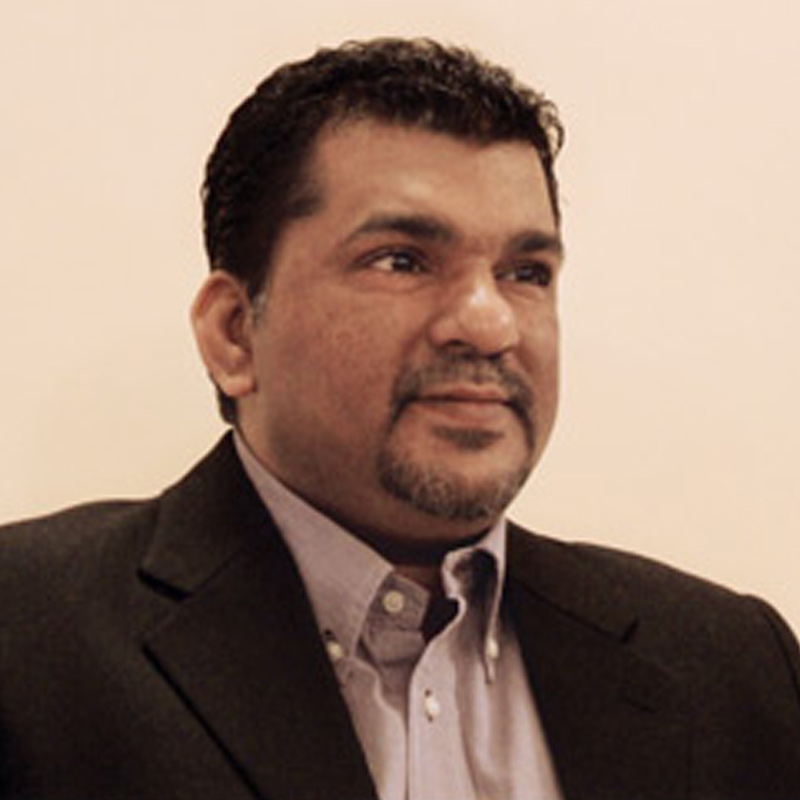
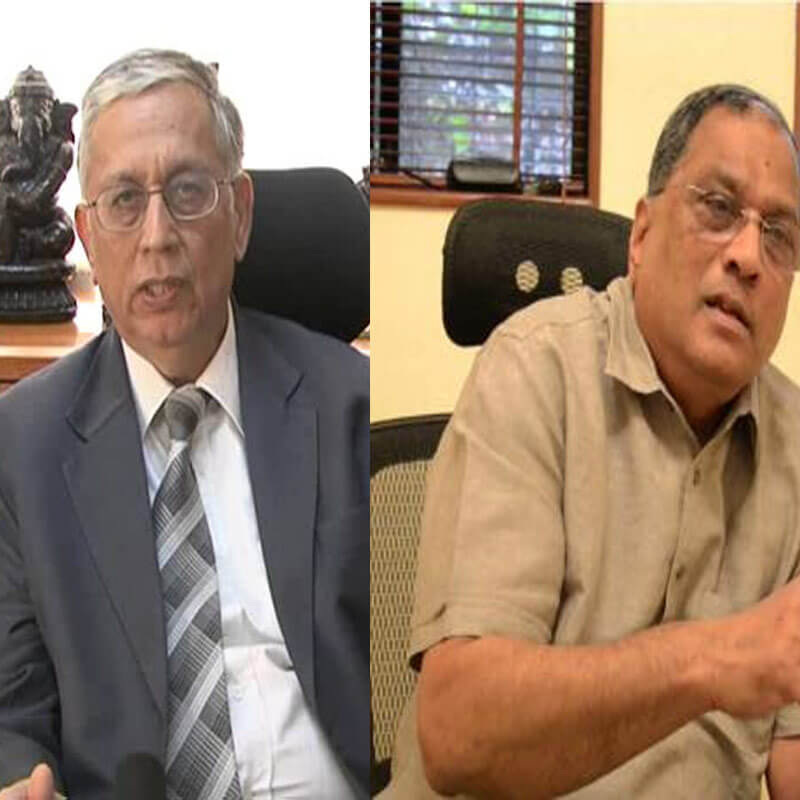
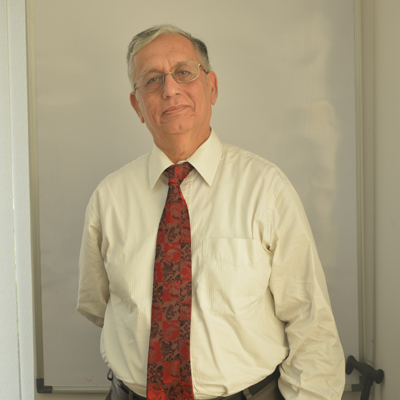
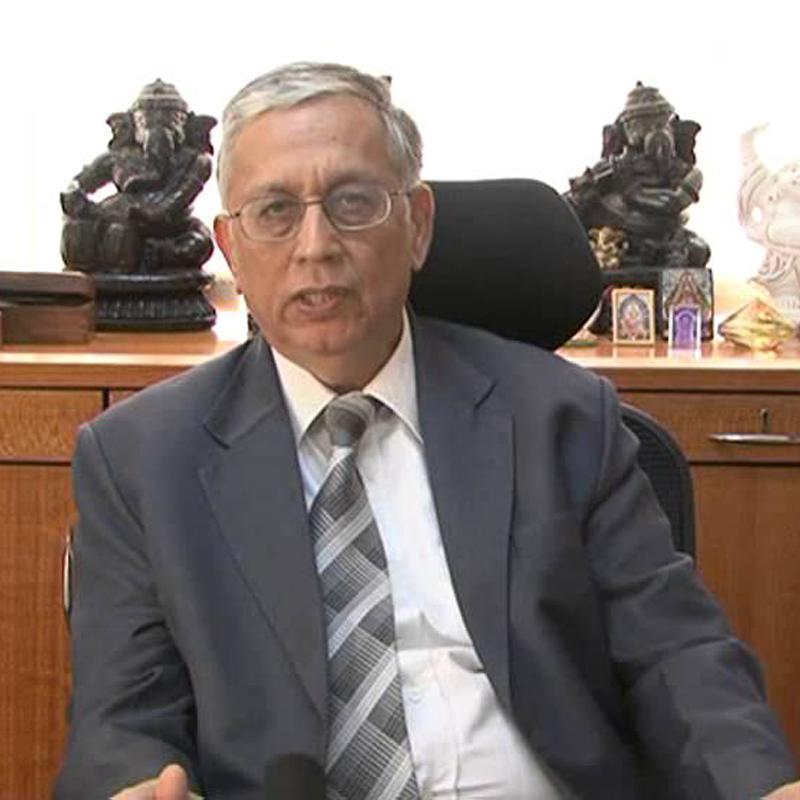
    KOLKATA: Ashok Mansukhani is departing from NXTDigital putting an end to a 24 year long association with the Hinduja group.The industry veteran will retire on 30 September. 

    According to a BSE filing, his term as managing director and key managerial personnel was extended on 29 April 2020  until NXTDigital's next annual general meeting (AGM). The company recently announced its AGM date to the BSE as 30 September 2020. 

    Mansukhani joined the Hinduja group in 1996 when was appointed as a director of the cable TV venture IndusInd Media & Communications. He was then appointed executive director before becoming its managing director. The group later went in for reorganisation of the business through a process of demerger, merger and further integration of Indusind Media and its HITS operation under Grant Investrade with their parent Hinduja Ventures, which he was heading. Hinduja Ventures was later rechristened as NXTDigital. Mansukhani oversaw the group and the companies through this entire process. 

    Read more news on Ashok Mansukhani

    His last postion with Hinduja Ventures was as managing director. Mansukani has over the years handled various senior responsibilities in the group’s media and corporate sphere.

    The Delhi University alumnius had spent the first half of his career in central government as an Indian Revenue Service officer.

    During the course of restructuring NXTDigiatl CFO Amar Chintopanth has been appointed as whole-time director.

  • Broadband internet subs growth higher in May-18 than previous month

    Broadband internet subs growth higher in May-18 than previous month

    BENGALURU: India witnessed 2.91 percent growth in broadband internet customers in the month of May 2018 (May-18, month under review) according Telecom Regulatory Authority of India (TRAI) data for the month ended 31 May 2018. Hence, 122.10 lakh (122.10 million, 1.221 crore) broadband subscribers were added in May-18. Comparatively, in April 2018, broadband internet customers grew 1.74 percent (71.90 lakh, 7.19 million, 0.719 crore) vis-a-vis the previous month.

    The smallest segment among broadband internet services providers – the Fixed wireless- WiFi, Wi Max, Point to Point, Radio, Vsat segment, lost about 10,000 subscribers – the segment’s subscriber base fell from 4.2 lakh (0.42 million or 0.042 crore) to 4.1 lakh (0.41 million or 0.041 crore) during the month. The wired broadband internet subscriber base dropped by 30,000 to 179.40 lakh (17.94 million, 1.794 crore) in May-18 from 179.70 lakh (17.97 million, 1.797 crore) in the previous month.

    A major portion-100.25 percent (122.40 lakh or 12.24 million or 1.224 crore) of the new users opted for wireless broadband internet through mobile devices and dongles in May-18. The mobile devices and dongles segment grew 3.05 percent in the month. It may be noted that TRAI considers download speeds equal to or in excess of 512 kbps as broadband internet. Also, TRAI subscriber numbers data is published in millions with two decimal places, hence the accuracy of this report is limited to the nearest 10,000 (Ten Thousand).

    As on 31 May 2018, the top five broadband internet service providers were Reliance Jio Infocomm Ltd orJio with 2055.4 lakh (205.54 million, 20.554 crore), Bharti Airtel or Airtel with 959.1 lakh (95.91 million, 9.591 crore), Vodafone with 614.2 lakh (61.42 million, 6.142 crore), Idea Cellular with 420.7 lakh (42.07 million, 4.207 crore) and BSNL with 207.5 lakh (20.57 million, 2.075 crore) subscribers respectively. The top five service providers constituted 97.54 percent market share of the total broadband subscribers at the end of May-18.

    Wireless Internet

    As on 31 May, 2018, the top five Wireless Broadband Service providers were Jio with 2055.4 lakh (205.54 million, 20.554 crore), Bharti Airtel with 894 lakh (89.40 million, 8,94 crore), Vodafone with 614.2 (61.42 million, 6.142 crore), Idea Cellular  with 420.7 lakh (42.07 million, 42.07 crore) and BSNL with 115.6 lakh (11.56 million, 1.156 crore) subscribers each.

    Jio showed the largest growth in terms of absolute numbers across all segments. Jio’s subscribers have grown by 28.39 percent in calendar year 2018 (CY 2018) since 31 December 2017 (or 1 January 2018, Dec-17). Its subscriber base has grown from 1,600.9 lakh (160.09 million, 16.009 crore) as on 1 January 2017 to 2,055.4 lakh (205.54 million or 20.554 crore) on 31 March 2018. Jio grew by 94.21 lakh (9.421 million, 0.9421 crore) in May 2018. At present, Jio provides only wireless broadband internet services through mobile devices including phones and dongles. The highest growth rate in CY 2018 until May 2018 was also by Jio at 28.39 percent. Further Jio led subscriber growth in May-18 with respect to Apr-18 with 4.80 percent growth.  Idea lost 3.30 lakh subscribers (0.78 percent drop) in May-18. BSNL has also being losing subscribers on a regular basis. Please refer to the figure below

    public://g1_3.jpg

    Wired Internet

    Though growth of the wired internet subscribers until May-18 has been led by Hathway Cable & Datacom Limited (Hathway), TRAI data shows that the company did not add any significant numbers in May-18. Its subscriber base for Apr-18 and May-18 was the same as per TRAI data. The company added about 60,000 (grew by 8.22 percent) subscribers in CY 2018 until May-18 and its subscriber base grew to 7.9 lakh (0.79 million, 0.079 crore) from 7.3 lakh (0.73 million, 0.073 crore) at the beginning of CY 2018.

    In May-18, the top five Wired Broadband Service providers were BSNL with 91.9 lakh (9.19 million, 0.919 crore), Bharti Airtel with 22 lakh (2.2 million, 0.22 crore), Atria Convergence Technologies or ACT with 13.2 lakh (1.32 million, 0.132 crore), MTNL 8.5 lakh (0.85 million, 0.085 crore and Hathway with 7.9 lakh (0.79 million, 0.079 crore) subscribers respectively. The government’s BSNL and MTNL have in general being losing subscribers. Please refer to the figure below.

    public://g2_3.jpg

    Other broadband internet service providers
     
    MSOs and (LCOs) or cable video service providers also provide wired broadband internet services in the country. These cable service providers have a number of subsidiaries and alliances, hence broadband numbers are split as applicable. The consolidated subscription numbers of these entities could be larger than the numbers of some of the wired internet services providers mentioned above. However, in general, quarterly results of the major MSOs’ until the quarter ended 31 March 2018 (Q4 2018) indicate that their wired broadband subscription addition efforts have been far below par, some have even had a drop in subscriber numbers.
     

  • Hinduja Ventures appoints Ashok Mansukhani as MD; net profit remains flat

    Hinduja Ventures appoints Ashok Mansukhani as MD; net profit remains flat

    MUMBAI: Hinduja Ventures Ltd (HVL) whole-time director Ashok Mansukhani has been elevated as the managing director of the company for two years from 30 April 2018 to 29 April 2020. Mansukhani completes his existing term as whole-time director on 29 April.

    The appointment was effected at the meeting of the board of directors today. Mansukhani was appointed as the MD and CEO of Hinduja Media Group in February 2017 following Tony D’Silva’s exit.

    Mansukhani is a postgraduate from Delhi University and completed his masters in English literature from Kirori Mal College, Delhi University, and his LLB from K C Law College, Bombay University.

    After a distinguished career in Central Government as an Indian Revenue Service Officer for 22 years, he joined the Hinduja Group in 1996 and has handled various senior responsibilities in the Group, in media and Corporate sphere. Mansukhani has been past president of the Multi System Operator Alliance (MSO Alliance) representing all leading MSOs in the country.

    The Board of HVL at its meeting held today approved un-audited standalone financial results for the quarter and nine months ended 31 December 2017.

    HVL, on a standalone basis, reported total income of Rs 169.12 crore for the nine months ended 31 December 2017 as against Rs 173.91 crore for the nine months ended 31 December 2016.

    Net profit for the nine-month period in 2017 stood at Rs 88.80 crore as against Rs 88.39 crore during the corresponding period in 2016, an increase of 0.47 per cent.

    For the quarter ended 31 December 2017, total income of the company stood at Rs 64.88 crore compared with Rs 53.58 crore for the quarter ended 30 September 2017 and Rs 52.79 crore for the quarter ended 31 December 2016.

    Net profit for the quarter ended 31 December 2017 stood at Rs 33.76 crore as against Rs 29.55 crore for the quarter ended 30 September 2017 and Rs 35.99 crore for the quarter ended 31 December 2016.

    IndusInd Media & Communication Ltd (IMCL), a Hinduja Group subsidiary, continues to make inroads into India’s rural areas through its head-end-in-the-sky (HITS) platform. IMCL is the only digital platform operator (DPO) to cover all 29 states and 4 union territories. This is due to major penetration in the past 12 months utilising NXT Digital’s HITS platform.

    The company feels that there is scope for deployment for DPO to an additional 30 million homes in the rural universe of 99 million homes. Another 20 million homes await power to households and will begin to watch television in the next three years.

    Also Read :

    Hinduja Ventures board okays amalgamation with Grant Investrade

    Hinduja Ventures PAT rises marginally Q1FY18, Nxt Digital HITS 640 districts


  • IDOS 2017: OTT is here to stay but may not replace pay TV

    IDOS 2017: OTT is here to stay but may not replace pay TV

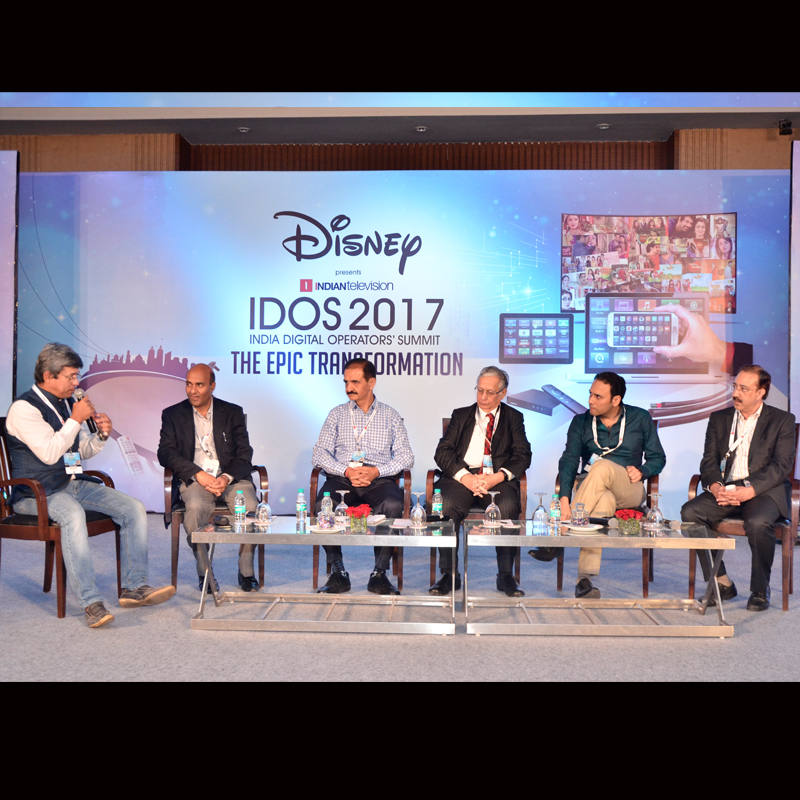
    NEW DELHI: The over-the-top (OTT) medium is here to stay and cannot be put down, but the television medium will continue to survive in the face of this challenge in India.

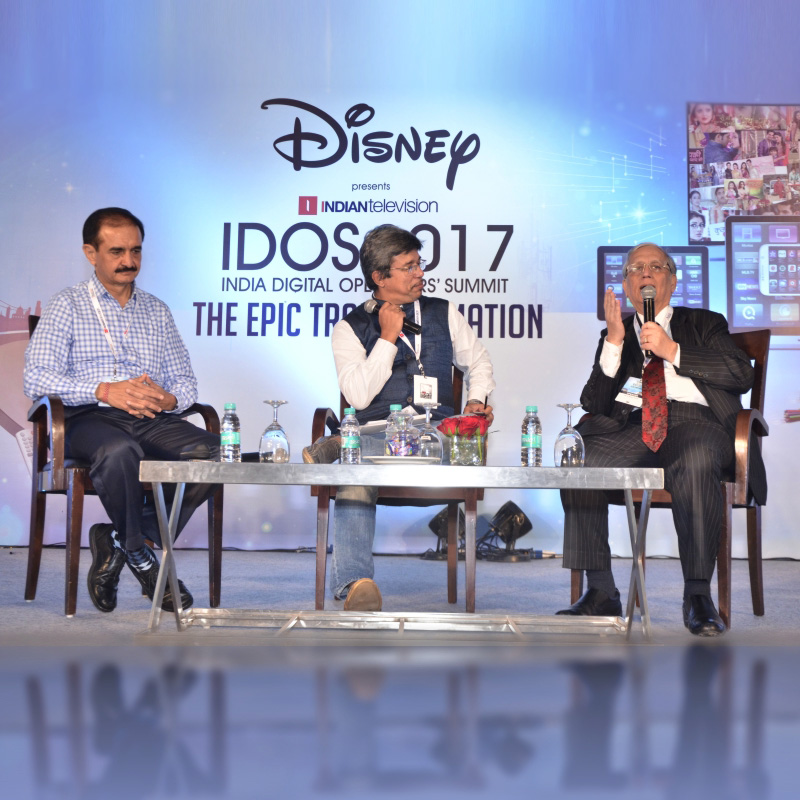
    The stressful life of today and the relationship built by the local cable operator are other reasons for the survival and well-being of the television medium. These were some of the views expressed at a discussion on the OTT Challenge to Pay TV at the Indian Digital Operators Summit organised by indiantelevision.com and moderated by the latter’s founder, CEO and editor-in-chief Anil Wanvari.

    Viacom 18 Digital Ventures’ senior vice-president and head of marketing Akash Banerji said that OTT would fundamentally change the scenario but admitted that “we over-estimate the short term, and under-estimate the long term.” He felt that the impact of OTT on pay TV may begin to show some change by 2020-21, but not immediately.

    Clearly, he said, some disconnect with the cable operators had led to the growth of OTT. Secondly, OTT was providing the content relevant to the individual viewer. Thirdly, he said that Viacom 18 was for the first time indulging in a B2C model where the consumer had the last word. He, however, admitted that the long-term survival of OTT lay in the medium moving to a subscriber-based scenario.

    Shaji Mathews, who has recently joined as the CEO of Kerala Cable Communicators in Kochi, said that OTT was no challenge, and (on the contrary) it would augment TV. He was confident that wired technologies will continue to dominate even as wireless technologies attempt to make inroads.

    He also felt that there was no level playing field for OTT at present, and so growth will take time.

    DEN Networks CEO S N Sharma said that the MSOs had entered the field of OTT in an attempt to provide a platform to various OTT players only to reach the consumer, realising that the consumer habits are changing. DEN had made inroads as far as fee-to-air OTT was concerned, and was only amalgamating the OTT players. The aim was to move with technology.

    Ashok Mansukhani of Hinduja Media Group admitted that OTT was a gigantic disruptor of the entire value chain but felt it would take some years to make inroads.

    Vynsley Fernandes of CastleMedia felt that the growth of OTT would largely depend on who has the TV remote in the home.

    Sisir Pillai of Lukup Media was confident that whatever the medium, it would survive if it had adequate content.

  • IDOS 2017: Cable TV sector needs more collaborative broadcasters, say MSOs

    IDOS 2017: Cable TV sector needs more collaborative broadcasters, say MSOs

    NEW DELHI: Even as the multi-system operators and cable operator are doing their bit to aid digitisation, broadcasters need to participate more in the process which officially has been completed. They need to be more transparent and supportive of the distribution platform operator — in this case the MSO and cable TV operator — and not be like a tax collector always asking for more.

    This was the general view of both, S N Sharma of Den and Ashok Mansukhani of Incable in a discussion in ‘The Indian MSO: Redefining the raison’etre’, who also said it was only now that the MSO was beginning to monetise almost five years after digital addressable system was first launched.

    Furthermore, the broadcasters were still free to fund the business as they wanted, and, as Sharma put it, there are only two laws that control the broadcaster – the Programme and Advertising Codes and the Cable Television Networks (Regulation) Act 1995. Thus, there is virtually no regulation for the broadcaster, Sharma said.

    Both, Sharma and Mansukhani agreed that MSOs and even LCOs had put in a lot of effort to get DAS off the ground — that too in a period of four to five years, which is unprecedented globally.

    “The DAS regulation was brought in for transparency and to allow everyone to have a fair share of the huge subscription revenues that viewers were paying to watch cable TV,” said Sharma. “But, the sad part is that broadcasters are constantly asking for rate increases of 24 per cent or so without even asking if it were possible,” added Mansukhani.

    They said that it would be better if the broadcasters were to communicate rate increases to viewers and invest in promoting that, rather than expecting MSOs who are just about recovering from the hangover of the huge investments they have put into DAS as well as getting robust systems and processes in place. “Also, we are not equipped or have the creative mindset to communicate this effectively for all channels,” agreed both Sharma and Mansukhani.

    Rather than going to courts to stall the TRAI tariff order, they said, broadcasters could collaboratively work with the DPOs to take DAS on to the next level. “Neither the government nor the regulator has been able to do anything,” they said.

    “We have our own troubles, recouping our investments to bring back profitability into the cable TV sector, as well as dealing with piracy and leakages which broadcasters take time to check and stop because they have procedures to follow,” said Sharma.

    Mansukhani disagreed with Indiantelevision.com founder, CEO and editor-in-chief Anil Wanvari that the cable TV sector will not be in a position to manage complicated skinny a la carte bundles for the millions of customers that it serves. “Our backends are ready,” he said. “Our SMS, billing and KYC of the customers is in place,” he said. “We are just waiting for the (court) order to come through.”

    He opined that the industry would ultimately survive the changes, and he was also confident that the cable industry was ready to adapt to any new technology.
    To a question about monetisation, Sharma said the MSOs were not beginning to reap the monetary benefits of Phase I. Even the DTH industry was beginning to break even only now, more than a decade after it was launched.
    Mansukhani said he was happy that the Hinduja’s headend in the sky (HITS) NXTDigital was reaching 1.5 million consumers. But, the need was to break even as early as possible and “giving a dividend to my shareholders.”

    But, he stressed the need to keep the dialogue open with the LCOs who are the ones dealing with the consumer. Consumer connect has to continue. He regretted that the level playing field that he had hoped to get from the government has never came.

    Both Mansukhani and Sharma agreed that, though the government had not made a difference between the urban and rural viewers, this was necessary if there has to be penetration in rural areas. Otherwise, they would go to Doordarshan’s FreeDish.

    Sharma said his company was soon launching a device that would not be internet-based and could be used for all gadgets including mobiles, TV, tabs, and so on.

    Mansukhani said that it was clear that the MSO will have to graduate from being a TV MSO to a multi-screen MSO.

  • Hinduja’s NXT Digital enters Fastway-dominated Punjab

    MUMBAI: It was announced with much fanfare, which simmered down. Now the Hinduja group promoted HITS platform NXT Digital has once again started making news. The group has stated that it is going to be pushing its headend in the sky (HITS) service in Punjab and Chandigarh.

    NXT Digital allows local cable operators to upgrade to digital cable TV serices at a mimimal expense. Speaking to the media Hinduja Media Group CEO Ashok Mansukhani on Friday said: “We have the state-of-the-art technology for digital TV viewing and our network in Punjab would ensure the viewers get uninterrupted world-class viewing experience at economical price in the market.”

    The entry of NXT Digital into Punjab will bring it head to head competition with Rs 500 crore turnover Fastway which has 2.45 million subscribers in Punjab, out of a national total of 4.2 million, of which 3.2 million are active. The other states in which Fastway has a presence is in Uttar Pradesh, Himachal Pradesh, Jammu&Kashmir, Rajasthan, Uttarakhand and Haryana.

    Speaking to Hindustan Times, Hinduja Media Group senior vice president Narinderpal Singh, claimed that NXT Digital has the active co-operation of the Congress state government which would welcome the existing and new cable operators to join them.

    Fastway, on the other hand, allegedly was closely linked to the previous Punjab government under the Shiromani Akali Dal (SAD) president Sukhbir Singh Badal.

    But that monopoly has been getting marginally eroded.

    Fastway MD Gurdeep Singh had acknowledged in an earlier media interview that the MSO has 5,290 cable operators (as compated to 6,500 cable operators from a total of 8,000 earlier) associated with it in Punjab and 159 in Chandigarh.

    “Some of the earlier ones have merged with others or gone to another multi-system operator, Hinduja Cable, which is a new player in Punjab. Then, some cable operators are aligned with other groups such as Bhullar Cable in Amritsar,” he had said.

    Will that marginal erosion becoming a landslide? For that, watch this space.

  • Hinduja’s Ashok Mansukhani feted with 8th BCS Ratna ‘Lifetime Award,’ IMCL best MSO in prepaid service

    MUMBAI: Hinduja Media Group MD Ashok Mansukhani has been honoured with the Lifetime Achievement Award in the media industry (individual category) at ‘8th BCS Ratna Awards’ held on 10 May, 2017.

    Hinduja Media Group was also awarded the Best MSO to start Prepaid services: IMCL (In Distribution Platform /MSO category) by the chief guest – minister of rural development, minister of panchayati raj and minister of drinking water and sanitation Narendra Singh Tomar.

    On receiving the award, Mansukhani said, “Our Nxtdgital HITS platform is a unique platform, which is catering to over 700 cities and over 900 micro head ends [COPES) and doing a yeoman service for the Rural India. The Rural and Semi urban India distribution is over 80% in this platform already, as we move we will continue to digitalis the rural cable industry and in this digital satellite cable platform the LCOs become their own owners and continue their entrepreneurship unlike in a classical MSO platform.”

    On behalf of the entire Broadcasting & CATV community, Hinduja group and Mansukhani were conferred with these awards by the recommendation of the Advisory committee and final selection by the Jury Members from the nominations received.

  • Hinduja Group media head Mansukhani spells out priorities

    Hinduja Group media head Mansukhani spells out priorities

    NEW DELHI: The new CEO  & MD of Hinduja Media Group Ashok Mansukhani, a veteran of Indian media industry, has already got his priorities etched out and expressed willingness to work along with all stakeholders of the sector for the overall growth and mutual benefits.

    Speaking to Indiantelevision.com, the bureaucrat-turned-corporate-executive Mansukhani said priorities included getting digital rollout of Indian TV services “back on track”, push for promotion of digitisation and increased education of consumers, explore how some of his cable segment colleagues could benefit from digitisation and last, but not the least, to work towards bringing other segments of the media and entertainment sector, including regulators and policy-makers, together so a conducive environment for a mature dialogue could be created.

    Indirectly admitting that digitisation had hit roadblocks in the last 12-18 months owing to several reasons, Mansukhani said while the third phase of digitisation is coming to an end, edges in the fourth and last phase need to be ironed out. “At the end of the day, it’s a matter of 73 million homes in small towns and hamlets in the last phase of digitisation and we cannot take the task lightly,” he explained.

    Mansukhani, a former Indian Revenue Service government official, has seen the Indian media industry (specifically the electronic medium) grow from staid Doordarshan days to the present vibrant — and possibly a bit chaotic — stage of evolution when the country has over 800 private sector licensed TV channels, several distribution platforms and approximately 50,000 cable operators. His stints at the pubcaster’s headquarters in New Delhi’s Mandi House area, Ministry of Information and Broadcasting (MIB) and later in the private sector with the Hinduja Group, puts him in a unique position.

    According to Mansukhani, who now will be heading the media assets of the multi-billion dollar Hinduja Group, including MSO company IndusInd Media and Communications Ltd (IMCL) and the HITS venture, the Indian media and TV industry is at a critical stage of development and hinted increased litigation and face-off with the regulator and policy-makers could be detrimental  for the industry, which needs to come together to voice the genuine and common concerns of the industry.

    “I would also like to see and explore how we can help cable operator colleagues and others benefit from digitisation,” Mansukhani said, adding that a more concerted effort needs to be put in by stakeholders, including broadcasters, distribution platforms and the regulator, to educate consumers, especially those in small towns, about the long term benefit of digitisation despite the monthly outflow in subscription fee increasing a bit.

    “Consumer education is very important in general and especially for the fourth phase (of digitisation) homes. All of us need to support this education process as it would be beneficial for all stakeholders,” he said.

    Mansukhani comes in place of Tony D’Silva, who joined the Hinduja Group on 1 August 2012 as the president of Hinduja Ventures Limited and strategised the group’s media businesses. D’Silva had expressed a desire to demit office after completion of his contract on 31 January 2017 to pursue “other interests and spend more time with his family,” according to an official statement from the Hinduja Group.

    However, it needs to be seen how Mansukhani grows the comparatively new HITS business carried out under a separate group company, apart from tackling the challenges of IMCL, an MSO.

    ALSO READ:

    Ashok Mansukhani takes over as IMCL CEO & MD

    Distribution vet Tony D’silva departs from IMCL

  • Hinduja Group media head Mansukhani spells out priorities

    Hinduja Group media head Mansukhani spells out priorities

    NEW DELHI: The new CEO  & MD of Hinduja Media Group Ashok Mansukhani, a veteran of Indian media industry, has already got his priorities etched out and expressed willingness to work along with all stakeholders of the sector for the overall growth and mutual benefits.

    Speaking to Indiantelevision.com, the bureaucrat-turned-corporate-executive Mansukhani said priorities included getting digital rollout of Indian TV services “back on track”, push for promotion of digitisation and increased education of consumers, explore how some of his cable segment colleagues could benefit from digitisation and last, but not the least, to work towards bringing other segments of the media and entertainment sector, including regulators and policy-makers, together so a conducive environment for a mature dialogue could be created.

    Indirectly admitting that digitisation had hit roadblocks in the last 12-18 months owing to several reasons, Mansukhani said while the third phase of digitisation is coming to an end, edges in the fourth and last phase need to be ironed out. “At the end of the day, it’s a matter of 73 million homes in small towns and hamlets in the last phase of digitisation and we cannot take the task lightly,” he explained.

    Mansukhani, a former Indian Revenue Service government official, has seen the Indian media industry (specifically the electronic medium) grow from staid Doordarshan days to the present vibrant — and possibly a bit chaotic — stage of evolution when the country has over 800 private sector licensed TV channels, several distribution platforms and approximately 50,000 cable operators. His stints at the pubcaster’s headquarters in New Delhi’s Mandi House area, Ministry of Information and Broadcasting (MIB) and later in the private sector with the Hinduja Group, puts him in a unique position.

    According to Mansukhani, who now will be heading the media assets of the multi-billion dollar Hinduja Group, including MSO company IndusInd Media and Communications Ltd (IMCL) and the HITS venture, the Indian media and TV industry is at a critical stage of development and hinted increased litigation and face-off with the regulator and policy-makers could be detrimental  for the industry, which needs to come together to voice the genuine and common concerns of the industry.

    “I would also like to see and explore how we can help cable operator colleagues and others benefit from digitisation,” Mansukhani said, adding that a more concerted effort needs to be put in by stakeholders, including broadcasters, distribution platforms and the regulator, to educate consumers, especially those in small towns, about the long term benefit of digitisation despite the monthly outflow in subscription fee increasing a bit.

    “Consumer education is very important in general and especially for the fourth phase (of digitisation) homes. All of us need to support this education process as it would be beneficial for all stakeholders,” he said.

    Mansukhani comes in place of Tony D’Silva, who joined the Hinduja Group on 1 August 2012 as the president of Hinduja Ventures Limited and strategised the group’s media businesses. D’Silva had expressed a desire to demit office after completion of his contract on 31 January 2017 to pursue “other interests and spend more time with his family,” according to an official statement from the Hinduja Group.

    However, it needs to be seen how Mansukhani grows the comparatively new HITS business carried out under a separate group company, apart from tackling the challenges of IMCL, an MSO.

    ALSO READ:

    Ashok Mansukhani takes over as IMCL CEO & MD

    Distribution vet Tony D’silva departs from IMCL

  • Ashok Mansukhani takes over as IMCL CEO & MD

    Ashok Mansukhani takes over as IMCL CEO & MD

    MUMBAI: Hinduja Ventures Limited (HVL)’s whole-time director Ashok Mansukhani will take over from Tony D’Silva aftre the latter completes necessary formalities.

    D’Silva, after being with the Hinduja group for over four and half years, since August 2012, had expressed his desire to demit office in order to pursue other interests and spend more time with his family.

    On 1 August, 2012, D’Silva took over as the HVL president and strategised the group’s media business. He went on to head Hinduja Group companies — IndusInd Media Communications Limited and Grant Investrade Ltd. – as their MD and CEO, where he completed his service contract on 31 January ’17.

    D’Silva, in a span of around five years, overhauled the group’s media businesses in a challenging and changing environment and put it on a strong platform for growth. Under his leadership, the business conceived and launched the unique Headend-in-the-Sky (HITS) platform, designed to boost the digitisation of local cable operators and MSOs.

    D’Silva and his team established the concept of prepaid model in the cable industry, a revolution in the prevailing system of credit extension which was stressing out business.