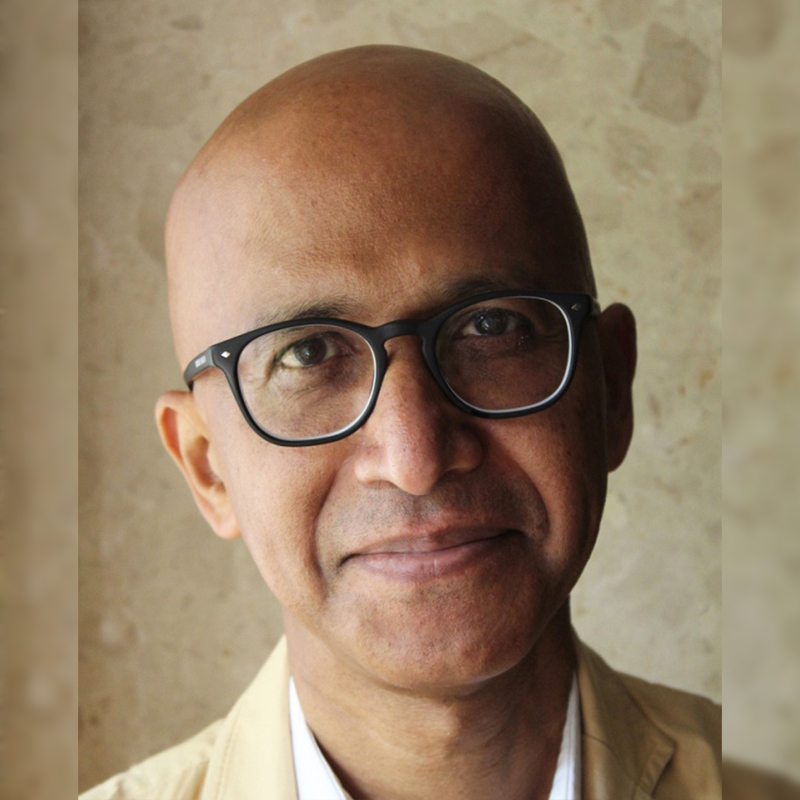
Tag: Ashok Lalla

  • Chlorophyll launches offerings to bridge brand creation and execution gap

    Chlorophyll launches offerings to bridge brand creation and execution gap

    MUMBAI: End-to-end brand consultancy Chlorophyll has launched new offerings on Independence Day, as it enters its 20th year.

     Chlorophyll co-founder and MD Kiran Khalap said, “As we complete 19 successful years powered by relentless learning, I am delighted to present chlorophyll 3.0, which, with several significant additions to its offerings, will help clients bridge and ‘Mind The Gap’ between brand creation and execution.”

    “These offerings include chlorophyll innovation lab, a sports practice, and two new digital-driven, consumer-centred offerings – Chlorophyll digital business synthesiser and Chlorophyll leadership branding. Together, these additions will empower Chlorophyll to deliver greater salience and value to clients in the digital age where social media has been causing subterranean shifts in the concept of brands and branding,” he added.

    Describing chlorophyll 3.0 as chlorophyll’s shift from brand creation to brand creation and execution, Khalap said it was necessitated because of a constant common feedback from clients: that once Chlorophyll had created and defined their brands, and the brand was handed over for execution to an ad agency, an event agency, an activation agency or a digital agency, there was a discernible gap in brand disciplines leading to loss of value.

    Over the past two years, the company has systematically invested in an innovation lab, in modelling a sports practice and in modelling digital services and social media services.

    The chlorophyll innovation lab is headed by veteran Chitresh Sinha, the sports practice is in partnership with Meraki, and for digital, Chlorophyll has Ashok Lalla as digital business advisor and principal consultant.

    Chlorophyll innovation lab is India’s first brand innovations collective set up by chlorophyll. It helps build brand relevance by helping organisations create a culture of innovation and start-up thinking, co-creating IP by collaborating with young innovators, early stage start-ups and the evolving maker-spaces across the globe and creating disproportionate earned media for brands via innovation-driven integrated brand engagement.

    Chlorophyll innovation lab CEO Chitresh Sinha said: “The key to innovation is that it needs to be created from the customer’s perspective and not from a technology or a domain perspective. That is why we have created a medium-agnostic model that merges evolving technologies, art and social impact to bring alive innovation for brands in integrated ways. The model is very different from the standard agency model. An ecosystem of 800+ innovators from across the globe set up fluid teams that create unique innovations.”

    The lab invented the world’s first Inspiration Medal for the Tata Mumbai Marathon in 2018.

     The sports practice allows brands to effectively invest in sport, helps sport teams, leagues, franchises and events define and align their brand thereby generating long term value and helps global sport properties navigate through India.

    Meraki Sport and Entertainment MD and co-founder Ajit Ravindran said: “Sport sponsorships in India have traditionally been one dimensional with logo visibility being the only parameter used in decision making. However, today sponsorships need to evolve into value partnerships that allow organisations to leverage sport to achieve multiple objectives. The chlorophyll sports practice will help brands, teams, leagues, events, athletes and federations leverage the power of sport and will work towards enhancing fan connect.”

    Chlorophyll also announced two new digital-driven, consumer-centered offerings that will help brands deliver better business impact. These are:

    1)   chlorophyll Digital Business Synthesiser – A time-bound, 5-step digital action model. It helps in creating ownable digital brand narratives to impact consumers and uplift business, through the use of proprietary models for research and branding, and its custom digital analytics tools.

     2)   chlorophyll leadership branding – this helps turn business leaders into leadership brands in the digital age through a proprietary leadership branding model.

    Digital business advisor Ashok Lalla said: “I am excited to collaborate with chlorophyll, a firm I have long admired, to create these two exciting digital-driven offerings. These will help brands and business leaders use digital in a manner that will maximise their impact on consumers.”

    Khalap said, “Over the past 19 years, chlorophyll has had the privilege of creating and transforming over 200 brands, including, for example Aptech, Ayush, BSE, CenturyPly, CG, CK Birla Group, FDC, Fortis, Ginger, Glenmark, India Today, Indigo Paints, Infosys, Mahindra, Mukand, Tata, The Lalit, Unilever and Zandu. It steps into its 20th year as chlorophyll 3.0, empowered to transform client brands by being their custodian and guide through brand creation and across all milestones of strategy and implementation for continued growth,” he added.

  • Viral on your mind?

    Viral on your mind?

    A‘Kolaveri Di’ kind of video with the capacity to go viral doesn’t happen every day, and that’s something marketers and the junta might do well to remember.

    There have been enough and more cases of online campaigns that fell flat on their face just as there have been instances of campaigns that fared considerably well in recent times (Dove’s real beauty, Flipkart’s Nation wants to know, Dhanush’s Sachin anthem).

    Content is king

    So what are the ingredients that make for success? First up, it’s the content. GroupM ESP national director (sports and live events) Vinit Karnik opines that videos like ‘Kolaveri Di’ and ‘It’s your fault’ are an engaging and entertaining way to disseminate a social message and build awareness.

    Watch the video: Boost pays tribute to Sachin’s 23 years of stamina!

    Gasoline founder and chief creative officer Anil Kakar says the first rule of creating online content is that it needs to be worth sharing. “The potential reach shareable content can offer is enormous and brands are currently only scratching the surface,” he says.

    Referring to two recent viral videos ‘It’s your fault’ and ‘I quit’, Draftfcb Ulka Interactive (digital arm of Draftfcb Ulka) creative head Sudarshan Sudevan says: “These two videos share different lights in the context of one’s feeling, one is targeted at the mass and the second, targeted at a single person….her boss. But the common platform that they share is – being vocal about it. That’s the lesson you can learn from it. Exercise your freedom of expression to the maximum… without fear. You can be a total stranger but your voice is surely heard if it has a message. That’s the power of this digital medium.”

    Not to do list

    Successful online content is often disruptive, based on a powerful insight and more importantly, follows a set of rules in social media that are way different from other forms of media.
    Experts believe the most common mistake that someone/some brand can make while launching a digital campaign is to create it to go viral. According to Infosys global head (digital marketing) Ashok Lalla, that is the biggest fallacy. “Virals happen. Of course, one can help them happen through content which is very high quality and well produced, and also through extensively promoting the content. For example, Idea’s Honey Bunny was promoted across media and that drove the viral-ness of the video online,” he points out.

    Similarly, Everest Brand Solutions president Dhunji Wadia says if one tries to create a campaign to go viral, there are a million ways to go wrong as there is no fixed formula or template for these videos. “You just have to click with the consumers, literally! Firstly, if it doesn’t impress me, how will it impress the world? One can get carried away with an idea, which does not make as much sense after production as much as it made on paper. Don’t hesitate to start fresh in such a case. Secondly, is the product/service forced into the communication? Sometimes there is a ‘disconnect’ between the product/service and the ad concept. If the two are not inter-twined, the product will be left hanging after a great concept.  It will hardly be noticed. Try to find a common ground between the two.”

    Highlighting mistakes marketers/advertisers tend to make, Sudevan adds: “Low budget for a promotion to be launched ‘asap’ plus maximum output demanded (for example say 1 million likes) and hence resorting to social media leads to bad ideas and bad execution, considering the time the agency gets to churn this out in that shoe-string budget. Also, no research of the ecosphere of social media or what or how much a campaign should cost or the time it should get competed within leads to selection of bad ideas presented by some smart agency.”

    With or without social media

    All said, the social media universe is swelling and no advertiser or marketer can afford to ignore it. Besides, with the dipping rupee and dwindling economy, conventional Indian media is facing the heat, rendering social media the smartest option in the current scenario. 

       
    Says Kakar: “What makes social media unique is the fact that brands can, for the first time, have a conversation directly with consumers. This is a huge paradigm shift of sorts, which is already testing our collective skills as an industry. Also, for the first time, we can gauge accurate responses through analytics and tools, engage with a select audience, should the need arise, and alter content according to responses. Social media is also a great platform to engage opinion leaders or ‘feeders’, who help promote content onto blogs, twitter, facebook and other platforms for a multiplier effect, generating free PR, which would have otherwise cost an arm and a leg for an advertiser.”

    Watch the video: AIB seeks an answer to whose fault is it anyway?

    FoxyMoron co-founder and director – new business and innovations Pratik Gupta seconds Kakar saying: “A lot of brands want to reach out to their audience and it might be as simple as uploading a TVC on YouTube. One must remember that a TVC is watched by the entire family, out of which, not all could be the target audience wherein the people who will click on social media are the correct viewers.”

    Gupta gives the example of the campaign Baby Lips Kiss Song featuring Alia Bhatt that FoxyMoron recently did for Maybelline. He says there are many brands that are utilizing the platform to the fullest to reach their TG.  He also talks about the YouTube channel Q-tiyapa by TheViralFeverVideos saying they are doing everything right to strike a chord with the youth.

    And what do advertisers have to say about digital platforms? “Advertising is a 360-degree experience. That’s when a user feels the brand in totality and since every medium has its own plus points, it’s best to design any campaign keeping in mind the purpose of the campaign,” say advertisers.

    Then again, there are the naysayers who feel digital media and by extension, social media is still not a mass channel of outreach in India. Statistics for internet usage vary between 70-140 million and those for social media are a subset of this. So, it’s unlikely to be the medium of choice for all brands for all seasons. At best, digital/social media may be the medium of choice for a younger, urban-centric demographic concentrated in major metros and towns across the country.

    Whatever be the case, one thing is clear that with the medium encouraging conversations on various social platforms, the movement of content from ‘airing’ to ‘sharing’ can catalyze the internet audience to great effect.

  • Siddharth Sethi to head Mindshare’s digital business

    Mumbai: Mindshare, the flagship media agency of GroupM, has appointed Siddharth Sethi as leader- Digital for Mindshare India.

    Sethi’s last stint was as director India for Xaxis, GroupM‘s audience buying company.

    He is taking over the position which was vacant since Ashok Lalla quit in May 2012. Lalla is now with Infosys as global head- digital marketing.

    In his new role, Sethi will be responsible for boosting the agency’s full-service digital offerings geared towards actively pushing adaptive planning, performance and digital analytics to the fore.

    Based out of Mumbai, he will report into Mindshare South Asia leader Ravi Rao.

    Rao said, “We are very fortunate to have someone with such integrated expertise at the helm of our digital offerings. Siddharth‘s experience of having led Xaxis in India will be another factor in enhancing the overall digital offering as well his entrepreneurial culture will take Mindshare into a league of its own, well within the Original Thinking Framework for all brands. He is technologically savvy, understands the brand space and is performance driven.”

    On his move to Mindshare, Sethi said, “I am delighted to be joining an agency with such an impressive digital portfolio. Over recent years Mindshare has really built a strong digital team with some really impressive digital and social media campaigns under its belt. I am really looking forward to building on this reputation.”

    Sethi has over 12 years of experience in media management, marketing and product management. He has spent the last seven years focused on helping digital startups create products and revenue streams.

  • Ex-Mindshare Ashok Lalla to join Infosys as global digital marketing head

    MUMBAI: Ashok Lalla, who had quit Mindshare as South Asia leader – digital in May 2012, is all set to join Infosys as the global head of digital marketing.

    Lalla is joining the IT services company on 4 October. He will be based out of Bengaluru.

    He told Indiantelevision.com, “Yes, I am joining Infosys. I will be in charge of the digital marketing of the company worldwide.”

    Lalla has close to 19 years experience in the industry and started his career in 1993 with Enterprise Nexus Communications (now Bates 141) as senior account executive.

    After four years at the agency, he joined Taj Hotels Resorts and Palaces as advertising manager in 1997. Two years later, he moved to Times Multimedia where he worked as senior product manager for a year before moving back to Taj Hotels Resorts and Palaces in 2001 to take up the post of director internet marketing. He then moved to Euro RSCG as president – digital in 2009 before joining Mindshare in 2011.

  • Ashok Lalla quits Mindshare

    MUMBAI: Mindshare leader – digital Ashok Lalla has decided to call it a day at the agency. His last day will be 31 May, ending his-seven month stint with Mindshare.

    “Yes, he is leaving the agency,” said Mindshare South Asia leader Ravi Rao.

    Lalla has close to 19 years experience in the industry and started his career in 1993 with Enterprise Nexus Communications (now Bates 141) as senior account executive. After four years at the agency, he joined Taj Hotels Resorts and Palaces as advertising manager in 1997. Two years later, he moved to Times Multimedia where he worked as senior product manager for a year before moving back to Taj Hotels Resorts and Palaces in 2001 to take up the post of director internet marketing. He then moved to Euro RSCG as president – digital in 2009 before joining Mindshare in 2011.

    Lalla is also the founder, author and curator of the Future of Digital for Brands – a global community of over 2500 brands and marketing and digital experts and enthusiasts from more than 35 countries that shares and creates ideas that shape the future of brands via the future of digital.

    Suraj Nambiar heads the digital wing for Mindhsare in the west for the agency while Anita Bhat heads south and Kavita Dhyani was recently brought on board to head the north operations for digital.