Tag: Ashish Sood

  • Delhi dreams big as Live Times Xchange charts vision for 2047 future

    Delhi dreams big as Live Times Xchange charts vision for 2047 future

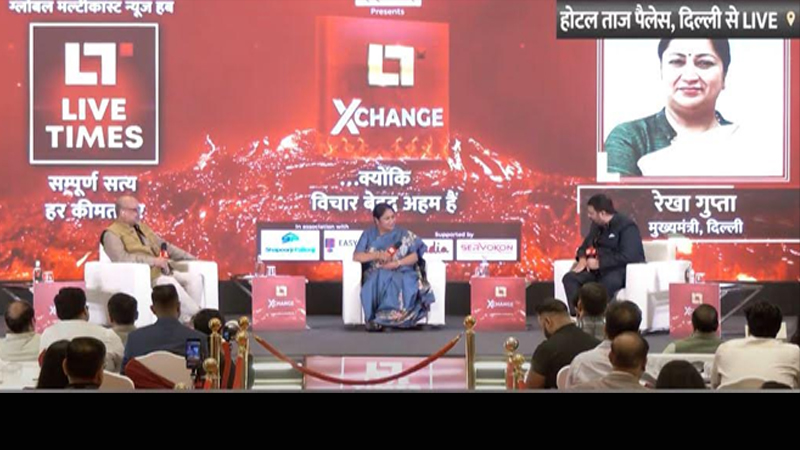
    MUMBAI: When the capital talks, the country listens jkand Live Times Xchange made sure Delhi’s voice roared loud and clear at its 4th flagship conclave on 10 September 2025 at the Taj Palace, New Delhi. Centred on ‘Mission Delhi @2047: Reinvent India’s Capital’, the event gathered an eclectic mix of powerbrokers, policymakers, and public voices to reimagine the city’s future.

    The line-up was nothing short of formidable: chief minister Rekha Gupta, MPs Sanjay Singh and Manoj Tiwari, ministers Kapil Mishra, Ashish Sood, Parvesh Verma, AAP Delhi president Saurabh Bhardwaj, Congress leaders Devendra Yadav and Alka Lamba, Delhi mayor Raja Iqbal Singh, JNU vice-chancellor Prof. Santishree Dhulipudi, former AIIMS director Dr. M.C. Mishra, and justice Sudheer Aggarwal. Together, they debated the policies, politics, and pathways to transform Delhi into a global, citizen-first capital by 2047.

    Rekha Gupta unveiled an ambitious blueprint: complete electrification of public transport, seven million new trees to expand Delhi’s green cover, and a renewed push to restore the city’s healthcare credibility. “Delhi will not only see change in infrastructure but also in intent, as governance becomes truly people-first,” she assured.

    Ashish Sood spotlighted futuristic education reforms, from 75 CM Shri Schools teaching AI, robotics, and data science to a Rs 900 crore allocation for 21,000 smart classrooms, alongside the clean yamuna Mission. Alka Lamba, reflecting on her 30 years in politics, credited Sheila Dikshit’s legacy of flyovers, metros, schools, and hospitals, and urged today’s leaders to carry forward long-term, responsible governance.

    Manoj Tiwari brought personal grit to the table, recalling his journey from Bhojpuri cinema to Parliament and defending Delhi’s migrants. He touted initiatives like Rs 1 lakh free healthcare for the poor, Ayushman Arogya centres, GPS-tracked water tankers, Yamuna clean-up drives, and the UVR-2 road project as proof of development with intent.

    The conclave distilled five big pillars for Mission Delhi @2047:

    ●    Smart, transparent governance

    ●    Sustainable green infrastructure

    ●    EV-led future mobility

    ●    Knowledge and innovation hubs

    ●    Inclusive healthcare, housing, and citizen services

    For Live Times founder & editor-in-chief Dilip Kumar Singh the gathering epitomised the brand’s ethos: “Sampoorna Satya, Har Keemat Par is not just a slogan, it is our responsibility. LT Xchange shows that when leadership and media collaborate on facts, democracy thrives.”

    As the curtains fell, the message was unmistakable: Delhi’s reinvention rests on collaboration, innovation, and accountability. With optimism and determination in the air, the conclave left one lingering thought, if politics, policy, and people can pull together, Delhi 2047 won’t just be a capital, it’ll be a global benchmark.
  • Future of retail in the age of e-commercialisation

    Future of retail in the age of e-commercialisation

    The India retail industry accounts for over 10 per cent of the country’s GDP and contributes to around eight per cent of the employment. This space is undergoing transformations due to scores of e-commerce firms gaining huge popularity. In such a scenario, it is the brick and mortar companies that are gradually feeling the heat waves of the rising competition level in the Indian market. The truth is, the future of Indian retail holds value both in offline and online retail, especially in impulse categories like fashion jewellery and accessories.  


    Over the last decade, the Indian retail industry has grown phenomenally with a remarkable shift towards organised retailing formats. It is gradually shifting towards a modern concept of retailing, which is a seamless blend of online and offline formats. This concept is called ‘Omni-Channel’ retailing, which focusses on employing all kinds of shopping channels like internet, brick and mortar, television, direct mail and radio among many others. Merging the two formats of online and offline retailing is to blend technology with smart merchandising and imbibe community building, customer engagement and targeted marketing in their operations. For instance, to tackle the queue problem at its stores, customers have the option of shopping online and opting for home delivery or store pick up at WalMart. Customer friendly tactics such as this have helped WalMart to be counted among the top five online retailers in the US with estimated revenues of $10 billion in 2013 from the online segment alone.


    It is predicted that the Indian retail market will grow by seven per cent over the next 10 years, eventually becoming a whopping $850 billion industry by 2020. Coming specifically to traditional retail, a growth of five per cent is expected in the same and is estimated to reach a size of $650 billion (76 per cent). Organised retail is likely to develop by 25 per cent and reach a size of $200 billion by 2020. Since the last five years, Online Retail, both direct and through marketplaces has had a roller-coaster ride in metamorphosing itself from being at a nascent level to becoming the most promising sector in India.


    For the future growth of the industry, retailers are also set to embrace Targetted Marketing to augment their operations and keep themselves on par with global standards. Targetted Marketing aims to make the promotions, pricing and distribution of the products and services easier and more cost effective. It envelopes all the aspects of marketing and involves breaking a market into segments and paying more attention to the ones that are of paramount importance for the company. For instance, firms can create e-mail campaigns and send to a specific set of customers depending on who the company wants to target. In order to know their target audience, companies can use various nifty tools like social media. These have helped marketers and SMEs track the target audience in real time through the fan pages of other companies. Besides this, they also provide an in-depth graphical data about every person who is connected with the page. Targetted Marketing is the mantra for finding the target audience that will help the retail sector survive cut throat competition. Innovative thinking and technology aided growth strategies are what will separate the lions from the lambs when it comes to this ever-evolving industry.


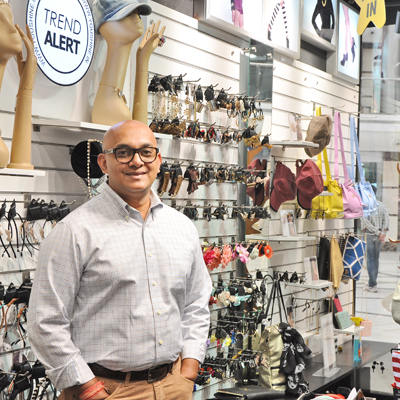
    (These are purely personal views of Youshine founder Ashish Sood and Indiantelevision.com does not necessarily subscribe to these views.)