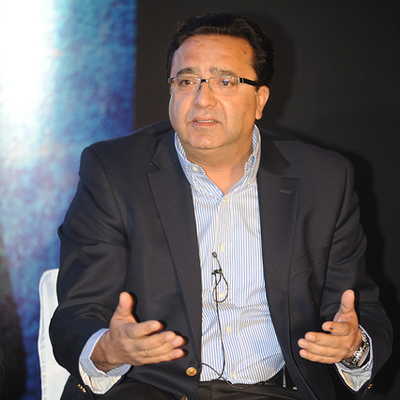
Tag: Ashish Sehgal

  • Vivaki’s Mona Jain joins Zee Entertainment

    Vivaki’s Mona Jain joins Zee Entertainment

    MUMBAI: In December last year, Vivaki Exchange Mona Jain had put in her papers. The move came in after Lodestar UM and Cheil won the Samsung account from Starcom MediaVest Group.


    Jain, who has more than two decades of experience in marketing communications, was tight-lipped about her next move. Her joining Zee comes as a pleasant surprise to many.


    In-line with its plans to strengthen the senior sales team, Zee Entertainment Enterprises Limited (Zeel) today announced the appointment of Jain as EVP-cluster head and Rahul Sharma as sr. VP-national sales head.


    Speaking on both the appointments, Zeel chief sales officer Ashish Sehgal said, “We are extremely happy to have two media stalwarts join us from the industry. Mona brings with her an immense experience and understanding of the industry. She has been instrumental in key media launches and her knowledge will be really valuable in reinforcing our relationship with agencies & clients. Mona will play a key role in developing brand solutions, setting up a business model for geo-targeting & agency relationship management. She will also head the North region leading the Business Development team, new initiatives and niche channels.”


    “Rahul comes with a digital background, which will add a new dimension in selling traditional media. His proven skills in establishing start-up operations and successful launch of channel brands will play an integral role in helping the Company achieve its business objectives”; Sehgal further added.


    Commenting on her joining, Jain stated, “I am extremely pleased to be stepping into this position. ZEE looks poised for huge growth and it will be very exciting to be a part of this journey.”


    With over 20 years of experience in media and FMCG, Sharma said, “I have been a part of Television and it’s home coming to me. I am excited to join ZEE and be a part of the biggest Television Network.”


    Both the appointments are with effect from 5th March, 2014.

  • Zee Cine Awards scales up for 2014

    Zee Cine Awards scales up for 2014

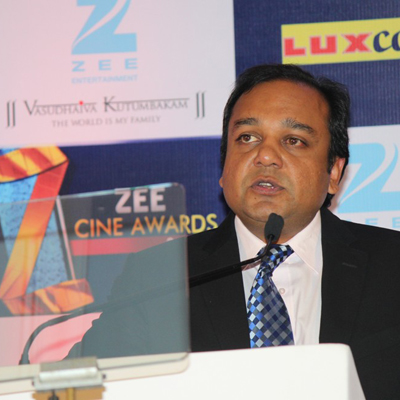
    MUMBAI: All roads and the biggest names in Indian cinema and television converge at Mumbai’s Film City on 8 February this year. Reason is the 14th edition of the Zee Cine Awards aka the ‘World’s Biggest Viewers’ Choice Awards’ to be held there.


    Among A-list acts, Shah Rukh Khan will perform to some of the hit numbers from his films including Lungi Dance, 1234 and so on. This year, Lux Cozi has been roped in as title sponsor. Additionally, the network is pitching for a special partner and looking for more sponsors across categories.


    The Zee Cine Awards, started in 1998, were the first ever awards to be introduced by a television network and have since grown into an institution of sorts.


    Exults Zeel managing director and CEO Punit Goenka: “Zee Cine Awards is a property with growing global reach and audience share. The success of this award over the years makes it an indispensable component of advertisers’ media mix and this year, they will further leverage it across the network’s varied channels.”


    This edition of the Zee Cine Awards will see a partnership with the Neeraj Pandey scripted film, Total Siyapaa, starring Ali Zafar and Yami Gautam and several initiatives on this front are to be announced shortly.


    Says Goenka: “Every year, the talent recognized by our viewers continues to inspire us with the depth and richness that the Hindi film fraternity represents. We will support extraordinary new films that need a platform like Zee Cine awards to showcase them to the industry, and that’s why we are pleased to support Total Siyapaa. We are looking forward to celebrating their achievements in a fittingly glamorous way at the awards.”


    What also makes the Zee Cine Awards unique is that viewers’ votes decide winners. For instance, last year’s awards drew an unprecedented over 4.5 million votes from across the globe. This year too, in keeping with its promise Haq Hai Aapka, the network will only declare nominees across popular categories and then pass the baton of selecting Best Actor, Best Film and so on to its loyal audience through a transparent and hassle-free voting mechanism.


    As Zeel chief sales officer Ashish Sehgal puts it: “We are amongst the first broadcasters to come up with an award like this. And secondly, we were the only ones to give them out as per viewers’ voting. Earlier, all the awards were constituted by film magazines – be it Screen or Filmfares.”


    Significantly, the Zee Cine Awards 2014 will be telecast on 23 February on multiple channels (Zee TV, Zee Anmol, Zee Tamizh, Zee Cafe etc.) across multiple geographies in different languages and genres, with a programming reach of over 700+ million viewers across 168 countries.


    So why are the Zee Cine Awards being held in Mumbai for the second consecutive year after creating a worldwide footprint across destinations like Singapore, London, Mauritius and Dubai?


    Replies Sehgal: “With almost all awards airing overseas, after a long period, we brought it back to India, thinking we should give a chance to Indian audiences also.”


    Zee Network is pulling out all stops to promote one of its biggest properties across platforms.


    Viewers can log onto www.zeecineawards.com for a visual treat that traces the journey of the awards from 1998 through 2000 and till date, complete with over 2000 exclusive photographs and over 500 videos showcasing some of the best performances, award acceptance speeches, Kodak moments and behind-the-scenes buzz.


    Apart from this, the awards will be promoted on all network channels, giving advertisers an opportunity to reach out to different audiences across categories. Digitally too, the awards will be promoted in a big way with SRK’s performance as one of the highlights.


    With the channel having achieved its targeted revenue of Rs 300 million last year, what is the target for this year, given there are restrictions on inventories unlike last time. Apparently, the network plans to make the extra moolah by showcasing the event on Zee’s HD channels as well (Zee HD, Zee Cinema HD and Zee Café HD). “Given the restrictions on inventories, the only thing that can go up is pricing,” says Sehgal.


    “This year, we are looking at kind of maintaining those revenues because we believe they are the highest revenues generated by an award show. The advantage we have this year is we can make extra money by showcasing these awards on our HD channels (Zee, Zee Cinema HD and also Zee Café). For evolved and discerning audiences, we are selling it separately. Though title and powered by will be common in both the channels, there will be more numbers of associate sponsors separately,” signs off Sehgal.

  • Ad Cap: The Story continues….

    Ad Cap: The Story continues….

    MUMBAI: That both music channels and news channels had approached the Telecom Disputes Settlement and Appellate Tribunal (TDSAT) against the 12 minute ad cap ruling by the Telecom Regulatory Authority of India (TRAI) is known.

    We had also reported that while the TDSAT hearing for music channels was scheduled for 21 October, that for news channels had been brought ahead to 31 October from 11 November.

    We want status quo, no matter which way the verdict goes, says Rohit Gupta

    But there’s one more twist in this tale for music channels too will now have to wait, much like their news counterparts, till 31 October to hear the TDSAT ruling on the matter.

    And it doesn’t end there. Industry sources reveal there is still confusion regarding the ad cap with nearly 50 per cent of television channels not implementing it, a few of which are following the earlier mandate of 16 and 20 minutes advertising, and still others ‘flouting the rule completely.’

    In fact, a source states the number of antacid pills being consumed by planners and buyers in agencies and by ad sales executives in TV channels has gone up thanks to the constant bickering between the two of them.

    Indeed, Sony Entertainment Television took everyone by surprise when the network unanimously decided not to follow the 10+2 mandate. Network CEO and Indian Broadcasting Foundation president Man Jit Singh had then said: “There should be status quo and there should be one law for all channels from all genres.”

    Till date, Sony stands by its CEO’s statement. “We will wait for the verdict from TDSAT, which comes out at the end of this month. We want status quo, no matter which way the verdict goes,” says MSM president network sales, licensing and telephony Rohit Gupta.

    On the other hand, representatives of Star Network and Viacom 18, which have been happily following the ad cap, maintain that their respective managements will take a call after the TDSAT ruling. “We will follow the law,” they say.

    Meanwhile, Zee has an entirely different take on the issue. “We will continue with the 10+2 ad cap no matter what the TDSAT decides,” says Zeel chief sales officer Ashish Sehgal.

    He justifies this stance saying: “Not that we are too happy with the scenario, but we need to bring in discipline. We are now going to the international norm of 12 minutes of advertising per hour. The network has already created its business plan around the new rule. A lot of planning has gone into this. We have increased our content and decreased the inventory and revising this again is not on our agenda.”

    We will continue with the 10+2 ad cap no matter what the TDSAT decides, says Ashish Sehgal

    On their part, advertisers are unhappy with the few networks that are implementing the mandate voluntarily and charging high rates. The big question facing them is what if TDSAT overrules TRAI’s diktat. “Will the channels revert to their earlier air time allocation as everyone else is doing or will they further hike the rates?” one of the advertisers questioned voicing his apprehensions on condition of anonymity.

    As far as the industry is concerned, an IBF member says: “Let’s say the TDSAT quashes the TRAI order. The ruling will be valid for everyone and every broadcaster (even those who are complying with the 12 minute ad cap) can go back to the old system. Or news and music channels lose the case in TDSAT. They can approach the Supreme Court for succour. Then let’s say the Supreme Court puts a stay on the ad cap, it will then be back to the way the world was operating before this ad cap announcement by TRAI.”

    News broadcasters say that if the verdict is in support of the ad cap, it will be implemented by end-November, if not earlier. “With Diwali round the corner, we are unsure how many days the court will take to come up with the verdict. Though if it is implemented, it is bad news for news channels,” says a member of NBA (News Broadcasters’ Association). Asked if the NBA will then appeal to the Supreme Court, the member dismisses it as a hypothetical question.

    Some advertisers believe that the new ad cap regime could take longer to roll out completely. Some expect it to spill over to mid-2014. Or it could be even later, if things go back and forth in court as they are wont to do.

    For the industry, however, what could be the best outcome is that Union I&B Minister Manish Tewari’s suggestion (that ad cap be implemented post completion of digitization in December 2014) is taken seriously and becomes a reality.

    But then there are the cynical observers. Says one of them: “Don’t get into the politics. Ministers say something and do something else. After all, where did the request for the ad cap come from…”

  • Ad Cap: The Story continues.

    Ad Cap: The Story continues.

    MUMBAI: That both music channels and news channels had approached the Telecom Disputes Settlement and Appellate Tribunal (TDSAT) against the 12 minute ad cap ruling by the Telecom Regulatory Authority of India (TRAI) is known.

    We had also reported that while the TDSAT hearing for music channels was scheduled for 21 October, that for news channels had been brought ahead to 31 October from 11 November.

    ut there’s one more twist in this tale for music channels too will now have to wait, much like their news counterparts, till 31 October to hear the TDSAT ruling on the matter.

    And it doesn’t end there. Industry sources reveal there is still confusion regarding the ad cap with nearly 50 per cent of television channels not implementing it, a few of which are following the earlier mandate of 16 and 20 minutes advertising, and still others ‘flouting the rule completely.’

    In fact, a source states the number of antacid pills being consumed by planners and buyers in agencies and by ad sales executives in TV channels has gone up thanks to the constant bickering between the two of them.

    Indeed, Sony Entertainment Television took everyone by surprise when the network unanimously decided not to follow the 10+2 mandate. Network CEO and Indian Broadcasting Foundation president Man Jit Singh had then said: “There should be status quo and there should be one law for all channels from all genres.”

    Till date, Sony stands by its CEO’s statement. “We will wait for the verdict from TDSAT, which comes out at the end of this month. We want status quo, no matter which way the verdict goes,” says MSM president network sales, licensing and telephony Rohit Gupta.

    We will continue with the 10+2 ad cap no matter what the TDSAT decides, says Ashish Sehgal

    On the other hand, representatives of Star Network and Viacom 18, which have been happily following the ad cap, maintain that their respective managements will take a call after the TDSAT ruling. “We will follow the law,” they say.

    Meanwhile, Zee has an entirely different take on the issue. “We will continue with the 10+2 ad cap no matter what the TDSAT decides,” says Zeel chief sales officer Ashish Sehgal.

    He justifies this stance saying: “Not that we are too happy with the scenario, but we need to bring in discipline. We are now going to the international norm of 12 minutes of advertising per hour. The network has already created its business plan around the new rule. A lot of planning has gone into this. We have increased our content and decreased the inventory and revising this again is not on our agenda.”

    On their part, advertisers are unhappy with the few networks that are implementing the mandate voluntarily and charging high rates. The big question facing them is what if TDSAT overrules TRAI’s diktat. “Will the channels revert to their earlier air time allocation as everyone else is doing or will they further hike the rates?” one of the advertisers questioned voicing his apprehensions on condition of anonymity.

    As far as the industry is concerned, an IBF member says: “Let’s say the TDSAT quashes the TRAI order. The ruling will be valid for everyone and every broadcaster (even those who are complying with the 12 minute ad cap) can go back to the old system. Or news and music channels lose the case in TDSAT. They can approach the Supreme Court for succour. Then let’s say the Supreme Court puts a stay on the ad cap, it will then be back to the way the world was operating before this ad cap announcement by TRAI.”

    News broadcasters say that if the verdict is in support of the ad cap, it will be implemented by end-November, if not earlier. “With Diwali round the corner, we are unsure how many days the court will take to come up with the verdict. Though if it is implemented, it is bad news for news channels,” says a member of NBA (News Broadcasters’ Association). Asked if the NBA will then appeal to the Supreme Court, the member dismisses it as a hypothetical question.

    Some advertisers believe that the new ad cap regime could take longer to roll out completely. Some expect it to spill over to mid-2014. Or it could be even later, if things go back and forth in court as they are wont to do.

    For the industry, however, what could be the best outcome is that Union I&B Minister Manish Tewari’s suggestion (that ad cap be implemented post completion of digitization in December 2014) is taken seriously and becomes a reality.

    But then there are the cynical observers. Says one of them: “Don’t get into the politics. Ministers say something and do something else. After all, where did the request for the ad cap come from…”

  • TVT gives us power to negotiate better: Broadcasters

    TVT gives us power to negotiate better: Broadcasters

    MUMBAI: The month of July saw the tamasha related to the ratings – TRPs vs TVTs and it was for a fortnight that the whole industry awaited for the three stakeholders to reach a consensus on how viewership numbers will be dished out and what will be the metric for evaluating how television is faring.

    Several meetings and exchanges of emails  between the involved parties gave birth to television viewership in thousands, colloquially referred to as TVTs. The format was devised to capture and reflect growth in TV audiences in the country in absolute numbers.

    And so from the past three weeks, the industry has been receiving ratings in numbers rather than percentages. Indiantelevision.com spoke to industry professionals to understand the changing scenario and the road ahead.

    Though most broadcasters feel that it is still too early to expect any major changes, but the numbers have surely put them in a better position to negotiate.

    “It is never too easy to get advertisers on board,” laughs and says Zeel chief sales officer Ashish Sehgal. “Currently, the way transactions are happening people sometimes still tend to refer to both (percentage as well as numbers) as they are habituated to the old ways. But to see the real change happening, we will have to wait for a while – till the whole universe is revamped in January,” he adds.

    He further elaborates, “Things like ad cap and ad rate hike are the roadblocks in adaptation of the new currency. However, broadcasters now have higher negotiating power.”

    On the same lines, a senior executive from a leading GEC is happy that TVT which is the accepted norm globally for gauging TV viewership has been finally adapted in India. “The new method is a true reflection of how many people are really watching TV and hence, it helps our sales team to utilise the data in a profitable manner while discussing ad rates with the clients.”

    The new method has benefitted the niche and regional channels the most which at times received zero per cent TRPs. ETV Marathi and ETV Gujarati business head Anuj Poddar says, “The shift of TAM from GRP to GVT is a healthy thing for everyone and I don’t know why the buyers and advertisers were protesting so much. Now it’s all doodh ka doodh, paani ka paani because it shows absolute numbers. It is very easy to compare across platforms.  You can see the reach of the channels and know the number of homes it reaches.It’s a good starting point where TVT helps all of us get our math right and to also know how and where to spend money.”

    However, there is a catch in the consensus achieved which is keeping all the stakeholders happy. For internal evaluation including planning and buying, percentage TVR weekly and all other data is still available to advertisers and advertising agencies as in the past. Hence, for most advertisers it’s business as usual.

    Parle general manager (marketing) Praveen Kulkarni says, “For us, it has not made any difference. We still go by the old currency (TRPs). So, there is no change in our media plans.”

    Similarly, Godrej & Boyce Manufacturing vice-president (sales & marketing) Kamal Nandi states, “The change has just happened so it is too early to say anything. As of now, we still refer to information in percentages.”

    He further elaborates and says that for TVTs to become a reference point will still take some time and it all depends on how fast planners and buyers can cope with the new metric.

    Media planners too think that it is too early to talk about benefits of TVTs over TRPs and continue to refer to the old rating method. A south India based media planner explains, “It is too early to say how it will change the way money is exchanged between the two parties. We are trying our best to make sure that both the parties are in a win-win situation.”

    On this, the GEC executive goes on to say, “Earlier an advertiser who would pay Rs 100 (and if 100 people were watching a channel) will now have to pay Rs 500 as the reach too would have increased to 500 viewers. And that is the main reason they were and are still opposing it.”

    Whatever be the case, one thing which is clear right now is that the broadcasters have engineered change in the way industry views how television programming is being consumed. And that is only phase one of their journey. They still have some road to travel to ensure that TVTs become the currency amongst aadvertisers and agencies.

  • Marico in list of top advertisers by volume as Bharti Airtel slips out

    MUMBAI: Bharti Airtel has cut down its advertising on television and shifted allocations to other mediums in 2012, a year marked by slowdown and a difficult market condition for telecom companies.

    Bharti Airtel has fallen off the list of top 10 advertisers on television in terms of volumes, according to TAM AdEX‘s ranking in 2012. The telecom major held the number 10 spot in the TAM AdEx‘s list of top ten advertisers in 2011.

    Replacing Bharti Airtel is fast moving consumer goods (FMCG) manufacturer Marico. Not figuring in the list in 2011, Marico has marked its aggression to gain the tenth spot with one percent share in advertising volume on television.

    Top 10 Advertisers in 2012 on TV
    Rank
    Advertisers
    % Share
    1
    Hindustan Lever Ltd
    8
    2
    Cadburys India Ltd
    2
    3
    Reckitt Benckiser (india) Ltd
    2
    4
    Itc Ltd
    2
    5
    Procter & Gamble
    2
    6
    Colgate Palmolive India Ltd
    1
    7
    Ponds India
    1
    8
    Coca Cola India Ltd
    1
    9
    Samsung India Electronics Ltd
    1
    10
    Marico Ltd
    1

    Bharti Airtel has upped its ad inventory on digital and on ground marketing initiatives. Agrees a top media buyer who is familiar with the ad spends of telecom companies, “The shift to digital and on ground in case of Bharti Airtel would be the main reason why its volume of advertising on television has decreased. If you see the whole picture, the overall media spends may not have gone down so much, but resources have been shifted to focus on other aspects of a 360 degree media plan. The BCCI and F1 sponsorships are no small investments.”

    Top 10 Advertisers in 2011 on TV
    Rank
    Advertisers
    % Share
    1
    Hindustan Lever Ltd
    8
    2
    Reckitt Benckiser (india) Ltd
    3
    3
    Cadburys India Ltd
    2
    4
    Itc Ltd
    2
    5
    Procter & Gamble
    2
    6
    Ponds India
    1
    7
    Coca Cola India Ltd
    1
    8
    Colgate Palmolive India Ltd
    1
    9
    Bharti Airtel Ltd
    1
    10
    Smithkline Beecham
    1

    Bharti Airtel is one of the major ad spenders in India and has been on expensive mediums like cricket. The telecom major bagged the BCCI sponsorship rights of all international cricket matches played in India for the period 2010-2013.

    “While telecom companies in general have reduced their ad inventory on television, in case of Bharti Airtel this fall has been sharp. Even on TV, some of the focus has shifted to niche channels,” says Zeel chief sales officer Ashish Sehgal.

    Bharti Airtel’s consolidated net profit has been falling for the past 12 quarters on rising expenses. The company is also faced with large cash outflows in 2013-14 on account of one-time spectrum fees and licence renewal fees, for which it is expected to preserve cash.

    The reduction in TV ad volumes by Bharti Airtel could also be a reflection of the general economic slowdown that the industry is experiencing. While advertisers in general have either cut back on advertising and promotion spends or refrained from increasing them, FMCG companies have been increasing the same and this has been reflected in more FMCGs figuring in the top ten advertisers.

    Of the top ten advertisers on television, nine belong to the FMCG category (same as in 2011). Samsung India Electronics Ltd, a consumer durables company, is the only outsider at number nine. HUL is the number one advertiser with eight per cent of the television ads share by volume followed by Cadbury India, Reckitt Benckiser, ITC Ltd and P&G (in that order), all claiming two per cent of ad volume.

    MediaCom CEO Debraj Tripathi says, “Now that the slowdown has hit the industry, the telecoms are keeping a check on their spends and investing sparingly, while the FMCGs are robust on advertising.”

    Though TAM AdEx only gives ad volumes, Marico has also increased its spends in value terms. The company, which has been selling brands such as Saffola and Parachute, has upped its ad spends for the period of January-December by 16.67 per cent from Rs 3.54 billion in 2011 to Rs 4.13 billion in 2012.

    “Marico has been making efforts to increase market share. It has also launched new products and been trying to aggressively grow its brands. The aggression is marked with the acquisition of personal care brands of Paras Pharma from Reckitt Benckiser,” says a media analyst.

  • HUL to be exclusive ad partner of Zee Bangla Cinema

    MUMBAI: Zee Entertainment Enterprises Ltd (Zeel) has signed an exclusive advertisement deal with the country’s largest spender on advertising Hindustan Unilever Ltd (HUL) for its newly-launched Bengali movie channel.

    This is the first time an entertainment channel has entered into an exclusive advertisement arrangement.

    As part of the deal, the FMCG major will exclusively get to advertise on Zee Bangla Cinema for one-and-a-half months. And for the next four-and-a-half months, Zee has committed 30 per cent of the ad inventory of the channel to HUL.

    For the first one-and-a-half months, the deal will act as a roadblock for other advertisers wanting to advertise on the channel. HUL will also get visibility on all the promotional activities of the channel.

    According to Zee Entertainment Enterprises Ltd (Zeel) chief sales officer Ashish Sehgal, the ad deal with HUL is beneficial to both the parties. “I am able to sell the channel from day 1 without the assessment of ratings and HUL will get to advertise exclusively on our channel,” he said.

    The channel was scouting for an advertising partner during the launch and had approached several clients. “HUL showed confidence in us and hence they are on board,” Sehgal said.

    Zeel already runs a Bengali GEC Zee Bengal, which also airs movies and already owns blockbuster Bengali movie titles.

    The Zee-HUL ad deal also comes in the backdrop of the FMCG company’s decision in June against advertising on any of the Star Network channels. HUL‘s ad and promotional spends in 2011-12 was Rs 26.97 billion.

    In India, Star also did ad deals for a shorter duration for its second GEC Life OK but it was with three advertisers. The other kind of deal worked out was by NDTV when its launched a co-branded lifestyle channel, NDTV Good Times, with Kingfisher.

    “This is an effective model of working where the new channels sign on clients as exclusive advertisers. Life OK had also done it with three brands including HUL for a month,” an executive with a rival broadcaster said, adding Bengal’s television advertising market is in the range of Rs 8 billion.

  • Cycle Pure Agarbathies take Ind-SL series ground sponsorship

    MUMBAI: Cycle Pure Agarbathies, India’s leading incense brand, has come in as ground associate sponsor for the upcoming India-Sri Lanka men’s cricket tournament consisting of 5 ODIs and 1 T-20 international from 21 July.

    Cycle Pure Agarbathies has also announced the setting up of the ‘Cycle Agarbathies Quality Performer of the Series’ award to be given away to the most consistent performer of the cricket series, who also demonstrates true sportsman like behaviour.

    Zeel chief sales officer Ashish Sehgal said, “We are delighted to have a trusted and traditional brand like Cycle Pure Agarbathies on board as the associate sponsor for the India Sri Lanka cricket series. We believe that this series will be one of the best international cricket series for India and our partnership vindicates the stand that it will be good for advertisers too, I am confident that together we will create a wonderful experience for the cricket fan.”

    Parallel to the cricket series, Cycle Pure Agarbathies will also run a contest in retail wherein an exclusive group of retailers will be selected for the contest who will nominate their favourite cricketers for the ‘Cycle Agarbathies Quality Performer of the Series’ award. Cycle Pure Agarbathies intends to create a lasting bond between the retailers and the company to forward the sales of the organisation and build on the uniform passion for cricket that connects India.

    Cycle Pure Agarbathies MD Arjun Ranga said, “Cycle stands for quality; wherein in cricket quality is not just runs scored, or wickets taken. Thus, Cycle believes in quality as a combination of quality of performance and quality of on field behaviour, which is reflected in the recently instituted Cycle Agarbathies Quality Performer of the Series award.”

  • Zeel designates Ashish Sehgal as chief sales officer

    MUMBAI: Zee Entertainment Enterprises Ltd (Zeel) has re-designated its head – network sales Ashish Sehgal as chief sales officer.

    Indiantelevision had reported in November last year that Sehgal was promoted as head of network sales following the exit of Joy Chakraborthy.

    Sehgal will continue to report in to Zeel president Rajesh Jejurikar.

    The announcement was made by Jejurikar in an internal mail.

    Sehgal had joined Zeel in 2006 as AVP and was looking after the northern region and subsequently was promoted to EVP sales. Prior to Zeel, Sehgal was at Star India, serving as All India Sales Head of Star Gold.

    Also Read:

    Zeel promotes Ashish Sehgal to sales head