Tag: Ashish Mishra

  • Tata tops the Best Indian Brands 2014 list

    Tata tops the Best Indian Brands 2014 list

    MUMBAI: Omnicom Group’s Interbrand India has released the second edition of its Best Indian Brands 2014 league table, the definitive guide to the top 40 brands in India.

    While unveiling the table, Interbrand global chief marketing officer Graham Hales said that with an impressive growth rate of 14 per cent across the brands within table, it can be seen that investing in brands is a good opportunity for Indian business. “Indian business may have been slow to start the process of creating really strong brands, but the opportunity is now evident and in its own right that should feed the impetus to create stronger brands,” he said.

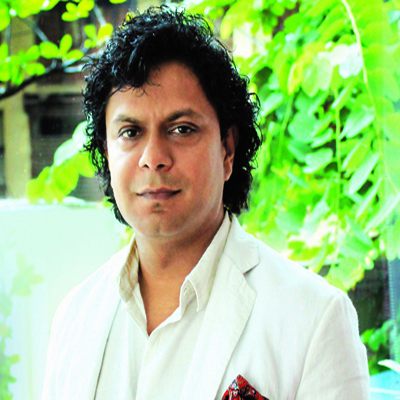
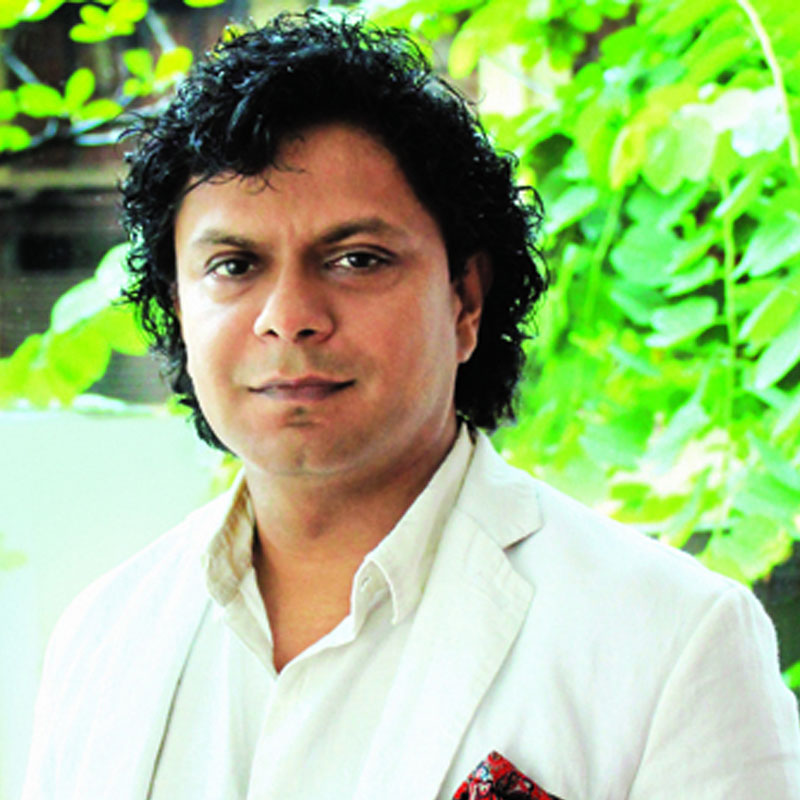
    Interbrand India managing director Ashish Mishra believes that not just Indian, but very few Asian companies have managed to build valuable international brands. “In my mind, it has to do with a prevalent business belief that brand is a cost, rather than a strategic and long-term investment. Here businesses clearly lead the brand and are not led by it, with the brand mostly relegated to being an expression tool.”

    As a brand consultant in the region, he sees the need to continue to educate senior managers, about brands being an asset that requires long-term management and planning. If Indian companies begin to change their brand mindset, the opportunities are limitless.

    “Indeed opportunities are a positive way of looking at the challenges. And there can’t be a stronger motivation for us than to act as a bridge of sorts in the Indian corporate world – between the two league tables we bring to the market – best Indian brands and best global brands,” adds Mishra.

    Beyond resulting in a numeric value, the brand value perspective brings in an appreciation of where and how brand and business value could be created. These are the discussions Interbrand wants to create in the Indian market to create a rightful leverage for Indian Brands on the domestic as well as the global scale.

    The league table is pasted below:


  • Tanishq on Interbrand’s Best Retail Brands APAC list

    Tanishq on Interbrand’s Best Retail Brands APAC list

    MUMBAI: The jewellery brand from the house of Tata’s, Tanishq, is the only Indian brand to make it to the list of top 30 Best Retail Brands in Asia Pacific.


    The jewellery brand stands at number 13 with a brand value of $670 million.


    On being the first Indian brand ever to make to the list, Titan Industries Jewelery CEO CK Venkataraman said, “It is a proud and humbling moment for us to make it to the Interbrand APAC list of Retails Brands 2014. We would like to dedicate this achievement to the passionate and tireless efforts of the large Tanishq team across the country and our wonderful customers who have helped us achieve all that we have.”


    Asia’s consumer markets remain highly fragmented, both as a whole and within individual markets. Genuine liberalisation is patchy as best, with traditional and local retailing dominating in many markets. At one extreme, there are highly concentrate markets such as Singapore, where FairPrice commands over 50 per cent market share in the grocery category; at the other, markets such as India, where modern retail brands remain dwarfed by traditional local retailers.


    Commenting on India’s performance, Interbrand India managing director Ashish Mishra said, “It is indeed heartening to see an Indian brand figure in the Best Retail Brands league table. The retail space in India is experiencing simultaneous transformational influences both from the supply and demand sides. Political swings, newer business models, supply chain efficiencies, online innovations, and at the root of it all – complex new customer journeys. The resulting flux is both exciting as well as challenging. We need to adapt but without losing our core cultural resources. Tanishq has in some ways done that.”


    Key findings across geographies point to major retailers looking beyond their core business models in pursuit of gaining a competitive advantage, online innovation bridging the divide between in-store and online shopping, and a strategic understanding and leveraging of sales data in meeting customer needs and desires better and faster than ever before.


    The global Best Retail Brands report ranks the top 50 North American and European retail brands by brand value, as well as the top 30 retail brands from across Latin America and the Asia-Pacific. The report is produced in collaboration with Interbrand Design Forum, the retail experience group within Interbrand, the world’s leading brand consultancy.


    Interbrand Design Forum MD Dirk Defenbaugh said, “The world’s best retail brands understand the complex and challenging relationships between analog and digital and have been quick to address changing shopper behaviors. By integrating the physical and virtual, making purchasing easier, enhancing service, and using storytelling, these leading brands are re-imagining their offers, and creating unique experiences for consumers that convert browsers into buyers.”


    Click here for Best Retail Brands – Asia Pacific 2014 Report

  • Anatomy of the top 100 brands 2013

    Anatomy of the top 100 brands 2013

    MUMBAI: This year, Apple has re-written history by replacing Coca-Cola, the number one brand for the past 13 years, as the new numero uno in the coveted top 100 global brands announced by brand consultancy, Interbrand.

    Interestingly, it’s not as if Coca-Cola got it wrong this time round. Rather, the FMCG brand has been on a successful spree; winning awards, launching brilliant campaigns, and engaging people in popular initiatives like Coke Studio. Just that technology and new media have emerged leaders this year.
    Ashish Mishra says the report tries to find an answer to who really leads the brand the marketer or the consumer, or both

    Says Interbrand India managing director Ashish Mishra: “If we look at the top five or ten, its technology and new media which is leading the pack and this is the trend all across.”

    The top 10 brands convey a message: A brand today has got to be all about the people. And how anticipation, co creation, conversation, innovation, investment in people & big data, strategic CSR and new leadership is the new way ahead. Mishra goes on to say that Apple has climbed the charts because of the Apple culture is has fashioned across the globe.

    East is East, West is West

    What emerges from the list is that most of the top 100 brands belong to the Western world. So is it to do with our white fixation or the fact that brands from the US, UK, Germany or France have made a name for themselves globally?

    “A brand needs to be where the top 10 GDPs are,” says Ashish, adding that apart from the brands’ financial performance, their role in influencing consumer choice, the strength they command as also recognition across the globe are important factors while determining their value.

    What is more unfortunate is that no Indian brand figures in the top 100. The consultancy reasons it’s all about diversification.

    Mishra explains that post Independence, India grew at a fast clip while business grew in various directions. For example, Tata today means different things i.e. Tata Steel, Tata Motors, TCS etc. to different people. Ditto for other Indian conglomerates, which diversified into different brands and sub-brands, which in turn grew bigger than the mother brand in some cases.

    “An organisational structure is important and somewhere down the line, custody of sub-brands was handed over to people (CEOs, CMOs, CFOs etc) who took charge but forgot to work towards the mother brand,” says Mishra of the irony of the Indian market.

    The agency is helping many companies in India to bridge the gap and be part of the global brands. And to achieve it, the agency feels the companies need to have an inside-outside perspective wherein they need to go to the right markets after creating a name for themselves here as well as compete with the global counterparts on the same parameters.

    Media not so savvy

    Of the top 100, the only media brands are Disney, Thomson Reuters, Discovery (new entrant this year) and MTV. Implying that while media may be the most influential opinion maker for readers and viewers, it somehow fails to impress brand creators.
    While the consultancy does evaluate media brands excluding publishing houses, very few made it to the list. Also, the consultancy made an exception for India and China by taking into consideration government-owned brands because of their sheer number in these countries.

    “The names in the list are the most influential brands globally. But if you look at the media in a broader context, then many other brands too would be included. For example, Facebook,” says Ashish. Incidentally, the top 30 brands evaluated by the consultancy in India did not have a single name from the media.
    Whatever may be the case, the names that figure on the list demonstrate that these brands have indeed managed to deliver meaningful and seamless experiences across all platforms and touch points.

  • Anatomy of the top 100 brands 2013

    Anatomy of the top 100 brands 2013

    MUMBAI: This year, Apple has re-written history by replacing Coca-Cola, the number one brand for the past 13 years, as the new numero uno in the coveted top 100 global brands announced by brand consultancy, Interbrand.

    Interestingly, it’s not as if Coca-Cola got it wrong this time round. Rather, the FMCG brand has been on a successful spree; winning awards, launching brilliant campaigns, and engaging people in popular initiatives like Coke Studio. Just that technology and new media have emerged leaders this year.

    Ashish Mishra says the report tries to find an answer to who really leads the brand the marketer or the consumer, or both

    Says Interbrand India managing director Ashish Mishra: “If we look at the top five or ten, its technology and new media which is leading the pack and this is the trend all across.”

    The top 10 brands convey a message: A brand today has got to be all about the people. And how anticipation, co creation, conversation, innovation, investment in people & big data, strategic CSR and new leadership is the new way ahead. Mishra goes on to say that Apple has climbed the charts because of the Apple culture is has fashioned across the globe.

    East is East, West is West

    What emerges from the list is that most of the top 100 brands belong to the Western world. So is it to do with our white fixation or the fact that brands from the US, UK, Germany or France have made a name for themselves globally?

    “A brand needs to be where the top 10 GDPs are,” says Ashish, adding that apart from the brands’ financial performance, their role in influencing consumer choice, the strength they command as also recognition across the globe are important factors while determining their value.

    What is more unfortunate is that no Indian brand figures in the top 100. The consultancy reasons it’s all about diversification.

    Mishra explains that post Independence, India grew at a fast clip while business grew in various directions. For example, Tata today means different things i.e. Tata Steel, Tata Motors, TCS etc. to different people. Ditto for other Indian conglomerates, which diversified into different brands and sub-brands, which in turn grew bigger than the mother brand in some cases.

    “An organisational structure is important and somewhere down the line, custody of sub-brands was handed over to people (CEOs, CMOs, CFOs etc) who took charge but forgot to work towards the mother brand,” says Mishra of the irony of the Indian market.

    The agency is helping many companies in India to bridge the gap and be part of the global brands. And to achieve it, the agency feels the companies need to have an inside-outside perspective wherein they need to go to the right markets after creating a name for themselves here as well as compete with the global counterparts on the same parameters.

    Media not so savvy

    Of the top 100, the only media brands are Disney, Thomson Reuters, Discovery (new entrant this year) and MTV. Implying that while media may be the most influential opinion maker for readers and viewers, it somehow fails to impress brand creators.
    While the consultancy does evaluate media brands excluding publishing houses, very few made it to the list. Also, the consultancy made an exception for India and China by taking into consideration government-owned brands because of their sheer number in these countries.

    “The names in the list are the most influential brands globally. But if you look at the media in a broader context, then many other brands too would be included. For example, Facebook,” says Ashish. Incidentally, the top 30 brands evaluated by the consultancy in India did not have a single name from the media.
    Whatever may be the case, the names that figure on the list demonstrate that these brands have indeed managed to deliver meaningful and seamless experiences across all platforms and touch points.

    Click here for Interbrand‘s Best 100 Global Brands

  • Anatomy of the top 100 brands 2013

    Anatomy of the top 100 brands 2013

    MUMBAI: This year, Apple has re-written history by replacing Coca-Cola, the number one brand for the past 13 years, as the new numero uno in the coveted top 100 global brands announced by brand consultancy, Interbrand.


    Interestingly, it’s not as if Coca-Cola got it wrong this time round. Rather, the FMCG brand has been on a successful spree; winning awards, launching brilliant campaigns, and engaging people in popular initiatives like Coke Studio. Just that technology and new media have emerged leaders this year.


    Says Interbrand India managing director Ashish Mishra: “If we look at the top five or ten, its technology and new media which is leading the pack and this is the trend all across.”


    The top 10 brands convey a message: A brand today has got to be all about the people. And how anticipation, co creation, conversation, innovation, investment in people & big data, strategic CSR and new leadership is the new way ahead. Mishra goes on to say that Apple has climbed the charts because of the Apple culture is has fashioned across the globe.


    East is East, West is West


    What emerges from the list is that most of the top 100 brands belong to the Western world. So is it to do with our white fixation or the fact that brands from the US, UK, Germany or France have made a name for themselves globally?


    “A brand needs to be where the top 10 GDPs are,” says Ashish, adding that apart from the brands’ financial performance, their role in influencing consumer choice, the strength they command as also recognition across the globe are important factors while determining their value.


    What is more unfortunate is that no Indian brand figures in the top 100. The consultancy reasons it’s all about diversification.


    Mishra explains that post Independence, India grew at a fast clip while business grew in various directions. For example, Tata today means different things i.e. Tata Steel, Tata Motors, TCS etc. to different people. Ditto for other Indian conglomerates, which diversified into different brands and sub-brands, which in turn grew bigger than the mother brand in some cases.


    “An organisational structure is important and somewhere down the line, custody of sub-brands was handed over to people (CEOs, CMOs, CFOs etc) who took charge but forgot to work towards the mother brand,” says Mishra of the irony of the Indian market.


    The agency is helping many companies in India to bridge the gap and be part of the global brands. And to achieve it, the agency feels the companies need to have an inside-outside perspective wherein they need to go to the right markets after creating a name for themselves here as well as compete with the global counterparts on the same parameters.


    Media not so savvy


    Of the top 100, the only media brands are Disney, Thomson Reuters, Discovery (new entrant this year) and MTV. Implying that while media may be the most influential opinion maker for readers and viewers, it somehow fails to impress brand creators.
    While the consultancy does evaluate media brands excluding publishing houses, very few made it to the list. Also, the consultancy made an exception for India and China by taking into consideration government-owned brands because of their sheer number in these countries.


    “The names in the list are the most influential brands globally. But if you look at the media in a broader context, then many other brands too would be included. For example, Facebook,” says Ashish. Incidentally, the top 30 brands evaluated by the consultancy in India did not have a single name from the media.
    Whatever may be the case, the names that figure on the list demonstrate that these brands have indeed managed to deliver meaningful and seamless experiences across all platforms and touch points.

  • Water Interbrand makes a steady start

    MUMBAI: DDB Mudra Group‘s strategic branding outfit Water Consulting, a merged entity of Omnicom‘s Interbrand and erstwhile Mudra‘s strategic branding and design consultancy Water, has posted an encouraging start in the quarter ended June.

    In its first three months of operations, the agency has not only expanded its client base but also the scope of its operations. It added new projects like PepsiCo GNG brands Quaker and Tropicana, Asian Paints PPG‘s corporate branding and environment design, XLRI rebranding, MoneyGram brand expression, and EMMBI‘s brand strategy, identity and engagement assignment.

    With the new assignment, the agency now has a total of three overseas clients – Etisalat, PepsiCo and MoneyGram.

    Interbrand London CEO Graham Hales said, “The emphasis on all assignments being carried out now is in line with Interbrand‘s commitment to creating and managing brand value in a benchmark way.”

    Water Interbrand business head and head of strategy Ashish Mishra said, “Significantly, Water‘s central philosophy of creating brand‘s that resolve socio cultural conflicts has found great resonance with Interbrand‘s inspirational belief that brands have the power to change the world.”

    Hales added, “Being a pioneer and a leading global brand consulting network, we would like to create a clearer understanding of how brands are living business assets which when managed well across touch points, create identification, differentiation and value.”

    The agency also expressed its intent to grow the Indian market as well by providing an approach that demonstrates the measurable value of brands.

    Water joined the global Interbrand network when Omnicom acquired majority stake of 51 per cent in Mudra last October. The global brand consultancy is represented in India through Water.

  • Interbrand to build Digital Branding in India

    MUMBAI: Omnicom‘s branding firm Interbrand, present in India through Water Strategic Branding and Design, will now also be focusing on the digital branding space.

    Interbrand European digital director Simon Smith said, “Digital, unfortunately, is seen as just another medium and while many more marketers are waking up to its potential, they tend to see it as a way to reach their audiences in a targeted, cost effective manner. In that sense, they see it more as a communication medium instead of a branding medium. There‘s a lot more than communications that you can do!”

    Smith feels that the digital branding space still has a lot of untapped potential that savvy marketers could use to build strong brands. Water head and chief strategist Ashish Mishra said, “While digital itself has become all-pervasive in today‘s world, digital branding still has a long way to go. Currently, the medium is used more for downstream activities and tactical communication. With Interbrand focusing the space, we believe the digital space itself will move upstream and begin to play a strategic role. Interbrand‘s core belief is that brands have the power to change the world. And Brands that have a socio cultural evangelism at their core have a far greater chance of espousing causes & conversations in a genuine way.”

    In order to help that foray, Interbrand intends on working closely with the local talent in India. “Indians understand the cultural nuances best and are best placed to leverage digital branding here,” Smith asserts.

    Smith started his career in computer game design for Sony while still at University. After completing his first degree in Industrial Engineering, he got involved with creative departments during the dotcom boom. These early experiences exposed him to gaps between the digital and traditional marketplace which he has since been striving to fill.

    Interbrand was started in 1974 and has since been involved in creating and managing brands as valuable business assets, not just logos. Interbrand operates through 40 offices worldwide and offers disciplines including analytics, brand strategy, brand valuation, corporate design, digital brand management, internal brand engagement, brand naming, packaging design, retail, verbal and visual identity. Some of the brands associated with Interbrand worldwide include 3M, AT&T, BMW, Godrej, P&G, Thomson Reuters and many more.