Tag: Ashish Jaiswal

  • Chennai Singams sign 16 players for Rs 96.4 lakhs in Indian Street Premier League

    Chennai Singams sign 16 players for Rs 96.4 lakhs in Indian Street Premier League

    Mumbai: Business stalwarts Rajdipkumar Gupta, Sandipkumar Gupta, and actor Suriya Sivakumar, promoters of Chennai Singams bought 16 players, including star player Sumeet Dhekale aka ‘Bahubali’ for the inaugural edition of ISPL. The Chennai-based franchise is among the six teams competing in the street-to-stadium league’s premiere edition from 6 to 15 March 2024 in Mumbai.

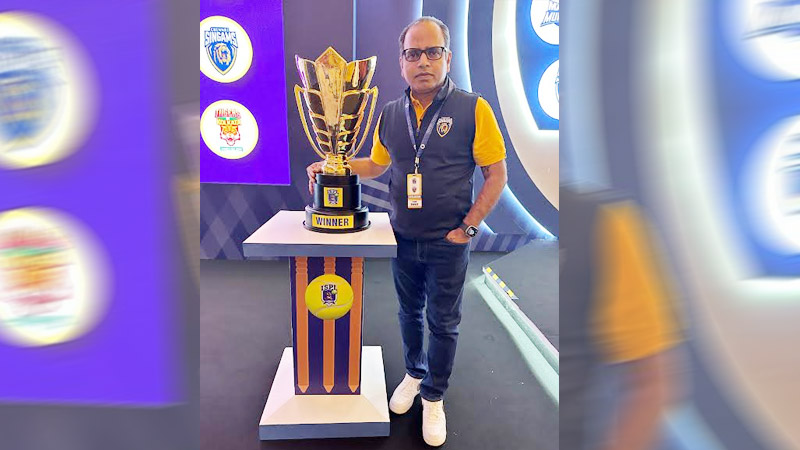
    The Chennai Singams team, with a purse of Rs 1 Crore, bought 16 players for a cumulative amount of Rs 96.4 Lakhs, making the team the highest bidder at the auction. Representing Chennai Singams were co-owners, Rajdipkumar Gupta, and the core team consisting of Rahul Pandey, Ashish Jaiswal and Sandeep Jaiswal.  

    Entrepreneur Chennai Singams co-owner  Rajdip Gupta said, “Our team strength is our players. We are elated to have bought some of the best players in the lot. The scouting camp that we hosted was very fruitful. Can’t wait for the Chennai Singams team to take to the field.”

    Chennai Singams co-owner Suriya Sivakumar said, “Witnessing the dedication, skill and talent on display, namely Sumeet Dhekale, Ketan Mhatre, R. Thavith Kumar, Venkatachalapathi Vignesh among others, I am confident that Chennai Singams will cross a milestone in the upcoming inaugural edition of the Indian Street Premier League. Our team is marked by passion, determination, and a relentless pursuit of excellence. Experience and raw talent are hard to resist! Chennai Singams is more than just a team; cricket is more than just a game for us. It’s an emotion!  Like all cricket lovers, I also eagerly await the game of our players in the ISPL matches. Sports and sportsmanship are forever inspirations! Let us roar together, Chennai Singams!”

    A team formed with players from different corners of the country, Chennai Singams, bought Sumeet Dhekale for Rs 19 Lakhs who is one of the most expensive players followed by Ketan Mhatre for Rs 16.5, Farman Khan for Rs 10.5 Lakhs, Dilip Binjwa for 9 Lakhs, Sanjay Kanojjiya for Rs 7 Lakhs, Sagar Ali for Rs 4.4 Lakhs, Harish Parmar for Rs 3 Lakhs, Vedant Mayekar for Rs 3 Lakhs, Pankaj Patel for Rs 3 Lakhs, Farhat Ahmad for Rs 3 Lakhs, R. Thavith Kumar for Rs 3 Lakhs, Venkatachalapathi Vignesh for Rs 3 Lakhs, Aniket Sanap for Rs 3 Lakhs, Bablu Patil for Rs 3 Lakhs, Rajdeep Jadeja for Rs 3 Lakhs and Vishwanath Jadhav for Rs 3 Lakhs.

    The strength of Chennai Singams comes together with 6 players from the West zone, and two each from the East, North, South, Central and under 19 categories.

    Zone Wise Break–Up

    East Zone

    .   Sagar Ali – Left Handed– Batsman

     Sanjay Kanojjiya – Left Handed – Batsman – Right Arm spinner

    North Zone

     Farman Khan – Right-Handed – Bowler – Right Arm Fast

     Farhat Ahmad – Right-Handed – Bowler – Right Arm Fast

    South Zone

    .   R. Thavith Kumar – All-rounder– Left-Handed – Left Arm Fast

     Venkatachalapathi Vignesh – All-rounder– Right-Handed – Right Arm Medium

    Central Zone

    .   Dilip Binjwa – All-rounder– Left-Handed – Left Arm Medium

    .   Pankaj Patel – Bowler – Right-Handed – Left Arm Fast

    West Zone

     .  Sumeet Dhekale – Batsman – Left Handed

     .  Bablu Patil – All-rounder

     .  Ketan Mhatre – Batsman – Right-Handed – Right Arm Fast

     .  Aniket Sanap – Bowler – Left Handed – Left Arm Spinner

     .  Rajdeep Jadeja – Bowler – Right-Handed – Right-Arm Spinner

     .  Vishwanath Jadhav – All-rounder– Right-Handed – Right Arm Fast

    In the under-19 category, Vedant Mayekar (18-year-old) and Harish Parmar (19-year-old), both from the west zone were added to the Chennai Singams squad.

     Vedant Mayekar – Right-Handed – All rounder – Right-Arm Fast

     Harish Parmar – Right-Handed – All rounder – Right Arm Fast

    The six teams who are part of ISPL – are Mumbai, Kolkata, Bengaluru, Hyderabad, Srinagar and Chennai. 

    Sr No Zone Player Name Age Playing Roles Batting Handednes Preferred Bowling Style
    1 East Sagar Ali  26 Batsman Left Handed  
    2 Sanjay Kanojjiya 28 Batsman Left Handed Right Arm spinner
    3 North  Farman Khan  29 Bowler Right Hand Right Arm Fast 
    4 Farhat Ahmad  33 Bowler Right Hand Right Arm Fast 
    5 South  R. Thavith Kumar  32 All rounder Left-Handed Left Arm Fast
    6 Venkatachalapathi Vignesh 26 All rounder Right Hand Right Arm Medium 
    7 Central  Dilip Binjwa 40 All rounder  Left-Handed  Left Arm Medium
    8 Pankaj Patel 26 Bowler Right Handed Left Arm Fast
    9 West  Sumeet Dhekale  37 Batsman Left Handed  
    10 Bablu Patil  39 All rounder     
    11 Ketan Mhatre 28 Batsman  Right Handed Right Arm Fast
    12 Aniket Sanap 36 Bowler Left Handed Left Arm Spinner
    13 Rajdeep Jadeja 31 Bowler Right Handed Right Arm Spinner 
    14 Vedant Mayekar 18 All rounder  Right Handed Right Arm Fast
    15 Harish Parmar  19 All rounder  Right Handed Right Arm Fast
    16 Vishwanath jadhav 29 All rounder  Right Handed Right Arm Fast
  • CAMM Summit ’22: Adtech is a gamechanger for publishing industry, say experts

    CAMM Summit ’22: Adtech is a gamechanger for publishing industry, say experts

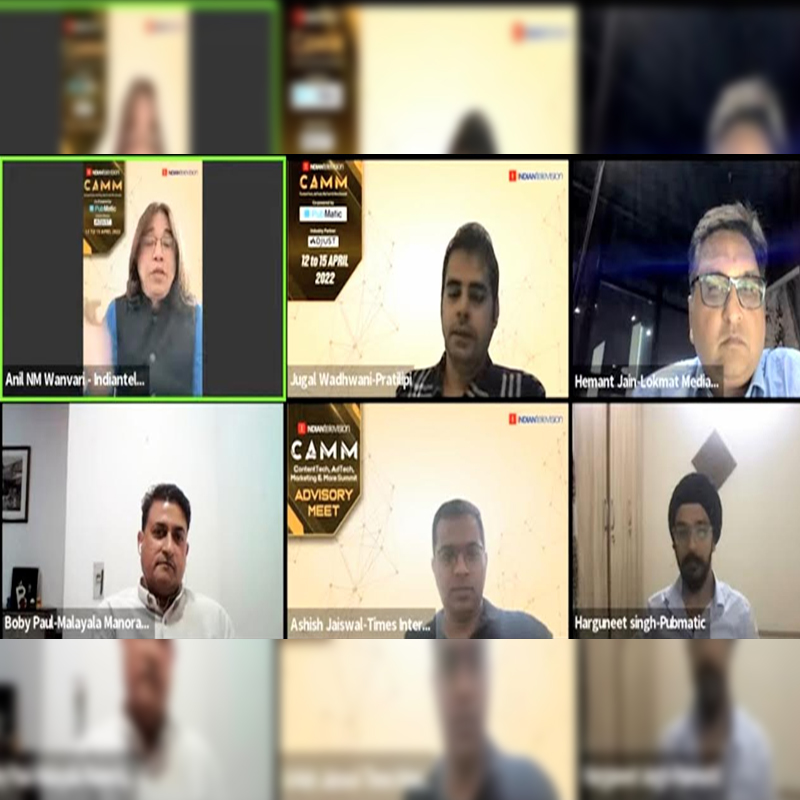
    Mumbai: Advertising and technology have undoubtedly made great strides over the last few years. And to discuss the various cutting-edge innovations in this dynamic space, IndianTelevision.com has organised ContentTech, Adtech, Martech and More (CAMM) Summit and Exhibition 2022. The virtual event took off on Tuesday with a panel discussion on ‘Adtech Landscape: A Gamechanger for Publishing Industry,’ which put the spotlight on how adtech is emerging as a niche that helps publishers efficiently maximise the value of their content or ad inventory.

    Moderated by IndianTelevision.com founder, CEO and editor-in-chief Anil Wanvari, the guests on the panel were Times Internet chief technology officer Ashish Jaiswal, Pratilipi business and content head Jugal Wadhwani, Malayala Manorama general manager – marketing Boby Paul, Lokmat Media senior executive vice president and head of digital business Hemant Jain, and PubMatic director Harguneet Singh.

    The CAMM Summit saw a conversation that is perhaps the most crucial in the age of changing advertising technologies.

    Challenges ahead of publishing industry and the possible ways to overcome

    Opening the discussion, Wanvari highlighted the increasing fragmentation of audiences between the own platforms of publishers as well as the third-party platforms is becoming a common phenomenon.

    “In terms of trying to drive advertising revenue, what are the challenges that publishers are facing?” he asked the panel.

    Agreeing with his thoughts, Times Internet’s Jaiswal said fragmentation is clearly happening and the same content being available across platforms is a major challenge for publishers. But being a publisher, he also shared how they are overcoming the challenge. 

    “What we are doing on our side to overcome these challenges is to stay connected with our audiences across all the platforms. We do not just publish and leave, we ensure that there’s a clear connection between us and our audiences across all platforms,” stated Jaiswal.

    Taking ahead the conversation, Lokmat Media’s Jain said, “What demonetisation couldn’t do to digital payments, Covid-19 did to digital media.”

    With this statement, he hinted at the enormous growth in terms of audience engagement that publishers have witnessed. Coming to the challenges, Jain said optimising content for small screens is another major challenge. 

    “It is quite difficult to give the right reading or viewing experience to customers while giving enough space to advertisers also,” Jain noted. “The struggle doesn’t end here. Lack of a large inventory, audience fragmentation and ensuring that the consumer ends up on your platform at the end are also making it difficult for publishers to maintain their growth.”

    However, Jain feels that while there are so many challenges, it also keeps you pushing to develop and looking for newer opportunities.

    Coming to the opportunities, he suggested that today focusing on one platform is not enough, publishers need to have an open mind and need to create a holistic approach to the business. “At the same time, it is important to have a highly optimised platform that meets users’ and advertisers’ expectations,” he remarked.

    He feels that publishers have to accept the fact that the audience who is consuming content on Facebook doesn’t necessarily come to your website too because the content we put on Facebook is already customised in a way that people would love to watch it on that platform only. “If you work hard, each of these platforms will help you revenues apart from your direct sales from the website.”

    However, Malayala Manorama’s Boby Paul feels audience fragmentation is a choice. “It happens because you want to put your content out to more and more people. So all you need to do is to keep a close eye on the aggregator platforms and understand which platform is providing you benefits and strategise accordingly,” Paul said. “When you have an audience coming to your aggregator platforms, you should design strategy in a way so that you can entice them to come to your own platform.” 

    Taking note of the challenges and the possible solutions suggested by the experts, Wanvari asked Paul to highlight the challenges of technology as far as marketing is concerned.

    Speaking about the marketing and monetisation part, Paul said that digital publishing platforms are facing major challenges because most of the digital platforms are free to air. “There’s no set framework. But as adtech is evolving, there seems a hope,” he asserted.


    Adtech and programmatic: The way forward for publishers


    While all the publishers highlighted the challenges and opportunities, PubMatic provides a solution to all these concerns. Harguneet Singh acknowledged the challenges highlighted by the panel and explained how adtech platform like PubMatic comes into the picture and helps the publishers.

    “While the challenges are quite evident, adtech platforms like PubMatic come in the picture as a savior to the publishers,” he affirmed.

    Suggesting some adtech based solutions, he said that publishers have provided a lot of control to the users in the name of free content which they need to take back immediately. He feels that adtech and programmatic are the key tools for this.

    “While adtech platforms enable advertisers, ad publishers, and advertising agencies to create, run, and optimize ad campaigns with minimal human involvement, programmatic advertising uses artificial intelligence and real-time bidding to automate and streamline the ad buying process,” Singh said, adding that, “With the right use of adtech and programmatic, publishers can significantly grow their business and increase CPMs.”

    What do users want?

    Amid the emergence of adtech and programmatic, it is crucial to understand what users want? Pratilipi’s business and content head Jugal Wadhwani, who closely works with individual publishers, explained that initially all people wanted was social recognition, the concept of revenue was not there really. “But presently, generating revenue is equally important for individual publishers too,” he added.

    However, Wadhwani feels that once the publishing platform becomes a hit, distribution is not that big of a challenge, it is the discovery that they are actually looking for and platforms like Pratilipi come into the picture to help individual publishers.

    On being asked how things are working on the audio side, Wadhwani said that audio advertising is very low right now in India. “The numbers are rising, but there is no significant development on the audio front so far.”

    Coming to the subscription models and how paywalls work, Wanvari asked how conventional news publishers ensure that users buy their subscription instead of just reading the free version. 

    Lokmat’s Jain explained that India is a ‘sachet-driven country,’ so they need to come up with small offerings. “If publishers really need to sell high valued subscriptions, they need to build high-quality unique content rather than a generic piece,” he remarked.

    “Over the last 10-years, journalism in India has evolved and produced unique content which helped the subscription model to become common. One of the most successful players in this field is The Hindu, which has built a very robust subscriber base,” noted Jain.

    How will the removal of cookies impact the publishers?

    Google announced it will not build alternate tracking identifiers with similar cross-site tracking abilities after phasing out third-party cookies. This change will be made by Google in late 2023. While this announcement may not have come as a surprise, many advertisers find themselves confused about how to manage the situation.

    “How will publishers collect user data without cookies which is crucial for audience profiling?” Wanvari asked.

    Jain thinks that with the removal of cookies, profiling or identifying customers, which is extremely important for running a digital publishing business, would become difficult. “With this, targeting customers offsite will become impossible.”

    Suggesting a way for publishers after the removal of cookies, Jain said that in such a situation, targeting users on-site seems one possible solution. “To target them on-site, publishers really need to come up with relevant content.”

    Times Internet’s Jaiswal thinks that in a cookie-less world, trust-building will become crucial. “Publishers will have to ask users to fill out forms to manually provide their data, maybe we can call this idea a ‘profiling paywall.’ But to ensure that they really fill out the form, provide their email address and mobile number, publishers need to work a lot on trust-building.”

    Jaiswal suggested that publishers can win trust with unique content.

    Adding to the conversation, PubMatic’s Singh said adtech will play a really important role here. “Right technology and the right technology partner who has good sense will have great opportunities to work with publishers,” he averred.

    Concluding the discussion, all panelists agreed that adtech provides tools for both publishers of content and advertisers to efficiently navigate the appropriate price points and trading techniques to connect inventory with digital ad buyers.