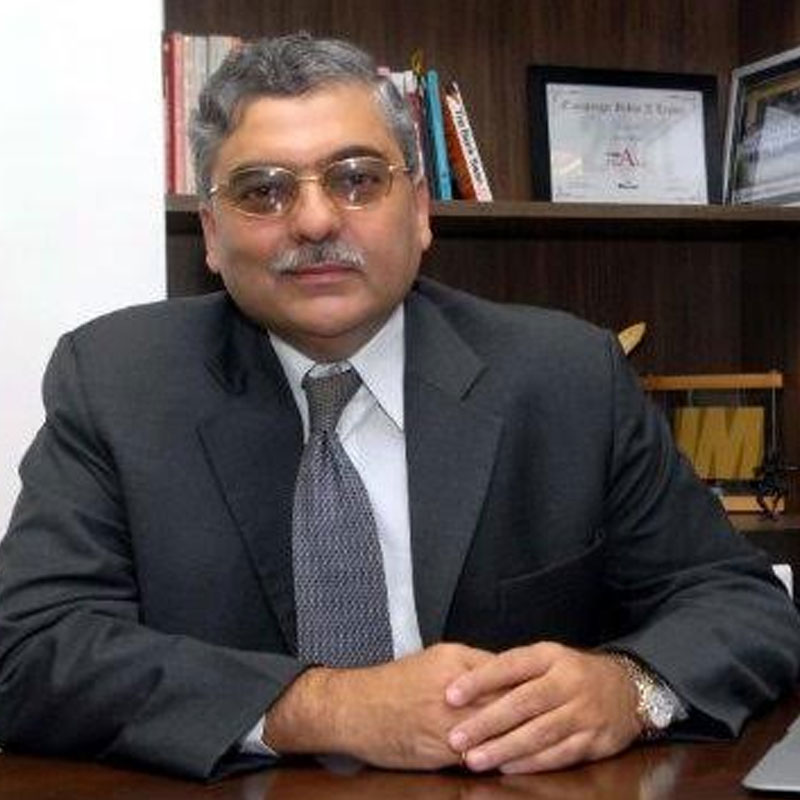
Tag: Ashish Bhasin

  • Ad spends to grow by 10.5% to reach Rs 624 billion in India DAN Report

    Ad spends to grow by 10.5% to reach Rs 624 billion in India DAN Report

    MUMBAI: Advertising and digital communications group, Dentsu Aegis Network, has released it its biannual global forecasts, pointing to a more positive 2018 for Asia Pacific advertising expenditure than previously expected. 

    Ad-spend growth will rise from 4.0 per cent in 2017 to hit 4.5 per cent in 2018 – higher than the 4.2 per cent forecast in January 2018 and taking total investment to USD 215.95 billion. Regional events such as the 2018 World Cup that will be held in Russia, 2018 Winter Olympics South Korea, Asian Games in Indonesia and Australian federal election will play an important role in stimulating growth.

    Geographically, Asia Pacific is a major growth region, contributing 41 per cent of the global increase (USD 613.5 billion). Comparatively, North America accounts for 32 per cent, Western Europe accounts for 13 per cent with Latin America at 8 per cent and Eastern Europe 5 per cent.

    Dentsu Aegis Network Asia Pacific CEO Nick Waters says, “The region as a whole displays a positive outlook with increasing growth rates. We are seeing upward revisions in most key markets, with India, the Philippines and Vietnam showing high rates of growth.”

    Spend in China continues to grow at pace, though driven almost entirely by the e-commerce platforms Alibaba, Tencent and Baidu. Digital remains the dominant growth area with a quarter of Asia Pacific advertising spend expected to be delivered through mobile for the first time.

    Digital continues its rapid growth with online video gaining in share. This has been driven largely by the availability of high speed connectivity across the country, it is only set to grow faster. TV with a projected market share of 39.1 per cent continues to lead the media share of pie with Print at 29.3 per cent. 

    Speaking on the Indian context, Dentsu Aegis Network India and Amplifi president of media brands Kartik Iyer mentions, “India’s ad spend is projected to grow at 10.5 per cent as compared to the beginning of the year when the growth was expected to be over 11 per cent. It wouldn’t be a surprise to see some forward thinking brands trying to use Video Instead of TV  in a few test and learn cases.”·

    India advertising spend market is expected to grow in 2018 by 10.5 per cent to reach Rs 624 billion. Though there had been a slow start in Q1-2018, the market was picking up from March-April, fuelled by a stable recovery post demonetisation/GST/RERA buoyed by the State Elections in Meghalaya, Tripura, Nagaland and Karnataka in April. The India South Africa Match in January, Budget announcement in February, lead to continued expansion and growth of regional newspapers and television. Both social and online video will see growth for the next five years as India continues to evolve their internet, mobile, cloud audience.

    In China, advertising market is predicted to grow 6.5 per cent in 2018, up from the previous forecast of 5.4 per cent, to reach RMB 630 billion of global ad investment. Growth will be driven by digital, which is forecast to command 60 per cent of advertising spend and increase by 14.8 per cent. The online giants Baidu, Alibaba and Tencent (BAT) are projected to contribute around 80 per cent of this growth, underlining their dominance of the marketplace. Mobile payments are also one to watch in the coming years as platforms such as WeChat or Alipay make cash obsolete in large parts of the country. 

    The mobile device is steadily becoming our primary point of access to all digital services and content. In 2018, 52.2 per cent of all worldwide online traffic was generated through mobile phones, up from 50.3 per cent in the previous year, according to Statista. People now spend an unprecedented amount of time on their smartphones—more than five hours a day, according to some estimates. This growth in usage is largely driven by the widespread availability of high-quality digital Video. Mobile Video consumption is exploding among all age groups and content categories. 9 in 10 Social media users opt for mobile browsing, with mobile apps accounting for 70 per cent of time spent on Social media.

    Reflecting this, mobile is forecast to represent a quarter of global ad spend 25.2 per cent this year exceeding the previous prediction of 24.8 per cent. With Mobile payments forecast to be more popular in the coming years, Mobile is set to continue on a positive growth trajectory a forecast 18.8 per cent in 2019. 

    Traditional media spend is forecast to decline by -0.5 per cent in 2018 and -0.4 per cent in 2019. Newspapers and magazines are expected to continue their downward trend, with falls of -7.5 per cent and -6.5 per cent respectively. Radio, Out of Home and Cinema spend are expected to show steady growth.

    TV spend is forecast to move back into growth in 2018 following a -0.7 per cent decline in 2017, remaining a major medium in the mix with 35.5 per cent of overall investment. 

    Figure 1: Growth in global ad spend 2017-19 (% y-o-y at current prices)


    2017a

    2018f

    2019f

    GLOBAL

    3.3 (3.1)

    3.9 (3.6)

    3.8

    NORTH AMERICA

    2.5 (2.5)

    3.4 (3.1)

    3.2

    USA

    2.6 (2.6)

    3.4 (3.2)

    3.1

    CANADA

    0.0 (0.0)

    2.3 (1.1)

    5.1

    W. EUROPE

    3.2 (3.3)

    2.9 (2.6)

    2.9

    UK

    4.2 (3.6)

    4.2 (3.8)

    4.7

    GERMANY

    2.3 (2.2)

    2.6 (2.6)

    2.9

    FRANCE

    2.7 (1.7)

    2.5 (2.0)

    2.8

    ITALY

    0.9 (0.9)

    1.4 (1.9)

    1.1

    SPAIN

    2.3 (1.9)

    1.5 (1.4)

    1.2

    C&EE

    8.8 (8.3)

    7.8 (7.4)

    6.6

    RUSSIA

    14.3 (12.9)

    11.7 (10.4)

    8.5

    ASIA PACIFIC

    4.0 (3.5)

    4.5 (4.2)

    4.4

    AUSTRALIA

    2.3 (2.7)

    2.8 (2.9)

    2.4

    CHINA

    6.3 (6.0)

    6.5 (5.4)

    6.0

    INDIA

    8.9 (9.6)

    10.5 (12.5)

    11.1

    JAPAN

    1.6 (1.0)

    1.5 (1.6)

    1.2

    LATIN AMERICA

    8.3 (8.1)

    6.9 (8.8)

    7.3

    BRAZIL

    2.8 (2.1)

    2.3 (5.0)

    2.6


    Figures in brackets show our previous forecasts from Jan 2018

    Figure 2: Growth in global ad spend by media, 2017-19 (% y-o-y at current prices)


    2017a

    2018f

    2019f

    TELEVISION

    -0.7 (-0.9)

    1.2 (0.5)

    1.1

    NEWSPAPERS

    -9.4 (-9.0)

    -7.5 (-7.9)

    -7.4

    MAGAZINES

    -7.6 (-7.2)

    -6.5 (-5.9)

    -6.4

    RADIO

    1.2 (0.5)

    2.0 (1.3)

    1.2

    CINEMA

    6.1 (4.8)

    5.9 (4.6)

    5.2

    OOH

    2.6 (3.0)

    2.2 (2.4)

    2.1

    DIGITAL

    15.2 (15.0)

    12.6 (12.6)

    11.3


    Figures in brackets show our previous forecasts from Jan 2018


  • DAN Consult aims to deliver business objectives with major clients on board

    DAN Consult aims to deliver business objectives with major clients on board

    MUMBAI: DAN Consult, the consulting arm of Dentsu Aegis Network, has successfully scaled up winning large growth consulting assignments with corporates like Tata Unistore (Tata Group’s e-commerce venture), UAE’s leading e-commerce platform Noon.com, India’s leading regional newspaper group Rajasthan Patrika, Rajasthan’s luxury hotel group Suryagarh Hotels along with a few other clients who wish confidentiality.

    DAN Consult is an integrated hub of growth consulting and marketing transformation services combining business consulting, product consulting, marketing and sales strategy, technology, data, AI, digital marketing, performance marketing and martech (marketing technology) to deliver on the business objectives of clients. The plan is to build a result focused consulting firm and fill a space today not captured by the large consulting firms or the tech companies specifically on digital growth where being hands-on is key to success.

    While DAN Consult has employees dedicated to business consulting, the practice also pools entrepreneurs, leaders and CEOs internally across the DAN group and the best breed external experts who have built and scaled businesses themselves and successfully created teams on a project-by-project basis. These industry-leaders will leverage their expertise across multiple domains to not just advise on strategy, but also form campaigns, products, and infrastructure including digitisation and Artificial Intelligence or solving business problems through an innovative and disruptive process.

    Lalit Bhagia has taken over as the CEO of DAN Consult. It will be the fourth entity under the DAN Performance Group, headed by Vivek Bhargava, along with the existing three companies under it – iProspect India, SVG Columbus and Merkle Sokrati.

    Bhagia and Bhargava, both ex-entrepreneurs themselves will collaborate to build and scale the DAN Consult business. Bhagia has led and built the digital growth strategy for companies like Star TV and Aditya Birla Financial Services among others. Prior to Star, he was the head – APAC at Digitas where he single-handedly built and scaled Digitas across India and Southeast Asia from scratch.

    Bhagia says, “With DAN Consult, we aim to deliver on business objectives and not the marketing objectives. Our business model rests on this very premise and thus we work with companies based on revenue growth using digital. In the long run, we will take a cut from the results, instead of charging fixed fees for time. This is a shift from what traditional consultants currently do and with this we hope to redefine the space. I am glad to have been chosen to create and build this business for DAN. This indeed is the next level of how agencies would evolve in the future.

    Bhargava mentions, “With 1800 digital experts and the diverse talent that the network possesses, we believe we enjoy a niche to cater to the unmet demand of clients beyond what tech companies and traditional consultancies are equipped to provide. The strength, dynamism, culture, flexibility, consumer understanding and risk-taking that a network like ours possesses along with some of the best minds in the business work as a huge added advantage. With Lalit at the helm, I’m positive we will be able to deliver great value to clients through our consulting efforts.”

    “The launch of DAN Consult enables our business to achieve the completion of the triumvirate of branding, media and consulting. We believe the market currently leaves scope for an offering of this nature and we are glad to introduce the consulting business under the DAN Performance Group, providing further value to our clients and working with CEOs and promoters to push the envelope through digital. Moreover, this is aligned with our One-DAN vision.” concludes Dentsu Aegis Network South Asia Chairman and CEO Ashish Bhasin.

  • FTA GECs bring in revenue despite low ad rates

    FTA GECs bring in revenue despite low ad rates

    MUMBAI: The formulation of the Broadcast Audience Research Council (BARC) had one big advantage for channels. Regional reporting led to increased viewership for free-to-air (FTA) general entertainment channels (GEC) as well as higher advertiser interest. Star Bharat is the only FTA that has original content while others such as Zee Anmol, Rishtey, Sony Pala and Star Utsav show reruns of popular shows from their main channels. Though low on operational cost, are the channels making money?

    Dentsu Aegis Network chairman & CEO – South Asia Ashish Bhasin says that advertisers follow eyeballs, regardless of where it comes from. “Advertisers pay for total target audience. Unlike TAM [the earlier measuring system], rural market is measurable with BARC. It is a fact that many categories are seeing much more growth in rural than in urban since they have reached near saturation in urban markets but rural is untapped.”

    FTA channels are available without subscription but are digitally encoded and geographically restricted. According to SAB & MAX cluster senior EVP & business head Neeraj Vyas, “FTA is a zone which is growing and we are looking at a base between 25-30 million homes now. FreeDish is a very important platform to reach out to masses today. We reach out to those homes, which haven’t seen or sampled the kind of television viewed in the country. So, it is a critical platform to reach out to viewers and in turn, the viewers have also loved our content.”

    FMCG brands dominate ads on FTA channels. MediaCom national director-buying K Srinivas Rao attributes this to their deep penetration in tier II and III cities. He says that the channels get 75-80 per cent of contribution from FMCG while smartphones, telecom players and two-wheelers have scope too.

    For now, these channels don’t seem to be earning much but Vyas expects it to get better. “From an advertising standpoint, I think the bleeding levels will certainly get better. It is a matter of time and things are definitely on the right track. I think most of the channels in this space are making a reasonable amount of advertising money,” he says. Though ad rates are considerably lower, the operating costs are just one fourth of large GECs.

    According to industry sources, prime time ad rates of FTA channels are 30-40 per cent of paid TV ones.

    Rao believes that channels can make money because their only investment is staff cost even though ad rates are low for reruns. According to Bhasin, the ad rates can improve if these channels can increase viewership and sustain it over time.

    Wavemaker India’s managing partner Navin Khemka opines that the FTA channels are high in demand and they are catering to a segmented audience. He added, “The operations costs will only increase as they invest in original content. This trend is on the rise with Star Bharat investing in content. And the results are showing.” He believes that the success of FTA channels is due to DD’s direct feed and penetration in small towns and rural India. He also stated that FMCG players are playing a key role in the patronage of these channels. However, newer categories like two wheelers and telecom are also emerging in rural regions.

    Sony Pal is currently broadcasting Yam hai Hum, Baalveer, Taarak Mehta Ka Ooltah Chashmah, Kuch Rang Pyaar Ke Aise Bhi, Badi Dooooor Se Aaye Hai, Y.A.R.O Ka Tashan, Sankatmochan Mahabali Hanuman and CID. Sony Pal’s advertiser bouquet consists of Hindustan Unilever, Dabur, Colgate, Patanjali, Telcos brands, handsets brands etc.

    Rishtey’s shows Na Aana Is Des Laado, Belan Wali Bahu, Tere Sang Yaara, Chakravartin Ashoka Samrat, Veer Shivaji and Radhaa Ki Betiyaan Kuch Kar Dikhayeng. Zee Anmol shows Kumkum Bhagya, Ek Mutthi Aasmaan, Laddoo, Santoshi Maa, Jamai Raja, Qubool Hai, Gangaa, Kaala Teeka and more.

    Star Utsav is currently showing some epic shows of Star Plus and Channel V like Bhakton Ki Bhakti Mein Shakti, Ek Hasina Thi, Ishqbaaaz, Iss Pyaar Ko Kya Naam Doon?…Ek Baar Phir, Sadda Haq – My Life, My Choice, Suhani Si Ek Ladki, Saath Nibhaana Saathiya, Yeh Rishta Kya Kehlata Hai and more.

    Star Bharat has a big bouquet of original shows which include Kya Haal Mr. Paanchal, Jai Kanhaiya Lal Ki, Jiji Maa, Kaal Bhairav Rahasya, Nimki Mukhiya, Saam Daam Dand Bhed and more.

    There are few regional FTA GECs but they will mushroom over time as soon as regional advertisers see the merit in them. Advertisers are keen on tapping rural India and with growing viewership, these channels are likely to form an important part of their budgeting portfolio.

    Also Read :

    Sony to launch Marathi GEC

    ‘Porus’ viewership soldiers on

    ‘Prithvi Vallabh’ is 20% history, 80% mystery: Anirudh Pathak

  • Union Budget 2018: Industry expects govt to favour consumption

    Union Budget 2018: Industry expects govt to favour consumption

    MUMBAI: Union Budget 2018 has snuck up on us. This Thursday, the government will unveil its budget for fiscal year 2018-19 and many market watchers are expecting a slew of incentives for businesses. After a difficult year, some course correction is certainly on the anvil. Here’s what some of the leaders in the industry had to say:

    public://puneet-goenka_1.jpg

    “In the rapidly changing landscape, we believe that the distinction between telecom, IT and broadcasting technology has disappeared and that a convergence of these sectors is required. A positive consideration of this demand in the 2018 budget will certainly help in the rapid growth and generation of substantial employment in our country. Also, similar to the telecommunications sector, television broadcasting organisations including direct-to-home (DTH), cable services and headend in the sky (HITS) require huge investments in setting up technology and distribution networks and, as such, are ‘asset-rich’ organisations. Hence, just like in the software and telecom sectors, it is necessary to allow for the carry-forward of losses in the case of amalgamation or merger of companies in the broadcasting sector.

    For the budget 2018, we are also hopeful that the government will issue a clarification stating that transponder hire charges are not ‘royalty’ in order to avoid protracted litigation.” 

    Indian Broadcasting Foundation president Punit Goenka 

    public://ashish_0.jpg

    “I anticipate that the Union Budget of 2018 will drive growth and whenever the economy grows, the advertising industry benefits. I see a particular thrust from the government in the areas of infrastructure development as well as for rural development. We have had a reasonably good monsoon, rural economy is starting to look up and another push in the same direction  will significantly benefit all consumption-led sectors, including FMCG, which are heavily advertised.

    I think the government will make efforts  to ensure that there is more money in the pockets of the common man, hopefully by giving some relief on the income tax front and will use technology for better tax compliance, thereby keeping the fiscal deficit under control. The fiscal deficit is very important from the point of view of controlling inflation.

    Specifically for the advertising industry I hope that there are some simplifications around the services part of GST that are announced. While GST has been a progressive step for the country, my feeling is that the services sectors  were relatively less focused upon and hence the step that was supposed to simplify indirect taxation has actually ended up complicating it significantly, particularly for advertising agencies that operate out of different cities and states and service clients who may be based all over the country. Under the thrust of the government for ease of doing business, I hope this issue gets addressed. The advertising industry doesn’t mind paying the taxes but needs simplification of processes, which are taking away too much of unproductive manpower and blocking working capital.

    Over all I feel that India is poised to see  good economic growth over the next 10 years and a little bit of help from the government policies, through the Union Budget of 2018 will further help the economy outperform the rest of the world.”

    —     Dentsu Aegis Network chairman and CEO (South Asia) Ashish Bhasin

    public://sahil-chopra_0.jpg

    “The announcement of Union budget is just around the corner with discussions & debates being conducted around it. There is hush-hush regarding the assumptions when everyone is expecting a positive release. As far as digital is concerned, besides the allocation of budgets on Digital Infra Development, there is a need to initiate a few reforms. Digital is the fastest growing sector of India and should be highly benefitted from the Union Budget.

    As per my understanding, budgets should be allocated to PSUs for investing in digital marketing. This will lead to a win-win situation as for the organisation the digital mediums will help gain recognition and support. While the digital agencies will spread awareness and educate the audience about the benefits of the organisation. Even the digital organisations paying taxes dutifully should be recognised well and given the right opportunities to flourish.

    Even on a personal level, the entrepreneurs who are platinum taxpayers should be given certain advantages as a reward for their contribution towards the nation. Any individual paying heavy taxes on time should be entitled to such benefits which could be in the form of a card similar to the other identity cards we have. This will not only be a welcomed move, but it will also ignite the zeal among the others to be a part of that category thereby benefitting the country.

    However, what the budget is going to be will be interesting to witness and I hope for some reforms that help the digital sector in various ways.”

    — iCubesWire CEO and founder Sahil Chopra

    public://mitesh-shah_0.jpg

    “Given the NDA Government’s strong intent to drive reforms, we definitely anticipate some rationalisation in tax structures and strengthening of related  infrastructure. While the GST council has already taken some proactive measures, we hope the Government will reemphasize on a roadmap for simple and business friendly GST compliance and administration systems. More importantly, over the course of next few months, initiate all necessary constitutional amendments to ensure that there are no other State or Local Body Taxes, as they defeat the very purpose of bringing uniformity in tax structure, while ensuring proper input credit for taxes. 

    For the accelerated growth of the start-up sector and economy at large, it’s important that the push for digitisation should continue with more vigour. Initiatives by the Government including waving MDR on debit cards on transactions upto Rs 2,000 really go a long way in attaining this objective and we hope, on similar lines in post-budget period, rationalisation mechanisms are introduced around credit cards rates as well–which will continue to be a major mode of payments. UPI should be made more cost effective and should be given a much larger push to increase its adoption in India. 

    We do expect the Government to take up and address IT infrastructure and allied issues this year, taking into account some serious issues that are being faced by the entertainment/media sector such as Piracy. The IT laws must be strengthened to address the root cause for these issues that are constantly causing a substantial hit to the overall revenues for the sector.” 

    — BookMyShow head of finance Mitesh Shah  

    public://Rubeena-Singh_0.jpg

    “In this budget, we look forward to the government focusing on the upliftment of the rural economy and job creation. 49 per cent of the Indian population is engaged in the rural economy. More money in their hands will lead to rebalancing of media spends by corporates that provide goods and services to the rural market. This will be a positive for the advertising industry.”

    —     iProspect India CEO Rubeena Singh

    public://amit-shukla_0.jpg

    “India’s hospitality industry is one of the key drivers of growth of its service sector. With a turnover of USD 71.53 billion in 2016, it accounted for 9.6 per cent of GDP and was the third largest foreign exchange earner for the country. The sheer volume of business it is generating makes streamlining GST on hospitality imperative for Budget 2018.

    Government has somewhat eased its taxation policy by downward revision of rates or rationalization of tax slabs, however, a more detailed approach for resolving issues that still plague GST is required. For instance, IGST in not available to Hotels, tax is calculated on declared rather than actual tariffs, luxury travel and stay are taxed at considerably higher rates, food and beverages sector suffers from the loss of input tax credit, all of which increase costs for end-users and subliminally disincentivises consumption. With experts predicting overall industrial growth between 100 and 200 per cent in next couple of years, 2018 should see a significant expansion in HORECA industry; hence it would be highly beneficial if government would fuel this growth with some planned tax benefits.

    Hotel industry is highly capital intensive. Granting infrastructure status to this sector would enable hotels secure long term loans at competitive rates, which would help reduce room tariffs. Facilitating loan availability to small and medium enterprises under Mudra scheme with easier accessibility and larger outlays and granting tax benefits to remote businesses can further help the industry.

    In addition, leading hospitality industries around the world revolve around a core group of highly skilled individuals – an area where India still lacks. Benefits of creating and maintaining a talent pool of skilled manpower would be significant. Were government to allocate some portion of the budget to this area, it would go a long way in making India the global leader in the hospitality sector.”

    —Pursuite.com CEO Amit Shukla

  • 2018 will be a year of video campaigns: WATConsult’s Rajiv Dhingra

    2018 will be a year of video campaigns: WATConsult’s Rajiv Dhingra

    MUMBAI: If you see an advertisement on a website or your app, you are a well defined consumer of digital advertising. Thet ads on the website you visit are primarily revenue source for internet companies.

    Digital advertising is no longer a joke. The emails were considered pointless and annoying and banner ads used to be laughed at but today, with smartphone penetration being higher than ever and decreasing low data costs, digital advertising needs to be done and done well as the market is highly saturated and consumer’s attention span is shorter than ever.

    Some twenty years ago, digital advertising was just a couple of banners placed cleverly on websites. They were considered super annoying, as if you happened to click on one of them intentionally or unintentionally, you would soon be bombarded with banners all over your website. Today, digital advertising has become extensive with different types of online ads being produced based on the website content and target audience. Online advertising is one of the fastest growing way to reach an audience which includes banner ads to social media networking, email marketing, site takeovers, online classified ads, Search Engine Optimisation (SEO) and even

    SPAM.

    With the accessibility of internet on smartphones and low data cost, companies are now spending millions of rupees trying to find a way to advertise on digital platforms without creating an unpleasant experience for the consumer.

    Digital advertising doesn’t come cheap but it is far more affordable for marketers than traditional advertising model. There are over hundreds of different digital advertising models available today and every ad we see on digital platforms today is paid by one of those models. The most popular method though are CPA (Cost Per Action), PPC (Pay Per Click) and CPM (Cost Per Mille).

    To get some insights on the changing face of digital industry in India, Indian Television Dot Com got talking to WATConsult founder and CEO Rajiv Dhingra who has seen and been a part of the digital revolution in India and recently completed 11 years in digital advertising business.

    The company which started off as a social media specialist in 2007 has expanded its reach and portfolio to become the most sought after full service digital agency in the country. WATConsult today specialises in digital marketing, social media marketing, search marketing, mobile marketing, digital analytics and digital video production.

    How has the digital ecosystem in India evolved along with WATConsult?

    When I look back to the industry’s growth in context of the past 11 years, there has been a tremendous change in the digital industry. Digital industry has become so large today in terms of advertising yet it is only 15 per cent of the overall market advertising and there is so much more growth opportunity left. While digital has been around for around 20 years, the industry has just started to become significant in terms of advertising efficiently on the platform.

    Since the market is highly competitive today, how does associating oneself with a bigger network help since WATConsult was also acquired by Dentsu Aegis Network back in 2015?

    It is the comfort of being associated with a large network that helps in getting global processes in line. That is the core level where a global network helps. Beyond that, every agency is unique and every agency has to work hard to earn its bread. I don’t think you can credit any agency or network all the accolades they achieve and if that was the case, all agencies under a network would work equally efficiently which is not the case.

    How is the Indian digital ecosystem different from the rest of the world as it sure does have its own challenges and uniqueness?

    India is still a very small market for advertising and within the small market, it has an even smaller advertising pie for digital. But what is similar is that Indian marketers are now open to new ways of leveraging digital. Execution and creative wise digital is not a very backward market as we see some amazing work happening in digital which is globally comparable as well.

    and the challenges…?

    In India, we need to up our ante when it comes to our creative and overall work level. Only that will help in bringing more clients and get them to spend more money. Digital still needs to simplify in our country as to what it is that an agency or marketer is trying to tell and achieve. Today, there are too many people selling digital in 100 different ways. We need to focus on business and brand objectives rather than focusing on 100 different t metrics that digital brings.

    How much do you project the ad spends to increase by 2020?

    There are no doubts about it that ad spends will definitely increase on digital. Ad spends will increase by 32 per cent CAGR y-o-y  and by 2020 it is going to be 24 per cent of the market which is almost 1/4 of the advertising market.

    How soon will the shift happen where digital becomes a dominant medium over television?

    I believe for digital to become dominant over television medium will take another 5-6 years in my mind and it is not going to happen by 2020. Although it is definitely going to happen by 2022-23 and that is when it will come very close to the advertising share of television.

    We have been hearing a lot about AI, Big data and Machine Leaning and the buzzwords lately. Is the Indian media ready and understands the concepts or we still have a long way to go?

    I don’t see these as buzzwords or jargons. Social media 10 years ago was considered a jargon and a buzzword but today it is an accepted reality. 10 years from today, AI, big data and machine learning will become accepted reality. Although they may not be called what they are called today and will be referred to as something else entirely. For instance, when social media was launched, it was called, Web 2.0. Similarly, 10 years from now, these new technologies will have a huge impact not only on digital adverting but on businesses in general.

    But why are marketers still reluctant on investing in these newer technologies?

    That is imply because marketers were also reluctant about social media 10 years ago. Marketers are always reluctant because they don’t want to spend their money on or betting on future technology which may or may not happen. They want results of today and hence they will always stay reluctant. Technology moves faster than marketing moves and users move even faster as far as technology adoption is concerned. Globally marketers have got there and back in India, some mature marketers have started experimenting with the technologies. Some of the large FMCG companies in India are looking to create their own data repository data lake to make sure they have detailed data analytics. One of our own automobile client has insisted that we get a data scientist on board for their brand. These are early but significant times of how data, AI and machine learning are going to be big part of digital advertising as we go forward.

    Do you believe influencer marketing is here to stay was that just a passing phase in 2017?

    Influencer marketing is becoming more and more of a professional industry and it is going to only grow. Three to four years from now, marketers will end up spending so much more on this medium and as internet grows and the frequency grows, word of mouth is going to be even more important than paid media as it has its own challenges in terms of cost and credibility.

    Facebook recently announced that it will filter the newsfeed by removing marketing ads to ensure better user experience. Will this hamper businesses in any way?

    Facebook has always focussed on user experience. I am sure they will find other ways to make sure marketers who spend money do reach their audiences. But yes, marketers who would like to use Facebook as a free tool will be hit because clearly Facebook doesn’t think that free advertising should be allowed on Facebook itself.

    What would be the game-changer in digital adverting this year ? How does 2018 look to you?

    Video has been a huge growth factor in 2017 and it is going to continue at a break next speed in 2018. With data consumption going through the roof, you wont see a digital campaign that does not have a video. 2018 looks like a year which has a lot of opportunities and it could be the best year for digital industry ever with so many interesting things happening in the industry.

    ALSO READ:

    How iProspect’s Vivek Bhargava foresaw a digital future two decades ago

    2017 – The year of long-format ads

    Going from clicks to bricks

    Martin Sorrell on how WPP is combating ad world slowdown

    BFSI’s changing communication in the digital era  

  • Digital will be core of ad budgets by 2020: DAN report

    Digital will be core of ad budgets by 2020: DAN report

    MUMBAI: The increasing penetration of digital media in India is creating huge opportunities for marketers to reach out to untapped audiences in newer ways than before. Marketers are getting innovative with the way they choose to advertise to their audience.

    As of 2017, the Indian ad industry stands at Rs 55960 crore and is estimated to grow with a CAGR of 11 per cent till 2020 to touch Rs 77623 crore. This growth will be driven by the smart phone revolution and the subsequent spends on digital advertising, according to the second edition of media and digital marketing communications company Dentsu Aegis Network’s (DAN) digital report that was launched yesterday.

    India is on the brink of transitioning into a digital economy with a big push from the government and the public private partnership model. The Indian government’s concerted endeavours to boost digitisation coupled with an array of economic reforms and policies have infused higher momentum into India’s participation in a digital economy. The telecom sector has contributed in equal measure — lower data rates, improved connectivity have put India on a path to a mobile revolution of sorts.

    The Telecom Regulatory Authority of India (TRAI) estimates the internet population in the country to hit 738 million by 2020. Currently India’s internet subscriber count stands at around 430 million. As per TRAI’s performance indicator report for July-September 2017, a total of 129 million rural subscribers and 300 million urban subscribers are connected via internet or broadband services. The tele-density in urban areas is 74 per cent whereas it is around 14 per cent in rural India.

    Ad spends have seen double digit growth rates in e-commerce, BFSI, automotive and telecom in 2017. Ad spends have seen the highest increase in e-commerce with 13 per cent and BFSI at 11 per cent. Television takes the largest share of media spends at 40 per cent (Rs 22526 crore) followed by print at 34 per cent (Rs 18981 crore) and digital media at 15 per cent (Rs 8202 crore).

    While spends on television will grow with a CAGR of eight per cent till 2020, its contribution to the advertising market has been on a decline. The digital ad industry is estimated to grow with a CAGR of 32 per cent by 2020 as advertisers are now adopting digital media as a branding medium, not merely a performance medium. The highest spender on digital is e-commerce followed by telecom and BFSI sector. The spends on digital video is expected to see the highest growth rate followed by display and social media. OTT and an engaging mobile experience will also help in driving the digital growth.

    DAN chairman and CEO South Asia Ashish Bhasin believes that digital is no longer a medium but a way of doing business. It is how consumers interact with brands. “The digital transformation is affecting every business and agencies and marketers who don’t recognise this will be left behind. Digital is a behavioural change taking place with the consumers, not just a way of building a brand. This is a critical difference many don’t understand,” he says.

    Brands are slowly shifting their marketing budgets to digital platforms as the digital medium becomes all pervasive and consumers increase time spent on this medium. Even though digital ad platforms have been instrumental in direct sales, so far they do not match up to traditional media when it comes to brand building. Brand building is largely happening through mature ad mediums such as TV rather than digital.

    Marketers are moving from purely mass-targeting platforms to a mix of traditional
    and digital platforms. This makes use of the relative advantages of both media for an optimal marketing strategy. Traditional media provides a better reach in comparison to digital media while the latter is unparalleled when it comes to measurability. When it comes to performance marketing, digital media has evolved as a powerful platform. The explosive growth of internet-enabled businesses such as e-commerce, digital wallets, etc., has also caused a shift of ad money towards this medium as businesses targeting consumers inclined to online transactions rely on digital ad platforms. Meanwhile, the smaller brands also prefer to make investments on digital platforms as compared to bigger brands it provides better return on investment (RoI).

    Automotive sector has had one of the highest growth in ad spends last year and is expected to spend a large majority of its ad budget on traditional media. Within digital, it distributes the budget across all ad formats. Growth in ad spends for e-commerce has been the highest and it spends the highest proportion of marketing budget on digital media and mostly on search and social media. Additionally, telecom also spends a high amount of its marketing budget on digital media but mostly on media and video.

    Marketing has been an ever-evolving field. It’s normally exposed to so many new technologies and is an early adopter for most of them. This happens because the consumer is nearly always a step ahead and the competition is stiff. Businesses today have to acquire and retain consumers extremely efficiently in the marketing process. There is a limit to how many line items a digital marketer can create and manage effectively at a human level. No matter how many segments our planners create, no matter how finely we slice and dice the data, it’s extremely difficult to connect all the dots. Here is where machines come in helpful.

    But the digital advertising industry is faced by several challenges like slow pace of digital transformation, lack of unified metric system, ROI on programmatic, ad frauds and the growing use of ad blocking softwares.

    Having said that, the future of digital advertising looks bright and optimistic with the rise in video content, engaging mobile experience, voice-based interaction, data science and machine learning and transformation in payment mechanism.

  • WATConsult celebrates 11 yrs with unique board game

    WATConsult celebrates 11 yrs with unique board game

    MUMBAI: WATConsult, the digital and social media agency from Dentsu Aegis Network, has launched PlayAgency, an innovative board-game, as part of its 11th anniversary celebration. To break the monotony of regular anniversary campaigns, the agency came up with something unique which caters to all advertising industry individuals. 

    Facebook

    The idea behind launching PlayAgency is that every agency in India, be it digital, creative, OOH or BTL is somewhere connected. They might be different in nature, but deep down they all are the same; every agency has diverse strengths, but one common aim. The approaches may differ at times, but the challenges connect them; they might be divided by experiences, but their spirit remains the same. 

    Taking this thought forward, the board-game has been made, which allows players to run an ad agency and experience all the highs and lows of it. Players will have to take tough decisions, win clients, acquire companies, manage pay-cheques, chart a vision for the company along with other similar tasks.

    Along with this, WATConsult ran a digital campaign called #EveryAgencyEver, which highlighted the daily challenges and joys which takes place in every agency, in terms of client approvals, campaign ideas, pitches and follow ups amongst others. The agency even launched its own Facebook party filter for everyone to join in the celebrations.

    WATConsult founder and CEO Rajiv Dingra says, “On the occasion of our 11th anniversary, I would take this opportunity to thank every single person who has been a part of the WAT journey. Our team, former teams, clients and our network; it wouldn’t have been the same without you.”

    Dentsu Aegis Network chairman and CEO South Asia Ashish Bhasin mentions, “I would like to congratulate WATConsult on their 11th anniversary and wish them many more successful years ahead. I had a great time playing PlayAgency with Rajiv. It’s interesting to actually play a game of something we all agency individuals live by every day.”

  • Industry applauds Sam Balsara as he turns 67

    Industry applauds Sam Balsara as he turns 67

    MUMBAI: He is a man of small stature and has a voice that at times breaks into a squeak. But veteran ad man Sam Balsara–who is celebrating his sixty-seventh birthday today–is one of the giants of Indian advertising whose words have boomed across the industry and made even the most powerful sit up, take note – and follow.

    Born in the small city of Bulsar–now called Valsad–in Gujarat, Blasara clearly was meant for bigger things right from the beginning. He went on to complete his management post graduation from the Jamnalal Bajaj Institute of Management Studies. He began his career working as a marketing executive at Sarabhais and Cadbury. Later he switched to advertising, working with Hindustan Thompson Associates’ second agency Contract Advertising. He then moved on to a fledgling outfit  called Mudra then headed by (the now late) AG Krishnamurthy and  went to lead its Mumbai office for four years.

    But working for someone else didn’t pacify his hunger to make a mark in the world. That’s when he decided to become an entrepreneur and partnered a fledgling agency called Madison which he took over totally later in 1988.

    What started as a small company with only two clients back then, namely Godrej and Nelco, today has 24 business units across 11 specialised functions of advertising, media, business analytics, outdoor, activation, events, PR, retail, entertainment, mobile and sports. The gross billing of Madison World today stands at around Rs 3,700 crore. 

    The chairman & managing director at Madison World, Sam Balsara has seen the industry evolve and go through to various upheavals and transformation and the man still gives novel agencies a run for their money.

    He got his daughter Lara Balsara Vajifdar on board as a management trainee in Madison in 2004 and today she has risen to become the executive director, Madison World, having played a significant role building the  brand over the past decade.

    public://sam2.jpg

    Working with your family has its own perks. But things can get tricky and awkward at times and one has to know how to manage the on-off switch. Sam Balsara does it well. Something that’s vouched for by Lara who emphasizes that her father is a very different person at home.

    “At work he is a lot more formal, objective, focused, but at home, although he does work a fair bit at home too, he is more relaxed. It is a treat to watch him interact and get bullied by his grand children,” says the mother of two.

    Madison World is set to compete 30 years of its business in March this year and people have been talking again about Balsara retiring from his position or selling off the agency. The on and off conversations have been going on for quite a few years on whether Madison World would begin active dialogue with any holding company for a sale or merger this year. And the chatter is pretty much justified as Madison is amongst the rare few Indian owned advertising agencies that is consistently outperforming its opponents that come with global ancestry and backing. But Balsara has always rubbished these rumours as he has no intentions of selling the company any time soon. 

    Lara points out that her father is a great man-manager as he always believes in leading by example. “He commands respect rather than demanding it and gives senior people the freedom to shape and drive their businesses,” she adds. 

    Sam Balara has been rated the most influential person in media and is a recipient of the AAAI (Advertising Agencies Association of India ) Lifetime Achievement Award. He has served as of AAAI president from 2002 to 2004, Advertising Standards Council of India (ASCI) chairman from 2000 to 2001, and has been The Advertising Club president for three terms from 1989 to 1992. 

    Although he isn’t likely to be in the city during the day to celebrate his birthday, the family is set to attend a function later in the evening. 

    Team IndianTelevision.com wishes the ad guru a very happy birthday and health! We list down  some of the key industry leaders’ wishes for Sam  Balsara. 

    Canco Advertising founder & IAA India president  Ramesh Narayan: “Sam and I go back a long way. He has always been a terrific industry man. We have worked together in the AAAI and continue to work together in the IAA. To me, Sam is a person who never says no and is always there to help you. He is a positive influence. May you always remain as young, smiling and helpful as you have always been my friend.”

    Publicis India managing director &  chief creative officer Bobby Pawar: “Hey Sam, you are not just a big part of the industry but you are an industry all by yourself. But can you do the rest of us a favour and just pretend to slow down because you are making the rest of us feel old.”

    Dentsu Aegis Network chairman and CEO South Asia Ashish Bhasin: “Dear Sam, You epitomise energy and drive in our industry. Keep providing us with your valuable guidance and keep growing younger and younger as you always do. Best wishes.”

    Madison Media & OOH Madison World group CEO Vikram Sakhuja:

    “I’ve known him for over 25 years and it has been a wonderful run with him. I’ve known him as a client for 10 years, as a competitor for 14 years and now as a partner for around 2 years. He  still has the same energy at 67 as he did when he was 40. He is one of those guys who is extremely passionate about advertising and media. He is always willing to help and humble to the core. He has a sense of fair play, integrity and is always willing to help the larger cause. He is a great mentor and provides advice that is profound in its simplicity.”

    Sony Pictures Network president of network sales & international business Rohit Gupta:

    “He is an institution in himself for the media industry. He is the most honest and respectable man in the media business and there is nobody who can come close to him. Despite the invasion of big agencies, he stood alone and hats off to him for that.”

    Applause Entertainment CEO Sameer Nair:

    “I have known Sam from the time I got into the industry and he has ever since been a leading light of the media buying and planning business. He has been like a hero to all of us in the industry and has held himself up against all big foreign giant multinational companies. Sam personally is a wonderful person and in my personal experience he has always been extremely kind, considerate and looks out for people. My professional relationship with him has always been smooth even when I was the seller and he was the media buyer. I have always found him as a very reasonable man to deal with.”

    BARC CEO Partho Dasgupta:

    “Sam is a respected voice not only in the advertising world, but the larger media industry as well – and not without reason. He has had a long innings, and I am sure he will continue to be at the crease for many years to come. He is the man who literally created the afternoon soap slot with Shanti on DD. There’s a lot to be gained from his rich experience and accumulated insights – and we all know that he speaks his mind freely without pulling any punches. I wish him many more years of success.”

    Viacom18 COO Raj Nayak: 

    Sam Balsara is a legend in his own right. Small in height and big in stature. I have known Sam for more than two decades and his biggest strength is his ability to combine humility with hardcore business. He is a charmer and can disarm you with his smile. He has a human side to his hard-nosed business approach and goes out of his way to help everyone. He is someone you can reach out to both personally and professionally. Sam is a hands on boss and comes prepared for industry meetings with facts and figures at his fingertips. He has been on almost all industry bodies and his contribution to the advertising and media business is unparalleled. He is someone I immensely admire and respect. Today on his 67th birthday I wish him. Lots more success, good health, happiness and a very long life. Cheers Sam, I am waiting for the birthday cake! 

    And from us at indiantelevision.com we’d like to end with the words of Ingrid Bergman in the 1942 film Casablanca: “Play it Sam. Play it for old time’s sake.”

    Also Read :

    ‘I encourage all my people to think like entrepreneurs.’ – Sam Balsara

    “I hope to convince BJP to connect with electorate throughout the year”: Sam Balsara

    ‘Name and shame delinquent channels’

  • India is 18-24 months away from an inflection point: Ashish Bhasin

    India is 18-24 months away from an inflection point: Ashish Bhasin

    MUMBAI: Today’s advertisers aren’t short of options to choose from through which they can get a message across. But the difficult task at hand is to identify the one that allows optimisation of reach and viewership.

    The digital media itself slices into many types of patterns – branded viral videos, advertorials, branded chat rooms and much more. In 2017, the muttering about artificial intelligence, chatbots, virtual reality, internet of things and m-commerce grew more than ever. With the hangover of GST and demonetisation in recovery mode, brands are back at leveraging the power of digital.

    According to a recent report by IPG Mediabrands’ agency Magna, advertising expenditure in India will grow at 12.1 per cent to reach Rs 68,334 crore by 2018. While television is expected to grow at the rate of 12.2 per cent to reach Rs 27,617, digital is projected to grow at 25.2 per cent and will reach Rs 12,808 crore from its existing Rs 10,277 crore. 

    Though his age may confound you, Dentsu Aegis Network chairman and CEO of South Asia Ashish Bhasin is vociferous about the digital medium. For over 30 years, he has seen the media transform from print to TV and now evolving into digital. Indiantelevision.com got talking to Bhasin where he spills the beans on television, digital advertising, plan for Dentsu and much more. Excerpts: 

    When will the digital advertising market in India gain critical mass?

    In terms of the digital advertising market, countries such as South Korea and China are ahead of India. In these markets, where smartphone penetration is over 40 per cent, an inflection point comes in because ultimately, advertising is driven majorly by FMCG, automobiles, consumer durables and others who want to reach mass numbers. 

    Out of the Rs 55,000 crore advertising market, Rs 10,000-11,000 crore is driven by FMCG across all media, although most of their spends are on television. Traditionally, these advertisers spent 90 per cent of their budget on television but that will soon change as digital will gain more importance. India is 18-24 months away from an inflection point. Out of every 100 phones in India, only 24 are smartphones. But there are some things that can make this whole calculation go haywire and expedite this and that is the entry of Reliance Jio as it is offering smartphones almost free of cost. Once every individual in India owns a smartphone, video consumption will increase and you already have data available at cheap prices.

    Facebook and Google account for 78 per cent of advertising on digital… 

    They do, but I believe a new player will emerge in that segment, three years from now, and that is going to be Amazon. The reason for that is you can advertise and complete the transaction on one platform. 

    Google’s model is very simple. Platforms like Google and Facebook have one of the largest consumer base. Their consumer base is growing at the rate of 30-40 per cent every year. It took big players like Google, Amazon and Hindustan Unilever years to become a multimillion dollar companies . It took Dabur maybe a 100 years to get to a $1 billion but it took Patanjali only a year and half. The Patanjali story makes for a great marketing case study. He (Baba Ramdev) has done everything opposite to what we have ever been taught. He has used himself as the brand ambassador for all his products and that has worked brilliantly for his brand. 

    Where do you see Dentsu Aegis Network 5 years down the line?

    We are driving change in the digital transformation direction. We are investing heavily in data. Dentsu Aegis Network has acquired Merkle in the United States which has platforms like M1 that house and use PII data of hundreds of millions of people. In India, we have acquired Sokarti and SVG media. Between these two, we have PII data of around 120-130 million people.  We are building our DMP (data management platform) and I want to have PII data of 200 million people very soon. Out of the 26 agencies in Dentsu umbrella, eight are digital agencies. In 2018, 45 per cent of our revenues will come from our digital business. 

    What about television? 

    In India, for the next five to seven years, all mediums will grow including television because the penetration is increasing. FreeDish will drive the penetration in smaller markets. By the next year, around 30 million television sets will be sold in India and all of them will have flat screens while CRT (cathode ray tube) TV will be phased out of India eventually. Today, the consumer is driving the change. Affordability is a big issue in smaller markets but the moment flat screen TV becomes affordable, every house will have it. India is a price-sensitive market. Everybody wants a smartphone but not everyone can afford it. The moment it becomes available at Rs 2000, no one will have a feature phone. Likewise for TVs. 

    Do you think outdoor will be impacted because of digital?

    We have to stop seeing digital as a medium. Outdoor will be significantly impacted by digital but that doesn’t mean outdoor will go away. I see 100 per cent of our business being digitally impacted five years from now but that doesn’t mean there won’t be non-digital business. Every business around the world will be impacted by digital. But OOH as a medium will thrive and grow rapidly in India with so many airports, metros and infrastructure projects coming up. 

    What about non-traditional platforms used for business transactions?

    WhatsApp is becoming bigger than Facebook. A huge amount of business happens on WhatsApp today in India. A few years from now, all social media platforms will become banks where you will be able to compete your transaction just like Paytm. This is the first year where the number of ATMs and banks has reduced in India. Why do people need to go to banks and ATM when they can transact online!

  • Happy mcgarrybowen launches Delhi-Gurgaon ops

    Happy mcgarrybowen launches Delhi-Gurgaon ops

    MUMBAI: The creative agency from Dentsu Aegis Network, Happy mcgarrybowen has expanded its footprint to Delhi-Gurgaon in an attempt to serve its existing clients better and to partner with more clients.

    The Gurgaon-based operation will have Jay Gala and Bodhisatwa Dasgupta leading from the front. Jay Gala, who comes armed with over ten years of experience with Creativeland Asia and production thereafter, will be handling the agency’s business operations. Bodhisatwa, who has previously worked with JWT, Wieden+Kennedy (W&K) and Ogilvy, will be leading the creative efforts for Happy mcgarrybowen.

    Happy mcgarrybowen Gurgaon AVP Jay Gala says, “I am super excited to be a part of the Happy mcgarrybowen family. It has created exceptional work in the last decade. I look forward to partnering with the very talented team to deliver the agency’s vision and invigorate growth. I can’t wait to roll up my sleeves, get into the thick of things and get ready for happy times ahead.”

    Happy mcgarrybowen senior creative director Bodhisatwa Dasgupta adds, “There’s something about the word ‘Happy’. Something bright, friendly, cheerful, ridiculous, sunshiny. Here is an agency that at the heart of it, wants to create happy ideas. Joining Happy was a no-brainer. I’m excited and scared. Excited to create a unique kind of work, for a unique set of clients. And scared that I may have bitten off more than I can chew. Thankfully, there’s the infectious energy of the entire agency to get me by.”

    Dentsu Aegis Network chairman and CEO South Asia Ashish Bhasin mentions, “Happy mcgarrybowen has been expanding rapidly and it is brilliant to see them enter the Delhi NCR market, which today has some of the largest clients. And what an entry! A big bang entry with the Suzuki two-wheelers win and several more in the pipeline. I think this is a great step in Happy mcgarrybowen’s success path and in many ways, will transform the Delhi creative agency scenario as there are relatively few future-looking, new age creative agencies in that market.”

    Happy mcgarrybowen co-founder and CEO Kartik Iyer says, “It is really encouraging to see the keen interest brands here are showing in us. It is heartening to see the appreciation for our way of thinking and our way of working. Our foray into the market will be supported with a proper set- up, as the branch grows. I think we have found two very talented individuals who believe in our vision. All we have to do now is bring it alive.”

    Happy mcgarrybowen has won a slew of new businesses across categories in 2017 which include Duroflex, Cure.fit, Tally Solutions, Suzuki 2 wheelers and Wildcraft.