Tag: Ashish Bhasin

  • Digital suffers due to lack of common metric system: Ashish Bhasin

    Digital suffers due to lack of common metric system: Ashish Bhasin

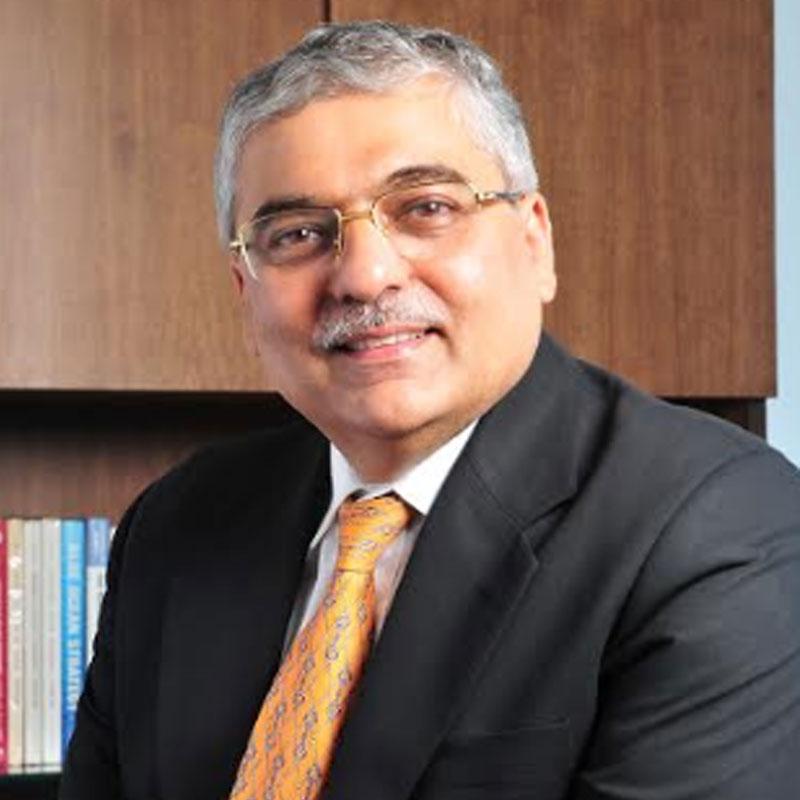
    MUMBAI: Dentsu Aegis Network, one of the biggest marketing agencies in India, released the third edition of its annual Digital Report recently predicting a wholesome 31.96 per cent CAGR growth of digital advertising in India. An exhausting and thoroughly researched report, this initiative by DAN is probably the singular attempt being made by any agency in India. Therefore, it was definitely a proud moment for Ashish Bhasin, the chairman and chief executive officer for DAN South Asia. In an exclusive conversation with Indiantelevision.com, Bhasin reveals how working on this report serves the larger goal of maintaining a leading position in the market and how other marketers can learn from the insights revealed.

    Talking about the launch, Ashish Bhasin proudly says, "We are very excited and very happy with the way the whole report has come out. What's very clear to us at DAN is that there is no business that is not going to be affected by digital. And as leaders of digital communication and advertising in India, we see it as our responsibility to make sure that authentic research on that is available, which, unfortunately, has not been revealed in India so far."

    Bhasin is of the view that creating such reports serve the dual purpose of driving the cumulative growth of the digital ecosphere as well as preparing the team within the agency for opportunities and challenges forward. He notes, "We forecast the trends and lead the markets towards those trends. Now, that we know what the market is thinking and what our clients are aspiring, we have already started building capabilities in those areas which other agencies haven't even thought of."

    The report reveals a number of key marketing trends that will rule the digital industry in the coming years. Most important of them being the three Vs – voice, vernacular, and video. As far as the voice part is concerned, DAN made a fine move by launching the report on Google's voice assistant Alexa. Video is already a stronghold for the agency as many of its campaigns have already been bringing national and international honours.

    Asserting on the need for viable vernacular content, Bhasin shares, "In the next few years, around 200 to 300 million more people are going to be on the internet. Now, from these, very few will be coming from the metropolitan cities as the penetration there is very good. The people will be joining from tier 2 and tier 3 cities, all the way down from rural areas."

    But not many agencies are creating vernacular advertisements. "At best, they take a Hindi or English ad and translate it into other languages. That might be better than putting an English ad into a vernacular setting but it is not good enough. You have to start building the ability to create advertisements in local languages because that's where your audiences are."

    Bhasin also lauds the effort of the Indian government in starting initiatives that are augmenting this influx of larger population on digital platforms. He says, "I think digital is going to be key to governance, forget anything else and thus, the infrastructure for digital needs to be created and administered by the government. At the moment, there are between 400 and 450 million Indians who are on the internet. This is a large number but the more exciting part to me is that in the next two to three years we are probably going to see something like 200 to 300 million more people coming on to the internet. And that can be possible only if the government helps put up the right infrastructure, which they have been very good at so far."

    While the pouring in of new online customers is a positive sign, the digital ecosphere still faces the absence of a unified metric system to measure and evaluate the impact of online content. Sharing his thoughts, Bhasin elaborates, "I think that is the single biggest problem that digital advertising in India faces today. For a medium that is so measurable, we don't have an agreed common metric like Broadcast Audience Research Council is for television. The medium suffers because of that. If we are to get that right, I think that will make a huge difference."

    However, he is optimistic that this challenge will eventually be solved. He says, "We need to have common industry-accepted viewership parameters and I am hopeful that these metrics in the next couple of years will be in place. I believe that in the next two years, as an industry, we collectively will evolve a common metric system as not having that is a big disadvantage."

  • Marketing in 2018: Led by revenues, ditched creativity

    Marketing in 2018: Led by revenues, ditched creativity

    MUMBAI: Long gone are the times when advertising and marketing industry in India was a small-scale business with just a few creative heads scratching their brains and churning out a minuscule number of campaigns. With the growing disposable income and aspiration to own premium goods and experience quality services, customers in India are willing to explore more, thus prompting sellers to market their products better.

    2018 was, in many ways, a cornerstone year for brands and agencies alike as they tried to peg more and more consumers to their base. The impact of demonetisation and GST gradually faded, thus allowing the brands to spend more than the previous year on marketing their products. As revealed by Zenith’s Advertising Expenditure Forecasts, the ad spends for India in the year 2018 are expected to close at Rs 62,699 crore. This number is around 10-12 per cent higher than what 2017 saw. And 2019 looks even better. The same Zenith forecast reveals that total adex for India will see an increase of 15 per cent and climb up to Rs 72,169 crore in 2019.

    As per Ethinos Digital Marketing MD Sidharth Hegde, most brands tend to spend between 7-15 per cent of their total revenue on marketing and advertising. “This percentage of spends is likely to continue, however, large brands are looking to insource a lot of the marketing and advertising that will help them save large amounts of funds that would now be going to external agencies,” he says.

    Hegde also gives a breakdown of the expenses, “In 2018, the average firm was expected to allocate 42 per cent of their marketing budget to online, and this rate is expected to grow to 45 per cent by 2020. Social media advertising investments will continue to grow, with a 17 per cent compound annual growth rate from 2016 to 2021, and is expected to represent 25 per cent of total online spending in 2018. Investment in paid search, display advertising, social media advertising, online video advertising, and email marketing is predicted to account for 46 per cent of all advertising by 2021.”

    It is clear from his predictions and is obvious otherwise as well, that digital is, in fact, seeing massive growth in India. Dentsu Aegis Network chairman and CEO – south Asia Ashish Bhasin seconds this thought and describes 2018 as the year that will be remembered as “when digital became an integral part of the marketing mix”.

    Bhasin notes, “I think this (2018) was the year in which digital came to the forefront. From being a nice-to-have part of strategy it became an integral part of the marketing mix. This was partly helped by the JIO effect as it brought down the prices of data and increased the bandwidth available. Also, the falling prices of smartphones made it happen.”

    He further adds, “And I take that by 2020, one-fourth of the advertising market will be digital. In 2022, the number of Indians reached by internet will nearly be the same as those reached by television.”

    Mirc Electronics Limited (Onida) head of marketing Pratyush Chinmoy says, “One clearly visible trend (in 2018) was companies increasing their digital pie in the overall marketing spends, in recognition of shifting consumer touchpoints. Many industry leaders also saw impressive growth in video marketing, OTT media, with the consumer from all walks of life, consuming data at a much faster pace than ever before helped by telecom price decreases.”

    But does that mean digital will overpower the other ‘traditional modes’ of advertising? Ashish Bhasin doesn’t think so. He quips, “When the tides are rising, all the boats rise along. In India, we are currently in a position where all the media are growing; be it print, TV, or digital, and it will remain so for the next 5-10 years. So, it is not digital vs print or print vs TV, or TV vs digital, it is digital and TV, and print, and OOH for India.”

    An IBEF report also supports this claim of Bhasin. According to its September 2018 report on Media and Entertainment, in FY 2018, TV advertising was the largest contributor to the country’s advertising revenue, generating Rs 223.5 billion closely followed by print that generated revenue of Rs 210.6 billion. Digital advertising generated revenues worth Rs 116.3 billion.

    Chinmoy also shares a similar brief based on some internal data, “In a period of Jan ’18 to Oct ’18, leading brands have spent around Rs 270 crore. Television has continued to gather a major pie, with print coming in second. In 2019, the spends are expected to slightly increase by a factor of 10-15 per cent.”

    He also adds, “While OTT caters to a subset of the television audience with a different offering altogether in terms of content, it has still a long way to go to catch up with television spends.”

    JHS Svendgaard Laboratories MD Nikhil Nanda adds an interesting insight, “As far as marketing trends are concerned, digital is growing fast but television and print still remain as traditional and dominant mediums. Content has been ruling the market and OTT. Disruptive marketing and radio are picking up faster than digital.”

    N Chandramouli, CEO of TRA Research has the same input. He notes, “There is no TV or OTT for the consumer. They only know the screen. None of the advertisements in such platforms are getting consumed and only the skip button catches their attention. Smart brands are focusing on consumer basis for transactions and what urges it fulfils in them, rather than present product benefits. Brands must see it as an integrated consumer experience, not as how it is delivered.”

    But Hegde differs slightly as he mentions that according to TDG Research, ad spend on OTT is projected to hit $40 billion by 2020, which is nearly half of the $85 billion in forecasted total TV ad revenue. “Also, with the influx of cheap and easily available internet, more and more users are bound to ditch the traditional TV for OTT services,” he says.

    2018 was a grand year for many agencies as many national and international honours fell upon them, the grandest being creative and impactful campaigns that were churned out in the past year; the most impressive being Piyush and Prasoon Pandey getting the prestigious Lion of St. Marks honour at the Cannes. Yet the industry feels 2018 was not a very impressive year when it comes to creativity in marketing campaigns.

    Chandramouli says, “2018 has not been an impressive year in brand creation. In the wake of a slow sales year, most of it has been attempts at selling. This, unfortunately, was based on a wrong premise because the consumer is dramatically changing.  If you sell, they don't want to buy.”

    Ashish Bhasin shows more or less the same emotion, “I think it has overall been a good year but not a great year in terms of creativity on TV because there haven’t really been any breakthrough campaigns that stood out at the national level.”

    He adds, “I think this is because the creativity in digital has significantly improved and for digital creative films from India have been getting digital identification. I think the first example that is a big name is the ‘Powerless Queen’, which was done by WatConsult, which internationally won some 15-20 awards, which we really hadn’t seen earlier for a digital campaign. We have seen print campaigns win, TV campaigns win but I guess it is a sign of coming times more creative efforts will be put in digital and we will see more of that in 2019.”

    Nikhil Nanda, however, differs in his observation. He notes, “Creatively, storytelling took the driving seat and advertisements showing the brand or products were more subtle. Whether it was an ad meant for digital/social channels or OTT alone, the more impressive the story, the better it was for the brands. Also, social causes and emotions took centre stage. Case in point: Colgate strong teeth campaign with Deepika Padukone and her mother. Campaigns in 2019 will be strongly inclined toward emotional and adopting better health habits storytelling.”  

    While 2018 was a pretty impressive year with its highs and lows, marketing agencies are now looking up to 2019 with a twinkle in their eyes. Big events like general elections and cricket world cup will be ruling the year and thus there will be a great influx of money as well.

    Bhasin believes that 2019 will see around 12 per cent growth in ad revenues. He believes that India is all set to reach the $10 billion mark in advertising in the coming year. This sentiment comes after taking into consideration some facts. Bhasin notes, “Advertising is very susceptible to sentiments. If a stable government, which is considered pro-business, is in power then the sentiments of the brands and marketers improve. They tend to spend more. Otherwise, advertising is the easiest expenditure to cut. I am hopeful that we will show good economic growth and will have a good monsoon, so we have a good performance.”

    While Bhasin is hopeful, Chandramouli sees 2019 as a difficult year for brands and marketers. He says, “2019 is a slippery year ahead, with brands not investing in new things.  So, the way to go for brands is to understand the consumer basis for trust and their innate sense of desire. Other than a few who will stand out using consumer insights and buying propensity understanding, many brands will continue to waste their money on campaigns irrelevant to the consumer. Brands that only try to sell will not get bought. Those that help the consumer buy, will be loved.”

    Another trend that might rule the advertising and marketing industry in 2019 will be of consolidations. Bhasin notes, “I think there is a process of consolidation that has started in advertising globally. We saw one of the oldest agencies JWT being merged into Wunderman this year. Even in India, there are six groups that control about 85-90 per cent of the advertising market. I see that this process of consolidation will only go bigger.”

    He further adds, “The legacy agencies will come under pressure now. The groups that have been formed in the new age and are more digital-savvy, who have more proportion of the business coming from the digital will do well. Big names that have been in the market for 100 years will suddenly now start feeling the pressure and start feeling the heat. We saw the beginning of that in 2018, we will see more of that in 2019.”

    All in all, 2019 looks like a great year for the brands and marketing agencies as it comes with its own shares of challenges and opportunities. The industry is very positive about the revenues but a little work on the creativity side is required to make 2019 a year better than the gone by.
  • Impact of assembly elections on TV ad spends

    Impact of assembly elections on TV ad spends

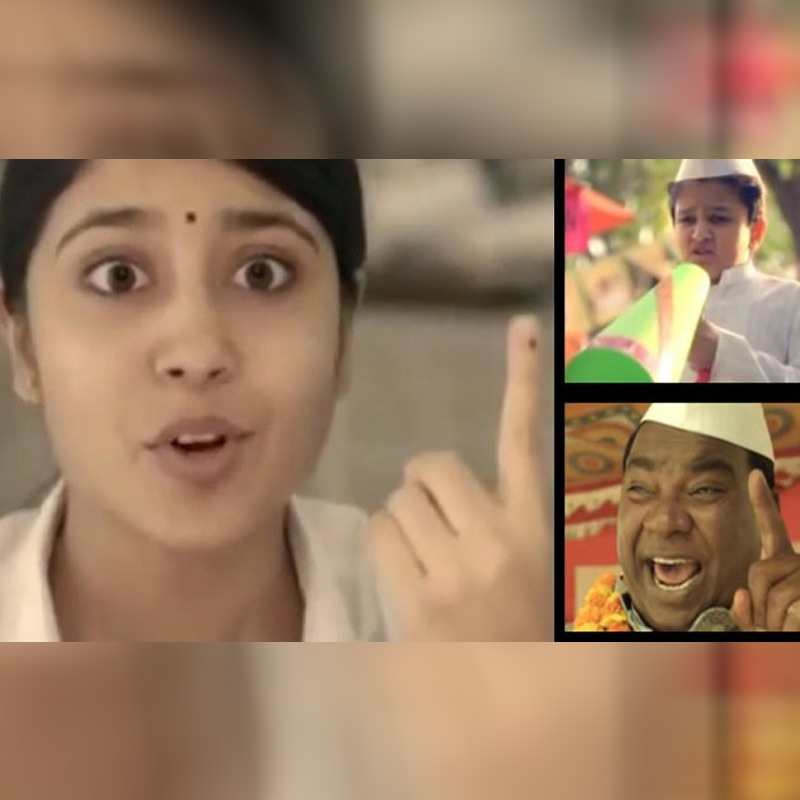
    MUMBAI: “Bad officials are appointed by good citizens who do not vote.”  We’ve all heard that every citizen must cast their vote because it’s the very essence of a country’s democracy and also their right. However, a lot of people choose to turn a blind’s eye. This could either be due to lack of awareness about getting voter ID cards ahead of time or just sheer boredom to go out, stand in a queue and getting inked. 

    Election time is fairly interesting because we get to see so many different and new ads during this time. The ruling party is gushing about its achievements whereas the opposition party criticises the existing regime and the changes they intend to bring if elected. Brands on the other hand, often come up with some tongue-in-cheek advertisements that talk about the importance of voting and so on. Today, with digitisation, availability of low cost smartphones and low data costs, digital and social media has become the front leader of all marketing mix. Bands and political parties are sure to leverage the medium to reach a large set of audiences where traditional media kind of seems to fail. 

    India’s 2014 election was the world’s biggest exercise in democracy, with a price tag to match. Indian politicians spent around $12 billion on their campaigns, which, in terms of expense, makes these polls the most expensive since the US presidential elections hit the $7 billion mark.

    The next General Elections will take place in 2019 which is promised to be a game changer in the way political parties spend during elections. If we’ve learnt anything from the 2014 elections where BJP spent Rs 714 crore and Congress spent Rs 516 crore, 2019 election is set to break all major records. However, before we enter 2019, The Indian Assembly Elections are scheduled between November-December in the states of Madhya Pradesh, Rajasthan, Chattisgarh, Telangana and Mizoram.

    In order to understand what will be the impact of Assembly elections on ad spends this year and which brands or categories will advertise the most, we bring to you industry expects’ views: 

    MediaCom national director for buying K Srinivas Rao thinks that advertising on elections, especially state elections is majorly driven by local retail advertisers or semi-corporate advertisers with a B2B advertising objective.

    Local/retail advertisers majorly depend on news channels for their advertising and hence are most likely to go big during elections. Retail players do long term deals keeping in mind the election time which gives them a leverage to get the best value from the channels. Election time is generally seen as the time when news channels expect an upside in revenues on the back of specific programming and its sponsorships. We have typically seen around 10-15 per cent upside in revenues for the national channels during elections. However, this number grows many times on the respective local news channels in which the elections are being conducted.


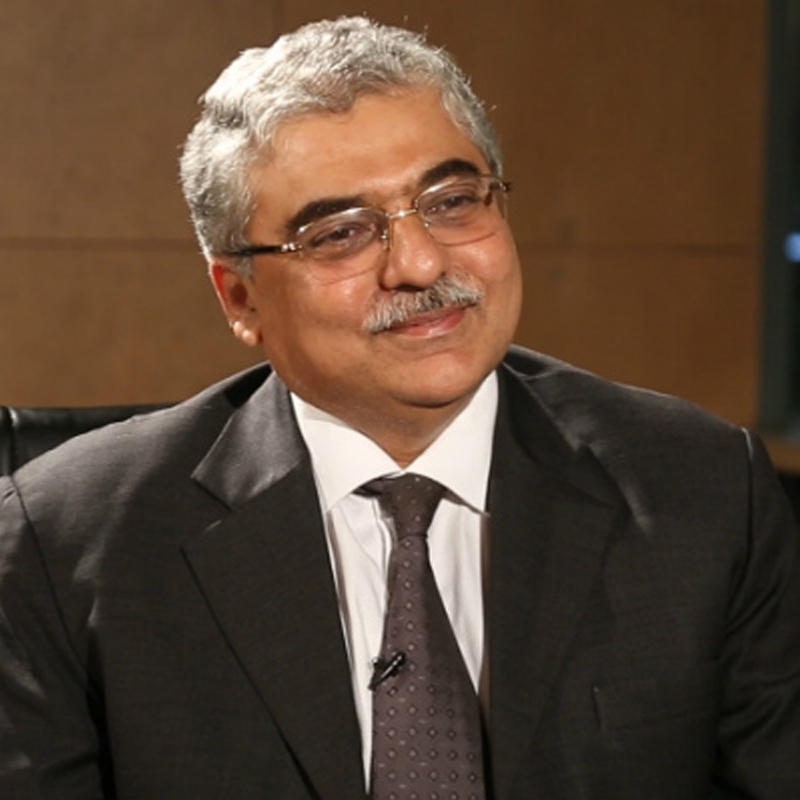
    Dentsu Aegis Network chairman & CEO South Asia Ashish Bhasin thinks that election ad spends are not that significant because the total size of the market is Rs 65000 crore whereas election ad spends contribute to only Rs 2000 crore. 

    The government/political ad spend goes up during elections, especially before election silence starts. Digital and mobile play a vital role during this time as all of them want to reach the younger user/generation. The 2014 general election was the first one where digital was used in a big way and it will be pertinent in the next elections as well. News channels become more active and advertise the most during this time because advertising follows eyeballs and people who follow elections, tend to switch on those news channels for election coverage. Other than the government and political parties, there is no significant change in the advertising spends because brands advertise according to their consumer cycle and the need of their category.


    Havas Media Group CEO – India and South East Asia Anita Nayyar is of the opinion that automobile, FMCG, e-commerce brands and e-wallet sectors are expected to advertise the most during elections along with digital and mobile which will play a major role in political advertising.

    According to the PTI report, the government spent nearly Rs 1,286 crore in 2016-2017 on ads about government policies, schemes, projects and events, through various media. The amount spent by the advertising agency for 2016-17 was 8.15 per cent higher than Rs 1,188.85 crore spent in 2015-16. The decibel level of marketing by government and brands will only go up in the coming months. While political advertising is an important arm of the Indian adex, it is very sentiment-driven and dynamic. If the government is stable, there is positive sentiment leading to brands spending more on advertising.
  • Pet Tales with  Dentsu Aegis’ Ashish Bhasin

    Pet Tales with Dentsu Aegis’ Ashish Bhasin

    What’s your favourite pet movie?

    101 Dalmatians

    What does a typical day with your pet look like?

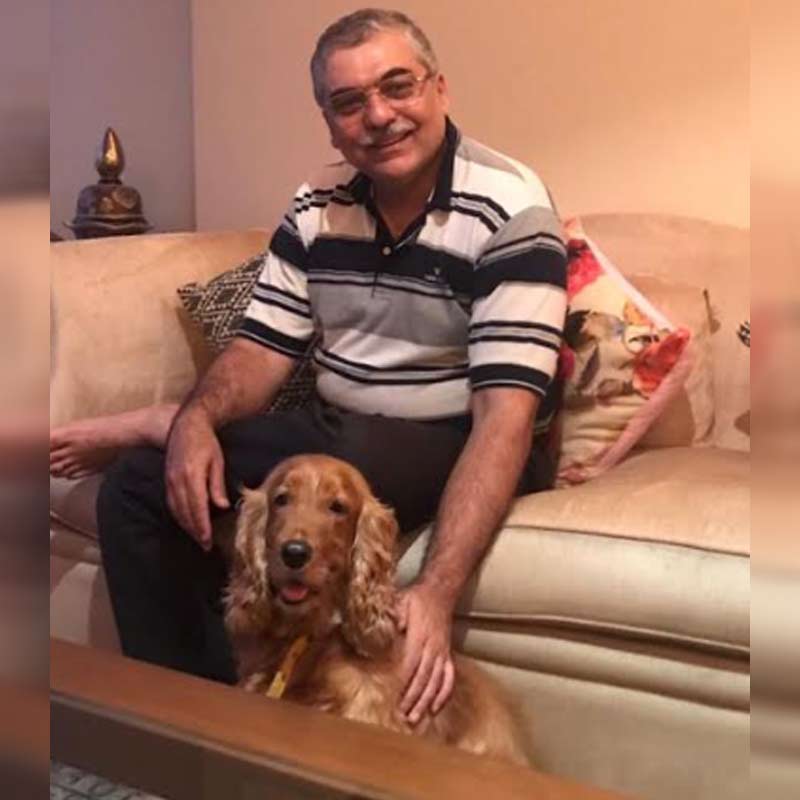
    Simba is more of my daughter’s pet as she insisted on getting him. When we decided to bring him home, I wasn’t a big pet person and so wasn’t in the favour of it. But over a period of time, he just grew on us. He is up and around when I’m up early in the morning. When I come back in the evening and take off my shoes, he comes up to me and wants me to pet him. He tends to turn on his back and wants me to rub his belly. Whenever I am free, he wants me to throw him a bone or a ball and he goes running to fetch it. He really enjoys free space and when we go to our villa in Lonavala, he loves to play till he is completely exhausted.

    What prompted you to have a pet? Do you feel having a pet changes your perspective?

    I wasn’t prompted but literally forced because of the commitment that I made to my daughter! She is an animal lover and very fond of them. I wasn’t very keen on having a pet but she insisted and forced us all but in hindsight, it turned out to be a brilliant decision and now everybody is very happy and attached to him.

    I do think that having a pet changes your perspective about a lot of things as they become a part of the family. Once you have a pet at home, it’s like having a child that never grows old. In many ways, you have to follow similar principles of parenting where you have to be strict and disciplinary when needed and indulgent and playful as well. It’s pretty much like parenting in that case.

    Do you think public places within India are pet friendly? If not, what can be done to improve this?

    I don’t think a lot of places are that pet friendly in India, and the ones that are, tend to be fairly expensive and upmarket. The old Moshe’s restaurant/cafe had a pet corner where you could have a doggie treat. There is a need for more education and awareness about pets. Most people in Mumbai live in housing societies and they have contradictory points of view where some residents don’t want pets. Besides the public places being friendly, there needs to be more friendliness in the minds of people and a little more acceptance. There also has to be responsibility taken by pet owners to make sure that pets aren’t causing any damage or dirtying public places.

    What’s been your favourite campaign/ad that involving animals?

    All Vodafone ads that involved those little pugs have been my most favourite.

    Has adoption of strays really increased today because of media and increased awareness?

    I think it has marginally increased but it has a long way to go. I am sure a lot more can be done to make sure it increases even further.

  • Star India pegged to earn close to Rs 450 cr from ISL 5

    Star India pegged to earn close to Rs 450 cr from ISL 5

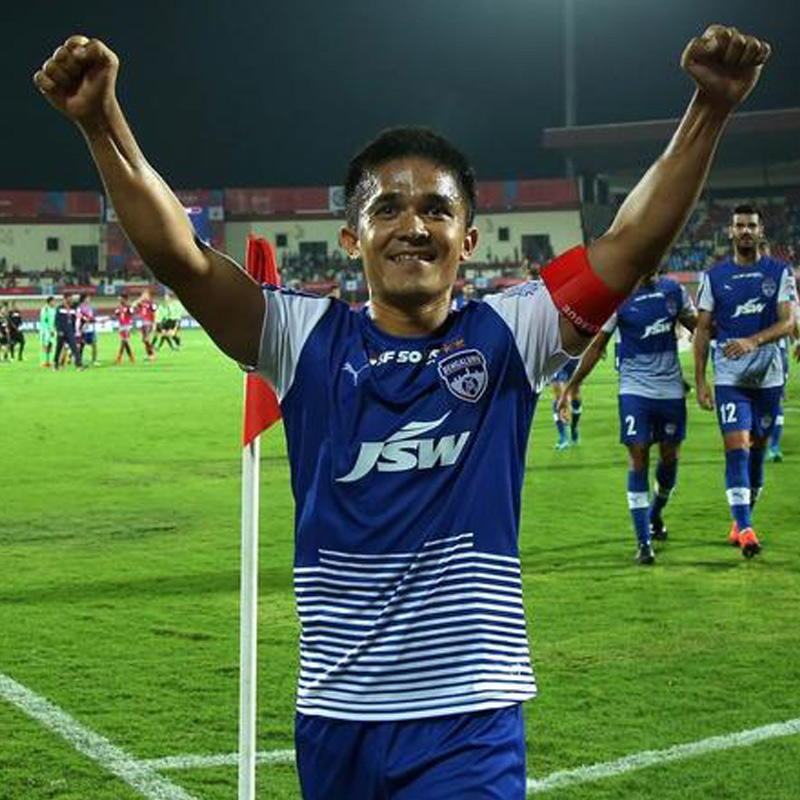
    MUMBAI: Star India is aiming to earn more from this year’s Indian Super League (ISL). Industry experts believe it will earn close to Rs 450 crore revenue from advertising and sponsorship. The projected revenue includes broadcast as well as digital. Season 5 starts from 29 September 2018 to 16 December 2018.
    “Star is eyeing around Rs 450 crore. This was the aim last time but this time it looks like they will be able to achieve it because they have put Star Gold and Star Utsav in the frame,” an industry source informed Indiantelevision.com on condition of anonymity.

  • MRUC appoints Vikram Sakhuja as chairman of IRS tech committee

    MRUC appoints Vikram Sakhuja as chairman of IRS tech committee

    MUMBAI: MRUC has appointed Madison Media Group CEO and OOH Vikram Sakhuja as chairman of the IRS Technical Committee (TechCom).

    Sakhuja will replace DDB Mudra Group executive director NP Sathyamurthy whose term comes to an end.

    Commenting on the development, MRUC chairman Ashish Bhasin says, “We are very excited at the prospect of Vikram leading the IRS TechCom as we take stronger strides in the direction of further improving the study and making it more robust. IRS surely is in excellent hands. On behalf of the board, I would like to thank Sathya for his excellent tenure.”

    On his  new role Sakhuja says, “IRS has been the definitive baseline study for readership and other media measurement for the advertising and marketing industry for decades. It is an honour to chair the technical committee of this body. It will be my endeavour to ensure that the data is valid, reliable and beyond reproach.”

    Sakhuja was executive vice president marketing at Star TV, prior to that he was marketing manager brands at Coca-Cola. Vikram Sakhuja is an engineer from IIT Delhi and an MBA from IIM Calcutta. He joined P&G in 1988 where over eight years, he held positions in marketing research and media.

    He was the managing director of MindShare South Asia, then was the CEO of GroupM South Asia for six years. 

  • Ashish Bhasin elected as president of AAAI

    Ashish Bhasin elected as president of AAAI

    MUMBAI: Media veteran Ashish Bhasin has become the new president of Advertising Agencies Association of India (AAAI) for the year 2018-2019. Bhasin takes over from Nakul Chopra who will now be the ex-officio member of the new AAAI executive committee.

    Publicis Media India CEO Anupriya Acharya was elected vice president of the association.

    Bhasin has been a part of AAAI as the vice president and has now taken up a much larger role. He is also the chairman and CEO South Asia for Dentsu Aegis Network and a member of the Dentsu Aegis Network Asia Pacific Executive Board.

    Outgoing president Mr Nakul Chopra stated, “I have been privileged to lead AAAI for two years – my sincere thanks to all my fellow members for their support. Hearty congratulations to Ashish on his election as President. He is not only a key influencer in our industry but also a AAAI veteran. I am sure that AAAI will only grow from strength to strength under his tutelage.”

    The announcement was made today at the St. Regis hotel, with Ram Sehgal being conferred with the AAAI Lifetime Achievement Award 2018. 

    The AAAI Lifetime Achievement Award is the highest honour to be given to an individual in India for his/her outstanding contribution to the Advertising Industry.

    The award was presented to Sehgal in recognition of his outstanding leadership and contribution to the advertising industry in literally establishing Delhi as a premier centre for advertising in India.

    It was this foundation that later led JWT Delhi to become the largest office in India and among the biggest in the world. Sehgal also helped in moulding Contract Advertising into one of the finest agencies and for leading AAAI and establishing one of the finest training programs in the industry ever. 

    AAAI is the official, national organisation of advertising agencies, formed in 1945, to promote their industry interests. The Association promotes professionalism, through its founding principles, which uphold sound business practices between Advertisers and Advertising Agencies and the various media. AAAI consists of small, medium and large-sized agencies as its members, who together account for almost 80 per cent of the advertising business placed in the country.

    Indian Television Dot Com exclusively spoke to the man of the evening, Ashish Bhasin to understand his goals for AAAI and the Indian media current state. 

    Goals you have set for yourself as president of the Advertising Agencies Association of India?

    Its a huge honour for me to be elected as the president of AAAI as we are in our 74th year. People who are so illustrious and stalwarts have occupied the position. My immediate past president Nakul Chopra has done a great job, So, the first goal is to live up to their standards.There is a complete change in the Media and Advertising industry and we have to change and adapt with times to make sure we continue to represent all constituents of our industry. And those constituents are constantly changing. Digital is now becoming pretty important today and we should encourage more digital agencies to be a part of AAAI. We also need to agile to the changing dynamics of the media industry and take up the industry’s issues as and when needed. 

    We also need to bring in younger people in the industry and also have more women on board. The vice president of the association this year is a female leader after a very long time. Anupriya Acharya is a very competent lady and its great to have her on board. 

    How do you view the current Indian advertising industry and what do you think are the challenges for the advertising industry?

    There is a complete momentum of change in the marketing and services business across and not just A&M. While there is an interplay between consumers going increasingly digital but we are lucky to be one of those few counties where all medias are increasing. Print and TV are still growing steadily in India. We also have to get out of the procurement and squeezing mindset so that enough resources are available with the agencies to invest in talent which they can use for their client. It is a period of change globally.  AAAI and the Indian industry should take this up as an opportunity and that’s where our focus will be. 

    What will the focus areas for AAAI this year?

    We want to be the apex body that best represents the advertising agencies along with other industry associations, the government or any other organisation. 

    AAAI is said to be the Big Boys Club. While we know there are fewer women in top leadership roles in the advertising industry, over the years we have never seen women as leaders or even participating much in AAAI. Why is that?

    It is a perception and we have to correct it. Some even call AAAI as “The Old Guy’s Club”. In an organisation, we need to have diversity and more women in the business as managers who take active roles. I am extremely pleased that after several years, we have  a female vice president and I hope and will work towards having many more women in the association. I hope our new EC will be a judicious mix of young and experienced because you need to have experienced people to have that continuity and wisdom which is gathered over the years. But we also need fresh and young blood in the organisation. We also want to include other agencies, be it big or small, so we are not labelled as a “Club”. 

  • IAA kick starts mentorship plan for women

    IAA kick starts mentorship plan for women

    MUMBAI: International Advertising Association (IAA) brings up a specialised mentorship program for women which will help them to progress and also empower them to climb the corporate ladder by giving them the right guidance and mentorship by industry leaders.

    The mentorship program is designed to train and encourage women who are talented and have had work experience of 8-10 years. It got a unanimous cheer from the industry when it was launched early this year.

    The IAA committee, which consist of Lodestar UM CEO Nandini Dias, Zirca Digital Solutions CEO Neena Dasgupta, IAA President Ramesh Narayan, chief operating officer BTVI- Business Television India took time out to carefully analyse and handpick women who will now get a chance to meet, engage and receive mentorship via four sessions from industry leaders over the next six months.

    IAA President Ramesh Narayan shares, “We have been working on this programme around the clock and are very happy with the way it is shaping up. We have finished the selection process and will now roll out the phase I of the activity. It is a long-term plan and we are glad to get it started.”

    The mentorship programme is the brainchild of IAA vice president (chief operating officer BTVI- Business Television India) Megha Tata who is also driving the initiative. She said, “The idea of encouraging someone to achieve their true potential is a very fulfilling thought and that is exactly what this programme achieves to do. We have shortlisted 23 women who will be receiving mentorship from some of the leading industry experts. We are sure this exchange will be valuable and will empower women leaders over a period in time.”

    The IAA has roped in 23 amazing mentors which include Viacom18 COO Raj Nayak, South Asia Dentsu Aegis chairman and CEO Ashish Bhasin, Viacom18 Media Pvt Ltd  Group CEO Sudhanshu Vats, Star India managing director Sanjay Gupta, ZEE Entertainment Enterprises Ltd CEO Punit Misra, Farm Equipment Sector president Rajesh Jejurikar, Member of the Group Executive Board, Mahindra and Mahindra Ltd, Dainik Bhaskar executive president Bhaskar Das, Dainik Bhaskar non executive director Girish Agarwal, The Times of India Group  president revenue Sivakumar Sundaram to name in few.