Tag: Ashish Bhasin

  • There is a pot of gold for India at the end of it: Ashish Bhasin

    There is a pot of gold for India at the end of it: Ashish Bhasin

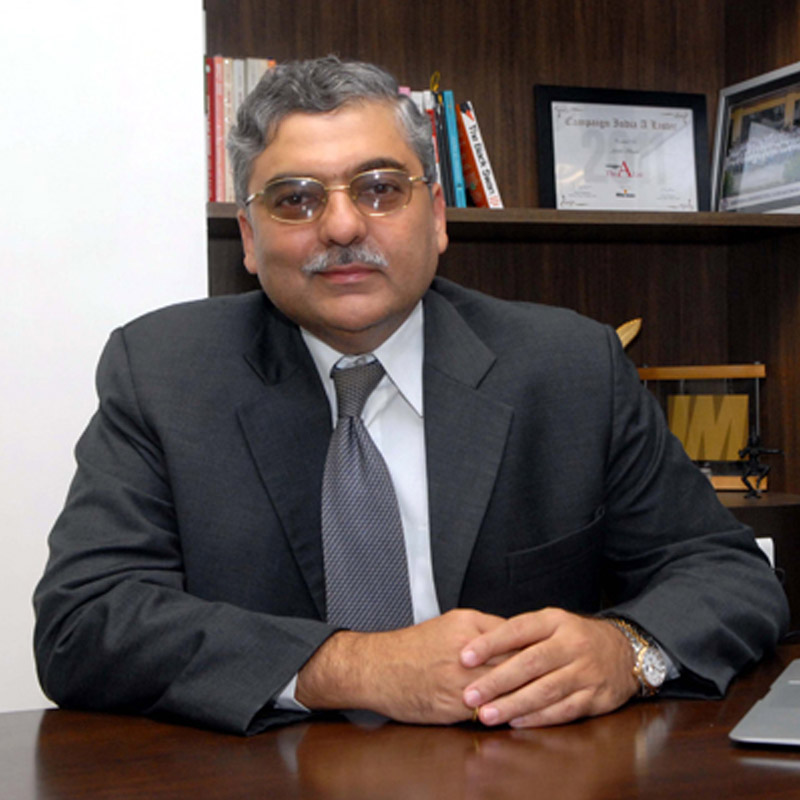
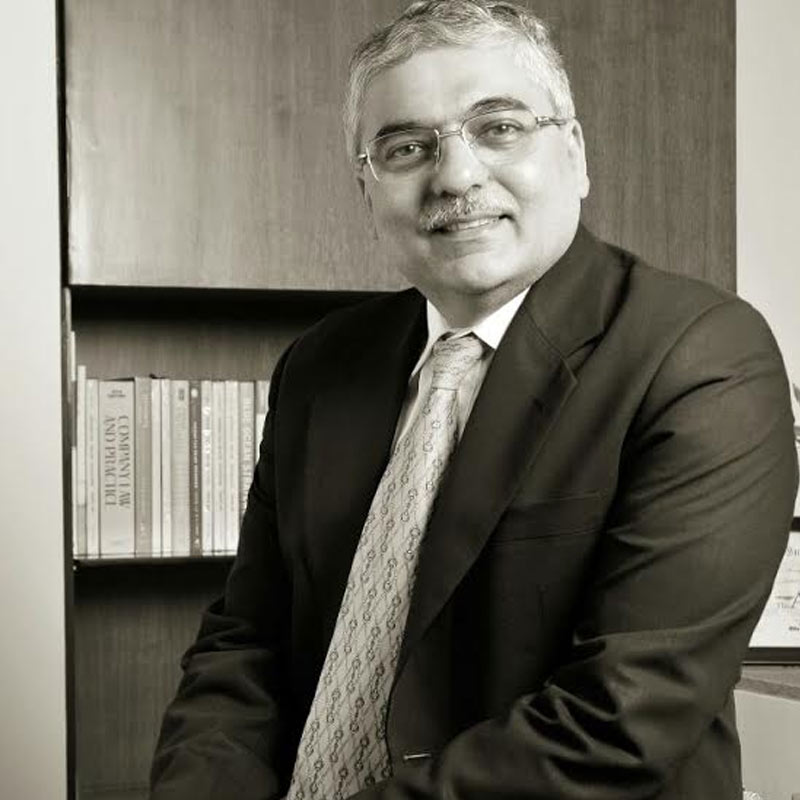
    NEW DELHI: In the second part of this exclusive chat with DAN CEO APAC, chairman India Ashish Bhasin, the versatile leader talks about his experiences of handling various international markets during the lockdown, his expectations with the future of the Indian market, and how the industry can tackle this crisis. 

    Read here the first part of this conversation: Ashish Bhasin thinks advertising needs to find the balance between optimism and realism 

    You said that people should be planning for the short term. So, how are the immediate few months looking like to you?  How can the industry prepare itself? 

    When this year had started we all, including my agency had forecasted a 10-12 per cent growth for the industry. Now, the reality is that we are going to end this year, most likely, at negative 15-20 per cent. There is a 30 per cent swing in what we had expected and what we will reach. Now, this 30 per cent amounts to around Rs 22000 – 23000 crores, which are going to get away from the industry. Some parts will be severely disrupted because of this.

    First, accept it there's no point in hoping and wishing that suddenly a magic wand will be waived and everything will come back to normal. Now, you know at which levels the businesses are going to operate; so figure out the right structures. Invest only in the right people and resources. This is not the time to be adventurous. This is the time to conserve cash and reserve your resources.

    Same goes for the clients. I am seeing people suggesting their clients keep advertising during the lockdown or they will disappear from the consumers’ minds. And in theory, it is right. But if we look at it practically, there is a liquidity crisis in the market. There are certain categories whose shops are shut completely. So, what’s the point in advertising after a certain limit? 

    I agree that advertising plays an important role in reviving any economy but this is the time to be sensible. Even the clients have to invest in critical resources to let their businesses survive. 

    I think the focus has to be on how do you make your money work harder. How do you make it more efficient? How do you get a bigger bang out of your buck? Once that happens and once the demand starts coming back you can then become a lot more adventurous. 

    Do you see more job losses happening in the coming few months?

    Well, that’s the sad part about the pandemic, everyone will have to face some pain. At Dentsu, from the very beginning of the pandemic, we had taken this decision to take pay cuts at each level, to save jobs. Obviously, the rangers differed from market to market. It was very clear to us that there is going to be disruption and there might not be any revenue beyond a point. 

    Now the recovery has been much slower than expected, and certain businesses will have to take these tough decisions, be it advertising or any other. For example, in the events business, where there is movement from months now, then it’s not fair to continue with employees at much-reduced salaries. 

    Also, it will largely depend on if the festive season really picks up and businesses start coming back. But again, it will be at an industrial level. You will be seeing job losses and it will depend on the sector to sector and which part of the business one is in. 

    You have also been handling the APAC region of the network. Tell us more about the experience of handling other markets in the region, even beyond the pandemic.

    It has been eleven months since I have taken the role and I think it would be fair to say that we have managed to stabilize it very quickly. There were some early calls I had to make, some quick management changes across the region were announced. I changed the CEO and the CFO of our Australia and New Zealand operation and created a new team over there. Some leadership changes were done in the Philippines market too. A few more were in the process but then the pandemic hit us. 

    So, the region was a little complicated and challenging for the network but I think we have taken some steps in the right direction. It is a work in progress but I am sure we will be able to take it there, increase our revenues. Right now, my focus is on building the right teams, getting the right people on board and empowering them. 

    And how did the various teams react to the pandemic?

    So, we have a big office in Wuhan, which turned out to be the first city to get impacted. And they were quick and adept at handling the situation. We moved everyone to work from home within a few days and the learnings from there really helped us with other markets too. We set up Market Incident Teams (MIT) and Regional Incident Teams (RIT) to assess the whole process and impact. We were then able to take these lessons to countries like Vietnam and Indonesia. It came to India quite later and by that time we were prepared for it. We shifted thousands of people to work-from-home overnight. I am very thankful to all my teams for managing this so well. 

    Now, China was quick to recover, subsequent lockdown and unlocks have happened in Australia and now there is the second wave there. Markets like Taiwan were relatively less impacted. China is showing robust growth now, Korea has recovered pretty well. Vietnam has handled the pandemic very well. 

    And how’s the future of the Indian market looking like to you?

    I think there is going to be month-on-month recovery from here on. Also, in the larger picture, in the next 2-3 years, 250 million more people are going to come onto the internet. Agriculture is doing now much better and we're investing in infrastructure.  I think in the medium-term and long-term, India is going to be in a good position.  I can guarantee you there is a pot of gold at the end of it for India. 

    Read more: Rural, tier 2 & 3 cities to drive the next leg of growth 

  • Star Sports reveals IPL 2020 sponsors in promo

    Star Sports reveals IPL 2020 sponsors in promo

    Mumbai: The Disney Star India (read: Star Sports sales) team seems to have done it again: breasted the broadcast sponsorship tape for the IPL 2020 in good time, even as the Board of Control for Cricket in India (BCCI) has yet to close many of its deals.

    The roster of sponsors, which was revealed in the first IPL promo look pretty healthy, clearly showing the confidence that brands have in the success of the tournament which is slated to flag off on 19 September in the Dubai International Sports Stadium in the UAE.

    It’s digital first brands, as expected and predicted, that have come on board as co-presenting broadcast sponsors. This includes fantasy sports app Dream 11, online shopping major Amazon, digital payments company PhonePe, and edutech unicorn Byju’s.

    Amongst the associate sponsors figure some old sports backers and some new ones: Cadbury Dairy Milk, Sunfeast, Coca-Cola, Polycab, Rummycircle, Kamla Pasand Masala and  McDowell’s.

    For this year, Star Sports claims to have already sold out 75 per cent of the IPL inventory. There are over 60 advertisers, including FMCG, auto, BFSI, online shopping, edutech, and other new-age brands, for spot buys, PPL shows, and features. Some of the brands in this list include Coca Cola, ITC, Mondelez, P&G, Nestle, Colgate, Britannia, GSK, and Reckitt. Star has also indicated that the number of advertisers and the amount of ad spends is higher than the usual. The network claims to have witnessed heavy demand from brands as Dream11 IPL cuts across gender and ages

    The broadcaster reveals that brands from BFSI categories have shown great interest in this season of Dream11 IPL. They are seeing it as a unique combination of festive and a high impact opportunity to engage and influence consumers whose buying behaviour has been disrupted.

    On the programming front, Star Sports has increased its content for pre-shows thus making more inventories available for this popular asset for brands that want to participate in this high impact property during the festive season.

    IPL is the biggest live sporting event happening in the subcontinent after a hiatus of nearly five months. People are keenly awaiting the tournament to begin. It is expected that the viewership of the game will be higher as audiences have sorely missed live sports. As per BARC, currently, TV consumption is higher over pre-Covid2019 times as people are restricted to their homes. The matches, this year start at 7:30 pm and will increase audience availability by more than 20 per cent, as per BARC.

    Over the years, the league has been regarded as the biggest platform reach and engagement for brands as it has continued to set viewership records across demographics year-on-year. The twelfth edition of the league witnessed 613 million viewers (consolidated + PPL + Surround). The broadcaster will continue with its focus on regional channels. IPL 2019 also saw some record-breaking numbers through women viewership. Nearly 175 million women viewers aged 15 years and above watched Vivo IPL across India between 23 March and 12 May 2019. As per the data from the broadcaster, the top 50 shows among women include cricket and IPL dominates primetime with 3.5 per cent leadership margin.

  • India’s GDP contracts, revival of demand will be a gradual process

    India’s GDP contracts, revival of demand will be a gradual process

    NEW DELHI: Recording the worst slump since India started releasing quarterly GDP data in 1996, the Indian economy contracted by 23.9 per cent in the month of June 2020. According to experts, the country has lost Rs 13 lakh crore of income in Q1. The downturn, which was quite evident from the previous few quarters was catalysed by the lockdown and is expected to last beyond the pandemic.

    DAN CEO APAC & chairman India Ashish Bhasin said, “It is quite obvious that GDP numbers are not going to be good because as we know the most significant part of the industry and economy was virtually in a lockdown. It has set us back 2- 2.5 years.”

    Madame executive director Akhil Jain noted, “Primarily fear for the future has led to chaos. The industry is in the expansion and development stage and was already working on thin margins with a huge dependency on financial institutions etc. Poor support has led to either suspension of manufacturing operations or reduction. E.g. the moratorium hasn’t helped anyone much as it will increase the burden in the future. Had there been a waiver on interest for a quarter – it would have corrected the downfall to a great extent.”

    Speaking about the advertising industry, Bhasin noted that he doesn’t see advertising coming to 2019 levels even in 2021 but perhaps by 2022. “There are severe challenges, including liquidity crisis, that a significant part of the economy is facing. Therefore the revival of demand will be a gradual process. It is not going to be a sudden V-shape recovery. It will keep improving gradually, month on month.” 

    The advertising industry faced massive losses during the first half of the year, firstly because of NTO 2.0 and then by Covid2019 lockdown. DAN India CEO Anand Bhadkamkar had shared in an earlier interaction, “Certain economists are predicting that the GDP growth (that was estimated at about 4.5 per cent) may dip up to 1.5-1.9 per cent. If that happens, we will be slipping down by more than half almost. We just have to wait and watch how things pan out.”

    Now, the industry estimates for the yearly GDP stands at negative 15-20 per cent as shared by Bhasin, indicating much bigger losses that the industry had expected in the earlier months. 

    Ethinos Digital Marketing executive director & joint MD Benedict Hayes shared, “We saw an immediate 40 per cent reduction in marketing investments and spends across in the first month of lockdown, by month 2 that touched 65 per cent. It has recovered somewhat of late, but by no means back to where it was. Less expendable income and shopper sentiment mean conversion rates to sales will drastically drop below normal. This means media spends have to be more efficient and this is where we have seen technology make a big difference. Some industries like entertainment, healthcare, gaming, EdTech have seen a positive, but generally, everyone has taken a hit.”

    Industries like travel, tourism, manufacturing, and construction are expected to face the worst of the brunt in the coming months, which will further impact the GDP. The retail sector will also face some struggle to get up from here. 

    Jain shared, “We are expecting the demand to reach 100 per cent only by the second quarter of the next financial year. This FY, we are expecting to reach 65-70 per cent of last financial numbers.”

    However, the industry is seeing the silver lining in a few sectors.  

    Bhasin noted, “On the positive side, the rains have been good, and the demand should start picking up. The festive season’s start should also help in bringing things back to normal. The rural areas and tier 3-tier 4 towns are likely to have more money in consumers’ pocket, which is a good sign because the rains have been good and rural demand should pick up.”

    Arya Collateral MD Prasanna Rao, however, added that just the agri sector and rural spending might not be the best antidote to the ailing economy. “If we look minutely into the data just released, agriculture alone has shown positive growth with a share of 18 per cent in GDP. The only bright spot was the rural economy, where the farm sector grew at 3.4 per cent year-on-year in the quarter. The agriculture, the farm sector is still growing, but it might not be enough to pull out the economy from this stagnation. There is no alternative to public spending in these trying times, people are locked inside their houses and only spending on essentials.”   

    BYJU's head of marketing Atit Mehta says, "According to UNESCO – nationwide closures of educational institutes during this crisis are impacting over 90 per cent of the world’s student population, which is around 1.5 billion learners across 186 countries. Online learning platforms have become almost a necessity in today’s scenario to ensure learning and education for kids around the world is not impacted."

    Mehta further adds that with students now completely depending on online learning to fulfill their daily learning needs, the Covid2019 crisis has caused a paradigm shift, making online learning a vital part of mainstream learning. "It has put the spotlight on the ed-tech sector. At BYJU’S, we introduced several new programs to help students continue learning even during this difficult time. From introducing courses in vernacular languages to launching more subjects, our teams worked diligently to keep bettering our learning programs. We also launched ‘BYJU’S Classes’ – a comprehensive online tutoring program to offer students a platform to solve their doubts instantly. We have received an overwhelming response with almost 3X increase in the number of students accessing our app. Earlier students used to spend 2-3 days per week on our platform. As a result of the lockdown, they are using the platform on a daily basis and spending an average of 100 mins per day. We saw over 20 million new users access our platform. There has also been a significant behavioral shift in the parents’ mindset towards online learning as they have witnessed their children benefiting from it in person and seen how this format of learning can serve as an enabler in their growth. We believe it adds even more responsibility on us to provide exceptional home learning opportunities to students today. Every crisis presents an opportunity and this is that inflection point for education, where we expect the rise of a blended model of education. The proliferation of smart devices coupled with the democratisation of the internet will fasten this process. Screens have become the primary mode of content consumption for the new generation. This will further boost the adoption of the new model of learning," adds Mehta.

    Another sector that is expecting a positive upturn from here is the logistics sector. LetsTransport CEO & co-founder Pushkar Singh highlighted, “The booking volumes on our platform have picked up mostly due to e-commerce and home deliveries picking up. In the initial months of the lockdown, it was very difficult for enterprises to continue operating with traditional companies using archaic processes. We saw enterprises transition to working with more organized logistics players as the focus was on reliability in the supply chain. While the overall economy has contracted affecting every sector, it will certainly push the logistics sector to innovate and adapt faster. Going forward, logistics capabilities will prove to be a key differentiator for brands, all of whom are trying to reach their customers more quickly and more efficiently.”

    The industry has no hopes for the market to revive this year and is expecting it to reach 2019 levels by 2022. 

    Hayes noted, “Honestly, I feel the road to recovery will be long and will stretch until the second half of next year. We are witnessing something that has not happened before and will see a lot more fallout before recovery is complete as well. Restaurants, travel, and hospitality companies are in absolute dire straits, as well as high street retail, automotive, and real estate. Without support, I feel a lot of big businesses will be under extreme pressure. It looks like some economies such as the UK steamrolled into a full-blown recession, and the ripples of the western markets will definitely be felt here.”

    Jain highlighted the need for better economic stimulus from the government stating that the earlier packages did not fare well for the industry at the ground level, “The package didn’t help the MSMEs at all. The upgrade in the limits was an eyewash, e.g. the limit for benefits was increased to 250, but the investment and bank limits weren’t touched making it non-utilisable for a lot of MSMEs.”

    Rao suggested, “The only way possible from here are stimulus announcement and public expenditure outlay in infrastructure, which may bring in the channelisation of economic fundamentals required for the country's growth."

  • Digital-first & internet- based brands and the magnetic appeal of IPL 2020

    Digital-first & internet- based brands and the magnetic appeal of IPL 2020

    NEW DELHI: Apart from the brands and services available in shop shelves and in brick and mortar stores, a slew of players in the digital ecosystem has also boarded the IPL train and ridden on the track of success. The telecast of the league has played a vital role in building mass awareness and adoption of digital-first brands thus accelerating digital adoption in India.  Something which the SARS Cov2 virus has further hyper-speeded up over the past few months.

    Digital-first start-ups are normally on a fast-growth and customer acquisition path right from the get-go, egged on by investors to increase valuations and revenues. Marketing guru and director of the Ehrenberg Bass Institute at the University of South Australia Byron Sharp in his book How Brands Grow – what marketers don’t know highlights that “growth primarily comes from gaining new users rather than driving increased loyalty. Most brand users are light users. Hence, marketers need to build brand availability and mental availability. What this basically means is that if brands want to grow, then they have to ensure they reach non-users consistently.”

    Observers point out that this is something which digital brands can effectively do using the unparalleled large scale and simultaneous reach that the IPL offers. The league itself has taken a page out of Byron’s marketing theories, has innovated, increased its reach in different languages, added viewing platforms, increased viewers, thus growing year on year. Inventory on the IPL telecast on the Disney Star India channels is limited at 800 seconds an hour with shorter ad breaks of 50 seconds each because of the fast-paced nature of the T20 game. Thus the OTS for a TVC is higher than on other television genres leading to high TOM recall. Research has also shown that increasingly TV viewers are constantly using their mobile phones as a second screen; hence cleverly crafted TVCs or ads leading audiences to respond instantly using their handheld device can generate instant and repeat interaction with a digital-first brand and even a transaction during IPL matches.

    Consider the experience of digital lending marketplace Paisabazaar and insurance price-comparison and booking portal Policybazaar.  Brand managers at the two companies have regularly put their ad bucks behind cricket to build their brands and reach out to potential customers. In 2019, the duo advertised around IPL as well as the ICC World Cup and made a huge impression on viewers.

    Paisabazaar chief marketing officer Sai Narayan is sold on the efficacy of the IPL as a national promotional platform. “IPL is one of the important vehicles for digital-first brands to increase their reach,” says he. “Brands continuously spend on digital mediums to generate ROI but TV gives scale. It generates a huge amount of free traffic and people end up searching for the brand. It creates a pull effect for the brand instead of the push effect.”

    Narayan agrees that IPL is costlier than any other platform but the returns are also better as the conversion rate is higher and the brand recall and impact are much higher.  Says he: “Brands are ready to pay a premium for the incremental jump. If you advertise around it regularly, it helps in creating a strong brand salience,” says Narayan.

    Additionally, his teams have been consistently witnessing jumps in the free traffic from 40 per cent to 50 per cent above the usual. Elaborates Narayan: “Whenever we have considered cricket, we have observed a substantial surge in our web traffic, resulting in lowering our cost per lead at a daily/ monthly/ campaign/ market level. The canvas to play within live sports is far bigger than traditional mediums, there are so many elements you can play with. A typical sporting event is long enough for brands to build a lasting recall value. If there were no live sports we might not have reached 40 million monthly users on Paisabazaar and 30 million monthly users on Policybazaar.”

    Urban Company (formerly Urban Clap) went aggressive with its Ayushman Khurana-anchored TVC during the IPL 2019 promoting the company’s air conditioning (AC) services targeted at males on Star Sports’ HD channels.  The net result: searches and bookings for the sorely needed air condition repair service in the summer climbed. This allowed the management to expand Urban Clap into newer services as well as its footprint to newer Indian cities. Earlier this year, it went in for a rebranding exercise calling itself the Urban Company.

    No wonder Dentsu Aegis CEO APAC & chairman India Ashish Bhasin believes that this season’s IPL presents a perfect opportunity that digital brands should exploit. “The pandemic has benefited digital companies as we have all moved more to digital as we have been working from home,” he says. “It’s obvious there is a distinct advantage to digital businesses to associate with the IPL as they are running well whereas the brick and mortar companies are still struggling to get back on their feet. The digital firms also have cash as they are well funded. Associating with the IPL gives them distinct benefits as well as tremendous exposure and engagement.”

    Online food ordering and delivery platform Swiggy partnered with the IPL in 2018 and 2019 as an official associate broadcast sponsor.  It created six witty slices of life TVCs which were focused on the love of Indians for cricket and food. The core message the commercials conveyed: Swiggy allows consumers to enjoy the absorbing battle on the ground even as it looks after their stomach’s needs.

    “Our TVCs are reflective of the national brand that Swiggy is today,” says Swiggy VP marketing Srivats T. “Post the last IPL campaign, we had millions of users download the app, waiting for Swiggy to go live in their cities. We saw growth in both new and repeat users. There was a phenomenal engagement on Swiggy Sixes – a property using which fans would get discounts if they placed an order within six minutes of a six being hit – with over a million viewers opting for it.”

    Edutech company Byju’s has backed the IPL and even team India in recent times. According to VP marketing Atit Mehta, the Byju’s app sees increased downloads during India matches as compared to non-cricket days. “Other measurable objectives like awareness, audience engagement, time spent on the app, conversation rates, etc., also have shown an upward trend,” he said.

    Digital payments company PhonePe too met with successful results when they chose the IPL as a consumer outreach and acquisition platform.  “We wanted to build awareness around digital payments and PhonePe amongst both rural and urban audiences in 2019,” said PhonePe founder &CEO Sameer Nigam. “We used a mass media platform like TV, the most popular sport cricket, and the IPL – the biggest sporting event of the year – to launch our new brand campaign.”

    His faith in the league was justified when PhonePe reported a 115 per cent growth in the number of transactions.

    These are some compelling figures marketers at startups and emerging digital businesses simply can’t ignore. The IPL has always been one of the largest marketing platforms for brands and marketers to gain from. With so many testimonies that prove this in more than just one way, it’s evident that this is the right time to get a lot of traction with the IPL and the festivities coming together from a timing perspective. It’s all about the right choices when it comes to Adex and spends. And when timed right, this can really turn a brand’s journey around. As the saying goes, success – though it may seem unsure initially – embraces those who go boldly were few have gone before.

  • Virtual Fireside Series: A week of exploring the new world order in the marketing space

    Virtual Fireside Series: A week of exploring the new world order in the marketing space

    NEW DELHI: The world of advertising and marketing is going through a massive transformation as the new normal of the pandemic-era syncs in. A business that was based on millions of face-to-face meetings and gazillions of group discussions has gone digital almost completely. Now client relationships are being built across screens and internal meetings are getting virtual. A sea change in consumer behaviour is also expected as they learn to live on bare essentials. 

    All this has been leading to a change in client behaviour too. There is a more than ever increased focus on digital mediums, traditional mediums are expected to transform, and the changing consumer sentiments are leading to great creative transformations too. The publishers are also reworking on their strategies. 

    To understand this new order of the marketing and advertising world, Indiantelevision.com will be hosting a series of fireside chats with the stalwarts of the industry, who will be answering some interesting questions by our founder CEO and editor-in-chief Anil Wanvari. The audience will also get a chance to directly interact with the speakers as the discussions will be live on our social media channels and website. 

    Starting today, the first live discussion will have Bennett Coleman & Co Ltd president-response Partha Sinha giving an overview of the print and digital publishing industry. It will go live at 6:30 pm and you can register for the same here.

    The next discussion scheduled for tomorrow 4:00 pm is with Zee Entertainment Enterprises Ltd chief growth officer advertisement revenue Ashish Sehgal. Register here

    On 2 September, we will be going live with Dentsu Aegis Network CEO APAC and chairman India Ashish Bhasin who will highlight the global perspective along with Indian market sentiments. You can register for the 11:00 am live here.

    The last episode, going live at 5;00 pm on 3 September will feature IPG Mediabrands CEO-India Shashi Sinha giving an extensive insight into the Indian market and changing scenarios. 

    Keep watching this space for more information. 

  • IPL and festive season to boost marketing sentiments: Experts

    IPL and festive season to boost marketing sentiments: Experts

    NEW DELHI: The Covid2019 has not only crushed the global economy, but it has badly impacted the live sporting events across the world. Every sporting event was canceled or postponed due to the virus, including the Olympic 2020. While some of the games resumed in Europe and the US, there has been a major upheaval in the sporting calendar.

    India's mecca of sports, Indian Premier League (IPL) is all set to take-off from 19 September in UAE, and cricket fans are eagerly waiting for this sporting event.

    Indiantelevision.com organized a virtual round table to discuss more on the current state and future of Live Sports in India. The round table witnessed several industry veterans sharing their opinions and insights on the subject. These veterans included – Mindshare South Asia, COO Amin Lakhani; Dentsu Aegis Network CEO APAC & Chairman Ashish Bhasin; Byju’s head of marketing Atit Mehta; Future Group’s group CMO (Marketing, digital, and e-commerce) Pawan Sarda; IPG Mediabrands CEO- India Shashi Sinha; Group M India business head (Entertainment, Sports & Live Events) Vinit Karnik. The discussion was moderated by IndianTelevision.com Group Founder, CEO & Editor-in-Chief Anil Wanvari.

    Hence, the question being asked is: will the IPL’s overlap with the festive season lead to a drop in viewership for the GECs and advertising dollars being sucked out from them towards the league?

    DAN CEO APAC & chairman Ashish Bhasin exclaimed, “It will depend on how much marketers are willing to shell out, and the next three months will disclose how marketers are going to make their next move. Covid2019 has taught us to be more adaptable. Decision-making has become more agile.”

    Talking about anti-china sentiments, he said, “I don't think there will be any impact on Chinese brands. I see it as a temporary blip, and it won't impact IPL significantly.”

    Experts hope that this festive season will bring back the cheer among consumers to buy, which will eventually help the brands. “IPL will be a great stimulator to the festive season,” shares IPG Mediabrand CEO – India Shashi Sinha.

    Group M India business head Vinit Karnik describes the upcoming months as very crucial. “From now, India will see three big festivals ­- Ganpati, Durga Puja, and Diwali. However, the fourth festival, in this pandemic, will be IPL. My optimism comes from the conversations we have had in the past 2-3 weeks, which have been very encouraging. People are willing to spend on this little festival, and that’s an opportunity for us.”

    Therefore, the question being asked is: Can we see marketers investing in spot buying instead of buying packages deals during this IPL?

    Mindshare South Asia COO Amin Lakhani affirms, “As we move forward, people are taking calculative decisions. The window is open till November end, and a lot of brands depending on their strategy will take a call, and these packages will make a bulk of consumption from the IPL perspective. There are a few clients who are evaluating their positions and want to be a part of it, but it depends on how the business shapes up.”

    He believes that IPL is a wonderful opportunity, and brands are willing to be a part of it. They are making initial strategies on how they want to participate.

    On brand sponsorship, Karnik says that this will have a huge impact on teams as most of the team sponsors rally with IPL for two reasons- brand saliency and activation. “With IPL going abroad, the activation point gets moot, and for team sponsorships, the numbers will be 12-25 per cent downward for team sponsorships point of view.”

    It has been widely reported that for this edition of IPL, Star India has set a target of Rs 3,000 crore in advertising.

    According to Sinha, “If the broadcaster reaches closer to last year's ad sales number, it will be a good sign. While the overall industry is still not doing well in terms of performance, but categories work in terms of sponsorship. It will not be as bad as people think.”

    Bhasin states that even the last two generations haven’t faced anything like this, so it is unfair to expect that this year is going to be the same as the last one. The context is where we are as compared to three years ago.

    He further says, "In this pandemic, digital consumption has reached its highest level. Digital companies have benefitted, and many of them are funded companies. They are in a much better position than many others."

    However, he believes that the only exception is live sports because you need a bigger screen. “The skew of ad spends is towards digital, but it is not at the cost of TV. Digital segment will just open up more opportunities.”

    It will be interesting to see how the next three months pan and will advertisers open up their purses.

  • What IPL comeback means to the entire industry?

    What IPL comeback means to the entire industry?

    NEW DELHI-. As numerous tournaments around the globe are making their comeback, the Indian Premier League (IPL) is going to bring smiles to cricket fans’ faces from 19 September. The game will be held in UAE this year and is one of the most sought after tournaments in recent history.

    If reports are to be believed, online gaming and sports firms are all set to spend big on television and digital platforms. With live sports back in action, the biggest question that is being asked is how the business of live sports would fare during the pandemic.

    Indiantelevision.com organized a virtual round table to discuss more about the current state and future of Live Sports in India. The round table witnessed several industry veterans sharing their opinions and insights on the subject. These veterans included – Mindshare South Asia, COO Amin Lakhani; Dentsu Aegis Network CEO APAC & Chairman Ashish Bhasin; Byju’s head of marketing Atit Mehta; Future Group’s group CMO (Marketing, digital, and e-commerce) Pawan Sarda; IPG Mediabrands CEO- India Shashi Sinha; Group M India business head (Entertainment, Sports & Live Events) Vinit Karnik. The discussion was moderated by IndianTelevision.com Group Founder, CEO & Editor-in-Chief Anil Wanvari.

    Mindshare South Asia COO Amin Lakhani mentions that since the day IPL was announced there has been a sense of positivity and it indicates that we are on the path to recovery. “There is a cautiousness in the market as the businesses have taken a huge setback in most of the segments. Many brands are looking it as an opportunity on how they can engage with IPL. The conversation with clients on IPL is three times more than what we were having with them around television ad spends in last couple of months,” shares Lakhani.

    IPG Media brands CEO- India Shashi Sinha believes that it is definitely an opportune moment for IPL to come in. “Metro cities contribute to nearly 35% of overall consumption in India. However, these cities have been most affected due to pandemic and IPL gets large traction from these regions. So, IPL is a good opportunity for brands catering to the audiences in these markets to come out from the negativity. We also feel that the sentiment is really good, and one should not compare IPL to the March – April but to what the mood was in June and July this year.”. 

    DAN CEO APAC & chairman Ashish Bhasin points out that the Indian market is more sentiment-driven as compared to any other market in the world. “If the mood is upbeat, both advertisers and consumers continue to open their purses. Last year, the economy was not doing as badly as it is doing now, but the mood was depressed. As a result, the advertising industry and many other brands were not doing well. We have already had 4-5 months of bad news, and sometimes we need an escape from it, and IPL has a potential for that. I think around the time of IPL, we will start approaching closer to normality, and once that happens, the universe will expand,” says Bhasin.

    Group M India business head Vinit Karnik opines that it’s completely unfair to compare 2020 with last year's performance. “This year has been a completely different experience for each and every sector, but still, I believe there is a reasonable amount of head-room for both GECs as well as the sports sector to survive. I think we have a decent amount of headroom to manage both,” he further adds.

    Future Group’s group CMO Pawan Sarda defines the last few months as a complete washout and believes that businesses are still struggling as they have not reached 30-40 per cent of the previous year. Says he, “It’s time to step back and observe how things will happen and then make a decision on our spendings. IPL is a platform that sets the mood for the country. A good amount of advertising is always good for healthy consumption, and since we are in retail, we tend to get the benefit from it. We are not committing anything right now.”

    During this lockdown, e-learning has performed exceptionally well. Byju’s head of marketing Atit Mehta shares, “For us, the past 4-5 months have been good in topline and bottom-line growth. We are optimistic and looking forward to the start of the festive season and every other opportunity that comes our way.”

    Says he, “As we have lost out our bid, we will now have to look at other options as far as IPL is concerned.”

    So, overall the mood is very upbeat within the brands and agencies as they keen to once again go out and reach their consumers.

  • Advertising Agencies Association seeks government help for business continuity

    Advertising Agencies Association seeks government help for business continuity

    MUMBAI: The Advertising Agencies Association of India (AAAI) has reached out to the government for business continuity to mitigate the effects of the impact of COVID-19 on the advertising community.

    The association, under aegis of president Ashish Bhasin, has sent a detailed set of recommendations to the union minister of information & broadcasting Prakash Javadekar. In this, he has stressed the importance of the advertising industry for the accelerated revival of the economy.

    The advertising agency business, like many other businesses, have been seriously affected because of the lockdown. The bulk of the agency’s costs are fixed in nature, be it salaries, rent, electricity, communication, upkeep, media audience measurement reports, etc. The income and cash flow have been in serious stress in the last month and unless there is some intervention, many businesses will either file for bankruptcy or will have to undersize considerably. 

    INS and IBF, the media associations representing the interest of print and TV respectively, have been kind enough to permit AAAI members to pay monies they have collected from their clients and not insist on what is due to them on the due dates. But the continuity of the agencies business cannot be for long without the help of the government of India, states a press release.  

    “What we have asked the government is very reasonable. We want principally money that is owed to us by way of IT & GST refunds, and dues from government & PSUs for our advertising bills to be settled immediately. We have also said that any payment made to us should not suffer any TDS deduction going forward since there is unlikely to be any significant profit for the year. Further, we have sought a direction to banks and our debtors that they provide the much-needed cash flow to pay salaries and meet other essential expenses, etc,” said Bhasin. 

    “These do not lead to any revenue loss to the government. They just need to show a kind heart. The timely help they will provide actually is the help they are providing to the people of India since advertising is a critical input that can provide a ripple effect in reviving many sectors of the economy,” he added.

    One other recommendation made is to treat advertising expenses as an investment and have this cost amortised over the next three years. AAAI believes this will encourage larger advertising outlay which will help revive the economy faster. In the same vein, AAAI also suggested that advertising expenses could be given weighted deduction while computing taxes. The suggestion was that every Rs 100 spent on advertising, should be treated as Rs 200 while computing the taxable income.

  • Ashish Bhasin salutes nation’s unsung heroes during COVID-19 pandemic

    Ashish Bhasin salutes nation’s unsung heroes during COVID-19 pandemic

    MUMBAI: COVID-19 has forced the population to stay indoors; and industries are moving their functions to online. In this unprecedented situation, citizens are counting on the essential service workers who risk their health to keep the society running smoothly. Some of them have been working silently without us realising that how important they are. Leaders from the media and entertainment industry express their gratitude to healthcare providers and other essential services personnel for their support during the pandemic.

  • Industry bids farewell to ad maverick Goutam Rakshit

    Industry bids farewell to ad maverick Goutam Rakshit

    MUMBAI: Who can forget the devil slithering around in his green cape and his malicious smirk in TVCs and ads to hawk Onida – a TV brand – in the eighties and nineties? And of course, the memorable catchline: “Neighbour’s envy Owner’s pride.” It was a tack not many had taken before: use a negative creature and emotions to create a positive desire in consumers to go out and purchase a television set.

    The images will stay etched forever in the minds of the generation that grew up watching the Onida TVC and they cannot forget the two-horned loveable evil creature (played by David Whitbread) and the unique conceptualisation that went into making the commercial. The brand value the iconic ad created was something that those yesteryear commercials for TV could not emulate or replicate. Remembering that powerful TVC can be the right requiem one can pay to Advertising Avenues’ founder Goutam Rakshit who passed away on Tuesday morning. Rakshit fully backed his art director Gopi Kukde and the idea to use the devil to create a differentiated campaign for a little-known brand which then had just five per cent of the TV market. Within a decade or so Onida had surpassed many older brands and had captured a19-20 per cent share.

    Like many others of his era, Rakshit, graduated from Jamnalal Bajaj Institute of Management, went on to join Cadbury as a management trainee in 1971.

    He went on to set up Advertising Avenues in the year 1982, which he steered for almost four decades. The forte of his agency was its clear focus on small and medium enterprises, which did not have the luxury of availing the services of a big ad outfit. Thanks to his agency, many SMSes and brands flourished.

    Indiantelevision.com reached out to some senior members of the advertising and marketing fraternity to pay homage to the bespectacled ad professional who preferred to keep a low profile.

    Madison Communications founder-chairman-MD Sam Balsara says, “What can I say; I have lost my longest-lasting professional friend since my Cadbury days in 1975. That makes it 45 years ago. We must all thank Jaideep for giving us an opportunity to meet Gautam earlier this month at his son’s wedding where he was his cheerful best and chided me for having two parties at my house when on both occasions he was out of town with his extended family which he could not miss.  I had promised that the next party I host at my house; I will first consult his holiday calendar before fixing the date! I have followed Gautam professionally and medically. He joined Cadbury. I joined Cadbury. He left Cadbury to join the advertising agency Clarion. I left Cadbury to join Contract. He left Clarion to start his agency, Advertising Avenues. I left Mudra to start Madison. Wait there’s more. He had a bypass surgery. I followed in a few years with a bypass surgery. I will save more for the prayer meeting that we will hold once the lockdown is lifted. Vidita please take courage we are all there for you. May his soul rest in peace. Amen.”

    Says Samsika Marketing Consultants CMD Jagdeep Kapoor, “Goutam Rakshit was a great professional and a dear friend. His sharp advertising mind, coupled with his grace and patience, and sprinkled with a sense of humour, was indeed unique. His humility was praiseworthy. I remember, 25 years ago, when I started Samsika Marketing, he was kind enough to come for the inauguration and pass on his good wishes, even though Samsika was a start-up and he was on top of his profession at that time. Indeed, a loss to the advertising world."

    DAN's Ashish Bhasin remembers Goutam Rakshit as a true gentleman who always kept the mood of those around him light.

    Expressing his grief, Bhasin says, "He was one of the last members of the generation gone by, where there were gentlemen in advertising who upheld principles. His contribution to advertising will always be remembered and losing people like him is a very sad loss for our industry."

    Times of India Group president Partha Sinha, who was earlier associated with agencies like Publicis and McCann, added, “He was a very fine gentleman – a rare breed in the advertising industry. He was a thoroughly sophisticated person unfortunately, I never worked with him. A person like him raised the quality of the room when he entered. His presence will be missed."

    Ogilvy chief creative officer worldwide and executive chairman India and ZEE Entertainment Enterprises independent director Piyush Pandey remembers Goutam as an extremely successful professional and a dear friend. “I was shocked to get the bad news this morning. His smiling face and a warm hug will not leave me forever. He was my senior and a competitor but he never made me realise either of the two. RIP Gautam,” he says.