Tag: Ashish Bhasin

  • Viacom18’s Sudhanshu Vats appointed as chairman of IBF Credit and Collections Committee

    Viacom18’s Sudhanshu Vats appointed as chairman of IBF Credit and Collections Committee

    MUMBAI:  The Indian Broadcasting Foundation (IBF) announced the appointment of Viacom18 group CEO Sudhanshu Vats as the chairman of the IBF Credit and Collections Committee & co-chairman of the joint IBF- AAAI sub-committee.

    IBF, in association with AAAI (Advertising Agencies Association of India), had formed a joint credit collections committee which scrutinizes, regulates and evaluates the credit worthiness of the advertiser’s active through AAAI member advertising agencies on IBF member channels. It plays a pivotal role in dispute resolution between channels and agencies vis-a-vis advertisers.
    Vats, also an IBF Board member stated, “I am delighted to have been entrusted with this responsibility. Strengthening our relationship with the advertisers would be our goal and I look forward to introducing newer mechanisms in line with the global standards, to normalize the revenue mechanisms for all parties.”

    The outgoing chairman I Venkat said, “I know Sudhanshu would bring his ethos and greater clarity in the functioning of the committee. I am thankful to all the members for their support and  their valuable contribution and also to Ashish Bhasin , the co- chairman of the committee,  AAAI  who helped me conduct these meetings in a more organised and transparent manner”.

     Speaking on Vats appointment, IBF President Uday Shankar said, ”Both Mr Vats and Mr Venkat have been valuable colleagues in the IBF board and both deserve admiration and appreciation for taking up the task of revamping the broadcaster’s ad revenue flow. I am sure Sudhanshu will bring greater efficacy and democracy to the functioning of the committee.”

  • Union Budget 2016: What it means for the media & entertainment industry

    Union Budget 2016: What it means for the media & entertainment industry

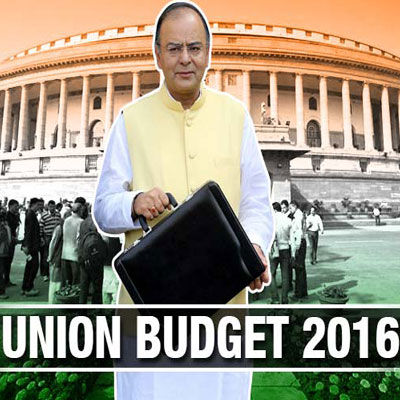
    MUMBAI: 29 February marked an important date in the year’s calendar as Indian Finance Minister Arun Jaitley presented the Union Budget 2016, amidst expectations from all sections. With an aim to give equal attention to all sectors that need financial assistance, Jaitley presented the nine pillars of his budget that focused on multiple subjects; from eCommerce to start-ups; from education to increasing jobs; and from agriculture to health.

    In a quest to find out what it really means for the media and entertainment industry, Indiantelevision.com reached out to several industry stalwarts to find out how they interpret the Union Budget 2016.

    Here’s what they have to say:

     M&E Tax Advisory India, EY, partner and head Rakesh Jariwala

    “As part of the budget proposals, India has levied an equalisation levy – what is known as ‘google tax’ globally. The tax @ six per cent of the consideration will apply on services relating to online advertisement, provisions on online ad space or other facility or services for the purpose of online advertisement, when such services are provided by a non-resident to either an Indian resident or a non-resident having a permanent establishment in India. The payer for these services are required to deduct 6% prior to making the payment. This is the first time that online services are being taxed in India.”

     Videocon director Anirudh Dhoot

    “The Finance Minister presented a balanced budget with a focus on infrastructure and agriculture sectors. By keeping the fiscal deficit target to 3.5 per cent of the GDP, the budget addresses long term positive impact on businesses. For consumer durable and home appliances industry specifically, the budget brings mixed responses. While the focus is more on dispute resolution and simplification of provision, the voluntary income disclosure will dampen the market. The government has lowered the corporate tax for new manufacturing units at 25 per cent with a view to promote industrial activity and generate jobs. With regard to small units having a turnover of Rs 5 crore, the corporate tax rate has been reduced from 30 per cent to 29 per cent. However, there is no relief on the corporate tax for big manufacturers. Government has stressed on GST implementation and proposed changes in customs duty to push make in India initiatives, which is aimed at improving the overall business environment.” 

     Sony Pictures Networks India CEO NP Singh

    “From an overall budget perspective, the enhanced public spending through various social schemes and infrastructure investments should further help to expedite economic growth. The government has also balanced spending with fiscal prudence by reigning-in fiscal deficit. From a media industry perspective, there were no major changes. I feel that a change in the definition of industrial undertaking for the services industry as well as a push to define the GST roadmap would have been sector-positive. There is a landmark attempt in the budget to simplify the tax administration, which should herald a friendlier tax regime.”

     Dentsu Aegis Network South Asia CEO and chairman and Posterscope & MKTG – Asia Pacific chairman Ashish Bhasin 

    “Overall there are some positives and some negatives in the budget. Not increasing the service tax is a positive, particularly for the advertising and media sector. The general expectation was that Service Tax may go up in anticipation of higher GST rates. Controlling the fiscal deficit and several steps to invigorate the rural economy and rural consumption are positive signals. A rural consumption revival will help the economy and the advertising and media sector tremendously. On the negative side, there was an expectation based on what the Finance Minister said in the past, that corporate tax rates would come down. That is not to be so for most large companies. Introducing double taxation on dividends is also a negative. In balance this seems to be a mixed bag budget with a positive bias. If it is able to spur overall economic growth, we could see good times ahead for the advertising and media sector.”

     Times Network CEO and MD MK Anand

    “Digitisation, in my opinion is the most important factor for the broadcast sector currently, we are very happy about the excise duty changes proposed for set-top-boxes, which will help in the last mile infrastructure of Digital Addressable System (DAS) Phase 3 and 4. Overall, a stable and positive fiscal situation is good for the economy and that will support our ad sales growth projections. All in all budget 2016 looks good for the Broadcast sector.”

     Viacom18 Group CEO and National Media and Entertainment Committee CII chairman Sudhanshu Vats

    “Kudos to the government for presenting a disciplined and inclusive budget. The emphasis on rural development and commitment to the fiscal deficit target augur well for the economy in the long-run. The proposal for a more conducive excise duty regime for STBs and other ‘entertainment-access devices’ is welcome. While many of us from the industry were anticipating more sector-specific announcements, I’m sure that this budget will benefit the larger economy and therefore, by extension, have a positive impact on our industry as well.”

  • Union Budget 2016: What it means for the media & entertainment industry

    Union Budget 2016: What it means for the media & entertainment industry

    MUMBAI: 29 February marked an important date in the year’s calendar as Indian Finance Minister Arun Jaitley presented the Union Budget 2016, amidst expectations from all sections. With an aim to give equal attention to all sectors that need financial assistance, Jaitley presented the nine pillars of his budget that focused on multiple subjects; from eCommerce to start-ups; from education to increasing jobs; and from agriculture to health.

    In a quest to find out what it really means for the media and entertainment industry, Indiantelevision.com reached out to several industry stalwarts to find out how they interpret the Union Budget 2016.

    Here’s what they have to say:

     M&E Tax Advisory India, EY, partner and head Rakesh Jariwala

    “As part of the budget proposals, India has levied an equalisation levy – what is known as ‘google tax’ globally. The tax @ six per cent of the consideration will apply on services relating to online advertisement, provisions on online ad space or other facility or services for the purpose of online advertisement, when such services are provided by a non-resident to either an Indian resident or a non-resident having a permanent establishment in India. The payer for these services are required to deduct 6% prior to making the payment. This is the first time that online services are being taxed in India.”

     Videocon director Anirudh Dhoot

    “The Finance Minister presented a balanced budget with a focus on infrastructure and agriculture sectors. By keeping the fiscal deficit target to 3.5 per cent of the GDP, the budget addresses long term positive impact on businesses. For consumer durable and home appliances industry specifically, the budget brings mixed responses. While the focus is more on dispute resolution and simplification of provision, the voluntary income disclosure will dampen the market. The government has lowered the corporate tax for new manufacturing units at 25 per cent with a view to promote industrial activity and generate jobs. With regard to small units having a turnover of Rs 5 crore, the corporate tax rate has been reduced from 30 per cent to 29 per cent. However, there is no relief on the corporate tax for big manufacturers. Government has stressed on GST implementation and proposed changes in customs duty to push make in India initiatives, which is aimed at improving the overall business environment.” 

     Sony Pictures Networks India CEO NP Singh

    “From an overall budget perspective, the enhanced public spending through various social schemes and infrastructure investments should further help to expedite economic growth. The government has also balanced spending with fiscal prudence by reigning-in fiscal deficit. From a media industry perspective, there were no major changes. I feel that a change in the definition of industrial undertaking for the services industry as well as a push to define the GST roadmap would have been sector-positive. There is a landmark attempt in the budget to simplify the tax administration, which should herald a friendlier tax regime.”

     Dentsu Aegis Network South Asia CEO and chairman and Posterscope & MKTG – Asia Pacific chairman Ashish Bhasin 

    “Overall there are some positives and some negatives in the budget. Not increasing the service tax is a positive, particularly for the advertising and media sector. The general expectation was that Service Tax may go up in anticipation of higher GST rates. Controlling the fiscal deficit and several steps to invigorate the rural economy and rural consumption are positive signals. A rural consumption revival will help the economy and the advertising and media sector tremendously. On the negative side, there was an expectation based on what the Finance Minister said in the past, that corporate tax rates would come down. That is not to be so for most large companies. Introducing double taxation on dividends is also a negative. In balance this seems to be a mixed bag budget with a positive bias. If it is able to spur overall economic growth, we could see good times ahead for the advertising and media sector.”

     Times Network CEO and MD MK Anand

    “Digitisation, in my opinion is the most important factor for the broadcast sector currently, we are very happy about the excise duty changes proposed for set-top-boxes, which will help in the last mile infrastructure of Digital Addressable System (DAS) Phase 3 and 4. Overall, a stable and positive fiscal situation is good for the economy and that will support our ad sales growth projections. All in all budget 2016 looks good for the Broadcast sector.”

     Viacom18 Group CEO and National Media and Entertainment Committee CII chairman Sudhanshu Vats

    “Kudos to the government for presenting a disciplined and inclusive budget. The emphasis on rural development and commitment to the fiscal deficit target augur well for the economy in the long-run. The proposal for a more conducive excise duty regime for STBs and other ‘entertainment-access devices’ is welcome. While many of us from the industry were anticipating more sector-specific announcements, I’m sure that this budget will benefit the larger economy and therefore, by extension, have a positive impact on our industry as well.”

  • Dentsu merges Fountainhead & psLIVE to form Fountainhead-MKTG

    Dentsu merges Fountainhead & psLIVE to form Fountainhead-MKTG

    MUMBAI: Dentsu Aegis Network has merged Fountainhead with its experiential marketing arm psLIVE India to form Fountainhead-MKTG.


    It may be recalled that last year, Dentsu Aegis Network formed its ninth global network brand – MKTG, the lifestyle marketing agency it acquired in August 2014. The agency also made the Fountainhead acquisition in India last year.


    With this merger, MKTG brings its vast resource of experience and knowledge into the Indian landscape. The agency currently operate in various mature lifestyle markets around the globe. This knowledge, combined with Fountainhead’s local expertise is poised to produce some unique and outstanding marketing innovations.


    “In India, the lifestyle marketing solutions market is growing at twice the rate of the ATL market. With Fountainhead, a leading player in India and MKTG, a leading global player, we now will have the best offering of global standards, through Fountainhead MKTG. This is another big step forward in helping us achieve our mission of being the second largest agency group by end 2017 in India, overturning for the first time the existing ranking, which has historically been in place for over 80 years in India,” said Dentsu Aegis Network chairman and CEO – South Asia Ashish Bhasin.


    “With this influx of international expertise, safety standards, design & technology, Fountainhead MKTG will consistently raise the bar when it comes to producing events within the country. While officially we are a full-service marketing agency, in reality we are a creative group of people who come to work everyday to create unique, disruptive and innovative projects for our clients,” added Fountainhead-MKTG CEO Brain Tellis. 

  • Dentsu merges Fountainhead & psLIVE to form Fountainhead-MKTG

    Dentsu merges Fountainhead & psLIVE to form Fountainhead-MKTG

    MUMBAI: Dentsu Aegis Network has merged Fountainhead with its experiential marketing arm psLIVE India to form Fountainhead-MKTG.


    It may be recalled that last year, Dentsu Aegis Network formed its ninth global network brand – MKTG, the lifestyle marketing agency it acquired in August 2014. The agency also made the Fountainhead acquisition in India last year.


    With this merger, MKTG brings its vast resource of experience and knowledge into the Indian landscape. The agency currently operate in various mature lifestyle markets around the globe. This knowledge, combined with Fountainhead’s local expertise is poised to produce some unique and outstanding marketing innovations.


    “In India, the lifestyle marketing solutions market is growing at twice the rate of the ATL market. With Fountainhead, a leading player in India and MKTG, a leading global player, we now will have the best offering of global standards, through Fountainhead MKTG. This is another big step forward in helping us achieve our mission of being the second largest agency group by end 2017 in India, overturning for the first time the existing ranking, which has historically been in place for over 80 years in India,” said Dentsu Aegis Network chairman and CEO – South Asia Ashish Bhasin.


    “With this influx of international expertise, safety standards, design & technology, Fountainhead MKTG will consistently raise the bar when it comes to producing events within the country. While officially we are a full-service marketing agency, in reality we are a creative group of people who come to work everyday to create unique, disruptive and innovative projects for our clients,” added Fountainhead-MKTG CEO Brain Tellis. 

  • Curtains down on Amitabh Bachchan’s ‘Aaj Ki Raat Hai Zindagi’ on 10 January

    Curtains down on Amitabh Bachchan’s ‘Aaj Ki Raat Hai Zindagi’ on 10 January

    MUMBAI: Amitabh Bachchan completes yet another inning on television as his non-fiction show on Star Plus – Aaj Ki Raat Hai Zindagi comes to an end.

    Being a finite series, the show had a life of 13 episodes and will air its last episode on 10 January.

    A source close to the development informs Indiantelevision.com that Big B signed a Rs 1.5 crore deal with Star for hosting the show. What’s more, the ad rates for the show’s 10 second slot was Rs 2 lakh.

    Additionally, the channel had roped in Maruti Suzuki as the presenting sponsor and Cadburys Dairy Milk as the powered by sponsor for the show. 

    However, despite have oodles of celebrity quotient on the show as well as having a unique feel-good factor, the show failed to generate good ratings for the channel. 

    “It didn’t do well in the terms of ratings. Despite bringing in so many celebrities on the show, it didn’t prove a profitable proposition for the channel,” said a senior media planner, on condition of anonymity.

    Dentsu Aegis Network South Asia chairman & CEO South Ashish Bhasin opined, “It’s true that having a celebrity onboard a show does give it an edge. Therefore it is helpful in the initial few days to set up its fan base and audience. But in the long run that won’t sustain a show. Ultimately it’s the content of the show that will retain eyeballs. Advertisers understand this as well. They might want to take advantage of the initial popularity of the show for a celeb, but for continuous investment they will go for a show that is doing well long term.”

    Star India COO Sanjay Gupta said, “Star India has always endeavoured to explore new and disruptive content – one that can fuel a billion imaginations. Aaj Ki Raat Hai Zindagi is one such show that, at its heart, captured the ethos of Star. Through this 13-episode finite series, our vision was to celebrate the extraordinary deeds done by ordinary people thereby inspiring people to believe that they too can make a difference and positivity can triumph. By celebrating the inherent goodness in people, we believe that people will be inspired by the feel-good and do-good spirit of the show long after the series reaches its culmination.”

    On 10 January at 8 pm, the show’s finale will see the legendary Jai-Veeru moment from Sholay being recreated on the stage of Aaj Ki Raat Hai Zindagi along with a surprise performance by Farhan Akhtar for Bachchan. 

    Whether the channel brings back the show for a second season, remains to be seen.

  • Dentsu India elevates four execs; eyes No. 2 rank by 2017

    Dentsu India elevates four execs; eyes No. 2 rank by 2017

    MUMBAI: Dentsu India is set to move towards version 3.0 of its India story.  The company has a two-fold aim to transform the creative reputation of the Dentsu brand in India, bringing it into the top 5 and contribute towards the objective of taking the Dentsu Aegis Network towards an ambitious No. 2 position by 2017.

    In line with this, the roles of four key professionals in the India leadership team of Dentsu have been upgraded.

    The current CEO of Dentsu Creative Impact Group and national planning director (Dentsu India – North) Narayan Devanathan has been promoted with immediate effect to the newly created role of Dentsu India group executive & strategy officer.

    In his role, Devanathan will be the chief steward of the Dentsu brand in India, ensuring consistency of vision and output, in line with Dentsu’s global philosophy of good innovation. He will also play the role of an integrator with the other members of the Dentsu Aegis Network, both within and outside India, helping leverage the power of the network.

    In addition, he will continue to helm the two specialist units of Dentsu Mama Lab (dedicated to connecting brands with mothers meaningfully) and Citizen Dentsu (dedicated to connecting brands with social purpose).

    Dentsu Marcom branch head Harjot Narang has been promoted with immediate effect as the company’s president. In recognition of Narang’s contribution to the agency’s turnaround over the last four years, and his continued drive to catapult the agency to be counted among the top 3 agencies in the Delhi / NCR market, Narang will be charged with driving the pace of growth at Dentsu Marcom.

    Dentsu Creative Impact brand head Amit Wadhwa has been promoted with immediate effect as the agency’s president. 

    Over the last four years, Wadhwa has grown from heading the account management function to overseeing the branch’s operations, and has grown the agency from strength to strength. His charge, with more autonomy, will now be to transform the creative reputation of the agency while achieving never-before scale.

    Dentsu branded agencies India group CFO C.P Arora will have an expanded role in the Dentsu Aegis Network in India as well. He will now, in addition to his existing responsibilities, take charge as Dentsu Aegis Network India (North) CFO.

    Commenting on the developments, Dentsu Aegis Network, South Asia chairman & CEO Ashish Bhasin said, “We are now at the forefront of our next phase of growth in our creative agencies and it is important for us to recognise the excellent talent pool that we have within the network and give them more autonomy to better service our clients. Narayan, Harjot, Amit and C.P. are amongst the best that we have in the network and I am sure that, they will drive the Dentsu Creative Agencies to new heights and help Dentsu Aegis Network become the second largest agency group in India by end-2017, overturning for the first time the existing ranking which has historically been in place for over 80 years in India.”

  • Rs 1500 crore riding on World T20 & IPL’s back to back play out in 2016

    Rs 1500 crore riding on World T20 & IPL’s back to back play out in 2016

    MUMBAI: Come 2016 and merely five days separate the two flagship cricketing extravaganzas – the ICC World T20 and the Indian Premier League (IPL). Even as World T20 draws to a close on 3 April, IPL takes to the ground on 9 April and riding on the two tourneys in terms of advertising spends by multiple brands is approximately Rs 1500 crore.

    While one tournament invokes national pride, the other appeals to emotions at a more regional level. The two tournaments will be played over a span of 80 days, which in turn poses the threat of fatigue.

    On one side, Star India will be pulling all stops in order to rake in the highest possible revenue. The broadcaster had an average 50 over World Cup played in Australia and New Zealand, which generated ad revenue of approximately Rs 400 crore. On the other hand, there’s Sony Pictures Networks (SPN) India (erstwhile Multi Screen Media), which has two more editions of the IPL with them to break even and close with a neat profit. The remaining two seasons will be very crucial for SPN India’s balance sheets. It should be recalled that MSM acquired the rights of the tournament for a period of 10 years in 2007 after dishing out a whopping $1 billion.

    Ad spends on the upcoming ICC T20 World Cup can go up to Rs 400 crore including digital as per estimates of a senior media planner. “At the same time, if Sony goes by their normal 10 per cent ad rate hike even for the 2016 edition of IPL, they should manage to generate close to Rs 1100 crore, which I think they would be happy with,” the planner adds. Similar estimates were drawn by multiple other media planning executives that Indiantelevision.com spoke to.

    So when Rs 1500 crore is on the line for two major cricketing events, will the back to back scheduling eat into one another’s ad pie?

    Havas Media Group, India & South Asia CEO Anita Nayyar is of the opinion that it will not. “I don’t think the schedules of either of the tournaments will effect the advertising spends they are expecting. Whether it’s ICC World T20 or IPL season 9, there are different clients focused on them. IPL specially enjoys a different section of advertisers, who keep an eye on it in well in advance. Even with the common advertisers, it’s a question of their marketing and advertising budgets. Marketers plan their spends for a year in advance after looking at the calendar. I am sure they have prepared for both the cricketing events,” she says.

    Dentsu Aegis Network South Asia CEO and chairman Ashish Bhasin concurs with Nayyar. “I don’t think that the two tournaments scheduled one after another will have an affect on their ad revenues. This is not the first time that it’s happening. Often we do see tournaments like the IPL leading to a different sporting event or vice versa. Marketers and advertisers who look forward to such events plan their budgets and strategies accordingly in advance,” he says.

    IPL and World T20 are completely different ball games when it comes to ad spends according to Bhasin. He says, “World Cup invokes following and fandom for team India. While it appeals to everyone, it is when the India matches air that our audience is mostly interested. That is why you see peaks of viewership for India matches, which reduce drastically if India is out of the tournament early. Whereas IPL retains the general interest of all. Marketers are aware that IPL is prolonged entertainment. It is not just the game but all the action around it. Therefore, advertisers strategise for IPL and World T20 in a different way.”

    The most consistent team of the IPL – Chennai Super Kings (CSK) owned by N Srinivasan promoted India Cements will not be a part of the tournament courtesy a two year ban imposed on it. The two year ban has also been imposed on Rajasthan Royals (RR). The Board for Control of Cricket in India (BCCI) has added two new franchises in the interim period. The players of the two banned teams thereby went under the hammer and after following the bidding process, the two new teams – Pune and Rajkot – absorbed them. So cricket fans will get to see their idols albeit wearing a different coloured jersey and maybe even in a new role.

    When queried as to how the absence of CSK and RR teams will impact the brand value of the tournament, Bhasin says that it might leave a certain impact on the ad rates. “Two of the biggest teams are out of the tournament and new ones have been introduced. At a time like this, clients may start questioning the credibility of the tournament all together. If the tournament has to retain its advertisers, they have to work on keeping the credibility intact,” he adds.

    “Having said that, a popular event like IPL will never have a lack of sponsors. The key issue is the ad slot prices. Over the years we have seen an increase in ad rates from the preceding tournaments for every new season. This year however, it will be hard to aim for higher ad rates for the ad slots,” he asserts.

    One thing that the SPN India president – ad sales Rohit Gupta and his team managed to achieve over the years is a constant hike in ad rates. The tournament 2015 edition, as per Indiantelevision.com’s analysis, raked in over Rs 1000 crore to make it one of the best ever IPL for the network. In the previous edition, the tournament hiked the ad rates by close to 15 per cent, taking the price of a 10-second slot to Rs 4.5 – 5 lakh. The tournament’s viewership has also kept ascending with time, and keeping the regional importance in mind, the broadcaster relayed the tourney in six different languages last year. Last year IPL was welcomed by ICC cricket World Cup. Played in Australia and New Zealand on a totally different time zone, the 50 over tournament did no harm to the flagship domestic T20 tournament.

    If sources are to believed then Star India is all set to bring back the Mauka Mauka craze. The ad campaign emerged as one of the most talked about elements during the ICC World Cup earlier this year.

    A cricket expert on condition of anonymity says, “The quality of cricket is elite in both the tournaments. India will be playing Pakistan in one of the league matches and I think that will be one of the most viewed matches of the year. Having said so, the enthusiasm won’t be similar during non-India matches, whereas when it comes to the IPL because of its unity in diversity nature all the matches turns out to be of equal importance. Pune is a good inclusion but I doubt if the pitch will last seven matches because last the time it did not. If you ask me to choose one between IPL or ICC World T20 Cup from a cricketer’s point of view, I will choose the IPL because of it’s consistent quality for a longer period of time whereas, as an Indian I will choose the World Cup because at the end of the day, when the National Anthem resonates, the feeling is special.”

    That said, the first half of 2016 will definitely be exciting for cricket, broadcasters, advertisers as well as fans of the game.

  • Dentsu Aegis launches The Story Lab in India; Sunil Kumaran to head

    Dentsu Aegis launches The Story Lab in India; Sunil Kumaran to head

    MUMBAI: Dentsu Aegis Network’s specialist content agency The Story Lab (TSL) has expanded its footprint by setting shop in India and has roped in Sunil Kumaran as country head.

    Based out of Mumbai, Kumaran will be guided by Carat India MD Kartik Iyer, who is the executive sponsor for TSL. Prior to this, Kumaran was with Reliance Broadcast Network Ltd as chief strategy officer (CSO).

    Dentsu Aegis Network-South Asia CEO and chairman Ashish Bhasin said, “Content is an exciting space for us to be in. Clients are increasingly looking at how they can ‘influence’ the consumers more effectively than just increasing their ‘reach’ through traditional forms of advertising. We have been building various expertise centres within Denstu Aegis Network and TSL is a significant step towards consolidating our position as a Network, which delivers superior value to clients and partners. Also, this is a big step forward in helping us achieve our mission of being the second largest agency group by end 2017 in India, overturning for the first time the existing ranking which has historically been in place for over 80 years in India.”

    Iyer added, “An entity like TSL is the need of the hour as brands look to accelerate the effectiveness of their ecosystems through innovative content solutions that can deliver scale, engagement and advocacy. We are very happy to have Sunil Kumaran on board who brings with him years of strategic media planning experience and deep understanding of this space.”

    Kumaran said, “I’m very excited about this new initiative, which is based on the philosophy of providing a superior value proposition to clients. Media convergence has disrupted the traditional advertising-led marketing communications model and ‘Content’ is one of the most valuable assets within media companies’ and brands’ ecosystems. I am looking forward to doing some exciting work across brands within the Dentsu Aegis Network Group.”

  • Dentsu Communications names Vishal Nicholas as planning head

    Dentsu Communications names Vishal Nicholas as planning head

    MUMBAI: Dentsu Communications has roped in Vishal Nicholas as senior vice president – head of planning. 


    Nicholas will report to Dentsu Communications CEO Simi Sabhaney and will be responsible for the planning output across all its offices.


    Prior to this, Nicholas was Lowe Lintas, Bangalore VP – planning.


    Dentsu Aegis Network chairman and CEO South Asia Ashish Bhasin said, “Dentsu Aegis Network has already entered its next phase of growth and we are ready to add muscle to our might by supplementing our existing strong team with the right kind of talent. Vishal comes on board with immense industry exposure and I am very glad to welcome him into the network.”


    Sabhaney added, “The need of the hour is to devise interactive and engaging communication strategies that will create an impact on consumers… strategies that can weld together brand ambition and consumer needs. I believe Vishal Nicholas is a new age planner who is equipped to offer effective solutions in the changing communication landscape.”


    Nicholas said, “I have always believed in the need for planning to not only be interesting but also useful. I look forward to continue practicing that philosophy with the solid team here as well as in collaboration with the other integrated offerings under the Dentsu Aegis Network.”