Tag: ASCI

  • MIB cautions TV channels on ‘misleading’ online gaming ads

    MIB cautions TV channels on ‘misleading’ online gaming ads

    KOLKATA: Amid concerns over misleading advertisements on online gaming and fantasy sports, the ministry of information and broadcasting (MIB) has issued advisory to TV channels to follow guidelines issued by the Advertising Standards Council of India (ASCI) on 24 November.

    “All broadcasters are advised that the guidelines issued by ASCI are complied with and advertisements broadcast on television adhere to the guidelines of the ASCI. It may also be ensured that advertisements do not promote any activity which is prohibited by statute or law,” MIB stated.

    A large number of commercials on online gaming, fantasy sports etc have been appearing on television, MIB noted in the advisory. But those ads appear to be misleading, do not correctly convey to the consumers the financial and other risks associated thereof.

    Hence, MIB, along with the ministry of consumer affairs and the ministry of electronics and information technology, convened a stakeholders consultative meeting on 11 November with ASCI, News Broadcasters Association, Indian Broadcasting Foundation, All India Gaming Federation, Federation of Indian Fantasy Sports and the Online Rummy Federation.

    After discussions, it was agreed that ASCI would issue appropriate guidelines for the benefit of the advertisers and broadcasters to ensure that the ads are transparent and protect consumers.

    According to the recent ASCI guidelines issued on the same, no gaming advertisement may depict any person under the age of 18 years engaged in playing an online game for real money winnings, or suggest that such persons can play these games.

  • Advertising in newspapers most trusted by consumers: ASCI-ISA report

    Advertising in newspapers most trusted by consumers: ASCI-ISA report

    MUMBAI: Advertising seen on traditional media continues to enjoy high trust amongst consumers, with newspapers (86 per cent) emerging as the most trusted, a report by the Advertising Standards Council of India (ASCI) and the Indian Society of Advertisers (ISA) stated.

    The Trust in Advertising study, carried out by Nielsen, puts forth that while a section might say that people are no longer willing to trust advertising, a larger chunk of society still believes in brand advertising and their messages. They still make their purchases and preferences on the basis of this.

    The study was conducted with people across age groups in 20 centres in India, including metros, smaller towns and rural areas. The study found that eight out of 10 people trusted advertising messages across media.

    TV (94 per cent) was the most common medium for consumption of advertising, followed by digital (82 per cent), print (77 per cent) and radio (29 per cent). Viewership of TV ads is driven by non-metro markets.  Interestingly, viewership of ads on digital is the same in rural (82 per cent) as it is in metros (83 per cent).

    According to Nielsen global head – strategic alliances and new verticals Prasun Basu, this demonstrates the growing importance and centrality of this medium in the hinterland. ASCI spotted early that the growing consumption of digital content and advertising pointed to a permanent change in consumer behaviour and marketing. Accordingly, it set up robust monitoring mechanisms for digital platforms alongside its monitoring of print and TV advertising. It now scans more than 3,000 digital platforms for misleading messages.

    While newspapers are the most trusted medium of ads with 86 per cent consumers reposing faith in them, TV (83 per cent) and radio (83 per cent) are not far behind. Text/SMS ads were the least trusted at 52 per cent.

    About 70 per cent of the respondents said they trust advertisements which are endorsed by celebrities.  

    In terms of shifts, consumers put greater trust in advertisements consumed on TV, print, radio, social media, outdoor and search engines as compared to what they did in a similar survey conducted by Nielsen in 2015. However, there is a fall in the percentage of consumers trusting text messages over this period (58 per cent vs. 52 per cent).

    Among sectors, audiences displayed a very high level of trust for advertisements of educational institutions at 82 per cent. This is possibly because culturally, Indians have a strong belief in education as a means to secure their future. Ironically, ASCI finds that a significant portion of misleading ads come from the education sector. It therefore has a high focus on education sector advertising.

    “ASCI’s job of monitoring the education sector is even more crucial, given these findings. In India, the poorest of people prioritise education spends over other necessities. Most educational institutions promise job guarantees or make false claims of being the number one or guaranteeing 100 per cent placement without any objective data or evidence. We are doing our best to make sure that such false advertising is removed from the market,” said ASCI secretary general Manisha Kapoor.

    Home care products such as detergents, mosquito repellents etc as a sector also enjoys relatively higher trust levels. However, real estate advertisements were amongst the least trusted by consumers.

    When it comes to taking action when they see a misleading or offensive advertisement, about a third of consumers are likely to discuss this with their family/friends, another third take some action by posting it on social media, or reporting the same. However, almost 30 per cent of consumers do not take any action. This, too, is a major focus area of ASCI. It has used every tool available to make it easy for consumers to point out misleading claims in advertisements. Consumers can lodge complaints on its website (www.ascionline.org), or via email (contact@ascionline.org). Consumers can also send their complaints via WhatsApp (7710012345).

    According to ISA chairman Sunil Kataria said, “Brands are built on the back of long term communication with consumers and audiences. It is in the advertisers’ own self-interest to make sure that all communication is honest and truthful, so consumers can trust advertising messages, and thereby, brands. This study helps advertisers, agencies, media owners and planners understand what works well and introspect on what needs improvement.”

    Below is the report.

    A DETAILED STUDY ON ‘TRUST IN ADVERTISING’ (ascionline.org)

  • Game over for misleading gaming ads: ASCI

    Game over for misleading gaming ads: ASCI

    NEW DELHI: The Advertising Standards Council of India (ASCI) has introduced guidelines to make real-money gaming advertising safer and more responsible. The advisory has been developed to ensure that such advertising makes users aware of financial and other risks that are associated with playing online games with real money winnings.

    Real money gaming (RMG) platforms gained traction during the Covid2019 pandemic-induced lockdowns, when users took to online gaming in a big way. From rummy and poker to fantasy gaming, there are multiple categories involving real money, with firms such as Dream11, Mobile Premier League (MPL), RummyPassion and Ace2Three gaining popularity by advertising and sponsoring important events.

    The rapid growth of the online gaming sector, and the real danger of the negative impacts of RMG advertisements has prompted ASCI to develop advertising guidelines to ensure users are aware of the financial and addiction risks in the face of potentially misleading and harmful ads.

    The guidelines, devised with the backing of the MIB, MEITY and department of consumer affairs, will be effective from 15 December 2020 and apply to ads that are legally permitted.

    The guidelines:

    1.      No gaming advertisement may depict any person under the age of 18 years, or who appears to be under the age of 18, engaged in playing a game of ONLINE GAMING FOR REAL MONEY WINNINGS, or suggest that such persons can play these games

    2.      Every such gaming advertisement must carry the following disclaimer:

    a.      Print/static: This game involves an element of financial risk and may be addictive. Please play responsibly and at your own risk

    i.        Such a disclaimer should occupy no less than 20% of the space in the advertisement

    ii.       It should also SPECIFICALLY meet disclaimer guidelines 4 (i) (ii) (iv) and (viii) laid out in the ASCI code

    b.      Audio/video: “This game involves an element of financial risk and may be addictive. Please play responsibly and at your own risk.”

    i.         Such a disclaimer must be placed in normal speaking pace at the end of the advertisement

    ii.       It must be in the same language as the advertisement

    iii.     For audio-visual mediums, the disclaimer needs to be in both audio and visual formats

    3.      The advertisements should not present ‘Online gaming for real money winnings’ as an income opportunity or an alternative employment option.

    4.      The advertisement should not suggest that a person engaged in gaming activity is in any way more successful as compared to others.

    ASCI secretary-general Manisha Kapoor said that not only are these games highly addictive but also end up being misleading and harmful to individuals and society. “We have observed gaming advertisements target youth and families by suggesting that these can become sources of income and livelihood for them. We have noted concerns about such advertisements, both from consumers as well as the government. The key fact that is completely suppressed in most of these advertisements is the real possibility of losing money. Millions of users of these apps come from lower-income families, who can ill afford to lose their hard-earned money. The frequent use of celebrities in many of these advertisements make them more attractive to consumers, and consumers tend to trust their heroes and role models blindly.”

    The idea of framing specific guidelines for the advertisement of such games is to inform advertisers as well as members of the public what criteria will be uses to scrutinise advertisements against which we complaints have been received, thereby making the industry safer and more transparent.

    As per a recent KPMG study, online gaming grew 45 per cent in FY20 with the user base surpassing 365 million by March 2020 on real-money games. The card-based and fantasy segments both achieved strong traction. As India is a mobile-first country, more than 90 per cent of online gamers play games on their phones. The online gaming market, worth more than $500 million now, could be worth $1.1 billion by 2021. In 2019, around 5.6 billion mobile gaming apps were downloaded in India – the highest in the world and representing nearly 13 per cent of gaming apps globally. Internet penetration in India is 31 per cent and KMPG expects it to reach 53 per cent by 2021 – which would give over 700 million people access to the internet and its wealth of gaming options.

  • ASCI cracks down on false claims in education ads

    ASCI cracks down on false claims in education ads

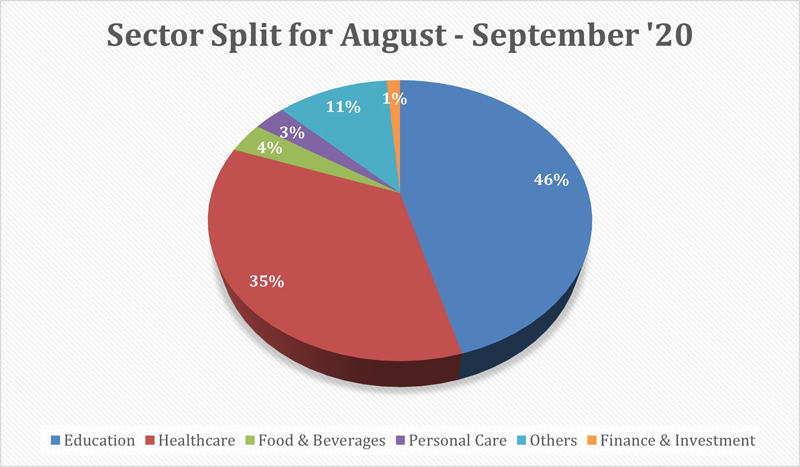
    MUMBAI: The Advertising Standards Council of India (ASCI) has cracked down on advertisements from the education sector which made misleading and false claims. During August and September, the regulatory body noticed a sharp rise in advertisements fielded by educational institutes which tried to pass off fake claims and upheld complaints against 101 such ads.   

    Claims such as top of their field, ranking no.1, 100 per cent job placements, best institute, 100 per cent passing rate, were the most used red flag terms that violated ASCI’s code. One online learning app claimed to be the best and pioneer of live online classes. Many educational institutions didn’t have substantial data and surveys to support the claims they were making and the Consumer Complaints Council (CCC) of ASCI recommended that these advertisements be declared misleading.

    In the health sector, with advertisers are trying to leverage consumers’ fears and insecurities amid the Covid2019 pandemic, ASCI cracked the whip on 59 ads which falsely claimed to cure or prevent the infection. Working together and synergizing efforts with the ministry of AYUSH, ASCI has constantly been working towards eliminating such false claims for consumer protection.

    The self-regulatory body also looked into non-healthcare advertisements, wherein a company contended that their paint protected home owners from germs, a clothing company claimed to kill 99 per cent germs, while another professed their fabric was anti-Corona. There was even an instance of a sweet confectioner claiming their sweets could combat COVID 19 and improve the immune system. There was a grocery chain that said they would refund their full grocery bill if their customer tested positive for Covid2019 within 24 hours of shopping at their store. These advertisers were told to modify such claims or withdraw their advertisements.

    There were some interesting cases flagged in the finance and investment sector too. ASCI received a unique direct complaint from a consumer regarding a campaign TVC run by a leading loan company. The TVC had people covering their mouth only till their nose with the mask. The CCC concluded that such advertisements misuse the Covid2019 situation and upheld the complaint.

    ASCI also upheld misleading ad claims made on various digital platforms like Instagram, Twitter and Facebook. Many such claims were taken up by ASCI suo motu.

    Overall, ASCI looked into complaints against 317 advertisements during August-September period, of these 64 were promptly withdrawn by advertisers on the council’s intervention. Of the remaining 253, complaints against 221 advertisements were upheld.

    ASCI secretary general  Manisha Kapoor said: “ASCI, is now in its 35th year since inception. COVID-19 related claims as well as misleading education claims continued to dominate the kind of complaints we received at ASCI during this period. The independent consumer complaints council (CCC), which comprises members of civil society as well as industry, jointly view such advertisements and adjudicate. The CCC goes deep into understanding the underlying complaint and the advertiser response and justification before an opinion is given. ASCI’s only goal is to promote responsible advertising which safeguards consumers.”

  • ASCI investigates surrogate ads in liquor category appearing during IPL

    ASCI investigates surrogate ads in liquor category appearing during IPL

    MUMBAI: The Advertising Standards Council of India (Asci) has, for the past few weeks, intensely monitoring possible surrogate advertising during the ongoing Indian Premier League (IPL). Asci has put in place daily updates on the monitoring of alcohol brand extension advertising, instead of its regular weekly feeds, for immediate processing of complaints. Complaints against eight such advertisements, which are in potential violation of the Asci code,  have been registered over the past one month.  These include whisky, beer and white liquor brands. In all these cases, Asci has written to the advertisers within 24-48 hours of airing of the commercials, seeking a response.

    The advertisements picked up range from those selling music CDs to packaged water, non-alcoholic beverages, and merchandising. The key to Asci's investigation is determining what are surrogates for liquor and what constitutes genuine brand extensions.

    Asci’s codes and guidelines are clear about what qualifies as a genuine brand extension:

    ·   For a brand extension of a product (liquor, tobacco, etc) to be considered genuine, it must be registered with an appropriate government authority such as the Food and Drug Administration and the Food Safety and Standards Authority of India etc.

    ·   In-store availability must be at least 10% of that of the leading brand in the category that the product competes, or sales turnover must exceed Rs 5 crore per annum or Rs 1 crore per annum in each state it is distributed in

    ·   It must have a valid certificate from an independent organisation for such turnover and distribution data

    Advertising for such brand extensions cannot feature what is prohibited by law or banned products. Neither can the advertising allude to or hint at products that cannot be advertised. 

    As per the law, advertisements for liquor brand extensions can run on TV if they have a CBFC certificate. The IPL broadcaster for TV has confirmed to Asci that all advertisements are checked for CBFC clearance so that they are not in violation of the Cable TV and Network Act. Keeping that in mind, Asci has processed complaints on advertisements appearing in OTT, digital and print media.

    Asci secretary general Manisha Kapoor said: “We are being extra vigilant because the IPL is one of the biggest marketing platforms in India. We are looking at advertising across media – print, OTT, digital. When we spot potential violations, we ask advertisers to substantiate their claims of their product or service being a genuine brand extension within seven days. This includes sales, distribution and market share data that must be certified by an independent body. Only if they fulfil the criteria for a genuine extension, is the advertisement allowed to continue.  If the advertiser fails to respond within the allotted time, the complaint is taken up ex-parte by Asci’s independent consumer complaints council.”

    Asci is the self-regulatory body of the advertising industry that has as its members, agencies, advertisers, media houses and other stakeholders. Its mission is to increase consumer trust in advertising by ensuring honesty and adherence to ethics in all marketing claims. 

  • ASCI announces Covid-2019 advertising advisory

    ASCI announces Covid-2019 advertising advisory

    MUMBAI: The Advertising Standards Council of India (ASCI) has directed brands to ensure that their adverts do not proliferate unsubstantiated claims related to Covid2019 that mislead and misinform the people.

    The self-regulatory industry body has issued a new set of guidelines on Covid2019-related ads that advertisers must adhere to, in a move to shield consumers from false and/or misleading information and products in the midst of the pandemic.

    As per the advisory: "Advertisers should be able to substantiate (direct or indirect) claims of immunity against or treatment for Covid2019 supported by either technical support recognised or approved by health authorities such as WHO, ICMR, Health Ministry, Ayush Ministry, DCGI, CDC (USA), or health organisations of similar stature or by well-recognised medical/technical literature or by regulatory-approved clinical research conducted by a recognised medical institute/laboratory."

    It further warned advertisers not to distort facts or mislead consumers by means of implications and omissions, abuse their trust or otherwise exploit their lack of experience and knowledge.

    ASCI also issued a firm reminder to manufacturers of Ayurvedic, Unani and Homeopathic products to abide by the guidelines set in place by the Ministry of Ayush regarding Covid2019 advertisements.

    The advisory is in line with Chapter 1 of ASCI’s code related to truthfulness and honesty of representation and, thus, the creation of consumer confidence in advertising.

    ASCI general secretary Manisha Kapoor said the pandemic is a difficult time for people and brands alike, but it cannot be a pretext to mislead consumers.

    “We want advertisers to be more mindful in creating advertisements and making claims related to Covid-19. Given the pandemic and the extended lockdowns, people are obviously concerned. Manufacturers and brands have also responded to consumer needs arising out of the pandemic. However, we want these products and advertisements to stick to claims and promises that are well backed by adequate substantiation. The advisory to advertisers is meant to safeguard consumers as well as to ensure the highest standards for advertising,” she said.

  • Advertising fraternity comes out in support of Tanishq

    Advertising fraternity comes out in support of Tanishq

    NEW DELHI: The team at Tanishq couldn’t have foreseen, even in their wildest dreams, that a simple ad about two communities co-existing in peace and harmony would land them in such massive trouble. They have been dragged on social media, in the equity markets, probably on the ground too (if news reports are to be believed). It’s fair to say that the trolls, naysayers, and people with a different mindset forced them to pull down their creative. Overnight, what was meant to promote their brand ahead of the festive season instead became a hot-button issue, for all the wrong reasons.

    What did it showcase: A young daughter-in-law all set for a baby shower. Only that she is a Hindu married into a Muslim household, and for the sake of her happiness, her new family is celebrating the occasion in accordance with her traditions.

    The idea of a interfaith union is not an alien one in India; there are enough number of Hindu-Muslim couples across Bollywood, sports, business and what not. So, there was not even an iota of sentiment that hurt any religion. But naysayers felt the pinch, lashed out at the brand in a big way and pushed it on the backfoot.

    However, the advertising industry came to the rescue of the much-maligned brand. ASCI, IAA, AAAI and The Ad Club issued separate statements, strongly condemning the trollers and extended their support to Tanishq, even going as far as to say that the jewellery maker could restart its campaign if they so wanted, as it did not contain any misleading or unethical content in the first place.

    This is not the first time when an ad has been attacked or trolled but it is one of the rare occasions when the advertising associations quickly turned around and created a special committee to evaluate the ad and give it a green chit.

    We spoke to several creative stalwarts and advertising agency bosses who in a unanimous tone censured trolls, supported the brand, and stood for the freedom of expression in the advertising business.

    Dentsu CEO APAC and chairman – India Ashish Bhasin is pleased to see the industry coming together in support of the cause. “Everyone in advertising would want the freedom of expression of this fraternity to continue and not get endangered. I think it is a good example of the entire community coming together to support the cause since it is of common interest to all. In the marketplace, we may compete as different businesses and agencies. However, one good thing about the advertising fraternity is that when it comes to issues of common interest, we cooperate and collaborate in the truest sense and I have witnessed this many a time. I am pleased that the fraternity is coming together to take a stance on something that affects everyone. Right now, it is just one agency or one client, but tomorrow it can be other agencies and clients as well. So, it is important for the fraternity to state its point of view, which I think is well done this time,” says he.

    Read more news on Tanishq

    Spring Capital founder and creative partner Arun Iyer is someone who has worked with Tanishq in the past and understands it. He could not find a reason as to why people are upset about the film as there is nothing wrong with it. “It is a neat piece of work and the intent behind it is nice. The film simply shows that the two communities can live together peacefully. However, there is a faction that thought otherwise. It is unfortunate that people have to take sides (for or against) on this piece of work as there is no need for it. Also, if there was not this much of trolling, may be the ad also would not have garnered this level of attention. I believe people are becoming increasingly sensitive about matters involving Hindu-Muslim. The brand has a point of view and it should not be blown out of proportion,” believes Iyer.

    The Social Street founding partner and CEO Mandeep Malhotra is happy that the industry associations are standing by Tanishq as these associations are like an extended family of the brands. “As a consumer, personally, I did not find anything offensive with the ad. However, we live in a country where people can be divided over extremely small issues. I personally feel it’s a good sign that the associations are showing solidarity with the brand in these low times. These brands have contributed very strongly to the community and it is one of those times when the family should be standing by you especially when you are right and have done nothing unethical. Also, I believe that the situation has already helped the brand achieve its objective of reaching out to people – in a good way or bad way, it remains to be seen,” Malhotra adds philosophically.

    DDB Mudra West VP & head strategy Toru Jhaveri opines: “I don't think advertising should have great pretensions beyond persuasion. Ads are storytelling snippets that move products, and the best ones are beautifully crafted and move people, too. Whatever power advertising has as a cultural force, lies in its ability to represent and normalise reality – which is one crucial way of shaping it. After all, imagining begins with an image, with seeing – or hoping to see. The Tanishq film was honestly simply a nice, warm film until we could no longer see it. Which begs the question: what else can we expect to stop seeing, and then imagining?”

    Tidal7 co-founder and chief creative officer KS Chakravarthy demands what the fuss is about anyway? “I think the very vocal opponents are missing the fundamental point – if an ad, any ad, offends people's sensibilities, the advertiser will pay the price in terms of brand image, goodwill, and ultimately, business. So if an ad is truly offensive to the vast majority of this country, it will be punishment enough by and of itself. If on the other hand it does not offend, and actually wins respect and affection, then what's the fuss about anyway?” asserts Chax.

    Infectious Advertising co-founder and director Nisha Singhania is unhappy with the situation and sees the attack as completely unwarranted and uncalled for. “It’s a lovely ad which actually represents India and it’s secular values beautifully. Tanishq as a brand has always done path breaking work and I congratulate them once again for doing the same. It is very unfortunate that the ad had to be pulled off, I commend the entire team behind it. It is sad that we live in times where stories that inspire equality and promote brotherhood have become objectionable,” she says.

    Havas Group India adds, “We have our Group CEO Rana Barua as both an industry representative and a Mancom member of all 3 institutions – IAA, AAAI and The Ad Club part of all the decisions taken by these industry bodies condemning the attack, which remains our stand."

    Tanishq is a creative brand that has done some very topical promotions in the past that have broken through the clutter and sparked conversations. It will be interesting to see if the brand manages to bounce back and resume its campaign with all the support it has garnered from the industry.

  • AAAI extends support to Tanishq ad, disapproves targeting

    AAAI extends support to Tanishq ad, disapproves targeting

    New Delhi: The Tanishq ad controversy seems to have got the attention of the entire advertising industry. In the latest development, Advertising Agencies Association of India (AAAI) said it disapproved of the targeting of the commercial. The association mentions that the threats against Tanishq as well as its employees, which led to the withdrawal of the advertisement, are a matter of great regret and concern.

    The advertisement in question, in fact, was also viewed at the Advertising Standards Council of India (ASCI) by an independent panel – The Consumer Complaints Council, which is representative of multiple stakeholders from industry, civil society, lawyers and consumer activists. The panel found nothing in the advertisement that was indecent or objectionable or repulsive that could lead to grave and widespread offence.

    There is a consensus among all allied bodies and The International Advertising Association (IAA) India Chapter and The Advertising Club also support this.

    For the last two days, the brand was roundly slammed by trolls on social media for upsetting their religious sentiments. However, a large number of people across the country have stood up for the brand and are supporting the ad. This includes several advertising personalities, actors and other people.

  • Guest Column: ASCI to form new ad regulations to avoid misleading content

    Guest Column: ASCI to form new ad regulations to avoid misleading content

    NEW DELHI: Advertising has evolved into an enormously complex form of communication, with literally thousands of different ways for a business to get a message to the consumer. Today's advertisers have a vast array of choices at their disposal. The internet alone provides many of these, with the advent of branded viral videos, banners, advertorials, sponsored websites, branded chat rooms and so much more. A successful advertising campaign will spread the word about your products and services attract customers and generate sales. Whether you are trying to encourage new customers to buy an existing product or launching a new service, there are many options to choose from.

    The most suitable advertising option for your business will depend on your target audience and what is the most cost effective way to reach as many of them as possible. The advertising option chosen should also reflect the right environment for your product or service. For example, if you know that your target market reads a particular magazine, you should advertise in that particular publication only or if the target market is online, then it’s better to have a firm grip on the online platform to reach the correct target audience.

    Ads can majorly vary into categories and further gets divided into sub- categories:

    1.    Online Advertising – If you see an advertisement via the internet, then it is classified as online advertising. In fact, there are ads on various pages, and most other websites you visit, as they are the primary revenue driver for the internet. There are many digital marketing strategies including placing ads on popular websites and social media sites like LinkedIn, Twitter, Instagram, Snapchat Facebook and on websites through Adword and Adsense. 
     

    • Google Adwords- AdWords from Google allows companies to bid on the placement of an ad on Google's search engine results page. By using keywords or common search terms, searches that are related to the business and their products. It works when a business pays google as per the number of times an ad is clicked on, which is why it's called a cost per click.
       
    • Google AdSense- It allows a company to host ads on their website from Google to generate revenue for the site. For businesses looking to advertise, they can enroll in Adsense and Google, which will then match the ad to various websites with related content or search parameters. As a result, companies can reach larger audiences through Google's placement of advertisements and will help gain website, the required traffic through it. 

    2.    Mobile Advertising- A dominating force in digital advertising is through mobile devices such as cell phones, iPads, kindles, and other portable electronic devices with internet connectivity. Current trends in mobile advertising involve major use of social media. Mobile advertising is similar to online advertising and is increasingly gaining importance as a method of reaching new customers. 

    3.    Print Advertising- Print, a huge driver of sales, it is taking a back seat to the many digital forms of advertising now available to marketers. However, if there is one thing that's certain about advertising, it's that being different is good. Typically, print can be split into three subcategories: 

    • Newspapers/ Magazines
    • Brochures, Leaflets, Flyers, Handouts, and Point-of-Sale Advertising
    • Direct Mail Advertising 

    4.    Broadcast Advertising- A mass-market form of communication including television and radio, broadcast advertising has, been the most dominant way to reach a large number of consumers.

    Challenges faced by the industry

    The industry is progressing and everyone thinks they can be a marketer these days even after having little or no experience at all.It is becoming a very difficult industry for new companies to navigate. The online advertising industry is facing a number of serious challenges right now. One of the major issues being faced is the lack of transparency. Transparency has long been an issue in advertising, largely due to the complex nature of contracts signed between media companies and their clients, as well as the subject of uncertain bonuses or benefits that have come from media producers.

    Advertising Standards Council of India (ASCI) to form new ad regulations to avoid misleading content- In order to curb these challenges, the government is recently working on a code to curb misleading advertisements, which will force companies to substantiate statements made while promoting products. Additionally, since there are no specific regulations for advertisers on OTT platforms for example, products like liquor ads do not have a gateway to advertise themselves on general DTH platforms, but due to no fixed regulation assigned on OTT platforms, brands have now started to advertise themselves on platforms like Netflix, Amazon, Hotstar, AltBalaji, Voot, Zee5 etc. Such an activity from advertisers can be a bane for children under the age of 18 and can badly influence the target audience. There is a need to have a code for the benefit of consumers and also to help identify quickly which fall under misleading category, otherwise there will be a sea of complaints about misleading advertisements. 

    (The author is Makani Creatives co-founder and managing director Sameer Makani. The views are personal and Indiantelevision.com may not subscribe to them.)
     

  • ASCI upheld complaints against 257 misleading ads in June & July

    ASCI upheld complaints against 257 misleading ads in June & July

    MUMBAI: In the months of June and July 2020, the Advertising Standards Council of India (Asci) investigated complaints against 363 advertisements, of which 76 were promptly withdrawn by advertisers. The independent Consumer Complaints Council (CCC) of Asci evaluated the remaining 287 advertisements, of which complaints against 257 advertisements were upheld. Of these, 150 belonged to the healthcare sector, 40 to education, 20 to food and beverages, four to GAMA complaints, 12 to personal care and 31 to the other category.

    Covid2019, continued to be the biggest fight which in turn led to a rise in the false claims of cure and prevention from Coronavirus. Holding hands with the Ministry of AYUSH, Asci is continuously working towards eliminating such false claims for the betterment of the society. In the month of May – June 97 such cases were flagged to the regulator.

    Read more news on Asci

    Asci chairman Subhash Kamath says, “There has been a flood of advertisements with dubious claims about COVID-19 cures and preventions. Especially at this time when consumers are feeling more vulnerable about the virus, it becomes more important for us as regulators to ensure that these ads don’t exploit the consumer’s anxiety.  We understand that such claims can adversely affect consumers and we are committed to work closely with the Ministry of Ayush to help eliminate such malpractices from society.”