Tag: ASCI

  • Dish TV, Star India ads pulled up by Asci

    Dish TV, Star India ads pulled up by Asci

    MUMBAI: Advertising Standards Council of India’s (Asci) Consumer Complaints Council (CCC) upheld complaints made against 27 advertisements during the quarter April – June 2011.

    During the same quarter, the CCC also rejected complaints against 15 advertisements as they did not violate the Asci Code.

    The CCC did not uphold complaints against 17 advertisements of various advertisers that include MakeMyTrip, Mankind Pharma, P&G WellaKolestint, Dabur India, McNroe Consumer Products, Royal Hygiene, Tata Chemicals, HUL’s Axe Googly Deo, Times of India, amongst others as these advertisements did not contravene Asci’s codes or guidelines.

    The complaints were upheld against advertisers from FMCG, education, healthcare, DTH and media sectors.

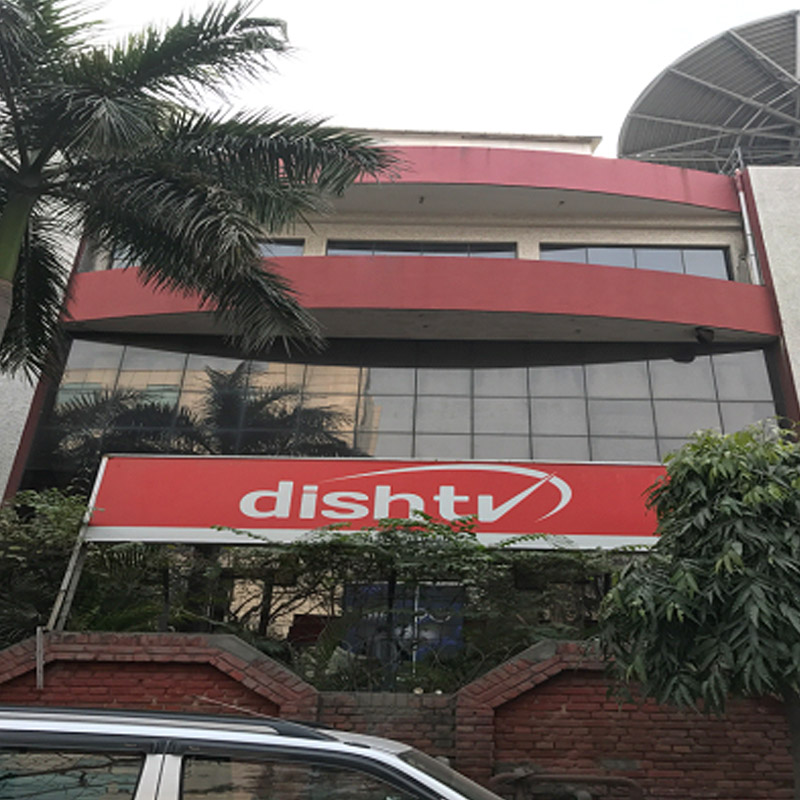
    Dish TV‘s claim to offer “30 True HD channels” was rejected by the CCC citing that the use of the word ‘True‘ to denote “upscaled standard definition” channels as HD was misleading.

    Their claim of providing maximum number of HD channels was also challenged, stating that Dish TV can provide only a limited number of HD channels and the other “claimed” HD channels were SD channels upscaled to HD at the DTH end. This claim would lead to consumers expecting an HD experience being misled.

    Similarly, complaints against certain claims made by Star India on the AsliHD campaign were upheld by the CCC stating that the claims of AsliHD were framed to exploit consumers‘ lack of knowledge of HD technology.

    In the educational sector, a complaint against IMS Learning Resources’ advertisement claiming “8 out of 10 toppers in CBS” and other similar claims was upheld since the claims could not be substantiated with evidence duly validated by an independent agency.

    Similarly, complaint against Roots Education‘s advertisement claiming No 1 CAT coaching in Delhi and other claims was upheld due to lack of evidence to back the claim.

    The complaint against Career Launcher advertisement claiming 303 Calls in DU (BBS/ BFIA) without mentioning whether they were final admission calls or just interview calls was also upheld by the CCC.

    The complaint against Sri Balaji Society’s advertisement claiming 829 students being placed from the 2009-11 batch without mentioning the total number of students was upheld on the ground that the claim contravened Section 4C of Asci’s guidelines for advertising of educational institutions and programmes as the advertisement shows images of colleges which do not seem real.

    ITM Institute of Fashion, Design & Technology in their advertisement state that their study programmess are approved by PIFT and MS University, but fail to provide details like full name and location. This contravenes the Asci Guidelines for advertising of educational institutions and programmes, hence the complaint was upheld.

    Similarly, ITM Institute of Hotel Management stated that their degree programme was affiliated to Mumbai University but failed to provide a specific institution or college and its location. Also, their claim of being voted Top Hotel Management College of the country by ‘Competition and Success Review‘ was not substantiated. Thus, the complaints against this advertisement were upheld by the CCC.

    Advertisement claims by FMCG majors HUL, P&G, Reckitt Benckiser, Paras Pharma amongst others came under the CCC’s scanner.

    FMCG major Hindustan Unilever was faced with a complaint regarding their advertisement on a leaflet of ‘Pureit Water Purifier’ which contains numerous disparaging and false statements about the competitor product – Tata Swach. The distribution of anti-Tata Swach danglers on Tata Swach packages by the advertiser was seen as undermining the Tata brand but also an unfair and unethical trade practice. Following the CCC’s intervention and upholding the complaints, HUL withdrew the leaflet from the market.

    Another HUL advertisement that came under the scanner was the Axe Effect campaign. This complaint was upheld on the grounds that the visual used was overtly sexual and vulgar and portrayed women in an indecent manner. The complaint against Paras Pharmaceutical’s sexually explicit advertisement of Set Wet Deodorant was upheld on the grounds that it was portraying women as sexual tools.

    Some complaints on certain claims made by P&G’s Pantene Pro-V Hair Fall Control were upheld by the CCC on the grounds that the depiction of a stylised golden circular drop misleads consumers into believing that 150 crore and not 15 crore women found Pantene to be effective.

    Moreover, P&G’s claim that 80 per cent of Indian women say that the new Pantene is better than anything else they have tried before, based on a study of just 360 women, was misleading. Following the CCC’s decision, P&G removed the stylised golden circular drop in the advertisement.

    Similarly, complaints received against Reckitt Benckiser’s advertisement for Dettol Skincare Soap was upheld on the ground that it was misleading consumers by wrongly linking the skin condition to germs, where in reality there is no correlation between the two.

    The complaint against Sundrop Heart’s advertisement was upheld on the ground that its statement “jeenekadaarnahi, khaaneka oil badaliye” can lead consumers to believe they can neglect the importance of healthy lifestyle by merely changing the cooking oil they use.

    Complaints against an advertisement of International Tractors Ltd for their brand Sonalika Tractors were upheld as they used the creative property ‘Mileage ka Master’ of Mahindra Tractors, thus taking unfair advantage of the goodwill attached to the Mahindra products.

    The complaints against GCMMF’s advertisement claiming that Amul butter tops the food triangle, was upheld in the absence of an appropriate disclaimer, ‘to be used in moderation’, which could mislead consumers to believe that Amul Butter is the best food to have, thus leading to over-consumption of butter.

    A few healthcare advertisements also came under the CCC’s scanner because of the claims made by the advertisers.
    A complaint was received against The Institute of Indian Therapies for their advertisement of ‘AyuCare Lavana Tailam’, which claims that the external application of oil helps reduce the size of one’s stomach and lose all fat. The CCC considered the report of the clinical trial submitted by the advertiser and concluded that the advertisement was misleading.

    In another case, AMA Herbal Labs advertisement mentions that competitors use PPD (Paraphenyenediamine) which can be harmful to the hair. The CCC concluded that the specific mention of PPD as a harmful chemical was misleading and unfairly denigrates other products.

    Business World magazine claimed to be the No. 1 business magazine in India which was most read and most sold. However, the IRS for the 3rd Quarter of 2010 showed the magazine in third place. Since the claim was not supported by any independent research, the complaint against the advertisement was upheld.

    The complaint against JyothyLabs’s Exo Dish Shine Bar advertisement claiming that it can kill disease-causing germs in just 20 seconds was upheld as the technical data submitted did not support the claim that it “starts” killing germs in 20 seconds. The advertiser made appropriate modifications to the advertisement post the CCC’s decision.
    The complaints against the Amul Body Warmer advertisement were upheld as the CCC concluded that the depiction of Draupadi in a frivolous manner could hurt religious sentiments of a large section of society, thus causing grave and widespread offence.

    The complaints against claims made by Shree Maruti Herbal’s D-Diabetes Smart Powder advertisement were upheld as these were not substantiated with clinical trials and technical data.

    Complaints against Micromax Mobile advertisement showing a student experimenting in a chemical laboratory which ends in a blast were upheld as it sends the wrong message to students and that it may encourage many students to emulate an act that could cause injury or harm.
  • Venkat is new Asci chairman

    Venkat is new Asci chairman

    MUMBAI: Eenadu director I Venkat has been elected chairman of the Board of the Advertising Standards Council of India (Asci).

    Leo Burnett chairman of India sub-continent Arvind Sharma was elected vice-chairman; and GroupM Media India CEO-South Asia Vikram Sakhuja was re-appointed as the honorary treasurer.

    Venkat replaces Aditya Birla Management Corporation director-group corporate services Rajiv Dube.

    As a member of the board of governors for five years, Venkat has provided active support to self-regulation in the advertising movement.

    Dube said, “It has been a privilege for me to have served as the chairman of Asci and I step down from the position with the satisfaction of a progressive year on self regulation in advertising behind me, for which I would like to thank all who supported strengthening the movement further.”

    Venkat said, “It is my honour to be elected as the chairman of an organisation which has been providing remarkable service to the Indian masses and ad industry by effectively self regulating advertising content over past 26 years. With the support of the Asci‘s Board and the Consumer Complaint Council (CCC) I will endeavor to further improve the awareness and usage of Asci. I urge the ad sector, the regulators, civil society activists and above all, the general public to actively seek Asci‘s services and also provide suggestions for its improvement.”

    The advertiser members of the new board of governors are Agro Tech Foods‘ Narendra Ambwani, Aditya Birla Management Corporation‘ Rajiv Dube, Procter & Gamble Hygiene & Health Care‘s Shantanu Khosla and Hindustan Unilever‘s Gopal Vittal.

    The media members on the board are Google India‘s Rajan Anandan and HT Media‘s Benoy Roychowdhury.

    BBH India‘s Subhash Kamath, RK Swamy BBDO‘s Srinivasan Swamy, Perfect Relations‘ Dilip Cherian, IBS‘s Dhananjay Keskar, Brandscapes Consultancy‘s Pranesh Misra and Partha Rakshit Associates‘ Partha Rakshit are other members on the new board of governors.

    During the year 2010-11, the Consumer Complaints Council (CCC) met 12 times and considered 777 complaints against 190 advertisements. Of these, complaints against 104 ads were upheld, while 80 were not upheld and six were considered non-issues. In 84 cases, the complaint upheld ads have been voluntarily withdrawn or modified as per the CCC‘s decisions resulting in over 80 per cent compliance rate.

  • Tata Chemicals, HUL in ad row

    Tata Chemicals, HUL in ad row

    MUMBAI: Tata Chemicals has said that advertising industry watchdog, ASCI, has upheld its complaint against leaflets circulated by Hindustan Unilever (HUL), said to be denigrating its water purifier brand Tata Swach.


    “Violating the professional code of business, Pureit, the water
    purifier brand from Hindustan Unilever, had been misleading consumers through persistent smear campaigns against Tata Swach, the water purifier from the house of Tatas,” the communiqué said.


    The company said the Advertising Standard Council of India (ASCI) through Consumer Complaints Council (CCC) directed HUL to pull out leaflets from the market.


    HUL retaliated by saying, “Tata Swach makes the ambiguous claim of ‘Tested for bacteria as per US EPA standards’ which can mislead consumers to believe that Tata Swach meets US EPA standards on safe drinking water.”


    Suggesting a ‘safety challenge’ in Tata Swach, the leaflets claimed that Tata Swach does not protect against viruses and bacteria; neither does it have auto shut-off, nor has a sales and service network. Moreover, among other claims, the leaftet said that Tata Swach’s per-litre running cost is higher than PureIt.


    “The CCC considered the technical data submitted by Tata Swach and concluded that the statement made in the leaflet circulated by Pureit denigrates Tata Swach,” Tata said.


    Since launching Pureit in 2008, HUL has been openly challenging rivals and consumers that its water purifier is one of a kind in offering matchless germkill water protection.


    It challenges to give away Rs 100 million to any consumer who finds any other domestic water purifier meeting the safety standards of Pureit.


    “Pureit meets the stringent US EPA standards for germ kill and we have made the various laboratory test results available for consumers to access easily and at all times on the Pureit website. We wish to also clarify that the promotional leaflets of Pureit against which the complaint has been made are not in use since July 2010,” HUL’s
    statement added.


    It further added: “We wish to also clarify that the promotional leaflets of Pureit against which the complaint has been made are not in use since July 2010.”


    HUL exports the Pureit brand to markets such as Indonesia, Mexico, Brazil and Bangladesh.

  • Asci raps 3 ads for obscenity

    Asci raps 3 ads for obscenity

    MUMBAI: Advertising industry watchdog, Advertising Standards Council of India (Asci), has asked three advertisements to be taken off-air immediately, as they have been found ‘‘obscene‘‘ and ‘‘indecent‘‘.

    The three culprits are two ads from Set Wet Zatak — Cool Talc and deodorant — and one Axe body spray spot.
     
    The talc advert, shot in an old-fashioned tailor‘s shop, shows the tailor’s son applying the talc before measuring a lady, which leads to the objectionable scenes.

    In the same company’s deodorant ad, a man with unbuttoned shirt sprays the deo before meeting up with the dentist. This ad by Zatak shows the dentist unbutton her blouse after smelling the deodorant. 

    Axe deodorant’s airport security ad has been axed as well. In this television commercial a woman security guard keeps frisking a man for a longer time than usual, because he is wearing Axe body spray.

    When asked about the possibilities of modification in these ads, Asci general secretary Allan Collaco said, “There is very little to modify in these ads. Hence, they have been asked to go off-air immediately.”

    In recent times, Asci has received numerous complaints against deodorant companies. Also, Information and Broadcasting Ministry had last month asked the body to take immediate action.

    The decision was made at the Consumer Complaints Council (CCC) meeting held on 28 June.
     

  • ASCI upholds 34 ads in 4-month period

    ASCI upholds 34 ads in 4-month period

    MUMBAI: The Consumer Complaints Council (CCC) of Advertising Standards Council of India (ASCI) has upheld complaints against 34 advertisements for the four-month period starting November.

    The CCC, meanwhile, let go remaining 19 adverts as their claims were substantiated.

    The majority of upheld ads were either removed or discontinued by the advertisers; the remaining were modified after the ASCI directive.

    The complaints received against Pernod Ricard‘s Royal Stag advertisement was related to surrogate advertising of an alcohol product during a cricket match, which led to the discontinuation of the advertisement.

    Similarly, Sab Miller India (Hayward & Hayward 5000) and United spirits (Mc Dowell‘s) both violated the Cable TV Network Rules and ASCI code on Surrogate Advertising, thereby resulting in the ads being withdrawn.

    The complaints received on advertisements of HUL, Procter & Gamble, L‘Oreal, Dabur, Dish TV, Kent RO Systems and Shree Maruti Herbal questioned the leadership comparisons or comparative benefits claimed by these brands in their advertisements with similar products available in the market.

    Consequently, appropriate modifications were made in the advertisement or the advertisement itself was discontinued.

    However, in a specific case of ITC‘s Vivel TVC, the portrayal and projection of women with dark skin brought it under CCC purview resulting in the discontinuation of the advertisement.

    The American Tourister‘s usage of the tagline “Survive Istanbul, Survive the World” marred Turkey‘s reputation as a tourist destination, and hence clashed with ASCI‘s code under Chapter III.1 (b).

    As Naaptol‘s Biomagnetic Titanium Bracelet didn‘t respond to CCC, it invoked chapters I.1 and I.5 of ASCI‘s code, which concludes that in the absence of comments from the advertisers, the claims made by the advertiser wouldn‘t be substantiated.

    Suitable modifications were made in both these advertisements, post CCC‘s intervention.

    Dainik Bhaskar‘s and Pudhari‘s advertisement came under the CCC scanner as a result of complaints made on its claims and the advertisements were withdrawn.

    TVS Motors had to modify the TVC, in which some of the stunts were shown in normal traffic conditions depicting the power or capacity of the advertised vehicle product. The advertisement contravened Clause `C‘ of the ASCI Guidelines on Advertisements for Automotive Vehicles.

    In the automobile sector, Hyundai Motors and Ceat were also brought under the discretion of the CCC. Ceat‘s TVC has been modified due to the dangerous practices displayed in its TVC. As for Hyundai, the TVC has been withdrawn altogether.

    In the education sector, two complaints were made against T.I.M.E. -MBA-CET 2010 advertisement. The advertiser substantiated one of the claims while appropriate changes were made with regards to the second complaint, since the claim could not be substantiated.

  • Asci receives complaints against 159 ads in 2009-10

    Asci receives complaints against 159 ads in 2009-10

    MUMBAI: The Advertising Standards Council of India (Asci) received complaints against 159 advertisements during the fiscal year 2009-10.

    The Consumer Complaints Council (CCC) of Asci pulled up 87 advertisements, following which the advertisers had to either withdraw or modify the ad. 
     
    The apex self-regulatory body for advertising content raised questions against 77 ads in the truthful and honest category, out of which 58 were upheld.

    Source: Asci 
     
    On the decency front, there were complaints against 30 ads. Asci, however, upheld only eight of them.

    CCC also pulled up 13 ads for breaching the norms of safe practices, while 21 were acquitted. 
     
    Eight ads were found guilty for unfair competition, out of 13 complaints.

    The information was released by Asci in the second issue of its quarterly magazine, Ezine.

    Asci has recently added new set of advertising guidelines for the educational, automobile and food and beverage sectors.
     

  • ASCI upholds complaints on 5 ads

    ASCI upholds complaints on 5 ads

    MUMBAI: Advertising Standards Council of India (ASCI) has pulled the plug on five advertisements from Prabhat Khabar, DNA, Naidunia, FMCG brand Sprite and Liquor brand McDowell’s No.1, finding them misleading.

    ASCI‘s Consumer Complaints Council (CCC) pulled up newspaper Prabhat Khabar, which claimed No 1 position in Jharkhand by citing data from Audit Bureau of Circulation (ABC) July-December 2009.

    The CCC’s findings show that the ABC July-Dec’09 results do not reflect Prabhat Khabar as the numero uno newspaper in Jharkhand as the claim is not substantiated by ABC report taking into account the circulation of Jamshedpur. After ASCI upheld the complaint, he advertiser has discontinued the advertisement.

    Similarly, CCC found that the DNA newspaper’s advertisement claims of being “The No1 Daily for the independent people”, “The No.1 daily for the new Indian”, “The No.1 daily for the people’s voice”, “The No.1 daily for tomorrow’s leader” are not substantiated with any data or research from any independent organisation. The advertiser did not did not state any source or explicit study conducted before making these claims. The said advertisement was suspended by the advertiser.

    In case of Nai Dunia newspaper, the advertiser’s assurance of compliance was still awaited by ASCI. The advertisement of Nai Dunia stated, “This remarkable growth rate of Nai Dunia can perhaps be an indication of the future, as much as that of current value”.

    The advertisement is considered misleading by CCC as per Chapter I.4 since although the growth rate of NaiDunia and Dainik Bhaskar may have been correctly depicted, the absence of a base index renders the advertisement misleading.

    In the Sprite TVC, which shows ‘two explorers captured by a tribe who are, apparently, cannibals and appear, quite distinctly, African’, CCC concluded that the ad projects negative stereotype of Africans and hence violates Chapter III, 1 (b) of ASCI which doesn’t permit derision of race, caste, colour, credd or nationality. This led to the TVC being withdrawn by the advertiser.

    In case of McDowell’s No1 Platinum CD ad having slogan, “Get inspired by the rare and legendary”, the CCC concluded that the ad was a surrogate ad for a liquor product – McDowell’s No. 1 and hence contravened Chapter III.6 of the Code. As the ad appears in the middle of a live cricket match, it is not distinguishable from the programme and hence, it also violates The Cable Television Networks Rules, 1994. Subsequently, the TVC was withdrawn.

    CCC also received complaint against Manforce Chocolate Flavoured Condoms. However, ASCI concurred that the TVC was not likely to cause grave or widespread offence, but found that it was not suitable for family viewing and, hence, the advertiser has been advised to air the TVC after family viewing hours – between 11 pm to 6 am.


  • Education sector ads come under ASCI scanner

    Education sector ads come under ASCI scanner

    MUMBAI: The recent introduction of guidelines for the education sector advertisements by the Advertising Standards Council of India (ASCI) seems to have made an impact among the masses.

    As per ASCI, the apex self-regulatory body for advertising content of the Indian advertising industry, the number of complaints against education institutions’ ads has gone up.

    Out of total 12 complaints received, six were against ads of education institutes and the rest from FMCG, travel, realty and appliances companies in the month, ASCI said in a statement.

    Complaints against three advertisements of Career Launcher India were upheld as ASCI’s Consumer Complaints Council (CCC) found that their claims could not be substantiated. The complaints pertained to claims of highest success rate, number of students taking tests, and being the most successful trainer in Mumbai. The company could not substantiate any of the claims with data and hence, the CCC asked for the ads to be withdrawn which was done.

    In a similar case, ads by Time Institute were asked to be withdrawn as the institute did not substantiate its claim of being no 1 institute for GMAT at the time. A claim by Education Matters on its website about its association with the British Deputy High Commission was unsubstantiated and hence it was directed to withdraw the claim from its website.

    ASCI Secretary General Alan Collaco said, “The recent introduction of education sector guidelines seems to be showing visible effects. The guidelines were much debated and well received by industry and citizens alike. Over 50 per cent of the complaints this time around were against educational institutes. The growing awareness and increased complaints is a good sign for the self regulated ad content guidelines of ASCI in India.”

    Among other ads, the TVC of Colgate Sensitive toothpaste was found to be misleading from the aspect of its visual showing “other” toothpastes having only one out of four dentists’ recommending them when the figure was actually more. The company was asked to modify this aspect of the TVC. However, the company was able to substantiate its claims of “relief from pain for sensitive teeth” and “3 out of every 4 dentists recommend Colgate Sensitive” with supporting data. Colgate-Palmolive has assured appropriate modification of the TVC.

    The implication that Dabur Pudin Hara’s does not contain any chemicals was found to be misleading by ASCI. The ad was instructed by the CCC to be modified appropriately. On the other hand, the company could successfully substantiate the claim of “relief from pain and acidity” with supporting data.

    In a case of comparative advertising, an icecream brand of Supreme Food Industries – MeriiBoy Ice Cream – was found to be misleading the consumers by claiming that the contents of competitor’s products were artificial. The CCC found the comparison between MeriiBoy Icecream and Medium Fat Frozen Dessert as unfair and misleading.

    As per the CCC decision, the leaflets were withdrawn from the market and website content modified by the advertiser. The complaint against Nirali Appliances of claiming savings on electricity and several power related claims was found to be unsubstantiated by any proper or relevant authority on energy. Upon CCC’s ruling, the advertiser assured that such claims will not be repeated in leaflets and on the website.


  • Educational sector to have ad guidelines from 1 December

    Educational sector to have ad guidelines from 1 December

    MUMBAI: The advertising code for the educational sector, prescribed by the Advertising Standards Council of India (Asci), will come into force from 1 December.

    Advertisements of educational institutes, coaching classes and educational programmes will be governed by these specific guidelines.

    Introducing the draft code two months back, Asci has made ready the final set of guidelines that are to be implemented across the country.

    The apex self-regulatory body for advertising content has introduced four sub-clauses into the code, based on the feedback and inputs received from general public and educational institutions.

    Some of the suggestions from masses are indicative of real life situations of misleading advertisements. Most of these include ads claiming high ranking, building and infrastructure, students’ testimonials and job placements.

    Says Asci chairman Rajiv Dube, “Education is a sector that is critical to the country’s future. We received a number of suggestions and inputs on the draft guidelines, largely from lay citizens and institutes. Such a response reinforced the importance we placed on the education sector and the need to treat it as a special case. We now know that our belief is a major public concern too, and sincerely hope that the code will reduce incidences of wrongful advertising in the education sector.”

    Creative agencies have welcomed the guidelines, stating that misleading ads could destroy the careers of youngesters.

    Says Leo Burnett chairman and CEO Arvind Sharma, “Asci has a crucial role to play in ensuring that there is fairness and accuracy in these ads. Education sector is one of the top five spenders in FY‘2010. So it is good that we have certain guidelines to check the factuality of these ads.”

    The new code prohibits ads claiming comparative ranking of institutes without giving details of the ranking organisation and the date the ranking was published.

    A new clause also prohibits display of building or infrastructure from models and computer graphics, requiring institutions to show actual and existing facilities, if the facilities are shown in the ads.

    The new code also attempts to clamp down on misleading testimonials of students that may not even have been part of the educational programme, exam or subject. A new clause makes it mandatory for advertisements to give exact details of students giving testimonials.

    Similarly, the new code takes another technicality into consideration by asking advertisers to mention total number of students who passed out from the class, whenever they claim an absolute number of students placed in jobs.

    The final set of advertising guidelines for educational institutions, among other things, prohibits institutions and programmes from claiming recognition, authorisation, accreditation, or affiliations without providing proper evidence.

    The guidelines also require that the name and place of the affiliated institution which provides degrees and diplomas on behalf of the advertiser and which may not be accredited by a mandatory authority, is prominently displayed in the ad.

    With the new guidelines, educational institutions will not be able to promise jobs, admissions, job promotions and salary increase, without substantiating such claims and also assuming full responsibility in the same advertisement. The proposed guidelines discourage institutions from claiming success in placements, student compensations, admission to renowned institutes, marks and rankings, and topper student testimonials unless every such claim is substantiated with evidence.

    The education sector guidelines take note of the fact that a significant amount of advertising activity is currently happening in the education sector, reflecting the vast variety of educational programs being offered in the country.

    Asci quoted the recent Adex report, which said that advertising by educational institutions has gone up by leaps and bounds. Last year’s figures show that 8 per cent of all advertising expenses in print media came from the educational sector. This is a significant increase compared to just a few years ago.

    In the recent past, Asci has put out specific guidelines for advertisements in the automobile and food and beverage sectors.

  • ‘Burgeoning distribution costs eating into money that should have been spent on content’

    ‘Burgeoning distribution costs eating into money that should have been spent on content’

    Much has happened this year and yet not a lot has happened.

    For India TV it has been a good year. Two years ago we were number six or seven in the news channel category, with a 5 to 6 per cent share; today we are number three with a 17-18 per cent share.

    The broadcasting industry has seen a huge amount of debate and discussion on the proposed Broadcast Bill and the Content Code. It perhaps looks to an observer like there is much heat and no movement, but I do believe such debate and discussion is essential.

    This is not something that can be done in a hurry. It has very wide implications in a country as free as India, where the media are genuinely free.

    And while the arguments for and against regulation are many, the fundamental thing is that any attempt to legislate a free media has to be done with a great deal of care. It is at the heart of Indian democracy. And as the world acknowledges, we may have a myriad problems but we are a robust democracy despite all odds: it is too valuable to risk.

    On the Content Code there has been a discussion for well over a year, and the government has been open to dialogue, which is excellent. The broadcasters have offered to create their own Code for self-regulation.

    The government has welcomed the offer of the industry to develop its own Code, as it has accepted and notified the ASCI Code for advertising. ASCI is a voluntary body, so the government has encouraged self-regulation, which is great.

    The single biggest problem in the industry today is distribution. It is getting more and more competitive, as more and more channels come into business. The cost is enormous and growing wildly, and it is hurting every broadcaster from the biggest to the smallest, FTA or pay.

    In this battle MSOs and LCOs point fingers at each other, but either way it is costing the broadcaster. And money that could and should have been spent on content is getting spent on distribution instead, and it weakens the industry.

    And as that burgeoning cost is eating into money that could and should have been spent on content, in the end it is affecting the viewer, with no medium term solution in sight.

    Digitisation is the only real answer. Digitisation is slowly coming in the non-CAS areas, but the operative word is ‘slowly’. Anything that the government can do to accelerate digitisation will be for the good of all, mostly for the good of the consumer.

    The other important thing with growing competition is the issue of audience measurement. Periodically there is heated debate, and everyone has an expert opinion on the subject. But listen to what each broadcaster says, and you know how good their ratings are: why else are yesterday’s critics silent today and why were today’s critics silent yesterday, when the system has been the same for years?

    And even as broadcasters and agencies criticize the measurement system they continue to use the data to help in buying and selling Rs 5-6,000 crore worth of advertising, on the nonsensical plea that some data is better than no data.

    There have been impassioned complaints about how the broadcasters and production houses are victims of the rating system, how every Friday when those wretched numbers come in they have to slog overnight to fix the content according to what the numbers tell them.

    It’s Aamir the actor who acts for a living versus Aamir the brand whose equity must be protected, grown and leveraged
    _____****_____

    That’s like a hypochondriac taking his temperature and blaming the thermometer. No one is forcing anyone to use the data, much less what to do about it. If you choose to be tyrannised by it, that’s your choice.

    That is not to say the current system is perfect. That it needs upgrading is beyond doubt. The industry has taken the initiative in that, with the formation of the Broadcast Audience Research Council.

    Whatever the outcome, it can only lead to a better, more robust measurement system.

    The best thing that has happened this year?

    It may sound like a strange thing to say, but to my mind the best thing that has happened is the ongoing debate about the Broadcast Bill and the Content Code. It brings many issues to the fore, many things that we need to be more aware of and many that we need to engage with the government about.