Tag: ASCI

  • Pan Masala ads featuring celebrities violate ASCI’s code

    Pan Masala ads featuring celebrities violate ASCI’s code

    MUMBAI: Continuing with the mission to address misleading, vulgar, hazardous and unfair advertisements, the Advertising Standards Council of India (ASCI) is set to investigate advertisements by ‘Pan Masala’ brands featuring celebrities as they violate ASCI’s code of self-regulation in advertising content.


    This comes in the wake of the recent appeal by the Health Department of Delhi Government, to not have celebrities appear in such products’ ads.


    ASCI secretary general Shweta Purandare said, “At this juncture, we would like to educate the consumers and the advertisers that while products like Pan Masala and Supari are not banned for sale or from advertising by law, the ASCI code does not permit the use of celebrities in advertisements of products, which by law require health warning on its pack or cannot be purchased or used by minors. Complaints against such advertisements have been received by ASCI and are being looked into. ASCI will approach the concerned advertisers to take necessary corrective action post decision by our Consumer Complaints Council.”


    According to the Food Safety and Standards Authority of India (FSSAI) Rules and Regulation, statutory warnings like ‘Chewing of Pan Masala / Supari is injurious to health’ are mandatory to be printed on the pack as well as for the advertisements. It has been observed that a large number of Pan Masala brands are in potential contravention of the advertising codes under ASCI’s Chapter III (to safeguard against the indiscriminate use of advertising in situations or of the promotion of products, which are regarded as hazardous or harmful to society or to individuals, particularly minors, to a degree or of a type, which is unacceptable to society at large). More specifically, Clause 2 (e) under Chapter III states: advertisements should not feature personalities from the field of sports, music and cinema for products which, by law, either require a health warning in their advertising or cannot be purchased by minors.

  • ASCI upholds 54 complaints against various advertisers

    ASCI upholds 54 complaints against various advertisers

    MUMBAI: In September 2015, ASCI’s Consumer Complaints Council (CCC) upheld complaints against 54 out of 84 advertisements.


    Out of those 54, 13 belonged to the Personal and Healthcare category, followed by seven advertisements each in the Education and telecommunication and broadband categories, six in the e-commerce category and 15 advertisements from other categories.


    Some of the health care products or services advertisements also contravened provisions of the Drug & Magic Remedies Act and Chapter 1.1 and III.4 of the ASCI Code.


    In the education sector, the CCC found that claims in the advertisements by seven advertisers were not substantiated and violated ASCI Guidelines for Advertising of Educational Institutions. Hence complaints against these advertisements were upheld.


    Click here to read the full report.

  • “Reaching out to the mass is our biggest challenge”: ASCI’s Benoy Roychowdhury

    “Reaching out to the mass is our biggest challenge”: ASCI’s Benoy Roychowdhury

    MUMBAI:  Step outside your home and there is hardly a place where you can’t spot an advertisement — bus stops, public transports, and of course, the hoardings.  At home it reaches us through the glaring television screen or through melodious jingles via radio waves, in the newspapers and newspaper inserts, in magazines and leaflets. Many advertisers know us on a first name basis and communicate with us through SMS and WhatsApp forwards. Given their all-encompassing nature, there is no shortage of ads that claim everything and anything under the sun and  prey on gullible consumers.


    In spite of disagreements and disapprovals on certain advertisements, people hardly raise their voice against such ads assuming it is beyond their power – a fact that poses a challenge to the Advertising Standards Council of India (ASCI)


    Need to be better known:


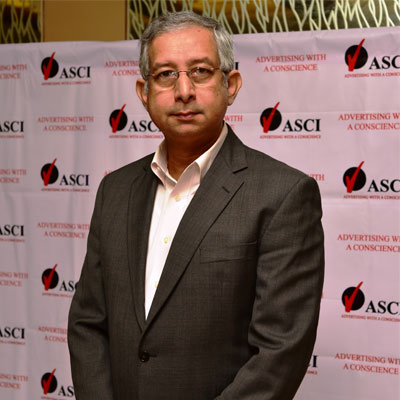
    While ASCI commands considerable credibility amongst the industry operators, there is a growing need for it to be better known as an organisation. “Today pretty much all of the industry knows us. The large advertisers, the big companies who deal with us know how we function. The issue lies with the lay consumers who are directly affected by rogue and misleading advertisements,”says  HT Media executive director and recently appointed ASCI chairman Benoy Roychowdhury.


    “Often people come across something offensive or false, but aren’t informed enough to take action against it. When they see something offensive, they question themselves ‘what to do about it? Most of them are unaware of a body that protects their interests against advertisers, without drawing them into court litigations, etc.  I think informing them about ASCI and encouraging them to actively use our help to address misleading advertisements is our biggest challenge at hand,” Roychowdhury admits.


    ASCI is already taking action to redress the situation by reaching out to the consumer digitally.


    Roadmap for maximum reach:


    Considering the fact that gaining popularity is ASCI’s biggest challenge, Roychowdhury shares the regulatory body’s plans to launch a campaign to spread awareness of ASCI and its functions. “We are working on an advertising campaign, which we plan to put in place in the next few months. The purpose is to reach out to consumers and tell them what to do when they see some offensive advertising and familiarising them with how ASCI functions,” shares Roychowdhury.


    He also adds that the agencies on board with ASCI will contribute to the concept and execution of the ad campaign ASCI is about to launch.  With 2015 being the thirtieth year of ASCI’s operation, the organisation wants to send out a message through the campaign about how it has been working to protect consumers and what it has to offer.  “In fact, five or six years ago, we did a similar campaign with a popular television actress with the tagline, ‘Jhoot bole kauwa kaate’”, Roychowdhury recollects.


    “The second step in ASCI’s roadmap is to make it easier for consumers to reach out to ASCI and lodge their complaints. A vital step in this process was to put out an ASCI app that enables consumers to immediately share their grievances with us. Today, we have also started receiving a bulk of our complaints through emails as well, and we are also looking at other modes of communication with consumers like Whatsapp etc.,” shares Roychowdhury. His contention is that if the process to lodge a complaint becomes complicated, consumers are likely not to reach out to ASCI.


    While conventional media like print and broadcast are going steadily, it is the digital media that is growing rapidly. “Hence we need to focus on ad campaigns on the digital platform as well,” he asserts. Following this directive, the organisation has upped its ante in the social media sphere in the last one and half years. “We are taking part in more online discussions and expanding our engagement with people through various social networking sites like Facebook, Twitter, LinkedIn etc. as well,” he adds.


    Digital India- an edged sword: Native advertising


    While technology and digitisation has brought ASCI closer to the consumer, it has also the paved way for new marketing initiatives by advertisers using different mediums and tools that makes it harder for the self-regulatory body to implement its guidelines.


    “Digital is great for ASCI as 15 percent of our complaints are digitally sent to us now. Our app allows you to take a photograph of the advertisement you want to complain about and send us through the app.  10 percent of our digital presence is through this app. To that extent digital is something great,” Roychowdhury reveals.


    ASCI does not find any major problem in dealing with digital advertisers since the body believes in accepting and evolving with the society. “The real issue is that digital advertising is giving way to these so called native advertising, most of which is content driven. They fall into this grey area between content and advertising. We need to develop norms for them as we as a body do not pass any comment on content, unless it is offensive and obscene to the public,” he says.


    While consumers have predominantly complained about TV Commercials, ASCI has also seen an increase in the complaints against digital advertisements rising from 5 percent  in 2013-14 to 11 percent in 2014-15. The challenge is also to identify an advertisement from user uploaded content, and differentiate between advertorial and editorial.


    Reassuring consumers, Roychowdhury further adds, “Thankfully there are people ahead of us in the curve in other countries like Advertising Standards Authority (ASA) in UK. We are examining their rules and bylaws to figure how to incorporate them in India. Also the sheer size of the digital space is so vast that it becomes difficult to monitor each sphere of it.”


    Censorship of advertisement:


    Apart from mitigating issues about misleading advertisements, ASCI also has the additional responsibility to look out for advertisements that hurts people’s sentiments. Several consumers complain about vulgar and obscene advertisement to ASCI. But unlike film and television content, advertisements don’t go through a censorship screening.


    Explaining the knowhow behind the process, Roychowdhury says, “We don’t pre-screen advertisement in India. Every channel has its own set of rules and regulations that the advertiser has to adhere to. Moreover, ASCI being a self-regulatory body can only provide an advertising advice when a certain advertiser approaches them with questionable content, which is not binding on them. Having said that, most of the suggestions given by us have been upheld by advertisers and have worked to their advantage.”


    The parameters of judging whether an ad is offensive and vulgar are changing with times as society moves ahead and becomes more progressive. “There was a time when airing lingerie ads was unthinkable and now we don’t even flinch at them,” Roychowdhury compares. “Therefore the question of offensive content is a subjective matter and the norms keep evolving.”


    “When a council member looks into such ads they take into consideration if it can cause grave or widespread offence. An ad can cause grave offense to an individual, while others will be fine with it. Secondly, we judge an advertisement based on the product it is selling. If it is for lingerie or a condom, then the advertisement’s content needs to be taken in that light. On the other hand, we will raise an eyebrow to a car advertisement having unnecessary skin show,” he explains.


    Industry support:


    Being a self-regulatory body comprising of all four sectors connected with Advertising — advertisers, agencies, media including broadcasters and the press and others like PR agencies, market research companies, the organisation enjoys support and reverence from its stakeholders.


    “The specific reason behind why you have a self-regulatory body is because before moving the court, here is an option to settle the issues as per industry guidelines. It is challenging at times to keep our stakeholders on the same page, but if they are reminded of the option they have apart from ASCI – moving the court or going to the government, they clearly prefer us. Going to the government is a terrible option as it takes time due to bureaucratic involvement and secondly it comes at a hefty price. Whereas, ASCI addresses the issues without having to employ fancy lawyers or going through a tedious process,” explains Roychowdhury.


    While Chowdhury doesn’t cringe at the idea of going to the court if any party has been given a court notice, as ASCI isn’t above the court, going by industry behaviour, advertisers tend to settle intra-industry disputes through ASCI.


    “Most advertisers see us a far better option than going for either litigation or moving any other government body.” But the picture is completely different when it comes to the masses, the consumers who are directly affected by misleading advertisements.


    Industry dispute:


    “Lately we have observed a number of broadcasters using ASCI mails to settle their own personal score with rivals”. Roychowdhury makes it very clear that ASCI is strongly against such usage of their notices and mailers that are not included in their press releases meant for the public.


    “It’s not like we are carrying out any business behind closed doors. All the decisions we make are available through our press releases on our website and people are free to go over it. But picking specific details to carry out their rivalry is uncalled for,” he says.


    Out of the 1877 advertisements complained against during the year, 71 were received from industry regarding misleading advertising or unfair competitive advertising. Of these, 58 were upheld, as per ASCI’s CCC analysis report.


    “We are here to promote self-regulation among advertisers, so intra-industry disputes are more than welcome at ASCI. Because the resolution takes less time thanks to our fast track mechanism for intra member complaints, we are a more preferred mode to address their grievances. What we do discourage is going to the media with individual decisions to settle personal or industry rivalry. In the long run it doesn’t benefit the industry. In fact we don’t entertain queries on such issues,” he shares.


    While health and teleshopping remain an issue for ASCI to tackle, Roychowdhury informs that education has emerged as a sector that gives way to rogue advertisement.


    Biggest offenders:


    A majority of the advertisements against which complaints were upheld fall under the educational sector (439), followed by the healthcare sector (297) and medical services clinics (271).


    “This year we also see emergence of complaints against advertisements in the automotive (69) as well as the telecom sector (58). There have been other complaints against leadership claims of media (Channels/Publications), teleshopping advertisements promising magical results and real estate advertisements as well,” Roychowdhury informs.


    Surprisingly, he doesn’t find any issues with Ayurvedic and herbal product advertisers. “Ayurvedic remedies form a very respectable section of Indian traditions. ASCI doesn’t discourage advertisement of such products, as long as they don’t make unnatural claims like pills that reduce weight in a  jiffy and Ayurvedic products that cure cancer, AIDS  etc,” he says.


    Overall, ASCI has been able to achieve close to 90 per cent compliance, which is a good figure considering ASCI is a self-regulatory body. With the backing of regulatory agencies such as the MIB as well as the DCA, Roychowdhury hopes that this number will go up in the coming year.

  • ASCI upheld complaints against 87 out of 117 advertisements

    ASCI upheld complaints against 87 out of 117 advertisements

    MUMBAI: In August 2015, ASCI’s Consumer Complaints Council (CCC) upheld complaints against 87 out of 117 advertisements.


    Out of the advertisements related complaints received, 37 belonged to the personal and healthcare category, followed by 41  in education and nine  from other categories.


    In health and personal care 37 advertisers were found either misleading, false or not adequately substantiated and hence violating ASCI’s code. LG Electronics India, Hindustan Unilever, L’Oreal India, Lotus Herbals and VLCC Ltd were among them.


    The CCC found that claims made by 41 advertisers in the education category were not substantiated which violates ASCI Guidelines for Advertising of Educational Institutions. Therefore the complaints were upheld.


    The advertisements against which complaints were upheld included HSIL Limited, Bharti Airtel, Amazon Kindle, Corona Plus Industries, Carlsberg India and 3M India Limited amongst others.


    Health and personal care:


    The CCC found the following claims in health and personal care product or service advertisements of 37advertisers to be either misleading or false or not adequately / scientifically substantiated and hence violating ASCI’s Code. Some of the health care products or services advertisements also contravened provisions of the Drug & Magic Remedies Act and Chapter 1.1 and III.4 of the ASCI Code. Complaints against the following advertisements were UPHELD.


      1.LG Electronics India Pvt. Ltd.  (LG Water Purifiers): The advertisement of LG Water Purifiers claims, “India’s only true water purifier” which was not adequately substantiated.


      2. Hindustan Unilever Ltd. (PureitUltima):The TVC of PureitUltima claims, “PureitUltima RO+UV. Sirf is meinhai Purity Indicator josaafsaafdikhatahaikipaanikitna pure hai”, which was false and misleading. Furthermore, the Print advertisement and Website claims, “PureitUltima with Purity Indicator. Purity you can see!” was misleading by implication.


      3.L’Oreal India Private Limited (L’Oreal Fall Repair):  The claims in the advertisement, “Its   triple action arginine nourisheshair from its roots, it reduces breakage, hair grow stronger” and “Save up to 2000 hair strands”, were inadequately substantiated and were misleading by ambiguity.


      4.Lotus Herbals Limited (Lotus Herbals Youth RX): The claims in the advertisement, “A firmer and younger skin in just seven days” and “In four weeks 96 percent of users have agreed that effects of ageing are almost gone”, were inadequately substantiated.


      5.VLCC Ltd Healthcare: The claims in the advertisement, “Listen to your DNA for weightloss. Presenting for the first time VLCC DNA Slim a scientific weight loss solution based on your DNA”, “Running 4KM daily helped your colleague Lose weight. But may only make you lose your cool” and “Lose four kilograms or get your money back”, were considered to be misleading by exaggeration and implication.


      6.Sanzyme Ltd (Nutrus Slim Tea): The claims in the advertisement, “Slim”, and “Green Tea reduces the risk of Diabetes and Cancer”, were not substantiated with clinical evidence.


      7.Dr. Amit Sharma: The claim in the advertisement, “Completely cure HIV AIDS and any kind of cancer through Ayurveda treatment”, was not substantiated.  Also, specific to the claim related to complete cure of Cancer, the TVC is in breach of the law as it violated The Drugs & Magic Remedies Act.


      8.Yogis Ayurveda: The claims in the advertisement, “Since 1944 Worldwide Safe & Successful Ayurvedic Herbal Treatment for Every one – Height increase” and “Takat Da TohfaKesar- Gold Course for newly married couples”, were not substantiated.  Also, specific to the claim related to height increase and for claims implying enhancement of sexual pleasure, the advertisement is in breach of the law as it violated The Drugs & Magic Remedies Act.


      9.ParthvimedaGauUtpadPvt Ltd. (Pathmeda Products): The claims in the advertisement, “Consume Pathmedagomutra ark regularly to get protected from the incurable diseases like obesity, Diabetes, Heart Diseases and Cancer”, were not substantiated.  Also, specific to the claims implying prevention of obesity, Diabetes, Heart Diseases and Cancer, the advertisement is in breach of the law as it violated The Drugs & Magic Remedies Act.


      10.Shreeji Herbal Products: The claims in the advertisement, “Shreeji Herbal Products – Stops hair fall in 24 hours – Money back if no results are seen – 100% result on damage caused due to medicines of thyroid – Makes skin whiter in 20 days”, were not substantiated. 


      11.Shree BaidyanathAyurvedBhawanPvt Ltd (BaidyanathMedoharGuggulu): The diagrammatic representations of before and after images shown in the advertisement and on the product pack were found to be misleading by exaggeration.


      12.Vaidic Clinic: The claims in the advertisement, “100% Ayurvedic Treatment by advanced technique – Premature Ejaculation – Night fall – Problem in penis – Impotency – Sexual weakness – Skin diseases – Arthritis – Female diseases – Piles – Obesity”, were not substantiated. Specific to the claims related to treatment of sexual impotency, Obesity, the advertisement is in Breach of the law as it violated The Drugs & Magic Remedies Act.   Also, specific to the claims related to treatment for Piles, the advertisement is in breach of the law as it violated Schedule J of The Drugs and Cosmetic Act, 1940 and Rules, 1945. The headline in the advertisement, “100% Ayurvedic Treatment by advanced technique”, was considered to be misleading.


      13.Hair Doc Trichology Hair Clinic: The claims in the advertisement which states, “Complete Baldness Treatment”, “White Hair Control”, “Specialized HDHT+ for 100% natural hair growth”, “Awarded with Keshratna”, “Stop Hair loss” and “Advanced Non-Surgical Mesotechnology for Hair Loss Control”, were not substantiated.  The visuals of before and after the treatment were misleading.  Specific to the claims related to complete baldness treatment (a condition referred in Schedule J of the Drugs and Cosmetics Act) is in breach of the law as it violated The Drugs & Cosmetics Rule 106.


      14.RV New Visions Healthcare Pvt Ltd: The advertisement states, “After research by Dr. Manju Ray of Kolkata (a reputed scientist of Bose Institute and felicitated by Government of India), the effectiveness of this treatment M.G. (Methy/Glyoxal) has been proved, which was successfully tested at Kolkata as well as at the Chinchwad based hospital of Lokamanya Group of Hospitals. This medicine works very well as complementary to the regular cancer medicines; and treats it”, “Suitable for preventing regrowth of cancer tumor after removing it with surgery”, “It acts as a complementary while starting radiation or chemotherapy, making it more beneficial and helpful in preventing its side effects”, “Starting this treatment immediately is effective when radiation or chemotherapy is not possible”, were not substantiated. Also, specific to the claims for Cancer prevention, the advertisement is in breach of the law as it violated The Drugs & Magic Remedies Act.


      15.Nityanand Herbals (DiaNitya): The claims in the advertisement, “Miracle in the world DiaNitya – For Diabetes – Instant relief – Made from traditional natural herbs – Helps in reactivating the beta cells – Helps in high consumption of glucose by cells – Works as insulin – No Side effects”,  “Our aim to make the world diabetes free”,  were not substantiated. Also, specific to the claims implying cure for Diabetes, the advertisement is in breach of the law as it violated The Drugs & Magic Remedies Act.


      16.AsthaAyurved: The claims in the advertisement, “Successful treatment of nil sperms/ less sperms, impotency, premature ejaculation, less stress, looseness, nightfall, semen in urine, less desire of sex, etc. Ovarian/Uterus clot, blocked ovary tube, irregular periods, leucorrhoea/ white discharge, lack of desire in women by ayurvedic technique”, were not substantiated. Also, specific to the claims related to successful treatment for sexual impotency, the advertisement is in breach of the law as it violated The Drugs & Magic Remedies Act.


      17.Mardana Josh Range of Products: The advertisement’s claims, “Mardana Josh Herbal Majun& Capsule – Increases masculine energy, provides stoppage, increases stimulation and potential, stops premature ejaculation, successful in curing physical weakness”, were not substantiated.  Also, the advertisement claims read in conjunction with the advertisement visual implies that the product is meant for enhancement of sexual pleasure, which is in breach of the law as it violated The Drugs & Magic Remedies Act.


      18.Dilco Slimming Capsule: The claims in the advertisement, “Dilco Slimming Capsule – Get rid of obesity, immediately – Reduce obesity – Reduce fat – Increase energy – Without any side effect – Without operation – Without crash dieting – Without yoga – Without any exercise”, “Now Obesity, will never trouble you”, “Obesity gets over with Dilco Slimming”, “We have brought a natural and easy way to reduce weight”, “Dilco Slimming melts your fat like wax”, were not substantiated.  The visuals of before and after the treatment were misleading.  Also, specific to the claims related to cure / prevention of Obesity, the advertisement is in breach of the law as it violated The Drugs & Magic Remedies Act.


      19.SMG Healthcare  (Sugar Haran Kit): The claims in the advertisement, “Sugar Haran- For relief in sugar control, continue with your healthy life style, regular medicines, exercises, nutritious and balanced diet and take only ten drops of Sugar Haran per day”, were not substantiated.


      20.Weitrex Forte Capsule & Drops: The claims in the advertisement, “Weitrex Forte Capsule & Drops – Reduce Obesity”, “No Dieting” and “No Side Effects with pure ayurvedic treatment”, were not substantiated.


      21.Kiran Homeopathic Clinic: The claims in the advertisement, “Successful treatment of piles, stones, premature ejaculation in men, masturbation, weakness & impotency”, were not substantiated. Specific to the claims related to successful treatment for Piles, the Ad is in breach of the law as it violated Schedule J of The Drugs and Cosmetic Act, 1940 and Rules, 1945.


      22.Sultan Forte: The claims in the advertisement, “Sultan Forte – For the lost energy, passion and stoppage in men/women – Beneficial in nightfall, bad nerves, erectile dysfunction, nil sperms & all kinds of sexual problems”, were not substantiated.  Also, the advertisement claims read in conjunction with the pack visual implies that the product is meant for enhancement of sexual pleasure, which is in breach of the law as it violated The Drugs & Magic Remedies Act.


      23.Ramban Liquid: The claims in the advertisement, “Get Rid of Drinking – Use Ramban Herbal Liquid Medicine by Vedban Delhi. A person stops drinking forever by using this medicine”, were not substantiated. 


      24.NirogAyurvedic Center: The advertisement’s claims, “Treatment for Paralysis now completely possible in Himachal – Patients of Stroke, Non-functioning of legs, hands and tongue, facial muscle drop, loss of control over  urine & stool discharge and other dangerous initial  symptoms of paralysis like: stumbling, shocks, skin crawling, heaviness, numbness etc., can now be saved from paralysis by treating them with Ayurvedic Medicine developed by N.A.C”,  “This medicine removes the dead blood cells and smoothens the blood circulations. It saves from being paralysed by curing the weakened cells after attack”, “This medicine has no side effects and can be consumed with Allopathic Medicines. Clear improvement can be seen within few hours in new patients and within few days in case of old patients by this medicine” and “Epilepsy: Special medicine for all types of brain attacks, frothing in mouth, crooked neck, becoming moony, tongue not working, tremors, weakness of brain by balancing the cells and cures attacks. With the help of this English medicines stop slowly and gradually”, were not substantiated. Also, specific to the claims related to treatment/cure for Paralysis and Epilepsy, the advertisement is in breach of the law as it violated The Drugs & Magic Remedies Act.


      25.Laborate Pharmaceuticals India Limited (PathriNashak Range of Products): The advertisement’s claims, “Helpful in problems of all kinds of stone”, “Helps in dissolving stone by making it small and by which stone gets removed by the way of urine”,  “Helps in stopping the formation of stone and increases the functioning of kidney”,  “Beneficial in curing all types of urine disorders, inflammations in urine etc”, were not substantiated with clinical data to justify this particular composition for this proprietary product to provide the specific benefits as claimed.


      26.Claris Lifesciences limited: The claim in the advertisement, “Industry best in Healthcare” is false as it is ranked #2. The advertisement does not have a disclaimer qualifying the source and date of research for the claim made in the advertisement.


      27.Cure Sight Laser Centre: The claims in the advertisement, “Wavelight EX-500 which is US FDA approved and can remove one eye number in just 1.4 second”, were not substantiated.


      28.DharampalSatyapal Ltd. (Rajnigandha Pan Masala): The disclaimer in the TVC of Rajnigandha Pan Masala is not legible and contravened the ASCI Guidelines for Supers.


      29.Hindustan Unilever Ltd. (Fair & Lovely Men’s Fairness): The visual of “a model in the jeep without wearing seat belt” as depicted in the TVC of Fair and Lovely Men’s Fairness shows an unsafe practice. 


      30.BSY Noni India (BSY Noni Black Hair Magic): The claims in the advertisement, “No more chemicals”, “No more bye (black)”, “Used confidently by people in over 28 countries across the World”, “Just ten minutes”, were not substantiated. 


      31.Alaska Water Marketing (Amazing Water): The claims in the advertisement, “First Time in India”and “Amazing Water – Anti-Oxidant – Anti-Ageing – 7 X Faster Hydration – Increase Performance & Energy – Enhanced Electrolyzed Alkaline Functional Water – More PH More Healthy”, were not substantiated.


      32.Berry’s Skin Care Clinic: The claim in the advertisement, “White spots (Leukoderma), Psoriasis – Product awarded with Indira Gandhi award”, was not substantiated with authentic support data. The advertisement further claims the product to be the only Ayurvedic formula which gives 100% results. They further claim, “Cure completely from its roots”, “No chances for reoccurrence”, “No need to consume medicines for years”, were not substantiated. In addition to these claims, “Certified by Government of Dubai”, was not substantiated with authentic support data. Also, specific to the claims related to complete cure of White Spots, the advertisement is in breach of the law as it violated The Drugs & Magic Remedies Act.


      33.Abdan Pharmacare Private Limited: The claim in the advertisement, “Abdan Hair Tonic – Stops hair fall – Stop balding – Increases memory by dendrite cells”, was not substantiated with proof of efficacy. 


      34.Torque Pharmaceuticals (U B Fair): It was concluded that the name “U-B Fair” does not have FDA approval nor is it stated on the product licence.  The name of the product itself presents it as a Fairness product (U-B Fair) and along with the claims in body copy of various advertisements, promotes its use for several cosmetic benefits. The product contains topical steroids which are potentially dangerous when used over a prolonged period. Thus, the name of the product “UB Fair” and information provided in the advertisement was found to encourage its unsafe use. It was also concluded that the advertisement is misleading and is likely to exploit the lack of knowledge among consumers. In additions, specific to the reference of this “drug product” for fairness claim, the advertisement is in violation of Schedule J clause 18 of the Drugs and Cosmetics Act.


      35.Vishal Personal Care Pvt Ltd (Banjaras Hair Oil): The claim in the advertisement, “Banjara’sSamvridhi Hair Oil with Ayurvedic herbs and oils that gives upto eight centimetre of hair growth in just eight weeks”, was not substantiated adequately and was misleading by ambiguity.


      36.Johnson & Johnson Ltd (Aveeno Active Naturals): The claims mentioned on the pack and as cited in the complaint, state “Aveeno Active Naturals are ingredients derived from nature” for the declared active ingredient on the pack “Dimethicone” which is not considered to be natural was false and not substantiated.


      37.Rafael Medicare Centre: The advertisement’s claim, “An option beyond Bypass & Stents EECP Treatment”, is misleading since the indications for this treatment are limited. The advertisement also claims, “Safest, USA- FDA Approved Treatment for Chest Pain (Angina) & Heart Failure”, which was not substantiated.


    Education


    The CCC found that claims in the advertisements by 41 advertisers were not substantiated and, thus, violated ASCI Guidelines for Advertising of Educational Institutions. Hence complaints against these advertisements were UPHELD.


      1.Personaliteez: The advertisement’s claim, “Making 2 lakhs per weekend”, was not substantiated. 


      2.Peoples Empowerment Group – ISB&M School of Technology: The claims in the advertisement, “100% Placement” and “ISB&M School of Technology Ranked 8th in Emerging Engineering Institutes in India”, were not substantiated.


      3.NIPS  School of Hotel Management: The claims in the advertisement,  “World Record Holder”,  “Ranked No. 1 Eastern India the Pioneer Newpaper 2014”,  “Best Placement Award- By South Asian Academy, New Delhi, 2012”,  “Ranked No. 2 Among India’s Private Hotel Management Institute – The Pioneer Newspaper – 2013”,  “Holder of Limca, Asia & India Books Of Records”,  “Eastern India’s Best Hotel Management College- Awarded By Brands Academy, New Delhi – 2013”, “Winner 8th National Education Award- Awarded by NEA, New Delhi- 2014”,  “Winner National W.B Education Award- Awarded by NEA, New Delhi – 2014” and “Worldwide Hospitality Award- Awarded by WWHA, Paris, France- 2003”, were not adequately substantiated with evidence.


      4.The Mentor’s Academy: The claims in the advertisement stating, “Get a reputed Government job. Get Bank, Railway, Police etc. in just one day exam”, and “100% Money Back Guarantee”, were not substantiated.


      5.CL Educate Ltd (Career Launcher): The claims in the advertisement stating, “CAT Test Series – The No.1 CAT Test Series Program”, “Most recommended test series”, “Rated the best by students” and “True percentile predictor”, were not substantiated adequately.


      6.SCMS School of Engineering & Technology: The claim, “Kerala’s No. 1 Engineering College (SF) in quality and excellence”, was not substantiated with comparative data..Theclaim, “SCMS is ranked No. 1 in all ranking surveys conducted by RECCA-NIT”, was not substantiated with supporting data and also the claim is misleading by omission of what the ranking was specific to.


      7.Invertis University: The advertisement claims, “National Education Award 2014 for Outstanding B-School &Engg. Univ. – ABP”, “4 Star Ranking – The Pioneer”, “Bharat ShikshRatan–Velidictedby GAF, Delhi” and “Best Emerging University Of North India – Indian Achievers Podium”, were not adequately substantiated and were misleading by omission of disclaimers.


      8.Career Institute for Commerce & Accounting: The claim in the Advertisement, “AIR-26, 30, 36, 37, 41, 42” as a declaration is considered to be fake and not substantiated with supporting data. 


    Complaints against advertisements of all educational institutes listed below mostly are upheld because of unsubstantiated claims that they ‘provide 100% placement/AND/OR they claim to be the No.1 in their respective fields’:


    Vidyalankar Classes, Vivekananda Degree & PG College, Aim Entertainment Acting Academy, Learn & Earn Academy, Master of Science Information & Technology, Mediit Educational Institute,ADCC Infocad Private Limited (ADCC Academy), Wisdom Institute, Sri Shakthi Institute Of Engineering & Technology, Ponjesly College of Engineering, Vidyalankar Classes, One Dream, Blue Bells Innovative School, UEI Global Education, Tajinder Bhatia Achieve Max, Vidya Knowledge Park, MIST Plus, Happy Child College of Nursing, Sai Wellness Education, The Prayag International Institute of Hotel &Tourism, All India Computer Trainers Association, IPCA Accountancy, Millennium Institute of Management, Banda Para College Medical, KIPM College of Engineering & Technology, ISC CNC Training Centre, Chalapathi Institute of Pharmaceutical Sciences, National Power Training Institute Corporate Centre, Centre for Bioinformatics, SKML Defence Academy, Mangayarkarasi Educational Trust (Mangayarkarasi College of Arts & Science), NIV Foundations (NIV School of Hospitality Management) and Vivekananda Institute of Professional Studies (Delhi School of Business).


    Others


      1.HSIL Limited (Hindware Ensemble Kitchen): The claim in the advertisement, “Air Flow–1200 m3/hr”, was not substantiated with supporting technical data.


      2.Bharti Airtel Ltd. (Airtel Broadband): The claim offer of “Airtel Broadband – 60 GB @ Rs.1099 with unlimited calls”, was not substantiated with evidence of the customers who have availed this scheme.  


      3.Amazon Kindle: The advertisement claiming price off of Rs 1000/- from Rs. 5999 to Rs 4999 in large prominent font shown for an image of the product costing Rs.8999/-  is misleading by implication regardless of the disclaimer (in fine print), “Device shown in Image is Rs.8999/-”.


      4.Corona Plus Industries Limited (Plus Easy Washing): The claims in the point of sale material (POSM) of Plus Easy Washing state, “Rs. 5 KeChote, PatleSabuno Se DhulaiBadiKashtdayiHain”,  “ApkoBadiRahatDega, KashtdayiDhulaikoAsaan Karta HainAur 66% JyaadaKapdeAsani Se SaafDhulteHain”, were not substantiated with comparative data against competition products.  The claims used in conjunction with the images of the competition products in the POSM is denigrating and disparaging competition.


      5.Carlsberg India Limited (Tuborg Zero): The advertisement was a surrogate advertisement for a promotion of a liquor product – Tuborg Zero.  The advertiser did not provide the annual market sales data of the product/service advertised, thus the advertisement contravened Chapter III.6 (a) (b) of the ASCI Code and the Guidelines for Brand Extension product or service.


      6.3M India Limited (3M Car Care): The advertisement visual showing a car splashing water filled on the road, encourages people to indulge in dangerous practices without justifiable reason.


      7.City Broadband: The claim in the advertisement, “India’s No.1 Leading Internet Service Provider”, was not substantiated.


      8.John Distilleries Pvt Ltd (Original Choice):The advertisement shows a bar situation with coloured liquid in bottles/glasses which appears to be a direct promotion of liquor product – Original Choice.  The advertisement is misleading by implication and contravened Chapters I.4 and  III.6(b) of the Code (“Whether there exists in the advertisement under complaint any direct or indirect clues or cues which could suggest to consumers that it is a direct or indirect advertisement for the product whose advertising is restricted or prohibited by this Code.”).  Also, the advertisement did not meet the requirements as per ASCI’s Guidelines for Qualification of Brand Extension Products and thereby contravened Chapter III.6 (a) of the ASCI Code.


      9.Manappuram Finance Limited: In absence of a disclaimer to indicate that the earlier scheme of 5% reduction in interest rate has been extended to other branches, the advertisement is misleading by omission.       

  • Misleading ad gives wrong notions about blood donation: Health Ministry

    Misleading ad gives wrong notions about blood donation: Health Ministry

    NEW DELHI: Despite a letter to the Advertising Standards Council of India (ASCI) by the Health Ministry, an advertisement that can potentially mislead blood donors is still running on air.


    The advertisement has been put out by carwale.com – which sells used cars or car parts – and attempted to prove that the need for exactness in demand. The ad shows a doctor talking to someone on the phone for more blood for a patient. He says if you do not have more units of ‘A’, then send ‘AB’ type, and saying 19-20 ka farak hai (just a minor difference). The aim of the commercial is to say that there has to be exactness in what the customer wants.


    The Health Ministry has taken objection to the commercial as it creates doubts in the minds of the donors.


    The National AIDS Control Board, which is expected to check every blood sample for AIDS, has written to ASCI to ensure that the advertisement is pulled off air as it does not meet ASCI’s standards of honest representations.


    Under Indian laws, human blood is treated as a ‘drug’ under the Drugs & Cosmetics (D&C) Act. During the HIV/AIDS crisis, the Indian government made it mandatory for any donated blood to be tested for HIV 1&2 antibodies, giving the Blood Safety Programme to NACO.


    ASCI secretary-general Shweta Purandare told media that a decision on the complaint had not been taken yet. “We usually do not speak about individual complaints. In this case, we haven’t conveyed our final decision to the Ministry,” she said. 

  • ASCI upheld complaints against 82 out of 148 advertisements

    ASCI upheld complaints against 82 out of 148 advertisements

    MUMBAI:  In June 2015, ASCI’s Consumer Complaints Council (CCC) upheld complaints against 82 out of 148 advertisements. Out of 148 advertisements against which complaints were upheld, 26 belonged to the Personal and Healthcare category, followed by 22 advertisements in the Education category, 9 advertisements in Food and Beverage category, 7 advertisements in media and entertainment category and 18 advertisements from other categories.


    Health and personal care:


    The CCC found the following claims in health and personal care product or service advertisements of 26 advertisers to be either misleading or false or not adequately/ scientifically substantiated and hence violating ASCI’s Code. Some of the health care products or services advertisements also contravened provisions of the Drug & Magic Remedies Act and Chapter 1.1 and III.4 of the ASCI Code. Complaints against the following advertisements were UPHELD.


    1. L’Oreal India P. Ltd (GarnierPureActive Neem+ Tulsi High Foaming Face): The advertisement, promotional pamphlets and leaflets of the product claim, “removal of 99.9 %   pimple causing germs” was found ambiguous and unsubstantiated0.


      2. L’Oreal            India Limited (New Garnier Action Facewash): The claim in the advertisement of New Garnier Action Facewash, “1 tone fairer skin”, was not substantiated and was                misleading by ambiguity.


      3. CavinKare Pvt Ltd (Chik Egg White Protein Shampoo): The advertisement claims “Isska Egg White Protein damage baalon ko jad se sire tak nourish karke hair fall kam kare” (“Its Egg White Protein nourishes damaged hair from root to tip and reduces hair fall”), was not substantiated with data specific to Egg White Protein. The visual depiction showing strengthening of the hair roots by the Egg White Protein, resulting in reduction of hair fall, and strengthening of hair, was misleading. In view of the above, the claim of “Perfect Solution” against hair fall was also found misleading. In addition, the supers/disclaimers in the TVC were not legible.


      4. CavinKare Pvt Ltd (Nyle Naturals Hairfall Defence shampoo): The disclaimer in the advertisement claims, “Baalon ke tootne ke karan hone wale hair fall …” is factual.However, the the term used in the voice over “…baalon ka jhadna …” was considered to be misleading by ambiguity.


      5. Lotus Herbals Limited  (Lotus Herbals Youth RX): The advertisement claims, “A firmer and younger skin in just 7 days”, “ In 4 weeks 96 percent of users have agreed that effects of ageing are almost gone”,  were inadequately substantiated. 


       6. Akansha Hair & Skin Care Herb Unit Private Limited   (Akansha  SwarnaliFairness Cream): The claim in the advertisement which states “Fairness in three weeks” was not substantiated.


       7.  Fortis Healthcare Limited: The advertisement of Fortis Healthcare Limited does not refer to the criteria applicable for cosmetic surgeries and by presenting this as a “limited period discount” offer could encourage unsafe practices.  Also, the advertisement is misleading by omission of a disclaimer INDICATING the risk factors involved.


       8.  Vicco Laboratories (ViccoTurmeric Facewash): The advertisement claim, “No Pimples, No blackheads”, “Kyunki (pimples / blackheads) hai hi nahi” is an absolute claim and was not adequately substantiated with efficacy data for this product. In addition the claim, “har ladki ki skin problem ka ek hi upaay” was also considered to be misleading.


       9. Japanese Automatic Penis Increasing Tool: The advertisement of the product claims, “World’s No, 1 Sexologist”, “Sexual Diseases, why disappointed?”, “Free Japanese Penis Increaser Tool”, “Makes penis long by seven to eight inches, thick, shapely and energetic. Cures premature ejaculation, impotency, childlessness and increase sex time up to 25-30 minutes. Get excitement capsule, romantic spray, 175 Kaam Kala Book, 16GB Memory Card and DVD Free along with 45 days medicine”,  “Money back if it does not work”,  “By the use of these machines size of the male penis will increase by two to six inches and intercourse timing will increase by 30-45 minutes”,  were not substantiated.  Also, specific to the claims related to sexual impotency, and the advertisement claims read in conjunction with the advertisement visual implying that the product is meant for enhancement of sexual pleasure, is in breach of the Drugs and Magic Remedies Act.


      10. Japanese Automatic Penis Increasing Tool: The advertisement claims, “See the effects with its use”, “If your penis is small, thin crooked then make it long, thick, strong and shapely and increase sex time by 30-40 minutes. Cure premature ejaculation, nightfall, impotency, childlessness, nil sperms 100% from its roots. Get 30 days medicine with Japani Masti Oil, Kaam Kala Book, DVD, rapturous spray, excitement capsule without any charge. Colour Mobile Free”, “By the use of these machines size of the male penis will increase by two to six inches and intercourse timing will increase by 30-45 minutes”, were not substantiated.  Also, specific to the claims related to sexual impotency, and the advertisement claims read in conjunction with the advertisement visual implying that the product is meant for enhancement of sexual pleasure, is in Breach of the Drugs and Magic Remedies Act.


      11. Japanese Automatic Penis Increasing Tool: The advertisement claims, “Make penis eight to nine inches long, thick & strong and increase sex time up to 30 -45 minutes by making it straight. Get 100% rid from impotency, premature ejaculation, nil sperms, nightfall, and bad habits like masturbation with guarantee. Get 30 days medicine, 8GB memory card, fun gel and excitement capsule free”,  “Benefits Guaranteed”,  “No Side Effect”,  “By the use of these machines size of the male penis will increase by two to six inches and intercourse timing will increase by 30-45 minutes”, were not substantiated.  Also, specific to the claims related to sexual impotency, and the advertisement claims read in conjunction with the advertisement visual implying that the product is meant for enhancement of sexual pleasure, is in Breach of the Drugs and Magic Remedies Act.


      12. Sexual Disease: The advertisement claims, “Small penis, why disappointed?”, “World’s No.1 Penis Increaser Tool”, “Effect starts immediately with its use. Make penis long by seven to eight inches, thick, strong, shapely and energetic. Increase sex time up to half an hour. Successful cure of impotency, premature ejaculation, nightfall, childlessness. Powerful 30 days medicine, excitement capsule, romantic spray, Kamasutra Book, 8GB Memory Card free”,  “Money back if not benefits are not found”,  “By the use of these machines size of the male penis will increase by two to six inches and intercourse timing will increase by 30-45 minutes”,  were not substantiated.  Also, specific to the claims related to sexual impotency, and the advertisement claims read in conjunction with the advertisement visual implying that the product is meant for enhancement of sexual pleasure, is in Breach of theDrugs and Magic Remedies Act.


      13. Sex Dhamaka: The claims in the advertisement says,  “Small penis, why disappointed?”,  “Japanese Penis Increaser Tool”,  “Automatic Power Tool”, “Make penis long by eight to nine inches, thick, shapely, thick by five inches and sex time up to 40-45 minutes”,  “Cure premature ejaculation, nightfall, nil sperms, and impotency and take double joy of sex. For more information 8GB memory card, color mobile, sex texts free”, “By the use of these machines size of the male penis will increase by two to six inches and intercourse timing will increase by 30-45 minutes”, were not substantiated.  Also, specific to the claims related to sexual impotency, and the advertisement claims read in conjunction with the advertisement visual implying that the product is meant for enhancement of sexual pleasure, is in Breach of the Drugs and Magic Remedies Act


      14. Vaccum Therapy: The claims in the advertisement state,  “Unique invention”,  “Penis Increaser Tool with Vaccum Therapy”,  “American Agency FDA believes that by Vaccum Therapy and Penis increaser Tool along with  Ayurvedic medicines make your penis eight to nine inches long within 15 minutes, three to four inches thick, strong, straight and increase sex time by 30-45 minutes, also cures premature ejaculation, impotency, small penis, looseness of penis, thinness, nightfall, erectile dysfunction, childlessness, impotency from its roots”,  “100% Herbal Treatment”,  “By the use of these machines size of the male penis will increase by two to six inches and intercourse timing will increase by 30-45 minutes”,  were not substantiated.  Also, specific to the claims related to sexual impotency, and the advertisement claims read in conjunction with the advertisement visual implying that the product is meant for enhancement of sexual pleasure, is in Breach of the Drugs and Magic Remedies Act.


      15. The Body Care Slimming & Beauty Clinic: The claims in the advertisement, “Seven days fast track program”, “Fastest reduction infrared cavitation therapy”, “Lose up to five to eight centimetres in one area”, “Get rid of baldness result in 6 weeks only”, were not substantiated. Also, the visuals showing the images of before and after the treatment were misleading. In addition, specific to the claims implying baldness prevention is in Breach of the Drugs and Magic Remedies Act.


       16. Rocket Capsules: The claims in the advertisement to enhance sexual power was not substantiated. Also, the advertisement claims read in conjunction with the advertisement visual and the pack visual implies that the product is meant for enhancement of sexual pleasure, is in Breach of the Drugs and Magic Remedies Act.


      17.  Neem Jamun Kerala Ras: The advertisement claims, “Natural source of iron, vitamin and calcium”, “Controls sugar and reduces sugar levels in just seven days of its consumption”, “Completely cure diabetes in six months”, “100% organic”,  “No side effects”, were not substantiated. Also, specific to the claim related to cure of Diabetes, the advertisement is in Breach of the Drugs and Magic Remedies Act.


      18.  Vibes Healthcare Limited: The claims in the Advertisement state, “Get a flat belly without exercising”, “Lipo Laser programs 60 minutes”, “Quick Inch Loss and Quick Weight Reduction”, “Lose up to six centimetres from Waist, Hips and Thighs”. These claims were not substantiated.


      19. Shathayu Ayurveda: The advertisement claims, “Special detoxification at Shathayu Ayurveda increases the natural Insulin production in the body by activating pancreases” and “Ayurveda says Diabetes is curable”, were not substantiated. Also, specific to the claim related to cure of Diabetes, is in Breach of the Drugs and Magic Remedies Act.


      20. Sanzyme Ltd. (Nutrus Slim Tea): The advertisement claims relating to the Health Benefit such as “Weight reduction” and, “Reduces the risk of diabetes and cancer”, were not substantiated. 


       21. The Body Care Slimming and Beauty Clinic: The claims in the Advertisement says, “Stay Slim Forever without Dieting”,  “2.3 day slim program”,  “Fat reduction of six to eight centimetres”,  “Lose up to ten kilograms”,  were not substantiated.


       22. HealthCare     Global Enterprises Limited: The advertisement mentioned the complainant doctor’s name without his permission, which is in contravention of the ASCI code and also confers an unjustified advantage for their hospital.


       23. Raghudeep Eye Hospital: The claim in the advertisement states, “India’s first exclusive blade free Lasik Centre in Ahmedabad”, was not substantiated with supporting data. Also the claims, “World’s safest blade free technology” and “US-FDA approved single use disposables to prevent infections” were not substantiated with authentic evidence.


       24. Sikandar-e-Azam: The advertisement claims,  “World’s Best Sikandar-e-Azam”,  “Capsule for Penis Enlargement available in India”,  “New trust with one capsule”,  “Make penis long by one to two inches, thick cures premature ejaculation and makes penis steely”,  “Strength, contentedness, satisfaction – With Guarantee Card”,  “By the use of these machines size of the male penis will increase by two to six inches and intercourse timing will increase by 30-45 minutes”,  were not substantiated.  Also, specific to the claims implying that the product is meant for enhancement of sexual pleasure, the advertisement is in Breach of the Drugs and Magic Remedies Act.


       25. Mangal Pharma (Madhu Care Churma): The advertisement claims, “Sureshot Treatment/ Solution of Diabetes- Madhu Care Churna”, was not substantiated. Also, specific to the claim related to treatment of Diabetes, the advertisement is in Breach of the Drugs and Magic Remedies Act.


      26. Thyrocare:  The advertisement claims, “Nine out of ten thyroid patients are mothers”, was not substantiated.


    Education


    The CCC found that claims in the advertisements by 23 advertisers were not substantiated and, thus, violated ASCI Guidelines for Advertising of Educational Institutions. Hence complaints against these advertisements were upheld.


    1. Amity University: The advertisement claims, “Amity University ranked among the Top Universities in Asia by QS, a leading ranking organization”, was not substantiated.


      2. The Sagar School: The advertisement’S claim “International School Award 2014-2017”, is false, and is misleading by omission.  Also, the advertisement does not fulfil the criteria laid down by the British Council for making such claims in the advertisement such as size of the logo, placement of the logo etc.


      3. BYJU’s Classes: The advertisement claims, “Announcing excellent success ratio in our first IIT batch with 161 of 212 students clearing JEE Mains” and “Get classes from India’s best teachers”, were not substantiated with data. In addition, the claim “Bangalore’s Biggest Scholarship Test for 7th to 12th Class students”, was not substantiated with comparative data.


      4. Amity University: The advertisement’S claim, “Distance Learning Programmes ranked #18 worldwide by QS”, was not substantiated.


      5. CLAT Possible: The claims, “Rank 1 in CLAT & AILET. 30/71 selections in NLU. CLAT UP Rank 1 & 2” and “Rank 1 in CLAT & AILET. More than 18 students in top 60 ranks in CLAT. 30 out of 71 students selected in first list”, were not substantiated.


      6. Career Launcher: The claimS in the advertisement state, “3 OUT OF 5 TOPPERS IN CLAT 2015 ARE CLSTians, 7 State Toppers & Counting”, were not substantiated.


      7. Career Launcher: The advertisement claims, “CLAT CL Nagpur Students Create History! Swarnima Mukharjee AIR 204, Shrinkhala Shikhar AIR 606, Shivani Dixit AIR 561, Darshan Gandhi AIR 1472”. These claims were not substantiated.


      8. Career Launcher: The claim in the advertisement, “10/10 top Ranks in MNLUAT (NLU, Mumbai) are LSTians”,   was not substantiated.


      9. Green Valley High School: The claims, “17 Acre Lush Green Campus” and “20 students per class”, were not substantiated.


      10. Institute of Finance Banking and Insurance: The advertisement claims, “Become a Senior Officer in a Bank in just 6 Months” is misleading and was not substantiated with support data.  They further claim, “Over 17,500 placed in the I.C.I.C.I bank” and “32,500 Placements since inception in September 2006”, were inadequately substantiated.


      11. Koneru Lakshmaiah Education: The claims, “The Leader in Placements”, “K.I.U Awarded Best Engineering Institute in Asia”, “918 Placements in a single day! from a single Campus”,  “KLU created history with 65% Placements on Day One (2014-2015)”,  “K.I.U. University Awarded at National Level- – AAAA+ – Careers 360 – 2nd – Digital Mailer – 5th- Silicon India – 6th- Dainik Bhaskar – 8th – The Pioneer”,  were not substantiated.  


      12. DPSG Dehradun: The claims, “DPSG – The Best CBSE Day Schools of India Now in Dehradun”, “DPS Ghaziabad ranked No.8 in the country”, were not substantiated. 


    Complaints against advertisements of all educational institutes listed below mostly are UPHELD because of unsubstantiated claims that they ‘provide 100% placement/AND/OR they claim to be the No.1 in their respective fields’:


    Koneru Lakshmaiah Education Foundation (KL University), KLU University, Aishwarya Educational Trust (Audisankara Group of Institute), ANIHM Institute of Hotel Management, Nalanda Education Society, Academy of Commerce, The Institute of Education and Management, RojgarMahiti Kendra, Sun Infotech and JK Group of Institute.


    Food & Beverages:


    1. Borges India Pvt. Ltd. (Borges Extra Light Olive Oil): The CLAIM of Borges Extra Light Olive Oil “Borges `Extra Light Olive Oil” is false and misleading by omission. 


      2.  General Mills India Pvt. Ltd (Pillsbury): The claim in the advertisement states, “…Payein bilkul ghar jaisa swaad. Yeh hai desh ki 10 mein se 9 mahilaon ka kehna” for the Pillsbury RavaIndli Mix was not substantiated.


      3. Modi Natural Limited (Rizolo Rice Bran Oil): The advertisement of Rozolo Rice Bran Oil claims to be “Suitable for diabetics” as it is rich in MUFA and PUFA and so considered good for diabetics.  They further claim “Cholesterol reduction”, “Cancer protection” and “Skin health”. These claims were not substantiated with clinical evidence.


      4. Healthy Heart Foods (Healthy Heart Cooking Oil): The claim in the advertisement “India’s No.1 Brand”, was not substantiated. Also, the accompanying graphical representation in the advertisement referring to the Consumer VOICE survey findings was found to be misleading.


      5. Saboo Sodium Chloro Limited (Surya Salt):  The advertisement claims, “Surya salt has right amount of Sodium that helps to take care of your heart and protects from high blood pressure so that you live healthy and for longer period”, is misleading as acceptability of Sodium level for every person will be variable.  Also, the product being low sodium was not substantiated. 


      6. TMA Hospitality Services Pvt. Ltd (Ammi’s Biryani): The website advertisement of Ammi’s Biryani shows leg piece of chicken in their biryanis.  According to Ammi’s Biryani, they do not serve chicken leg pieces as a matter of policy. Thus, the advertisement was found to be misleading.


      7.  Sri Sri Ayruveda (Yumlakki Instant Poha Mix): The visual in the advertisement of  “noodles being animated as snakes” with the voiceover “leave poisonous Maida noodles” (“Jeharilee maide waali noodle chhodiye”),  unfairly denigrated entire category of noodles products, distorts facts and is misleading by exaggeration. 


      8. Heinz India P. Ltd (Complan): The advertisement claims that Complan has 100% milk protein and comparing it versus other malt based drinks, which is misleading by implication. By choosing this comparison, it bestows an artificial advantage on milk protein based drinks and creates an impression that a better bargain is offered than truly is the case.


      9. Pernod Ricard India P. India (Seagram): The advertisement of Seagram states, “More than a few drinks can change the meaning of U-turn”, read in conjunction with the logo of `Seagram’ and statement “Enjoy responsibly”, directly promotes a brand linked to alcohol. 


    Media and Entertainment


    1. TV 18 Broadcast Ltd (CNBC): The claim in the advertisement by CNBC, “‘No. 1 TV channel in India” was not substantiated and was found to be misleading.


      2. Odisha Television Ltd (Tarang): The advertisement of Tarang TV claims of being the No.1 channel was found to be misleading.  The advertisement violates the TAM guidelines and the subject matter of comparison confers an artificial advantage upon the advertiser so as to suggest that a better bargain is offered than is truly the case.


      3. Insight           Media   City (India) Private Limited : The advertisement of Insight Media City claims, “Flowers emerges as clear No.2 in general entertainment space” and “Week 2 of launch Flowers continues to strengthen its position as clear No.3”,  were not substantiated and were found to be  misleading.  The subject matter of comparison confers an artificial advantage upon the advertiser so as to suggest that a better bargain is offered than is truly the case.


      4. Sarthak TV: The advertisement of Sarthak TV claims higher viewership than other competitor channels. This claim was found to be misleading as is not based on at least 4 weeks of data as per the TAM Guidelines.  This confers an artificial advantage upon the advertiser so as to suggest that a better bargain is offered than is truly the case


      5. Prameya News7: The advertisement of Prameya News7 represents the viewership growth which is based on only one week’s data, which violates the TAM guidelines that advises taking a base of least 8 weeks data to arrive at a valid conclusion. The advertisement also violates the TAM guidelines which require that the estimate should be clearly stated.  This confers an artificial advantage upon the advertiser so as to suggest that a better bargain is offered than is truly the case.


      6. Sarthak Entertainment Private Ltd (Sarthak TV): The advertisement of Sarthak TV claims that it is the leading channel in the Odisha market, as per weekly GVT data. The super in the advertisement does not indicate that the data is based on at least 4 weeks of data as per the TAM advertising guidelines.


      7. Living Media Ltd (India Today): The advertisement of India Today depicts a graph showing 4 News Channels i.e. INDIA TODAY, TIMES NOW, CNN IBN & NDTV 24*7 and in the graph.It is displayed that INDIA TODAY is leading the market by holding 33.1 % Market share, followed by Times Now channel with 24.8 %, CNN IBN with 10.5 % and NDTV 24*7 with 10 This advertisement does not show the total market share of 100%. They also claim to be ‘No.1 English News Channel’ without any source data specified in the advertisement. By providing incorrect information for the purposes of substantiating the claim made by India Today, the advertisement is false, misleading, and disparaging to the other news channels.


    Others


    1. Flipkart Internet Private Limited:The website communication claims the MRP of the product as Rs.799, when actual printed MRP on product is Rs. 399 which is being offered as the discounted price for Canvera. The website communication claims the MRP of the product as Rs. 999, when actual printed MRP on product is Rs. 449 which is being offered as the discounted price for OBS. This distorts facts and is therefore misleading the consumers as to actual discount being offered.


      2. BSNL:The advertisement of BSNL’s website claims, “…..NOW BSNL AT YOUR DOORSTEP…. Our Sales team will come to your Doorstep to collect documents and provide the connection”, was found false.


       3. Flipkart Internet P. Ltd (Xpert Commendo 6 White Black shoe):The website communication claims the MRP of the product as Rs. 1078, when actual printed MRP on product is Rs. 469 which is being offered as the discounted price.


       4. Uber: The advertisement by Uber states, “You drink, we drive”, when read in conjunction with the depiction of logos of Bars such as Zara etc. as #UBERAPPROVED PARTNERS, was seen to promote alcohol drinking. 


       5. Jasper Infotech P. Ltd. (Snapdeal.com): The advertisement of Snapdeal.com depicts a visual of “a man riding a bike without a helmet” shows an unsafe practice.


       6. Honda Motorcycle &Scooter India Pvt. Ltd (Honda Activa): The advertisement claiming schemes of “lowest down payment of 5555” and the “lowest instalment of 999/month”, are misleading by ambiguity and by omission of a disclaimer qualifying the criteria of the individual schemes.


       7. JadeBlue: The TVC of JadeBlue shows the visual of “a man riding a bike without a helmet”. Such actions in an advertisement are seen to promote unsafe practices.


       8. Casa Grande: The sign off slogan in the advertisement states, “On time every time”, which was very similar to the sign off slogan of the earlier run advertisement of another competitor advertiser in the same sector of business so as to suggest plagiarism.


       9. Milcent Appliances Pvt Ltd: The advertisement claims, “100% Aluminium (Carcinogenic Cancer Causing Metal) Free”, was misleading by exaggeration. Also, grinding in aluminium grinding chamber resulting in incidence of cancer was not substantiated with supporting evidence. The claim was also considered to be disparaging to “Aluminium” based product categories.


      10. Lucknow Gramaudyog Sansthan (Ultra Guide Detergent Powder): The advertisement states, “Auro se ek kadam aage” (“We are one step ahead than others”), the basis of which was not provided. Hence the advertisement was found to be misleading.


      11Chehra Pahachaano: The advertisement by Chehra Pahachaano lure consumers by showing a fraudulent contest. The winner is asked to deposit money so as to register, and they further give false promises of gifting iPads to the winners in return. These advertisements of “ChehraPahachaano” contest are found to be false, misleading and contravene Chapters I.1, I.4 and I.5 (f) of the Code (“Ads inviting public to take part in prize competitions permitted under law or which hold out the prospect of gifts shall state clearly all material conditions as to enable the consumer to obtain a true and fair view of their prospects in such activities….”).


      12. Vikrant Happy Homes Pvt. Ltd: The claims, “Fully Furnished”, “Ready-to-live Studio Apartments” and “Rs.18.9 lakhs onwards”, were false and not proven.


      13. Poonam Developers: The claims “NO-Stamp Duty, Registration Fee, Service Tax and V.A.T”, were false and misleading by omission.


      14. Scoobee Bags: The advertisement visuals depicting children putting their head and hands outside the window while the vehicle is in motion, show a dangerous practice, manifests a disregard for safety and encourages negligence.


      15. Vodafone Essar Ltd. (Vodafone): The claim of “uninterrupted voice calls on 3G Network”, was not substantiated.


      16. Krishnapatnam Port Company Ltd. (Krishnapatnam Port KPCT): The advertisement shows a driver racing his sports car on a public road recording lapping times and trying to beat past time records and then shows chasing a helicopter. The depiction of speed manoeuvrability encourages unsafe or reckless driving.  The advertisement also depicts stunts being performed in normal traffic conditions in some frames.  Also, the duration of the supers in the advertisement was not for a minimum of six seconds hold duration on the screen and not present for the scenes depicting the stunts. 


      17. Ruia Agro Farm: The advertisement claims, “Stop Eating Cancer Causing Fruits and Vegetables”, is misleading by exaggeration as they are only selling land where organic farming may be carried out. Also the claim in the advertisement “Buy an organic farm today” was considered misleading. In addition, the claim, “India’s First property Recommended by Doctors” shown along with the visual of a doctor, was not adequately substantiated with supporting proof and was misleading by ambiguity. 


      18. Aakash Institute: The advertisement shows the visual of “a boy pillion riding a bike without a helmet” which depicts an unsafe practice.  
  • ASCI upholds complaints against 100 ads for violating code

    ASCI upholds complaints against 100 ads for violating code

    MUMBAI: In May 2015, The Advertising Standard Council of India’s (ASCI) Consumer Complaints Council (CCC) upheld complaints against 100 out of 141 advertisements in May 2015.


    Out of 100 ads against which complaints were upheld, 46 belonged to the Personal and Healthcare category, followed by 22 in the Education category, 10 in Food and Beverage category, five in Telecom category and 17 from other categories.


    In the Personal and Healthcare segment, the CCC found 46 claims from advertisers for products or services to be either misleading or false or not adequately/scientifically substantiated and hence violating ASCI’s Code. 


    Some of the health care products or services advertisements also contravened provisions of the Drug & Magic Remedies Act and Chapter 1.1 and III.4 of the ASCI Code.


    Complaint against advertisement upheld includes Dabur India, Hindustan Unilever, Celebrate Life Wellness, Modi Naturals, Lotus Safe Sun UV Screen Matte Gel, Omega Hospitals and VLCC Healthcare amongst others. 


    In the Education category, the CCC upheld complaints against 22 advertisers whose claims in ads were not substantiated and, thus, violated ASCI guidelines for Advertising of Educational Institutions. Some of them includes Aptech Limited, Lalani Group, Utkarsh Institute and Podar World School.


    In the Food & Beverages category, the CCC found that claims in ads by 10 advertisers were not substantiated and upheld complaints against Britannia Industries, K.C. Food Products Private Limited, Pepsi Foods P. Ltd and GlaxoSmithKline Consumer Healthcare Ltd amongst others. 


    Click here to read the full report

  • ASCI appoints Benoy Roychowdhury as new chairman

    ASCI appoints Benoy Roychowdhury as new chairman

    MUMBAI: The Advertising Standards Council of India (ASCI) has appointed HT Media executive director Benoy Roychowdhury as its new chairman. As a member of the Board of Governors for four years, he has represented print media and provided active support to self-regulation.


    R.K. Swamy BBDO chairman and MD Srinivasan K. Swamy was elected as vice chairman and Media Brands CEO Shashidhar Sinha, was re-appointed the honorary treasurer.


    ASCI outgoing chairman Narendra Ambwani said, “It has been quite an eventful year for ASCI. We had set four key priorities for the year i.e. Collaboration with the regulators, easier consumer access to ASCI services, inculcate self-discipline among creators of advertising and be seen as fair adjudicator by all stakeholders. Not only were we able to deliver on all four priorities; but we also received recognition for all the good work ASCI has been doing. The Department of Consumer Affair (DCA) engaged ASCI as their “Executive Arm” to curb misleading advertisements and has entrusted ASCI to process complaints received on DCA’s portal “Grievances Against Misleading Advertisements (gama.gov.in).”


    Roychowdhury added, “There has been a remarkable transition in the last couple of years of how newer sectors like e-commerce and media such as digital advertising have changed the game. Over 90 per cent of consumers send in their complaints to ASCI online or via e: mail versus letters or phone calls. ASCI has also evolved to match the pace by significantly improving the efficiency and speed in ASCI’s consumer redressal process. These continuous efforts are now being backed by regulatory agencies such as the Ministry of Information and Broadcasting as well as the DCA, and more and more Government organizations are approaching ASCI to seek help in adjudicating on various complaints related to advertisements. Responsibility for the success of self-regulation rests with every player – Advertisers should advertise with a conscience, media which carry the ads should be more responsible and regulators should back self-regulation by lending their support.”


    Speaking exclusively to Indiantelevision.com the new chairman said, “I would like to strengthen the four pillars that we stand tall on. Educate through our E-Learning initiative, enhance consumer interaction and our app will play a pivotal role in it. I am also looking at more collaborations.  We had great success as Ministry of Consumer Affairs recognised us last year and lastly we need to advertise our presence so that more people are aware about ASCI.”


    ASCI promotes self regulation philosophy and Roychowdhury thinks it’s healthy for the fraternity as the alternatives can be difficult. “The alternative to self regulation is government regulation which I think is not what the industry is looking towards. Responsible advertising is much better than courts and judicial processes,” he added. 


    Other members of the Board of Governors are CIABC vice president Abanti Sankanarayan, Procter & Gamble Hygiene and Healthcare managing director and chief executive Al Rajwani, Bennett Coleman and Co Ltd president Arunab Das Sharma, Pepsico India chairman & CEO D. Shivakumar, Eanadu director I Venkat, Agrotech Foods Ltd director Narendra Ambwani, Provacateur director Paritosh Joshi, Genesis Burson-Marsteller Asia Pacific & principal/founder, Burson-Marsteller vice chair Prema Sagar, Google India managing director Rajan Anandan, Hindustan Unilever executive director personal care Sameer Singh, S.P. Jain Institute management educationist SK Palekar, BBH Comms India managing partner Subhash Kamath and Grey Group chairman and managing director Sunil Lulla.

  • UP Transport Department asks ASCI to enforce responsible advertising in auto sector

    UP Transport Department asks ASCI to enforce responsible advertising in auto sector

    MUMBAI: The Uttar Pradesh Department of Transport has approached The Advertising Standard Council of India (ASCI) for taking action against automotive advertisements that depict violation of traffic rules.


    Through a letter, Transport & Road Safety commissioner K. Ravindra Naik has strongly backed ASCI for its efforts in promoting responsible advertising and has requested the industry body to instruct advertising agencies to adhere to the self-regulatory code.


    Early in July, highlighting the recent incident of a road accident in Delhi, Prime Minister Narendra Modi in the 10th edition of ‘Mann Ki Baat’ programme also focused on the importance of road safety in the country. He said, “It is the duty of every family to inform youngsters about the importance of road safety rules.”


    “According to the statistics of road accidents in the country, every four minutes a person dies in a road accident and around one – third of those dying in road accidents are between 15 and 25 years of age. It is the need of hour on creating awareness of road safety across the country as also through the manner in which advertisements depict responsible driving,” he added.


    ASCI chairman Narendra Ambwani said, “ASCI has been very proactive on the subject of advertisements for Automotive Vehicles and came up with a specific guideline in April 2008. Chapter III.3 of the ASCI’s Self-Regulatory code prescribes that ‘Advertisements shall not, without justifiable reason, show or refer to dangerous practices or manifest a disregard for safety or encourage negligence.’ We welcome this move by the Department of Transport, Uttar Pradesh for discouraging depiction of rash and unsafe driving. We hope each state in the country will also take effective measure to encourage responsible advertising and promote road safety.”


    The Department of Transport, Uttar Pradesh has also requested ASCI to ask advertising agencies to take effective measures to follow the said guidelines and to blacklist the agencies that do not comply with ASCI’s recommendations. The State Transport Authorities of UP has also written to all District Magistrates in the state to take action in this matter.


    According to self–regulation guidelines on advertisements for automotive vehicles, advertisers are encouraged to depict advertisements in a manner, which promotes safe practices, e.g. wearing helmets and fastening of seatbelts, not using mobile phones when driving etc. The advertisements should not portray violations of any traffic rules, should not show speeding or manoeuvrability in a manner which encourages unsafe or reckless driving, which could harm the driver, passengers and / or the general public, or show stunts or actions which require professional driving skills, in normal traffic conditions which, in any case, should carry a readable cautionary message drawing viewers’ attention to the depiction of stunts.

  • ASCI launches mobile app to curb misleading ads

    ASCI launches mobile app to curb misleading ads

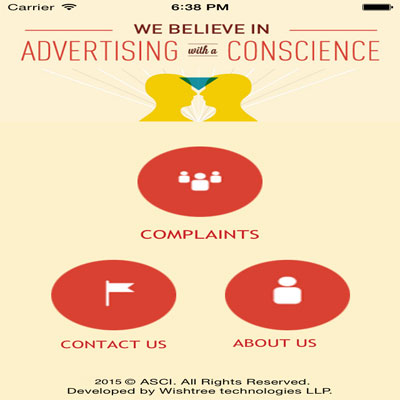
    MUMBAI: Continuing with its mission to address misleading advertisements, Advertising Standard Council of India (ASCI) has launched India’s first consumer complaint mobile App – ASCIonline, to provide consumer complaint services on a mobile phone besides providing the facility online. The mobile app is currently available on Android and iOS.

     
    ASCI chairman Narendra Ambwani said, “One of the goals of ASCI is to provide convenient access for lodging complaint and hence this launch of mobile app. Today mobiles devices are more widely used compared to desktops. With growing use of smart phones consumers want apps to put power of doing transactions in their pocket. ASCIonline mobile app is consumer friendly and can be freely downloaded. It will be very useful as one can track the status of the complaints which he or she registered on our portal with the help of the app.”

    Some of the key features of the app are as follows: 


    1)    Lodge complaint: Lodge complaints by simply providing advertisement details and objection. Users can also attach the files like image or video or YouTube link of that advertisement.


    2)    History: Check the history of all previously registered complaints with the latest status and all other details.


    3)    Complaint Tracking: Simply track the status of the complaints by providing the tracking code of the complaint.


    4)    Manage profile: Manage profile and contact details.


    5)    Push Notifications: Receive the automatic push notifications when status of your complaint gets changed.


    6)    Accessibility: It’s always on and connected.