Tag: ASCI

  • Magic ‘dawakhana’ TV ads to be curbed

    Magic ‘dawakhana’ TV ads to be curbed

    MUMBAI: The central government has decided to communicate to all state governments asking them to initiate a crackdown on outdoor advertisements of traditional medicines that promise to “magically” cure cosmetic problems and various illnesses. The development comes after earlier bids to curb such advertisements failed.

    In the crackdown on ads that suggested remedies for chronic diseases by reportedly exaggerating the effects of unani and ayurvedic medicines, the government instructed administrative officials to take stern action under the Drugs and Magic Remedies (Objectionable Advertising) Act, 1954.

    Information and broadcasting ministry officials said letters were being sent out following a rap from the Union ministry of Ayurveda, Yoga and Naturopathy, Unani, Siddha and Homeopathy.

    Sometime back, the AYUSH ministry had made amendment in the Drugs and Cosmetic Rules making it illegitimate for traditional medicine manufacturers to advertise cures or treatments for over 35 medical disorders, such as baldness, infertility and short height.

    Manufacturers of Unani, Ayurvedic and Sidhdha drugs, under the new rules, cannot advertise diagnosis, cure, treatment or prevention for cancer, high blood pressure, diabetes, skin darkness, baldness, short height, and greying of hair, sexual performance, dark skin, and cataract, among other.

    In August 2014, the information and broadcasting ministry had recommended the TV channels asking them not to carry “dubious teleshopping advertisements that claimed “magical” cures for cosmetic and health problems, offering viewers “immediate weight loss” and “divine” benefits. However, such ads continued to be shown on cinema, general entertainment, and news channels, mostly in the afternoons between 11pm and 2am.

    Meanwhile, the ASCI banned 152 ads including Godfrey Phillips, Cadila, PepsiCo, ITC, Nivea, LeEco, HUL, Woodland, Shiksha.com, SpiceJet, Tata Value Homes, SBI, Magic Bricks, and Tata Sky in August 2016.

    The Consumer Complaints Council upheld complaints against the 152 out of 209 in for either misleading consumers or not able to substantiate their claim. Of the 152, 27 belonged to the healthcare category. The CCC found the claims of 27 to be either false or misleading or not adequately/ scientifically substantiated and hence violating ASCI’s Code, it said.

    Among the ASCI banned ads are:

    Rajvaidya Shital Prasad & Sons (Hempushpa)

    Chetanta (Get Diabetes cured by acupressure Spring)

    Olefia Biopharma Ltd (Votif Range of Products)

    DHI-Hair Restoration

    Jay Pranav Ayurvedic Pharmaceuticals (Body Plus Capsules)

    Chetan Clinic

    Shri Ram Hospital

    Anupama Ayurvedic Drug Co. (Arish Tanclear Range)

    Divine Care

    Nurture Health Care (Ayurex S Capsule)

    Zenlabs Ethics (Zenovit Soft Gel)

    Dr. Bhavana Shah Fitness Care Pvt. Ltd. (Fat Freeze):

    Jippo African Capsule and African Oil

    Kerni Fitness Pvt Ltd (Fitness Universe)

    Amba Health Clinic

    Rex Remedies Pvt Ltd (Rex Dimaghi Brain Tonic)

    Mohak Bariatrics and Robotics

    German Homeo Laboratories Pvt. Ltd. (German Homeo Laboratory)

    Women’s Centre

    Kudos Laboratories India Limited (Kudoos Range of Products)

    S. S. Hospital

    Pretti Slim Clinic

    Avion Biotech (K lor Free)

    Cadila Healthcare Ltd. (Zydus Acti Life)

    N.I Education Trust (NIMS Blacumin Tea)

    Dr. Dassan’s Ayurvedic Herbal (Body Walk Oil)

    Dr. Rana’s Health Care (Gaino Power Powder)

    Leeford Healthcare Ltd. (Meglow Fairness Cream for Women)

    Oshea Herbals (Oshea Sunblock Cream SPF 40)

    Earlier, in a letter to all district administrators, Uttar Pradesh principal secretary Anita Bhatnagar-Jain had stated that advertisements offering remedies for chronic diseases and magical sex cures were on rise in magazines, newspapers, through wall paintings at public places and even on TV.

    The Advertising Standards Council of India’s consumer complaints council had upheld complaints against 185 out of 230 advertisements last year, including Hashmi Dawakhana which, through its ads, promised to “nullify the fear of sex, increase the penis size by 1–2 inches, makes one more energetic with super sex power with the consumption of just one strip, with a guarantee.”

  • ASCI upholds complaints against 134 advertisements

    ASCI upholds complaints against 134 advertisements

    MUMBAI: ASCI has upheld complaints against 134 advertisements. In July 2016, ASCI’s Consumer Complaints Council (CCC) upheld complaints against 134 out of 183 advertisements. Out of which, 44 belonged to the Healthcare category, 44 to the Education category, followed by 24 in the Food & Beverages category, 8 in Personal Care Category and 14 advertisements from other categories.

    Here is the complete list:

    Food & Beverages:

    Bonn Nutrients (Bonn Nu Health Bread):  The advertisement’s claim (in Hindi) as translated into English, “With calories low as 40 cal/slice” was not substantiated and was misleading by implication.

    Sonia Honey:  The claims in the advertisement “Sonia Honey scored the highest on the main parameters of honey purity in a recent analysis of all Indian branded and unbranded honey” and “Sonia Honey The perfect natural Sweetner is: Anti-Aging, Anti- Cancer”, were not substantiated and are misleading.

    KP Group (Kamla Pasand Pan Masala): The advertisement features Rajneesh Duggal – a celebrity from the field of entertainment for a product which has a health warning “Pan Masala is injurious to health” and which cannot be purchased or used by minors. Minors are very likely to be exposed to the advertisement. The celebrity in the advertisement would have a significant influence on minors who are likely to emulate the celebrity in using the product. The advertisement contravened Chapter III.2 (e) of the ASCI Code, which specifically states that Advertisements “Should not feature personalities from the field of sports and entertainment for products which, by law, require a health warning such as “Panmasala is injurious to health” in their advertising or packaging.”

    G. K. Tobacco Co. Pvt. Ltd. (Zafri Pan Masala): The visual of a “women pillion rider without a helmet” as depicted in the advertisement of Zafri Pan Masala shows violation of traffic rules and also is an unsafe practice.

    Health care:

    American Instrument: The Advertisement’s claims (in Hindi), as translated into English, “Are you disappointed with a small penis.  American penis enlarger free.  Get rid of small, thin crooked penis and make it thick, hard and firm.  Improve your sperm count, infertility, premature ejaculation, firmness, nightfall, childlessness can be cured and increase your sex time by 30-45 minutes with energetic oil, excitement capsule, 16GB memory card free.  Money back guarantee”, were not substantiated and are misleading by gross exaggeration.  Also, the claims related to the product benefit read in conjunction with the advertisement visual implies that the product is meant for enhancement of sexual pleasure and the claims related to treatment of infertility, childlessness’. This is in breach of the law as it violated The Drugs & Magic Remedies Act. 

    Japani Instrument: The advertisement’s claims (in Hindi), as translated into English, “Are you disappointed with a small penis?  Get Japanese penis enlargement instrument free.  As soon as you use Japanese penis enlargement instrument you can make your penis longer, thicker, weak topo firm and stronger. Increase your sex time from 30 to 45 minutes. Nightfall, premature ejaculation, infertility, impotency, low sperm count and childlessness can be cured.  45 days course for an artificial vagina and artificial penis.  100% guarantee.  No side effects”, were not substantiated and are misleading by gross exaggeration.  Also, the claims related to the product benefit read in conjunction with the advertisement visual implies that the product is meant for enhancement of sexual pleasure and the claims related to treatment of childlessness. This is in breach of the law as it violated The Drugs & Magic Remedies Act.

    Nurture Healthcare (Ayurex-S Vitality Capsules): The advertisement’s claim (in Hindi) as translated into English, “It’s the right of every Man, to lead a happy married life”,  “For Men only”,  “Vitality Capsule”,  “If you are worried about low, excessive weakness, then consume AYUREX-S capsule and with its help, do the work successfully with the capacity and power”,  “My Wife says I am more energetic than Before”,  “In some days my married life has become exciting and happy, thanks to Ayurex-S”,  were not substantiated with product efficacy data,  and are misleading by exaggeration. Also, these claims when read in conjunction with the advertisement visual implies that the product is meant for enhancement of sexual pleasure, which is in breach of the law as it violated The Drugs & Magic Remedies Act.

    Personal care:

    Himalaya Company (Himalaya Facewash): The advertisement’s claim in Hindi, “Isme hai neem aur haldi ki kudrati achchai Jo aapko har tarah ki skin problems se suraksha de” (“This has the goodness of neem and haldi that gives you protection from every skin problems”) was not substantiated with product efficacy data, and the claim is misleading by exaggeration.

    Gillette India Ltd. (Gillette Vector): The advertisement’s claim offers, “Save Rs. 30/- in comparison to Vector 2s pack”, is misleading by omission of a disclaimer to mention the exact price comparison with the post price increase of the product.

    Hindustan Unilever Ltd. (Axe Deodorants): The advertisement’s claim, “When it gets hot, the fragrance is boosted”, was not adequately substantiated with consumer perception data, and is misleading by implication. 

    Glaxosmithkline Consumer Healthcare Ltd. (Sensodyne Toothpaste): It was noted that the source and date of research and criteria for assessment for the claim, “Worlds No. 1 sensitivity toothpaste”, was not indicated in the TVC. In addition, the supers in the Hindi TVC were not in the same language as the audio of the TVC, they were not legible, and the hold duration of the supers was short. The TVC also contravened the ASCI Guidelines for Supers.

    Education:

    Guru Nanak Institute of Management: The advertisement’s claims, “Highest Salary Package: 8 Lakhs” and “Average Salary Package: 4.5 lakhs”, were not substantiated with evidence to prove that the students have availed the claimed salary packages, and the claims are considered to be misleading by exaggeration.

    Dhruva College of Management: The claims in the advertisement, “Highest Salary Package: 8 Lakhs” and “Average Salary Package: 4.5 lakhs”, were not substantiated and was misleading.

    Biju Patnaik Institute of Information Technology & Management Studies: The claims in the advertisement, “Placement Percentage- 2013: 95%, 2014: 96%, 2015: 97%”, were not substantiated with authentic supporting data (such as detailed list of students who have been placed through their Institute, contact details of students for verification, enrolment forms and appointment letters received by the students).  Also, the claims are considered to be misleading by omission of the details of batch size for which the claim would hold.

  • ASCI upholds complaints against 134 advertisements

    ASCI upholds complaints against 134 advertisements

    MUMBAI: ASCI has upheld complaints against 134 advertisements. In July 2016, ASCI’s Consumer Complaints Council (CCC) upheld complaints against 134 out of 183 advertisements. Out of which, 44 belonged to the Healthcare category, 44 to the Education category, followed by 24 in the Food & Beverages category, 8 in Personal Care Category and 14 advertisements from other categories.

    Here is the complete list:

    Food & Beverages:

    Bonn Nutrients (Bonn Nu Health Bread):  The advertisement’s claim (in Hindi) as translated into English, “With calories low as 40 cal/slice” was not substantiated and was misleading by implication.

    Sonia Honey:  The claims in the advertisement “Sonia Honey scored the highest on the main parameters of honey purity in a recent analysis of all Indian branded and unbranded honey” and “Sonia Honey The perfect natural Sweetner is: Anti-Aging, Anti- Cancer”, were not substantiated and are misleading.

    KP Group (Kamla Pasand Pan Masala): The advertisement features Rajneesh Duggal – a celebrity from the field of entertainment for a product which has a health warning “Pan Masala is injurious to health” and which cannot be purchased or used by minors. Minors are very likely to be exposed to the advertisement. The celebrity in the advertisement would have a significant influence on minors who are likely to emulate the celebrity in using the product. The advertisement contravened Chapter III.2 (e) of the ASCI Code, which specifically states that Advertisements “Should not feature personalities from the field of sports and entertainment for products which, by law, require a health warning such as “Panmasala is injurious to health” in their advertising or packaging.”

    G. K. Tobacco Co. Pvt. Ltd. (Zafri Pan Masala): The visual of a “women pillion rider without a helmet” as depicted in the advertisement of Zafri Pan Masala shows violation of traffic rules and also is an unsafe practice.

    Health care:

    American Instrument: The Advertisement’s claims (in Hindi), as translated into English, “Are you disappointed with a small penis.  American penis enlarger free.  Get rid of small, thin crooked penis and make it thick, hard and firm.  Improve your sperm count, infertility, premature ejaculation, firmness, nightfall, childlessness can be cured and increase your sex time by 30-45 minutes with energetic oil, excitement capsule, 16GB memory card free.  Money back guarantee”, were not substantiated and are misleading by gross exaggeration.  Also, the claims related to the product benefit read in conjunction with the advertisement visual implies that the product is meant for enhancement of sexual pleasure and the claims related to treatment of infertility, childlessness’. This is in breach of the law as it violated The Drugs & Magic Remedies Act. 

    Japani Instrument: The advertisement’s claims (in Hindi), as translated into English, “Are you disappointed with a small penis?  Get Japanese penis enlargement instrument free.  As soon as you use Japanese penis enlargement instrument you can make your penis longer, thicker, weak topo firm and stronger. Increase your sex time from 30 to 45 minutes. Nightfall, premature ejaculation, infertility, impotency, low sperm count and childlessness can be cured.  45 days course for an artificial vagina and artificial penis.  100% guarantee.  No side effects”, were not substantiated and are misleading by gross exaggeration.  Also, the claims related to the product benefit read in conjunction with the advertisement visual implies that the product is meant for enhancement of sexual pleasure and the claims related to treatment of childlessness. This is in breach of the law as it violated The Drugs & Magic Remedies Act.

    Nurture Healthcare (Ayurex-S Vitality Capsules): The advertisement’s claim (in Hindi) as translated into English, “It’s the right of every Man, to lead a happy married life”,  “For Men only”,  “Vitality Capsule”,  “If you are worried about low, excessive weakness, then consume AYUREX-S capsule and with its help, do the work successfully with the capacity and power”,  “My Wife says I am more energetic than Before”,  “In some days my married life has become exciting and happy, thanks to Ayurex-S”,  were not substantiated with product efficacy data,  and are misleading by exaggeration. Also, these claims when read in conjunction with the advertisement visual implies that the product is meant for enhancement of sexual pleasure, which is in breach of the law as it violated The Drugs & Magic Remedies Act.

    Personal care:

    Himalaya Company (Himalaya Facewash): The advertisement’s claim in Hindi, “Isme hai neem aur haldi ki kudrati achchai Jo aapko har tarah ki skin problems se suraksha de” (“This has the goodness of neem and haldi that gives you protection from every skin problems”) was not substantiated with product efficacy data, and the claim is misleading by exaggeration.

    Gillette India Ltd. (Gillette Vector): The advertisement’s claim offers, “Save Rs. 30/- in comparison to Vector 2s pack”, is misleading by omission of a disclaimer to mention the exact price comparison with the post price increase of the product.

    Hindustan Unilever Ltd. (Axe Deodorants): The advertisement’s claim, “When it gets hot, the fragrance is boosted”, was not adequately substantiated with consumer perception data, and is misleading by implication. 

    Glaxosmithkline Consumer Healthcare Ltd. (Sensodyne Toothpaste): It was noted that the source and date of research and criteria for assessment for the claim, “Worlds No. 1 sensitivity toothpaste”, was not indicated in the TVC. In addition, the supers in the Hindi TVC were not in the same language as the audio of the TVC, they were not legible, and the hold duration of the supers was short. The TVC also contravened the ASCI Guidelines for Supers.

    Education:

    Guru Nanak Institute of Management: The advertisement’s claims, “Highest Salary Package: 8 Lakhs” and “Average Salary Package: 4.5 lakhs”, were not substantiated with evidence to prove that the students have availed the claimed salary packages, and the claims are considered to be misleading by exaggeration.

    Dhruva College of Management: The claims in the advertisement, “Highest Salary Package: 8 Lakhs” and “Average Salary Package: 4.5 lakhs”, were not substantiated and was misleading.

    Biju Patnaik Institute of Information Technology & Management Studies: The claims in the advertisement, “Placement Percentage- 2013: 95%, 2014: 96%, 2015: 97%”, were not substantiated with authentic supporting data (such as detailed list of students who have been placed through their Institute, contact details of students for verification, enrolment forms and appointment letters received by the students).  Also, the claims are considered to be misleading by omission of the details of batch size for which the claim would hold.

  • Srinivasan K Swamy is new ASCI chairman

    Srinivasan K Swamy is new ASCI chairman

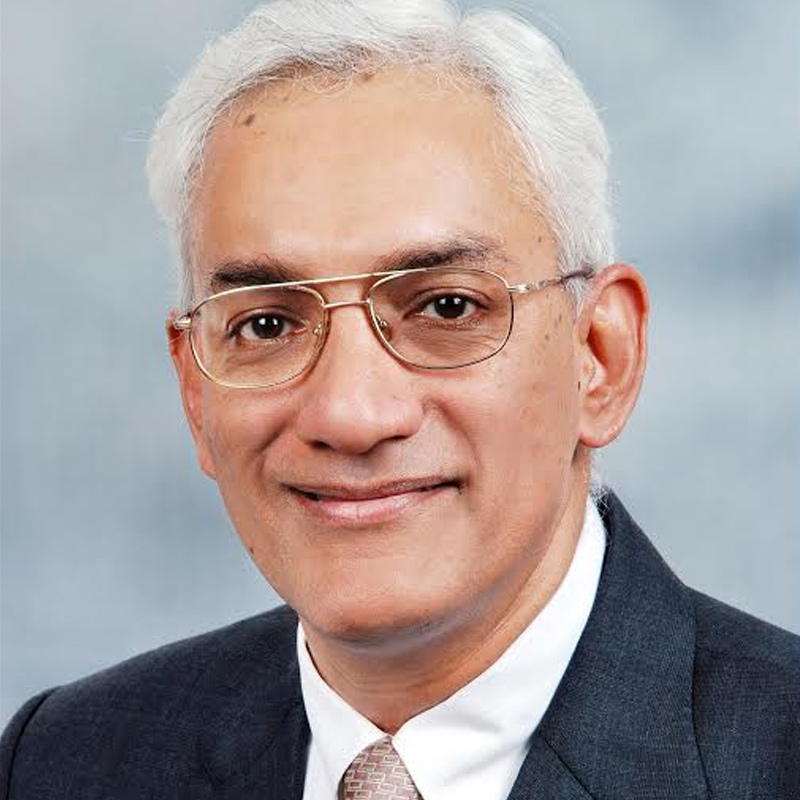
    MUMBAI: Advertising Standards Council of India (ASCI) has appointed the industry stalwart Srinivasan K Swamy as the chairman, as the incumbent head Benoy Roychowdhury’s term comes to a close. R K Swamy Hansa BBDO chairman Sundar Swamy, as he is popularly addressed, was serving as the vice-chairman of the board of ASCI during the HT Media executive director Roychowdhury’s term.

    About his primary focus as the chairman, Swamy said, “My focus will be to inform the world about ASCI’s Consumer Complaints Council (CCC) and its members, who preview every objectionable advertisement independent of the ASCI board of governors. These members hail from the civil society consisting of consumer activists, educationists and lawyers, etc. Basically, the decision taken by them reflects a consumer’s decision.”

    His appointment as the chairman doesn’t come as a surprise given his contribution to the advertising community in India as the head of R K Swamy Hansa BBDO.

    Apart from this, Swamy has played important roles in several industry bodies : International Advertising Association (IAA), Asian Federation of Advertising Associations (AFAA), Confederation of Asian Advertising Agency Associations, ll India Management Association (AIMA), The Madras Chamber of Commerce & Industry, and the list goes on.

    Recently, Swamy was conferred with this year’s AAAI Lifetime Achievement Award by the Advertising Agencies Association of India (AAAI).

  • Srinivasan K Swamy is new ASCI chairman

    Srinivasan K Swamy is new ASCI chairman

    MUMBAI: Advertising Standards Council of India (ASCI) has appointed the industry stalwart Srinivasan K Swamy as the chairman, as the incumbent head Benoy Roychowdhury’s term comes to a close. R K Swamy Hansa BBDO chairman Sundar Swamy, as he is popularly addressed, was serving as the vice-chairman of the board of ASCI during the HT Media executive director Roychowdhury’s term.

    About his primary focus as the chairman, Swamy said, “My focus will be to inform the world about ASCI’s Consumer Complaints Council (CCC) and its members, who preview every objectionable advertisement independent of the ASCI board of governors. These members hail from the civil society consisting of consumer activists, educationists and lawyers, etc. Basically, the decision taken by them reflects a consumer’s decision.”

    His appointment as the chairman doesn’t come as a surprise given his contribution to the advertising community in India as the head of R K Swamy Hansa BBDO.

    Apart from this, Swamy has played important roles in several industry bodies : International Advertising Association (IAA), Asian Federation of Advertising Associations (AFAA), Confederation of Asian Advertising Agency Associations, ll India Management Association (AIMA), The Madras Chamber of Commerce & Industry, and the list goes on.

    Recently, Swamy was conferred with this year’s AAAI Lifetime Achievement Award by the Advertising Agencies Association of India (AAAI).

  • Expert-speak on implications of penalising celebs in misleading ads

    Expert-speak on implications of penalising celebs in misleading ads

    MUMBAI: In India, a general tendency is to shoot the messenger instead of going to the root of a problem and then finding a solution. A Parliamentary panel proposal — it’s still that only — to penalise celebrity endorsers for misleading advertisements could be one such instance, though industry experts differ on the merit of such a move.

    One thing the Indian advertising world has learnt from the Maggi fiasco in India is when a brand’s authenticity is questioned; fingers are quick to point at celebrities endorsing it instead of going into finer details. Some adverse government lab findings hit  Nestle, owners of Maggi brand of noodles and soups, so hard that it’s still recovering from the brand and revenue battering it took over few months earlier this year.

    While celeb endorsers of Maggi, including people like film stars Madhuri Dixit, Amitabh Bachchan and Preity Zinta, only felt the wrath of social media, if the Parliamentary panel suggestions are enacted into a law, going forward, celebrities may face legal action against them for featuring in misleading advertisements.

    In a recent meeting to discuss the Consumer Protection Bill 2015, a Parliamentary Standing Committee on Consumer Affairs mooted that a celebrity may be fined upwards of Rs 1 crore (Rs 10 million) as an exemplary penalty. A jail time up to five years was also brought up in a prior meeting but was later reconsidered.

    Though not yet a law, but it is easy to gauge the general direction the conversation on celebrity endorsement is headed in India, which, along with Japan, has in recent times shown an increased use of celebrities to push products and services.
    As things stand today, the obvious questions are: (i) should celebrity endorsers alone be held responsible for saving consumers from false advertisements and claims and not the company owning the product and the ad agency designing the creatives and (ii) what are the implications on the advertising  business in India if the Bill actually becomes a law?

    Indiantelevision.com reached out to stakeholders in the industry for their take on the issue and to understand how such a proposal would affect them.

    Celebrities are not godmen or god-women

    A Euromonitor study in 2014 on `Celebrity Power and Its Influence on Global Consumer Behaviour’ stated: “As long as the celebrity is authentic, he or she can help to lend credibility to a brand and influence the way it is perceived as many consumers believe that if a product is good enough for a star, it is good enough for them.”

    In spite of acknowledging the fact that celebrities are strong influencers, Advertising Club of India President Raj Nayak finds it silly to penalise celebrities over misleading advertisements.

    “It is unfair to put the onus on celebs unless they are endorsing brands like beedi (hand rolled tobacco leaves), cigarettes , alcohol, gutka (chewing tobacco), fairness cream or any such product that is injurious to health or has a negative  impact on society.  Even in such a case there should be an advisory cautioning them from endorsing such products,” Nayak opined, adding the onus of a misleading ad, however, must rest with the company that is advertising and selling the product.

    According to Nayak, the industry in India already has a self-regulatory body, Advertising Standards Council of India (ASCI),  and consumers have the option of complaining or raising an issue regarding an ad, but it’s “absolutely silly to penalise celebrities.”

    Though it has been seen that the global trend of using celebrities to push products does have a roller-coaster ride, Vizeum India MD Shripad Kulkarni does not totally agree that celebrities alone can change and shape opinions.

    “Holding the celebrity responsible is akin to shooting the messenger. A celebrity is an individual without any public authority. Assuming that a misleading ad is the sole responsibility of the celebrity, can somebody please explain to me how an individual can ever figure out if the claim in an ad on any product category is true or not?” Kulkarni asked, explaining that a celebrity who can check the veracity or authenticity of all the products or services (being endorsed by him or her),  ranging from a financial instrument rating, vest comfort or oils helping maintain long hair, etc, “might as well get into the most lucrative business in India — become a godman” or god-woman as the case may be.

    Echoing sentiments similar to Kulkarni was RK Swamy Hansa BBDO Chairman Srinivasan K Swamy. “Celebrities don’t have the means to clarify each and every claim made by a brand. They may have sort of a check, but that doesn’t make it a foolproof one. I think a brand communication is ultimately an advertiser’s responsibility,” he averred.

    Vague term or definition

    The 2014 Eurominitor study at another place stated that the level of celebrity influence is “difficult to gauge” but it is estimated that while as many as one in four advertisements feature celebrities in the US, the percentage is much lower in Europe. In Germany, for example, the rate is around 16 per cent. The  celebrity culture is widespread in Asia and though the  phenomenon is newer in China and India, it has gained momentum in a relatively short space of time.
    So, who is this celebrity that the government plans to penalise? An actor? A cricketer?  Someone plain famous? A Bharat Ratna, which is India’s highest civilian award? A scion of  an erstwhile royal family? A politician or a Member of Parliament (yes, in India even such people widely endorse products and services) ? A professional  model? Or the common man who oscillates between fame and  oblivion?

    The Advertising Agencies Association of India (AAAI) chairman Nakul Chopra expresses serious concerns over the ambiguity of the word ‘celebrity’, especially with regards to a would-be law.

    “You can’t enact a law with the term ‘celebrity’ in it without defining what it means precisely. Basically, any model lending his or her face, voice or image to a product can be charged with these penalties. Tomorrow, someone lending his or her face to a cause or a brand, may be not a known personality, will also be liable under this law. I don’t think you can apply one rule to all,” Chopra said.

    For Chopra, it’s not fair that an endorser of a product or a service, celebrity or not, is made liable for the product that they endorse because it is a “difficult liability to administer.”

    More caution need of the hour?

    There’s an age old saying that more things change, more they remain the same. And, this proposal, experts feel, is a case highlighting the adage.

    Madison Communications Mates CEO Darshana Bhalla, who deals with talent management and facilitates top notch endorsement deals, felt these proposals were just cosmetic changes wherein except for a more judicious verification process everything else will remain the same.

    “Advertising is a  like a wheel and every cog in the wheel is responsible for its movement, be it the celebrity, the brand, the media, the creative agencies or agencies like us. Therefore, I believe, we shouldn’t take away responsibilities from each other or over impose them either,” Bhalla said.  

    Pointing out that there is nothing wrong in doing the due diligences when it comes to celebrity endorsements, whosoever is the stakeholder, Bhalla did feel that if the proposal was actually enacted into a law, it would bring more caution in the processes, which is only fair.

    According to him, “Anyway most of the A-listers have been very cautious about what they endorse. Ultimately consumerism is not going to get affected by this, will it? When it comes to us talent management agencies, we get our celebrities to endorse brands that are cognizant of the guidelines of proper brand communication.”

    In line with the same thoughts Swamy added, “This Bill, if it comes in effect, will simply add a few more layers of self-regulation. I don’t think the advertising or endorsement market will feel any major impact from it.”

    Factoring in fines in contracts

    Several advertising gurus predicted that if the fine or penalty became an actuality, a fine-inclusive contract will become the norm in the endorsement world.

    “Celebrities are basically echoing a brand communication for a product or a service. If the fines (and other penalties) come into being, they will be simply included into a contract as a clause. From the beginning itself the celebrities will not face the burden of paying the fines because no celebrity will sign a contract that will expose him or her to a possible financial damage,” SK Swamy Hansa BBDO’s Srinivasan Swamy pointed out.

    Interestingly, Swamy also opined that if the law required to hauling up of celebrities on monetary grounds, they will have” no qualms to stand by brands”. Chopra too felt that a fine will lead to celebrities seeking indemnity from the advertisers for the liability placed on them.

    More teeth to ASCI

    Whether or not a law to penalize celebrity endorsers for misleading adverts becomes a reality, what is clearly emerging is that the industry would need more of self-regulation and for that to be more effective, ASCI’s role as a body gains importance.

    In its report on the Consumer Protection Bill, which was introduced in Parliament last year in August, the Parliamentary Standing Committee on Consumer Affairs said the penalties could be in the form of compelling the misleading advertiser to either issue corrective advertisement (an expensive proposition in itself), apart from proposing other stringent measures.

    This could be done by adding clauses to the Consumer Protection Bill to ensure that the advertising code being followed by ASCI got added legal teeth. Punitive measures need to be incorporated in the Advertising Code to cater to consumer interests, the panel opined. This was based on a suggestion by the Consumer Education and Research Centre of Ahmedabad.

    During the study of the Bill, the parliamentary committee had met several stakeholders as well as officials of government organizations and execs  from advertising companies.

    Welcoming suggestions by the Committee, ASCI secretary told the panel members , “ASCI had the chance to present our work from the last few years before the committee and the current self-regulatory system was backed by other industry stakeholders as well. We are very happy that the committee has recommended more teeth to ASCI, though we have yet to see how it is worded in the final legal document.”

    (With inputs from BB Nagpal in New Delhi)


  • Expert-speak on implications of penalising celebs in misleading ads

    Expert-speak on implications of penalising celebs in misleading ads

    MUMBAI: In India, a general tendency is to shoot the messenger instead of going to the root of a problem and then finding a solution. A Parliamentary panel proposal — it’s still that only — to penalise celebrity endorsers for misleading advertisements could be one such instance, though industry experts differ on the merit of such a move.

    One thing the Indian advertising world has learnt from the Maggi fiasco in India is when a brand’s authenticity is questioned; fingers are quick to point at celebrities endorsing it instead of going into finer details. Some adverse government lab findings hit  Nestle, owners of Maggi brand of noodles and soups, so hard that it’s still recovering from the brand and revenue battering it took over few months earlier this year.

    While celeb endorsers of Maggi, including people like film stars Madhuri Dixit, Amitabh Bachchan and Preity Zinta, only felt the wrath of social media, if the Parliamentary panel suggestions are enacted into a law, going forward, celebrities may face legal action against them for featuring in misleading advertisements.

    In a recent meeting to discuss the Consumer Protection Bill 2015, a Parliamentary Standing Committee on Consumer Affairs mooted that a celebrity may be fined upwards of Rs 1 crore (Rs 10 million) as an exemplary penalty. A jail time up to five years was also brought up in a prior meeting but was later reconsidered.

    Though not yet a law, but it is easy to gauge the general direction the conversation on celebrity endorsement is headed in India, which, along with Japan, has in recent times shown an increased use of celebrities to push products and services.
    As things stand today, the obvious questions are: (i) should celebrity endorsers alone be held responsible for saving consumers from false advertisements and claims and not the company owning the product and the ad agency designing the creatives and (ii) what are the implications on the advertising  business in India if the Bill actually becomes a law?

    Indiantelevision.com reached out to stakeholders in the industry for their take on the issue and to understand how such a proposal would affect them.

    Celebrities are not godmen or god-women

    A Euromonitor study in 2014 on `Celebrity Power and Its Influence on Global Consumer Behaviour’ stated: “As long as the celebrity is authentic, he or she can help to lend credibility to a brand and influence the way it is perceived as many consumers believe that if a product is good enough for a star, it is good enough for them.”

    In spite of acknowledging the fact that celebrities are strong influencers, Advertising Club of India President Raj Nayak finds it silly to penalise celebrities over misleading advertisements.

    “It is unfair to put the onus on celebs unless they are endorsing brands like beedi (hand rolled tobacco leaves), cigarettes , alcohol, gutka (chewing tobacco), fairness cream or any such product that is injurious to health or has a negative  impact on society.  Even in such a case there should be an advisory cautioning them from endorsing such products,” Nayak opined, adding the onus of a misleading ad, however, must rest with the company that is advertising and selling the product.

    According to Nayak, the industry in India already has a self-regulatory body, Advertising Standards Council of India (ASCI),  and consumers have the option of complaining or raising an issue regarding an ad, but it’s “absolutely silly to penalise celebrities.”

    Though it has been seen that the global trend of using celebrities to push products does have a roller-coaster ride, Vizeum India MD Shripad Kulkarni does not totally agree that celebrities alone can change and shape opinions.

    “Holding the celebrity responsible is akin to shooting the messenger. A celebrity is an individual without any public authority. Assuming that a misleading ad is the sole responsibility of the celebrity, can somebody please explain to me how an individual can ever figure out if the claim in an ad on any product category is true or not?” Kulkarni asked, explaining that a celebrity who can check the veracity or authenticity of all the products or services (being endorsed by him or her),  ranging from a financial instrument rating, vest comfort or oils helping maintain long hair, etc, “might as well get into the most lucrative business in India — become a godman” or god-woman as the case may be.

    Echoing sentiments similar to Kulkarni was RK Swamy Hansa BBDO Chairman Srinivasan K Swamy. “Celebrities don’t have the means to clarify each and every claim made by a brand. They may have sort of a check, but that doesn’t make it a foolproof one. I think a brand communication is ultimately an advertiser’s responsibility,” he averred.

    Vague term or definition

    The 2014 Eurominitor study at another place stated that the level of celebrity influence is “difficult to gauge” but it is estimated that while as many as one in four advertisements feature celebrities in the US, the percentage is much lower in Europe. In Germany, for example, the rate is around 16 per cent. The  celebrity culture is widespread in Asia and though the  phenomenon is newer in China and India, it has gained momentum in a relatively short space of time.
    So, who is this celebrity that the government plans to penalise? An actor? A cricketer?  Someone plain famous? A Bharat Ratna, which is India’s highest civilian award? A scion of  an erstwhile royal family? A politician or a Member of Parliament (yes, in India even such people widely endorse products and services) ? A professional  model? Or the common man who oscillates between fame and  oblivion?

    The Advertising Agencies Association of India (AAAI) chairman Nakul Chopra expresses serious concerns over the ambiguity of the word ‘celebrity’, especially with regards to a would-be law.

    “You can’t enact a law with the term ‘celebrity’ in it without defining what it means precisely. Basically, any model lending his or her face, voice or image to a product can be charged with these penalties. Tomorrow, someone lending his or her face to a cause or a brand, may be not a known personality, will also be liable under this law. I don’t think you can apply one rule to all,” Chopra said.

    For Chopra, it’s not fair that an endorser of a product or a service, celebrity or not, is made liable for the product that they endorse because it is a “difficult liability to administer.”

    More caution need of the hour?

    There’s an age old saying that more things change, more they remain the same. And, this proposal, experts feel, is a case highlighting the adage.

    Madison Communications Mates CEO Darshana Bhalla, who deals with talent management and facilitates top notch endorsement deals, felt these proposals were just cosmetic changes wherein except for a more judicious verification process everything else will remain the same.

    “Advertising is a  like a wheel and every cog in the wheel is responsible for its movement, be it the celebrity, the brand, the media, the creative agencies or agencies like us. Therefore, I believe, we shouldn’t take away responsibilities from each other or over impose them either,” Bhalla said.  

    Pointing out that there is nothing wrong in doing the due diligences when it comes to celebrity endorsements, whosoever is the stakeholder, Bhalla did feel that if the proposal was actually enacted into a law, it would bring more caution in the processes, which is only fair.

    According to him, “Anyway most of the A-listers have been very cautious about what they endorse. Ultimately consumerism is not going to get affected by this, will it? When it comes to us talent management agencies, we get our celebrities to endorse brands that are cognizant of the guidelines of proper brand communication.”

    In line with the same thoughts Swamy added, “This Bill, if it comes in effect, will simply add a few more layers of self-regulation. I don’t think the advertising or endorsement market will feel any major impact from it.”

    Factoring in fines in contracts

    Several advertising gurus predicted that if the fine or penalty became an actuality, a fine-inclusive contract will become the norm in the endorsement world.

    “Celebrities are basically echoing a brand communication for a product or a service. If the fines (and other penalties) come into being, they will be simply included into a contract as a clause. From the beginning itself the celebrities will not face the burden of paying the fines because no celebrity will sign a contract that will expose him or her to a possible financial damage,” SK Swamy Hansa BBDO’s Srinivasan Swamy pointed out.

    Interestingly, Swamy also opined that if the law required to hauling up of celebrities on monetary grounds, they will have” no qualms to stand by brands”. Chopra too felt that a fine will lead to celebrities seeking indemnity from the advertisers for the liability placed on them.

    More teeth to ASCI

    Whether or not a law to penalize celebrity endorsers for misleading adverts becomes a reality, what is clearly emerging is that the industry would need more of self-regulation and for that to be more effective, ASCI’s role as a body gains importance.

    In its report on the Consumer Protection Bill, which was introduced in Parliament last year in August, the Parliamentary Standing Committee on Consumer Affairs said the penalties could be in the form of compelling the misleading advertiser to either issue corrective advertisement (an expensive proposition in itself), apart from proposing other stringent measures.

    This could be done by adding clauses to the Consumer Protection Bill to ensure that the advertising code being followed by ASCI got added legal teeth. Punitive measures need to be incorporated in the Advertising Code to cater to consumer interests, the panel opined. This was based on a suggestion by the Consumer Education and Research Centre of Ahmedabad.

    During the study of the Bill, the parliamentary committee had met several stakeholders as well as officials of government organizations and execs  from advertising companies.

    Welcoming suggestions by the Committee, ASCI secretary told the panel members , “ASCI had the chance to present our work from the last few years before the committee and the current self-regulatory system was backed by other industry stakeholders as well. We are very happy that the committee has recommended more teeth to ASCI, though we have yet to see how it is worded in the final legal document.”

    (With inputs from BB Nagpal in New Delhi)


  • Patanjali gears up to battle ad regulator ASCI

    Patanjali gears up to battle ad regulator ASCI

    MUMBAI: Patanjali Ayurveda is about to go head-to-head with The Advertising Standards Council of India (ASCI) – the self regulatory body constituting of advertisers, advertising agencies and media to address misleading and rogue advertising content issues. The Swami Ramdev promoted FMCG company has decided to drag ASCI to court for its ‘high handedness’ and ‘unfairness.’

    Reason? ASCI’s Consumer Complaints Council (CCC) has called several advertisements of Patanjali Ayurveda products misleading and unfair, hampering other brands. Patanjali is amongst the biggest advertisers on Indian television.

    “The claims in the advertisement (of Patanjali Dugdhamrut) in Hindi as translated into English states “Infertility is increasing in cattle,” “Cattle is being butchered,” “Other companies mix up 3 to 4% urea and other non-edible things in their cattle feed” and “Patanjali Gaushala’s cow that gives 25 Liters milk,” were not substantiated and were misleading,” reads one such upheld complaint from ASCI’s Consumer Complaints Council (CCC) report in April.

    This decision is something that the top bosses at Patanjali cannot stomach and they see in it a possible conspiracy driven by competitors.

    “We feel that these complaints and accusations are an intentional act to mar Patanjali’s name and is part of a conspiracy by certain multinational companies, who have a great deal of influence on ASCI,” shares Patanjali managing director Acharya Balkrishna.

    And the brand has secured evidence to substantiate this, that it will present to the court against ASCI. “In order to expose ASCI’s underhanded behaviour for certain brands to the entire nation we want to take this matter to court. We have documental evidence that the complaints against our ads didn’t come from any individual consumer but from certain MNCs that have influence within ASCI.”

    It may be noted that several leading FMCG brands are part of ASCI’s member list including Nestle, Mondelez, and P&G.

    But suing ASCI wasn’t the first thing that Patanjali had decided upon after receiving the notices. The decision came after the brand failed to secure a satisfactory explanation from the self-regulatory body on each of those complaints. “We had replied to each and every one of the mails from ASCI on account of the complaints, but we got back one liners from them saying ‘We are not satisfied with your response,’ without any further explanation whatsoever,” shares an exasperated Balakrishna.

    Citing Justice GS Patel’s ruling in the Teleshop Teleshopping case in the Bombay High Court that declined to recognise ASCI as a regulator, Balakrishna also added, “That particular Bombay High Court order clearly flayed ASCI for its high handedness despite not being a regulator. In fact, it can’t issue notices against brands that aren’t its members. Patanjali isn’t a member of ASCI so we are not answerable to them.” The company is currently abiding by its policies to take up this matter to court in due time.

    To put matters into perspective, Balakrishnan reveals that the Patanjali has received at least more than forty such notices from ASCI within the past two to three months. “What is strange is that we have been making those products mentioned in the notices for almost 15 years now, and the ads have been going around for probably 10 years. Where was ASCI all these years?” asks Balakrishna incredulously.

    Balakrishna isn’t against an idea of a government regulatory body that monitors all misleading or objectionable advertisements fairly, allowing a level playing field.

    Meanwhile, ASCI has remained silent throughout the entire time. Current ASCI chairman Benoy Roychowdhury refused to comment on the issue when indiantelevision.com reached out to him before filing this story.

  • Patanjali gears up to battle ad regulator ASCI

    Patanjali gears up to battle ad regulator ASCI

    MUMBAI: Patanjali Ayurveda is about to go head-to-head with The Advertising Standards Council of India (ASCI) – the self regulatory body constituting of advertisers, advertising agencies and media to address misleading and rogue advertising content issues. The Swami Ramdev promoted FMCG company has decided to drag ASCI to court for its ‘high handedness’ and ‘unfairness.’

    Reason? ASCI’s Consumer Complaints Council (CCC) has called several advertisements of Patanjali Ayurveda products misleading and unfair, hampering other brands. Patanjali is amongst the biggest advertisers on Indian television.

    “The claims in the advertisement (of Patanjali Dugdhamrut) in Hindi as translated into English states “Infertility is increasing in cattle,” “Cattle is being butchered,” “Other companies mix up 3 to 4% urea and other non-edible things in their cattle feed” and “Patanjali Gaushala’s cow that gives 25 Liters milk,” were not substantiated and were misleading,” reads one such upheld complaint from ASCI’s Consumer Complaints Council (CCC) report in April.

    This decision is something that the top bosses at Patanjali cannot stomach and they see in it a possible conspiracy driven by competitors.

    “We feel that these complaints and accusations are an intentional act to mar Patanjali’s name and is part of a conspiracy by certain multinational companies, who have a great deal of influence on ASCI,” shares Patanjali managing director Acharya Balkrishna.

    And the brand has secured evidence to substantiate this, that it will present to the court against ASCI. “In order to expose ASCI’s underhanded behaviour for certain brands to the entire nation we want to take this matter to court. We have documental evidence that the complaints against our ads didn’t come from any individual consumer but from certain MNCs that have influence within ASCI.”

    It may be noted that several leading FMCG brands are part of ASCI’s member list including Nestle, Mondelez, and P&G.

    But suing ASCI wasn’t the first thing that Patanjali had decided upon after receiving the notices. The decision came after the brand failed to secure a satisfactory explanation from the self-regulatory body on each of those complaints. “We had replied to each and every one of the mails from ASCI on account of the complaints, but we got back one liners from them saying ‘We are not satisfied with your response,’ without any further explanation whatsoever,” shares an exasperated Balakrishna.

    Citing Justice GS Patel’s ruling in the Teleshop Teleshopping case in the Bombay High Court that declined to recognise ASCI as a regulator, Balakrishna also added, “That particular Bombay High Court order clearly flayed ASCI for its high handedness despite not being a regulator. In fact, it can’t issue notices against brands that aren’t its members. Patanjali isn’t a member of ASCI so we are not answerable to them.” The company is currently abiding by its policies to take up this matter to court in due time.

    To put matters into perspective, Balakrishnan reveals that the Patanjali has received at least more than forty such notices from ASCI within the past two to three months. “What is strange is that we have been making those products mentioned in the notices for almost 15 years now, and the ads have been going around for probably 10 years. Where was ASCI all these years?” asks Balakrishna incredulously.

    Balakrishna isn’t against an idea of a government regulatory body that monitors all misleading or objectionable advertisements fairly, allowing a level playing field.

    Meanwhile, ASCI has remained silent throughout the entire time. Current ASCI chairman Benoy Roychowdhury refused to comment on the issue when indiantelevision.com reached out to him before filing this story.

  • ASCI upheld complaints against 67 out of 141 advertisements for violating code

    ASCI upheld complaints against 67 out of 141 advertisements for violating code

    MUMBAI:  In April 2016, the Advertising Standard Council of India’s (ASCI) Consumer Complaints Council (CCC) upheld complaints against 67 out of 141 advertisements.

    Out of 67 advertisements against which complaints were upheld, 27 belonged to the Healthcare & Personal Care category – this included a few ads on sex/sexual enhancement products, ten in the Food & Beverages category, seven in the E-commerce Category, four depicting Automotives, followed by four in the Education category and 15 advertisements from other categories.

    The CCC found the claims in 27 health and personal care product advertisements to be either misleading or false or not adequately or scientifically substantiated and hence violating ASCI’s code. Some of the health care products or services advertisements also contravened provisions of the Drug & Magic Remedies Act and Chapter 1.1 and III.4 of the ASCI Code. Complaints against the following advertisements which included Razorbill, Colgate-Palmolive (India), Pantene Shampoo, L’Oreal India Limited, Patanjali Ayurved Limited , and Hindustan Unilever Ltd were upheld

    Click here for the detailed report

    The list below is not the complete list

    Some of the complaints against ads in the healthcare segment that were upheld included

    Razorbill (RazorSlimAyurvedic Instant Slimming Capsules): The advertisement’s claims, ‘RazorSlimAyurvedic Instant Slimming Capsules’ and ‘No Exercise and No Diet’ were not substantiated and the before and after visuals in the advertisement were grossly misleading.

    Colgate-Palmolive (India) Ltd. (Colgate Herbal): The ambiguous presentation of the trademark ‘Colgate Herbal’ on packaging as two separate words and omission of the reference to trademark was misleading.

    Procter & Gamble Hygiene & Health Care Ltd. (Pantene Shampoo): The advertisement’s claim, Pantene is the ‘World’s No. 1 Hair Care Brand’, regardless of the disclaimer, is misleading by implication and ambiguity. It was not accepted, that the qualifier in the advertisement stating ‘Hair Care Category sirf shampoo aur conditioner se sambandhit’ is appropriate to validate the advertiser’s own categorisation of Hair care category which comprises of Shampoo, Conditioner and Hair Oils.

    L’Oreal India Limited (New Garnier White Complete Double Action Facewash): The advertisement on the pack claims, ‘instant whitening’ and ‘Gives 1 tone fairer looking skin in one wash’ were not substantiated. The TVC claim, ‘You think only cream can give you visible fairness? Think again …. This fights dark spots and gives instant whitening’, was misleading by implication.

    Hindustan Unilever Ltd. (Rexona Roll On): The advertisement of Rexona Roll On claim, ‘Ten times (10X) Protection’, was misleading by omission of qualifiers and reference to the comparison to talcum powder.

    Rajnish Hot Deals Pvt. Ltd. (Play Win Plus Capsules): The claim in the advertisement (in Marathi) ‘And, what continues the whole night? Quick results, one capsule one hour prior, get a surge of energy, for better results use PlayWin oil’, in the advertisement read in conjunction with the pack visual and the advertisement visual is misleading and implies that the product is meant for enhancement of sexual pleasure, which is in breach of the law as it violated The Drugs & Magic Remedies Act.

    Rajnish Hot Deals Pvt. Ltd. (Play Win Capsules): The advertisement’s claim, ‘Effect start from First Day Only’, was not substantiated with supporting product efficacy data, and is misleading. Also, the claims (in Marathi) as translated into English, ‘If you want to make your life happy! Then make your wife happy!!!’, ‘Play Win Capsules are effective for this kind of problems. Which can help you gain your power, stamina, strength’ and ‘Make your relationship stronger’, read in conjunction with the advertisement visual and pack visual implies that the product is meant for enhancement of sexual pleasure, which is in breach of the law as it violated The Drugs & Magic Remedies Act.

    Ayuway Herbal (Noni Wellness Drink): The claims in the advertisement (in Gujarati) as translated into English, ‘By taking Ayuway Herbal Noni daily in appropriate dose, the following stubborn diseases can be brought under control – Cancer, Arthritis, Blood circulation, Stomach ulcers, Muscle pain, Thyroid, Gas trouble, Diabetes, H.I.V., Skin problem’, ‘In many such diseases Ayuway Noni is beneficial’ and ‘100% money back guarantee’, were not substantiated and are misleading.  Also, specific to the claims with money back guarantee implying treatment/cure for Cancer, Arthritis, Diabetes, the advertisement is in breach of the law as it violated The Drugs & Magic Remedies Act.

    Babuline Pharma Pvt. Ltd. (Babuline Carminative Water): The advertisement’s claim, ‘Five times faster than churan or tablet’ was not substantiated as there was no authentic evidence comparing the speed of action of the product versus any marketed product. Also, the claim in the advertisement, ‘Fit and Healthy’ was considered to be misleading by ambiguity.

    Vaidya Pritam Singh (Shiva Aushadhalaya): The advertisement (in Hindi) claiming to ‘Cure childless women with guarantee’, was not substantiated and is misleading by exaggeration.  Also, specific to the claims implying guaranteed cure for childless women (infertility), the advertisement is in breach of the law as it violated The Drugs & Magic Remedies Act.

    A few complaints about ads in the F&B segment that were upheld included

    Patnajali Ayurved Ltd. (Patanjali Kachi Ghani Mustard Oil): The advertisement’s claim, ‘mustard oils are being adulterated with oil made by solvent extraction process with neurotoxin containing Hexane’, was not substantiated.  Also, the claim is grossly misleading by exaggeration.

    Kamla Kant & Company LLP (Rajshree Pan Masala): The advertisement themed blood donation features Anu Kapoor – a celebrity from the field of cinema for a product which has a health warning ‘Pan Masala is injurious to health’ and which cannot be purchased or used by minors, who are very likely to be exposed to the advertisement. The celebrity in the advertisement would have a significant influence on minors who are likely to emulate the celebrity in using the product. The advertisement contravened Chapter III.2 (e) of the ASCI Code which specifically states that advertisements ‘Should not feature personalities from the field of sports and entertainment for products which, by law, require a health warning such as ‘………….. is injurious to health’ in their advertising or packaging’. Also, the supers/statutory warning in the Hindi TVC were not legible and not in the same language as the audio of the TVC.

    DJ Group (Pan Bahar Pan Masala): The advertisement features Saif Ali Khan – a celebrity from the field of cinema for a product which has a health warning ‘Pan Masala is injurious to health’ and which cannot be purchased or used by minors, as minors are very likely to be exposed to the advertisement. The celebrity in the advertisement would have a significant influence on minors who are likely to emulate the celebrity in using the product. The advertisement contravened Chapter III.2 (e) of the ASCI Code which specifically states that advertisements ‘Should not feature personalities from the field of sports and entertainment for products which, by law, require a health warning such as ‘………….. is injurious to health’ in their advertising or packaging’. Also, the advertisement is misleading by omission of an appropriate disclaimer/statutory warning.

    Meeka Restaurants Private Limited (Nando’s Chicken): The statements in the advertisement, ‘Try something you can grab with both hands’ and ‘We don’t mind if you go on to touch our buns, breasts or thighs’, are sexually suggestive and objectifies female body parts, which is likely in the generally prevailing standards of decency to cause grave and widespread offence.

    Kellogg India P. Ltd. (Kelloggs Chocos Mascot in Chota Bheem): The advertisement’s claim, ‘Kellogg’s chocos – Isse behetar kya ho sakta hai’ implies that Kellogg’s Chocos is recommended as a better food option and can be had several times. The advertisement hence contravened the Guidelines on Advertising of Food and Beverages (Clause # 3 and #7 – (‘Advertisements should not disparage good dietary practice or the selection of options, such as fresh fruits and vegetables that accepted dietary opinion recommends should form part of the normal diet’, ‘Advertisements for food and beverages unless nutritionally designed as such should not be promoted or portrayed as meal replacement.’).

    Hindustan Unilever Ltd. (Knorr Classic Thick Tomato Soup): The advertisement’s claim, ‘Knorr chefs have handpicked the best quality vegetables’ was not substantiated and is misleading by implication, given that the product is made on a mass production scale and not customized or personalized.

    A few complaints about ads in the eCommerce segment that were upheld included

    One Mobikwik Systems Pvt. Ltd. (Mobikwik Rs. 20 Cashback Offer): The advertisement’s claim, ‘Rs 20 cashback’ was misleading by ambiguity and omission of complete disclaimer.

    One Mobikwik Systems Pvt. Ltd. (Mobikwik) (Get Rs 500 Cashback): The advertisement’s claim, ‘Pay via Mobikwik (Get Rs. 500 Cashback)’ was misleading by ambiguity and omission of a qualifier.

    Uber India (Uber Taxi Service – Distance Surcharge): The advertisement was misleading by omission of the mention of applicable additional charges (i.e. distance surcharge) per trip along with the fares on the website.

    One97 Communications Limited (Paytm): The advertisement’s claim, ‘24/7’ is misleading by ambiguity and omission of the details of the specific services for which the claim is valid.

    Astrologerad.com: The claims in the advertisement (in Gujarati) guaranteeing sure solutions for problems such as infertility, marital discord, winning a lottery, were false and misleading by exaggeration. The advertisement exploits the consumers’ lack of knowledge and is likely to lead to grave or widespread disappointment in the minds of consumers.

    Bankbazaar.com (Bhartiya Jan Dhan Credit Scheme): The advertisement of Bhartiya Jan Dhan Credit Scheme was posing like a Government scheme and was misleading the consumers by ambiguity and implication.

    A few complaints about ads depicting Automotives that were upheld included

    Nissan Motors India Pvt. Ltd.  (Nissan Sunny): The scenes in advertisement showing the ‘driver speaking on the phone’, ‘vehicles coming from the wrong sides’,  ’car overtaking from  the wrong side’, and the last scene of the ‘driver not wearing the seat belt’, shows / encourages dangerous / unsafe practices and manifests a disregard for safety.

    Apollo Tyres Ltd. (Apollo Tyres for Scooters): The scene in the advertisement showing, albeit for a short time, the ‘protagonist riding the scooter on the footpath to get ahead of the blocked traffic’, shows / encourages an unsafe practice, and also portrays violation of Traffic Rules.

    Hamilton Housewares Pvt. Ltd. (Milton i Fresh – 100 percent  Leakproof Lunch Boxes): The advertisement showcasing rash driving to demonstrate 100 percent Leakproof Lunch Boxes depicts speed and manoeuvrability in a manner which encourages unsafe and reckless driving and manifests a disregard for safety and encourages negligence.

    Amazon.com Inc. (Amazon – Friendly Customer Service): The visual in advertisement, ‘a pillion rider on a bike without a helmet’ as depicted in the advertisement shows violation of traffic rules and also is an unsafe practice.

    Education sector

    The CCC found following claims in the advertisements by 4 different advertisers were not substantiated and, thus, violated ASCI Guidelines for Advertising of Educational Institutions. Hence complaints against these advertisements were UPHELD.

    New Delhi Institute of Management: The advertisement’s claim, ‘A+++ with Average Salary in S2 Grade (Rs.5.0-Rs.9.9 Lakh)’, was not substantiated with evidence to prove that the individual students were indeed given the salary offer. Further, the advertisement’s claim, ‘100 percent Finest Placements since Inception’, was not substantiated with authentic data. In addition, the advertisement’s claim, ‘15th Best Placements in India’ was not substantiated with authentic comparative data. Also, the claims are misleading by ambiguity in the absence of any disclaimers.

    Test Cracker  Education Private  Limited   (Test Cracker – CAT  2016 coaching): The advertisement’s claims, ‘95 % Guarantee in CAT 2016’,  ’Srikant is the Bangalore topper in CAT 2015’,  ’Best Results in CAT 2015’ and ‘Ashank Dubey the best Quant faculty in India’,  were not substantiated and are misleading by exaggeration.

    S.Tech Group of Education (S Tech I.T School): The advertisement’s claim, ‘No. 1 Biggest Campus’, was not substantiated and is misleading.

    British Fort Foundation (British Institute): The advertisement’s claim, ‘Award in USA’, was not substantiated and is misleading.

    Others

    Reckitt Benckiser (India) Pvt. Ltd. (Mortein Insta5): As for the absence of the word ‘mosquitoes’ in the tagline of the advertisement of Mortein Insta5, the claim, ‘Relief from Dengue in just 5 minutes’ was misleading by ambiguity.

    Pernod Ricard India P. Ltd. (Seagram’s Royal Stag): The advertiser did not provide the annual market sales data of the product/service ‘Royal Stag Mega Music’, which was advertised. It was concluded that the advertisement was a surrogate advertisement for a promotion of a liquor product – Royal Stag.

    Whirpool of India Ltd. (Whirlpool 3D Cool Xtreme AC): The advertisement’s claim, ‘3 times more powerful cooling’ is proven in terms of air throw distance, but not in terms of speed of cooling the room. The claim was not adequately substantiated and is misleading by ambiguity. Further, the advertisement’s claim, ‘6th Sense Climate control’ was not adequately substantiated and is misleading by implication. The advertisement also claims, ‘cools the room instantly’ which was not substantiated and misleading by exaggeration. Also, the advertisement’s claim, ‘Health protection’ was not adequately substantiated and is misleading by implication.

    Idea Cellular Ltd. (Idea 3G 900): The advertisement’s claims, ‘Jam free network’ and ‘Adwiteeya internet indoor coverage (second to none internet indoor coverage)’, were not substantiated by comparative data of other service providers and were misleading by ambiguity.

    Idea Cellular Ltd. (Idea 3G): The advertisement states, ‘Idea 3G’ in Baharpur village where the 3G service is not being offered was misleading by omission of an appropriate disclaimer. Also, the advertisement exploits the consumers’ lack of knowledge and is likely to lead to grave or widespread disappointment in the minds of consumers.

    Reliance Industries Ltd. (Reliance Jio Infocomm): The advertisement’s claim, ‘Financial year 2016-17 will be the first full year of commercial operations of its Reliance Jio’,  is factually wrong and likely to mislead the consumers as the advertiser has not started their commercial services.

    Aircel Ltd. (Aircel): The advertisement’s claim, ‘RC 32 1.2p/2 sec STD+LOC 90 D’, was false and misleading.

    Suzuki Motorcycle India Pvt. Ltd. (Suzuki Gixxer): The advertisement’s claim, Suzuki Gixxer is ‘Most Awarded Bike of the Year 2015-16’, with the picture of 19 awards shown at the bottom of the advertisement, was false and misleading, as Suzuki Gixxerhas won only 6 awards in 2015-16.

    Shwas Homes Pvt. Ltd: The advertisement’s claim, ‘Aluva Railway station & Metro station is just a cigarette distance away’ was not adequately substantiated and is misleading by ambiguity.

    12. Sri Vedic Pratisthan (Rashi Bhagya Ratna): The advertisement’s claims, ‘If you possess RashiRatna (5.25 ‘Rati’ RashiRatna) thousands of rupees, you can become quickly fortunate and receive miraculous betterment, health, accomplishment and ‘Buy our talisman in just Rs.525/- and become fortunate to get your wishes fulfilled. Be profited by using it for job, success in business, conquest of enemy, dream marriage and love’, were not substantiated and are misleading by exaggeration. The advertisement exploits the consumers’ lack of knowledge and is likely to lead to grave or widespread disappointment in the minds of consumers.

    Agarwal D2D Packers and Movers: The advertisement’s claim, ’60 percent of the people in the country shift through us’, was not substantiated and is misleading.

    Tata Motors Ltd. (Tata Signa): The advertisement’s claims, ‘Higher Productivity through improved comfort and fleet utilization’, ‘Superior incab experience’, ‘Fleetman. Fleet telematics for higher productivity. In-built telematics’ and ‘Proven and reliable driving’, were not substantiated by submission of claim support data as to how the advertised product is better as claimed. Also, the claims were misleading by omission of a reference to the comparison being made.