Tag: ASCI

  • Airtel does not agree with ASCI’s ‘conclusion’ on misleading ad

    MUMBAI: The Advertising Standards Council of India (ASCI) has given a statement in favour of Reliance Jio and has asked Airtel to stop the ads that were misleading for several reasons. Bharti Airtel however does not agree with ASCI’s decision and will file an appeal as per guidelines. It said its campaign is based on the findings by Ookla – the globally recognised leader in mobile speed tests and also a benchmark for reputed global operators.

    Reliance Jio has been in a tug-of-war with incumbent telecom operators with its launch of Jio 4G services in India. Regardless of the quality of the service or the speeds, which has always been a debatable topic, Jio is on the forefront, and other operators are trying to catch up with it. Jio sent a legal notice to Ookla for what it calls wrongly calling Airtel as the leader of speed.

    Jio’s complaint to ASCI was considered by the Fast Track Complaints Committee (FTCC) on 29 March 2017. The FTCC referred to the terms and conditions (https://www.airtel.in/fastestnetwork/download/terms-and-conditions-fastest-network-ookla.pdf) and noted that some clauses were considered to be in contravention of the ASCI Guidelines.

    Airtel TVC does not state in the claim itself that the speed results pertain to only a specific period. (i.e. The period taken to conduct speed test is from Q3-Q4 2016”). The FTCC noted that the claim by the advertiser is not specific to 4G technology whereas the TVC has 4G visuals. The FTCC considered this representation to be misleading by ambiguity and implication. While the advertiser submitted an Ookla certificate, they did not provide an explicit test methodology to substantiate that the method is robust to capture that the sample; and is representative and comparable across operators, geographies and consumers.

    The FTCC referred to the TRAI web site with respect to the coverage of Jio vis-a-vis Airtel and noticed that there is a significant gap between geographical dispersion of Airtel and Jio 4G subscribers which could impact the comparison. Based on this data, the FTCC concluded that the claim was not adequately substantiated and the basis of comparison has been so chosen as to bestow artificial advantage to the advertiser.

    FTCC has legally ordered Airtel to either appropriately modify or withdraw the advertisement completely by 11 April 2017.

  • Over 250 complaints of misleading ads about AYUSH products since Jan 2015

    NEW DELHI: The Advertising Standards Council of India (ASCI) referred 263 complaints of allegedly AYUSH products related advertisements to the Consumer Affairs Ministry since January 2015, including seven advertisements of herbal medicines in 2016.

    The AYUSH Ministry itself received 79 complaints in the year 2014 about advertisements and misleading claims allegedly of herbal and AYUSH products.

    Such complaints of 381 advertisements are also registered online till 16 March 2017 in the Grievances against Misleading Advertisements (GAMA) portal maintained by the Ministry of Consumer Affairs, Food & Public Distribution.

    Giving this information in Parliament, AYUSH Minister Shripad Yesso Naik said that it was pertinent that the proof of safety and effectiveness as required for issuing license to manufacture Ayurvedic, Siddha or Unani medicine is prescribed in the guidelines under Rule 158-B of the Drugs & Cosmetics Rules 1945, which can either be based on textual rationale from the authoritative books listed in the First Schedule to the Drugs & Cosmetics Act or published literature; and if no such evidence of effectiveness of the drug is available, it needs to be generated by conducting the pilot study.

    He said that in an effort to check the veracity of misleading advertisements of AYUSH products, the Central Government had issued directives to the State Governments for appointing gazetted officers for monitoring of advertisements of such drugs. Complaints of misleading advertisements of medicines are forwarded to the concerned State Licensing Authorities for action in accordance with the provisions of Drugs & Cosmetics Act, 1940 and Rules thereunder and Drugs & Magic Remedies (Objectionable Advertisements) Act, 1954 and Rules thereunder. States have reported action taken against the defaulters.

    The AYUSH Ministry also signed a memorandum of understanding with ASCI on 20th January 2017 to undertake monitoring of the misleading AYUSH –related advertisements appearing in print and TV media and bring the instances of improper advertisements to the notice of the State Regulatory Authorities for taking necessary action.

  • WhatsApp’s 200m users catalysed ASCI’s digital initiative

    MUMBAI: The Advertising Standards Council of India (ASCI) successfully completed a year of its digital initiative – Snap and WhatsApp (+91 77100 12345).

    In perfect tandem with World Consumer Rights Day themed “Consumer Rights in Digital Age” being celebrated today, ASCI’s WhatsApp number provides an efficient first touch point for consumers to register their complaints with great ease and completely free of cost.

    Empowering consumers to register their grievances against objectionable advertisements through an easy access and effective medium, the WhatsApp platform registers 200 Million monthly active users in India. With more and more consumers accessing WhatsApp, ASCI’s WhatsApp number has radically increased its outreach. In one year since launch the WhatsApp number contributes to approximately 15 per cent of the total number of advertisements complained against by consumers.

    ASCI chairman Srinivasan K Swamy said, “By ensuring that the advertisements are truthful, decent, non-offensive, legal and fair in competition, ASCI is ensuring the protection of the interests of consumers. ASCI has provided Indian consumers a very powerful tool through its WhatsApp number (77100 12345) to take action against objectionable advertisements and thereby protecting consumer rights in this digital age. We are delighted to see that our proactive step of launching this number a year ago has been a success with more and more consumers reaching ASCI using this platform.”

    Interestingly, by embracing technology to connect with the consumers, ASCI has expanded its reach to smaller towns and cities in India and received encouraging participation from non-metro cities in registering the complaints on the WhatsApp number. The sectors that received complaints on WhatsApp include FMCG, Healthcare, Telecom, E-commerce, Travel, Durables, Automotive, Food and Beverages and Education which have been seen across medium not restricted to only TV or print but also Website, Radio, SMS, Emailers, Promotional Materials, Product Packaging, Hoardings, etc.

    This WhatsApp initiative is part of a more comprehensive system set up by ASCI to get consumers to register complaints on what they consider are offensive. Initially it set up a web-based complaint registration system and later it launched a free mobile app “ASCIonline” in July 2015, which was followed, by the launch of WhatsApp number (7710012345) in March 2016. With these measures, ASCI is able to effectively engage with thousands of consumers who raise objections against misleading or offensive advertisements.

    ASCI also has a tie up with Broadcast Audience Research Council (BARC) through which ASCI monitors nationally (National Advertising Monitoring Service – NAMS) print and TV media for offending advertisements wherein each of the 1600 new TV and 45000 print advertisements are reviewed to weed out potentially misleading advertisements. ASCI tracks 32 national Newspapers (all editions) that contributed to over 80 per cent of national newspaper readership, 50 magazines and 425 TV Channels across the country in 14 languages. NAMS also tracks whether non-compliant advertisements reappeared and results show that most of these advertisements are either withdrawn or modified.

  • MIB report: 50% digital STBs seeded during DAS’ first three phases

    NEW DELHI: If the Ministry of Information and Broadcasting (MIB) is to be believed, then first three phases of on going rollout of digital addressable system have already accounted for 50 per cent of digitisation as out of targeted 140 million set-top-box requirement, 70 million have been installed. Evolving ground realities may be different, however.

    The catch in the MIB’s annual report for 2016-17, put on the ministry’s website Thursday, is that the government has taken the Census 2011 as the base for calculating the total number of TV households in India, which has been pegged at 117 million. Adding an incremental 20 per cent for multiple TV homes and TV sets at offices and other places like restaurants, etc, MIB states total requirement for boxes was 140 million — a figure that may be different from ground realities.

    “Total STBs required by adding 20 per cent provision for multiple TV (sets) in houses and TVs in offices/shops is 14 crore (140 million),” MIB’s annual report says, while adding that in digitisation’s first three out of the total four phases, “7 crore (70 million) STBs have already been installed.”

    However, in an evolving world while BARC’s latest data, unveiled February 2017, estimates the Indian TV households at 183 million, the MIB annual report itself quotes, at another place, a FICCI-KPMG report of 2016 as India being “the world’s second largest TV market after China” having “175 million TV households…”

    The MIB report goes on elaborate that the first two phases of digitisation achieved 30 million seeding of boxes, while estimating the requirement for boxes for ongoing Phase IV, which comprises small towns and villages in rural hinterlands of India, to be 70 million.

    But amidst these confounding and confusing numbers being bandied around by the government, it admits that digitisation, pushed by MIB and regulator TRAI since 2012, has increased tax collections both for the State and the Central governments.

    Pointing out that cable TV digitisation has brought transparency in the whole eco-system, making it difficult for MSOs and LCOs to under-declare subscriber base and evade taxes, the MIB report highlights, entertainment tax collection in states increased from Rs. 157 crore (Rs. 1570 million)  in 2012-13 to Rs. 358 crore (Rs. 3580 million) in 2015-16.

    Further, the government also admits that digital cable TV networks were vital infrastructure for penetration of broadband through which e-government services could be deployed. Listing out the benefits of digitisation, the MIB report says, “(Though) no formal impact assessment of the cable TV digitisation has been carried out, data has been collected from different stakeholders, which indicates…major benefits from digitisation have started accruing.”

    The benefits are not restricted to government in the form of tax revenues, but also increased choice to consumers, including HD channels. “From the data received from the MSOs, it is observed that in Delhi, Mumbai and Kolkata, on an average, 300 SD and 20 HD channels are being carried by each MSO. Subscribers have choice to choose from these large numbers of channels…not possible in an analog regime,” MIB clarifies.

    Action Taken Report on Complaints Against TV Channels

    During the period 1 April 2016 to 21 December 2016, MIB issued advisories, warnings and orders to TV channels on receiving complaints from various sections of the population.

    There was one general advisory given to news &current affairs TV channels regarding telecast of incidents related to Cauvery water dispute with due caution and restraint; nine specific advisories to adhere to the Programme & Advertising Codes; four warnings directing the TV channel to strictly comply with programme and advertising norms and three orders to TV channels to go off air for varying number of days.

    According to the MIB, the News Broadcasters Association (NBA), as part of its self-regulation mechanism, has formulated a Code of Ethics and Broadcasting Standards. The News Broadcasting Standards Authority (NBSA) received and considered 1,451 complaints from 2014 to July, 2016 and passed 26 orders. It also issued one guideline and nine advisories.

    The Broadcast Content Complaints Council (BCCC), according to MIB, received 16,257 complaints from 16 April, 2014 to 20th June, 2016. During the period April, 2015 to July, 2016 industry-formed advertising regulator ASCI received and considered 2,020 complaints against advertisements, upholding 1,271 of them.

    Transponder Capacity Constraints

    While enumerating the highlights, achievements and also hurdles in the Indian broadcast and cable sector, MIB holds out some hope for all those Indian users of  satellite services that capacity crunch could get addressed

    “There is some constraint with regard to availability of transponder capacities, but it is expected that with greater demand will also come the supply,” MIB says without divulging how the growing demand for satellite capacity would be met.

    User s of satellite services in India, including teleports, DTH ops and Vsat players, have been severely constrained by lack of KU-band transponders as India’s space agency ISRO has not been able to fill the demand-supply gap despite several launches, while steadfastly refusing to ease norms for renting capacity on foreign satellites.

  • SC recognises ASCI role

    SC recognises ASCI role

    MUMBAI: The Supreme Court of India (SC), in its recent judgement titled “Common Cause (A Regd Society) v Union of India and Ors”, affirmed and recognised the self-regulatory mechanism put in place for advertising content by The Advertising Standards Council of India (ASCI).

    The SC agrees that ASCI serves as an effective pre-emptive step to statutory provisions in the sphere of media regulation for TV and Radio programmes in India.

    In its judgment, after carefully analyzing the provisions of the Cable TV Act and Rules, as well as the submissions presented by the central government regarding the necessity of self-regulation in media, the court concluded that the current regulatory mechanism involving both statutory and self-regulatory system serves as a sufficient media content regulator and needs no interference. The grievance redressal platform provided by self-regulatory bodies like ASCI, therefore, function as the first step for aggrieved consumers against content in the media which might not be in line with the existing laws.

    Commenting on the Supreme Court’s directive, ASCI chairman S K Swamy said, “It’s a moment of pride and honor for ASCI to have received the highest form of recognition from the Supreme Court of India. This is extremely encouraging as this order endorses ASCI’s processes for self-regulating advertising content and therefore, motivates us further to strengthen our efforts towards protecting the legitimate interests of consumers from misleading, indecent, harmful and unfair advertisements.”

  • AYUSH-ASCI to regulate advertisements

    AYUSH-ASCI to regulate advertisements

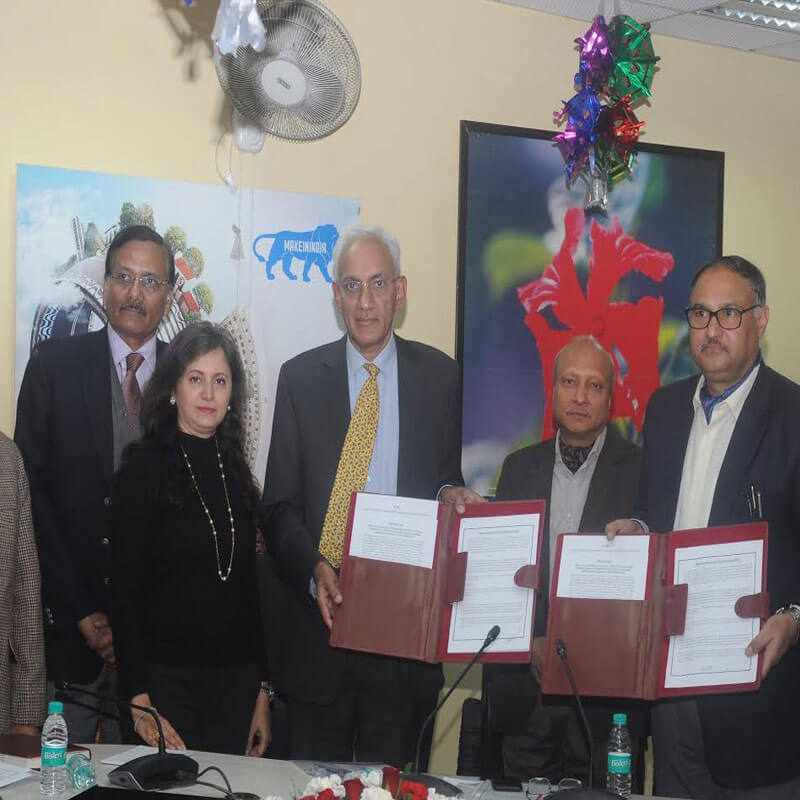
    MUMBAI: Progressing with the impetus towards supporting co-regulation in advertising, the Ministry of Ayurveda, Yoga and Naturopathy, Unani, Siddha and Homoeopathy (AYUSH) has signed an MoU partnering with the Advertising Standards Council of India (ASCI).

    Addressing the cases of misleading advertisements with respect to Ayurveda, Yoga and Naturopathy, Unani, Siddha and Homoeopathy Medicines, treatment and related services, ASCI will comprehensively monitor these advertisements across print and electronic media. ASCI has been given a self-monitoring mandate by the Ministry of AYUSH to identify potentially misleading advertisement in the AYUSH sector and process complaints through its Consumer Complaints Council (CCC). The Ministry of AYUSH will also redirect complaints against misleading advertisements they receive to ASCI, which will be reviewed using ASCI’s code and guidelines. The MoU also requires ASCI to report to the Ministry of AYUSH, advertisements in potential violation of the Drugs and Magic Remedies (Objectionable Advertisements) Act, 1954 and Rules thereunder as well as non-compliance of ASCI’s CCC recommendations for the Ministry of AYUSH to take further action.

    This partnership will put in place, a much needed formal mechanism to monitor & curtail misleading advertisements in the AYUSH sector and will lead to effective implementation though strong support locally from the State Licencing Authorities as well as Centrally through the Ministry of AYUSH.

    Ministry of AYUSH secretary Ajit M. Sharan said, “The arrangement would also ensure that any advertisement making claims for diseases and disorders, in violation of the notification issued by our ministry for indications that have been prohibited from claiming, are immediately brought to our attention. We have entered into an MoU with ASCI to effectively weed out such advertisements so that consumers are protected from unscrupulous manufacturers selling products making false claims. This is vital for the propagation of AYUSH system of medicine within India and beyond.”

    ASCI chairman S.K. Swamy added, “At ASCI, we have been relentlessly working to encourage self-regulation in advertising content and ensuring the protection of the interests of the consumers. AYUSH is among top three sectors where we find a high incidence of misleading advertisements and some of the advertisements in the AYUSH sector claiming treatment of certain diseases in violation of the Drugs and Magic Remedies Regulations have been a cause of concern. ASCI’s partnership with the Ministry of AYUSH will provide the necessary support to our efforts in effectively curtailing misleading advertisements in this sector.”

  • AYUSH-ASCI to regulate advertisements

    AYUSH-ASCI to regulate advertisements

    MUMBAI: Progressing with the impetus towards supporting co-regulation in advertising, the Ministry of Ayurveda, Yoga and Naturopathy, Unani, Siddha and Homoeopathy (AYUSH) has signed an MoU partnering with the Advertising Standards Council of India (ASCI).

    Addressing the cases of misleading advertisements with respect to Ayurveda, Yoga and Naturopathy, Unani, Siddha and Homoeopathy Medicines, treatment and related services, ASCI will comprehensively monitor these advertisements across print and electronic media. ASCI has been given a self-monitoring mandate by the Ministry of AYUSH to identify potentially misleading advertisement in the AYUSH sector and process complaints through its Consumer Complaints Council (CCC). The Ministry of AYUSH will also redirect complaints against misleading advertisements they receive to ASCI, which will be reviewed using ASCI’s code and guidelines. The MoU also requires ASCI to report to the Ministry of AYUSH, advertisements in potential violation of the Drugs and Magic Remedies (Objectionable Advertisements) Act, 1954 and Rules thereunder as well as non-compliance of ASCI’s CCC recommendations for the Ministry of AYUSH to take further action.

    This partnership will put in place, a much needed formal mechanism to monitor & curtail misleading advertisements in the AYUSH sector and will lead to effective implementation though strong support locally from the State Licencing Authorities as well as Centrally through the Ministry of AYUSH.

    Ministry of AYUSH secretary Ajit M. Sharan said, “The arrangement would also ensure that any advertisement making claims for diseases and disorders, in violation of the notification issued by our ministry for indications that have been prohibited from claiming, are immediately brought to our attention. We have entered into an MoU with ASCI to effectively weed out such advertisements so that consumers are protected from unscrupulous manufacturers selling products making false claims. This is vital for the propagation of AYUSH system of medicine within India and beyond.”

    ASCI chairman S.K. Swamy added, “At ASCI, we have been relentlessly working to encourage self-regulation in advertising content and ensuring the protection of the interests of the consumers. AYUSH is among top three sectors where we find a high incidence of misleading advertisements and some of the advertisements in the AYUSH sector claiming treatment of certain diseases in violation of the Drugs and Magic Remedies Regulations have been a cause of concern. ASCI’s partnership with the Ministry of AYUSH will provide the necessary support to our efforts in effectively curtailing misleading advertisements in this sector.”

  • Education sector had most misleading ads in Sept: ASCI

    Education sector had most misleading ads in Sept: ASCI

    MUMBAI: ASCI’s Consumer Complaints Council (CCC) has upheld complaints against 151 out of 199 advertisements in September 2016. Out of 151 advertisements against which complaints were upheld, 75 to the Education category, 39 belonged to the Healthcare category, followed by 10 in the Food & Beverages category, 8 in Personal Care Category and 19 advertisements from other categories.

    Sector wise highlights are as follows:

    EDUCATION:-

    Pratap University: The advertisement’s claims, “Ranked among Top 20 universities of India by ‘The Pioneer’”, and “Foreign University Collaboration UDG University of Montenegro Europe”, were not substantiated with supporting proof, and are misleading.

    ITM University: The advertisement’s claims, “100% Placement of MBA (Supply Chain Mgmt)”, and “Highest Placements in 1st year in central India”, were not substantiated with relevant data (such as evidence of batch size, enrolment forms, and appointment letters received by the students etc.) nor any independent audit or verification certificate. Also, the claims are misleading. The advertisement also claims, “05 Lac Highest package (CTC)” and “3.25 Lac Average package (CTC)”, were not substantiated with evidence to prove that students were offered the claimed salary packages, and also the claims are misleading.

    Sujas: The advertisement’s claims “Institute holds Record for Highest Number of Jobs Provided in Government and Private Sector”, and “100% Guarantee Employment/Job”, were not substantiated with authentic supporting data such as detailed list of students who have been placed through their Institute, contact details of students for verification, enrolment forms and appointment letters received by the students, nor any independent audit or verification certificate. Also, the claims are misleading by gross exaggeration. Also the claim, “Chance to work in a Government office in 6 Months for 10th/12th Passed Students”, was not substantiated with evidence to conclusively prove that 10th / 12th passed students were indeed offered jobs in government offices and also the claim is misleading by ambiguity.

    HEALTHCARE:-

    Cosmic Grace: The advertisement’s claims (in Hindi), “Cure prostate Cancer, Stone, Eye disease”, were not substantiated, and are misleading. Also, specific to the claims related to cure of prostate cancer, Stone, Eye disease, the advertisement is in breach of the law as it violated The Drugs & Magic Remedies Act. Also, the advertisement exploits consumers’ lack of knowledge and is likely to lead to grave or widespread disappointment in the minds of consumers. Advertiser did not produce explicit permission from the political personalities whose reference have been made in the advertisement. This tends to bring these persons into ridicule and disrepute.

    Thosh (Thosh Ion Shower): The advertisement’s claims, “Good news for those who are suffering from Asthma, Respiratory diseases & Breathing problems, Allergy, Migraine Insomnia, And those who are fed up of taking heavy medication and pills for the same. Now Negative Ion therapy has a solution”, were not substantiated, and are misleading by exaggeration.

    Nanophyto Pharmacy (UR Halt): The advertisement’s claims, “100% Natural and Scientific”, “No side effects”, Don’t Stress Just Put A Full Stop To Urinary Incontinence”, “URhalt control Naturally”, “100% natural phytomedicine.”, “No more dependence on adult diapers or surgical procedures”, “Controls urinary incontinence naturally”, “100 percent natural and scientific phytomedicine medicine derived from plants”, “Clinically evaluated formula”, “No side effects”, and “No more dependence on adult diapers and surgical procedures”, were not substantiated with clinical evidence of product efficacy, and are misleading by gross exaggeration.

    FOOD & BEVERAGES:-

    Buzz Live Foods (Pelicana DD Drinker’s Drive): The advertisement’s claims, “Pelicana DD is a beverage when added to acidic alcoholic drinks converts them into a positive health drink which reduces oxidative stress. Performs the role of a whole body stress reducer which gives freshness all over to the drinker”, were not substantiated with supporting clinical data specific to the product, and are misleading by gross exaggeration. The claim is also likely to encourage negligence among consumers regarding alcohol intake. Also the claims, “A Noble Prize winner and Tamil Scientist has invented this product after many years of research”, “Certified by World’s Leading Laboratories” and “World’s first breakthrough product”, were not substantiated with supporting proof, and are misleading by gross exaggeration.

    M.K Agrotech Private Limited (Sunpure Sunflower Oil): The advertisement’s claims, “Get the Natural Vitamins” and “Get the benefits of Vitamins in their pristine form, not to forget Natural Oryazanol”, were not substantiated with supporting technical data for the advertised product, and are misleading.

    Bhagat Marketing Corporation (Amrut Dana Dal):- The advertisement’s claim (in Gujarati), as translated into English, “To be No.1 in India”, was not substantiated with comparative data versus other similar brands in the same category, and with market share sales data, and is misleading by exaggeration.

    PERSONAL CARE:-

    J.K. Helene Curtis Limited (Park Avenue Acti-Cool Deodorant): The advertisement’s claim, “Lasting cooling effect”, was not substantiated adequately with technical data to prove how long the cooling effect stays. Also, the claim is misleading as it implies that the cooling effect is lasting for considerably long time.

    VLCC Personal Care Limited (VLCC Slimmer’s range of products): The product name and the variant name, “Slimmer’s Herbal Infusion with Green Tea” and “Slimming” respectively, are likely to mislead consumers by implication and the benefit of slimming attributable to the advertised product was not substantiated adequately.

    Johnson & Johnson Ltd (Clean & Clear Foaming face wash): The advertisement’s claims, “To give 8 hours’ oil control”, was not substantiated adequately, and is misleading by implication as the claim “control” implies maintenance of sebum level at a particular fixed value whereas, the product is demonstrating “reduction” and not “control” over the eight hour period. Also, the study indicates that even simple water has demonstrated reduction of the sebum levels at different time points.

    OTHERS:-

    Digital Radio Broadcasting Limited (Mumbai) (Redtro 106.4 FM): It was concluded that regardless of the disclaimer in the advertisement, the visual showing a boy hanging out of a moving train shows a dangerous practice without justifiable reason, manifests a disregard for safety and encourages negligence.

    Fever 104 HT Media Ltd. (Fever 104 FM): The advertisement’s claims, “Bangalore’s No.1 FM Station!” and “1 > 2+3+4+5 -FEVER 104 Bangalore has more listeners than the combined listenership of RED FM (No.2), Radio One (No.3), Radio Indigo (No.4) & Mirchi (No.5). Well there is a reason we are called the BAAP”, were not substantiated and are misleading.

    Berger Paints India Limited (Berger Express Painting): The advertisement’s claims, “You will be amazed to see how the trained painters use the hi-tech sanding machines to scrape your walls without any dust and use the automatic paining machines to paint the walls perfectly in no time.” were inadequately substantiated with supporting evidence, and are misleading.
  • Education sector had most misleading ads in Sept: ASCI

    Education sector had most misleading ads in Sept: ASCI

    MUMBAI: ASCI’s Consumer Complaints Council (CCC) has upheld complaints against 151 out of 199 advertisements in September 2016. Out of 151 advertisements against which complaints were upheld, 75 to the Education category, 39 belonged to the Healthcare category, followed by 10 in the Food & Beverages category, 8 in Personal Care Category and 19 advertisements from other categories.

    Sector wise highlights are as follows:

    EDUCATION:-

    Pratap University: The advertisement’s claims, “Ranked among Top 20 universities of India by ‘The Pioneer’”, and “Foreign University Collaboration UDG University of Montenegro Europe”, were not substantiated with supporting proof, and are misleading.

    ITM University: The advertisement’s claims, “100% Placement of MBA (Supply Chain Mgmt)”, and “Highest Placements in 1st year in central India”, were not substantiated with relevant data (such as evidence of batch size, enrolment forms, and appointment letters received by the students etc.) nor any independent audit or verification certificate. Also, the claims are misleading. The advertisement also claims, “05 Lac Highest package (CTC)” and “3.25 Lac Average package (CTC)”, were not substantiated with evidence to prove that students were offered the claimed salary packages, and also the claims are misleading.

    Sujas: The advertisement’s claims “Institute holds Record for Highest Number of Jobs Provided in Government and Private Sector”, and “100% Guarantee Employment/Job”, were not substantiated with authentic supporting data such as detailed list of students who have been placed through their Institute, contact details of students for verification, enrolment forms and appointment letters received by the students, nor any independent audit or verification certificate. Also, the claims are misleading by gross exaggeration. Also the claim, “Chance to work in a Government office in 6 Months for 10th/12th Passed Students”, was not substantiated with evidence to conclusively prove that 10th / 12th passed students were indeed offered jobs in government offices and also the claim is misleading by ambiguity.

    HEALTHCARE:-

    Cosmic Grace: The advertisement’s claims (in Hindi), “Cure prostate Cancer, Stone, Eye disease”, were not substantiated, and are misleading. Also, specific to the claims related to cure of prostate cancer, Stone, Eye disease, the advertisement is in breach of the law as it violated The Drugs & Magic Remedies Act. Also, the advertisement exploits consumers’ lack of knowledge and is likely to lead to grave or widespread disappointment in the minds of consumers. Advertiser did not produce explicit permission from the political personalities whose reference have been made in the advertisement. This tends to bring these persons into ridicule and disrepute.

    Thosh (Thosh Ion Shower): The advertisement’s claims, “Good news for those who are suffering from Asthma, Respiratory diseases & Breathing problems, Allergy, Migraine Insomnia, And those who are fed up of taking heavy medication and pills for the same. Now Negative Ion therapy has a solution”, were not substantiated, and are misleading by exaggeration.

    Nanophyto Pharmacy (UR Halt): The advertisement’s claims, “100% Natural and Scientific”, “No side effects”, Don’t Stress Just Put A Full Stop To Urinary Incontinence”, “URhalt control Naturally”, “100% natural phytomedicine.”, “No more dependence on adult diapers or surgical procedures”, “Controls urinary incontinence naturally”, “100 percent natural and scientific phytomedicine medicine derived from plants”, “Clinically evaluated formula”, “No side effects”, and “No more dependence on adult diapers and surgical procedures”, were not substantiated with clinical evidence of product efficacy, and are misleading by gross exaggeration.

    FOOD & BEVERAGES:-

    Buzz Live Foods (Pelicana DD Drinker’s Drive): The advertisement’s claims, “Pelicana DD is a beverage when added to acidic alcoholic drinks converts them into a positive health drink which reduces oxidative stress. Performs the role of a whole body stress reducer which gives freshness all over to the drinker”, were not substantiated with supporting clinical data specific to the product, and are misleading by gross exaggeration. The claim is also likely to encourage negligence among consumers regarding alcohol intake. Also the claims, “A Noble Prize winner and Tamil Scientist has invented this product after many years of research”, “Certified by World’s Leading Laboratories” and “World’s first breakthrough product”, were not substantiated with supporting proof, and are misleading by gross exaggeration.

    M.K Agrotech Private Limited (Sunpure Sunflower Oil): The advertisement’s claims, “Get the Natural Vitamins” and “Get the benefits of Vitamins in their pristine form, not to forget Natural Oryazanol”, were not substantiated with supporting technical data for the advertised product, and are misleading.

    Bhagat Marketing Corporation (Amrut Dana Dal):- The advertisement’s claim (in Gujarati), as translated into English, “To be No.1 in India”, was not substantiated with comparative data versus other similar brands in the same category, and with market share sales data, and is misleading by exaggeration.

    PERSONAL CARE:-

    J.K. Helene Curtis Limited (Park Avenue Acti-Cool Deodorant): The advertisement’s claim, “Lasting cooling effect”, was not substantiated adequately with technical data to prove how long the cooling effect stays. Also, the claim is misleading as it implies that the cooling effect is lasting for considerably long time.

    VLCC Personal Care Limited (VLCC Slimmer’s range of products): The product name and the variant name, “Slimmer’s Herbal Infusion with Green Tea” and “Slimming” respectively, are likely to mislead consumers by implication and the benefit of slimming attributable to the advertised product was not substantiated adequately.

    Johnson & Johnson Ltd (Clean & Clear Foaming face wash): The advertisement’s claims, “To give 8 hours’ oil control”, was not substantiated adequately, and is misleading by implication as the claim “control” implies maintenance of sebum level at a particular fixed value whereas, the product is demonstrating “reduction” and not “control” over the eight hour period. Also, the study indicates that even simple water has demonstrated reduction of the sebum levels at different time points.

    OTHERS:-

    Digital Radio Broadcasting Limited (Mumbai) (Redtro 106.4 FM): It was concluded that regardless of the disclaimer in the advertisement, the visual showing a boy hanging out of a moving train shows a dangerous practice without justifiable reason, manifests a disregard for safety and encourages negligence.

    Fever 104 HT Media Ltd. (Fever 104 FM): The advertisement’s claims, “Bangalore’s No.1 FM Station!” and “1 > 2+3+4+5 -FEVER 104 Bangalore has more listeners than the combined listenership of RED FM (No.2), Radio One (No.3), Radio Indigo (No.4) & Mirchi (No.5). Well there is a reason we are called the BAAP”, were not substantiated and are misleading.

    Berger Paints India Limited (Berger Express Painting): The advertisement’s claims, “You will be amazed to see how the trained painters use the hi-tech sanding machines to scrape your walls without any dust and use the automatic paining machines to paint the walls perfectly in no time.” were inadequately substantiated with supporting evidence, and are misleading.
  • Magic ‘dawakhana’ TV ads to be curbed

    Magic ‘dawakhana’ TV ads to be curbed

    MUMBAI: The central government has decided to communicate to all state governments asking them to initiate a crackdown on outdoor advertisements of traditional medicines that promise to “magically” cure cosmetic problems and various illnesses. The development comes after earlier bids to curb such advertisements failed.

    In the crackdown on ads that suggested remedies for chronic diseases by reportedly exaggerating the effects of unani and ayurvedic medicines, the government instructed administrative officials to take stern action under the Drugs and Magic Remedies (Objectionable Advertising) Act, 1954.

    Information and broadcasting ministry officials said letters were being sent out following a rap from the Union ministry of Ayurveda, Yoga and Naturopathy, Unani, Siddha and Homeopathy.

    Sometime back, the AYUSH ministry had made amendment in the Drugs and Cosmetic Rules making it illegitimate for traditional medicine manufacturers to advertise cures or treatments for over 35 medical disorders, such as baldness, infertility and short height.

    Manufacturers of Unani, Ayurvedic and Sidhdha drugs, under the new rules, cannot advertise diagnosis, cure, treatment or prevention for cancer, high blood pressure, diabetes, skin darkness, baldness, short height, and greying of hair, sexual performance, dark skin, and cataract, among other.

    In August 2014, the information and broadcasting ministry had recommended the TV channels asking them not to carry “dubious teleshopping advertisements that claimed “magical” cures for cosmetic and health problems, offering viewers “immediate weight loss” and “divine” benefits. However, such ads continued to be shown on cinema, general entertainment, and news channels, mostly in the afternoons between 11pm and 2am.

    Meanwhile, the ASCI banned 152 ads including Godfrey Phillips, Cadila, PepsiCo, ITC, Nivea, LeEco, HUL, Woodland, Shiksha.com, SpiceJet, Tata Value Homes, SBI, Magic Bricks, and Tata Sky in August 2016.

    The Consumer Complaints Council upheld complaints against the 152 out of 209 in for either misleading consumers or not able to substantiate their claim. Of the 152, 27 belonged to the healthcare category. The CCC found the claims of 27 to be either false or misleading or not adequately/ scientifically substantiated and hence violating ASCI’s Code, it said.

    Among the ASCI banned ads are:

    Rajvaidya Shital Prasad & Sons (Hempushpa)

    Chetanta (Get Diabetes cured by acupressure Spring)

    Olefia Biopharma Ltd (Votif Range of Products)

    DHI-Hair Restoration

    Jay Pranav Ayurvedic Pharmaceuticals (Body Plus Capsules)

    Chetan Clinic

    Shri Ram Hospital

    Anupama Ayurvedic Drug Co. (Arish Tanclear Range)

    Divine Care

    Nurture Health Care (Ayurex S Capsule)

    Zenlabs Ethics (Zenovit Soft Gel)

    Dr. Bhavana Shah Fitness Care Pvt. Ltd. (Fat Freeze):

    Jippo African Capsule and African Oil

    Kerni Fitness Pvt Ltd (Fitness Universe)

    Amba Health Clinic

    Rex Remedies Pvt Ltd (Rex Dimaghi Brain Tonic)

    Mohak Bariatrics and Robotics

    German Homeo Laboratories Pvt. Ltd. (German Homeo Laboratory)

    Women’s Centre

    Kudos Laboratories India Limited (Kudoos Range of Products)

    S. S. Hospital

    Pretti Slim Clinic

    Avion Biotech (K lor Free)

    Cadila Healthcare Ltd. (Zydus Acti Life)

    N.I Education Trust (NIMS Blacumin Tea)

    Dr. Dassan’s Ayurvedic Herbal (Body Walk Oil)

    Dr. Rana’s Health Care (Gaino Power Powder)

    Leeford Healthcare Ltd. (Meglow Fairness Cream for Women)

    Oshea Herbals (Oshea Sunblock Cream SPF 40)

    Earlier, in a letter to all district administrators, Uttar Pradesh principal secretary Anita Bhatnagar-Jain had stated that advertisements offering remedies for chronic diseases and magical sex cures were on rise in magazines, newspapers, through wall paintings at public places and even on TV.

    The Advertising Standards Council of India’s consumer complaints council had upheld complaints against 185 out of 230 advertisements last year, including Hashmi Dawakhana which, through its ads, promised to “nullify the fear of sex, increase the penis size by 1–2 inches, makes one more energetic with super sex power with the consumption of just one strip, with a guarantee.”