Tag: ASCI

  • D. Shivakumar elected new chairman of ASCI

    D. Shivakumar elected new chairman of ASCI

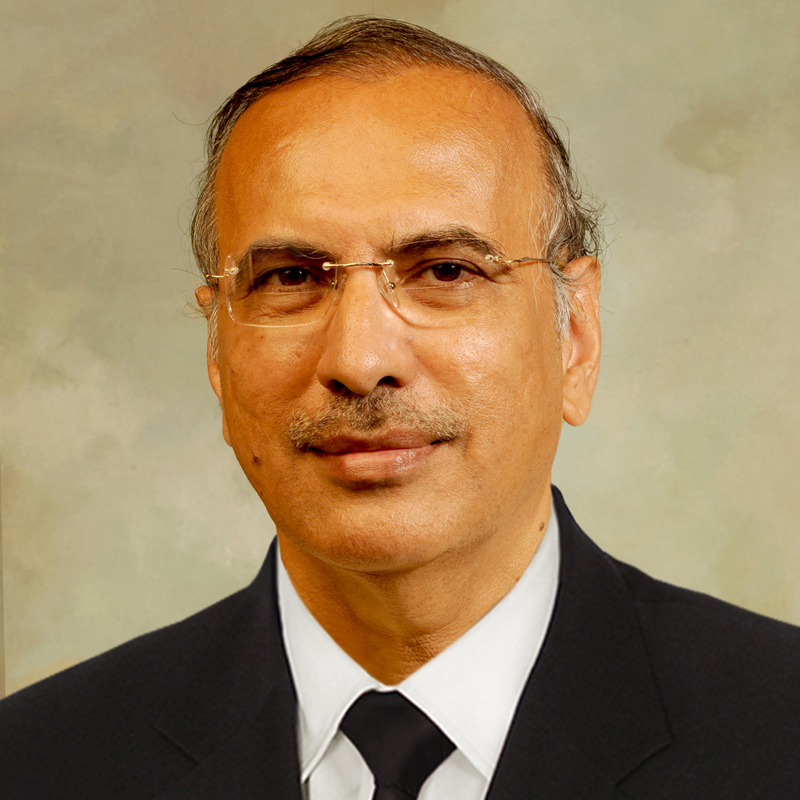
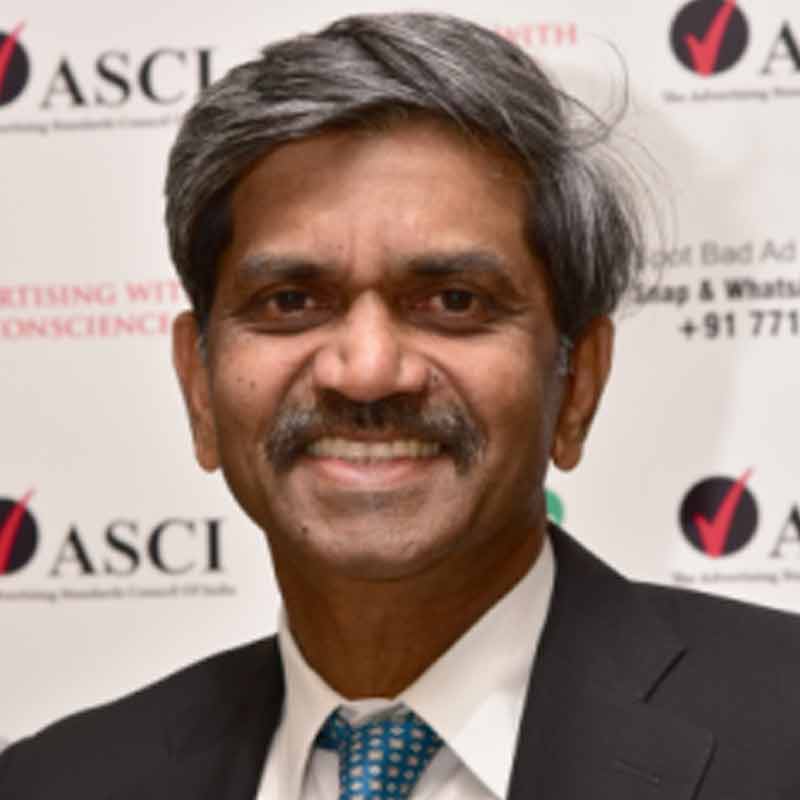
    MUMBAI: The Advertising Standards Council of India (ASCI) has appointed D. Shivakumar as the new chairman of the board for ASCI. 

    Shivakumar is the group executive president of corporate strategy at Aditya Birla Group.

    As the member of the board of governors for three years, supporting self-regulation, Shivakumar is an accomplished business leader having spent over 19 years in sales, marketing and general management positions across consumer products and the luxury industry.

    Sony Pictures Networks India President of network sales and international business Rohit Gupta has been elected as the vice-chairman while Media Brands CEO Shashidhar Sinha has been re-appointed as the honorary treasurer.

    Members of the Board of Governors include Harish Bhat (director, Tata Global Beverages.), Subhash Kamath (Managing Partner, BBH Communications India), Sandeep Kohli (executive director and vice president for personal care Hindustan Unilever Ltd), Prof S.K. Palekar (adjunct professor and advisor – Executive Education Institute of Management Technology), .S.  Rajan (managing director, Ketchum Sampark), K.V. Sridhar (founder and chief creative officer Hyper Collective Creative Technologies), Abanti Sankaranarayanan (former vice chairperson, CIABC), Girish Agarwal (director, Dainik Bhaskar Group), Madhusudan Gopalan (CEO, Procter & Gamble Hygiene and Health Care), Prasun Basu (president – South Asia Nielsen India), Sivakumar Sundaram (president- revenue Bennett, Coleman & Co), Vikas Agnihotri (director sales, Google India) and Umesh Shrikhande (CEO, Taproot India).

    The outgoing chairman of ASCI Abanti Sankaranarayanan said, “2017-18 has been another strong year for ASCI as we have made significant advancements towards building our organizational muscle, external credibility and strong collaborations. Our stringent guidelines, seamless processes and the dedication and hardwork of our Consumer Complaints Council have contributed to restricting the use of misleading advertisements and enhance self regulation. ASCI’s momentous achievements for the year include successful completion of three year-long collaboration with Department of Consumer Affairs, renewal of Memorandum of Understanding (MoU) with Food Safety Standards Authority of India, introduction of “Guidelines for Celebrities in Advertising” and inclusion in AYUSH’s Empowered Committee to control misleading ads of AYUSH drugs. As the Chairman for ASCI for the year 2017-18,I am extremely proud to be a part of this journey and I am confident that under Shivakumar’s Chairmanship ASCI will continue to grow swiftly and steadily.”

    The incoming chairman, D. Shivakumar said, “I want to thank Abanti for her stewardship. We live in changing times with respect to information, media and trust of society. ASCI has been built on the foundation of self-regulation and the wisdom of the previous chairmen and the board. It’s my privilege to do the role now”.

    The Consumer Complaints Council (CCC) established by ASCI is an independent body (majority of its members drawn from civil society members like consumer activists, lawyers, doctors, educationists), the CCC met 47 times during the year and deliberated on complaints against 2641 advertisements. Complaints against 1177 advertisements were upheld, while for 483 they were not upheld. The significant increase in the number of complaints as compared to 2016-17 numbers (2300) is largely due to ASCI’s Suo Moto Monitoring project viz. National Advertisement Monitoring Services (NAMS). The Independent Review Process (IRP) received a very favourable response and 30 IRPs were conducted during this year.

  • ASCI reports 732 complaints of misleading AYUSH ads

    ASCI reports 732 complaints of misleading AYUSH ads

    MUMBAI: Ministry of AYUSH had signed a memorandum of understanding with Advertising Standards Council of India (ASCI), for suo moto monitoring of Ayush advertisements appearing in print and TV media and reported 732 complaints in the period 20 January 2017 to 19 January 2018. The ministry has been receiving written and online complaints of misleading advertisements of Ayush medicines including herbal medicines/products.

    Six states/UTs including Delhi, Maharashtra, Gujarat, Kerala, Karnataka and Chandigarh have reported 573 instances of such misleading advertisement during the last three years, Minister of State (Independent Charge) for AYUSH, Shripad Yesso Naik said in a written reply to a question in Rajya Sabha on Tuesday.

    Such complaints are also registered in the GAMA (Grievances Against Misleading Advertisements) portal maintained by the Department of Consumer Affairs (DoCA). About 809 complaints of advertisements pertaining to Ayush and herbal medicines/products have been received during the period from April 2015 to March 2018.

    The provisions of Rule 158-B of the Drugs & Cosmetics Rules, 1945 provide for pilot studies for generating proof of safety and effectiveness for grant of licence to manufacture for sale certain categories of Ayurveda, Siddha and Unani drugs. As such the terms ‘herbal medicines’ and ‘clinical trials’ are not provided or prescribed in the provisions of Drugs & Cosmetics Act, 1940 and Rules thereunder pertaining to ASU drugs but certain complaints received in the Ministry referred to these aspects.  

    Two incidents of death have come to the notice of Ministry of AYUSH after consuming herbal medicines/products, one in Tamil Nadu and one in Kerala.

    In order to check the veracity of misleading advertisements and claims of AYUSH products, the government has taken following steps-

    I. State governments have been directed for appointing Gazetted Officers under section 8 (1) of the Drugs and Magic Remedies (Objectionable Advertisements) Act, 1954 to  enter, search any premises  or examine or seize any record which contravenes any provisions of the Act. About 621 Gazetted officers for this purpose are reported to have been appointed in 22 states. 

    II. Complaints of misleading advertisements of Ayurvedic, Siddha, Unani and Homoeopathic medicines are forwarded to the concerned State Licensing Authorities for action in accordance with the provisions of Drugs & Cosmetics Act, 1940 and Rules thereunder and Drugs & Magic Remedies (Objectionable Advertisements) Act, 1954 and Rules thereunder. Out of the 809 complaints reflected on GAMA portal, about 274 complaints have been resolved and 585 complaints forwarded to concerned state authorities for appropriate action in accordance with the legal provisions. States have reported action taken by them against the defaulters.

    III. Ministry of AYUSH signed MoU with Advertising Standards Council of India (ASCI) to undertake monitoring of the misleading AYUSH –related advertisements appearing in print and TV media and bring the instances of improper advertisements to the notice of the State Regulatory Authorities for taking necessary action. ASCI reported that 233 alleged advertisements were rectified or withdrawn by the advertisers and about 456 complaints were escalated to the state regulators for appropriate action.

    IV. On the request of Ministry of AYUSH, Ministry of Information & Broadcasting issued an advisory to all media channels to ensure strict compliance of the provisions of Drugs & Cosmetics Act, 1940 and Drugs & Magic Remedies (Objectionable Advertisements) Act, 1954 in respect of AYUSH health products/drugs being advertised. TV channels have been advised to advertise only those AYUSH products, which have valid manufacturing license.

    V. Provision of surveillance of AYUSH advertisements has been kept in the central scheme implemented for safety monitoring of ayurvedic, siddha, unani and homeopathy drugs under the pharmavigilance initiative. 

  • Govt. mulls norms tweak on women’s portrayal in digital media

    Govt. mulls norms tweak on women’s portrayal in digital media

    NEW DELHI: The Indian government is proposing to amend relevant laws relating to representation of women in mass media with a view to make the law contemporary and keep pace with changing technologies like OTT and other digital services.

    The India government had enacted the Indecent Representation of Women (Prohibition) Act (IRWA), 1986 to prohibit indecent representation of women through advertisements, publications, writings, paintings, figures or in any other manner. Since the enactment of the Act, technological evolution has resulted in the development of new forms of communication, such as internet, multi-media messaging, cable television, over-the-top (OTT) services and applications like Skype, Viber, WhatsApp, Chat On, Snapchat and Instagram.

    According to a statement put out by the government, technological advancements has necessitated widening the scope of the law so as to cover all forms of media. The proposal to amend the Act was introduced in Parliament in 2012, which referred the issue to a Parliamentary Standing Committee.

    The Ministry of Women and Child Development (WCD) has proposed amendments to widen the scope of Indecent Representation of Women (Prohibition) Act (IRWA), 1986 keeping in mind the recent technological advancement in the field of communications.

    Based on the observations made by the Parliamentary Standing Committee and recommendation made by the National Commission for Women and wide consultations with civil society groups, the following amendments have been recommended, amongst other things, by the ministry:

    Amendment in definition of term advertisement to include digital form or electronic form or hoardings, or through SMS and MMS.

    Amendment in definition of distribution to include publication, license or uploading using computer resource or communication device.

    Penalty similar to that provided under the Information Technology Act, 2000.

    Creation of a centralized authority under the National Commission of Women (NCW). This body will have representatives from Advertising Standards Council of India, Press Council of India, Ministry of Information and Broadcasting and one member having experience of working on women issues.

    This centralized body will be authorized to receive complaints or grievances regarding any programme or advertisement broadcast or published and investigate/examine all matters relating to the indecent representation of women.

    Also Read :

    Women portrayal: Better days are emerging

    Women employment in film and television industry drops: Study

  • ASCI part of AYUSH committee to control misleading ads

    ASCI part of AYUSH committee to control misleading ads

    MUMBAI: In a pre-emptive step, the Ayurveda, yoga and naturopathy, Unani, siddha and homoeopathy (AYUSH) ministry has constituted a committee to control misleading advertisements and exaggerated claims of AYUSH drugs. 

    The Advertising Standards Council of India (ASCI) is the only non-government member in the empowered committee of seven members comprising the AYUSH ministry, health and family welfare and the department of consumer affairs representatives. 

    The constituted committee will be empowered to review and monitor the implementation of the provisions of The Drugs and Magic Remedies (Objectionable Advertisement) Act, 1954 and rules thereunder for curbing misleading advertisements of AYUSH drugs. 

    The committee will be authorised to make recommendations for regulatory action against misleading advertisements and advise the central government for issuing any specific direction or advisory and for taking the necessary steps. The committee will also be responsible for reviewing the actions taken by the states and the pharmaceutical vigilance centres for surveillance and control of misleading advertisements of AYUH drugs.

    ASCI chairman Abanti Sankaranarayanan said, “ASCI has been closely working with the ministry to ensure that Indian consumers are not exposed to false information and have access to safe drugs. We are confident that the new committee will act as a catalyst to the process of self-regulation in advertising, thus safeguarding consumers from deceptive advertisements that can negatively impact them.”

    The meeting of the constituted committee will be convened every six months or as and when required to review progress and make recommendations to accomplish its objective of controlling misleading advertisements.

    Established in 1985, ASCI seeks to ensure that advertisements conform to its code for self-regulation, which requires advertisements to be legal, decent, honest and truthful and not hazardous or harmful while observing fairness in competition. The council looks into complaints across all media, including print, TV, radio and hoardings.

  • Complaints against misleading ads rose by 50% in 2017

    Complaints against misleading ads rose by 50% in 2017

    MUMBAI: The number of cases registered with regard to misleading advertisements has been on the rise. Grievance against Misleading Advertisements is a separate portal by the Department of Consumer Affairs to dispose of such complaints.

    Over the last three years, there has been a steady rise in the number of cases registered. In 2015, the launch year, there were 641 cases that shot up to 2032 the next year. Last year, 2017, saw a whopping 3302 cases being submitted to the portal.

    The departments had entered into a memorandum of understanding with the Advertising Standards Council of India (ASCI), a self-governing body, to process misleading ads in the print and electronic media, which will be received on the portal.

    In a reply to a question asked in the parliament, Minister of State for Information and Broadcasting (MIB) Rajyavardhan Rathore said that there was no pre-censorship done for TV channels but all broadcasters needed to abide by advertising rules set by the Cable TV Act and also could not telecast ads found violating ASCI’s codes.

    Also Read;

    Healthcare products lead in ASCI norms breach, 143 complaints upheld

    Ad spend on connected TV globally slated to grow in 2018

  • MIB recants, says only explicit condom ads banned during the day

    MIB recants, says only explicit condom ads banned during the day

    MUMBAI: After stirring the hornet’s nest on the contentious issue of restricting condom ads to only water-shedding hours, the Ministry of Information and Broadcasting (MIB) has clarified that such ads can be aired on TV during daytime. 

    In an advisory earlier this month, the MIB had asked all TV channels to air condom advertisements only between 10pm to 6am to avoid exposure of such material to children.

    But in a clarification dated 21 December 2017, the ministry said the ban on condom advertisements during daytime applies only to commercials that have sexually explicit content.

    In a release, the ministry quoted that “advertisements that do not sexually objectify women and are aimed at informing citizens regarding devices/products/medical interventions to ensure safe sex are not covered under the said advisory.”

    The ministry had earlier stated that it had taken note of objections regarding condom ads that are “targeted at a particular age group” being aired on some channels that are considered as ‘indecent especially for children.’ It used Rule 7 (7) and Rule 7 (8) of the Cable TV Networks Rules, 1994 to tell broadcasters to refrain from telecasting ads of condoms that could be considered inappropriate/indecent for viewing by children. 

    The relaxation on the issue came after the Rajasthan high court issued a notice to the Centre challenging an advisory of the MIB barring TV channels from showing condom ads during prime time.

    The petition underlined the fact that condom ads don’t violate Rule 7 of the Cable Television Network Rules, 1994 which apply to anything which endangers the safety of children or create in them any interest in unhealthy practices or shows them begging or in an undignified or indecent manner. 

    The Advertising Standards Council of India (ASCI) had approached the ministry earlier this month for guidance after several people complained regarding the inappropriate nature of the condom ads being telecast during primetime viewing on most channels. 

    Also Read:

    I&B tightens up on condom ads on TV

    ‘Sanskari’ India wants condom ads off primetime

    MIB categorises all non-Hindi and non-Eng TV channels as regional

  • ‘Sanskari’ India wants condom ads off primetime

    ‘Sanskari’ India wants condom ads off primetime

    MUMBAI: India is a country that takes offence at the slightest suggestion of titillation. The Advertising Standards Council of India (ASCI) has approached the ministry of Information and Broadcasting (MIB ) for withdrawing condom ads that are telecasted during prime time or ‘family viewing time’. The council received several complaints on the kind of content condom brands show in ads, which may not be suitable for kids and teenagers. The ASCI, in its letter to the ministry, has specifically stated that ads that are explicit and vulgar in nature should be aired only between 10 pm to 6 am.

    The most recent instance wherein our sanskari-ness was awakened was when Mankind put up banners across Gujarat that had Sunny Leone advertising condoms with a tagline to ‘Play Navratri but with love’ that did not impress people one bit. Twitter and Facebook were bombarded with hate posts, forcing Manforce to eventually pull down the banner.

    ASCI’s consumer council looks into the content of advertisements and decides whether the ad is a s per its self-regulation code or not. Speaking to Indiantelevision.com, ASCI secretary general Shweta Purandare said, “Given the nature of the category (condoms), some sort of intimacy shown in the ad is inevitable but viewers are upset about them being shows during family viewing time. We replied to a few complaints that were forwarded to us by the MIB , by stating that those ads were not considered objectionable as per ASCI’s code but they (I&B) could consider the timing.”

    Vouching for brands, Vizeum Media Services associate vice president Saumya Agarwal adds, “One cannot penalise the product for the incorrect/unacceptable treatment in their communication. The guidelines must be placed towards how should the creatives be designed, without demeaning any gender in any way, etc., but to put an embargo on their exposure time is not justified.”

    Calling it an extremely myopic and ad hoc approach to solving a much larger issue, Agarwal notes that given the plethora of freely available information across multiple media, this would hardly make any difference. In fact, it is an irony that a country that is promulgating sex education is also fighting to ban condom advertising to the same audience.

    Doordarshan during the 1980s had declared that sanitary pads are ‘unmentionable’ and were not allowed to be advertised before 10 pm. That created a vicious circle for the product since young girls were the primary target. Brand-Building.com brand strategist and founder Ambi MG  Parameswaran is of the opinion that there is nothing wrong with pushing what is known as ‘unmentionable’ products into a more ‘adult’ time slot. “We should remember that condoms are in fact health products, they are for family planning and for prevention of sexually transmitted disease and that needs to be kept in mind when pushing condom ads to midnight slot.”

    On a different note, Harish Bijoor Consults brand strategy expert and founder Harish Bijoor said that laws such as these will help protect the innocence of young audiences that are besotted with television. “If implemented, I do believe that the meaning of explicit should be common to all categories and not condoms alone. If showing skin above the knee is explicit, it should be common to every category for sure. If a skin cream can get away with it, why not condom brands,” he adds.

    Pointing out that brands need to self-regulated before they put out ads, Purandare added, “We are not against advertising of products but the execution is very important. Some ads are quite bold in nature and may not be appropriate for kids and we can’t allow them to show pornography at prime time. Advertisers have to be more conscious about what they put out.”

    One might want to consider the fact that even if the I&B accepts the proposal, kids and teenagers are fairly active on digital as well. They can view the content on digital platforms making it a moot point. Havas India CCO Nima Namchu believes that the content can be delivered to the target audience with a relatively higher degree of accuracy on digital media. But if the idea is to regulate content so that explicit content is not viewed by our children, then this step with ads on television will perhaps be followed by similar requests with digital content as well.

    Doesn’t the nature of the product need ads to be creative with raunchiness and ‘explicit’ communication? Our media experts tend to think otherwise. While Namchu thinks that is not the case, Agarwal adds that categories like alco-bev (Alcohol and Beverages), condoms, feminine hygiene need to be portrayed sensitively without falling into the obvious traps and there must be some sure shot ‘socially responsible’ guidelines in order to prevent marketers crossing the line of objectification of women which is indeed objectionable!

    If and when the move happens, it will impact brand communication and marketing spends for these brands on television as the viewership between 11 pm to 5 pm is negligible. Advertisers would be forced to find alternative routes, use surrogate advertising and move to digital platforms. Harish Bijoor added, “The loss is more for the medium of television rather than for the brand player. The brand player will find other means to advertise. Water will find its own level.”

    Purandare also points out that whether prime time ban would only be applicable for certain products or the entire category would be I&B’s call.

    A head of a big TV network, who did not wished to be named, says it is “hypocritical “ on the part of any government or regulator to say condom ads pollute Indian culture or corrupt young minds, especially when government  itself runs awareness campaigns for HIV/AIDS.

    “At a time when bursting population is becoming a problem for a government and the country, saying young people should not be taught or made aware of sexual activities of humans, especially as it has a big health angle (prevention against AIDS, etc.), any effort to push ads of condoms to unearthly hours past midnight defeats the whole purpose of sex-health education of young people,” the TV exec adds. 

    However, sources in Ministry of Information and Broadcasting (MIB) said no decision has been taken on the issue yet, though, prima face, some content and it’s depiction in such ads are a bit explicit .

    KamaSutra and Durex declined to comment on the issue.

  • ASCI dismisses HUL plaint against two Emami products

    ASCI dismisses HUL plaint against two Emami products

    MUMBAI: The Independent Review Committee (IRC) of The Advertising Standard Council of India (ASCI), chaired by Justice Mohit Shah (retired), has summarily dismissed two complaints filed by HUL against Emami Limited’s Fair and Handsome Instant Fairness Facewashes over the last six months.

    The complaints filed by HUL with ASCI against the two face wash brands of Fair and Handsome, was reviewed by Justice Shah at a meeting attended by teams from Emami and HUL. He went at length to look at the merit of every point raised, before arriving at his recommendations.

    One model of the brand was contested on the language used, “Instant Fairness Face Wash”, apart from raising seven more objections on the brand. Rigourous clinical study reports, consumer evidence and research studies were presented to prove how the face wash delivers, which was accepted by the chairperson.

    In the second case, HUL had raised objection to the language, “100% Oil Clear Instant Fairness Face Wash”, contesting that this was misleading, while the clarification was “clearing excess oil up to 100%” which was clearly mentioned on the pack. Post all the submissions, Justice Shah commented that, “I find substance in the submission made by the advertiser that the claim, “100% Oil Clear” is to be understood as “100% excessive oil clear”. The findings in the clinical study as well as the consumer study support this claim.”

    HUL had raised 11 more objections on the 100% Oil Clear Instant Fairness Face Wash, all of which were conclusively proven through clinical studies, consumer studies and reports by leading market research agencies, leading to dismissal of all 18 objections on both products.

    In another recent instance, ASCI had dismissed the disparagement case filed by HUL against Fair and Handsome Fairness Cream.

    HUL had filed a complaint with ASCI on the brand’s recent TVC, where the complainant had claimed that the advertisement disparaged HUL’s product – Fair & Lovely Fairness Cream. The Fast Track Complaints Panel (FTCP), after viewing the TVC, product packaging and noting Emami’s response, were of the view, “There are many aspects of dissimilarities between the product shown in the TVC and the complainant’s product.” Hence, the complaint was not upheld.

  • ASCI shall continue efforts towards fairness in ads, says new chairman Abanti Sankaranarayanan

    ASCI shall continue efforts towards fairness in ads, says new chairman Abanti Sankaranarayanan

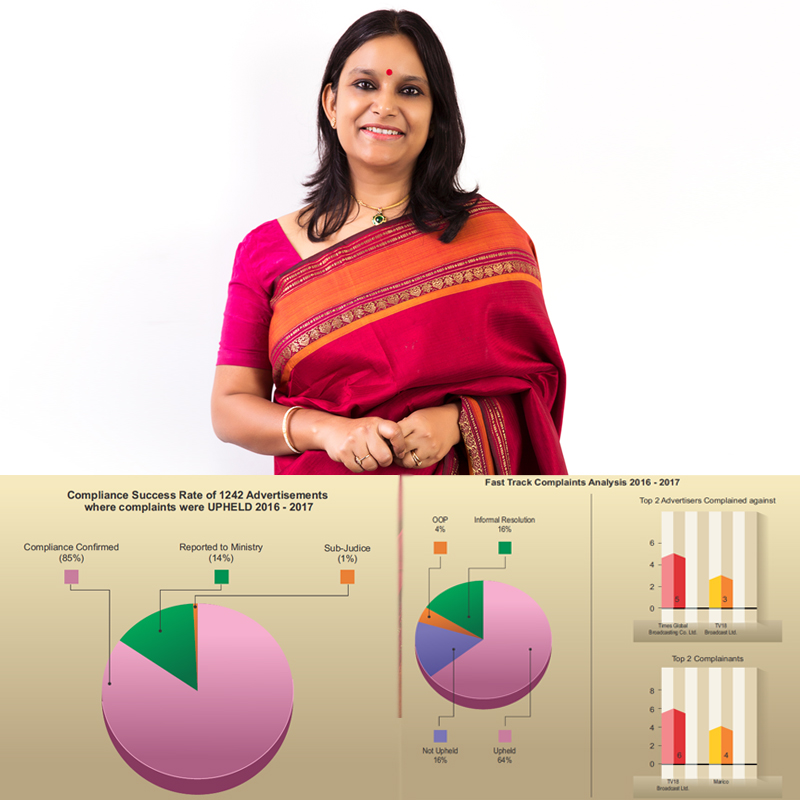
    MUMBAI: At the board meeting of The Advertising Standards Council of India (ASCI) held after the AGM on Thursday, the former vice-chairman of Confederation of Indian Alcoholic Beverage Companies (CIABC) Abanti Sankaranarayanan was unanimously elected as the chairman of the board of ASCI.

    Sankaranarayanan, who is also the chief strategy and corporate affairs officer at Diageo India, and member of its executive committee, said, “It’s heartening to see ASCI’s relentless efforts being recognised by the judicial body, regulators and government bodies and we shall take all efforts to continue to keep it so.”

    She added: “Core to ASCI’s mission to ensure protection of the interests of consumers, through supporting fairness in advertising, ASCI shall carry on to keep true with its consumer focused tagline, “So you can trust advertising.”

  • 24 education, healthcare and personal care ads found misleading by ASCI

    24 education, healthcare and personal care ads found misleading by ASCI

    MUMBAI: ASCI’s Consumer Complaints Council (CCC), in June 2017, upheld complaints against 62 out of 126 advertisements. Of 62 advertisements against which complaints were upheld, 23 belonged to the Healthcare category, 17 to the Education category, followed by 10 in the Food and Beverages category, six in the Personal Care category, and six advertisements from other categories.

    Direct Complaints

    ASCI processed complaints against the following advertisements from general public, industry as well as from the Department of Consumer Affairs’ Grievances Against Misleading Advertisements (GAMA) Portal. Of 99 advertisements, complaints against 38 advertisements were upheld.

    Healthcare

    The CCC found the following claims of 14 advertisements in health care products or services to be either misleading or false or not adequately / scientifically substantiated and hence violating ASCI’s Code. Some of the health care products or services advertisements also contravened provisions of the Drugs & Magic Remedies Act (DMR Act), Drugs and Cosmetics Rules (D&C Rules) and Chapter I.1 and III.4 of the ASCI Code. Complaints against the following advertisements were upheld.

    Rediscover Clinic Pvt. Ltd. (Rediscover Laser, Slimming, Skin and Hair Clinic): The advertisement’s claim, “Lose up to five kilograms weight with 21 centimetres from overall body”, was not substantiated with supporting clinical evidence, and with treatment efficacy data, and is misleading by exaggeration.

    SBS Biotech (Unit-II) Ayurvedic Division (Dr. Ortho Capsules & Ointment): The advertisement’s claim, “getting rid of Joint Pains by using Dr. Ortho Capsules” was entirely unsubstantiated and misleading by exaggeration; the advertiser had not submitted any authentic data, nor substantiated with clinical evidence, in particularly about the efficacy of the said Dr. Ortho Capsules in curing joint pains; and is hence misleading by gross exaggeration.

    Food and Beverages

    PepsiCo India Holding P. Ltd. (Pepsi Gatecrash): It was noted that the font size of the disclaimer in the advertisement was in font size of six which is illegible and unreadable. Thus, it was concluded that it is clear that the advertisement had violated the ASCI Guidelines for Disclaimers by using a much smaller font for the disclaimers in the TV advertisement.

    Narang Group (Ocean Active Water): For the advertisement’s claims, “Is Your Water Keeping up with your Lifestyle”, “Inspiring Smarter Hydration” and “Get Smarter Hydration Everyday” it was opined that the advertised product, compared with normal water and further considering the sugar levels in the product, could not be promoted as an equal or better alternative than normal drinking water. The advertiser has chosen the comparison in such a way as to bestow an artificial advantage on the advertised product. Therefore, it was concluded that the advertisement was false and misleading by ambiguity and implication. Further, regarding the objection on the supers in the advertisement, the advertiser admitted that the supers were smaller than the required size. Thus, the advertisement violated the provisions of the ASCI Codes as well as ASCI Guidelines on Disclaimers.

    Personal Care

    Lotus Herbals Ltd. (Lotus Herbals Limited Safe Sun UV Screen Matte Gel): The advertisement’s claim, “Lotus safe sun karega harmful rays se fight”,  suggests that Lotus Safe Sun products including Matte GEL SPF 50 will protect skin from harmful rays of the sun as well as harmful rays from the stadium floodlights.  Further, another advertisement of the product shows UVA and UVB rays getting reflected from the model’s face thereby implying that the product provides protection from UVA and UVB rays. These claims made in the advertisements were not substantiated with scientific evidence of product efficacy, and with technical tests/trials reports from an independent third party.  Also, these claims are misleading by implication and exaggeration.

    Emami Limited (Emami Kesh King Ayurvedic Oil): The advertisement’s claim, “No hair-fall, dandruff or dryness” was considered to be an absolute claim. Also, the advertiser did not substantiate the claim of “weak matrix cells in the roots of the hair are activated by this oil”. Further in respect of the claim, “pictures and names of  two  doctors  and  one hair  expert  from India, Japan and Australia” in the advertisement, saying  “Recommended  by  world’ s  best hair experts”, the advertiser had stated in their response in respect of this complaint that they had modified this claim to “renowned hair experts”, however this being a regional advertisement, the meaning of few words/statements have been slightly changed from what was handed to them in Hindi. It was disagreed with the advertiser’s submission as it was observed that the complaint under reference was in Gujarati and it continued using the claim which was found objectionable earlier as it was considered as false and misleading.

    Further, in respect of the exaggerated claims said to be made in the testimonial by Juhi  Chawla, and that it is misleading and creates undue influence on buyers, it was observed that the advertiser has used a testimonial by a celebrity which states that she believes in the product and trusts it. The advertiser did not submit any evidence of the celebrity lending her name to this particular communication and any of the claims therein.

    Also, several claims in the same communication by the celebrity were considered to be unsubstantiated and misleading. It was not agreed upon with the advertiser’s argument that the celebrity had only expressed her satisfaction with the usage of their products and its benefits; and that this is not a claim made by them but a satisfaction statement. Also it was opined that the said statement or declaration of satisfaction by the celebrity, made in praise or commendation of the product and publicised through an advertisement, becomes an advertisement in the understanding of the common man, since the consumers are most likely to be influenced by such publicity.

    Lastly, it was noted that there was no information or evidence submitted by the advertiser to show that the celebrity concerned has had “adequate information about, or experience with the product or service being advertised”. In view of the above overall factors, and in the absence of any document submitted by the advertiser in support of the apparent commendation given by the celebrity, it was concluded that this claim in the advertisement has contravened the provisions of ASCI’s Guidelines for Celebrities in Advertising.

    Education

    The CCC found following claims in the advertisements by four different advertisers were not substantiated and, thus, violated ASCI Guidelines for Advertising of Educational Institutions. Hence complaints against these advertisements were upheld.

    Satyadeva Institute: The advertisement’s claims, “No. 1 Institute in Asansol” and “No. 1 Result Maker Institute” were not substantiated with any verifiable comparative data of the advertiser’s institute and other similar institutes, or any third party validation; and are misleading by exaggeration. Also the claims, “Faculties from Patna”, “Test the Best”, and advertisements showing published photographs of students, are false and misleading by exaggeration.

    Vision IAS (Vision IAS Classroom): The advertisement’s claims, “15 ranks in top 20 and 70+ ranks out of top 100 successful candidates in the Civil Services Exam 2016” which was given below the photographs of six individuals with a line above the photographs reading “OUR CSE 2016 RESULT”, was not substantiated. Thus, the claims were false and misleading by gross exaggeration.

    Others

    Voltas Ltd. (Voltas All Star Inverter A/C: The font size of the disclaimers in the advertisement measures about 13 pixels, and hence the advertisement violated the ASCI Guidelines for Disclaimers (“For high definition images, the height of the text lower case elements shall be not less than 18 pixels [18 lines] in a 1080 line raster.”).

    Bharat Petroleum Corp Ltd.: The advertisement’s claim, “Go Green with Speed for it reduces emissions”, was unsubstantiated with supporting data, and therefore is misleading by exaggeration and omission.

    Suo Moto action

    The advertisements given below were picked up through ASCI’s Suo Moto surveillance of print and TV media via National Advertisement Monitoring Services (NAMS) project. Of 27 advertisements, 24 advertisements were considered to be misleading. Of these, 13 belonged to the Education category, nine belonged to the Healthcare category and two were from the Personal Care category.

    Healthcare

    The CCC found the following claims of nine advertisements in health care products or services to be either misleading or false or not adequately / scientifically substantiated and hence violating ASCI’s Code. Some of the health care products or services advertisements also contravened provisions of the Drugs & Magic Remedies Act (DMR Act), Drugs and Cosmetics Rules (D&C Rules) and Chapter I.1 and III.4 of the ASCI Code. Complaints against the following advertisements were upheld.

    Total Dental Care Pvt. Ltd. (Sabka dentist): The advertisement’s claim, “Sabka Dentist is India’s largest and most accessible chain of dental clinics….” was inadequately substantiated and also misleading by exaggeration.

    Rediscover Clinic

    The advertisement’s claim, “No pain, no surgery, no downtime, no scar, permanent reduction of stubborn fat & clinically proven, and no side effects. Lose five to eight centimetres through LYPO-R (Non-invasive, painless)” was not substantiated with any clinical evidence and with treatment efficacy data and was therefore false and misleading by gross exaggeration.

    Education

    The CCC found following claims in the advertisements by 13 different advertisers were not substantiated and, thus, violated ASCI Guidelines for Advertising of Educational Institutions. Hence complaints against these advertisements were upheld.

    Ambition School of Competitive Education: The advertisement’s claim, “Most trusted Institute @ Purnea, Bhagalpur & Muzaffarpur” was not substantiated with any comparative data of their institute vis-à-vis other similar institutes in the three towns mentioned in the advertisement; nor was any independent third-party validation or research to prove this claim submitted. Further, in respect of the claim, “Scholarship worth Rs. 1 crore,” no information was submitted to show the details of the scheme including the criteria for the same, details of students who had been given such scholarships in the past, and independent third-party validation or certification to substantiate this claim. In view of the above, it was concluded that the advertiser had failed to substantiate the claims they had made in the advertisement; and therefore, the claims made by the advertiser were false, and misleading by exaggeration.
    Personal Care

    X Men Instant Fairness Face Cream: The advertisement’s claims, “long-lasting fairness, spot reduction, and contained SPF 15”, were unsubstantiated and misleading by gross exaggeration.

    Tianjin Tianshi India Pvt. Ltd. (Airiz Sanitary Napkin): The advertisement’s claim, “World’s No. 1 Brand” was not substantiated with any relevant information, or authentic comparative data vis-à-vis the data of other similar brands, or any independent third-party validation or research to prove this claim. It was therefore concluded that the claim was false, and misleading by exaggeration.