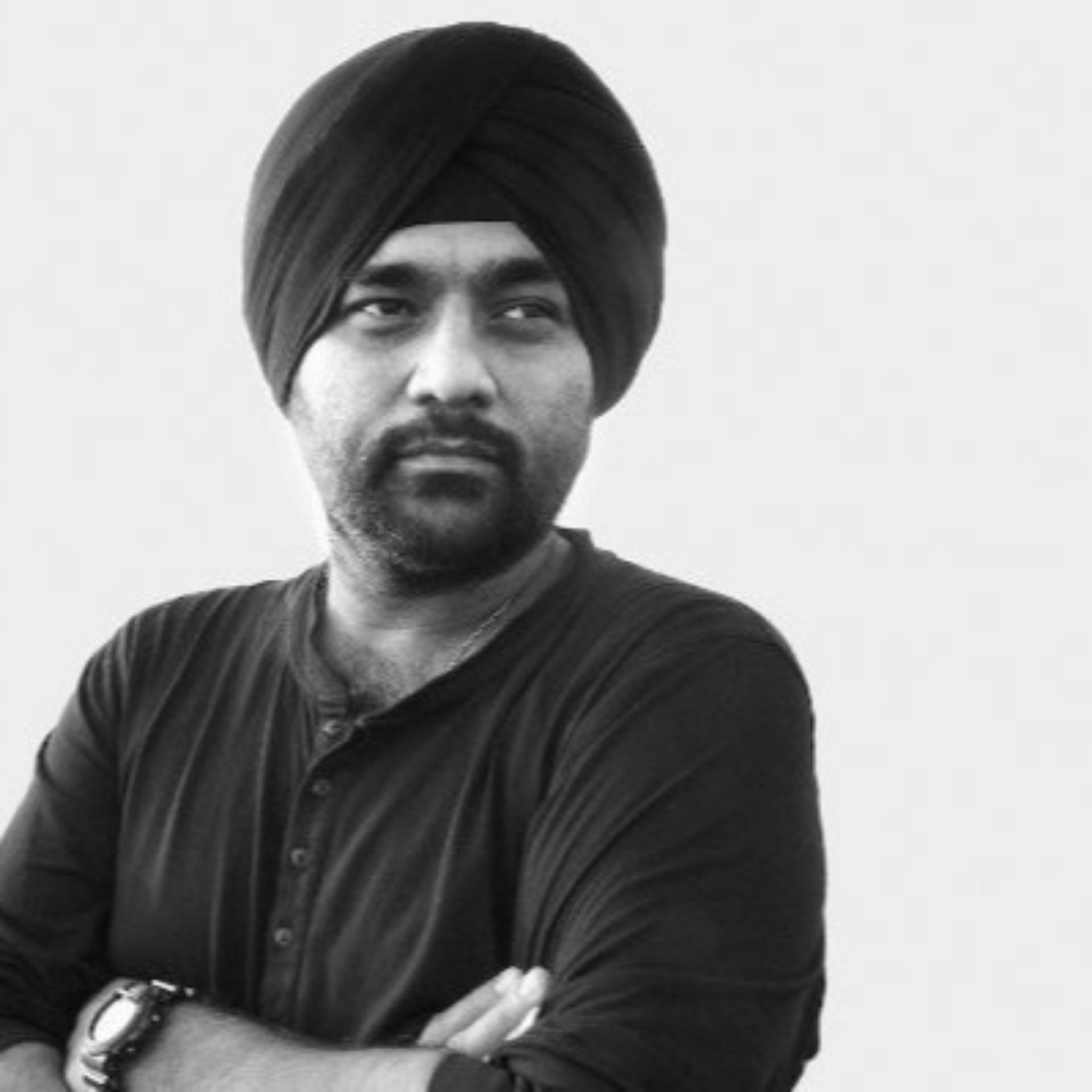
Tag: Arvind Singhal

  • Vedantu appoints Maninder Bali as head of brand marketing

    Vedantu appoints Maninder Bali as head of brand marketing

    Mumbai: Homegrown online learning platform Vedantu on Tuesday announced the appointment of Maninder Bali as head of brand marketing. Based in Bangalore, Bali will report to Vedantu’s chief operating officer, Arvind Singhal.

    In his new role, Bali will further build the brand and bring alive the Vedantu experience at every touchpoint. He will navigate the brand marketing playbook and drive impact at scale for Vedantu, said the press statement.

    Bali is an industry veteran who has 16 years of experience having worked with prominent advertising companies across India and Singapore, including Leo Burnett, Publicis Singapore, BBH, and Open Strategy and Design.

    Welcoming Bali on board, Arvind Singhal said, “His versatile experience will enhance our student-centric approach and strengthen our relationships with our stakeholders, allowing us to deliver excellence across all platforms. I extend a warm welcome to Maninder, and I am delighted to work with him.”

    Speaking about his new role, Bali said, “One rarely gets a chance to craft an entire brand out of a company’s culture and belief system. This is an extremely opportune time for me to be a part of the Vedantu journey. I’m excited to create a brand that becomes a force multiplier for our mission and creates impact at scale.”

  • BlueStone appoints Arvind Singhal as chief operating officer

    BlueStone appoints Arvind Singhal as chief operating officer

    MUMBAI: BlueStone has appointed Arvind Singhal as chief operating officer (COO). In his new role, Singhal will be responsible for charting out the growth plans and lead the market on all fronts of brand development, customer acquisition and growing sales and profits. 


    “We are quite excited to have Arvind on board. Arvind brings in an expertise, which is quite diverse and he has taken up various portfolios ranging from marketing to overall P&L. He has worked across various industries. His understanding of consumer behaviour and market is one of the best in the industry, which is going to be a great asset for us. As we desire to grow at an accelerated pace, especially for next couple of years, his thought process will surely give strategic direction to individual functions. We are sure that with Arvind coming in, our journey towards attaining our vision will be much smoother,” said BlueStone founder and CEO Gaurav Singh. 


    With over 16 years of experience in diverse industries in companies like Asian Paints, Marico Industries, Nokia, Reliance and McDonald’s India, Singhal last served TaxiForSure as CEO.


    Singhal added, “I am excited about the huge opportunity Bluestone has in the jewelry market in India, which is over $50 billion and poised to grow at a CAGR of 14 per cent plus. Bluestone brings to consumers a huge selection of contemporary design to choose from and delivered at their doorstep within 48-72 hours.”

  • Go for the young, but be alive to the downside

    Go for the young, but be alive to the downside

    MUMBAI: “Made in India – Made for a Young India”. A celebration of youth and the paradise of riches lying there for the pickings by those who could succesfully tap into this demographic.

    This could be termed as the gist of what constituted one of Friday’s high powered sessions at Frames 2006 in Mumbai that was chaired by Zee Telefilms CEO Pradeep Guha.

    According to Ashutosh Srivastava, CEO, GroupM, South Asia, “With half the population under 24 years of age, combined with increasing levels of disposable income and rapid penetration of new technology, attitudes and behaviour are undergoing a radical change – and this will have far reaching impact of the kind of entertainment, and also the way it is consumed by this young India.”

    “This is the most media savvy and exposed generation. It is also a lot more very self expressive ‘me’ generation, seeking its own identity, and has an opinion of everything. And, driven by the widespread penetration of mobiles and the internet, it is also the most socially networked generation,” Srivastava said.

    The downside of all this was thrown in (almost inadvertantly one thought) by KSA Technopark managing director Arvind Singhal who said for this generation, there was an intense aspirational sentiment at play as well as strong ambitions to “make it”. And to achieve this success, if the law was twisted towards this end so be it. The end justifies the means. Singhal used the character (small time con artists) of the lead protagonists in a recent hit film Bunty and Bali as an example. That Singhal didn’t seem to see this as a dangerous trend seemed a tad worrisome though.

    Even more bizarre was Singhal’s contention that in aspirational terms, India’s youth did not see themselves as being Asian but looked westward (specifially the US and the UK one would assume). This stands out in even starker relief stacked up against the common world view that points to Asia as being where the action is, India and China in particular and the rest of Asia in general. Where he fished this piece of data from might be worth a separate study.

    After the rather depressing dose of Singhal’s “world view” on India’s youth, it was refreshing to here from Rakeysh Mehra, director of the recent blockbuster hit Rang De Basanti, who introduced a cautionary note into the discussion. That there should also be awareness that in the midst of the hype and hoopla around the celebration of a young India, efforts to build a strong (ethical) foundation for a not so young india of the future was also needed was the point he tried to bring forth.

    Said Mehra, “It is important to harness the emotions of the young in the right direction and in a poetic way.” He added, “For the young India, it is essential to create a new idiom rather than copying one (from the West).”

    That new idiom was what Star India executive VP marketing and communication Ajay Vidyasagar focussed his presentation around. Vidyasagar believes that the creators of content, in order to connect with the young Indian, have to speak the language of the youth.

    The core message from all the panelists: It’s a whole new generation out there, with new mindsets, habits and working styles. As Srivastava pointed out, “This has huge implications for the industry. We will be forced to rethink current business models. Today, the consumers pay very little and and get exposed to all kinds of messages and content. In the future, they will pay and trade personal information to access the messages and the content they want, through different multimedia devices, at a time and place of their choice.”

    So what of the “40+ fossils”? What’s to become of them? This question was raised by some in the audience though the response from the panel was half-hearted to say the least. But then, this was a session that had all to do with the promise of youth. For the “fossils”, maybe another forum would be in order.