Tag: Arvind Sharma

  • Leo Burnett wins Rs 300 mn Iodex account

    Leo Burnett wins Rs 300 mn Iodex account

    MUMBAI: GlaxoSmithKline (GSK) Consumer Healthcare has awarded the creative duties of Iodex to Leo Burnett after a multi agency pitch.

    The account is worth Rs 300 million, according to sources. 
     
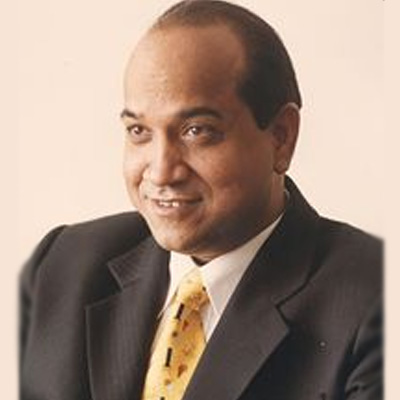
    Leo Burnett chairman Arvind Sharma confirmed the winning of the account.

    JWT was the incumbent agency.

    Brand Iodex includes Iodex Balm, Iodex Double Power, Iodex Headfast and Iodex Ultra Gel.

  • India to be 5th fastest growing ad economy in the world by 2013

    India to be 5th fastest growing ad economy in the world by 2013

    MUMBAI: India will emerge as the fifth-fastest growing advertising economy in the world by 2013, as developed markets are still recovering from the tremors of a deep recession.

    India’s contribution will be $2.5 billion to the global ad spend growth, behind US, China, Russia and Brazil, according to a recent forecast by ZenithOptimedia, a firm that tracks global advertising spending.

    A significant trend is that the high-growth areas are from the developing markets. While China’s contribution to the ad spend growth story will stand at $10.8 billion by 2013, Russia will settle at $6.9 billion and Brazil at $3.3 billion.

    “Overall, we predict developing markets will contribute 62 per cent of new ad dollars over the next three years,” the report said.

    US will, however, continue to lead due to its sheer size, contributing the most new ad dollars to the global market over the next three years despite its slow growth. It will make up $14.2 billion of the ad spend growth story by 2013.

    The total global ad spend in 2013 will be $525.59 billion, up from $451.94 billion in 2010, according to the ZenithOptimedia forecast.

    India’s ad spend growth will be fuelled by television. High competition and aggressive approach amongst DTH providers will lead to more customer acquisitions, which will eventually spawn viewership. Reality shows and sports content will also lead to a spike in television viewership.

    “The growth in TV will be more than in print,” said ZenithOptimedia India CEO Satyajit Sen. He said that access to global technology and software will reduce the costs involved and consequently, the content quality will improve, which will, in turn, result in increased time spent on television.

    In a separate reaction, Leo Burnett chairman and CEO Arvind Sharma said India is a star among the emerging markets. “Emerging markets is where all the attention is. The way media is consumed is changing,” he said.
     

  • Educational sector to have ad guidelines from 1 December

    Educational sector to have ad guidelines from 1 December

    MUMBAI: The advertising code for the educational sector, prescribed by the Advertising Standards Council of India (Asci), will come into force from 1 December.

    Advertisements of educational institutes, coaching classes and educational programmes will be governed by these specific guidelines.

    Introducing the draft code two months back, Asci has made ready the final set of guidelines that are to be implemented across the country.

    The apex self-regulatory body for advertising content has introduced four sub-clauses into the code, based on the feedback and inputs received from general public and educational institutions.

    Some of the suggestions from masses are indicative of real life situations of misleading advertisements. Most of these include ads claiming high ranking, building and infrastructure, students’ testimonials and job placements.

    Says Asci chairman Rajiv Dube, “Education is a sector that is critical to the country’s future. We received a number of suggestions and inputs on the draft guidelines, largely from lay citizens and institutes. Such a response reinforced the importance we placed on the education sector and the need to treat it as a special case. We now know that our belief is a major public concern too, and sincerely hope that the code will reduce incidences of wrongful advertising in the education sector.”

    Creative agencies have welcomed the guidelines, stating that misleading ads could destroy the careers of youngesters.

    Says Leo Burnett chairman and CEO Arvind Sharma, “Asci has a crucial role to play in ensuring that there is fairness and accuracy in these ads. Education sector is one of the top five spenders in FY‘2010. So it is good that we have certain guidelines to check the factuality of these ads.”

    The new code prohibits ads claiming comparative ranking of institutes without giving details of the ranking organisation and the date the ranking was published.

    A new clause also prohibits display of building or infrastructure from models and computer graphics, requiring institutions to show actual and existing facilities, if the facilities are shown in the ads.

    The new code also attempts to clamp down on misleading testimonials of students that may not even have been part of the educational programme, exam or subject. A new clause makes it mandatory for advertisements to give exact details of students giving testimonials.

    Similarly, the new code takes another technicality into consideration by asking advertisers to mention total number of students who passed out from the class, whenever they claim an absolute number of students placed in jobs.

    The final set of advertising guidelines for educational institutions, among other things, prohibits institutions and programmes from claiming recognition, authorisation, accreditation, or affiliations without providing proper evidence.

    The guidelines also require that the name and place of the affiliated institution which provides degrees and diplomas on behalf of the advertiser and which may not be accredited by a mandatory authority, is prominently displayed in the ad.

    With the new guidelines, educational institutions will not be able to promise jobs, admissions, job promotions and salary increase, without substantiating such claims and also assuming full responsibility in the same advertisement. The proposed guidelines discourage institutions from claiming success in placements, student compensations, admission to renowned institutes, marks and rankings, and topper student testimonials unless every such claim is substantiated with evidence.

    The education sector guidelines take note of the fact that a significant amount of advertising activity is currently happening in the education sector, reflecting the vast variety of educational programs being offered in the country.

    Asci quoted the recent Adex report, which said that advertising by educational institutions has gone up by leaps and bounds. Last year’s figures show that 8 per cent of all advertising expenses in print media came from the educational sector. This is a significant increase compared to just a few years ago.

    In the recent past, Asci has put out specific guidelines for advertisements in the automobile and food and beverage sectors.
  • ‘The challenge in a high growth economy is shortage of talented, trained manpower’ : Arvind Sharma – Goafest Committee chairman and Leo Burnett chairman India sub-continent

    ‘The challenge in a high growth economy is shortage of talented, trained manpower’ : Arvind Sharma – Goafest Committee chairman and Leo Burnett chairman India sub-continent

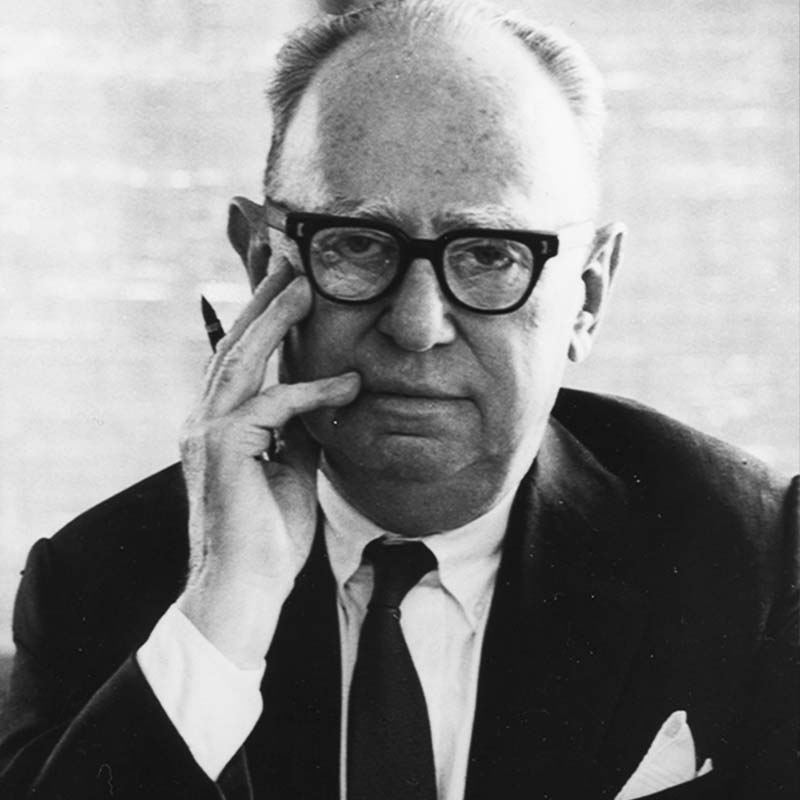
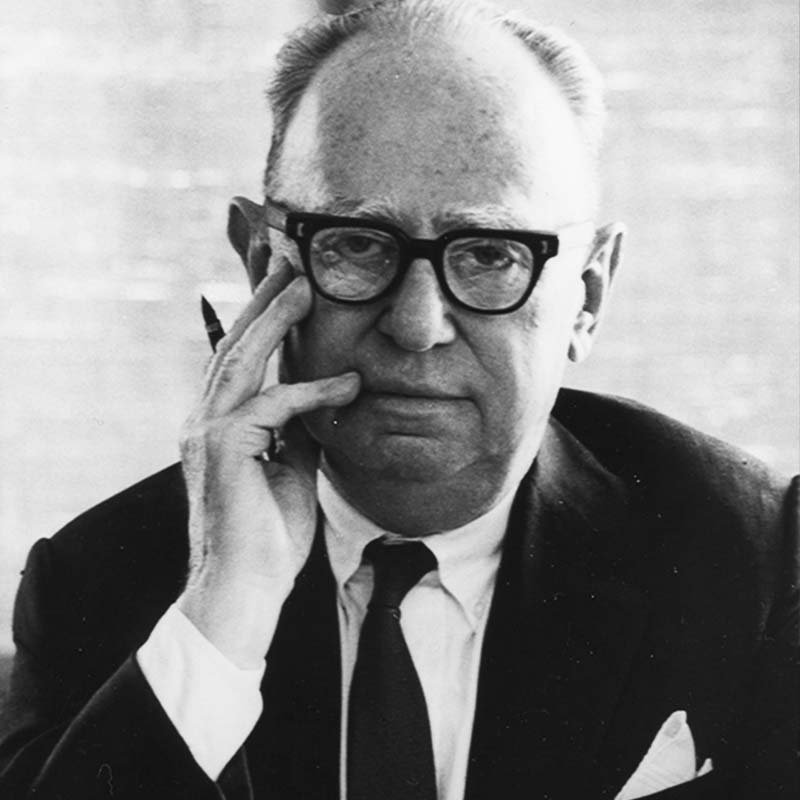
    As the sun and sands of Goa beckon the Indian advertising, media and marketing community for the AAAI organized ad festival Goafest from 19 – 21 April, apart from the celebration that lies in its wake, the event seeks to address more critical issues faced by the industry. Amidst all the hectic last minute schedules, Goafest Committee chairman and Leo Burnett chairman India subcontinent Arvind Sharma very co-operatively took time out to share his perspective on the current standing of the Indian advertising community, the progression towards growth and expansion and the pitfalls that need to be resolved.

    In an exclusive tete-a-tete with Indiantelevision.com’s Renelle Snelleksz, Sharma highlights the point that the fundamental objective for the festival is “to provide a platform for conversations, debates, ideas and celebrations between the rock stars and the aspirants.”

    Excerpts:

    What are the key proponents that necessitate AAAI’s endeavor to capture an untapped area of the Indian advertising fraternity through Goafest?
    As a member of the executive committee of AAAI, it was early last year that we decided to host a National Ad Festival. National because we recognized that epicenters have a way of moving and so different advertising capitals keep springing up across the country. At one point Kolkata was at the helm but today Delhi is huge, only 20 per cent smaller than Mumbai. Therefore AAAI endeavors to promote advertising work from across the country.

    Secondly, there is a fundamental difference between a one off award function and a festival. The former is largely focused on the work of the individual but we chose to go with a festival because it allows an opportunity to display the work and think of ways in which it can be bettered. Unlike award shows, the festival has been designed to not focus on the ‘agency of the year’ concept which selects one winner and a dozen losers. As an industry that is growing at 20 per cent we would rather have 1,000 winners and our attempt is to encourage and nurture those winners.

    By design, there will be no agency of the year but instead a Grand Prix award to recognize work that represents excellence. This will help develop the industry more rapidly. The fundamental objective for the festival is that it aims to provide a platform for conversations, debate, ideas and celebration.

    What are the key differentiators for Goafest as a festival, as compared to existing one off award functions?
    This takes shape in four ways – Firstly, the work that has been entered is displayed so that delegates have the opportunity to make their own judgment on the entries that have won and those that have not. The festival also brings successful International speakers and local jury members as well as aspiring youngsters to exchange their thoughts and ideas.

    Secondly, there are a host of formal seminars and thirdly, apart from the exchange between the aspirants and the rocks stars, the festival brings 2,000 people from various locations, specialist fields intermingling and sharing their experiences.

    Lastly, it brings the rising stars from across India to Goa. As is known, all industry functions like these are expensive and only the senior executives get to go, which ultimately makes development of the industry slower because the exposure is less. Thus we have provided a special package for 800 under 30 year-olds.

    While Goafest is an event of celebration, what are the larger underlying industry issues that the event is looking to address? How can these be remedied?
    The challenge for the advertising industry in a high growth economy is the shortage of talented trained manpower and this will be the primary focus at the event.

    The Ad Conclave that precedes the festival will get 150 leaders of the industry and much like town hall sessions, will get them thinking together. On an every day basis, the nature of competition exists, but this is a platform where we can all put our heads together to finds ways to cope with the existing issues.

    At an individual level, there will be competition but we need to work collectively on this front. The gurus of today spent their first 10 years in a pre-television environment with DD as the only means of TV. Youngsters on the other hand, are acquainted with the growing multimedia environment, though they may not know the craft. It is fundamental for us to listen and learn from them just as much as they learn from us.

    The industry faces a shortage of talent. It is believed that AAAI plans to unveil an ad campaign that would lure youngsters towards the profession. Is that still on the cards?
    Yes, it is still very much on the cards and will follow closely after Goafest.

    What is the growth that the industry has seen over 2006?
    Various sectors have grown differently – The creative agencies have grown at 15-20 per cent, the marketing services at about 30 per cent and the specialist’s media agencies at 25 – 30 per cent. So overall, the industry has grown by 20 -25 per cent and from a global point of view India features in the top five advertising industries. Although our base may be small, our growth rate is impressive.

    Creative agencies
    have grown
    15-20%, marketing services at about
    30% and the specialist’s media agencies
    at 25-30%

    In order to leap ahead in the next three to five years, as the Ad Conclave theme suggests, it would require the combined effort of the industry at large however; two mammoth agencies O&M and Lowe seem to stay aloof? What would be your advice to them?
    In any industry, one hopes for 100 per cent participation. But we have received enthusiastic support across centres and agencies. Sometimes people choose to wait and watch, but as and when they decide to join in we will welcome them. We will go forward with what we believe in, we will just have to give the others time.

    What is your opinion on a having a common Indian advertising body and a single credible award function, a proposition that many professionals have vouched for?
    Our belief is in an advertising festival and not just an award show that will include seminars and interactions. However, there will always be a second and third viewpoint.

    You mentioned earlier that an investment of Rs 50 million was being pumped into the event. You also have a big kitty of sponsors, what will be their contribution to making the event a success?
    Goafest is a non profit event and while no association has complete funding of its own, the whole industry has supported us directly through sponsorship money. We are extremely excited and grateful for their contribution.

    What are the logistics that have to be taken care of when planning an event on such a lavish scale? When did the planning commence and how long has it taken you to set up the agenda?
    The logistics are extensive as one has to get International speakers and coordinate dates that are convenient, to book hotel rooms and check availability. To accommodate and make arrangements for the 800 under 30 delegates as well as senior executives has been a real challenge. We started planning and preparation six month ago.

    With the inclusion of media awards and with a host of International experts and commentators – what are your expectations of the event this year?
    We are hoping to prove to ourselves and to the world that we are capable of hosting an advertising festival comparable to any in the world.

    What advice would you give to the 2,000 media, advertising and marketing professionals that are gearing up to come to Goafest this year?
    (Laughs) My only advice is to come and freely share your thoughts and ideas, as I believe this will finally help to catalyze the growth of the industry as a whole.