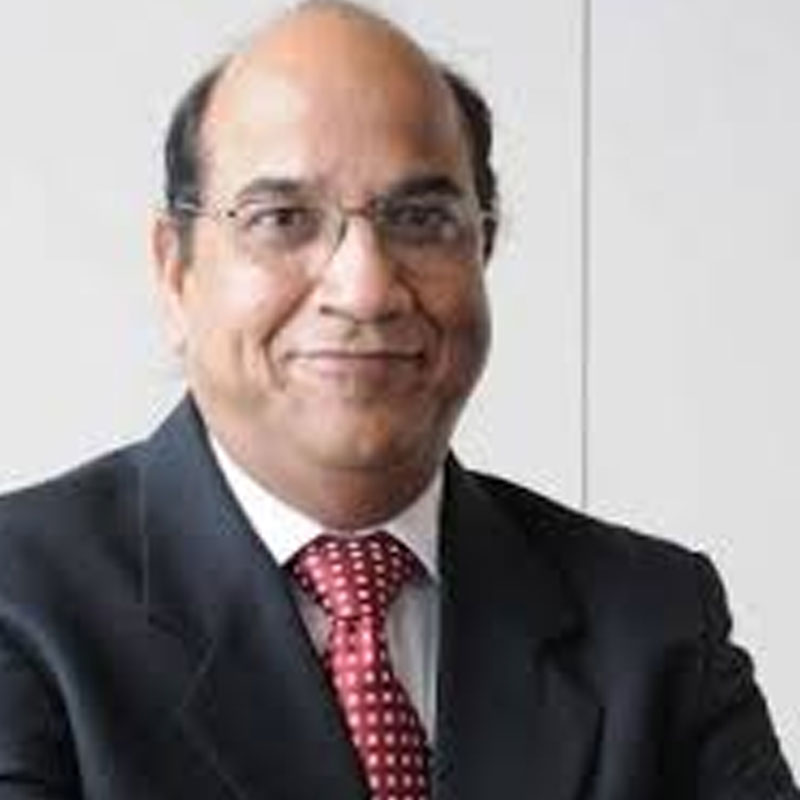
Tag: Arvind Sharma

  • Digitisation: Ad deals may be reworked on short term basis

    Mumbai: Advertisers may have to enter into transitory arrangements with broadcasters if some homes are left without digital cable connections in the four metros after 1 November.

    The government has mandated compulsory end to analogue delivery of television channels after the digitisation deadline, resulting in the possibility of a significant number of cable TV homes going without television signals for failing to have set-top boxes (STBs) installed to receive digital television signals.

    “In the worst case scenario, when we do have 30 per cent dark homes in the four metros, there may be need to rework the commercial deals on a short term basis,” Leo Burnett Indian sub-continent chairman and CEO Arvind Sharma told Indiantelevision.com.

    The Information & Broadcasting (I&B) Ministry last week said 68 per cent of cable TV homes in the four metros of Mumbai, Delhi, Chennai and Kolkata have already installed STBs to receive television channels in digital form. It said Mumbai leads the progress in digitisation with 95 per cent homes digitised, followed by Kolkata with 67 per cent. In Delhi, 53 per cent of the cable homes have switched to digital and in Chennai, 49 per cent.

    The number of households, however, is based on census data and a broad section of the broadcast industry does not believe this reflects the actual estimate of the STB requirement in these four metros.

    “In my opinion, digitisation will ramp up and only in the interim period will we as industry (advertisers, agencies and broadcasters) have to work out short term commercial deals. More importantly, the events of the next 40 days will be crucial,” Sharma said.

    So will TAM, the television audience measurement agency, report from digital homes only in the four metros after 1 November? A TAM spokesperson said: “TAM started reporting Digital TV Homes viewing data since 2008 when Digitization crossed threshold levels in some of the markets. TAM currently reports data from Non-C&S households (Terrestrial Antenna reception mode)and two types of C&S households: Digital C&S and Analog C&S – depending on whether households receive channels through a Set-Top Box (STB) or without Set-Top Box.

    As per TAM JAN 2012 TV baseline report, almost 35% of All India C&S homes have already adopted Digital way of watching TV, with 1/3rd of them coming from Urban markets. The government, by its DAS notification, has mandated that from November 1st 2012, C&S channels can be legally received in the Municipal Corporation (MC) limits of the four major metros (NCR for Delhi) only through a Digital STB. Therefore, from NOV 1st, TAM will not report data of channels viewed in TV Homes that are not received through a Digital STB in these areas (exception being, viewing happening in TV Homes through Terrestrial Antenna signal reception)”.

    The spokesperson added: “In other words, TAM will only be reporting Digital TV viewing data and Non C&S TV viewing in the DAS implemented areas of the 4 City. Data from Homes in the non-MC area of the cities (which does not fall under Phase I of DAS implementation) will continue to be reported as usual. We will be sending out a formal communication to our clients in the coming few days spelling out the details.”

    As a broad section of the industry feels that a total 100 per cent STB penetration will not be possible on day one itself (1 November), there will be some empty homes. If TAM sticks to its current statement, this will mean the analogue coverage in the four metros will not be reported by TAM. So what happens if cable TV operators transmit the analogue signals illegally (take digital signals through a STB and convert it through a modulator for carriage on their analogue networks)? The government, however, is determined to implement digitisation and may take recourse to strict action by arresting the ‘violators‘ under criminal offence.

    Media agency ZenithOptimedia CEO Satyajit Sen fears some kind of temporary disruption in business. “We presume that there will be disruption in the business. In the four metros, there aren‘t enough STBs to make them (cable TV homes) all go digital. Majority of the consumption of various categories happens in the four metros. Our clients will demand for TAM ratings and hence we will also ask for it,” Sen said.

    Lodestar UM CEO Shashi Sinha, however, is not disturbed by the disruption in TV viewership. “People who matter to us are the consuming class and they will switch to digital. May be in the beginning for two to three months, we will see some impact but gradually everyone will switch to digital. At least the consuming class will by the last week of October,” he said.

    Broadcasters to switch off analogue, Rajat Sharma to work in interests of viewers

    Broadcasters are largely confident of a smooth changeover to digital delivery of television channels from analogue. Like Lodestar‘s Sinha, Times Television Network MD & CEO Sunil Lulla too felt there is no need for any worry as the first phase of digitisation is happening at good speed.

    “Digitisation will happen. People who want to get STBs will get those who don‘t want won‘t,” Lulla said.

    The government is dead serious this time around in ensuring digitisation happens in the four metros by the deadline of 1 November and that all the stakeholders are brought on board. It has issued orders directing broadcasters to switch off analogue decoders in the four metros, unlike in 2003 when certain pockets in the metros were asked to shift to digital delivery of television channels.

    The government has gone a step ahead and made carriage of analogue television signals after the digitisation deadline in the four metros a criminal offence.

    BAG Films CMD Anurradha Prasad said, “All broadcasters want digitisation and, hence, we all will be switching off our analogue signals from 1 November. This is an order of government.”

    An NDTV spokesperson said, “The government order is sacrosanct and the broadcasters are adamant on switching off the analogue signal from 1 November.”

    India TV chairman and editor-in-chief Rajat Sharma sounded a different note. He said, “For all stakeholders — IBF, NBA, I&B Ministry and MSOs, the viewers‘ interest is foremost. We will take a call keeping in mind that the viewer doesn‘t suffer.”

    Pay TV channels will be more than willing to shift to digitisation as early as possible as it will mean a rise in their subscription revenues as the number of cable television subscribers disclosed by local cable operators will rise. In analogue, cable operators under-report the number of cable TV connections and thereby cause a loss of revenue for broadcasters with pay TV channels.

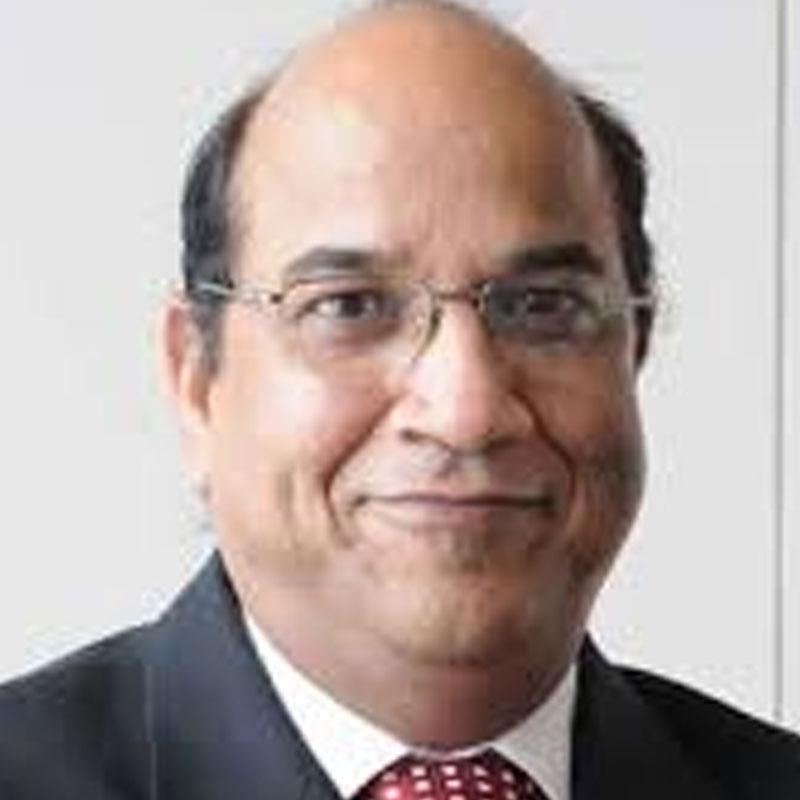
  • Arvind Sharma is new chairman of ASCI

    Mumbai: Chairman of Leo Burnett India Sub Continent Arvind Sharma has been elected as the new chairman of the Advertising Standards Council of India (ASCI) at its board meeting held on Thursday.

    He replaces Eenadu Director I Venkat. Sharma is also the President of Advertising Agencies Association of India (AAAI).

    Partha Rakshit Associates proprietor Partha Rakshit has been elected vice-chairman while CEO-designate of Maxus Global Vikram Sakhuja has been re-appointed the honorary treasurer.

    The other members of the new Board of Governors are: Advertisers: Narendra Ambwani (Agro Tech Foods), Hemant Bakshi (Hindustan Unilever), Rajiv Dube (Aditya Birla Management Corporation), Shantanu Khosla (Procter & Gamble Hygiene & Health Care); Media: Rajan Anandan (Google India), Sunil Lulla (Times Global Broadcasting Co.), Benoy Roychowdhury (HT Media), I Venkat (Eenadu); Advertising Agencies: Subhash Kamath (BBH Comms India), Srinivasan Swamy (R.K. Swamy BBDO). Allied Professions: Dilip Cherian (Perfect Relations), Dhananjay Keskar (IBS), Pranesh Misra (Brandscapes Consultancy P. Ltd.).

    Releasing the report for 2011-12, ASCI said the Consumer Complaints Council (CCC) met 16 times and considered 2,986 complaints against 176 advertisements. Of these, complaints against 103 ads were upheld, 69 were rejected and 4 were considered non-issues. As many as 89 ads complaints against whom were upheld were voluntarily withdrawn or modified as per the CCC‘s decisions, resulting in over 86% compliance rate.

    Venkat said, “The last year has seen ASCI take various initiatives to strengthen the Self Regulatory System. These included increasing the frequency of Consumer Complaints Council to twice a month, introduction of the Fast Track Service, having a National Conference on Strengthening Self-Regulation of Advertising Content, engaging with young Creatives through a Mobile Film Contest at the Goafest, interacting with the Department of Consumer Affairs and participating in their Conferences on Misleading Advertisements. ASC has taken a giant leap forward in introducing the National Advertising Monitoring Service (NAMS) which monitors 1500 TV and 45000 newspaper Ads per month. All in all a very satisfying year for ASCI. ASCI is the first self regulatory body in the world to initiate monitoring of almost all newly released ads in print and TV nationally with NAMS.”

    The incoming Chairman Arvind Sharma said, “It is indeed an honour to be elected as Chairman of ASCI which has progressively contributed to effective Self-Regulation in Advertising content. We are confident that the Ad sector, industry bodies‘ regulators, consumer activists and the general public will actively seek ASCI‘s services and take Self-Regulation forward.”

  • I&B calls AAAI, ISA for meet on 4 Sept over TV ratings issue

    NEW DELHI: The pressure on TAM Media Research, India‘s sole television ratings provider, is just not easing. The Information & Broadcasting (I&B) Ministry has decided to act in response to the NDTV lawsuit against the corrupt television ratings and the demand by News Broadcasters Association (NBA) for its intervention.

    After reportedly asking television ratings provider TAM Media Research and its 50 per cent owner Nielsen to submit a report on the status of the plans to make the ratings system robust, the ministry has convened a meeting with the Advertising Agencies Association of India (AAAI) and Indian Society of Advertisers (ISA) on Tuesday, 4 September.

    The meeting with AAAI and ISA is being held amid raging controversy over the credibility of television viewership ratings, after NDTV (New Delhi Television Ltd) filed a lawsuit in New York against TAM, its owners Nielsen and WPP and their officials.

    The meeting is also happening in the backdrop of a delay in operationalising the Broadcast Audience Research Council (BARC), which is to be jointly set up by Indian Broadcasting Foundation, AAAI and ISA.

    Sources close to the I&B ministry have confirmed to Indiantelevision.com that the meeting has been scheduled on Tuesday.

    According to a media report, the government has given to TAM 10 days and Nielsen two weeks to reply. The report said the government has also sought information from TAM and Nielsen on generation of viewership data from towns with less than 1 lakh of population and from north-east states and Jammu & Kashmir.

    “This has gone too far,” said the CEO of a media agency, suggesting that the meeting is a fallout of the war of words between WPP and NDTV.

    Leo Burnett chairman of India Subcontinent Arvind Sharma declined to talk on the meeting but referring to the media report said, “I can‘t blame the government for being concerned over what all is happening in media. The long term solution is that via the three players – AAAI, ISA and IBF – creation of BARC should be speeded up. One has to understand that there has to be a reliable, transparent medium. What government wants is similar to what we want and there isn‘t any contradiction.”

    Sharma said TAM has been giving AAAI and ISA progress reports since their meeting on 16 August. During the meeting, TAM had outlined a six-point action plan that included appointment of a security officer and a security agency, expansion in the number of homes with peoplemeters in the six top metros, an industry review of the viewership research processes, independent audit of outlier homes, faster rotation of the peoplemeter homes and setting up of an internal audit team.

    Speaking to Indiantelevision.com, Star India CEO Uday Shankar said: “I am glad that I&B Ministry has asked TAM to explain but how do we know that how many boxes are functional? There is no system of public audit. How do we know that the data which is collected has no uncertainty in that?”

    Shankar further said, “TAM is clouded in secrecy and according to me anything that isn‘t transparent and is under secrecy is subject to distortion and corruption.”

  • TAM: Arvind Sharma asks broadcasters to be patient as changes take time

    TAM: Arvind Sharma asks broadcasters to be patient as changes take time

    MUMBAI: Television broadcasters need to have patience as all the stakeholders are taking steps to move to a system of audience measurement acceptable to all, said Advertising Agencies Association India (AAAI) president Arvind Sharma, while speaking exclusively to Indiantelevision.com.

    Sharma’s counsel of patience follows outright rejection by broadcasters of the proposals forwarded by TAM Media Research to fortify its existing television ratings system.

    Sharma is pinning hopes on the proposed Broadcasters Audience Research Council (BARC) becoming operational in the next few weeks. A monitoring team constituted by BARC will then make sure that TAM carries out the commitments it has made.

    AAAI and Indian Society of Advertisers (ISA) had a meeting with TAM officials on 16 August during which the television ratings provider outlined a six-point action plan.

    The six steps outlined by TAM include appointment of a security officer and a security agency, expansion in the number of peoplemeters in six top metros, an industry review of the research processes, independent audit of outlier homes, faster rotation of the peoplemeter homes and setting up of an internal audit team.

    AAAI is hoping a meeting of AAAI, ISA and Indian Broadcasting Foundation (IBF) will happen in the next few days to finalise the modalities of setting up and making operational BARC.

    Sharma said, “I completely understand the growing skepticism. It is only action and demonstration of action which will change skeptics into believers in the sense that something is happening.”

    “In real terms what will happen is that we are hoping that BARC will be created within weeks and there will be a team from BARC which will monitor the progress closely,” Sharma added.

    His argument is that unless the industry has the ability to monitor the progress in improving the audience measurement system, any timelines will make no sense.

    Sharma said he hopes a BARC team to monitor audience measurement is put in place pretty soon.

    Asked about how media agencies not present at the meeting on 16 August and those who are not a part of either AAAI or ISA can be taken into confidence, Sharma had this to say: “The Joint Industry Body (JIB) which was supposed to be guiding TAM has not been functional.”

    He said the fact that TAM has specified some definite action steps was in itself a good signal. “The rest will be up to BARC to assess whether the proposed steps are adequate for the short run and make sure that they get implemented.”

    About a decade ago when there were two suppliers of television ratings – INTAM and TAM, each had their own specific number of meters. The industry stakeholders at that time decided to pool in their resources instead of paying money to two agencies and make the study more robust.

    The problem arose when a list of some peoplemeter homes was leaked and then allegations of manipulation of data were made. “So, if a (television) channel wanted to play mischief, it could target three or four peoplemeters homes through extra activations and that would make a huge difference”, Sharma pointed out.

    The JIB, when it was functioning about a decade ago, had laid down a lot of processes and rigorous rules for how the sampling would be done and had also introduced electronic checking,
    validation of data, etc.

    “Associations have to follow their processes. We just have to be a little patient in letting things fall into place. We are definitely moving forward. I am sure of it. The whole point of having associations is to carry members along even though the solutions may take longer to reach,” Sharma said.

    His philosophical view was that people involved ultimately accept the changes even if it takes a little longer.

    Also read:

    TAM proposals fail to enthuse broadcasters

  • NDTV effect: TAM lists 6 action points to plug loopholes

    MUMBAI: TAM, the television ratings provider, has assured the Indian Society of Advertisers (ISA) and the Advertising Agencies Association of India (AAAI) that it will work on a six-point action plan to plug loopholes in the system.

    The assurance was given at a meeting ISA and AAAI had with TAM on Thursday, 16 August to obtain facts about the audience measurement system. The meeting was held in the backdrop of broadcaster NDTV‘s suit in the US against TAM and its parents Nielsen and Kantar, claiming the ratings were fudged.

    During the meeting, TAM shared its perspective with ISA and AAAI and outlined the following six key action steps:

    • Appointment of a security officer and a security agency
    • Expansion in number of meters in the existing 6 top metros
    • A review by the industry of research processes that determine what TAM reports in its weekly reports. And what meter homes are left out of reporting for being data outliers
    • Getting the outlier homes independently audited
    • Faster panel rotation
    • An internal audit team to be put in place as soon as possible

    In a joint statement, AAAI president Arvind Sharma and ISA chairman Bharat Patel said, “As key users of audience research data, advertisers and advertising agencies need to know facts directly from the research agency. And if there are challenges at any level in the research, the research agency needs to share its proposed action plan with us.”

    They further said, “We look forward to speedy implementation of the six action steps outlined by TAM. With formation of Broadcast Audience Research Council-BARC on the anvil, it will be appropriate for us to request BARC to review if these steps are adequate.”

  • The ball is in the IBF court: AAAI prez Arvind Sharma

    MUMBAI: The ball is in the Indian Broadcasting Foundation‘s (IBF) court and the draft document (incorporating memorandum and articles of association) has been sent to them a while back, the Advertising Agencies Association of India (AAAI) president and Leo Burnett chairman and CEO of India subcontinent Arvind Sharma told Indiantelevision.com, while dismissing charges that the body was stalling the progress of BARC for setting up a new television ratings system that would be more transparent and representative of the country‘s socio-economic demographics and geographical spread.

    IBF president and Star India CEO Uday Shankar admitted the draft has reached the IBF. “But they have not signed it. The issue needs to be treated with more urgency,” he said.

    Shankar had earlier blamed the AAAI and the Indian Society of Advertisers (ISA) for slowing down the progress of Broadcast Audience Research Council (BARC).

    Sharma said the need of the hour is to move forward and get BARC rolling. “I can understand Uday Shankar’s eagerness to progress on BARC and frustration on why it is taking so much time. But we have not signed because they have not responded,” he replied.

    The government is also pressing for speed and had earlier this year told Parliament that BARC would issue its first report by July 2013, an informal dateline that looks hard to meet. The three stakeholders, IBF, AAAI and ISA, have yet to make BARC operational after announcing in March their equity partnership in the entity. While IBF has 60 per cent stake in BARC, AAAI and ISA hold the balance 40 per cent.

    Nagesh Alai, Interface Communications director and the immediate past president of AAAI, believes that it is in everybody’s interest to move BARC forward.

    “It seems to be a misconception or a miscommunication or a misinterpretation. Whatever it is, the statement is rather unfortunate and unwarranted. AAAI (and its members ), as custodians of the clients’ monies and scientific allocators of these monies over various media, is as interested in a robust and transparent research and research design. We are keen to get it off the ground quickly, as is IBF. The drafts of the MOA and AOA of BARC, incorporating these agreements, had been exchanged with IBF and this is under discussion and process. AAAI has always believed in working in partnership with other industry bodies in mutuality of interest and good business practices and so will it be going forward. It will continue to work with IBF and ISA to get to a good place. Stalling BARC is in no one’s interest,” Alai remarked.

    The recent NDTV lawsuit in New York against TAM Media has also prompted the government to consider a probe into the alleged fudging charges after several complaints from broadcasters.

    NDTV has sought damages of $810 million as compensation for loss in revenues suffered over the years and $580 million for negligence by Nielsen and Kantar officials, the owners of TAM.

    Meanwhile, TAM India has preferred to maintain its silence. “We don‘t comment on any litigation,” is all that TAM’s spokesperson had stated when media reports broke out about NDTV’s lawsuit against TAM and parent company Nielsen. TAM is a joint venture of Nielsen, Kantar and Cavendish Square Holdings B.V.

  • Arvind Sharma is AAAI president

    Arvind Sharma is AAAI president

    MUMBAI: Advertising Agencies Association of India (AAAI) has appointed Leo Burnett chairman and CEO of India subcontinent Arvind Sharma as president for the year 2012-2013 at its Annual General Body Meeting held today.

    Draftfcb+Ulka Advertising executive director and CEO-Mumbai M G Parameswaran has been elected as the vice president.

    Immediate past president, Interface Communications director Nagesh Alai will be the ex-officio member of the new AAAI Executive Committee.

    The other elected members of the executive committee for the ensuing year are Fifth Estate Communications head Ganesh Baliga, Aegis Group chairman India and CEO South East Asia Ashish Bhasin, Publicis Communications South Asia CEO Nakul Chopra, Mogae Group executive director Tanya Goyal, Crayons Advertising chairman Kunal Lalani, Network Advertising MD Vinod Nair, Prem Associates Advertising and Marketing partner Pranav Premnarayen, Matrix Publicities and Media India’s Sridhar Ramasubramanian, Group M South Asia CEO Vikram Sakhuja, Contract Advertising CEO Umesh Shrikhande and RK Swamy BBDO chairman and MD Srinivasan K Swamy.

  • Leo Burnett snaps up Indigo Consulting to grow in India market

    MUMBAI: The Publicis Groupe has swallowed full-service interactive and technology agency Indigo Consulting as part of its strategy to double the size of its India business by 2015.

    Publicis‘ aggressive stance comes at a time when the growth in the matured markets is slowing down and global agencies are working out strategies to gain market share in India, the world‘s 16th largest advertising market.

    Indigo Consulting will operate as a unit within the Leo Burnett Group in India and retain its name. Its founder, Vikas Tandon, will remain as managing director and will report to Leo Burnett chairman Indian subcontinent Arvind Sharma.

    Sharma told indiantelevision.com that this is part of a broader plan to make digital Leo Burnett‘s core strategy. Over the next two years, digital will no longer be a specialised function at the periphery and for this Leo Burnett was looking to acquire an agency with scale. Through this move, Leo Burnett plans to reorient its staff of 450 professionals across the country to think of digita.

    “In the next two to three years, we believe that digital will become central to marketing plans as TV and print are today. It is apparent that in the future brands will need to be ‘always on’ on the digital medium. As a preparation for that and to synergise the media, Leo Burnett decided to acquire Indigo,” he averred.

    The induction of Indigo will be carried out in a four phased manner. The first step will be to integrate the Indigo offices in Delhi and Mumbai with the Leo Burnett offices over the next few weeks. The second phase, stretching for a whole year, will include mutual sharing between the entities.

    Indigo will then be completely integrated with the Leo Burnett group over the next 18 months. The fourth phase will see the two working towards planning and executing digital efforts.

    Leo Burnett Worldwide chairman and CEO Tom Bernardin said, “From a global point of view, the potential and opportunities that India offers are massive. Over the years we have increased our efforts into this important market. Indigo Consulting, with its strong track record as a full-service interactive and technology agency, is the perfect strategic fit for our aspirations in India and around the world.”

    The alignment means that Leo Burnett will offer Indigo Consulting‘s digital marketing capabilities to its clients. There will also be cross-training and collaboration between the two entities.

    Said Tandon, “We wanted to join hands with an ad agency that understands human insights. With Leo Burnett we found that not only do they understand human behaviour, but there is also a meeting of minds between us and them. It was important for us that combined with size and scale, the people from both sides gelled and we did not feel lost in a global conglomerate.”

    Indigo Consulting provides website design and development, search engine optimisation, usability research and testing, and marketing online, on mobiles and in social media.

    Leo Burnett Asia Pacific president Jarek Ziebinski said, “Our growth strategy for Leo Burnett in India and Asia Pacific is based on two core pillars: digital and shopper-marketing. India is a key market for us, and it’s reporting explosive growth in the digital sector. We want to make sure Leo Burnett has the right infrastructure in place to meet the needs of tomorrow. I also see Indigo Consulting developing beyond India, to become an important player within our network in Asia Pacific and globally.”

    Currently advertising and marketing online represents less than three per cent of overall ad spend in India but the sector is expected to boom, according to ZenithOptimedia. The agency estimates that over the next three years, India’s digital ad spend will increase by roughly 30 per cent a year, driven by the spread of smartphones and the youth culture of social networks.

    Founded in 2000, Indigo Consulting has been involved in developing websites, software solutions and digital marketing programs for clients around the world, including Asian Paints, HDFC Bank, HSBC (India, Asia-Pacific and Middle East), Loop Mobile, Tata AIG Insurance and South Australia Tourism. The agency currently employs a team of 160 at its Mumbai headquarters and Delhi office. Their work has been recognised with Webby awards, W3 awards and Abbys.

  • Leo Burnett bags Limca’s creative biz

    Leo Burnett bags Limca’s creative biz

    MUMBAI: Leo Burnett has won the creative mandate for Coca-Cola India‘s lemon and lime flavoured carbonated soft drink brand, Limca.

    The account was handled by Ogilvy since January 2001.

    “Yes, we have bagged the account,” said Leo Burnett chairman and CEO Arvind Sharma.

    Limca‘s campaigns focus on the soft drink‘s brand value of “freshness”.

  • Goafest: Of Then and Now

    Goafest: Of Then and Now

    Leo Burnett chairman and CEO, India sub-continent and Goafest Committee chairman

    By ARVIND SHARMA

    (11 february 2012)

    I was fortunate enough to be the Chairman of the Goafest Committee in the founding year- 2006. We envisioned it as a platform for celebrating Indian advertising creativity and for the Indian advertising talent- young and not so young- to rub shoulders with the best in the world, exchange ideas, grow and become the best in the world.

    We wanted to make the festival accessible to youngsters and to that end we put together a special package for under-30’s. We were immensely pleased on the launch day of Goafest when we found that more than 800 delegates had chosen to travel and attend the festival. There were people who had already registered and many more who had just turned up at the venue to register and be a part of the event.

    Over the last six years, the quality of the event has been improving each year from the event organisation point of view. 2008 was a significant year. Ad Club Bombay came on board and Abbies at Goafest became the definitive awards of the industry. Last year, International Advertising Association used Goafest as a platform for launching the Olive Crown Awards. Advertising Standards Council of India (ASCI) used it to reach out to the industry to spread its self-regulation message wider. In that sense Goafest has evolved into an industry event, finding relevance amongst every person who is involved in advertising.

    Learning is a continuous process. There were occassions when Goafest was criticised for the way it ran the vital Award shows. And there were others where delegates expressed a desire for better speakers and seminars. What is important, though, is that we learnt quickly and made the next year better. And that we succeeded in staying true to the original vision of Goafest – celebrating advertising creativity and providing a platform for the advertising industry to get together and exchange ideas about our creative business.

    Goafest 2011 was by far the biggest and most successful year yet with nearly 3000 delegates, 80 sessions and discussions held over a period of five days. The Conclave saw participation of over 250 senior marketing and advertising practitioners from across the country. On the awards front, there was tremendous participation from over 140 organisations with over 4000 entries.

    This year while staying true to the Goafest vision, we plan to focus on ‘The Magic of Ideas’. What we do in our business is really magical. It takes serious investments, meticulous planning and complex operations for clients to put out their products and services to consumers. Sometimes consumers embrace them and sometimes they ignore them. Often the difference is in the power of ideas they use to connect with the consumers. Some ideas succeed magically. They can come from anywhere. It is important to recognise them, embrace them and celebrate them.

    This year Goafest has opened its doors to all its South Asian neighbours including Pakistan, Sri Lanka, Nepal and Bangladesh. The response that we have received has been extremely enthusiastic and it presents a great opportunity for the entire South Asian marketing and advertising fraternity to exchange ideas, perspectives and experiences for our greater collective progress.

    Another exciting aspect is the strong client participation that we are expecting this year. It is our strong belief that for clients to pick the best creative solutions for their marketing challenges, they have to be deeply engaged with the phenomena called creativity. We believe that Goafest 2012 will provide a great platform for the advertising and marketing fraternity to come together. The Goafest Committee is also looking forward to young client delegates in large numbers by offering a special package for under-30 marketers.

    Goafest has also taken a conscious step to acknowledge what’s over the horizon. And all of us know what is over the horizon- a far more diverse media environment. The rate at which new media are catching up with the traditional ones poses interesting new challenges. This year we will be awarding nine Grand Prix. There will be Grand Prix for Out-of-home & Ambient, Design, Interactive Digital, Direct and Media. These are in addition to TV &Film, Radio and Integrated Advertising. We believe that this step of extending the Grand Prix to wider number of categories will encourage many more specialist agencies to come forward with their work.

    The theme for the Conclave this year is ‘Ideas for impacting the full circle’. The ultimate objective of this conclave will be to help gear up the industry for opportunities that lie ahead. We are expecting participation of global leaders from marketing as well as the major communication groups.

    I look forward to seeing you there on April 20th and 21st at the Zuri White Sands. Goa here we come!