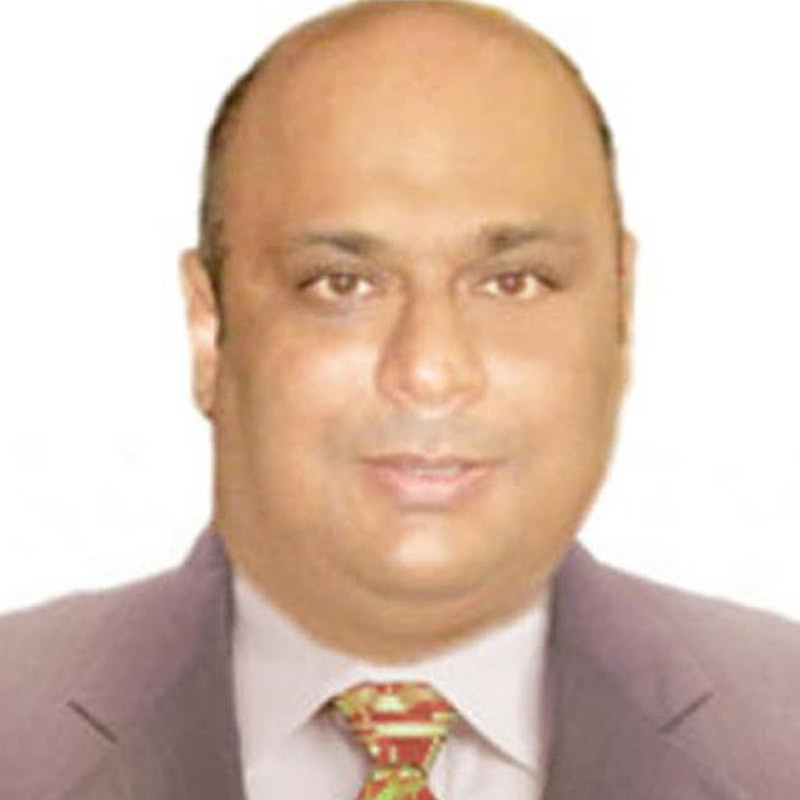
Tag: Arvind Prabhu

  • MCOF’s Prabhu sounds the alarm for cable TV fraternity

    MCOF’s Prabhu sounds the alarm for cable TV fraternity

    KOLKATA: Although linear television remains the primary mode of viewing for most Indian households, cableTV  operators still face numerous challenges – what the rapid uptake of OTT services and the inflexible pricing regulations set by the regulator. And the situation is not getting any better for the tribe, says Maharashtra Cable Operators Foundation (MCOF) president Arvind Prabhu.

    He claims that matters took a grim turn with Covid2019 causing a 25-30 per cent drop in subscribers for the cable TV trade operators in the first four months of the crisis,

    mainly due to lack of fresh TV content, labour migration and the closure of commercial establishments. He further projects that only 5-10 per cent of these subscribers might come back.

    While a lot the of users had moved to OTT during the beginning of the pandemic, Prabhu says there are fewer chances of them returning  to TV as the platforms are already offering linear TV content, streaming live sports events.

    Read more news on MCOF

    How far is normalcy?

    There had been a challenge at the operational level too with the onset of this pandemic. However, the situation is normalising inch by inch, thanks to the stage by stage unlocks, and it is comparatively easier at this moment, says Prabhu. However, 60-65 per cent of workers are not coming to offices regularly.

    Given that cable TV is an essential service, the government should have looked at insurance for its staff, insists Prabhu. Moreover, vendor supplies have also slowed down. The scene is a little different in rural areas, where manpower is available but getting equipment is an issue. Hence, it would take another month or so to reach normalcy, he expresses.

    Due to restrictions in movement, the MSOs have been demanding online payments. While others claim that 70-80 per cent of subscribers have shipped out,  Prabhu dismisses these figures. He says it is the subscribers of the MSOs that is the cable TV operators themselves who have moved to digital payments; not the end subscribers. So far, cable TV operators have been collecting payments traditionally from 50-60 per cent of their subscriber bases.

    What are the long-term challenges?

    Putting aside the challenges imposed by Covid2019, cable TV operators have been in distress for a while now. With the Telecom Regulatory Authority of India (TRAI) introducing a cap on NCF under NTO 2.0, their worries have only increased. Prabhu claims that TRAI did not take into consideration the suggestions that were given following the NTO consultation paper. He goes on to add that MSOs manipulated NTO 1.0 and it failed to bring end-to-end transparency.

    However, the MCOF president acknowledges that former TRAI chairman RS Sharma did his best to help small cable TV operators. “If the new chairman (PD Vaghela) does not quickly help us to revive the overall economic situation, we will be in dire straits. What we ask of the new chairman is to look at all the correspondence sent by cable TV operator associations. He will immediately realise that there has been a serious breach of regulations,” says Prabhu, and he urgesVaghela to call a meeting of all stakeholders at the earliest so they can figure out a solution together.

    Way to a sustainable future:

    Prabhubelieves that there is a way for cable TV operators to stem the loss of subscribers to OTTs: provide broadband services as that would help them to survive in a changing ecosystem, and integrate the billing for those with cable TV. He also mentions that many operators have already started offering android boxes. On the cable TV side, operators are trying to reduce subscriber loss with long-term packages. Hence, they have requested MSOs to offer some discounts on those.

    Going forward, cable TV operators who focus on futuristic services like broadband and hybrid boxes will be able to sustain themselves, says Prabhu. He is optimistic that the new boxes will go beyond urban areas and see good traction in tier II, tier III cities. While these boxes are expensive at the moment, the cost is predicted to come down once demand picks up, leading to increased adoption in rural areas too. Prabhu also highlights that the industry needs government intervention, such as providing loans to the last mile players for investing in new technology.

    But broadband and hybrid boxes are not a sure-shot road to success. With the entry of deep-pocketed players in the segment, operators are worried about not having a level playing field. “It is important to find out how to control the big brother coming and taking away everybody’s job. Even if it takes over everything, there should be some alternative modes for us,” says Prabhu.

    Need of the hour:

    Alongside the long-term strategies, the operators are facing short-term issues as well. “First and foremost, there should be a signing of model interconnect agreements. Nobody has signed a model interconnect agreement, whatever was signed was two-three years ago. The ownership of a set-top box needs to be defined. If a consumer is buying then it is his property; if a cable operator is buying to give it to consumers it belongs to him.; if it is being rented or leased, then it is owned by MSOs. Clarity on that is needed,” he states.

  • Corona : MCOF requests TRAI to defer NTO 2.0 implementation

    Corona : MCOF requests TRAI to defer NTO 2.0 implementation

    The Maharashtra Cable Operators Federation (MCOF) has requested the Telecom Regulatory Authority of India (TRAI) to defer the implementation of the amended tariff order (NTO 2.0) in view of the crisis created by Coronavirus. MCOF president Arvind Prabhu said that they are awaiting response from the regulatory body. The Association of Film and Video Editors has also decided to stop the shooting of TV serials, web series, etc. from 19 till 31 March 2020.

    The federation has written in a letter today to the authority that in the normal course of business, LCO business entails many visits to Customer premises for Collections of Post-paid Subscription and on- site Service Support. It added that NTO2.0 will necessitate more frequent interaction with Subscribers firstly to refit them into New Basic Plan options and secondly to enable them to make the right choices of Pay Channels and Packages.

    It has also been said that the field executives will be exposed to many subscribers and vice versa and thus has a higher probability of turning into a Passive Carrier, if not a patient himself, which is ill- advised in the days of Corona Virus spread. At the present scenario, almost everyone is resorting to Social distancing to contain the spread.

    It has also added that the problem is compounded in large cities where the cable executive often travels and aboard Public Transport to reach his office . It mentioned that while the future situation is not predictable , the psychological need for minimal interaction would be hard to overcome.

    “We therefore request you to kindly defer the implementation of NTO 2.0 until things settle. The interim period would also be useful for more interactions with and by the Industry and whole-hearted participation by each Value chain Member,” the letter stated.

    “We also request that the deferment be made applicable to DTH and IPTV Operators too so as to ensure Status quo across the Sector.  This is without prejudice to the rights of stakeholders who have legally challenged the Tariff regulations and the outcomes are subjudice at this stage,” it added.

  • MCOF’s Arvind Prabhu on post-NTO era, LCO concerns, OTT regulation

    MCOF’s Arvind Prabhu on post-NTO era, LCO concerns, OTT regulation

    The cable and broadcasting ecosystem started the year 2019 with a disruption – the new tariff order (NTO). With the implementation of NTO, the most dissatisfied section of the ecosystem was local cable operators (LCO) as they found the revenue-share business model would make their survival difficult which caused massive protests from LCOs. As months passed, the turmoil settled, but the ecosystem is yet to benefit from NTO, according to Maharashtra Cable Operators Foundation (MCOF) president Arvind Prabhu.

    In an interview with Indiantelevision.com, Prabhu spoke on major challenges faced by the ecosystem after NTO, how the industry evolved post-NTO, how LCOs can survive in the future with upgradation in technologies amid OTT onslaught, etc. Prabhu will also share his insights on the current state of industry at Indiantelevision.com's Video and Broadband Summit 2019, India's definitive Pay-TV and video distribution get together. 

    Edited excerpts:

    Has the industry settled down after the NTO was implemented?

    The industry has settled down but not the benefits of the NTO as envisaged by TRAI within the ecosystem. Consumers are not getting the benefits of the NTO. So the actual implementation of NTO is still found pending.

    What are the major changes you noticed post-NTO?

    What we would like to highlight is that because of the lack of proper implementation, the consumer is still not getting his choice of channels. There has been an increase in the monthly rates and we still feel the transparency is not there. The transparency which was required is still not there. Also, earlier there were two TV sets in households. Now, the second TV is still not active in post- NTO era. Only the primary TV set has been activated in the new tariff order. So, almost 20-25 per cent of our connections have still not activated.

    Initially, local cable operators showed strong disagreement to the revenue sharing model with MSOs. Has the situation changed?

    The situation has still not changed. The local cable operators (LCOs) are still not happy, especially with the network capacity fee (NCF) factor. We are still demanding the entire NCF should be given to LMO. So, the sharing with the broadcasters, the sharing of 80-20 is still not agreeable to us. There was an open-house discussion recently where lots of suggestions were given, therefore we are awaiting that to come.

    If the model does not change, have you thought of alternatives to prevent the loss?

    The revenue share model has to change. It looks like the broadcasters are going to be reducing the charges. Earlier, we thought broadcasters inflated their charges. From Rs 19 to they have gone down to Rs 12. Obviously, the ARPU is going down. If the ARPU is going down, then the revenue share also needs to be relooked and everyone in the ecosystem has to survive. If the cable operators do not get their fixed price, then they would not be able to survive. We are seeing a lot of cooperative head-ends coming up, a lot of infrastructure-sharing happening. But traditional TV is also now aligning with telcos. BSNL has opened its doors to providing its services as also Reliance Jio. There is going to be a little bit of turmoil in the market. The traditional linear viewing is changing.

    What are the other major concerns of LCOs?

    ,One of the major problem is who is the owner of the set-top box. Even today, the set-top box is given by the MSOs to LCO at Rs 1,150 or Rs 1,200. The receipt they are giving is the installation charge. As per TRAI, the installation charge is Rs 300 and registration charge is Rs 100. So, they cannot charge more than Rs 400 at any case. But they are giving the box at Rs 1,150 and saying it's installation charge. This is a violation of GST they are doing and the ultimate ownership of the box is still a question mark because the Multi-System Operators (MSOs) are taking money from LMOs, keeping the money to themselves, getting the depreciation themselves and also not paying GST.

    Also, the grievance is we are not given the choice to choose the channel that a consumer wants. As a consumer, I should have freedom of choice. But the DPOs are selling their packs, broadcasters selling their packs. I have no mechanism where I can sell my own packs. So, these all are part of NTO that was supposed to happen and that has not happened and the  tariff has gone up. So, now we are at a cross-roads.

    If you ask me whether NTO is a good thing, I will say NTO is a very good thing. It is bringing a lot of transparency, it gives equitable revenue to everyone but broadcasters and MSOs both are flouting the rules. Broadcasters are still doing fixed fee deals and MSOs are still not giving the actual audits. TRAI had also mentioned consumers be offered both prepaid and postpaid options. Now, as an LMO, LCO I am a consumer to the DPO. I have only got a prepaid option whereas my consumer is postpaid. So, what has happened is the entire liquidity of cable operators goes into prepaid mode whereas when the MSOs have to make the content  payment they make, they are easily getting three months of payment difference. So, basically MSOs are sitting on  cash. They are under-reporting to broadcasters, they have done fixed fee deals, they are not paying broadcasters also on time but they are taking prepaid from cable operators for the entire universe. The MSOs are benefitting more than anybody else.

    During the first phase of NTO implementation, a large number of consumers complained against LCOs for not giving a-la-carte channels? Why did this occur?

    Again, there was no awareness then. LCOs cannot give a-la-carte channels. Who gives a-la-carte channels? It is an MSO who has to facilitate the LCO to pass on the a-la-carte channels. MSOs are not giving a-la-carte channels, only DPO packages or the broadcaster packages. Earlier consumers were not getting that facility. Now, consumers thought the LCOs were not giving. Unfortunately, MSOs were not doing their duties and cable operators were facing the wrath of customers.

    As LCOs work on-the-ground, they are generally aware of consumer feedback. Do they think consumers are happy with the new price regime?

    Few consumers are very very dissatisfied because we are forcing packages on them and the prices have increased. Few of them – who were very very smart and educated and understood –  are very very happy with what is happening. A lot of awareness needs to happen. True pictures will emerge when we allow  consumers to select the a-la-carte channels. By and large, the ratio is 50-50.

    There are other changes in the ecosystem as well. How the OTT onslaught is affecting LCOs?

    OTT is making a lot of inroads. That is one of the points we are trying to make to TRAI that they have to bring OTT under this ambit. Because you are seeing a channel which is Rs 90 on cable or IPTV or DTH, on OTT it's available for free. And most of the people are now watching on their handheld devices. If they are getting all their entertainment and sports on an OTT platform that is not charged, it is not fair. It has to be charged and it has to be brought under regulation.

    Has Jio’s entry impacted the LCOs?

    Not much. Because they are struggling to reach a critical point. The pricing they have done also is quite affordable for LCOs to match and at Rs 699 for their basic internet charges, you know only cable operators can match those. Not much but it can be a threat.

    Why did LCOs lose a huge amount of subscribers during this phase?

    25-30 per cent of second  TV set owners may have gone to OTT or IPTV or they are not just renewing. They are finding it a luxury. Earlier they could get two TV sets coonections in Rs 300-400. Now, it's going to Rs 800-1000.

    With all the changes in technology, the emergence of new players, how do you foresee long-term future of LCOs?

    Those LCOs who upgrade themselves and do FTTH, will survive in the long run. Those LCOs who are not upgrading and think they will only do what they were doing and not invest in infrastructure, they will vanish. 

  • Hathway – MSM Media Distribution resolve differences, end dispute

    Hathway – MSM Media Distribution resolve differences, end dispute

    MUMBAI: Multi system operator (MSO) Hathway Cable & Datacom and Multi Screen Media’s distribution arm MSM Media Distribution (MSMMD) have finally put an end to their very public dispute.


    Hathway subscribers in phase I and II were greeted with a scrolling message on their screens, which informed them about restoration of MSM channels.


    Commenting on the development, a senior Hathway spokesperson told Indiantelevision.com, “We have mutually agreed to renew our deal with MSM in DAS and analogue markets post a meeting yesterday. The MSM bouquet channels have been reinstated in our packages.”


    It all started on 14 August when Telecom Disputes Settlement and Appellate Tribunal (TDSAT) had directed Hathway to pay Rs 14.56 crore towards subscription dues to MSMMD for DAS Phase I till the expiry of the agreement i.e. 31 October, 2015 in three instalments.


    Hathway in reply to that said that it will not renew the contract with MSMMD for DAS phase II. It may be recalled that this contract between the two expired on 31 March, 2015 and was not renewed by Hathway then.


    Commenting on the entire development a senior media observer said, “It’s good that both Hathway and MSM Media have kept the interests of cable TV subscribers in mind and ironed out their differences. A lesson to be learnt from their dispute and the resolution thereafter is that MSOs, DTH players and broadcast networks need to refrain from washing their dirty linen in public. Commercial disputes between two parties need to be resolved behind closed doors and not in the public glare of the media. Using the media for one’s own ends only sends out a bad signal that the industry has yet to mature to government, the regulator and potential investors in India’s video and broadband distribution sector.”


    Speaking to this website, Maharashtra Cable Operators Federation (MCOF) president Arvind Prabhu said, “It’s a great move firstly for consumers and secondly for the ecosystem. We are glad that they sorted it out amongst themselves. Having said so, we are now waiting to see how Sony or Hathway compensate the mental and commercial losses of last mile operators (LMOs). Huge number of cable subscribers have shifted to DTH during the dispute. We have given a representation to Hathway from the Aurangabad association but if they don’t do anything, we will go to TDSAT. The ecosystem needs mutual understandings, stakeholders should not let the subscribers suffer because of their individual benefits.”


    At the time of filing this report, MSMMD spokesperson was unavailable for comment.


    For the time being Hathway subscribers who missed out Messi and Ronaldo dribbling their way through to the nets can enjoy the highlights and wait for the weekend to catch some live LA Liga and Italian Serie A action on Sony Six and Kix for the first time this season. The sports expertise of MSM acquired the broadcasting rights of the two flagship football tournaments this year but before the commencement of the season the two stakeholders landed into dispute which resulted in fans missing the matches.

  • LMOs victor as Bombay HC directs TRAI to settle interconnect issue

    LMOs victor as Bombay HC directs TRAI to settle interconnect issue

    MUMBAI: The Bombay High Court today (1 September, 2015) issued direction to the Telecom Regulatory Authority of India (TRAI) to settle the Interconnect Agreement (ICA) issue between last mile owners (LMOs) and multi system operators (MSOs) within two weeks. A report has to be submitted to the TRAI on the proceedings in 30 days.

    “All LMOs are advised not to sign the one sided Interconnect Agreement of all MSOs. If the LMO has already signed without understanding the same and if the MSO has not given a copy of the Interconnect Agreement with their company seal and signature within 15 days of signing the same then the Interconnect Agreement is null and void,” said Maharashtra Cable Operators Federation (MCOF) in a statement.

    Speaking to Indiantelevision.com MCOF president Arvind Prabhu said, “This is a victory for the last mile operators who were constantly denied their dues. It’s the LMOs who do all the hard work in maintaining a cordial relationship with the consumers and growing the customer base, but MSOs are not ready to acknowledge this. We want a justified proposition through which the last mile operators will get their due.”

    “We want an agreement, which will be a balanced proposition between all the stakeholders. We want to have a transparent ecosystem where there is clarity on every aspect including revenue system. Ignoring LMOs or not giving them their due certainly cannot be the way forward,” added Prabhu.      

    “A just and fair ICA will now be drafted under the supervision of the Hon. Bombay High Court by TRAI and parties involved. All MSOs are to be made parties in this matter by MCOF so that there is a common just and fair Interconnect Agreement for all LMOs across India,” MCOF said in the statement.