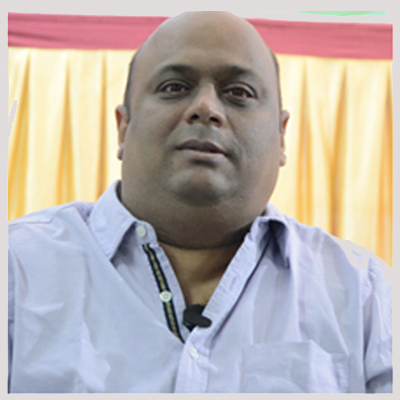
Tag: Arvind Prabhoo

  • LCO forums appeal to Minister Javedekar for their inclusion in new task force

    LCO forums appeal to Minister Javedekar for their inclusion in new task force

    KOLKATA: The local cable operators (LCOs) have once again appealed to the Minister for Information & Broadcasting Prakash Javedekar that the last mile owners (LMOs) associations/federations from all the four corners of the country must be a part of the new task force.


    The task force was set up for the implementation of digitisation in the country and particularly to oversee the execution of the last two phases of digital addressable system (DAS).


    It should be noted that on 8 October, when all the stakeholders met, the LCOs expressed their view of not being given a voice in the task force.


    “We have requested our president Arvind Prabhoo to communicate to the Minister and to ensure that MCOF be a part of the new task force and that LMO associations/federations from north, south, east and west of India must be part of the new task force,” said Maharashtra Cable Operators Foundation (MCOF) core committee member Bobby Shah.


    He added, “The Minister himself has noticed and mentioned that more than two to four LMO association/federation must be in the task force.”


    Reiterating the new government’s plan to transform the country into Digital India with the ideology ‘saabke sath saabke liye’, Kolkata-based Cable & Broadband Operators’ Welfare Association’s secretary Swapan Chowdhury said the forum has sought government’s intervention to the system, which would work in a transparent manner with a scope of protecting the livelihood of millions of people of our country.


     “We appreciate government’s endeavors to re-look and re-construct the digital addressable cable TV system and accordingly take up time to reconstruct the task force,” the LCOs said.


  • IDOS 2014: Industry solutions to distribution dynamics gain momentum

    IDOS 2014: Industry solutions to distribution dynamics gain momentum

    GOA: The India Digital Operators Summit (IDOS) 2014, the largest TV distribution summit in India ended with significant progress and a level of stakeholder unity on the way forward for digitisation in India, embracing voluntary and mandatory DAS, ground level pricing, interconnect and revenue sharing between LCOs, LMOs and MSOs and broadcaster support for standard, uniform pricing based on addressable deployment. Key stakeholders also agreed that it’s critical to further improve hygiene in Phase I and II of DAS while various ecosystem entities, including DTH pay-TV operators, domestic STB manufacturers, alternative TV distribution  platforms (HITS, Free Dish) along with the cable fraternity agreed that ahead of the delayed DAS mandate, voluntary DAS has legs in Phase III and Phase IV.


    IDOS 2014 had a full attendance of the who’s who of the industry with more than 300 professionals from the digital TV landscape making their way to the beautiful picturesque resort of Hotel Leela in south Goa.


    The summit which kickstarted with the biggest opening night party organised by HBO on 25 September, saw some eye opener facts presented by Media Partners Asia executive director Vivek Couto on the current status of Indian cable TV industry. He said, “Out of the 262 million households in the country only 162 million houses have a TV. Of this, 27 million is taken up by the free to air service providers such as Freedish via satellite and 7 million by terrestrial DD, while the rest comes under cable and satellite.”


    He also informed the gathering that over Rs 32000 crore has been invested in digitisation since 2005 with a bulk of the investment coming from the DTH operators followed by the MSOs and LCOs since 2011. Out of this, over Rs 11000 crore in the last 24 to 30 months has been invested by MSOs and LCOs.


    He pointed out that while the cost of all the pay channels on a wholesale basis is Rs 922 to digital platforms, the highest pack price is Rs 550 which is an anomaly and needs correction. “Wholesale channel rates should be reflective of retail  prices,” he highlighted. “The sector needs to move towards retail pricing to foster trust between broadcasters, cable TV operators, and LCOs. Retail pricing will make rates transparent. Competition amongst six DTH, two HITS, five national MSOs and several regional ones and the local cable ops will keep retail rates in check.”


    Another important point that came out during the session was that carriage fees which were declining before the digitisation mandate have now reversed their path following completion of phase of phase I and phase II .  “The carriage fee has gone up by 14 per cent on Q1 of FY15 over the previous corresponding quarter,” he informed.


    Indian Television Dot Com founder CEO Anil Wanvari suggested the way forward for the cable TV fraternity. He said, “The first thing is to look at digitisation and pay TV with a changed mindset that it will be beneficial to all. The government could look at setting up a digitisation transition fund that will help educate, train, provide seed capital to go digital – this is specially relevant in phase III and phase IV areas. The fund could be discontinued once the transition is completed successfully, say in the next four to five years. A mechanism needs to be put in place to reward people who follow the rules and ensure strict penalties for those who don’t.”


    Apart from this, Wanvari also suggested that Subscriber Management System (SMS) should be set up with correct KYC  details and bills be issued to consumers. The government or regulator could also look at laying down standards and tech specifications for set top boxes (STBs) which were in keeping in making the customer technology-future-proofed for at least three to four years and to ensure quality control. That’s if the mandate of made in India set top boxes is to become a reality. “The first wave of digitisation has seen low end zapper boxes being shipped in from China – of maybe not the best quality – and being dumped on to the Indian customer to meet the so-called deadlines in phase I and phase II,” he said. “Which is not fair on the lay customer who may have to go in for a new one in the not to distant future.”


    “On the pricing front, industry could be allowed to price their content based on market demand,” Wanvari added. “The prepaid model as followed by DTH with recharges being made available from your kiranawala (neighbourhood store) or paanwala will allow for more transparent collection from the ground for MSOs and the cable sector. The base pack price could rise; and content costs on cable could be brought on a parity with DTH.  On the other hand, different packages could be made available to the consumer.”


    One key take away from the three day summit was the fact that right from the broadcaster, to the MSOs, DTH operators and also a few local cable operators, no one is happy with the delayed digitisation. The captains of the industry expressed similar opinion  to what the Telecom Regulatory Authority of India chairman Rahul Khullar has been airing on several occasions, that ‘delayed digitisation sends out a wrong message to the world and helps no one.’


    Many also felt that the Average Revenue Per User (ARPU) needs to go up from the current Rs 150 to Rs 250-Rs 300. “ARPUs can see an upward trend only if there is trust amongst the various stakeholders,” said IndiaCast CEO Anuj Gandhi.


    Star India president and general counsel Deepak Jacob during a session suggested putting together a commercial model which is uniform. While Siti Cable CEO VD Wadhwa opined to opt for voluntary digitisation, if the broadcasters and LCOs support the MSOs.


    “IDOS is a great platform for the industry to express their point of view, which for this year was delayed digitisation. I am very pleased with the discussions and the quality turnout at IDOS,” said Wadhwa.


    “As a first timer, I got to learn a lot through all the sessions that were conducted. Given a chance, I will keep coming back,” said Scripps Networks Asia Pacific managing director Derek Chang.


    “The session on STB was very informative and there is no other platform where all the stakeholders can meet and discuss the issues related to the cable TV industry,” said Times Television Network MD and CEO MK Anand.


    The highlight of IDOS 2014 was the closed door interaction with TRAI chairman Dr Khullar via videoconference with the various industry stakeholders.

  • IDOS 2014: MCOF’s vision for DAS phase III and IV

    IDOS 2014: MCOF’s vision for DAS phase III and IV

    GOA: Maharashtra Cable Operators Foundation president Arvind Prabhoo has expressed complete dissatisfaction at the extension of the digitisation dates in phase III and phase IV. While the Information and Broadcasting Minister Prakash Javadekar has said that the delay in digitisation is because he is looking at indigenisation of set top boxes (STBs), Prabhoo feels that even before the Indian STB manufacturers come up with their quality boxes, the international vendors will start chipping in boxes, which will be over priced.


    According to Prabhoo, the postponement also sends a signal that there is a dichotomy between the regulator and the industry. The MCOF president was expressing his views during the just concluded IDOS 2014 in Goa.   


    “The worst impact of this delay will be on the last mile owners (LMOs), who will now face stiff competition from the direct to home (DTH) players because they will now have almost a year or year and a half to start marketing their product,” informs Prabhoo.


    The LMO, for Prabhoo is an entrepreneur “and we have been saying this since last year.”


    Many LMOs have started realigning themselves at district level as well as state level. “The last mile owner has realised that alignment and realignment will happen and it is good for him. We know that a lot of LMOs, who have a good standing in the community will get funds for fellow LMOs,” opines Prabhoo.


    He also highlights that a lot of technology solutions will be provided by LMOs, which will be much cheaper than what is currently available. “And if we adopt technology, I think it will become a great time for LMOs and independent headend operators.”


    Prabhoo through IDOS 2014 has also requested the Telecom Regulator Authority of India (TRAI) chairman Rahul Khullar to open up the ISP licences for cable television owners. “It is after this that the broadband and digital India dream can materialise,” he says.  


    He opines that while the extension has been given, the challenge can be seen as an opportunity. He is aware of the challenges, considering the different demographics for phase III and IV markets. “There are almost 5000 headend owners; we might have to cut this down to maybe 50 headends. That’s going to lead to unemployment. Also revenue differentiation will be there,” he highlights.


    Prabhoo disagrees with the perception that the ARPU is less. “There is going to be a viability concern because of transportation cost. We have requested the TRAI chairman to also allow us to use the national optical fibre system and subsidise rates. If that happens and cost of transportation goes down then these headends could be a viable proposition,” he says.


    According to him, players who were earlier in the B2B space and have applied for a DAS licence, when they begin to expand in phase III and IV areas, they won’t have any legacy issues. MCOF claims to have helped the LMO and independent headend owner by tying up with telecom skills department to re-skill employees because digital era is different than their analogue culture. “We are revenue driven and not valuation drive. So, those who want to see actual revenues coming in, should partner with us,” says Prabhoo.


    Learning from the mistakes of phase I and II, this time it will emphasise on data services. One of the major issues was about customer ownership and MCOF says that this will keep the ownership with the LMO with a fee based OSS and BSS services such as headend operation, billing etc. “We are looking at reducing a tier in the broadcaster, MSO, LMO, customer tier thus enabling lower MRP and much higher revenue share to the LMOs,” he concludes.

  • Bringing home Lord Ganesha

    Bringing home Lord Ganesha

    He is the ‘Dukh Harta’ and the one who removes obstacles. So be it any new project, a new house or a new car, everything starts with his blessings. The western part of the country is now gearing to welcome home the most loved Lord Ganesha.  And starting 29 August, one will see huge pandals housing Ganapati at every nook and corner of Maharashtra.  His aura is such, that devotees while immersing the Lord, ask him to come back soon, as they chant, ‘Agle Varsh Jaldi Aa’.

    From Lalbaug Cha Raja, to the pandals in localities to households are all busy with the last minute preparations. Right from cleaning the house, to making modaks (his favourite sweet), to decorating the house, the stage is set to welcome him home.

    While it is a 11-day festival, immersions take place after one and a half days, three days, five days, seven days, nine days and the eleventh day. Host of activities are lined up in the pandals and even at homes for the duration. The day starts with morning aarti, it progresses with hawan, bhajans and then concludes with evening aarti. People, who bring him home, invite family and friends for darshan and treat the Lord like a guest, with morning and evening aarti.   

    On the occasion, we at indiantelevision.com ask the industry about their preparations for the 11 day festival and how they celebrate it.

    MCOF president, Arvind Prabhoo

    We have been bringing home Lord Ganesha for the last 45 years. While the celebrations were restricted only to my mother’s house, it was some 45 years ago, when my brother was some two to three years old, when he got fascinated towards the whole festival and we decided to also bring home the Lord. We bring the Lord home for five days.

    The preparations start almost one year in advance, as the order for the idol has to be made. We get an eco-friendly Ganapati. For the past 15 days, the entire family has been busy with cleaning the house, getting ingredients for the Prasad etc.

    On day one we have modaks for the Lord and also lunch arranged, on the third day we arrange for bhajan in Gujarati and Marathi, while on the fifth day, my mother makes close to 200 puran poli’s.

    We immerse the Lord in the municipal ground next to our house in Villeparle, where the municipality creates an artificial pond. 

    Star India SVP programming Ashish Golwalkar

    We have been getting Lord Ganesha for more than 20 years. Celebrations and preparations start in full swing almost a week or 10 days in advance. We get Ganapati for seven days. This year, the celebration is going to be on a larger scale as all the families will come under one roof and are celebrating this occasion. We get clay Ganapati and immerse the Lord in the nearby pond.


    Zee 24 Taas business head Bhushan Khot

    We have been celebrating Ganesh Chaturthi since the past 12 years at our home. We keep for one and a half days and the immersion takes place at an artificially created pond near our home so as to not pollute the water. We have been doing this from my childhood as a joint family and when we moved out to our own place, we continued the tradition.


    Zee Marathi business head Deepak Rajadhyaksha

    The occasion is very important because it is being celebrated at our home since the last 60 years. My father had started the tradition and we followed suit of bringing home Ganesha for one and a half days and immersion is done at the nearby pond. Along with it, we also prepare Lord Ganesha’s favourite modak and shrikhand and other such sweets.

  • TRAI to hold MSO-MCOF meet in Mumbai

    TRAI to hold MSO-MCOF meet in Mumbai

    MUMBAI: Maharashtra Cable Operators Federation (MCOF) that had recently approached the Bombay High Court challenging the payment of entertainment tax, billing and the carriage fee has now approached the Telecom Regulatory Authority of India (TRAI) to seek answers on the constitution of revenue share.


    “While the TRAI says that there should be a revenue share between the multi system operators (MSOs) and last mile owners (LMOs) on the subscription fee the LMO collects from the consumer, is that the only revenue in this cable TV universe?” questions MCOF president Arvind Prabhoo.


    According to Prabhoo, there should be clear definition of constitutes revenue. “Apart from subscription revenue, there is carriage fee revenue, advertising revenue and even activation revenue. So why it that these revenues are not shared amongst all the stakeholders of the cable TV system?” he asks.


    “Who decides what revenue is?” questions Prabhoo.


    With regards to this, a meeting has been called between the MSOs and MCOF by TRAI. “I had met N Parameswaran earlier this month and had discussed these issues with him. With regards to this, TRAI has decided to hold a meeting in Mumbai between MCOF and MSOs,” informs Prabhoo.


    When Indiantelevision.com contacted TRAI principal advisor N Parameswaran he confirmed the meeting, but said that no particular date was yet decided. “We will be holding a meeting between the two in order to address issues of billing,” concludes Parameswaran.  

  • LMOs unite to form pan-India platform

    LMOs unite to form pan-India platform

    MUMBAI: The last mile owners (LMOs) will no longer be a fragmented body. This arm of the cable TV chain has decided to finally form a pan-India platform. The move comes after the national multi-system operators (MSO) formed the MSO Alliance, the direct to home (DTH) players got together to form DTH Operators Association of India and the broadcasters formed the Indian Broadcasting Foundation (IBF).


    No formal name has still been shortlisted; however, it will be during the upcoming cable TV exhibition in Hyderabad that the LMO association from across the country will meet to decide the name and the board members of the pan-India platform.


    The name would be kept under wraps until the body gets a confirmation from society registrar.


    Currently, six state cable TV associations from West Bengal, Maharashtra, Andhra Pradesh, Karnataka, Gujarat and Madhya Pradesh have come together to be a part of this pan-India platform. More state associations are expected to join the platform in the upcoming exhibition, which will be attended by LMO associations from Kerala, Tamil Nadu, Karnataka and Maharashtra amongst others.


    “LMOs at the grass root level have never been taken into consideration. A pan-India platform will give us proper representation and power. It will also help us take our views to the government,” says Maharashtra Cable Operators Federation (MCOF) president Arvind Prabhoo.


    “It is in Hyderabad that we will decide on the functional constitution body of this platform,” he adds.


    So why come up with this association now? Answers Prabhoo, “We learn from our mistakes. In the past 20 years we have never had one voice. While even the domestic servants have an association, LMOs have never had a strong pan-India association, but individual voices. With digitisation, operators have understood what is in store for them, and so also understood that an united voice was much needed.”

  • MCOF sets up CVNO SCOPE with signal from BR Cable

    MCOF sets up CVNO SCOPE with signal from BR Cable

    MUMBAI: Multisystem operators (MSOs) are in for some serious competition. This time from a MSO cooperative formed by the Maharashtra Cable Operators Federation (MCOF) along with BR Cable Network, christened SCOPE (Synergy Cable Operators Private Limited).  

     
    The first-of-its-kind cable virtual network operator (CVNO) will be formally inaugurated on 2 May, which coincides with the opening day of MCOF’s conference for LMOs called the National Conclave on Broadband and Cable (NCBC-2014).

     
    Already, SCOPE has starting seeding boxes in Mumbai. “While we have seeded boxes in Vile Parle and Thane, in the next 10 days, we will be seeding boxes in 50 other locations in Mumbai and Thane,” MCOF president Arvind Prabhoo tells indiantelevision.com.
     

    The newly-minted set-up will borrow its infrastructure from BR Cable Network while operations will be handled by MCOF. “This is a way to re-empower the last mile owners.  It is they who will manage the subscribers. They will have full ownership of the customers, unlike what is happening in the current scenario, where the MSO claims ownership of the customers.  Also, the LMOs will have limited access to the SMS, where they can feed all details about the customer and bill the subscriber,” explains Prabhoo.
     

    Unlike the rest of the cable TV industry, SCOPE will enter the market, with packages in place. “We will create packages according to the needs of subscribers. While other players have still not got packaging in place, we will give consumers the choice to watch what they want to,” informs Prabhoo. “We will not deal with broadcasters on our own. We will take the channels from BR Cable and then package them to give them to our subscribers.”

     
    SCOPE will pay BR Cable 15 paise per channel, per set top box, per month as signal processing charges. SCOPE will pay a minimum of Rs 15 per STB per month and a maximum of Rs 25 per STB per month for any number of channels it takes from BR Cable. Over and above this, SCOPE will pay the operator content cost charges as per the package. For subscribers, minimum package cost will be Rs 125 and this will include all the Marathi channels and have a top-up channel facility. The LMO will get 60 per cent of the package fee, the subscriber opts for. SCOPE has already bought 50,000 STBs and placed an order for an additional 2 lakh boxes. Currently, all members of MCOF are part of SCOPE. Ask Prabhoo how big is SCOPE and he laughs, “The number of LMOs who have come together is staggering, beyond someone’s belief.”

     
    Each LMO has made an initial investment of Rs 1 lakh in return for 100 STBs. “The best part of the cooperative is that irrespective of the number of subscribers one owns, every LMO has five shares in the company,” informs Prabhoo

     
    MCOF hopes that SCOPE will serve as a role model for DAS phase III and phase IV. MCOF also hopes that in the beginning, SCOPE customers will achieve savings of 25 per cent over the prevailing MSO packages and at least 15 per cent over comparable DTH offerings.

     
    About adding customers, Prabhoo says, “Well initially, we will convert 25 per cent of our existing customer base to SCOPE customers, replacing their existing boxes with the SCOPE box, at no additional cost. If any customer wants to upgrade, we will give them the SCOPE HD STB.” The SCOPE SD box will cost Rs 1,100 and the HD box Rs 1,500. 

     
    The new entrant will also provide high speed internet service to its customers.  “The service will be provided by Bolt. Subscribers can opt for any kind of speed they want and at 30 per cent less than what is provided by others,” says Prabhoo. Plans are afoot for bundling services like a cable and internet combo pack. The MSO will also launch an Android box. 

     
    SCOPE is eyeing not only Maharashtra, but the whole country. Even as its collaboration with BR Cable Network takes off, it has also got into an arrangement with CCN from Siliguri. “This model can be applied throughout the country.  People will realise this is the way forward,” says Prabhoo, who is hopeful that more MSOs will want to get associated with SCOPE once they understand the model.

     
    “We don’t want LMOs from phase III and IV, to suffer the way we did. And so this set up,” he signs off.

  • MCOF conclave stresses on importance of broadband for LMOs

    MCOF conclave stresses on importance of broadband for LMOs

    MUMBAI:  It has been touted as one of the leading get together of the last mile owners (LMOs) in Maharashtra. The Maharashtra Cable Operators Federation (MCOF) National Conclave on Broadband and Cable (NCBC) 2014 saw its president Arvind Prabhoo put his best foot forward in trying to get the LMOs to buy into his vision of a digitised cable TV India where they are also prospering. Apart from formally launching Synergy Cable Operators Private Limited (SCOPE), the first Cable Virtual Networks Operator (CVNO), Prabhoo and a handful of industry vets and consultants, stressed on the importance of broadband and how LMOs could increase their business five-fold, using this tool.


    Prabhoo pointed out that number of active broadband subscribers in India is expected double in the next two to three years according to a Telecom Regulatory Authority of India report.  In Mumbai alone, the figure is expected to go up from the current 1.2 million to 4.5 million in the next couple of years. “Broadband will grow, and we need to utilize this opportunity,” Prabhoo said.


    Drawing comparisons with the US where 50 per cent of broadband services are provided by cable operators, he said, “We need to implement the same in India. As things stand, only a fraction of the broadband subscriber base is delivered by cable operators.”


    Apart from the emphasis on broadband, day one of NCBC 2014 saw heated debate over the existing three models i.e. MSO:LMO, HITS and the newly-minted CVNO, which seeks to provide white label cable TV services to smaller operators in phase III and phase IV.


    Presided over by indiantelevision.com founder, CEO and editor-in-chief Anil Wanvari, the session had all parties putting forth their points of view. The panel comprised Kulbhushan Puri of BR Cable Network, Atul Saraf of ABS Seven Star, Vynsley Fernandes of Castle Media, and Prabhoo.


    During the discussion, Wanvari expressed the view that the full rewards of digitisation have yet to trickle down to the broadcaster, MSO or LMO – as they viewed each other with suspicion, though things have improved in recent times. “There is a need for greater communication and understanding among the stakeholders,” said Wanvari. “The LMOs and MSOs need to understand that broadcasters are investing in content and they need to recoup that investment.  Broadcasters need to understand MSOs are investing in setting up infrastructure and that LMOs want a sustainable future. The cable ecosystem also needs to understand that broadband can be extremely rewarding as compared to simple video signals where subscribers tend to be wary of price increases.”


    To this, Prabhoo invited all stakeholders to come together to discuss issues and take the industry forward while benefitting everyone. “Proper constructive pricing model can be worked out if broadcasters, MSOs and LMOs discuss issues on the same platform,” he said.


    Fernandes, who is involved in the upcoming HITS project of the Hinduja Group, said, “Packaging of content should be in the hands of the LMOs. Additionally, the LMOs need to invest in set top boxes which they will deliver to their subscribers so that ownership stays with them. And this is what the HITS project is set to do.”


    Prabhoo said that while there will be areas covered by the CVNO in phase III and IV of DAS called Headend on the Ground (HOGS), there would be some covered by HITS (Headend In The Sky). “There could also be areas where HITS and HOGS can work together to take digitisation forward,” proposed Prabhoo.


     Saraf said the future of DAS phase III and IV lay in MPEG4 and not MPEG2 STBs that were currently being seeded by operators. On the issue of low ARPUs in phase I and II, he said, “ARPUs can go up only by introducing value added services like Video on Demand (VOD), Movie on Demand and YouTube. We need hybrid STBs, which can provide both cable and internet services.”

  • Jaipur LCOs to form cooperative, set up own headend

    Jaipur LCOs to form cooperative, set up own headend

    MUMBAI: Local cable operators (LCOs) feel threatened with compulsory digitisation of cable TV services. LCOs own the end subscribers, but do not have the bargaining power with broadcasters and also access to funding.


    This has led to an increasing trend towards LCO consolidation, if not through the mergers and acquisitions route then through formation of associations and unions, especially in Gujarat, Maharashtra, Kerala and Karnataka, states the FICCI-KPMG media and entertainment industry report 2014.


    Now, nearly 220 of the about 250 LCOs in Jaipur, Rajasthan have decided to come together to protect their business. The LCOs are looking at forming a cooperative and setting up their own headend.


    The move comes as many LCOs are unhappy with the monopoly of the multi-system operators with the progressing digitisation.


    “It is at a nascent stage, but we are tired of the MSO monopoly here in Jaipur and hence looking at setting up a cooperative and converting into an independent MSO,” says a cable operator from Jaipur who is currently taking feeds from Hathway Cable & Datacom.


    The cooperative has been set up under the banner Jaipur Cable Operators Welfare Society. The LCOs are meeting regularly to finalise details.


    While the initial investments will be made by the LCOs, they will also approach banks for loans to meet the investment demands. “We are unhappy with the way things are moving in the state. Neither the Telecom Regulatory Authority of India nor the Ministry of Information and Broadcasting is ready to listen to us. And so we have decided to take this move,” says the LCO.


    As of now, four lakh set top boxes have been seeded in the state. “The Jaipur cable operators are in talks with us as they are looking at setting up a cooperative. We will be meeting in April in Mumbai to discuss further,” informs Maharashtra Cable Operators Federation (MCOF) president Arvind Prabhoo.


    It is not only in Jaipur that the LCOs are coming together to form cooperatives. While earlier such cooperatives were set up in Chennai, Delhi, Bengaluru and Kolkata, now LCOs are coming together in Mumbai, Jaipur, Jodhpur and parts of Madhya Pradesh to set up their own headends.

  • MCOF and its MSO-LMO revenue sharing proposal

    MCOF and its MSO-LMO revenue sharing proposal

    MUMBAI: The struggle to find a solution on how multisystem operators (MSOs) and cable operators (LMOs – last mile owners) will work together in a digitised India continues.  The discussions between Maharashtra Cable Operators Federation (MCOF) and Hathway Cable & Datacom to come up with a workable arrangement had given some hope for a smooth rollout of MOS-LMO revenue shares, and consumer billing in Mumbai. But talks between the two seem to have come to a standstill for some time now. 


    Indiantelevision.com has got a hold of the proposed revenue share model which has been hammered out after a lot of thought and conversation: it takes into consideration operational expenses (OPEX) and the capital expenditure (CAPEX) of both the LMOs and MSOs.


    “It is as much in our interest as it is in the MSO’s to resolve the bottleneck, differentiate amongst subscribers and cater to their needs to optimise the network resources and push ARPUs up in the shortest time,” says MCOF president Arvind Prabhoo.  


    According to the proposed revenue sharing structure, the MSO: LMO share for free to air (FTA) channels should be 37 per cent : 63 per cent. For basic pay packages, the price range of which is Rs 150-Rs 250 (excluding taxes), the proposed revenue share is 45 per cent : 55 per cent; for advanced pay channels, which are in the price range of more than Rs 250, the revenue share proposed is 50 per cent : 50 per cent. For special/VOD packages, it is 75 per cent : 25 per cent and for HD channel packages it is 60 per cent: 40 per cent.


    “The best way for the industry to not only survive but prosper to its true potential is to work as a pure and true partnership business. MCOF will act as the collection management and settlement entity,” adds Prabhoo.  


    The MCOF model assumes that every MSO has two systems in place: the subscriber management system (SMS) and Financial Accounting System (FAS). The SMS hosts the entire subscriber details and is the basis of value chain reconciliation and audit.  


    “We have proposed that the MSO use this to generate end-customer bills with full details, factoring the LMO income share and taxes at various levels. These bills would be raised in the name of the LMO network and carry the tagline powered by the MSO,” says Prabhoo.


    The billing details, as per the proposal, will be pulled by MCOF and placed on the cloud and each LMO would gain access via the worldwide web using a mobile device or through a desktop.  The collection data is planned to  be captured in real time using MCOF approved technology, which is currently UPASS and updated on the MCOF cloud in real time and at the MSO-end either in real time or on an end of day basis.


    “We will work out the tax liability at LMO levels and guide them to use the technology to compile tax returns/challans. We will also reconcile the MSO-LMO accounts taking into account prepaid/post paid, online payments made to the MSO and unpaid customers,” informs Prabhoo.  


    Explaining the reason for the proposed revenue share, Prabhoo says, “The LMO has certain base expenses to cover, such as employees, office rent, repairs and replacements of shared infrastructure, audit and tax returns.”


    The effective OPEX for an LMO, according to MCOF for 1000 subscribers is Rs 109,500 a month. “The LMO’s per subscriber cost comes to Rs 109.5. We need at least Rs 109- Rs 110 to pay the employees and other costs. So this is the minimum and then comes profitability,” he highlights.


    The average CAPEX per subscriber is close to Rs 4000. Also, MCOF points that while the subscribers/employee ratio for an LMO is around 400, it is expected to be more than 5000 for a MSO. Thus making the OPEX element much higher for an LMO than an MSO.  


    Prabhoo feels that while the MSO is a wholesaler and LMO the retailer, the assumption of equal sharing as envisioned by the Telecom Regulatory Authority of India (TRAI) needs to be rectified and replaced by equitable sharing.


    “We have had detailed discussions with the TRAI on this and the matter will be reviewed sooner or later, but for sure it is not correct on TRAI to assume equal sharing by all three stakeholders,” he says.   


    The collection cost currently is entirely on the LMO while a good part of the monies flows to MSOs. This, according to MCOF needs to be allocated in the revenue share formula, if not actually computed and reimbursed. “For all practical purposes the LMO’s work load will increase as he acts as the marketing arm and administrative support system for the MSOs. Also, another round of set top box (STB) deployment/retrieval/repairs/replacement by HD boxes will entail quite a lot expense.”


    MCOF, in the email to MSOs, has also suggested that carriage fees should be clubbed with customer revenues, being a mathematical product of STBs in place and carriage fee per STB.


    MCOF has agreed that the UPASS technology, devices and connectivity costs will be borne by the LMOs. Also while integration, payment gateway, electronic processing and settlement system costs are incurred by the MSOs for direct connections or internet services, for any additional integration, the cost can be shared with the LMOs on a pro-rata basis.


    The LMOs are also suggesting carriage fee sharing as a loyalty bonus. “This can be mutually worked out,” says Prabhoo.  


    The new system will enable the MSO to see and monitor the exact collections made each month by the LMO and also the revenue due to the MSO, excluding taxes. While revenue will be booked in both books as per packages, the LMO will pay the MSO per month for all the collections made during the previous month after deducting taxes and the LMO share within seven days of the invoice being generated by the MSO.


    While MCOF is trying to move things forward, what’s stopping the MSOs? “Well! There are talks going on between the promoters of the MSOs. There is no consensus amongst the MSOs and that is what is taking time,” says a Hathway official on condition of anonymity.


    According to the official, the proposed revenue share by MCOF is acceptable, with minor changes. “But, all the MSOs operating in the state, have to come to a consensus, which I don’t see happening soon,” he says. The official feels that billing in Mumbai is most likely going to  be delayed further.


    SitiCable Network, which also has a presence in the country’s financial capital says it may soon conclude on how it will share revenues. “We are negotiating. We may announce our revenue share in a couple of days. Since, we have a small presence in the state, we are seeing what other MSOs are doing there,” explains  SitiCable Network chief operating officer Anil Malhotra.