Tag: Arunish Chawla

  • GST 2.0 reloads India’s growth story at Network18’s power-packed summit

    GST 2.0 reloads India’s growth story at Network18’s power-packed summit

    MUMBAI: Talk about tax reform with extra firepower Network18’s Reforms Reloaded 2025 lived up to its billing as India’s biggest policy stage, convening the nation’s top minds just as GST 2.0 kicked in on 22 September 2025. Policymakers, CEOs, economists, defence strategists, and global investors gathered in Delhi to decode how the new regime could reshape India’s economic trajectory and set the tone for its Vision 2030 leap.

    The day was packed with insights, optimism, and the occasional hard truth. From GST reforms to defence indigenisation, divestment to digitisation, leaders sketched out how India could convert reform rhetoric into real, lasting impact.

    Chief economic advisor V Anantha Nageswaran called GST 2.0 “a very significant landmark reform”, predicting it will provide a “very significant boost to domestic demand”. Coupled with recent tax concessions, he said, the multiplier effect would “quite definitely boost GDP numbers”, with FY26 growth expected towards the upper end of the 6.3–6.8 per cent range.

    Tourism minister Gajendra Singh Shekhawat emphasised that the reforms would touch lives across strata, “from a farmer to a millionaire in Mumbai,” with 95 per cent of goods seeing a reduction in taxes. This, he argued, would put more money into consumers’ pockets, spur MSMEs, and even boost domestic tourism.

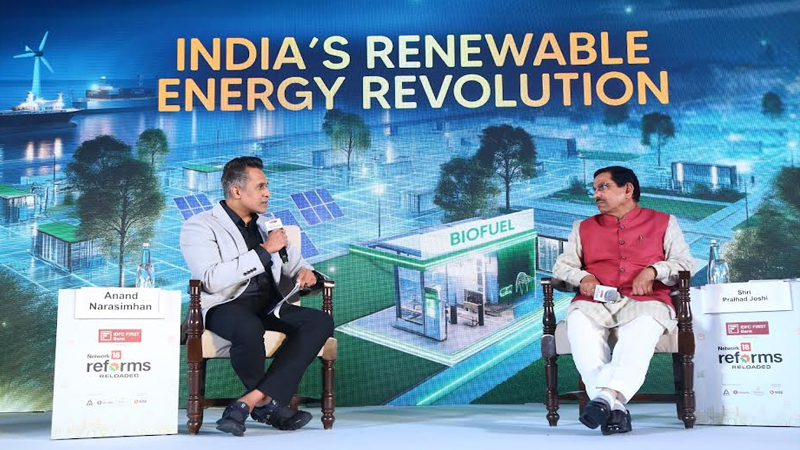
    Consumer affairs minister Pralhad Joshi went a step further, hailing GST 2.0 as “the biggest reform since 1975”. He announced a dedicated consumer helpline to tackle complaints about GST benefits not being passed on and praised the new online input credit refund system: “Compliances have been simplified, refunds have been made online… what can be a bigger relief for businesses?”

    DIPAM secretary Arunish Chawla highlighted how reforms in capital markets were democratising investment. Despite FIIs pulling out Rs 1 lakh crore between January and August, domestic institutional investors (DIIs) poured in Rs 5 lakh crore, with two-thirds of DIIs now individual investors. “As markets stabilise, we will bring in more OFS, minority stake sales and IPOs, and exceed this year’s Rs 47,000 crore divestment target,” Chawla said, cautioning against obsession with headline figures.

    Defence secretary Rajesh Kumar Singh spotlighted the government’s push for self-reliance, announcing 25–30 billion dollars in annual capex for the next decade, with 75 per cent of that to be spent within India. The move, he argued, would not only strengthen defence capabilities but also catalyse indigenous manufacturing and innovation.

    Beyond GST, panellists debated India’s reform roadmap: asset monetisation, renewable energy, frontier tech, and reshaping globalisation in India’s favour. The mood was decidedly optimistic that GST 2.0, alongside these reforms, could power a competitive, consumption-led economy.

    Network18 (Broadcast) CEO Avinash Kaul framed the day’s significance: “At a time when global economic shifts and technological disruption are transforming industries, Reforms Reloaded sparks future-focused conversations on governance, GST, and India’s evolving role in the global economy.”

    By the end of the summit, one thing was clear: GST 2.0 isn’t just another acronym in India’s policy alphabet soup. It’s the pivot around which India’s growth story for the next decade will turn, a story that leaders at Reforms Reloaded believe could make Bharat both resilient at home and credible on the world stage.

    Because when it comes to India’s economic future, the message from the summit was loud and clear: it’s time to reform, reload, and rise.

  • India@100 plans its big leap at BT summit with bold vision for 2047

    India@100 plans its big leap at BT summit with bold vision for 2047

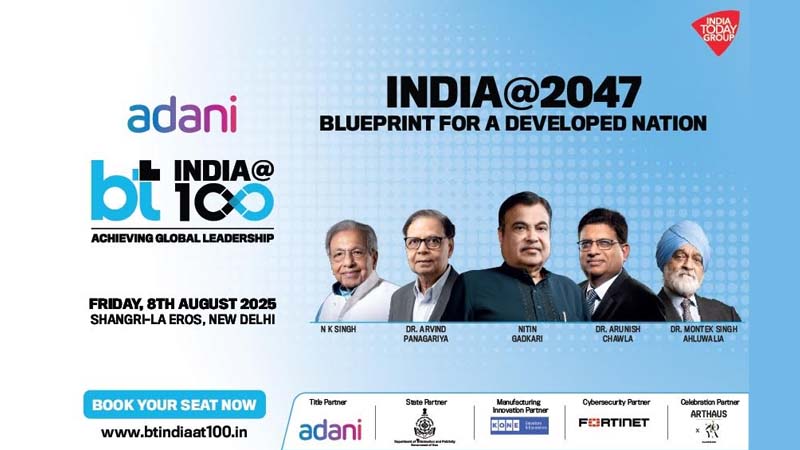
     MUMBAI: A century in sight, and India’s got a blueprint to boot. As the nation marches towards its 100th year of independence, Business Today Multiverse is setting the stage for a future-forward conversation. The BT India@100 Summit, to be held on August 8, 2025 in New Delhi, will convene some of India’s sharpest minds from business, policy, and governance under the theme ‘India@2047: Blueprint for a Developed Nation’.

    Headlined by union minister Nitin Gadkari, who will deliver the keynote on India’s long-term growth roadmap, the summit aims to decode what it will take for the country to join the ranks of high-income, innovation-led economies.

    The speaker line-up reads like a policy powerhouse: Arvind Panagariya, Arunish Chawla, NK Singh, and Montek Singh Ahluwalia, among others, will explore everything from economic resilience and institutional reforms to AI, urbanisation, trade, and sustainability.

    But the star of the summit? Business Today’s 100 Ideas for India@100, a curated, deeply researched list of actionable reforms across 10 sectors. Think GST 2.0, land and labour reforms, clean air, safe cities for women, digital infrastructure, and future-ready education. These ideas stem from collaborations with experts like Manish Sabharwal (Teamlease) and Rajesh Shukla (Price), and inputs from think tanks like ICRIER, CSIS, ASER, and former policymakers Anil Swarup and Subhash Chandra Garg.

    With just 22 years to go until 2047, the summit isn’t just another talking shop, it’s a call to action. Sessions will challenge government, industry, and civil society to co-create India’s future. As one speaker put it: “It’s not just about growth, it’s about transformation.”

    And as the country eyes a 10 trillion dollars economy, Business Today is aiming to shape the national dialogue on how to get there with ambition, equity, and accountability.

    Because the journey to 2047 won’t be built on headlines, it’ll be built on hard choices, bold moves, and ideas that stick.