Tag: Aruna Sundararajan

  • Truecaller dials up policy muscle, taps Aruna Sundararajan for board role

    Truecaller dials up policy muscle, taps Aruna Sundararajan for board role

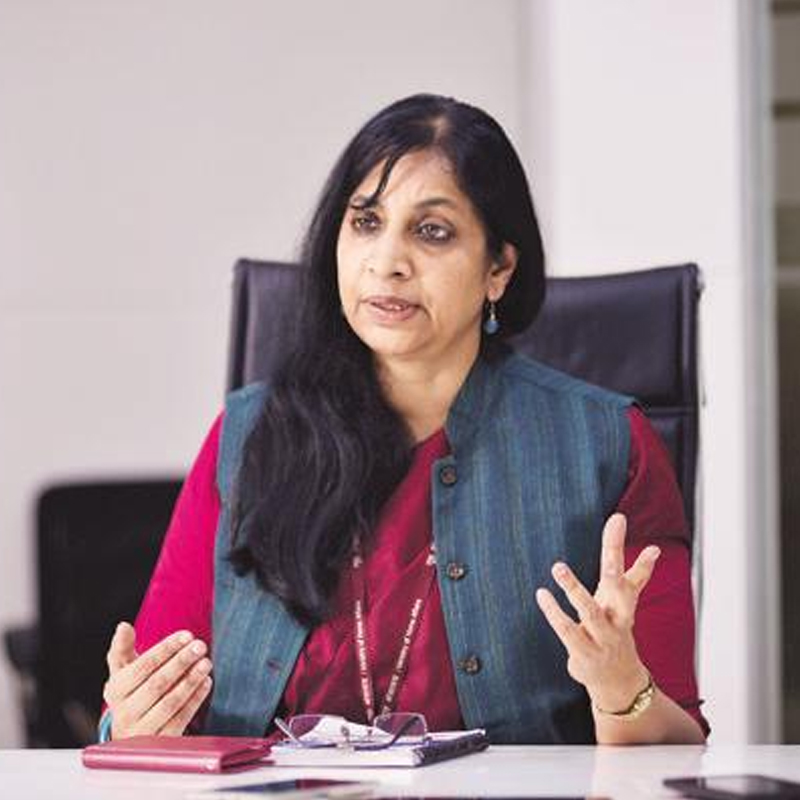
    MUMBAI: Truecaller is adding some serious regulatory firepower to its boardroom. The Stockholm-based caller ID giant has nominated Aruna Sundararajan—former telecom policy chief and digital transformation architect—for a seat on its board, ahead of the company’s annual general meeting (AGM) scheduled for 23 May.

    The nomination comes as part of a broader recommendation from the Truecaller AB nomination committee, which also proposed the re-election of all existing board members—Nami Zarringhalam, Alan Mamedi, Annika Poutiainen, Helena Svancar, and Shailesh Lakhani.

    Sundararajan is no stranger to tech and governance. The former secretary at India’s ministry of electronics and IT and department of telecommunications has steered some of the country’s most ambitious digital infrastructure and policy initiatives. She now chairs the Broadband India Forum and sits on the boards of Delhivery, Info Edge, L&T Technology Services, and India’s National Bank for Infra Financing and Development (NaBFID).

    “We are very pleased with the nomination of Aruna Sundararajan as a new board member of Truecaller. She possesses extensive experience in policy and regulatory matters within technology and has board experience from several listed companies in India. Her appointment as a new board member is expected to significantly enhance the board’s collective expertise and competence in these areas. With this addition the Board will consist of six board members with well diversified competences and experiences,” said Truecaller’s nomination committee chair Kamjar Hajabdolahi. “Her addition will level up the board’s strategic depth at a time when digital trust and global expansion are front and centre.”

    The committee, comprising reps from top shareholders and co-founder Alan Mamedi, will publish its full slate of proposals and justifications alongside the AGM notice.

    Founded in 2009 and listed on Nasdaq Stockholm since 2021, Truecaller has become a default defence against spam and scam calls globally. With over 450 million active users, the app blocked nearly 56 billion unwanted calls in 2024—making it one of the world’s most widely used caller ID platforms.

    With Sundararajan’s potential onboarding, Truecaller is ringing in not just experience—but influence that matters.

  • DoT & TRAI officials feel satcom policy needs ‘fundamental rethink’

    DoT & TRAI officials feel satcom policy needs ‘fundamental rethink’

    NEW DELHI: Two top Indian government officials from Telecom Ministry and TRAI feel the country must have a "fundamental rethink" on satellite communication policy to meet rising connectivity needs that are being fuelled by mobile data growth, digital aspirations, demand from the country’s broadcasting sector and advent of new-age technologies.

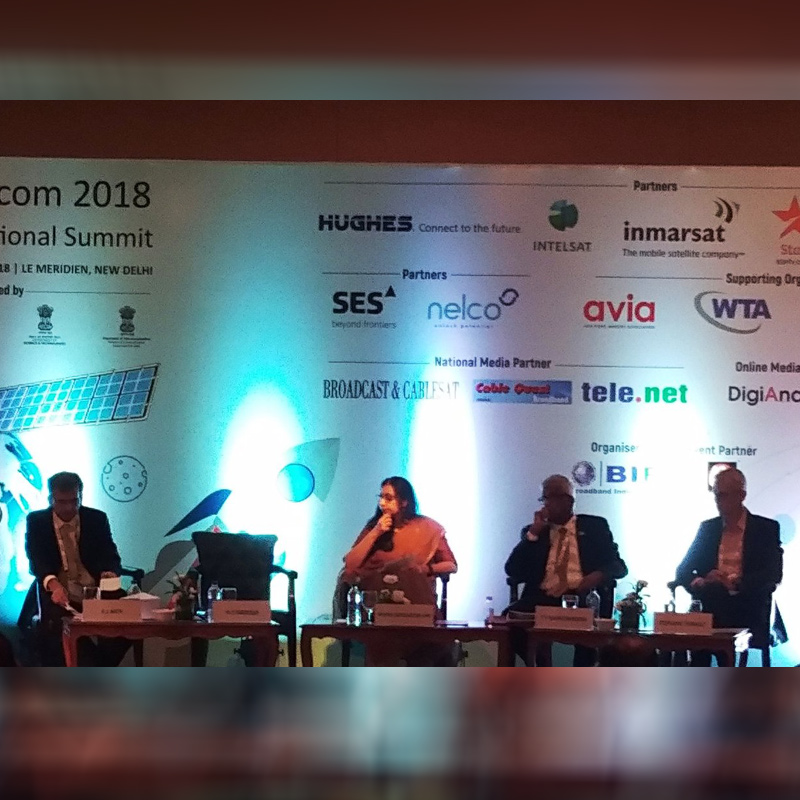
    Telecom secretary Aruna Sundararajan on Wednesday outlined the massive growth in mobile data consumption, driven by first-time users, and India's increasing digital clout, and said there is "no looking back" for the country when it comes to strengthening its communications infrastructure.

    She said that in an era of 5G and Internet of Things (IoT), the demand for communication infrastructure "far from slowing down, will increase exponentially".

    "We must have digital communications infrastructure that facilitates all this…We really must have a fundamental rethink on India's satcom policy in light of what are the emerging requirements and India's aspirations," Sundararajan said addressing the annual satcom summit 'India SatCom-2018' organised by Broadband India Forum (BIF), a PTI report stated.

    She further said that the demand for communication network is also being propelled by financial service industry, digital payment companies, smartphone usage and social media.

    Sundararajan noted that the draft national digital communications policy aims to provide universal broadband connectivity at 50Mbps to every citizen by 2022, create four million additional jobs, and also talks of enhancing the contribution of digital communications sector to eight per cent of India’s GDP from approximately 6 per cent now.

    "If we are to achieve robust modern digital communications infrastructure that the country needs…it has estimated the need for investment at USD 100 billion. Often, we in government are asked if that is a high figure, but I don't think so…I think this is realistic investment number in sync with our infrastructure requirements," PTI quoted her as saying.

    Stating that the country must embark on comprehensive review of its satellite communications policy, she stressed on the need to strike a balance between autonomy, security and the country's communications demand. "…it is possible to find a sweet spot between these three aspects. Other countries have done so, and I don't think it is impossible for India to strike a calibrated position keeping these three imperatives in mind…Keeping our strategic capabilities and requirements in mind, we need to look at how we can bridge the deficit in term of communication requirements," she pointed out.

    The summit also delved on various aspects of communications, including broadband connectivity to the remote parts of the country, satellite mobility, inflight connectivity, new technologies and innovations.

    Echoing sentiments similar to Sudararajan, telecom and broadcast regulator TRAI secretary SK Gupta, while addressing the valedictory session of the event, opined that “mainstreaming of satcom” issues was heartening.

    Pointing out that satellite transponder allocation process in India “needs a review” and the mechanism an “overhaul”, Gupta said that no regulatory hurdle should be created against use of any technology as satellite communication is very important for various applications and services.

    The one and half day satcom conference saw the convergence of not only ideas and trends, but also of representatives from the industry and government, including those from India’s space agency ISRO, Ministry of Information and Broadcasting and BECIL.

  • Cable variant with 50x capacity launched, good for BharatNet, says telecom panel secy

    Cable variant with 50x capacity launched, good for BharatNet, says telecom panel secy

    MUMBAI: Sterlite Tech, an end-to-end global technology leader in smarter digital networks, has bolstered its all-new FlashFWD 5G Solution with the launch of 1152F variant cables at India Mobile Congress (#IMC2017).

    As part of its new FlashFWD 5G Series, this new indigenous cable variant comes with over 50 times the capacity of the typical cable deployed in India.

    While launching this solution, Telecom Commission (DoT) secretary (T) and chairman Aruna Sundararajan said, “I am delighted to launch Sterlite Tech’s 5G cable that has been completely made in India. This is really a next-generation product. As the world looks at more fibre deployment, I think this is one of the products that will be a leader. This technology also fulfils the Government of India objectives. As BharatNet and other optical fibre projects roll-out in the country, we will see more such technology deployments.”

    FlashFWD 1152F is NABL certified and complies with the latest global standards of IEC.60794 series, ANSI/ICEA S-87-640, Telcordia GR-20, and ITU-T Recommendations.

    Sterlite Tech CEO Anand Agarwal asserted, “We are proud to have designed and manufactured this dense network solution for mobile backhaul in India. Sterlite Tech manufactures these products across the value chain from core silicon to semiconductor-grade glass to optical fibres and optical fibre cables, making us the most integrated player globally. This solution proposes the usage of one fibre cable and one duct solution instead of putting multiple ducts, which are subsequently unusable.”

    Sterlite CTO Badri Gomatam said, “These cable solutions have 50 times the capacity of the current cables deployed in the country and future-proof for 20 years. With efficient use of limited duct space, the 1152F cable features a rugged design that protects the network in harsh weather and impact situations, increasing life expectancy to at least double the current average lifetime with lowest carbon-footprint.”

  • Rs 37-bn panchayat wifi plan by Mar ’19, IMG to meet today

    Rs 37-bn panchayat wifi plan by Mar ’19, IMG to meet today

    MUMBAI: The central government is drafting an ambitious Rs 37-billion plan so as to cover around 5.5 lakh villages with wifi facility for all panchayats by March 2019, a senior Department of Telecom official has said. Also, data shared by the telecom minister Manoj Sinha showed that internet service has started in 33,430 gram panchayats as of 6 September.

    The inter-ministerial panel (IMG) of the Telecom Commission is scheduled to meet on Friday to consider phase-2 of BharatNet project under which 1.5 lakh GPs are to be covered with high speed broadband network.
       
    This month, the government expected to put out a tender for 2.5 lakh GPs (gram panchayats) to be covered so that 5.5 lakh villages would have had access to mobile broadband, the telecom secretary Aruna Sundararajan said, PTI reported.

    The government expects to start broadband services with about 1,000 megabit per second (1 gbps) across 1 lakh gram panchayats by 2017-end.

    Earlier, the plan was to provide 100 megabit per second connectivity to village panchayats, but, under the new BharatNet, the broadband speed has been enhanced 10 times to one gigabit per second at every panchayat level.

    One lakh wifi will used under BharatNet service. The other 1.5 lakh need not be on BharatNet from Day 1. Once BharatNet was completed, the government planned to integrate all wifi backward with BharatNet, Sundararajan said.

    At download speed of 1 gbps, an user can theoretically download a video equivalent to the size of a general Bollywood movie in about 2 seconds.

    Under the new policy, the government will focus on linking some 40,000 villages and increase availability of regular Internet access facility to 70 crore people, from 30 crore, by 2022.

    The secretary pointed out the pace of implementing BharatNet had accelerated by seven times in the last one month. Earlier, 150 installations a day were being done.

    As of July 2017, 2,21,925 kilometres of optical fibre cable (OFC), covering 1,00,299 gram panchayats, were laid and 25,426 GPs provided with broadband connectivity.

    The government, Sundararajan said, has already completed optical fibre rollout in one lakh GPs and is installing electronic equipment for commissioning of broadband services.

    The department has crossed 61,000 GPs where electronic (equipment) have been installed. In the next 2-3 months, it will complete the installation as well as integration to the network. The network for one lakh GPs will be functional before the end of this year.

    Also Read:

    GTPL Hathway pockets Rs 480-mn Gujarat govt contracts

    Fortinet deploys over 500 WiFi locations across Mumbai

    Wi-Fi: TRAI plans to set up ‘open’ WANI, seeks inter-operable, sachet-priced model

    NDMC-MTNL tie up to provide free Wi-fi & FTTH

  • Mobile data traffic grew by 76%, tele-market to cross Rs 6.6 trn by ’20

    NEW DELHI: Communications minister Manoj Sinha has said consumption of video content is forecast to be 75 per cent of India’s mobile data traffic by 2021, compared to 49 per cent in 2016.

    He said the Indian telecom industry has seen a paradigm shift from a voice centric market to a data-centric market. While voice business still contributes a large chunk towards operator revenues, data revenues have shown an exponential growth trajectory over the last few years.

    Speaking at a workshop on Telecom India here, the minister said that by the end of 2016 the number of internet subscribers in India was 391.50 million making India globally the 2nd highest in terms of internet users. He added that mobile data traffic also grew by 76 per cent in India in 2016, primarily attributed to increased smart phone penetration. This growing usage of smart phones, especially in urban areas, has increased the usage of internet on hand-held devices – in 2016, 559 megabytes of mobile data was generated per month by an average smart phone, up from 430 megabytes per month in 2015.

    Sinha said advancements in innovative IoT technologies like health monitors, smart transport, smart meters among others, is projected to result in 21 per cent increase in M2M services. These advances will result in a significant growth of mobile data, and as the telecom sector moves to newer technologies, TSPs will need to identify innovative avenues to monetise this data opportunity. He said the Indian Telecom Market is expected to cross the Rs 6.6 trillion revenue mark by the year 2020.

    Sinha said that one of the projects under the ‘Digital India’ initiative was ‘BharatNet’, launched to deploy high-speed optical fiber cables to connect 250,000 Gram Panchayat across the country by 2018. The project is being implemented in Phases, with more than100,000 gram panchayats connected under Phase-I as of July 2017 and states like Kerala, Karnataka, Chhattisgarh, Haryana, Uttar Pradesh and Madhya Pradesh nearing 100 per cent completion.

    This project would also help in increasing the fiberized sites in India which currently stands at less than 20 per cent as compared to other developed countries.

    Major achievements of the Indian telecom industry, Sinha said, include over 400 million internet users; FDI quadrupled in FY2016-17 recording inflow of approximately $ 5.6 billion; greater than 20 per cent tower sites now diesel free; rural tele density increased by 30 per cent over the last five years; more than 3/4th of the data consumption was from 3G/4G; tje telecom industry generates over 4 million jobs direct and indirect’ LTE device ecosystem grew by 270 per cent from 2015; and 38 new mobile manufacturing units set up since September 2015.

    He added that the government was working aggressively to connect 54,000 unconnected villages and would speed up its efforts after getting due reports from all states. An inter-ministerial group is looking into the financial health of the sector.

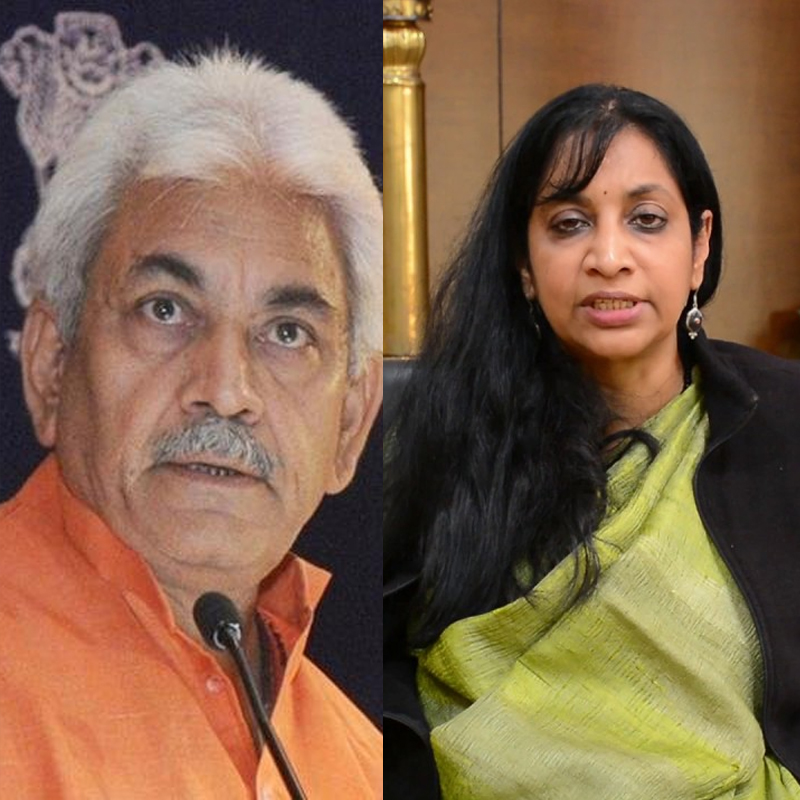
    Telecom secretary Aruna Sundararajan said India is attempting to do nothing short of charting a new digital strategy for growth. She said the new Telecom Policy will be a key building block for achieving the growth target of 10 per cent from the current 7.6 per cent as Telecom and IT are the two sectors contributing to 16.5 per cent to the GDP, and there are immense possibilities for it to go up to 25 per cent.

    ALSO READ :

    India leads y-o-y mobile data growth, 1m global users added per day: Ericsson

    “Cost of data is the only barrier for hyper growth of Hotstar & other OTT platforms:” Ajit Mohan

    Tele data & VoIP service rev may expand at 3% CAGR by ’21

    Digital is way forward but auxiliary for top brands: Reports (updated)

  • Time for OTT review? Delhi & K’taka top Net readiness, K’taka & Delhi lead in digital start-ups

    NEW DELHI: Will the OTT and VoD companies recast their strategies now that Delhi has emerged as the top-ranked state in terms of overall Internet readiness, overtaking last year’s winner Maharashtra?

    Delhi takes the first slot not only amongst small states and Union Territories but also when all states are taken together. The capital city-state is followed by Karnataka, Maharashtra, Kerala and Tamil Nadu.

    Delhi gets this rank primarily because of its fabulous e-infrastructure and e-participation according to a pioneering report titled ‘Index of Internet Readiness of Indian States, published by the Internet and Mobile Association of India (IAMAI) and Nielsen.

    Releasing the report, Electronics & Information Technology Ministry (MeiTy) Aruna Sundararajan said: “We are hopeful that India will leapfrog from the present 155th position to world’s top 5th in connectivity, within the next 5 to 6 years. India today is one of the most rapidly digitising economies in the world with the telecom industry leading the change. Things have improved multifold with state governments of Chattisgarh, Andhra Pradesh and Telangana among others taking proactive steps to improve connectivity and internet reach.”

    “The combination of various indigenous digital platforms along with innovative and disruptive startups holds the greatest scope for digital transformation in India. Post demonetisation, the country today has 3 million POS as compared to 1,50,000 POS earlier which is clearly a transformation and going forward too the infrastructure for digital payments will grow 3X within a span of one year.” she added.

    Among the smaller states, Delhi is at the top followed by Chandigarh and Puducherry. Chandigarh is ranked second in both e-infrastructure and e-participation. Puducherry ranks after Chandigarh when measured on the e-infrastructure index.

    Significantly, even within smaller states, the northeastern states ranked low in terms of overall Internet readiness. Therefore, much more needs to be done in the form of investment and infrastructure development in the region. Among the northeastern states, Nagaland tops the list, closely followed by Manipur and Tripura. Nagaland leads in IT environment and performs moderately well in other categories to get to the top.

    Internet readiness index is a composite benchmark of four components, i.e., e-Infrastructure index, e-Participation index, IT-Environment and government e-services index. All four components have equal weightage in this model. Separately, a fifth Index (named the Core Internet Index) has been created this year, consisting of select variables already used in constructing the above indices. The purpose of the index is to give a sharper perspective for digital industries looking to expand their business in Indian States.

    The overall top rankers amongst states as per their scores in the various indices are as follows:

    public://F.jpg

    One of the key highlights of this year’s report is measuring the digital start-up eco-system of states. The report finds that Karnataka, Delhi and Maharashtra are the top three states with the highest number of digital start-ups. The study says that of the total 242 start-up incubators in the country, 61 start-up incubators are in Tamil Nadu. About 83% of these incubators are in 10 states, i.e., Tamil Nadu, Karnataka, Uttar Pradesh, Maharashtra, Kerala, Telangana, Gujarat, West Bengal, Delhi and Rajasthan. In the North East, except for Manipur where a single start-up incubator is present, none of the other states have one.  

    The report highlights the performance of the states regarding different measures of Internet readiness index. Given the rapid advancement in e-services and e-commerce, it is essential to understand the strengths and weaknesses of the states. While this would help the business and governments to leverage the strength, policy measures can also be taken where improvements are required.


  • India takes significant initiative to secure cyber space

    MUMBAI: Extending the ‘Swachh Bharat’ campaign to the cyber world, the minister of electronics and information technology Ravi Shankar Prasad has launched the Cyber Swachhta Kendra–Botnet Cleaning and Malware Analysis Centre for analysis of malware and botnets that affect networks and systems. 

    This is a part of MeitY’s Digital India initiative aimed at creating a secure cyber space by detecting botnet infections in India and to notify, enable cleaning and securing systems of end-users to prevent further infections. The centre is operated by the Indian Computer Emergency Response Team (CERT-In).The Centre aims to enhance coordination between the Government and industry in order to encourage cyber hygiene among all end-users and to create a secure and safe internet ecosystem in India.

    Speaking on the occasion, Prasad said, “India is going to take a lead in the digitization process of the world. India today joined the distinguished club of countries that have malware cleaning systems for the use of its citizens. As of now, we have 13 Banks & internet service providers using this facility. With the expanding digital footprint in the country, I see a surge in start-ups in the area of cyber security by the end of the year.”

    “With the expanding role of Information and Communication technology across sectors and growth in volume of transactions and data exchange via internet, Cyber Security as reiterated by the prime minister, has emerged as the most critical factor when we move towards Digital India. Combating cyber threats is not something that can be done just by the government or an organisation or an individual alone. It requires a partnership approach. This centre being launched today will work in coordination with the Internet Service Providers and Industry. This Kendra will also enhance awareness among citizens regarding botnet and malware infection along with measures to be taken to secure their devices”, added Prasad.

    The minister made the following announcement at the launch of Cyber Swachhta Kendra:

    · The National Cyber Coordination Centre to be operational by June 2017
    · Sectoral CERTs to be created, that would operate under CERT-In
    · CERTs are to be set up in the state level as well
    · 10 more STQC (Standardisation Testing and Quality Certification) Testing Facilities to be set up
    · Testing fee for any star-up that comes up with a digital technology in the quest of cyber security, to be reduced by 50%
    · Empower designated Forensic Labs to work as the certified authority to establish cyber crime

    The Centre will operate in close co-ordination and collaboration with Internet Service Providers (ISP) and Anti-Virus companies. Whenever an infection is detected, the Centre will send alerts on the infected IP addresses to the Internet Service Providers, who in turn will inform the end-user about the malware and botnet infections on their system. The Centre will also work in close collaboration with the Banks to detect malware infections in their banking network and enable remedial actions. The launch of the Centre will help the Internet service providers and the banks to keep their networks clean and prevent cases of cyber fraud and theft.

    Ministry of electronics and information technology Aruna Sundararajan said, “With the increased penetration of ICT infrastructure in our country, the threat of cyber security has become more serious and visible. Today, the common man is confronted with hacking, spamming, malware and loss of data, yet public awareness about these issues and how to protect themselves is extremely low. There is a need to collaborate and come forth with solutions like the Cyber Swachhta Kendra in order to ensure a safe and secure cyber world for the citizens of India.”

    With the growth in digitalization and proliferation of broadband and mobile internet, security of end users’ systems is vital for enhancing their trust in ICT and online transactions. User information from the computer and the mobile devices can be compromised if systems get affected with Bots. Users therefore need to practice a rigid cyber hygiene regimen to prevent malware infections on their systems and to ensure security of their systems through suitable anti-malware tools. The Cyber Swachhta Kendra will provide free tools for detection and removal of malicious programmes. More than 3500 users have currently downloaded and tried the free bot removal tools till date. The end-user can log on to the Cyber Swachhta Kendra Portal (www.cyberswachhtakendra.gov.in) and clean their systems using the free cleaning tools. Users can also educate themselves about the various cyber threats and get information on the security tips in order to secure their computers, mobiles and prevent infections in their systems.

    Given below are details of some of the tools released for citizens:

    · USB Pratirodh -A desktop security solution, which protects from USB mass storage device threats.
    · AppSamvid – A desktop solution which protects systems by allowing installation of genuine applications through white listing. This helps in preventing threats from malicious applications. 
    · M-Kavach – An indigenously developed solution to address the security threats in mobiles.

    Also Read:

    Rs 12 billion budgeted for ‘Digital India’ ’17-18

    Cyberbullying may lead to depression in Asian kids

    India, US renew commitment to work on cyber security

  • Dist. National Informatics Centres to be of international standards

    Dist. National Informatics Centres to be of international standards

    NEW DELHI: Electronics and Information and Technology Minister Ravi Shankar Prasad has said the National Informatics Centre is the “technological bridge of India and is best placed to lead the way for a Digital India”

    He urged the District Information Officers (DIOs) to be innovative and proactive. NIC must adopt a transformative approach to make a difference at the grassroots level. He appealed to the NIC to connect with the Common Service Centres (CSCs), who have successfully provided training on digital payment systems to over 19.6 million of rural citizens and 6,15,000 merchants.”

    He was speaking at an event where the NIC kicked off the National Meet on Grassroot Informatics – VIVID: Weaving a Digital India here.

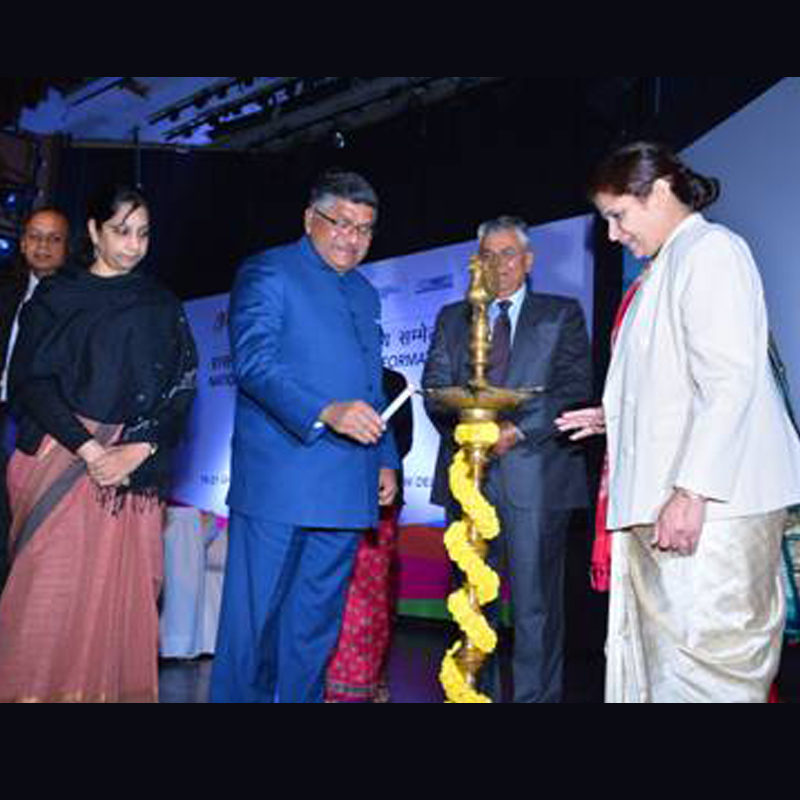
    The inauguration of the three-day event was also attended Minister of State P P Chaudhary, Secretary Ms Aruna Sundararajan, Additional Secretary Ajay Kumar, NIC DG Ms Neeta Verma, and Deputy DG Ms Rama Nagpal.

    Prasad announced the Government’s plan to set up a Government Security Operation Centre and a Data Centre for Cloud in Bhopal. He also announced that the Government is going to enhance the infrastructure of district NIC offices to international standards. As a pilot project, 150 District NIC offices would be upgraded during the period 2017-18, while rest will follow soon.

    He instructed the ministry to develop a training module for the NIC officials to keep pace with the ever evolving technologies. He also announced the introduction of annual awards for the DIOs of the NIC for taking up exemplary innovative approach in their respective districts. The top three best innovators will get a reward of Rs 2,00,000, Rs 1,00,000 and Rs 50,000 respectively.

    Chaudhary said, “The threshold of the year 2017 will always be remembered for heralding in several transformative changes to benefit the economy as well to the citizens, amongst them the Digital India initiative has been the most significant one. I must congratulate NIC and DIOs for playing a pivotal role in preparing the country for a successful Digital transformation of our ecosystem.

    NIC also introduced two new portals – District Collector’s Dashboard and NIC Service Desk, which were launched by Prasad and Chaudhary respectively.

    The National Meet on Grassroots Informatics is aimed at showcasing the various initiatives of NIC in creating and enhancing the Digital Infrastructure in the country. Some of these are – setting up of ICT infrastructure, developing state of the art products to enable the government and empower the citizens, its initiatives at state and district level along the lines of Digital India initiatives along with the various awareness campaigns on Digital Payment Systems encompassing DBT, PFMS, Cashless Payment, Aadhaar etc.

    The individual sessions during these three days would throw lights on NIC’s journey so far, the best practices it follows, the Digital India programme, Digital India initiatives from NIC State Units, success stories from the districts, Financial Inclusion, its technology awareness programmes and ICT Infrastructure being provided by NIC.

  • Dist. National Informatics Centres to be of international standards

    Dist. National Informatics Centres to be of international standards

    NEW DELHI: Electronics and Information and Technology Minister Ravi Shankar Prasad has said the National Informatics Centre is the “technological bridge of India and is best placed to lead the way for a Digital India”

    He urged the District Information Officers (DIOs) to be innovative and proactive. NIC must adopt a transformative approach to make a difference at the grassroots level. He appealed to the NIC to connect with the Common Service Centres (CSCs), who have successfully provided training on digital payment systems to over 19.6 million of rural citizens and 6,15,000 merchants.”

    He was speaking at an event where the NIC kicked off the National Meet on Grassroot Informatics – VIVID: Weaving a Digital India here.

    The inauguration of the three-day event was also attended Minister of State P P Chaudhary, Secretary Ms Aruna Sundararajan, Additional Secretary Ajay Kumar, NIC DG Ms Neeta Verma, and Deputy DG Ms Rama Nagpal.

    Prasad announced the Government’s plan to set up a Government Security Operation Centre and a Data Centre for Cloud in Bhopal. He also announced that the Government is going to enhance the infrastructure of district NIC offices to international standards. As a pilot project, 150 District NIC offices would be upgraded during the period 2017-18, while rest will follow soon.

    He instructed the ministry to develop a training module for the NIC officials to keep pace with the ever evolving technologies. He also announced the introduction of annual awards for the DIOs of the NIC for taking up exemplary innovative approach in their respective districts. The top three best innovators will get a reward of Rs 2,00,000, Rs 1,00,000 and Rs 50,000 respectively.

    Chaudhary said, “The threshold of the year 2017 will always be remembered for heralding in several transformative changes to benefit the economy as well to the citizens, amongst them the Digital India initiative has been the most significant one. I must congratulate NIC and DIOs for playing a pivotal role in preparing the country for a successful Digital transformation of our ecosystem.

    NIC also introduced two new portals – District Collector’s Dashboard and NIC Service Desk, which were launched by Prasad and Chaudhary respectively.

    The National Meet on Grassroots Informatics is aimed at showcasing the various initiatives of NIC in creating and enhancing the Digital Infrastructure in the country. Some of these are – setting up of ICT infrastructure, developing state of the art products to enable the government and empower the citizens, its initiatives at state and district level along the lines of Digital India initiatives along with the various awareness campaigns on Digital Payment Systems encompassing DBT, PFMS, Cashless Payment, Aadhaar etc.

    The individual sessions during these three days would throw lights on NIC’s journey so far, the best practices it follows, the Digital India programme, Digital India initiatives from NIC State Units, success stories from the districts, Financial Inclusion, its technology awareness programmes and ICT Infrastructure being provided by NIC.

  • India, US renew commitment to work on cyber security

    India, US renew commitment to work on cyber security

    NEW DELHI: India and the United States have signed a Memorandum of Understanding (MoU) to promote closer co-operation and the exchange of information pertaining to the Cyber Security in accordance with the relevant laws, rules and regulations of each economy on the basis of equality, reciprocity and mutual benefit.

    The MoU was signed between the Indian Computer Emergency Response Team (CERT- In) under the Electronics and Information technology Ministry and the US Department of Homeland Security on cooperation in the field of cyber Security. The MoU was signed by MeITY Secretary Aruna Sundararajan and US Ambassador Richard Verma.

    Earlier, United States and India signed an MoU on 19 July 2011 to promote a closer cooperation and timely exchange of information between the organisations of their respective Governments responsible for Cyber Security. Since 19 July 2011 regular interactions between CERT-In and US CERT are taking place to share the information and discuss cyber security related issues.

    The present MoU is in continuation to the cooperation in cyber security areas.

    Also Read:

    ‘Force 2’ piracy: Viacom18 registers FIR; KSS blames it on a theatre

    Guest Column: As digital spreads wings, bolstering security is paramount